
La Musica unisce
In collaborazione con Keyboard Charitable Trust
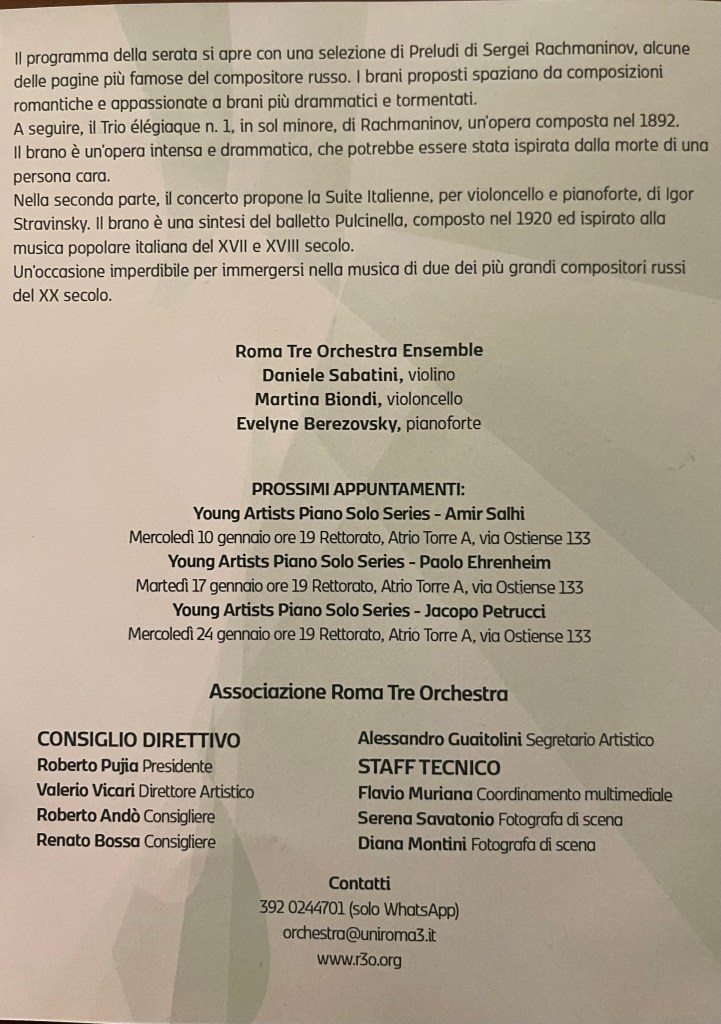
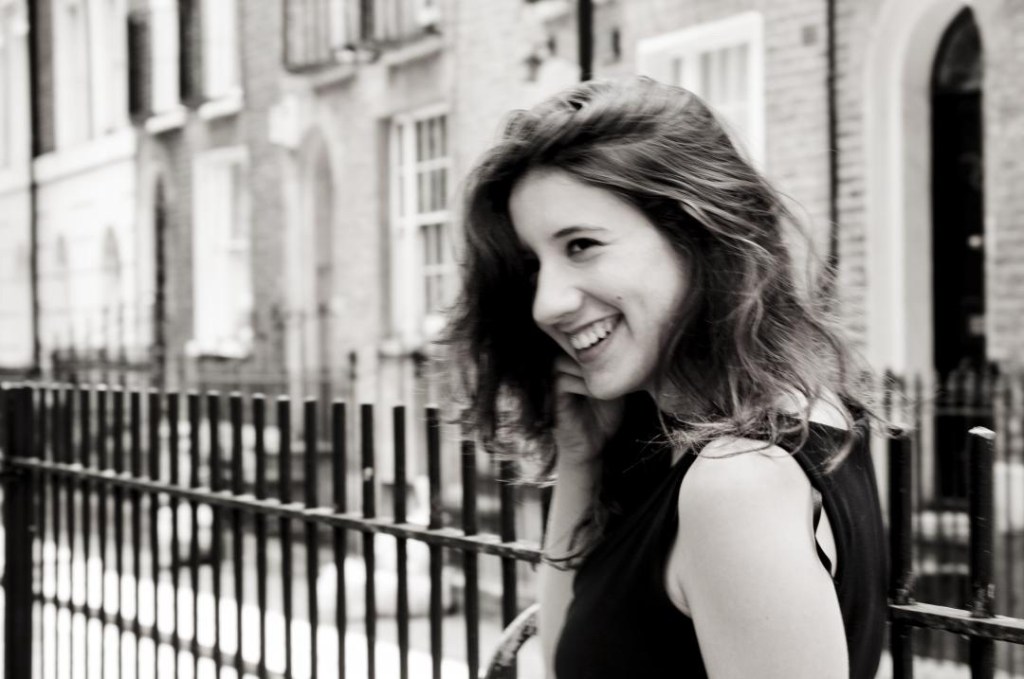

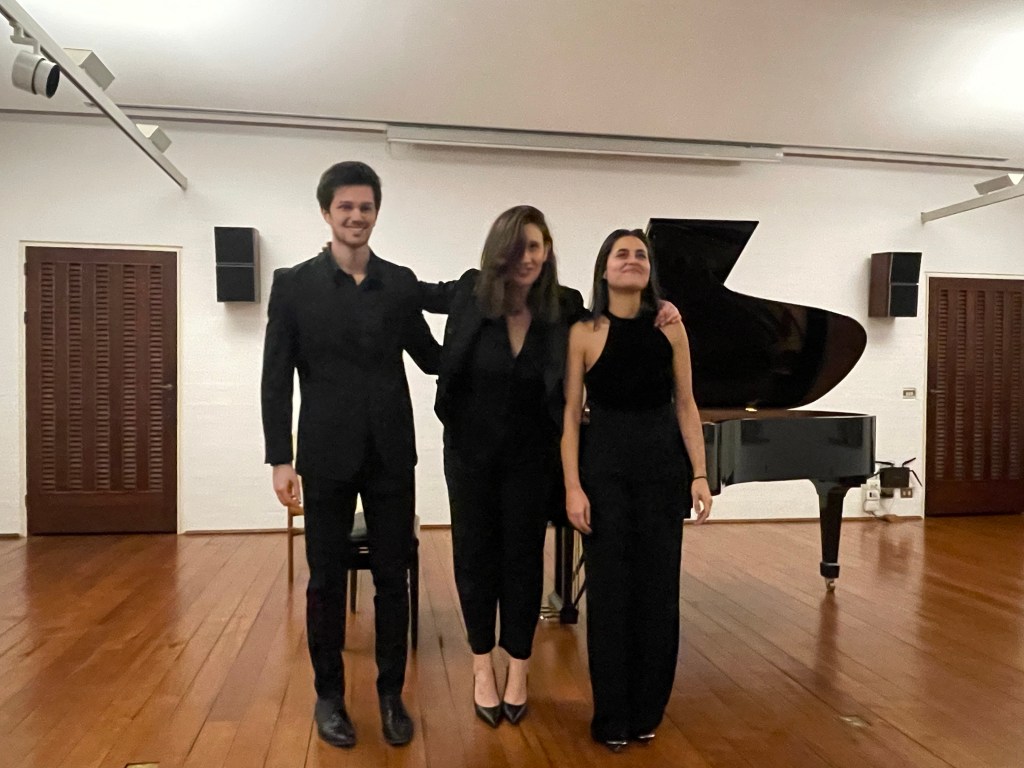

Evelyne Berezovsky seduction in Rome
Evelyne Beresovsky after the success of her concert last year, having stood in for her colleague and childhood friend Alexander Ullman ,was invited back to given a special concert dedicated to Rachmaninov and Stravinsky .Not only playing solo works but also two chamber music works with two superb musicians from the Roma 3 Orchestra .

Daniele Sabatini ,the Roman violinist ,winner of many prestigious prizes together with his duo partner the pianist Simone Rugani .
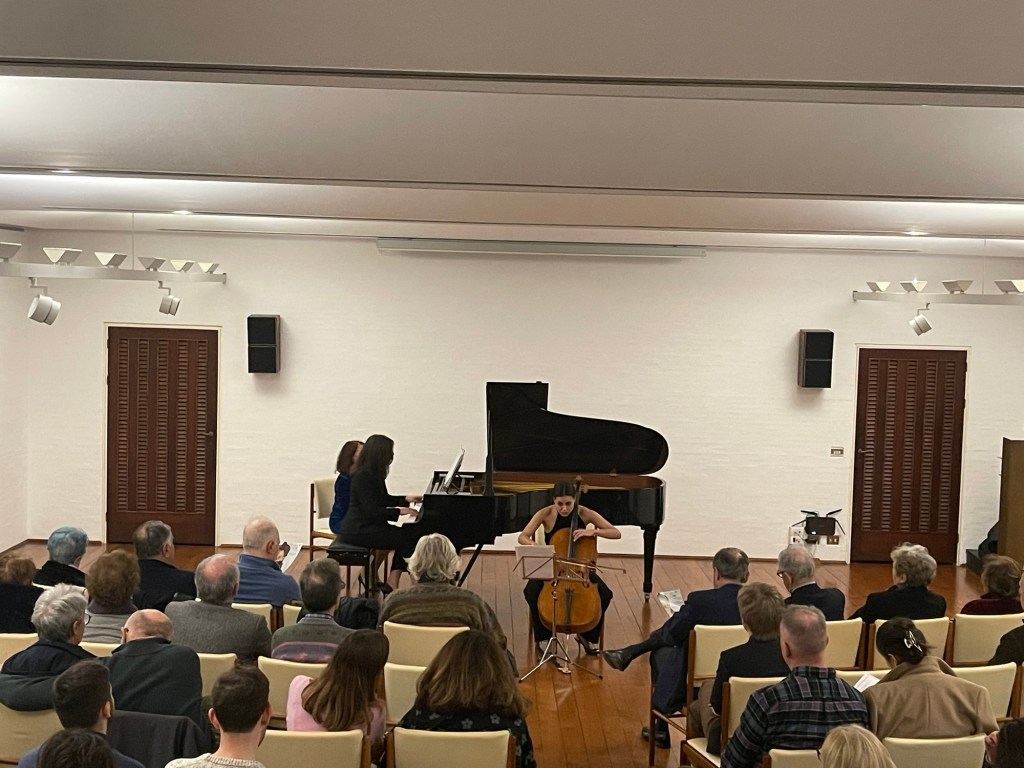
Martina Biondi is one of the finest Italian cellists of her generation who lives and works in Berlin .
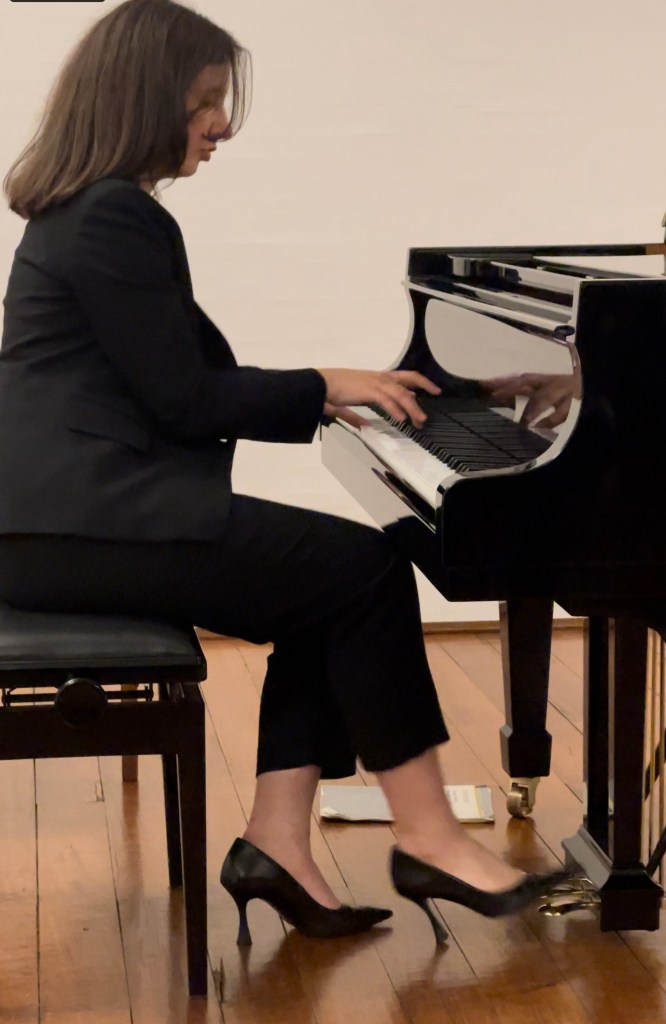
We know and have heard on many occasions the solo playing of Evelyne Beresovsky and today she was to shine in works by Rachmaninov and the ‘Firebird’ by Stravinsky in the famous transcription by Agosti (1928)

The surprise was her total commitment to chamber music and how she could blend in and shape the music with her colleagues .The gently throbbing chords of the violin and cello at the opening of the early Rachmaninov ‘Elegiac’ Trio was the stage set for the Eagle that was to swoop onto the scene with chiselled sounds of nostalgic beauty from the hands of Evelyne .Cascades of notes too that were like streams of gold creating sounds that accompanied the passionate outpourings from the two string players.

Playing in unison or solo Evelyne was always there listening and supporting with rich romantic sounds that never overpowered her fellow companions united in the turbulent youthful outpouring of romantic effusions.Deeply moving was the desolate atmosphere created at the end by the ‘cello and violin with the piano recalling what had passed with such poignant beauty and nostalgia.

Martina and Evelyne returned to play together Stravinsky’s ‘Suite Italienne’where the beauty of Piatigorsky’s arrangement was played by Martina with ravishing playing of restrained passion.Evelyne too played not only with spiky rhythmic spirit but also with extraordinary ease and perfect ensemble.After only a day to work together it was a ‘tour de force ‘ of musicianship from two artists who were listening with chameleonic care to each other.
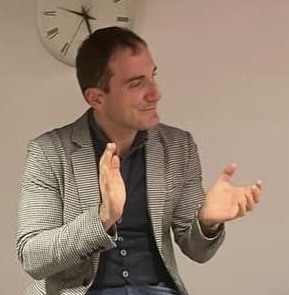
Of course this is the intent of Valerio Vicari,artistic director of Roma Tre Orchestra.To allow his superb players not only to play in the orchestra together but also to play in chamber ensembles where the same participation will continue into the larger orchestra ensemble.This had been amply demonstrated to us in Rome by Sir Antony Pappano when he took over command of the renowned S.Cecilia Orchestra .Creating chamber music ensembles with the very fine components of the orchestra ,playing the piano with them too,creating an orchestra that listens to itself.Sir Antony now bequeathes to Rome one of the great orchestra of the world after almost twenty years at their helm.

Evelyne brought ravishing sounds and a superb sense of style to the Preludes and Etudes – Tableaux that she had chosen to play. Some things cannot be taught and are part of the genes of pianists like Evelyne or dare I say Martha Argerich.A freedom where everything they play is fresh and newly minted as though discovered in that very moment .Both are well known for their human qualities where life,friendships and caring human relationships take precedence over hours spent locked away at the keyboard .It is a God given gift that Evelyne like her famous colleague has been endowed with from early training.Endowed with a technique that encourages a kaleidoscopic sense of colour from fingers of steel but wrists of rubber ( as Agosti used to say) ,A sense of touch that was encouraged and nurtured from a very early age added of course to a natural talent that is of the blessed few.
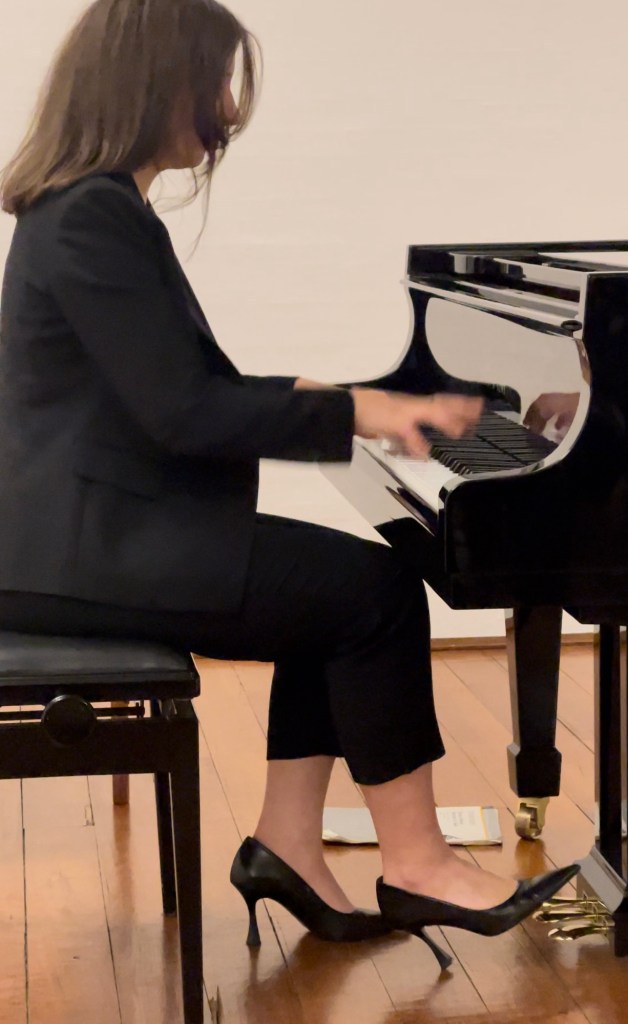
The Andante Cantabile of op 23 n.4 was played with the freedom of Belcanto as the balance between her hands was so delicate and sensitive . A beguiling seductive rubato to op 23 n.6 in E flat with its insinuating subtle colouring was followed by the dynamic drive to the G minor op 23 n.5. Alla Marcia indeed it was with overpowering sonorities never hard or ungrateful but the full sounds of Philadelphia proportions.Op 23 n.8 was a whirlwind of moving harmonies as the spider web of gossamer notes spun from Evelyne’s ever flexible fingers.

It was to the second set of Preludes that Evelyne chose the ravishing beauty of n. 5 in G major to close this selection .It was played with a fluidity and luminosity the same that I remember from the hands of Dame Moura Lympany who had played it for us in Rome at the end of a long and illustrious career before the Russians were allowed to travel to the west and astonish us even more.

Two Etude – Tableaux ignited the piano with the call to arms of truly orchestral proportions of op 33 n.6 in E flat .Allegro con fuoco indeed it was today and was a preparation for the fireworks that were to come with Stravinsky’s ‘Firebird’.This was followed by the most Romantic of all these miniature tone poems op 39 n. 5 in E flat minor with it’s sumptuous melodic outpouring and tumultuous climax only to withdraw into the desolate intimacy that was Rachmaninov’s heritage.
There was some confusion over the programme that announced ‘Love’s Sorrow’ which is more often referred to as ‘Liebesleid’ by Kreisler in the arrangement of his friend and duo partner Rachmaninov.There is the famous story of the Kreisler/Rachmaninov duo playing in Carnegie Hall.Kreisler momentarily lost his place and whispered to his partner:’Where are we?’…..‘Carnegie Hall’ growled Rachmaninov without battling an eyelid!
Alt-Wiener Tanzweisen (Old Viennese Melodies ) is a set of three short pieces for violin and piano composed by Austrian-American violinist Fritz Kreisler . The three pieces are titled Liebesfreud (Love’s Joy), Liebesleid (Love’s Sorrow), and Schön Rosmarin (Lovely Rosemary).Liebesfreud and Liebesleid, were the subject of virtuoso transcriptions for solo piano by Kreisler’s friend Rachmaninov in 1931 who also recorded them.Here is the master Kreisler himself playing with the same charm as we heard today from Evelyne Beresovsky (https://youtube.com/watch?v=AqQ2_2qd-5Y&feature=shared)
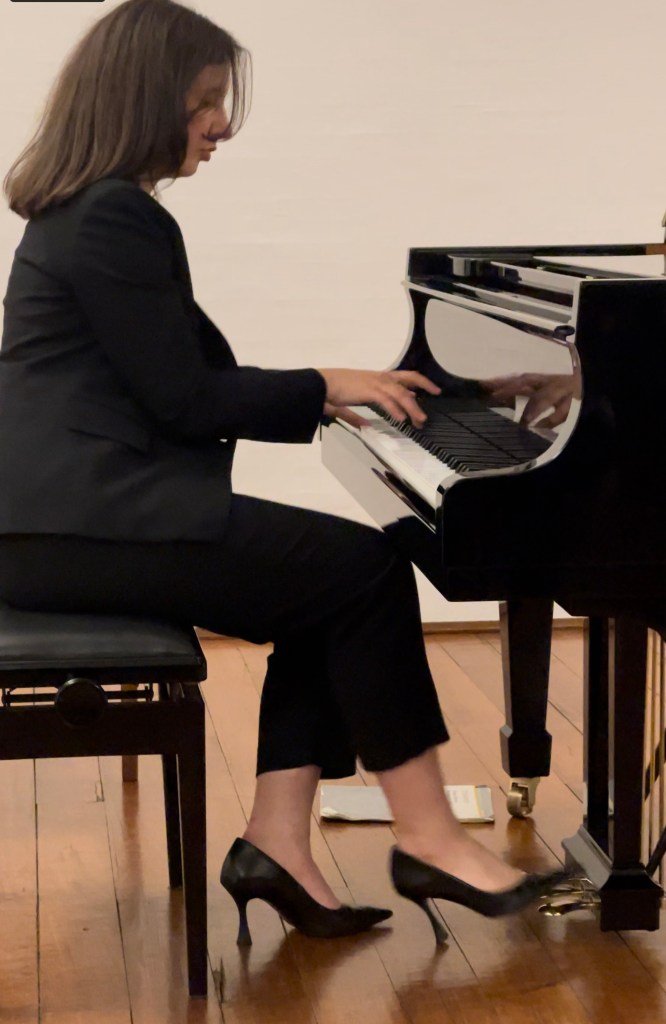
An astonishing opening to Agosti’s ‘Firebird’ transcription had us sitting on the edge of our seats before the gentle sounds bathed in pedal of the Berceuse.The appearance of the Firebird is always a magic moment whether in the original orchestral version or from the magical hands of Evelyne in Agosti’s quite remarkable transcription for solo piano.Solo piano it might be but like the feats of Liszt and Thalberg they defy one to believe that only two hands and two feet could multiply as if by magic.It is of course the pedal and a sense of illusion that can be created by those with the technique and imagination to turn a box of hammers and strings into a full orchestra.Evelyne demonstrated today that she is just such a magician at the keyboard.

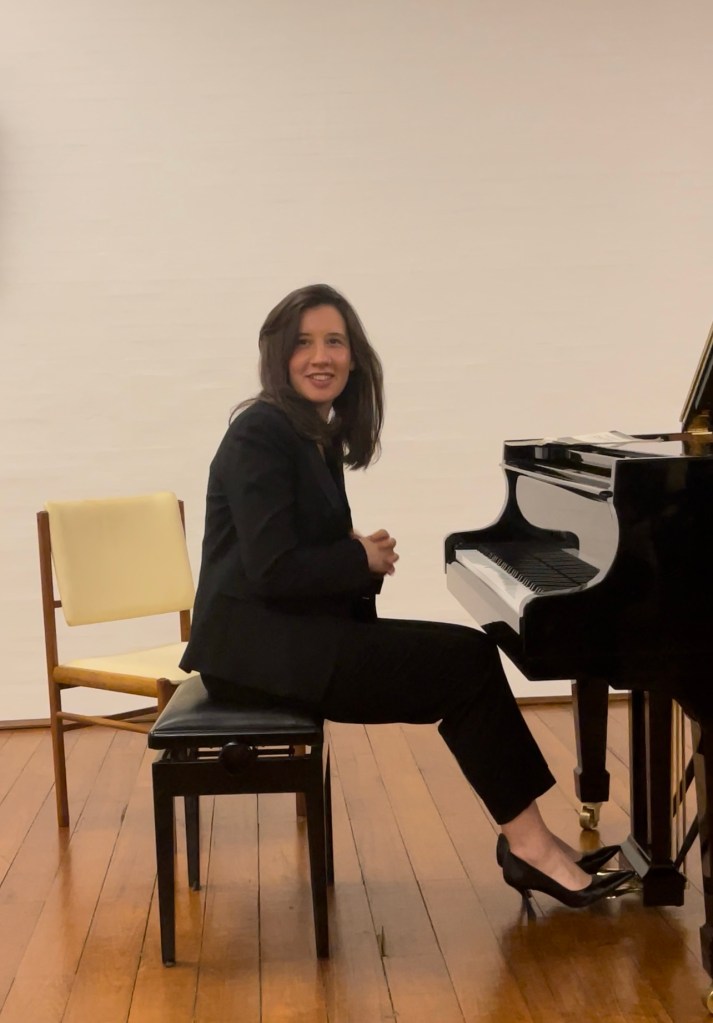
Two encores for an enthusiastic audience who wanted even more music.With Evelyne’s disarming humility and charm she announced she would play again the beautiful prelude op 32 n.5 and this was followed by Grieg’s Butterfly that she allowed to hover above the keyboard with the jeux perle charm and style of pianists of another age.

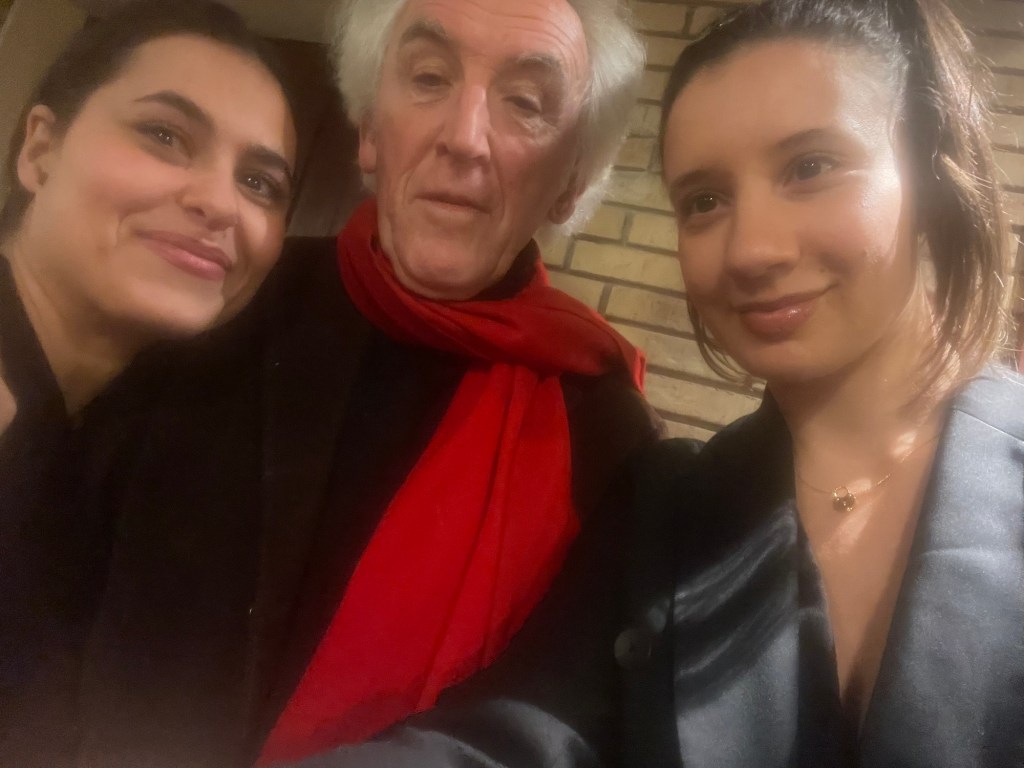

Trio élégiaque No. 1 in G minor was written on January 18–21, 1892 in Moscow, when the composer was 18 years old. The work was first performed on January 30 of the same year with the composer at the piano, David Kreyn at the violin and Anatoliy Brandukov at the cello.[1] It waited until 1947 for the first edition to appear, and the trio has no designated opus number. Rachmaninoff wrote a second Elegiac piano trio in 1893 after the death of Tchaikovsky.
This work is cast in only one movement, in contrast to most piano trios, which have three or four. This movement is in the classical form of a sonata,[2] but the exposition is built on twelve episodes that are symmetrically represented in the recapitulation. The elegiac theme is presented in the first part Lento lugubre by the piano. In the following parts, the elegy is presented by the cello and violin, while the spirit is constantly evolving (più vivo – con anima – appassionato – tempo rubato – risoluto). The theme is ultimately recast as a funeral march.
Despite his youth, Rachmaninoff shows in the virtuoso piano part his ability to cover a wide spectrum of sound colors. This trio has a distinctive connection to Tchaikovsky’s Trio in A minor, both in the unusual, expanded first movement, and in the funeral march as a conclusion.
The suggestion often heard – that the first trio is an early elegy for Tchaikovsky – is doubtful: in 1892 the elder composer was in good health, and there was no premonition of the sudden illness that would kill him nearly two years later. Rather, the key to the connection with Tchaikovsky of this first trio is its repetitive opening theme, a four-note rising motif, that dominates the 15-minute work. Played backwards in the same rhythm it is exactly the opening descending motif of Tchaikovsky’s first piano concerto (written 1874-75), and the allusion would have been apparent to listeners and teachers at the university, as would the closing funeral march imitative of Tchaikovsky’s elegy to Nikolai Rubinstein. Rachmaninoff wrote this first trio while still a student and may well have intended it as an homage to his elder friend and mentor. The second trio, written two years later, was the true “elegiac” work mourning Tchaikovsky’s death.

Stravinsky’s score for The Firebird was written for Sergei Diaghilev’s Ballets Russes dance company, which premiered the work in Paris in 1910. Based on ancient Russian folk tales, it tells the story of the young Prince Ivan’s quest to find a legendary magic bird with fiery multi-coloured plumage. In the course of his adventures, he falls in love with a beautiful princess but has to fight off the evil sorcerer Katschei to eventually marry her. The suite presents the culminating scenes of the ballet in a piano transcription by the Italian pianist and pedagogue Guido Agosti (1901-1989), who studied with Ferruccio Busoni.

The Danse infernale depicts the brutal swarming and capture of Prince Ivan by Katschei’s monstrous underlings until Prince Ivan uses the magic feather given to him by the Firebird to cast a spell on his captors, making them dance until they drop from exhaustion. The Berceuse is a lullaby depicting the eerie scene of the slumbering assailants, leading to the Finale, a wedding celebration for Prince Ivan and his princess bride.Agosti’s piano transcription, completed in 1928, is a daunting technical challenge for the pianist. Most of the piano writing is laid out on on three staves in order to cover the multi-octave range of the keyboard that the pianist must patrol. The piano comes into its own in this transcription as a percussion instrument, to be played with the wild abandon with which a betrayed lover throws her ex-partner’s possessions off the balcony onto the street below.Judging from the shocking 7-octave-wide chord crash that opens the Dance infernale, Agosti captures well the bruising pace of the action, with off-beat rhythmic jabs standing out from a succession of punchy left-hand ostinati constantly nipping at the heels of the melody line. The accelerating pace as the sorcerer’s ghouls are made to dance ever more frantically is a major aerobic test for the pianist.
Relief comes in the Berceuse, which presents its own pianistic challenges, mainly those of finely sifting the overtones of vast chord structures surrounding the lonely tune singing out from the middle of the keyboard.The wedding celebration depicted in the Finale presents Stravinsky’s trademark habit of cycling hypnotically round the pitches enclosed within the interval of a perfect 5th. Just such a melody, swaddled in hushed tremolos, opens this final movement. It is a major challenge for the pianist to imitate the shimmering timbre of the orchestra’s brightest instruments as this theme is given its apotheosis to end the suite in a blaze of sonority that extends across the entire range of the keyboard.
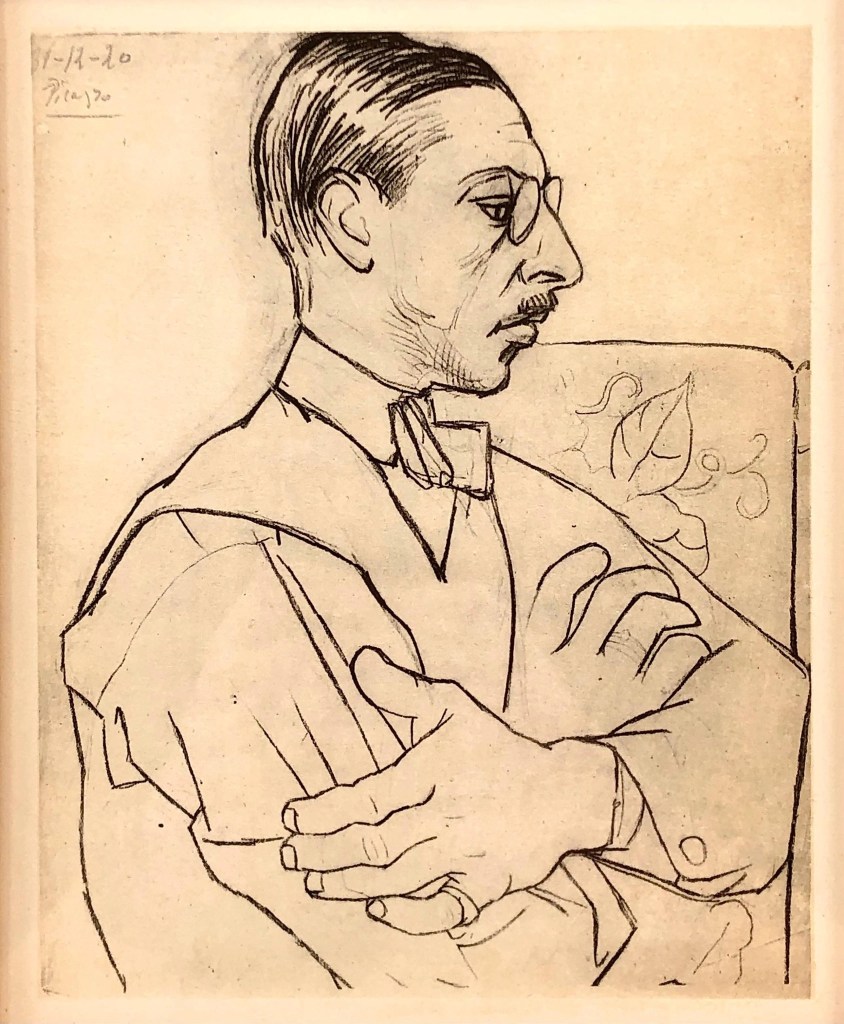
The Suite italienne is one of several spin-offs from Pulcinella, the “ballet with song” that Igor Stravinsky (1882-1971) composed for the Ballets Russes impresario Serge Diaghilev in 1920. “Composed” in this case being a somewhat misleading verb, as Diaghilev had found tunes he wanted to use by Giovanni Battista Pergolesi (1710-1736), which he gave to Stravinsky to arrange. (Massine also based his choreography on 18th-century Neapolitan steps.) This borrowing was controversial at the time, as was the “neo-Classical” direction Stravinsky’s music suddenly took, spiking the Baroque harmonies with dissonances, goosing the regular meters, and generally creating witty, ironic musical mayhem.
The brio and charm of the music was undeniable, however, and Stravinsky capitalized on it with various arrangements, including several suites of excerpts from the ballet’s 18 numbers for violin and/or cello and piano. Neither Stravinsky nor Diaghilev were aware at the time that Pergolesi was a popular name that 18th-century publishers slapped on just about any piece by a lesser-known contemporary that needed a sales boost. Of this Suite, only the Serenata and Menuetto are based on actual Pergolesi melodies. The Introduzione, Tarantella, Scherzino, and Finale are based on music by Domenico Gallo, and the Gavotta con due variazioni came originally from Carlo Monza.

Pulcinella is a 21-section ballet by Stravinsky with arias for soprano, tenor and bass vocal soloists, and two sung trios. It is based on the 18th-century play Quatre Polichinelles semblables, or Four similar Pulcinellas, revolving around a characters from the commedia dell’arte . The work premiered at the Paris Opera on 15 May 1920 under the baton of Ernest Ansermet . The central dancer, Leonid Massine, created both the libretto and the choreography, while Picasso designed the costumes and sets. The ballet was commissioned by Diaghilev , impresario of the Ballets Russes. A complete performance takes 35–40 minutes. Stravinsky revised the score in 1965 .
Ernest Ansermet wrote to Stravinsky in 1919 about the project. The composer initially did not like the idea of music by Pergolesi, but once he studied the scores, which Diaghilev had found in libraries in Naples and London , he changed his mind. Stravinsky adapted the older music to a more modern style by borrowing specific themes and textures, but interjecting his modern rhythms, cadences, and harmonies.
Pulcinella marked the beginning of Stravinsky’s second phase as a composer, his neoclassical period. He wrote:
‘Pulcinella was my discovery of the past, the epiphany through which the whole of my late work became possible. It was a backward look, of course—the first of many love affairs in that direction—but it was a look in the mirror, too.’
Suite italienne
Stravinsky based the following works on the ballet:
- 1925: Suite d’après des thèmes, fragments et morceaux de Giambattista Pergolesi, for violin and piano (in collaboration with Paul Kochanski).
- 1932/33: Suite italienne, for cello and piano (in collaboration with Gregor Piatigorsky ).
- 1933: Suite italienne, for violin and piano (in collaboration with Samuel Dushkin ).
- Violinist Jasha Heifetz and Piatigorsky later made an arrangement for violin and cello, which they also called Suite italienne.
Guido Agosti (11 August 1901 – 2 June 1989) was an Italian pianist and renowned for his yearly summer course in Siena frequented by all the major musicians of the age.It was on the express wish of Alfredo Casella that Agosti took over his class which he did for the next thirty years.Sounds heard in his studio have never been forgotten.

Agosti was born in Forli 1901. He studied piano with Ferruccio Busoni Bruno Mugellini and Filippo Ivaldiand earning his diploma at age 13. He studied counterpoint under Benvenuti and literature at Bologna University. He commenced his professional career as a pianist in 1921. Although he never entirely abandoned concert-giving, nerves made it difficult for him to appear on stage,and he concentrated on teaching. He taught piano at the Venice Conservatoire and at the Santa Cecilia Academy in Rome.In 1947 he was appointed Professor of piano at the Accademia Chigiana Siena .He also taught at Weimar and the Sibelius Academy in Helsinki.

His notable students include Maria Tipo,Yonty Solomon Leslie Howard,Hamish Milne,Martin Jones,Ian Munro,Dag Achat,Raymond Lewenthal,Ursula Oppens,Kun- Woo Paik,Peter Bithell.He made very few recordings; there is a recording of op 110 from the Ghione theatre in Rome together with his recording on his 80th birthday concert in Siena of Debussy preludes .


La scuola musicale russa tra Ottocento e Novecento rappresenta una fase cruciale nell’evoluzione del pensiero occidentale. In questo arco di tempo, la Russia, che in precedenza era stata in gran parte isolata dalle principali correnti musicali europee, iniziò a emergere come una potenza culturale significativa.Il cambiamento iniziò con Michail Glinka, spesso considerato il padre della musica classica russa. Glinka aprì la strada ad un nuovo stile musicale che attingeva profondamente dalla ricca tradizione folcloristica e dalle melodie popolari russe. Il suo approccio non era semplicemente quello di utilizzare melodie popolari, ma piuttosto di integrarle in una struttura classica sofisticata, creando così un ponte tra l’eredità culturale russa e le forme musicali occidentali.
Seguendo le orme di Glinka, il cosiddetto “Gruppo dei Cinque”, composto da Mily Balakirev, Aleksandr Borodin, César Cui, Modest Mussorgsky e Nikolaj Rimskij-Korsakov, portò avanti questa visione. Si trattava di artisti determinati a produrre una musica che fosse distintamente russa, non solo nella melodia, ma anche nell’armonia, nel ritmo e nella struttura. Nel corso del Novecento, compositori come Sergej Rachmaninoff e Igor Stravinskij continuarono a sviluppare questo stile. Rachmaninoff, con la sua profonda sensibilità e la sua abilità al pianoforte, portò la tradizione romantica russa fino agli inizi del XX secolo.
Stravinskij, d’altra parte, fu un innovatore, spingendo in avanti i confini stessi della musica con opere come “La Sagra della Primavera”, che provocarono sia scandalo che ammirazione per la loro audacia ritmica e armonica.
Il programma della serata si apre con una selezione di Preludi di Sergei Rachmaninov, alcune delle pagine più famose del compositore russo. I brani proposti spaziano da composizioni romantiche e appassionate a brani più drammatici e tormentati.
A seguire, il Trio élégiaque n. 1, in sol minore, di Rachmaninov, opera composta nel 1892. Il brano è un’opera intensa e drammatica, che potrebbe essere stata ispirata dalla morte di una persona cara.Nella seconda parte, il concerto propone la Suite Italienne, per violoncello e pianoforte, di Igor Stravinsky. Il brano è una sintesi del balletto “Pulcinella”, composto nel 1920 ed ispirato alla musica popolare italiana del XVII e XVIII secolo.

Da sottolineare, infine, il prestigio degli artisti coinvolti: Daniele Sabatini è un violinista romano, già vincitore di numerosi premi nel repertorio cameristico insieme al pianista Simone Rugani; Evelyne Berezovsky è una pianista russa che vive a Londra, già ospite di Roma Tre Orchestra, che partecipa grazie al generoso contributo del Keyboard Charitable Trust; Martina Biondi è una delle migliori violoncelliste italiane della nuova generazione, attualmente residente a Berlino.
 ChristopherAxworthy-MusicCommentary