
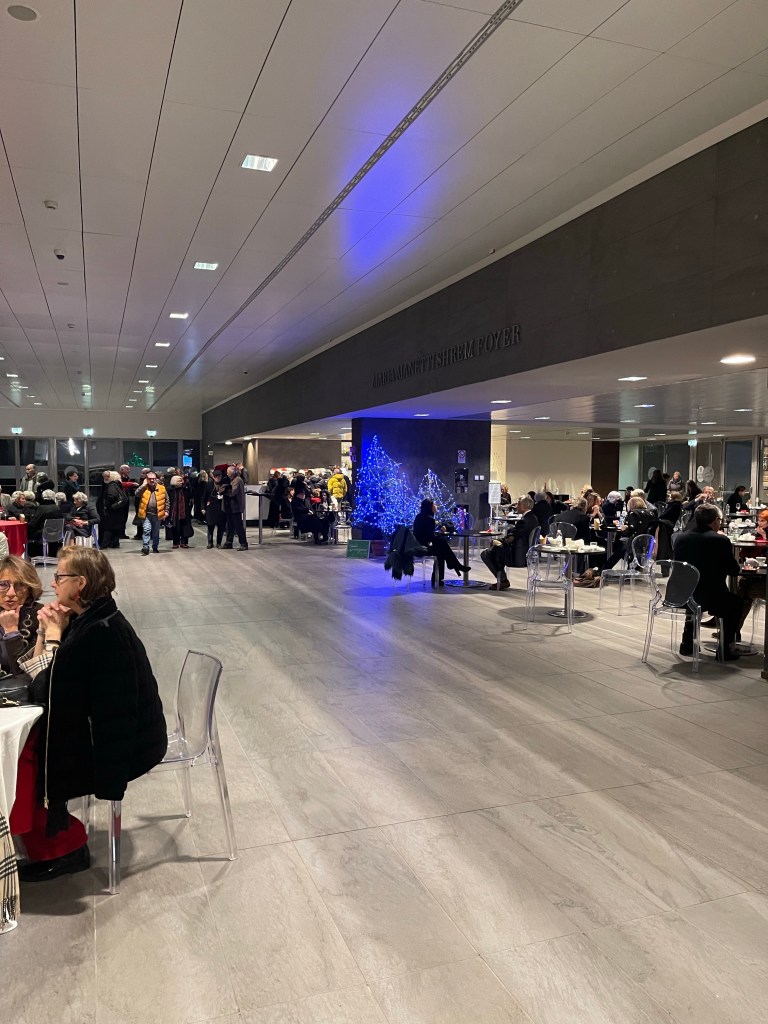
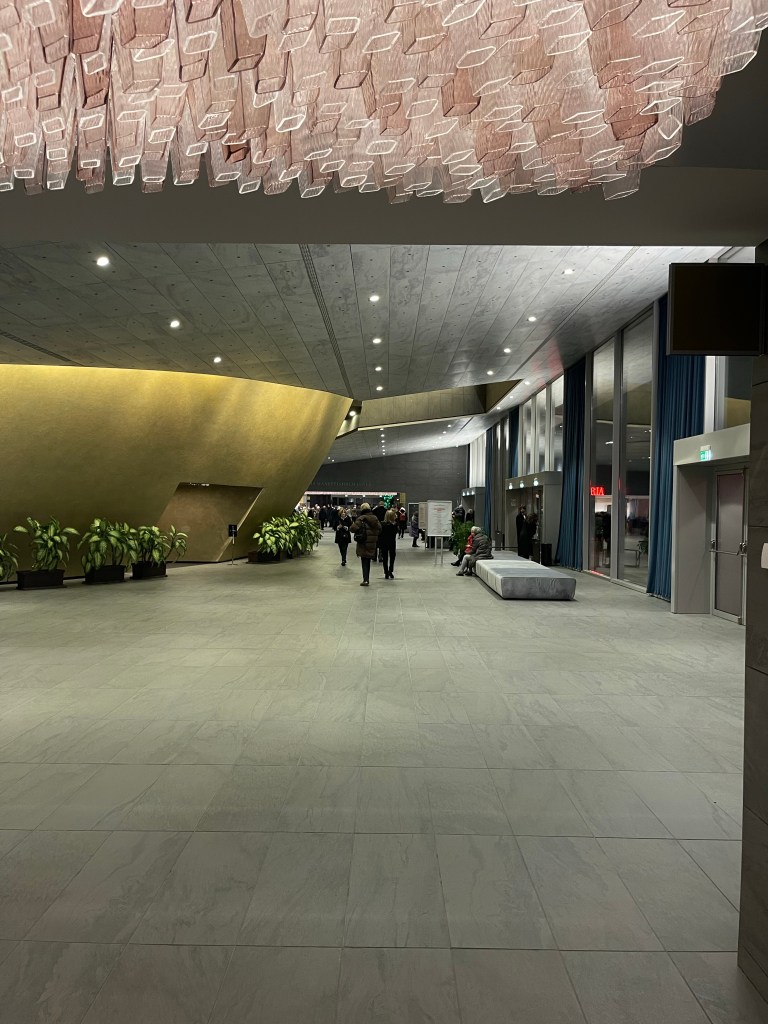
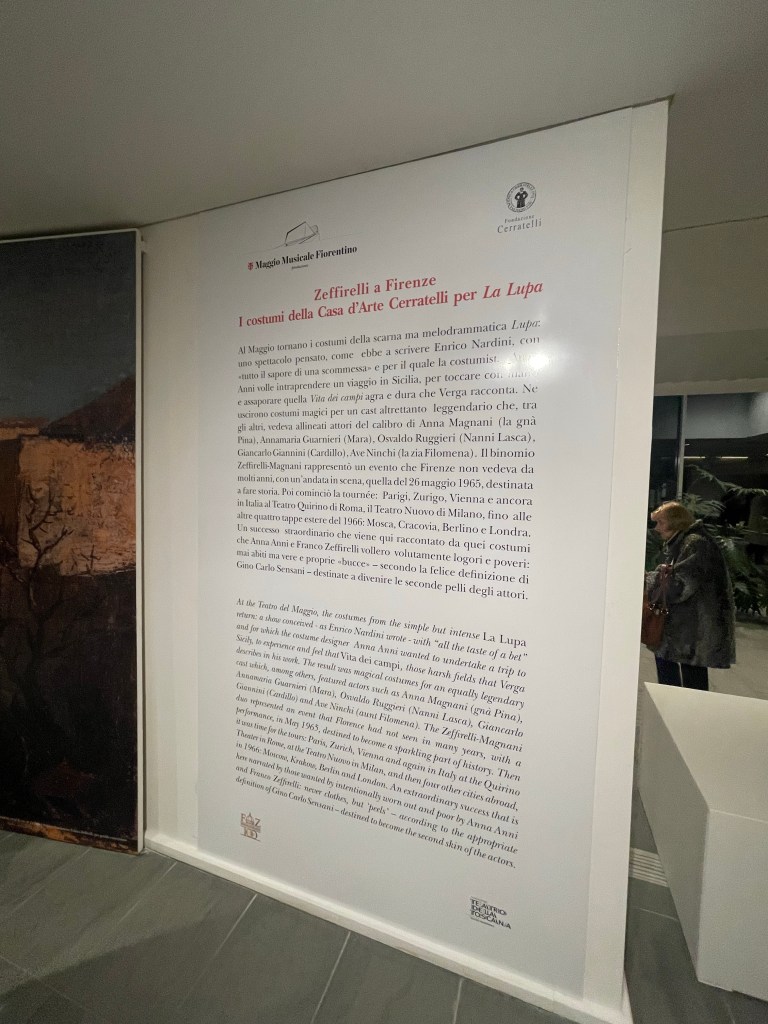
Teatro del Maggio Musicale Fiorentino is a multifunctional complex built to replace the old Teatro Comunale and was designed by architect
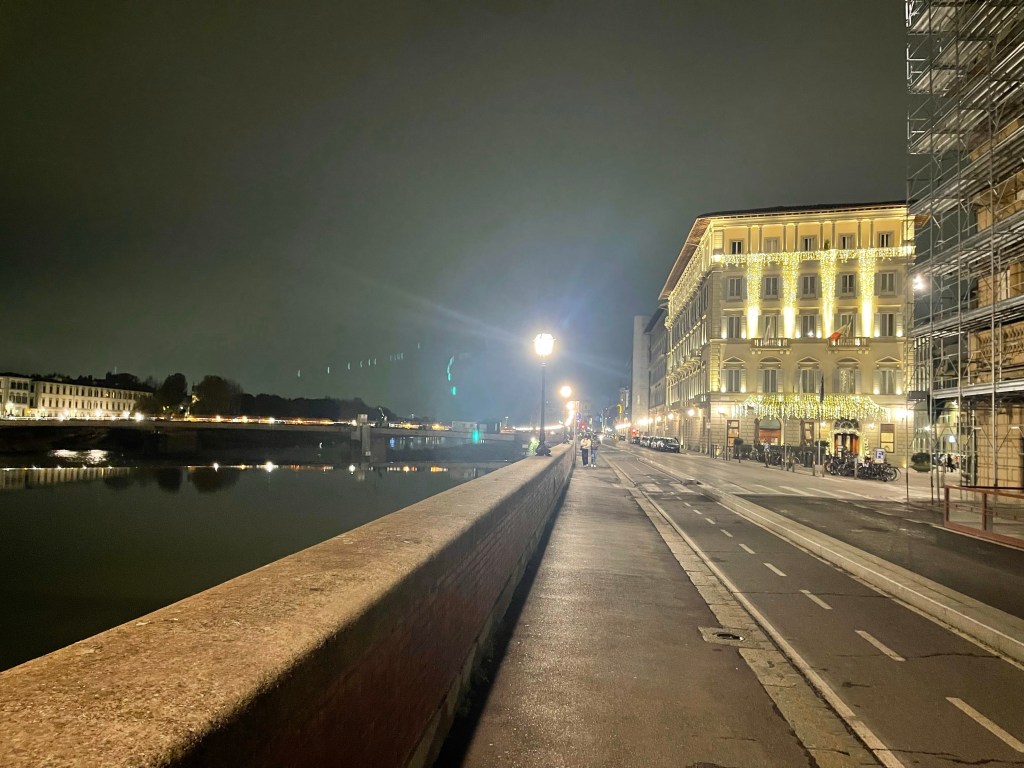
Paolo Desideri .It is the main venue of the Maggio Musicale Fiorentino , and hosts various types of musical and cultural events.It is located near the
Parco delle Cascine and the Firenze Porta al Prato station and is equipped with a hall with 1890 seats, intended for the opera theatre, an auditorium, named after the maestro Zubin Mehta , with 1200 seats, for symphony concerts and concert music. room, and an outdoor auditorium with 2000 seats work was undertaken from 2009-2021and opened on December 21, 2011

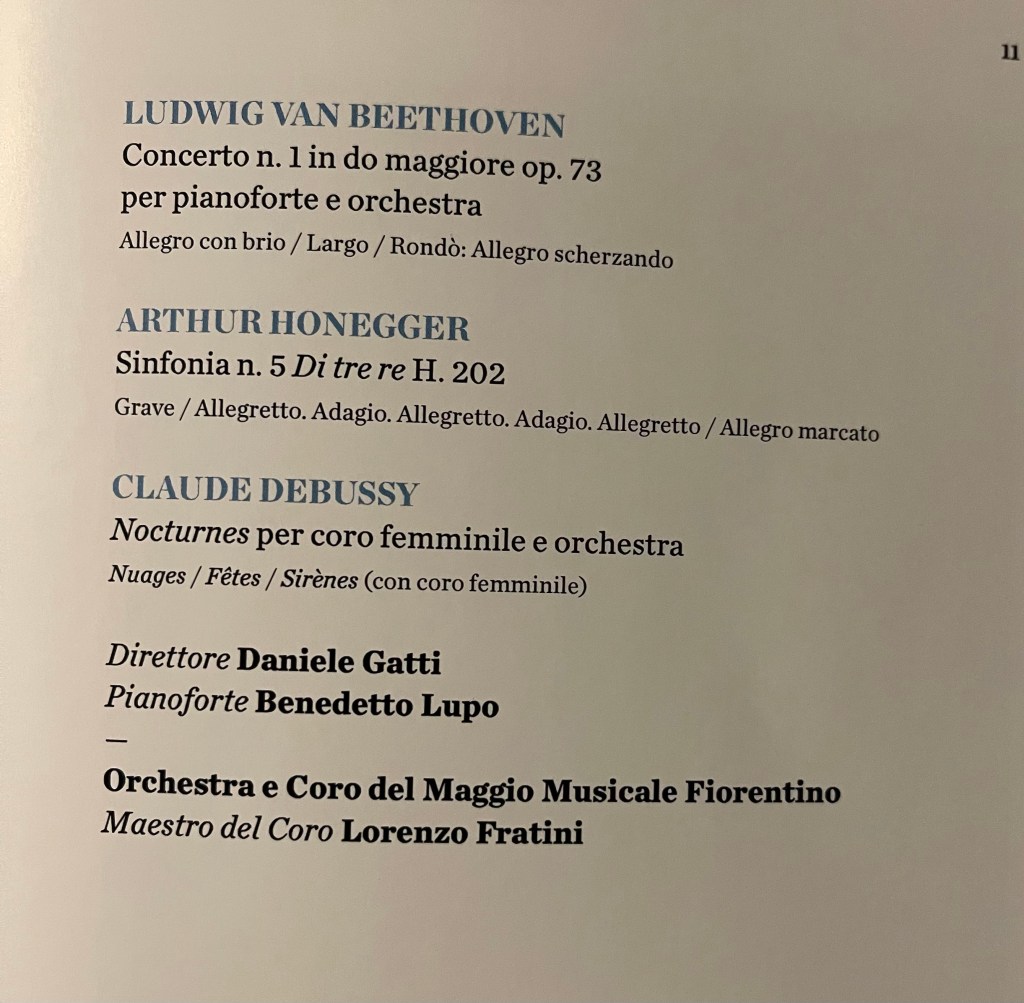
We came to hear Beethoven with Lupo and Gatti but it was Brahms that stole our hearts.
After a performance of Beethoven’s first piano concerto of dynamic brilliance and refined beauty Benedetto by great insistence was enticed into playing an encore.
It was as though the heavens had opened as he caressed the keys with an aristocratic sense of style and a kaleidoscopic range of sounds in the Brahms Intermezzo in A op 118 n.2.

The whispered opening almost unnoticeably grew in sound and weight to a sumptuously rich climax.The duet between voices in the central episode was of orchestral proportions as they wove together with a golden glow of warmth that seemed to entice us in to the sublime world that was evolving from Benedetto’s hands.The gradual disintegration of the ending was played with barely audible sounds that seemed to shimmer and gleam with poignant poetry in this visionary landscape.
A Beethoven where Benedetto had defined the opening with a driving rhythmic insistence that contrasted so well with the whispered legato of the central episode.
The Largo was played with such intimacy but at the same time the notes were projected into the upper reaches of the Zubin Mehta hall.
Daniele Gatti too was a sensitive partner who was able to create such an initimate atmosphere from the superb young players he had before him.
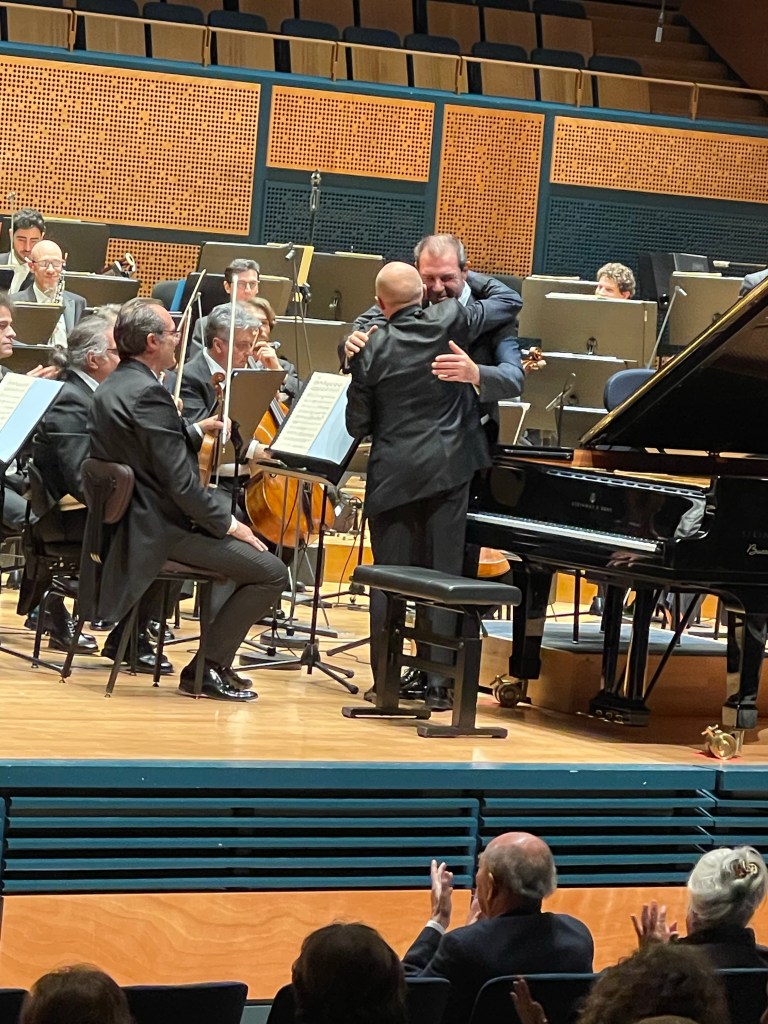
The rondo just shot from Benedetto’s hands where his artistry in knowing how to shape and sculpture the sounds brought this movement so vividly to life.
Mention should also be made of the delicacy of his playing in the ‘little’ cadenza of the first movement but even more beautiful were the final notes from the piano that he allowed to glisten as they flowed like jewels from his fingers before the final explosion from the orchestra brought to a conclusion a remarkably refined performance of what was infact Beethoven’s second Concerto!





https://christopheraxworthymusiccommentary.com/2018/02/23/benedetto-lupo-at-the-rfh-london/

Considered by international critics as one of the most interesting and complete talents of his generation, Benedetto Lupo made his debut at thirteen years of age with Beethoven’s First Concerto; he immediately earned distinctions in numerous international competitions, including the Cortot and the Ciudad de Jaén competitions in Europe, and the Robert Casadesus, Gina Bachauer, and Van Cliburn competitions in the United States. In 1992, as his intense performance activity brought him to the Americas, Japan, and Europe, he won the Terence Judd Award in London.
Benedetto Lupo has played on numerous occasions at New York’s Lincoln Center, Salle Pleyel in Paris, Wigmore Hall in London, Berlin’s Philharmonie, Palais des Beaux Arts in Brussels, the Tanglewood Festival, the Lanaudière Festival, the Oxford Festival, the International Festival in Istanbul, the Enescu Festival in Bucharest, and at Copenhagen’s Tivoli Festival. He has been guest of the leading Italian theatres –Teatro alla Scala in Milan, San Carlo in Naples, La Fenice in Venice, the Teatro Comunale theatres of Bologna and Florence, Turin’s Teatro Regio, Teatro Verdi in Trieste, Teatro Carlo Felice in Genoa, Teatro Filarmonico in Verona, Teatro Massimo in Palermo, Teatro Lirico in Cagliari, and Teatro Petruzzelli in Bari – and of the major national concert institutions, including the Orchestra dell’Accademia di S. Cecilia in Rome, the RAI National Symphony Orchestra, the Orchestra Verdi in Milan, I Pomeriggi Musicali, the Orchestra Regionale Toscana, Unione Musicale in Turin, La Società del Quartetto in Milan, the Accademia Filarmonica Romana, Amici della Musica in Florence, Festival Pianistico Internazionale in Bergamo and Brescia, and the “Micat in Vertice” season of the Accademia Musicale Chigiana.
Of the world-famous orchestras he has played with, in North and South America, mention may be made of the Philadelphia Orchestra, the Chicago Symphony, the Boston Symphony, the Los Angeles Philharmonic, the Baltimore Symphony, the Orchestre Symphonique de Montréal, the New World Symphony, the Saint Louis Symphony, the Seattle Symphony, the Vancouver Symphony, Les Violons du Roy, and the Orquestra Sinfonica Brasileira; in Europe, he has performed with the London Philharmonic, Gewandhaus Orchester in Leipzig, the Rotterdam Philharmonic, the Hallé Orchestra, the Deutsches Symphonie-Orchester, the Stuttgarter Philharmoniker, the Orquesta Nacional de España, the Orchestre Philharmonique de Monte Carlo, the Orchestre Philharmonique de Liège, the Bergen Philharmonic, the Slovak Philharmonic, the Orchestre du Capitole de Toulouse, and the Bruckner Orchester Linz. The conductors he has worked with most frequently include Yves Abel, John Axelrod, Piero Bellugi, Umberto Benedetti Michelangeli, Fabio Biondi, Daniele Callegari, Christoph Campestrini, Aldo Ceccato, Nicholas Collon, Yoram David, Vladimir Delman, Gabriel Feltz, Gabriele Ferro, Ed Gardner, Andrew Grams, Giancarlo Guerrero, Lü Jia, Vladimir Jurowski, Jean-Jacques Kantorow, Stanislav Kochanovsky, Pavel Kogan, Bernard Labadie, Louis Langrée, Marko Letonja, Alain Lombard, Nicholas McGegan, Fabio Mechetti, Juanjo Mena, Kent Nagano, Daniel Oren, George Pehlivanian, Zoltan Pesko, Michel Plasson, Josep Pons, Carlos Miguel Prieto, Lawrence Renes, Corrado Rovaris, Joseph Silverstein, Stanislaw Skrowaczewski, Michael Stern, Gregory Vajda, Alexander Vedernikov, Antoni Wit, Hugh Wolff, Kazuki Yamada, and Xian Zhang.
In addition to his recordings for numerous radio and television broadcasters in Europe and the United States, Lupo has recorded for TELDEC, BMG, VAI, NUOVA ERA, and the complete works for piano and orchestra by Schumann for ARTS. In 2005, a new recording of Nino Rota’s Concerto Soirée was released for Harmonia Mundi, winning no fewer than five international prizes, including the “Diapason d’Or.”
A pianist with an enormous repertoire, Benedetto Lupo can also boast a major chamber and teaching career; he holds master classes at major international institutions and is often invited to the juries of prestigious international piano competitions. Since the 2013/2014 academic year, he has been professor of piano in the master courses at the Accademia Nazionale di Santa Cecilia, where, in December 2015 he was named “Active Academician.”

 ChristopherAxworthy-MusicCommentary