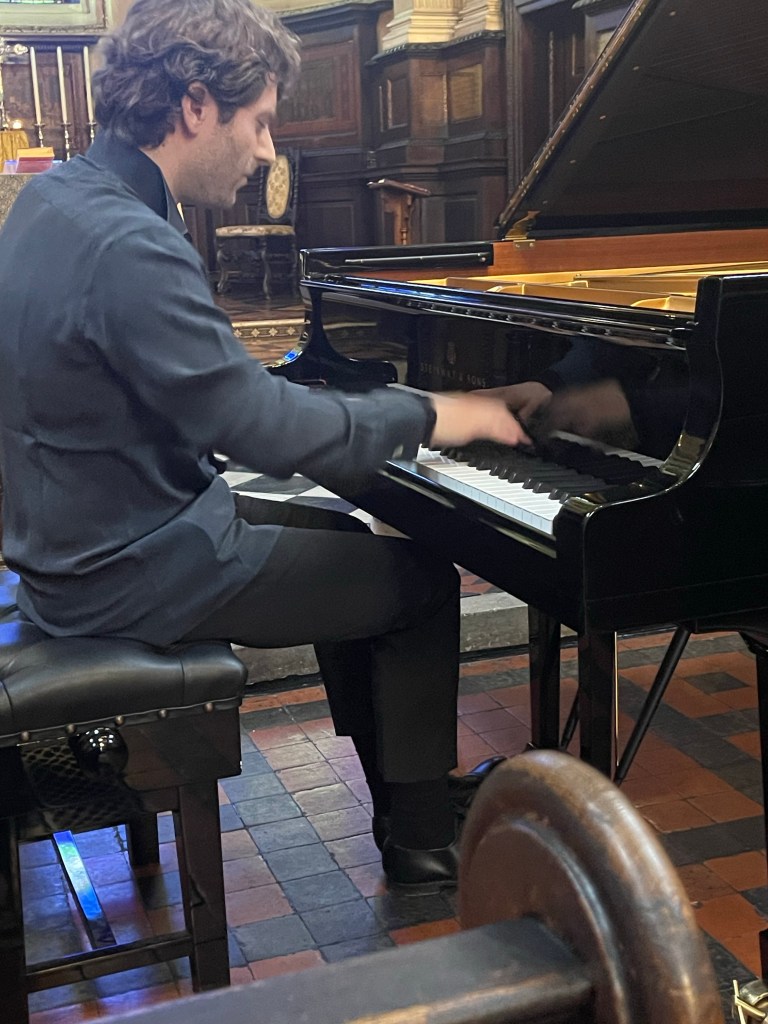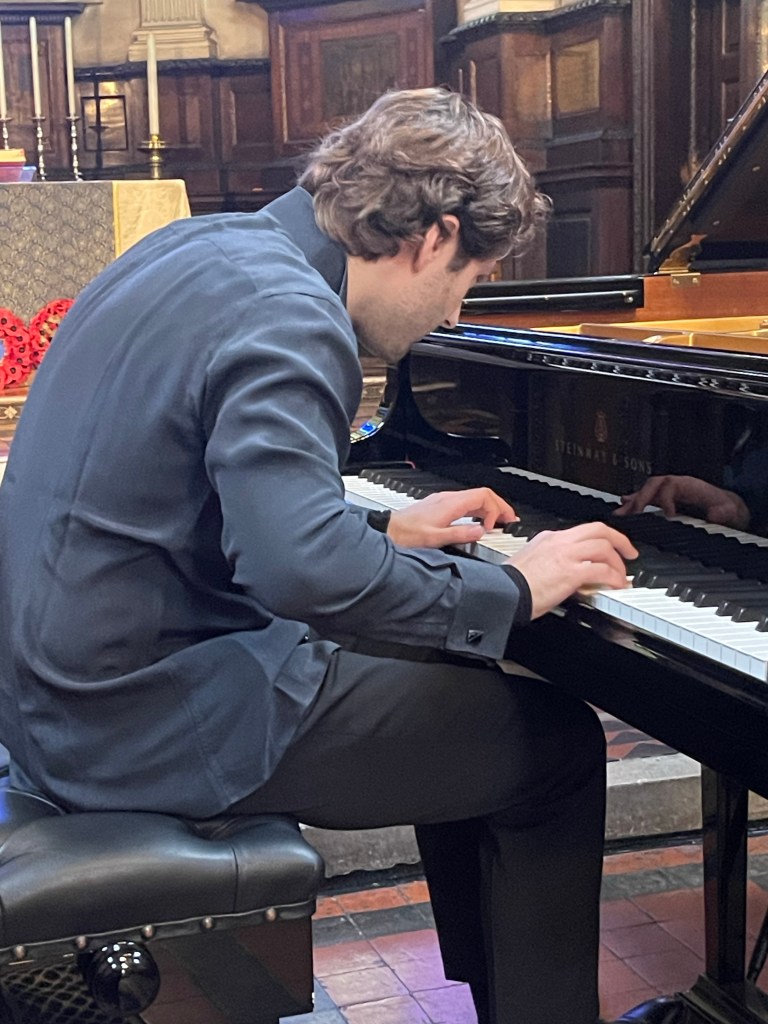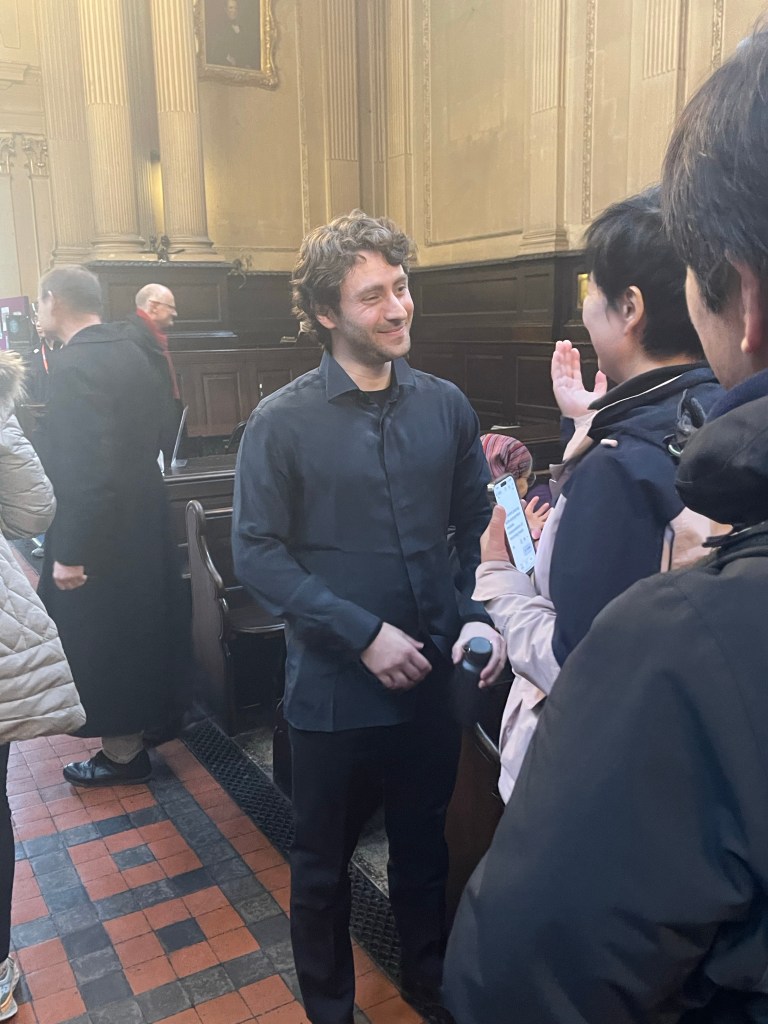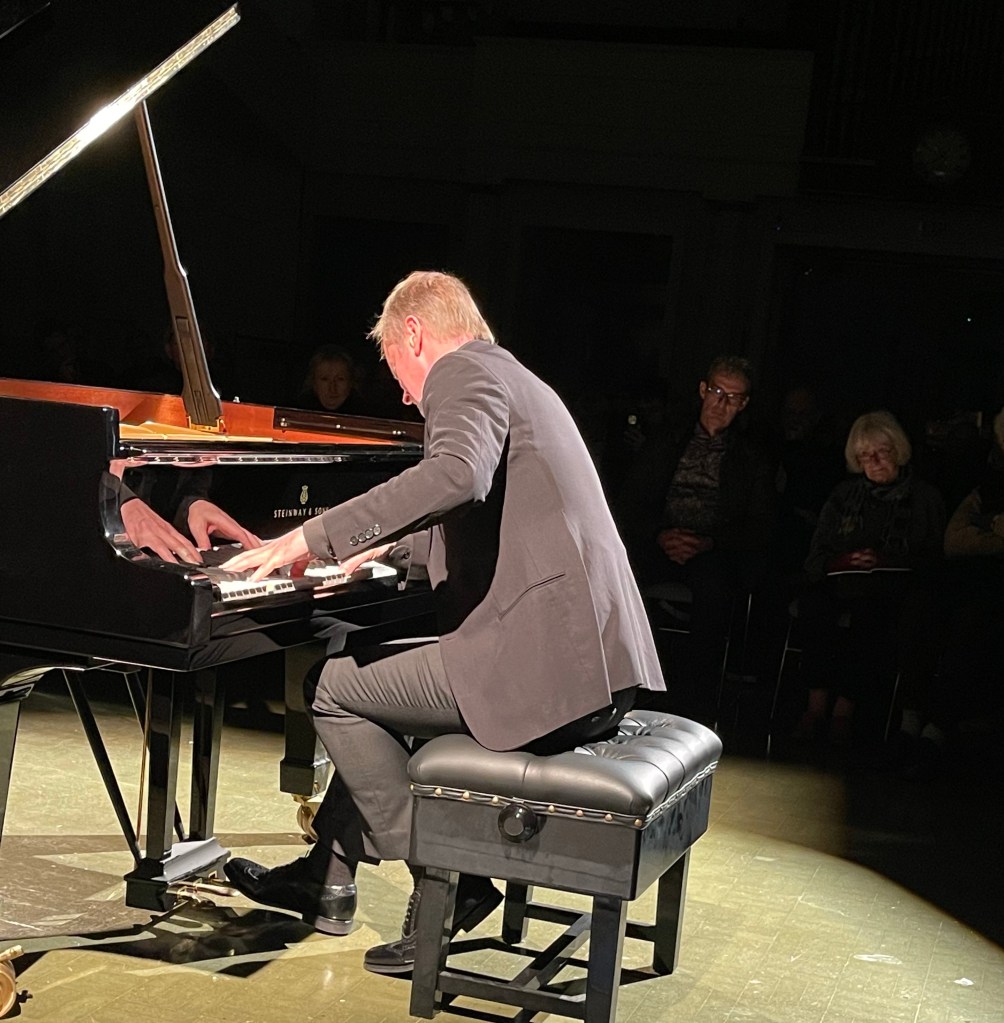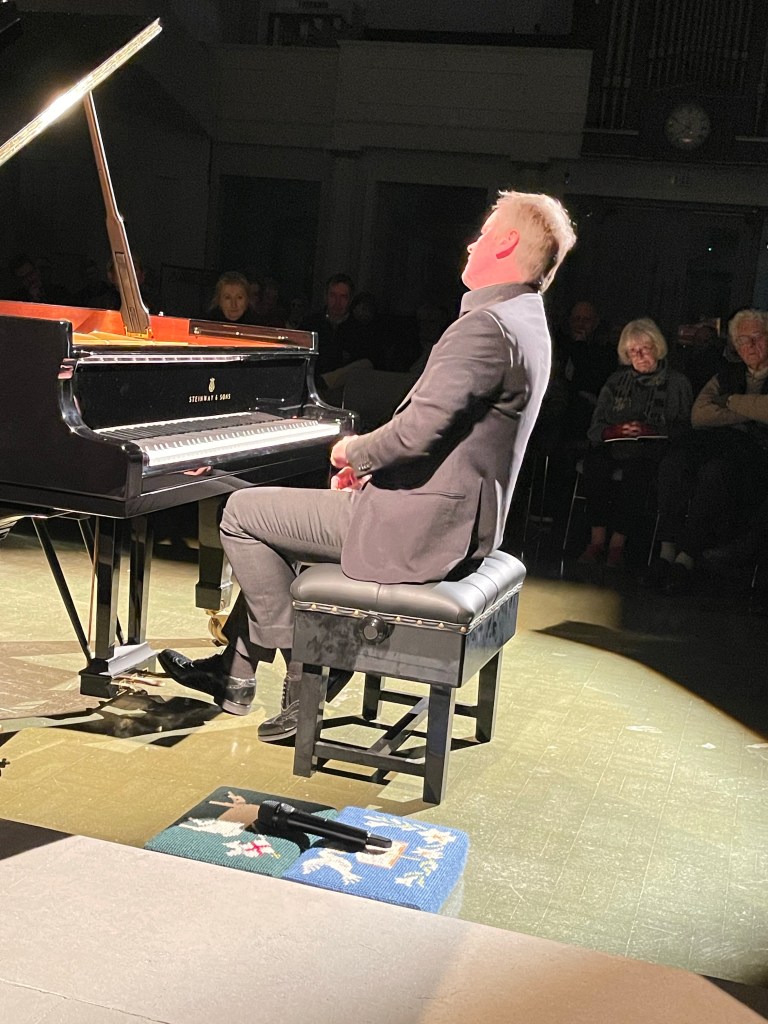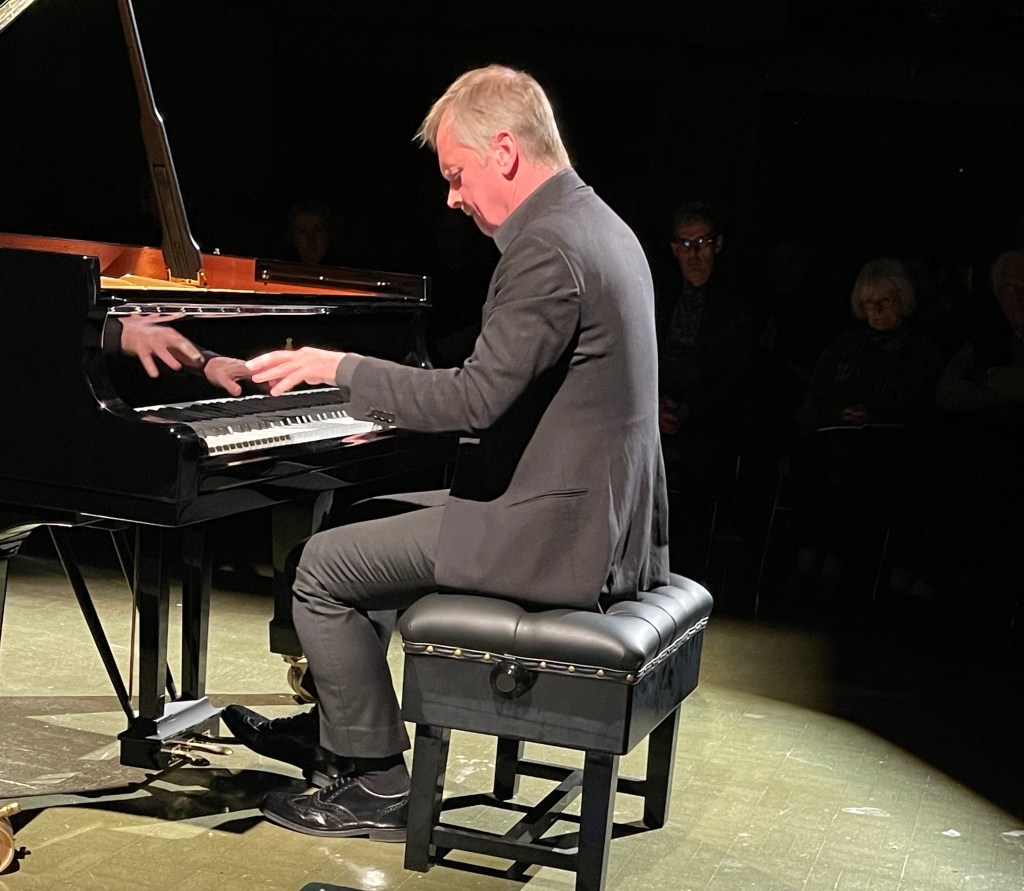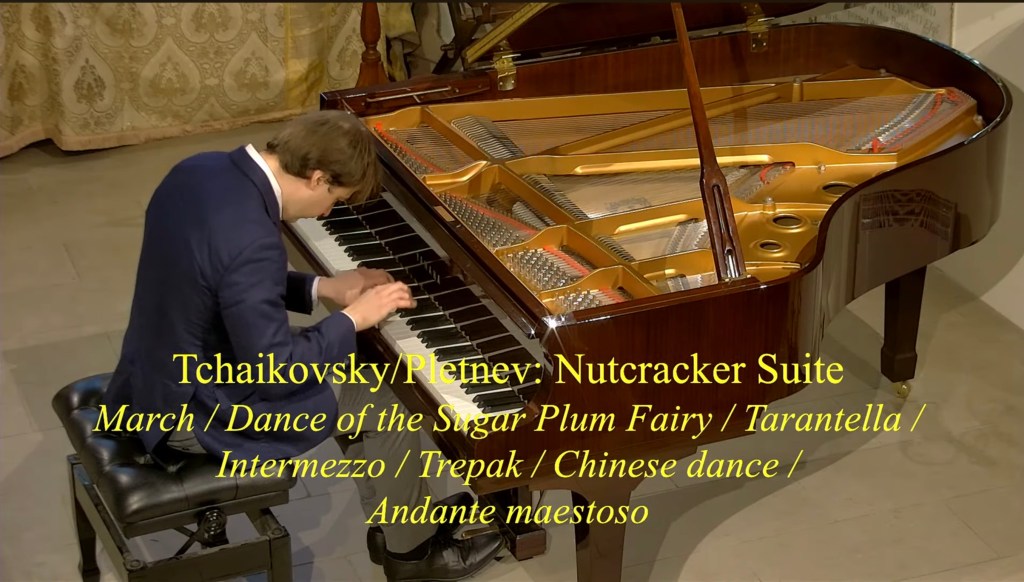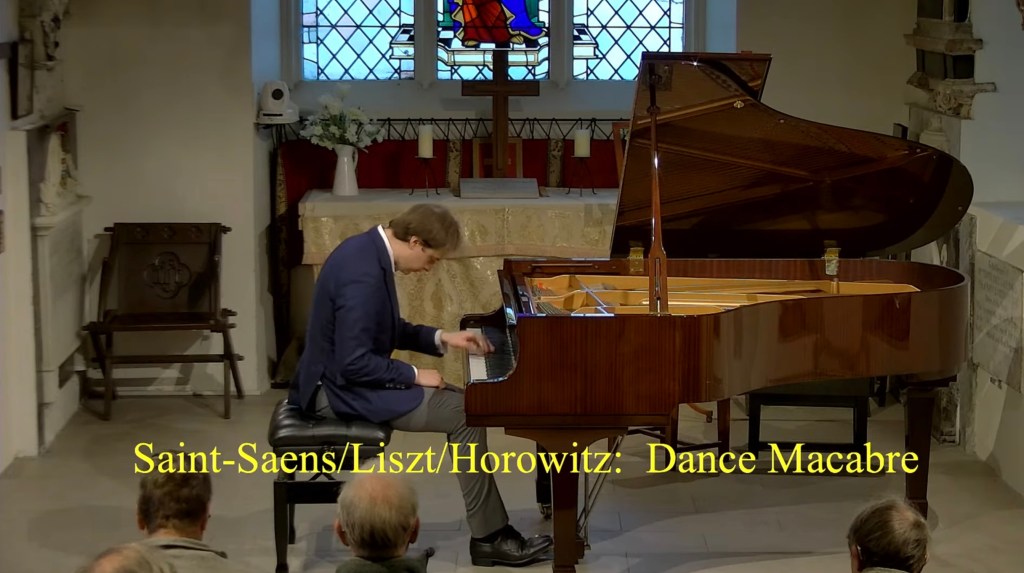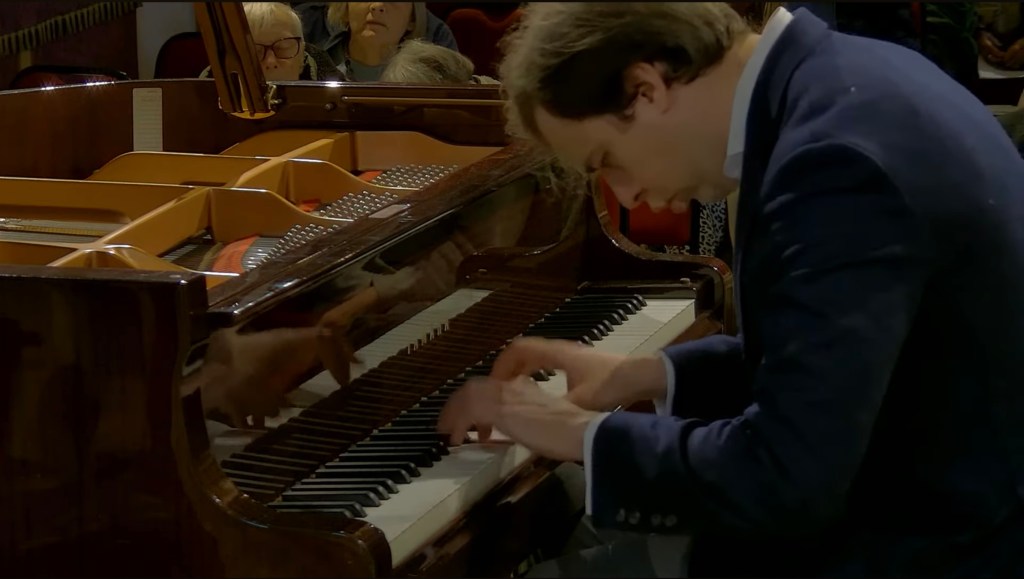
Sofya Gulyak’s Poetic mastery at Wimbledon Festival

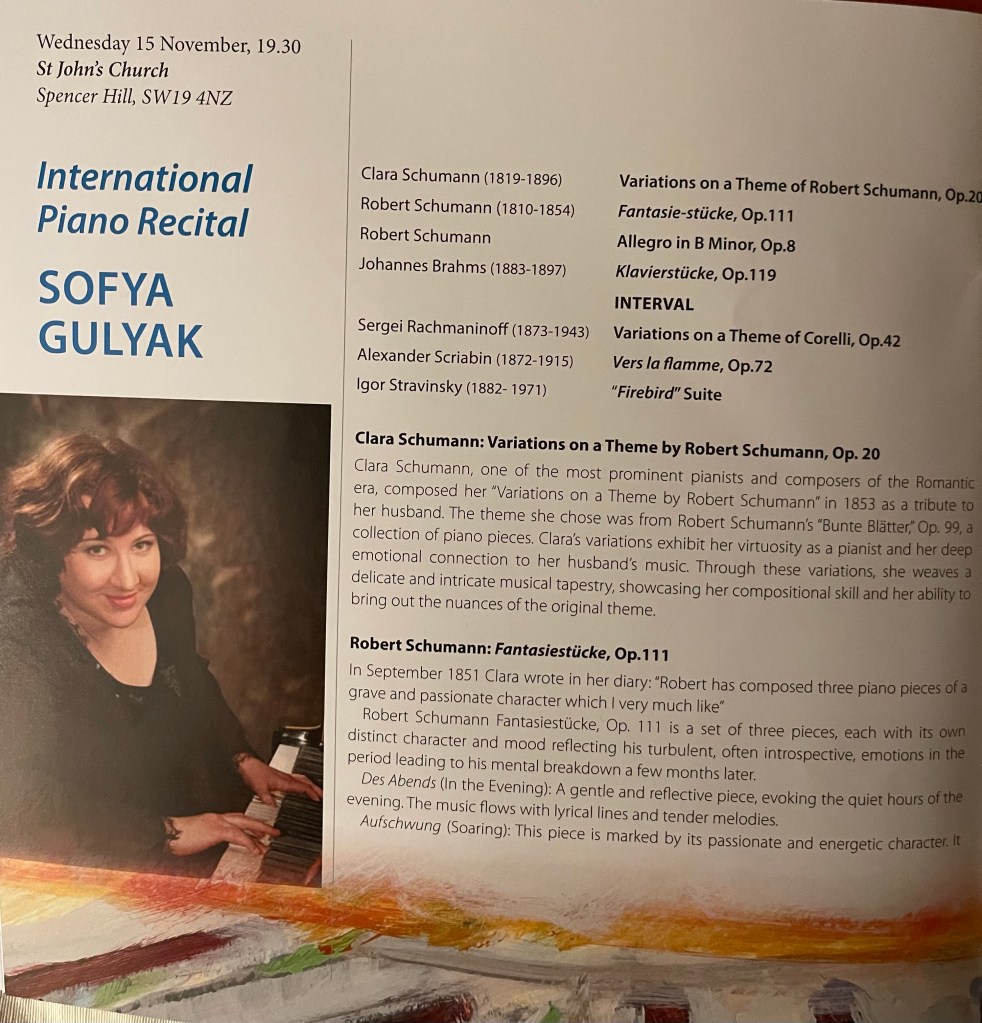
International Piano Recital:

Sofya Gulyak

Clara Schumann: Variations, op.20
Schumann: Fantasie-stücke op.111; Allegro op.8
Brahms: Klavierstücke op.119
Rachmaninoff: Corelli variations op.42
Scriabin: ‘Vers la flamme’ op.72
Stravinsky: ‘The Firebird’

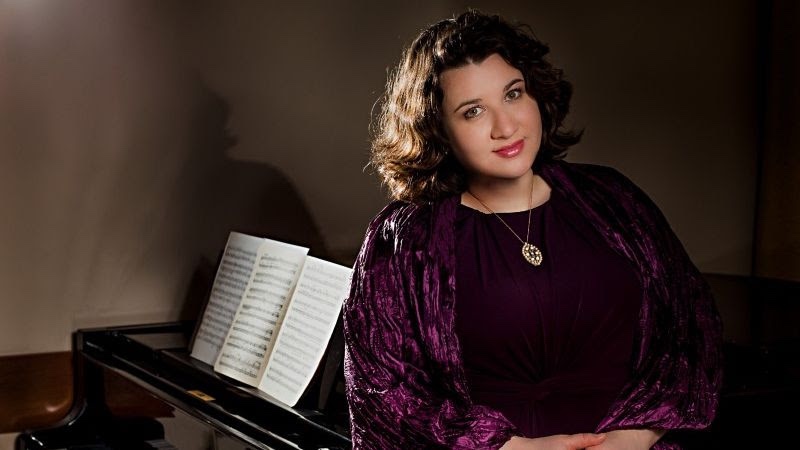
Russian pianist Sofya Gulyak, has been hailed as “La Grande Dame du Piano” by La Scène. Sofya was the 1st prize-winner of the celebrated Leeds International Piano Competition in 2009, the first woman in the history of the competition to do so.

Since then Sofya has garnered international praise:

‘A Rach Star is Born…’ Washington Post
‘Phenomenal Sofya Gulyak’ Ruck Muzychny
‘Formidable Artist’ The Guardian

Sofya Gulyak the mastery and poetic vision of a great artist

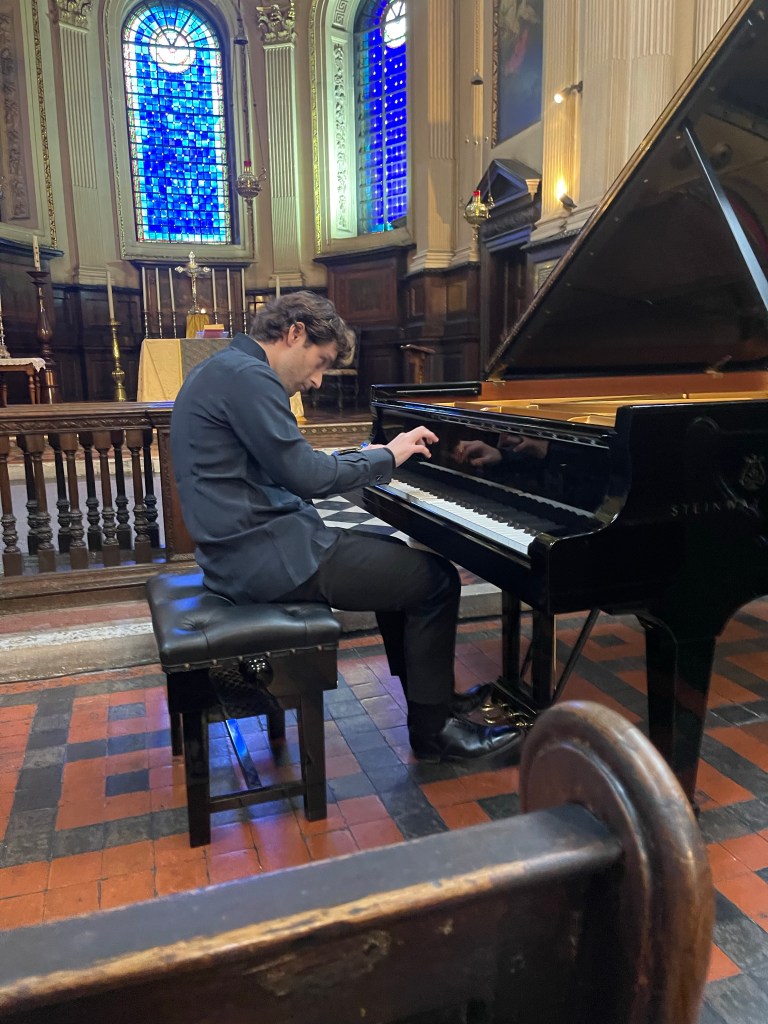
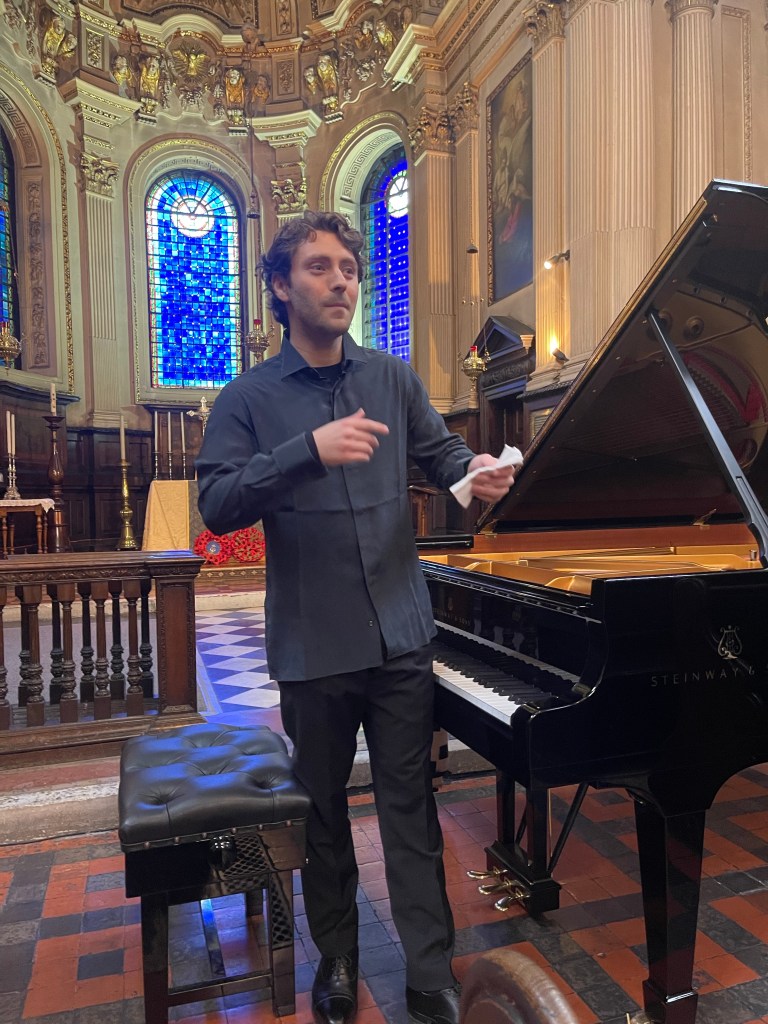
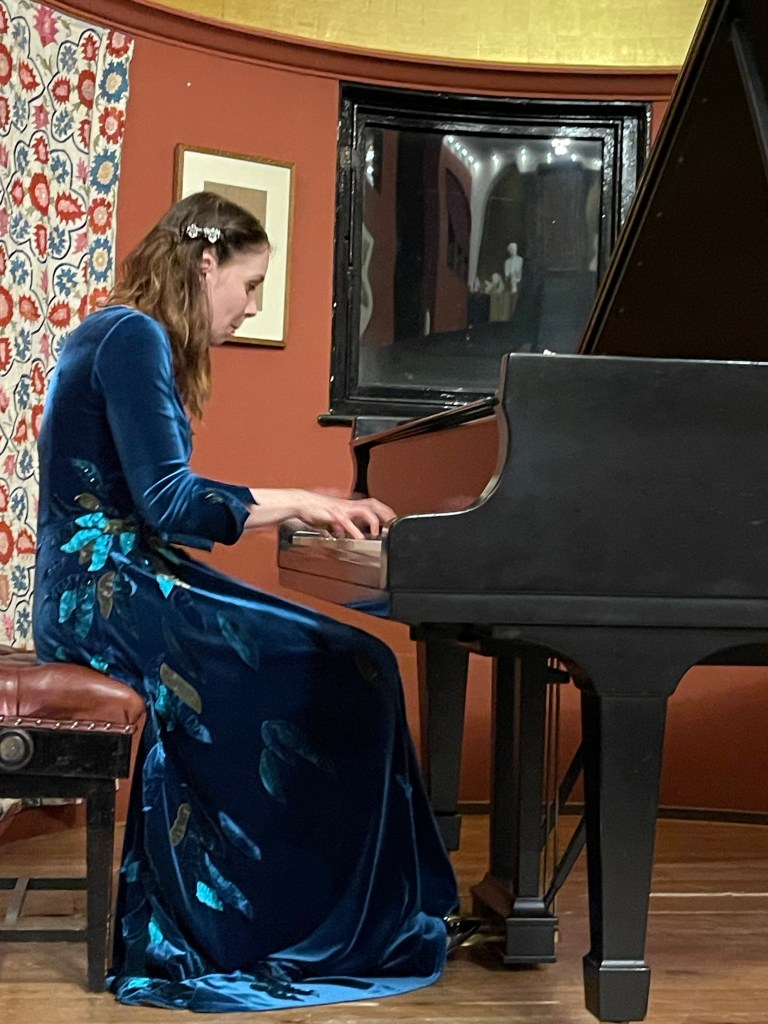
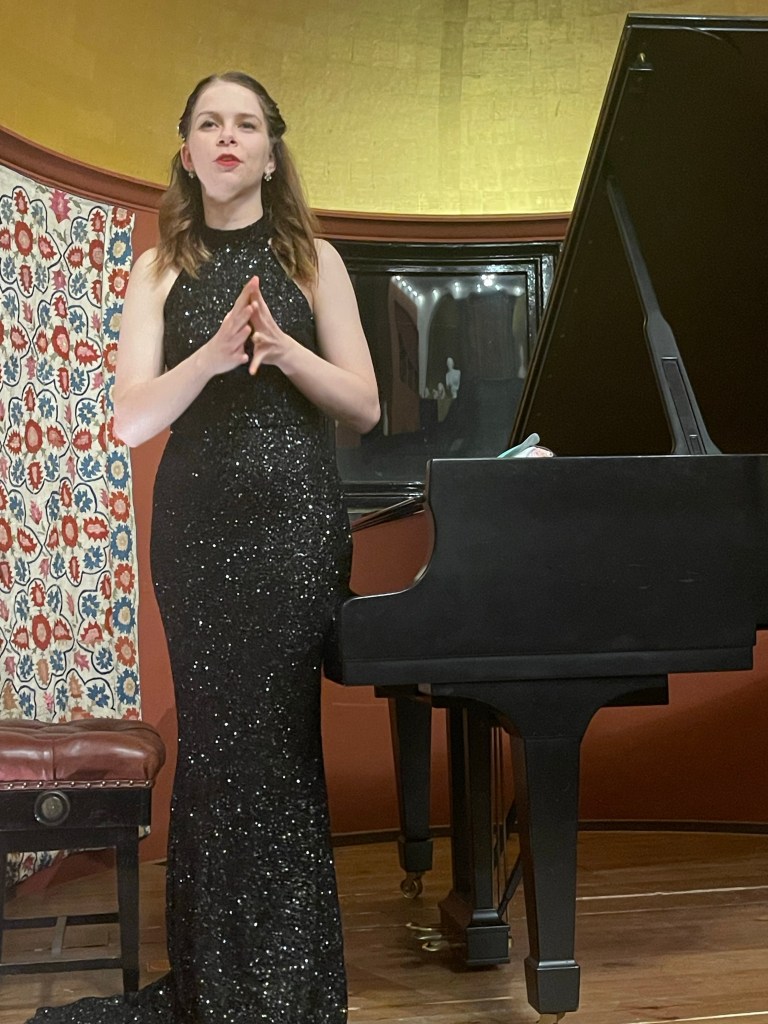
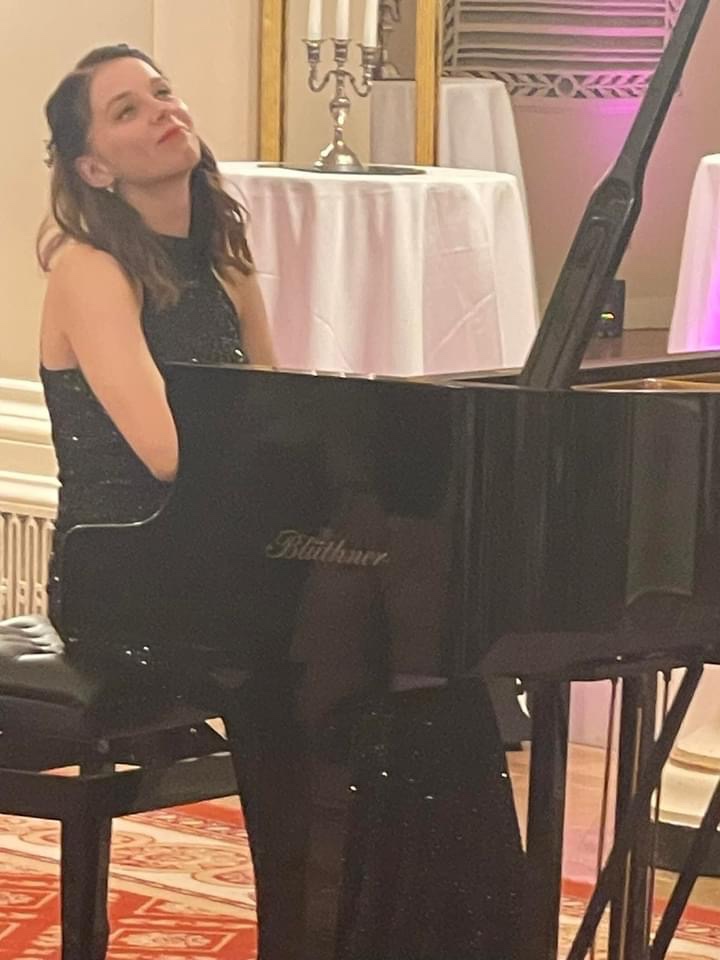
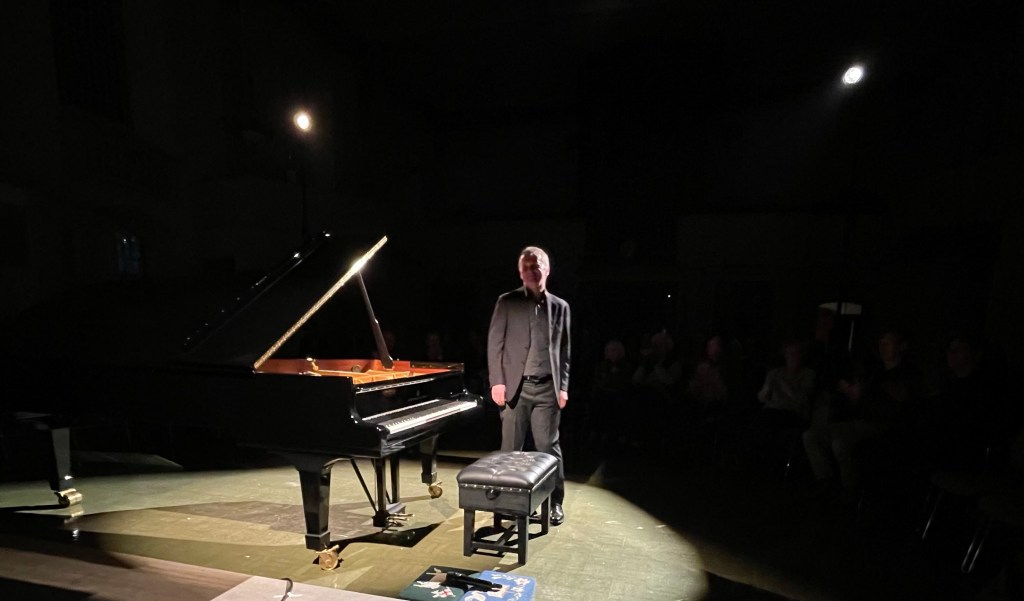
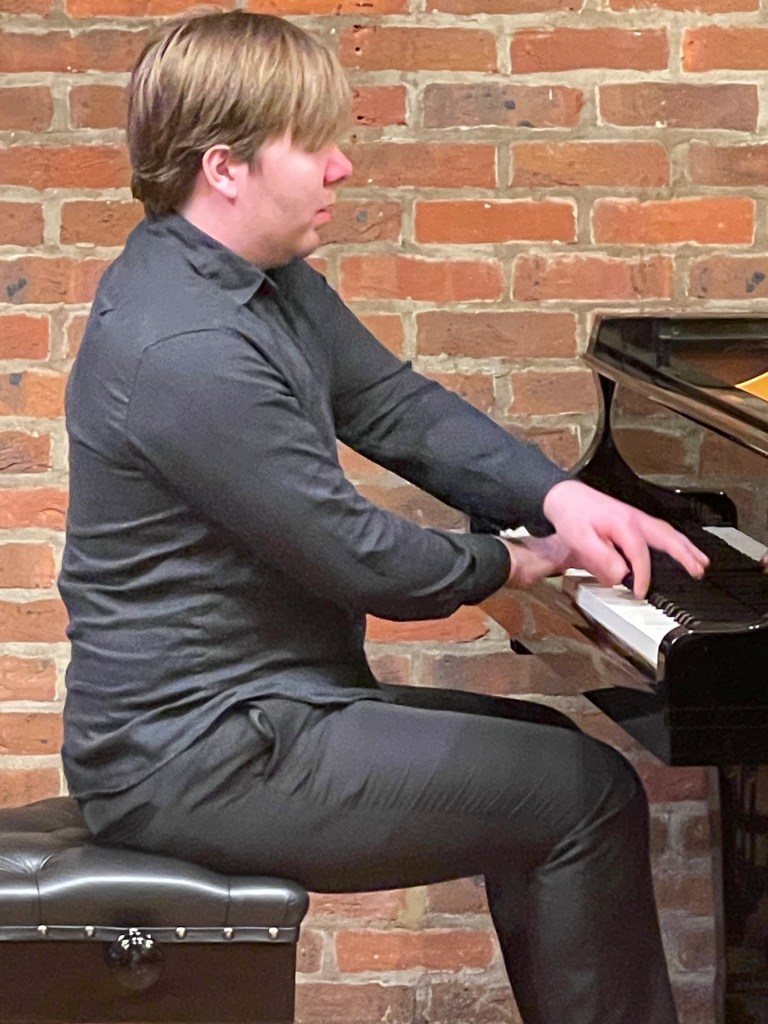
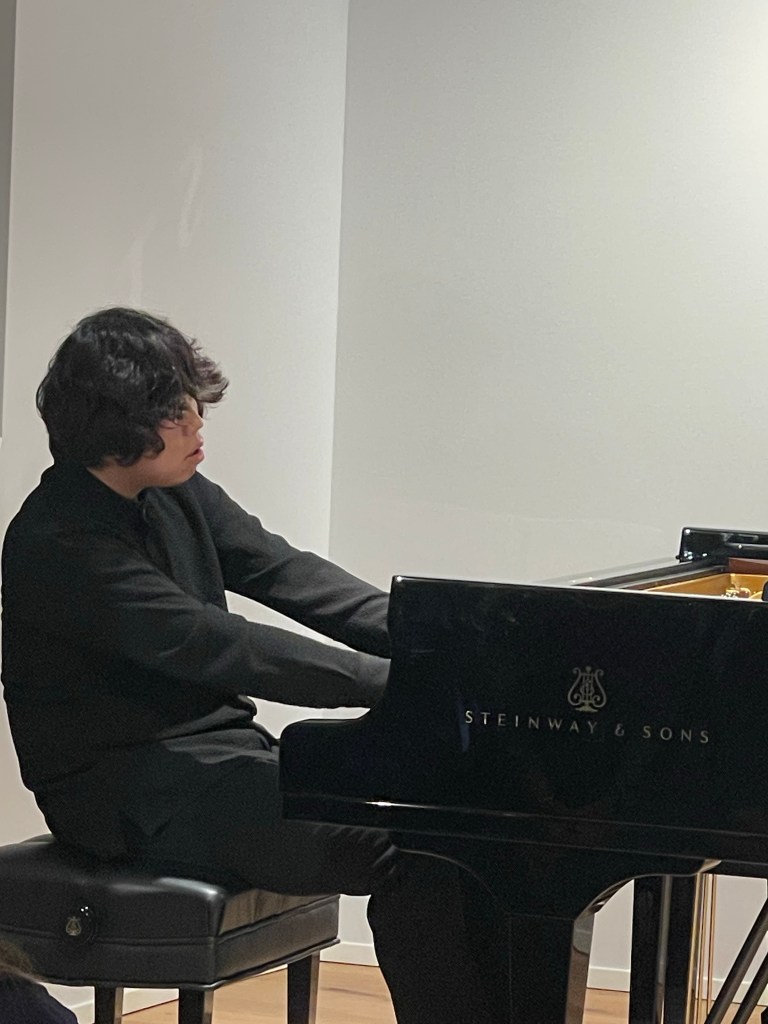
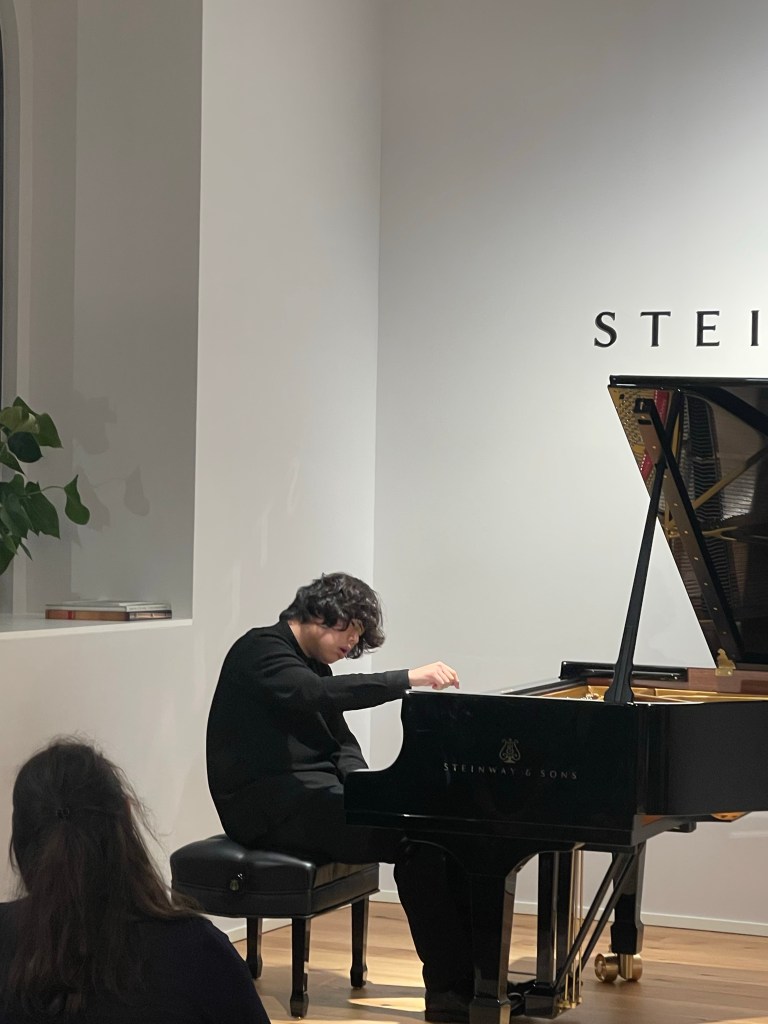
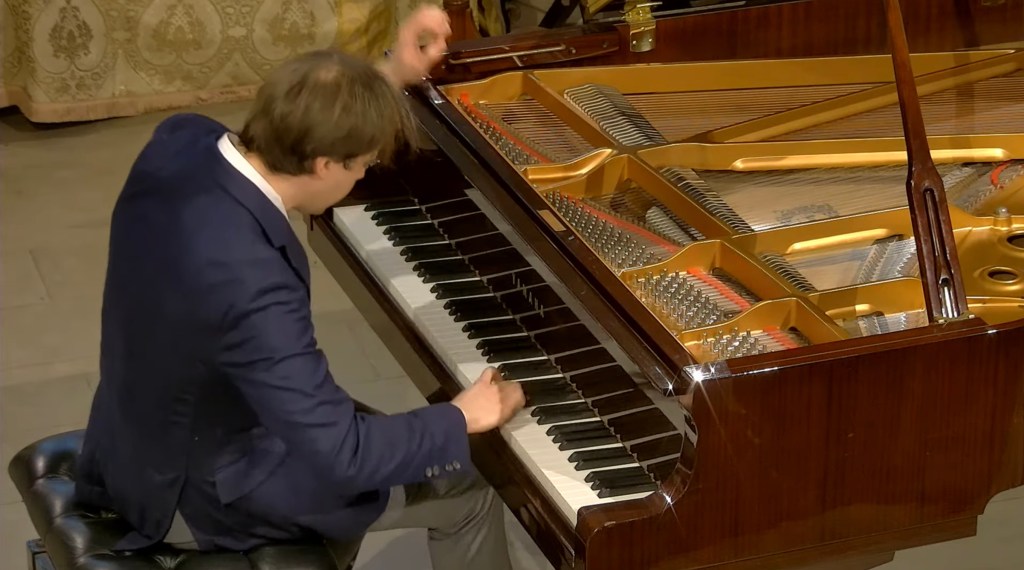
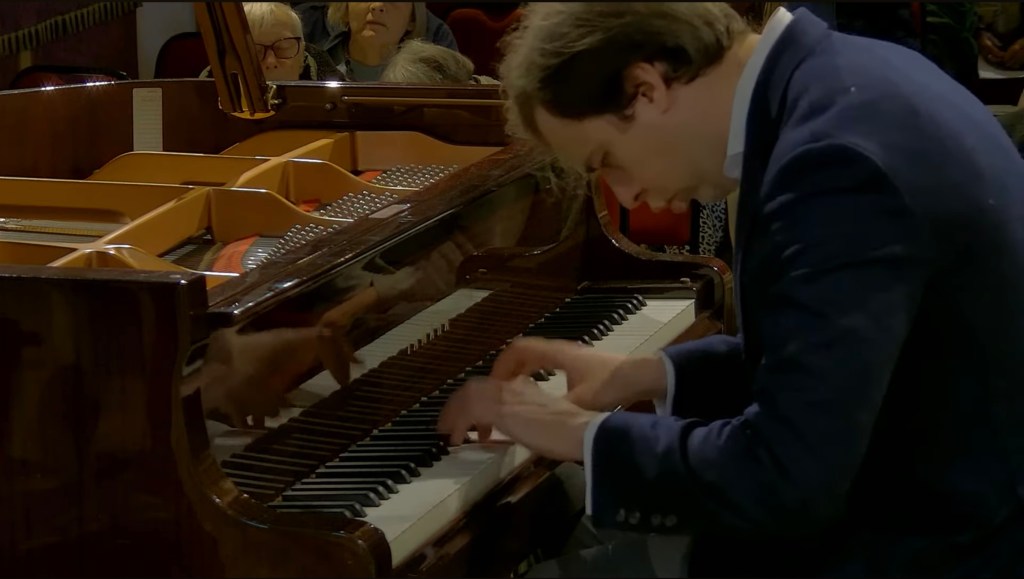
Sofya Gulyak Sofya at the Wimbledon festival with playing of a poetic mastery that was a lesson for all.Not only to hear but to see and it is no coincidence that many of her students from the RCM were present today -‘see it,say it sorted ‘ takes on a different meaning now !
Following on from that eclectic master Louis Lortie who played last season in the International piano recital that is reserved each year for the greatest of musicians .
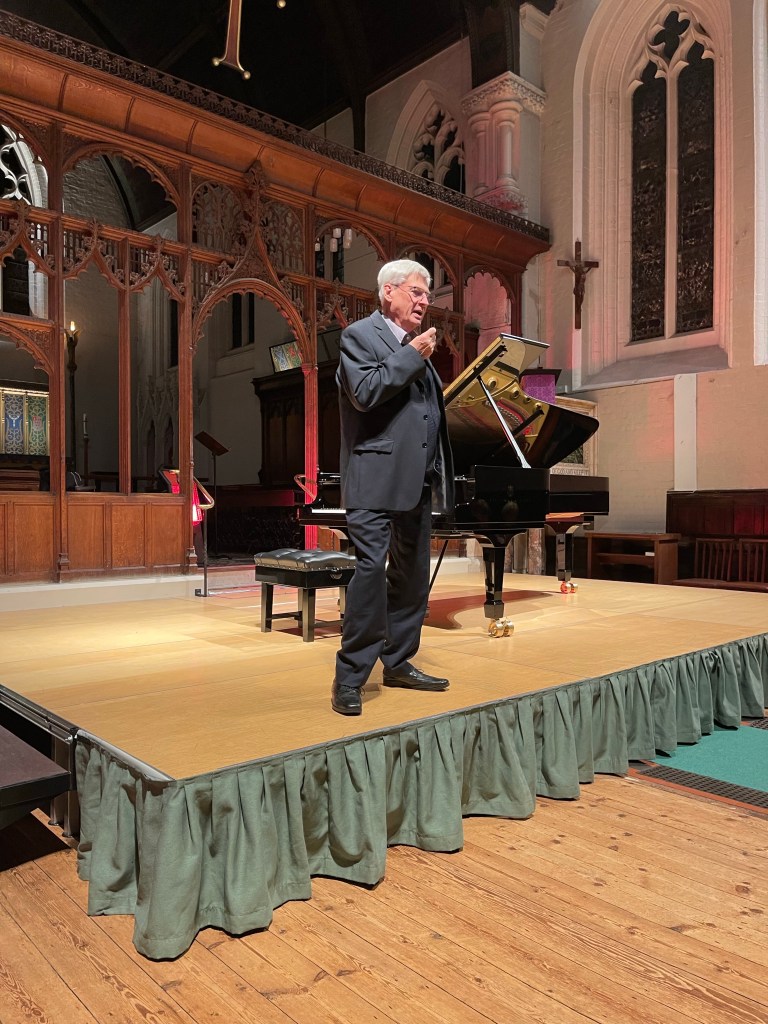
Anthony Wilkinson Founder and Artistic Director of WIMF

A month long festival organised by Anthony Wilkinson which shows his musicianly intent inviting two of the most refined and intelligent musicians on the International scene.Joining an eclectic group of musicians amongst whom this year the Juilliard Quartet.The opening concert had been Handel’s Israel in Egypt which takes on a new and harrowing significance in these troubled times!Wilkinson is obviously a man for all season -Chapeau indeed for his courage in bringing already 15 seasons of great music to Wimbledon…………..
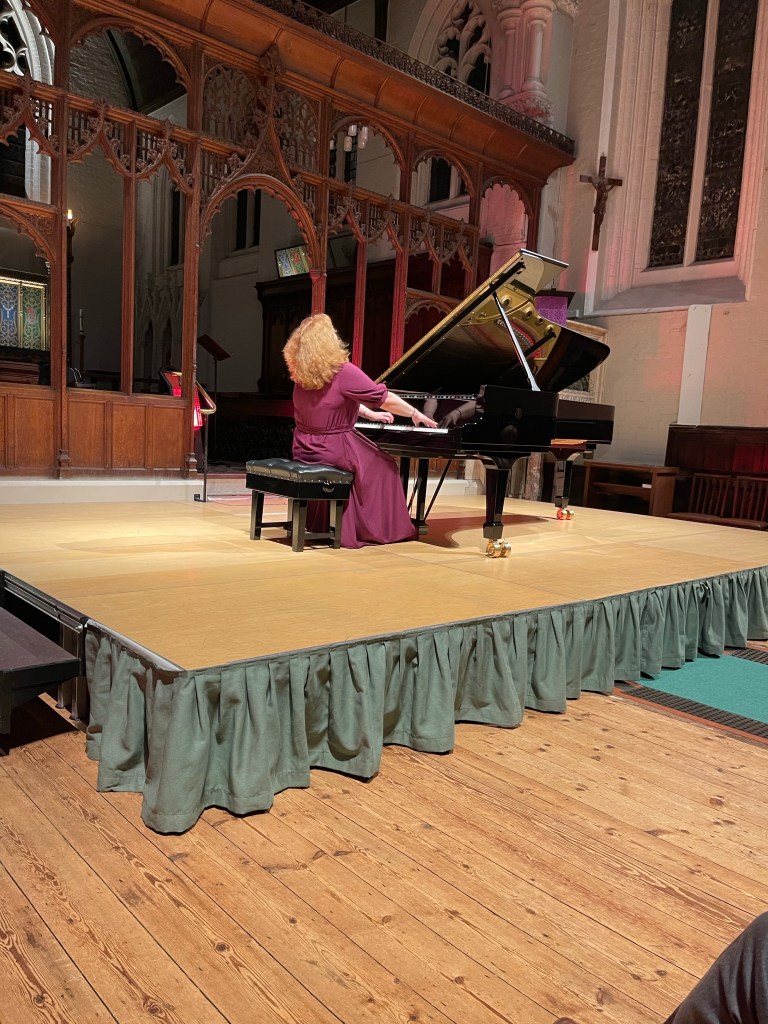
It was interesting to watch Sofya as she played an eclectic programme of rarely played works by great composers -and their wives!A Guinness book of records number of notes if one was to count the black dots on the page but the marvel was that in Sofya’s hands these became streams of sounds of varying intensity.From the seemless ease with which Clara embroiders her husband’s theme that he claimed had been send by the angels.The same theme that Brahms was to use too and it creates a question mark over that triangle of human relationships.Schumann’s Fantasie-stuck op.111 ( that I have not heard since Cherkassky used to play them as an opener to the Liszt Sonata.)A stream of sounds that weave their way to the Schubertian second piece that was played with delicacy and luminosity.
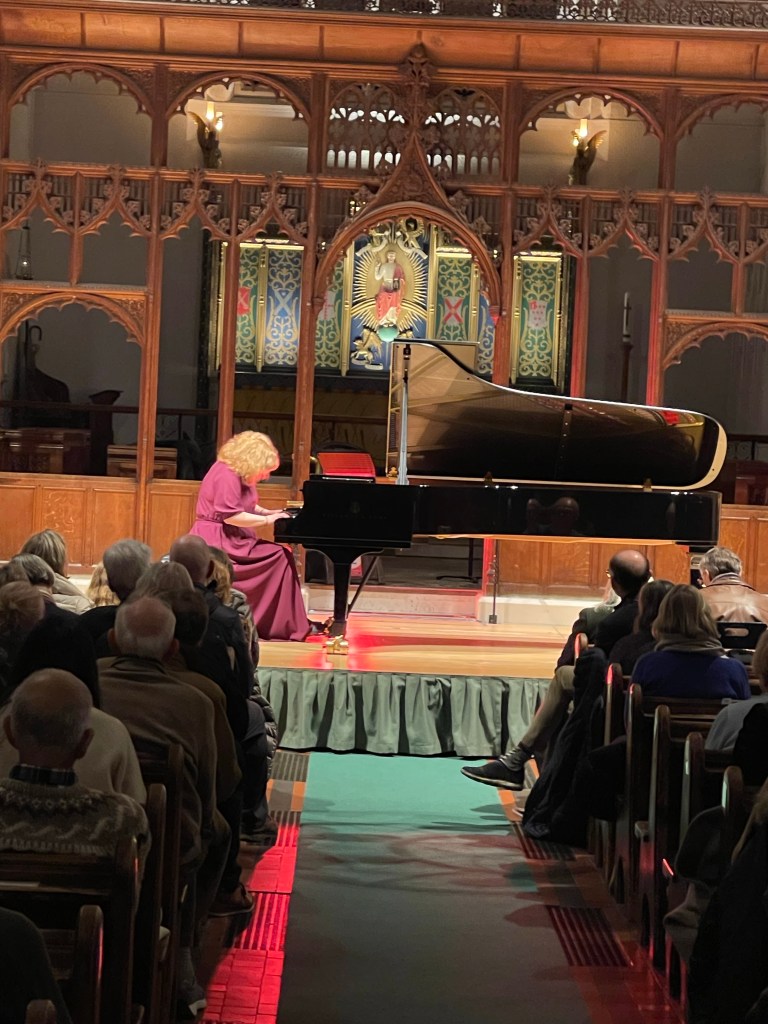
But it was in the Allegro op 8 that one could appreciate the true mastery of Sofya as she literally waded through the enormous amount of notes with an ease and naturalness like someone swimming.She was swimming in a stream of sounds where her natural movements were as beautiful as the sounds she was squeezing out of the keys.Agosti a disciple of Busoni always told his students that you must have fingers of steel but wrists of rubber.Pletnev recently likened the art of touch as if squeezing a strawberry extracting the juice out of every key.Because it is such a natural movement the shape of the arm and hand is the same shape of the music on the page so in a sense it seems as though the music is leading the pianist taking her by the hand into the direction she should go.It all become so natural and seemingly effortless but I know that to arrive at this state there are many many hours of practice needed each day.In this rarely played Allegro there was a scintillating display of jeux perlé as cascades of notes seemed to swarm over they keys that then miraculously would turn into melody.

Her control of sound in the four Brahms pieces op 119 was quite extraordinary with her delicacy and purity of sound with infinite inflections that allowed these intimate confessions to seem as though improvised .The nobility and grandeur of the Rhapsody contrasted with the etherial beauty of the grazioso central episode.

After the interval we had three works by Russian composers in which Sofya made the piano sound like a full orchestra .An extraodinary range of sound in the twenty Corelli variations where beauty and virtuosity combine in a wonderful magic box of colour and imagination .There was a Streichian insistence to the obsessive motif of ‘ Vers la flame’ that Sofya played with enormous control as the music built up in intensity to its final explosion where it burns itself out.
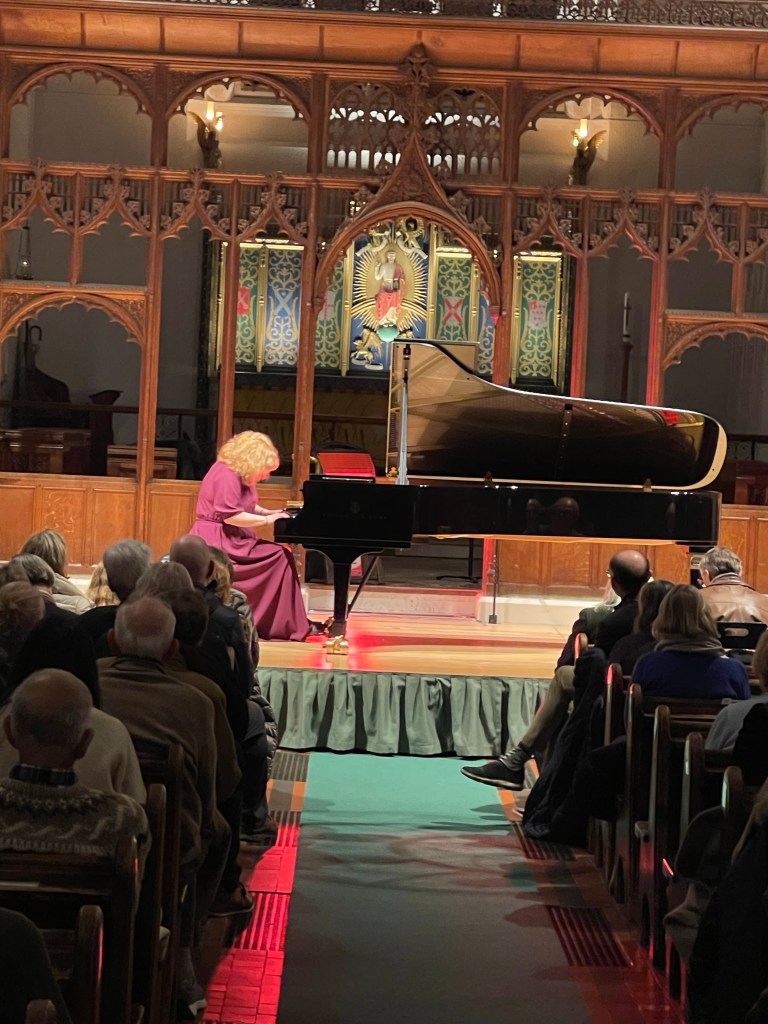
Agosti’s famous transcription of the ‘Firebird’ entered so quietly as it built to a tumultuous climax.There were moments of breathtalking virtuosity mingled with moments of ravishingly whispered sounds.The build up to the end was a tour de force of control and passionate involvement and earned her a spontaneous standing ovation.
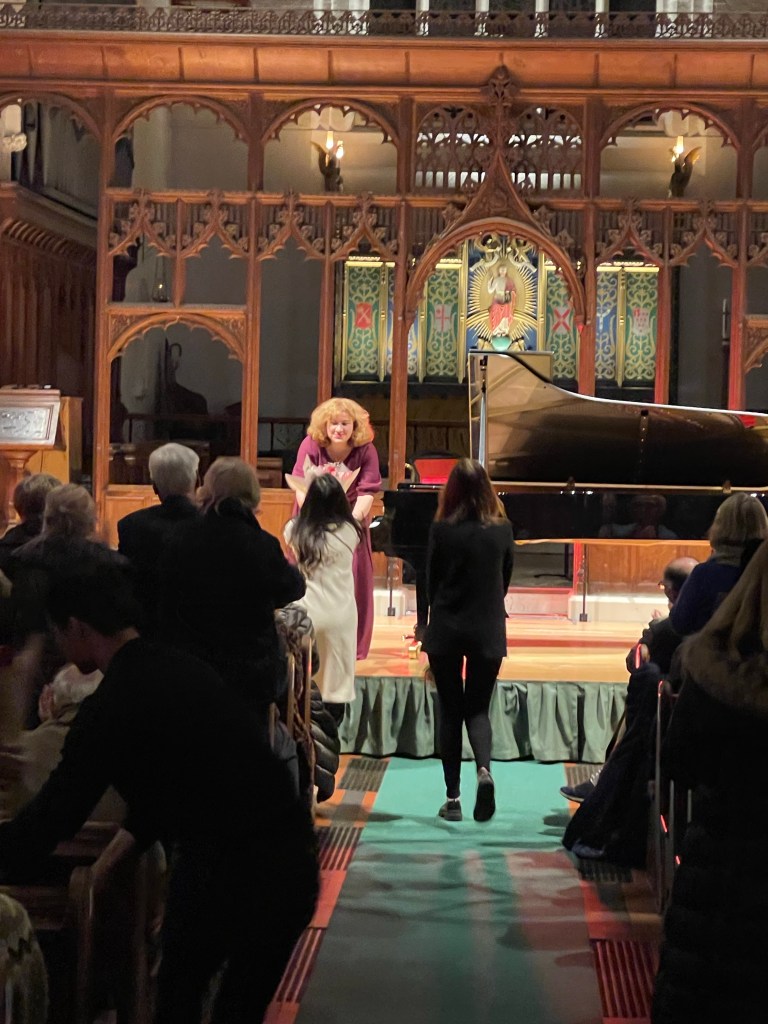
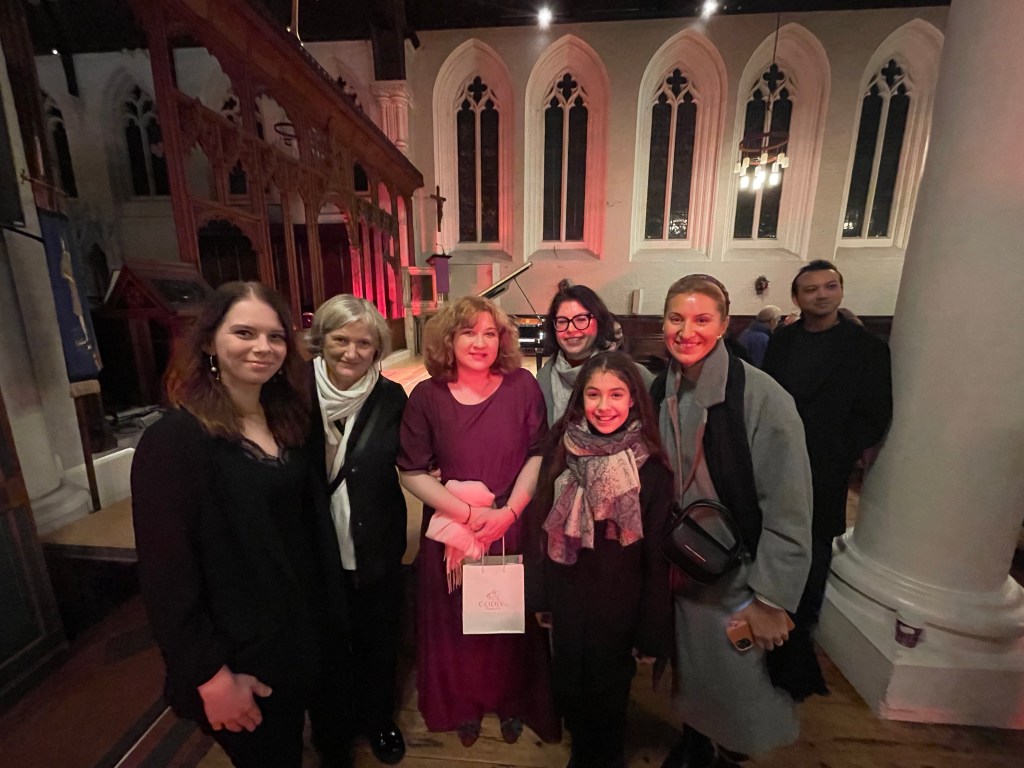
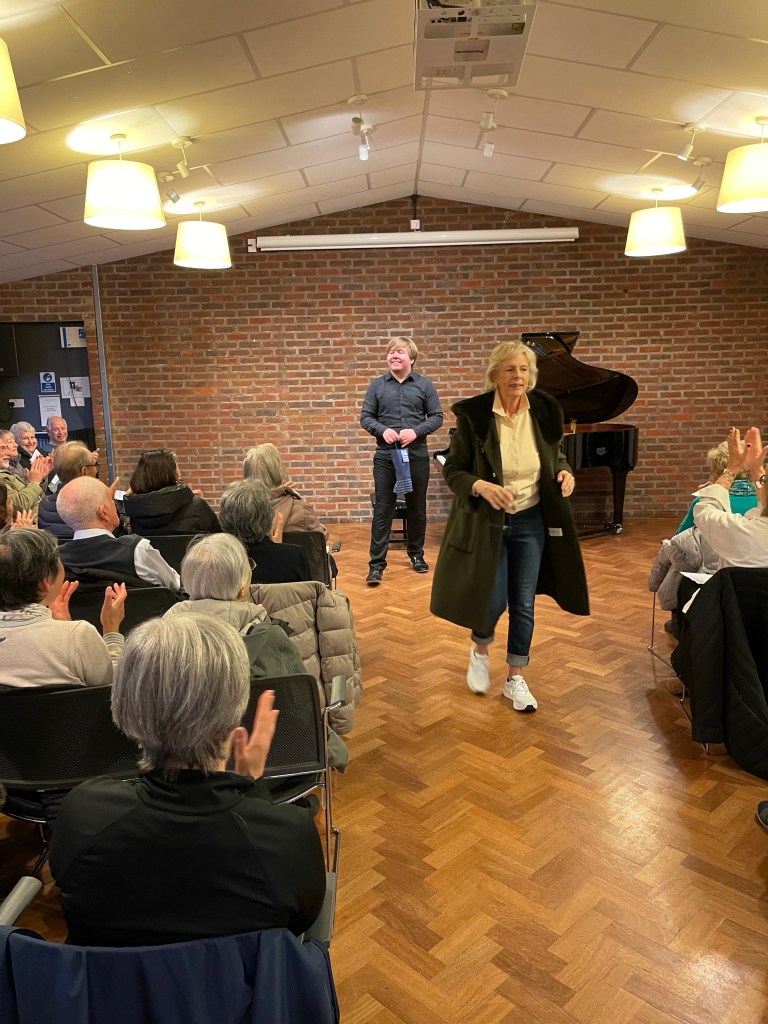
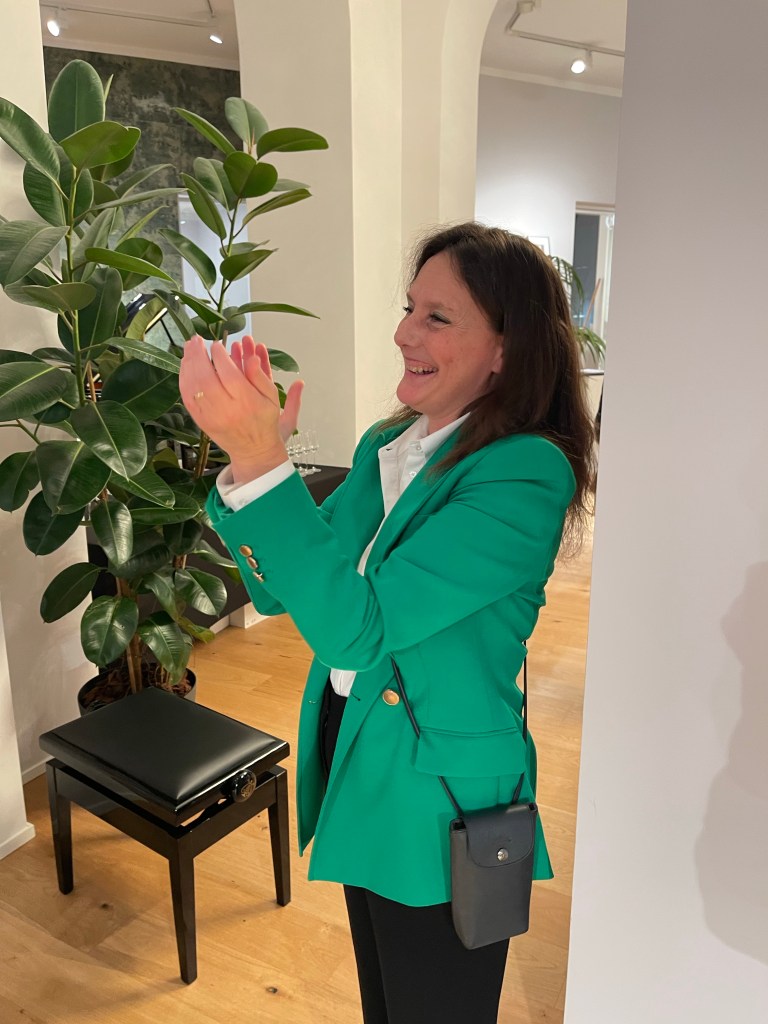
Many of her students present covered their adored Professor with flowers.The heartrending ‘Melodie’ from Rachmaninov’s ‘ 5 moreceaux de fantaisie op 3 ‘ was her way of thanking the audience with an even more ravishing kaleidoscopic range of sounds.
https://christopheraxworthymusiccommentary.com/2022/11/25/louis-lortie-takes-wimbledon-by-storm-exultation-of-the-prelude/
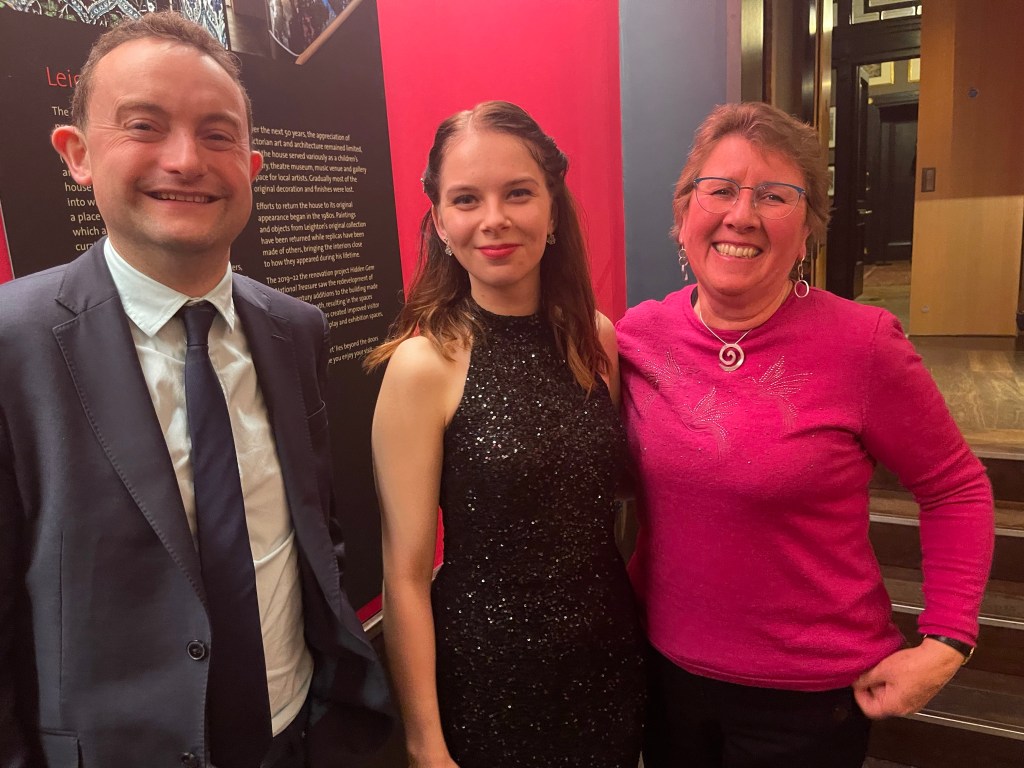
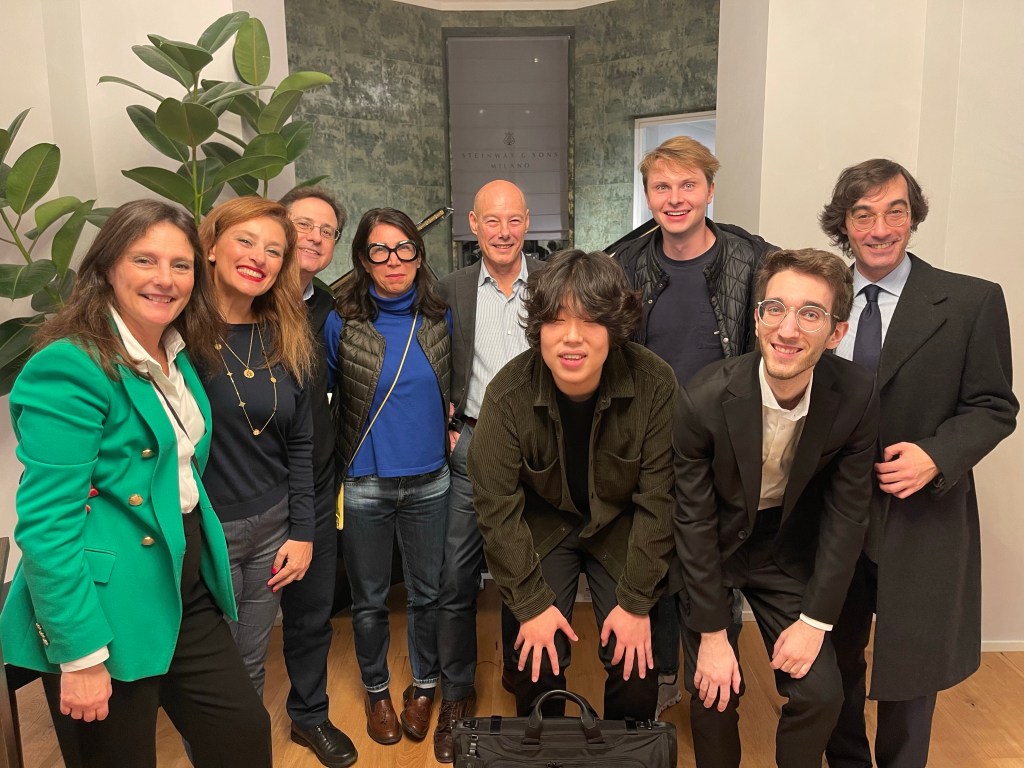
Sofya with Gabrielé Sutkuté and members of the Lithuania Embassy
https://christopheraxworthymusiccommentary.com/2023/11/15/25295/
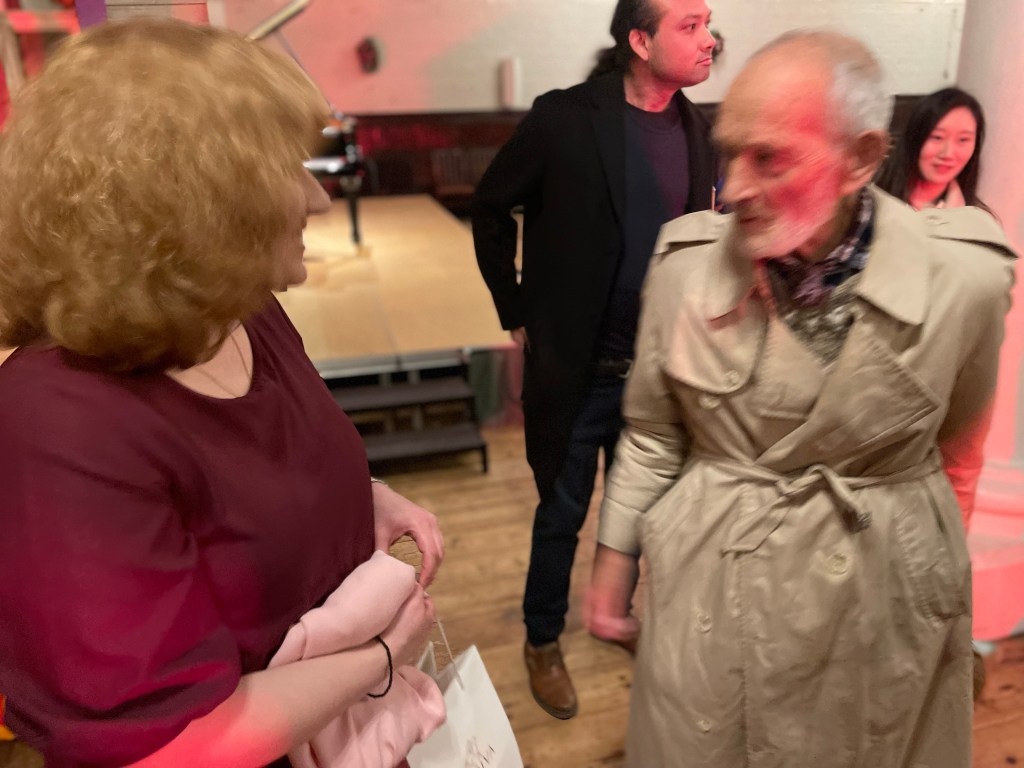
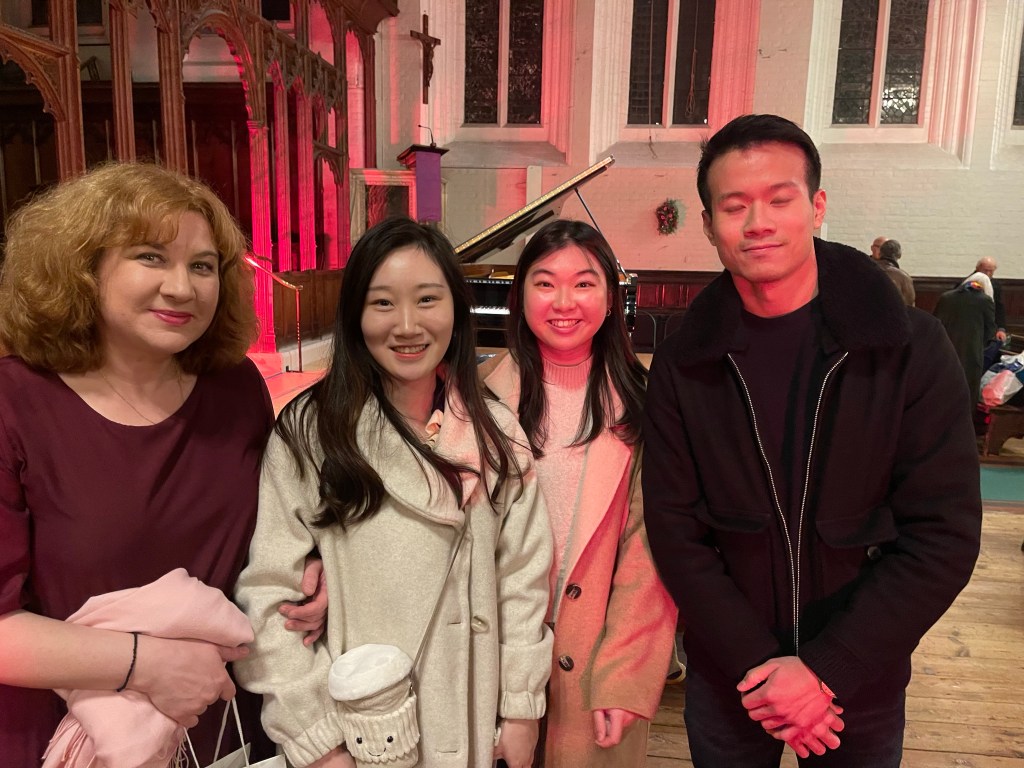
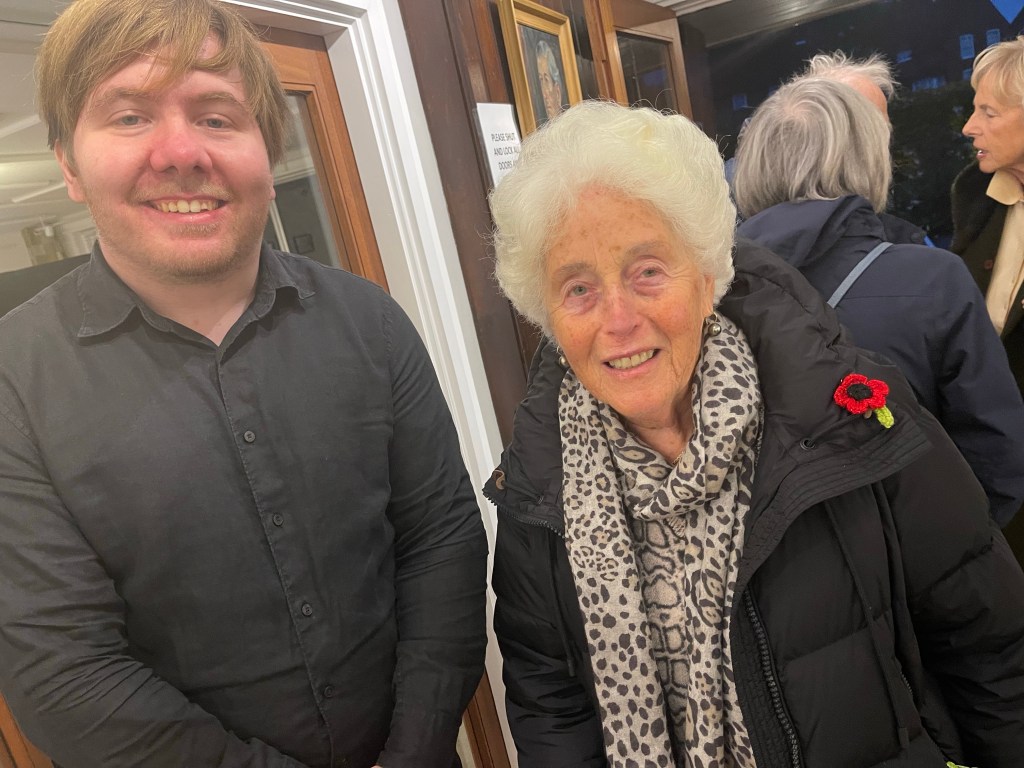
Sofya being congratulated by a distant relation of Ignaz Mocheles
Students come to listen to their Professor
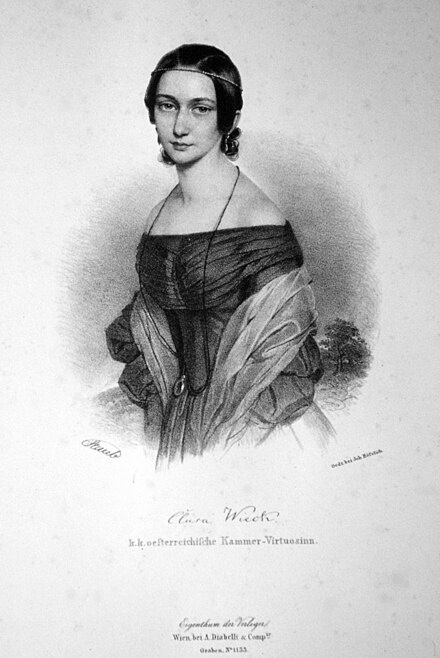
Clara Josephine Wieck
Leipzig 13 September 1819 – Frankfurt 20 May 1896 (aged 76)
married to Robert Schumann with in 1840 (he died in 1856) leaving
8 Children

A curiosity was the Variations on a Theme of Robert Schumann op 20 by Clara Wieck Schumann. A work from around 1854 and one of the few of her own compositions that she would love to play in her recitals.It is based on the theme from Schumann’s ‘Bunte Blatter’ op 99 n 4.
It was dedicated to her husband and was one of the very few compositions that she wrote before Robert was committed to an asylum where he died .Leaving Clara to bring up alone their eight children when in order to survive financially she had to maintain her concert activity to the exclusion of composition.
Robert Schumann suffered from a mental disorder that first was manifested in 1833 as severe depression,recurring several times alternating with phases of “exaltation” and increasingly also delusional ideas of being poisoned .After a suicide attempt in 1854, Schumann was admitted at his own request to a mental asylum in Endenich (now Bonn ).Diagnosed with psychotic melancholia he died of pneumonia two years later at the age of 46, without recovering from his mental illness.The Variations on a theme of Schumann op 20 were dedicated to her already sick husband and were completed just in time for his 43 birthday with a dedication :’For my dear husband a renewed and weak attempt to compose from your dear old Clara ‘.It was infact completed just in time as in 1854 Robert attempted suicide and was admitted to an asylum.
The theme is from Robert’s own ‘Bunte Blatter’ and it is the same theme that Brahms ,a close family friend ,was to use for his own Variations on a Theme of Schumann op 9.Seven variations from Clara where Brahms had written sixteen that he had dedicated to Clara.
There was a great fluidity to Clara’s variations and there was the chordal simplicity of the second alternating with the slow harmonically varied third.Sumptuous beauty in the fourth with the theme in the tenor register surrounded by exquisite embellishments.The great drama in the octave variation with the pompous chordal declamation of the theme dissolved so beautifully into the delicately shadowed mellifluous theme.A ending of arpeggiando chords was spread over the keyboard with ravishing beauty.
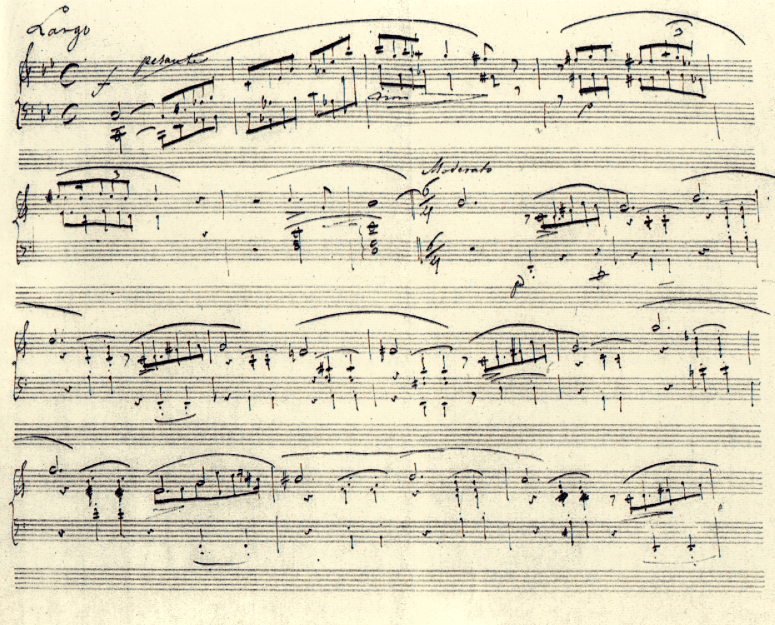
It was fascinating to hear this rarely performed work.Apparently Brahms had studied Clara’s unpublished score and on his own manuscript he wrote, “Little variations on a theme by him dedicated to her”.

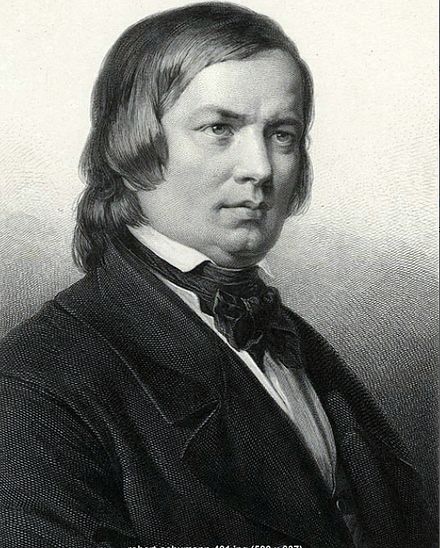
Three Fantasiestücke for piano, Op. 111, composed in 1851, is one of four works by Schumann entitled Fantasiestücke.
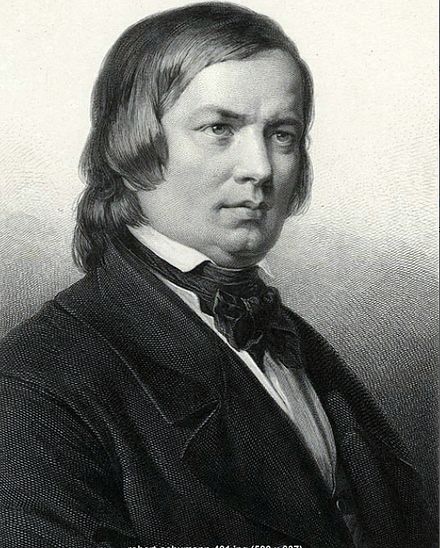
Robert Schumann in 1839

8 June 1810 Zwickau,Saxony – 29 July 1856 (aged 46) Bonn

Schumann composed the Op. 111 in 1851, a few months after his appointment as Generalmusikdirektor of the Düsseldorf Orchestra Orchestra and Clara Schumann wrote in her diary: “Robert has composed three piano pieces of a grave and passionate character which I like very much.They reveal “the composer’s ardour, impetuosity and inner youth, followed by a contemplative and peaceful atmosphere” ,and he is said to have written them as a tribute to Beethoven’s Opus 111, because of his admiration for the last of his 32 Sonatas.In three movements: Sehr rasch, mit leidenschaftlichem Vortrag [Very quickly, with passionate expression] ( Molto vivace et appassionatamente),Ziemlich langsam (Quite slow) (Piuttosto lento);Kräftig und sehr markirt [Powerful and very marked] (Con forza, assai marcato).

Schumann’s Allegro op 8 where a contemporary critic said:’Everywhere only confused combinations of figures, dissonances, passages in short, for us torture’ He only published the opening movement “Allegro di bravura” of what was originally meant to be a sonata the other parts were apparently destroyed. Clara, who was otherwise rather reserved as far as Schumann’s early works were concerned, soon incorporate this piece into her repertoire. Ernestine von Fricken, the dedicatee with whom Schumann was still engaged at its time of composition, often played it after their separation, even if ‘with quite curious expression.’
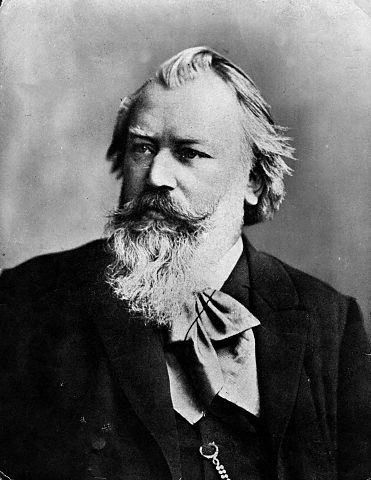
Brahms in 1889
Born
7 May 1833 Hamburg – 3 April 1897 (aged 63) Vienna

The Four Pieces for Piano Op. 119, were composed in 1893 .The collection is the last composition for solo piano by Brahms. Together with the six pieces op 118 ,Op. 119 was premiered in London in January 1894.

N 1 Intermezzo in B minor
n.2 Intermezzo in E minor
N.3 Intermezzo in C major (the key is mistakenly identified as A minor)
N.4 Rhapsodie in E-flat major

In a letter from May 1893 to Clara Schumann ,Brahms wrote: I am tempted to copy out a small piano piece for you, because I would like to know how you agree with it. It is teeming with dissonances! These may [well] be correct and [can] be explained—but maybe they won’t please your palate, and now I wished, they would be less correct, but more appetizing and agreeable to your taste. The little piece is exceptionally melancholic and ‘to be played very slowly’ is not an understatement. Every bar and every note must sound like a ritard[ando], as if one wanted to suck melancholy out of each and every one, lustily and with pleasure out of these very dissonances! Good Lord, this description will [surely] awaken your desire!

Clara Schumann was enthusiastic and asked him to send the remaining pieces of his new work.
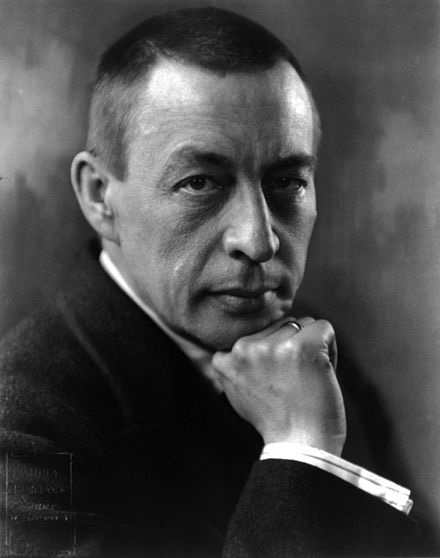
Rachmaninoff in 1921
1 April [o.s.20 March] 1873 -Semyonovo, Russia
28 March 1943 (aged 69) Beverly Hills ,California, U.S.

Variations on a Theme of Corelli op.42, was written in 1931 by the Russian they were composed the variations at his holiday home in Switzerland.

The theme is La Folia , which was not in fact composed by Arcangelo Corelli , but was used by him in 1700 as the basis for 23 variations in his Sonata for violin and continuo in D minor, Op. 5, No. 12. La Folia was popularly used as the basis for variations in Baroque music.Liszt used the same theme in his Spanish Rhapsodie .

Rachmaninoff dedicated the work to his friend, the violinist Fritz Kreisler and he wrote to the composer Nikolai Medtner , on 21 December 1931:

I’ve played the Variations about fifteen times, but of these fifteen performances only one was good. The others were sloppy. I can’t play my own compositions! And it’s so boring! Not once have I played these all in continuity. I was guided by the coughing of the audience. Whenever the coughing would increase, I would skip the next variation. Whenever there was no coughing, I would play them in proper order. In one concert, I don’t remember where – some small town – the coughing was so violent that I played only ten variations (out of 20). My best record was set in New York, where I played 18 variations. However, I hope that you will play all of them, and won’t “cough”.

Rachmaninoff recorded many of his own works, but this piece wasn’t one of them.

The Theme is followed by 20 variations, an Intermezzo between variations 13 and 14, and a Coda to finish. All variations are in D minor except where noted.

  • Theme. Andante
  • Variation 1. Poco piu mosso
  • Variation 2. L’istesso tempo
  • Variation 3. Tempo di Minuetto
  • Variation 4. Andante
  • Variation 5. Allegro (ma non tanto)
  • Variation 6. L’istesso tempo
  • Variation 7. Vivace
  • Variation 8. Adagio misterioso
  • Variation 9. Un poco piu mosso
  • Variation 10. Allegro scherzando
  • Variation 11. Allegro vivace
  • Variation 12. L’istesso tempo
  • Variation 13. Agitato
  • Intermezzo
  • Variation 14. Andante (come prima) (D♭ major)
  • Variation 15. L’istesso tempo (D♭ major)
  • Variation 16. Allegro vivace
  • Variation 17. Meno mosso
  • Variation 18. Allegro con brio
  • Variation 19. Piu mosso. Agitato
  • Variation 20. Piu mosso
  • Coda. Andante
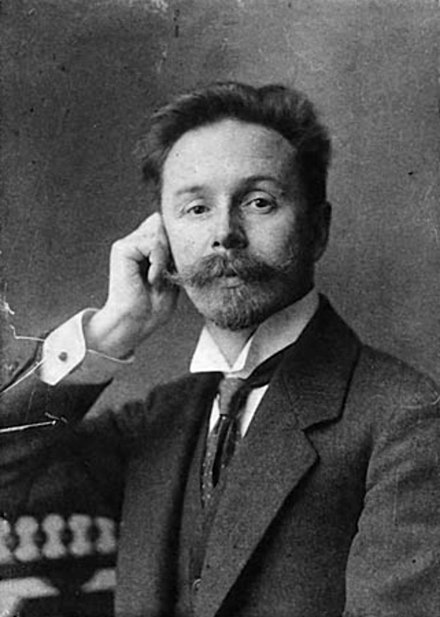
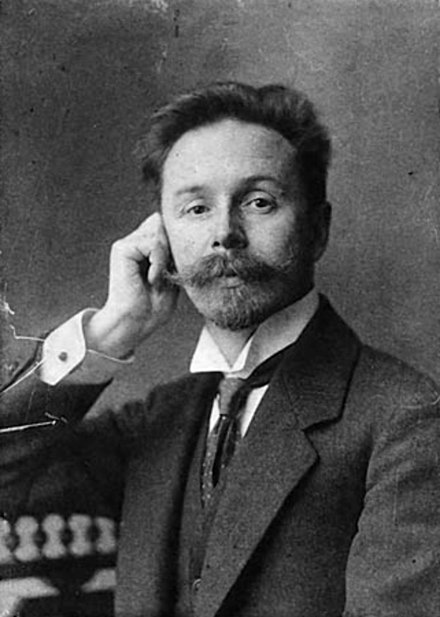
Alexander Nikolayevich Scriabin
Moscow 25 December 1871 ( 6 January 1872) – 14 April 1915 (aged 43)

Vers la flamme (Toward the flame), Op. 72, is one of Scriabin’s last pieces for piano, written in 1914.

The main motif of the piece consists of descending half steps or whole steps interspersed with impressionistic representations of fire. The piece was originally intended to be Scriabin’s eleventh sonata;however, he had to publish it early because of financial concerns, and hence he labelled it a poem rather than a sonata . Like many of Scriabin’s late works, the piece does not conform to classical harmony and is instead built on the mystic chord and modal transpositions of its tone center. It is notorious for its difficulty, in particular the enormous leaps and long, unusual double-note trills in the final pages.

Horowitz said the piece was inspired by Scriabin’s eccentric conviction that a constant accumulation of heat would ultimately cause the destruction of the world.The piece’s title reflects the earth’s fiery destruction, and the constant emotional buildup and crescendo throughout the piece lead, ultimately, “toward the flame”.It was premiered on 14 March 1915 in Kharkiv , with Scriabin himself at the piano
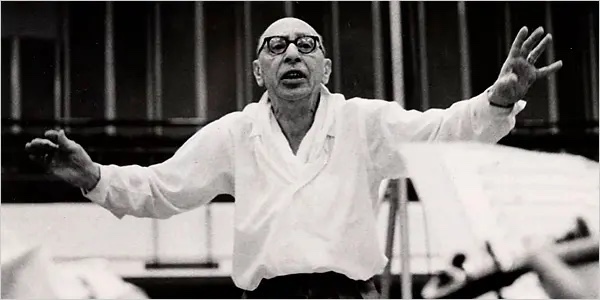
Igor Stravinsky 17 June 188. Saint Petersburg, Russia – 6 April 1971 (aged 88)
New York City, US

Stravinsky’s score for The Firebird was written for Sergei Diaghilev’s Ballets Russes dance company, which premiered the work in Paris in 1910. Based on ancient Russian folk tales, it tells the story of the young Prince Ivan’s quest to find a legendary magic bird with fiery multi-coloured plumage. In the course of his adventures, he falls in love with a beautiful princess but has to fight off the evil sorcerer Katschei to eventually marry her. The suite presents the culminating scenes of the ballet in a piano transcription by the Italian pianist and pedagogue Guido Agosti (1901-1989), who studied with Ferruccio Busoni.
The Danse infernale depicts the brutal swarming and capture of Prince Ivan by Katschei’s monstrous underlings until Prince Ivan uses the magic feather given to him by the Firebird to cast a spell on his captors, making them dance until they drop from exhaustion. The Berceuse is a lullaby depicting the eerie scene of the slumbering assailants, leading to the Finale, a wedding celebration for Prince Ivan and his princess bride.Agosti’s piano transcription, completed in 1928, is a daunting technical challenge for the pianist. Most of the piano writing is laid out on on three staves in order to cover the multi-octave range of the keyboard that the pianist must patrol. The piano comes into its own in this transcription as a percussion instrument, to be played with the wild abandon with which a betrayed lover throws her ex-partner’s possessions off the balcony onto the street below.Judging from the shocking 7-octave-wide chord crash that opens the Dance infernale, Agosti captures well the bruising pace of the action, with off-beat rhythmic jabs standing out from a succession of punchy left-hand ostinati constantly nipping at the heels of the melody line. The accelerating pace as the sorcerer’s ghouls are made to dance ever more frantically is a major aerobic test for the pianist.

Relief comes in the Berceuse, which presents its own pianistic challenges, mainly those of finely sifting the overtones of vast chord structures surrounding the lonely tune singing out from the middle of the keyboard.The wedding celebration depicted in the Finale presents Stravinsky’s trademark habit of cycling hypnotically round the pitches enclosed within the interval of a perfect 5th. Just such a melody, swaddled in hushed tremolos, opens this final movement. It is a major challenge for the pianist to imitate the shimmering timbre of the orchestra’s brightest instruments as this theme is given its apotheosis to end the suite in a blaze of sonority that extends across the entire range of the keyboard.

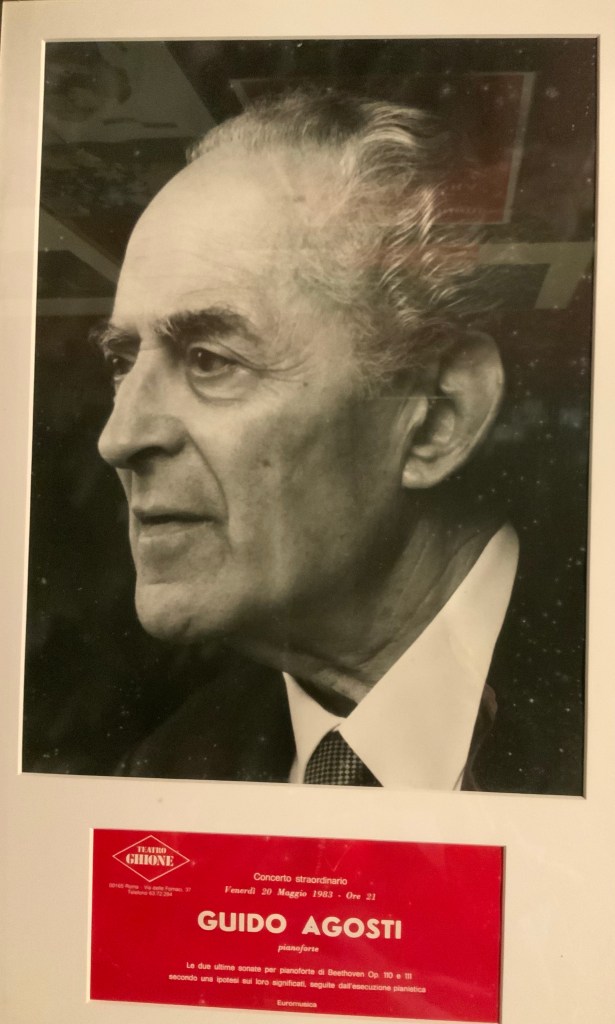
Guido Agosti (11 August 1901 – 2 June 1989) was an Italian pianist and renowned for his yearly summer course in Siena frequented by all the major musicians of the age.It was on the express wish of Alfredo Casella that Agosti took over his class which he did for the next thirty years.Sounds heard in his studio have never been forgotten.

Guido Agosti being thanked by Ileana Ghione after a memorable concert and masterclasses in the theatre my wife and I had created together in Rome.

Agosti was born in Forli 1901. He studied piano with Ferruccio Busoni Bruno Mugellini and Filippo Ivaldiand earning his diploma at age 13. He studied counterpoint under Benvenuti and literature at Bologna University. He commenced his professional career as a pianist in 1921. Although he never entirely abandoned concert-giving, nerves made it difficult for him to appear on stage,and he concentrated on teaching. He taught piano at the Venice Conservatoire and at the Santa Cecilia Academy in Rome.In 1947 he was appointed Professor of piano at the Accademia Chigiana Siena .He also taught at Weimar and the Sibelius Academy in Helsinki.

In the Ghione Theatre in the early 80’s with Ileana Ghione,’Connie’Channon Douglass Marinsanti ,Lydia Agosti ,Cesare Marinsanti,Guido Agosti.A closely knit family .

His notable students include Maria Tipo,Yonty Solomon Leslie Howard,Hamish Milne,Martin Jones,Ian Munro,Dag Achat,Raymond Lewenthal,Ursula Oppens,Kun- Woo Paik,Peter Bithell.He made very few recordings; there is a recording of op 110 from the Ghione theatre in Rome together with his recording on his 80th birthday concert in Siena of Debussy preludes .

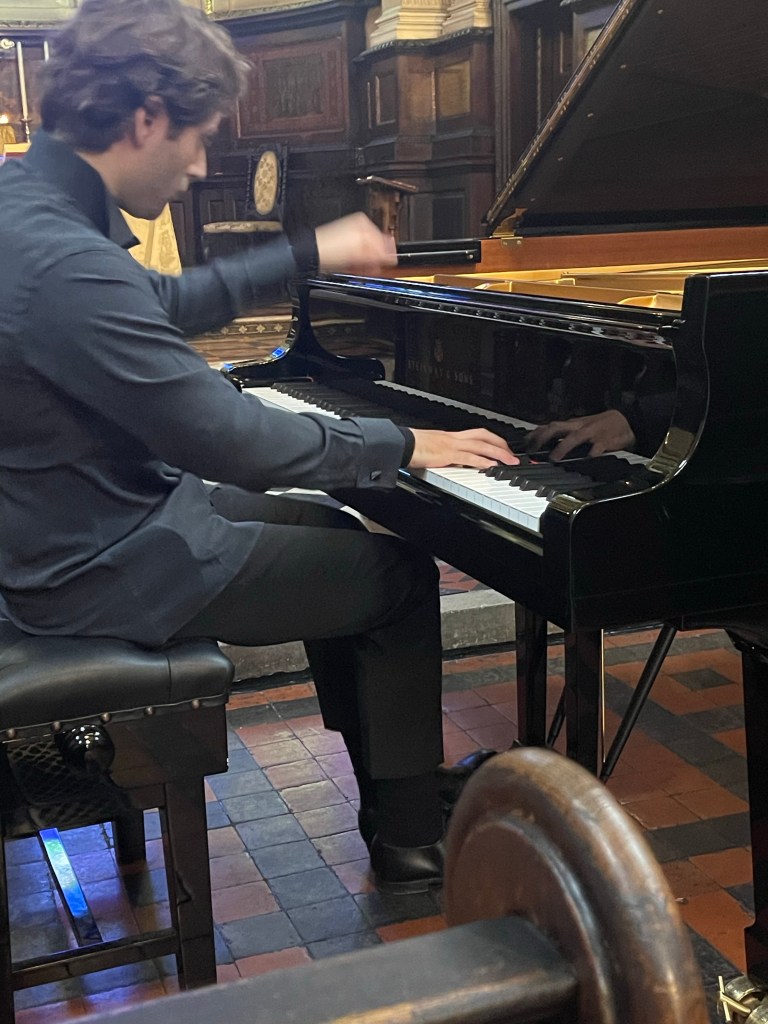
Nicolas Ventura at St Mary Le Strand Elegance and Beauty combine with intelligence and mastery

St Mary Le Strand

Haydn – Sonata in C major Hob.XVI:50

I.Allegro. II.Adagio. III. Allegro molto

Brahms – Sonata No.2 Op.2 in F sharp minor

I.Allegro non troppo ma energico

II. Andante con espressione

III. Scherzo. IV. Finale

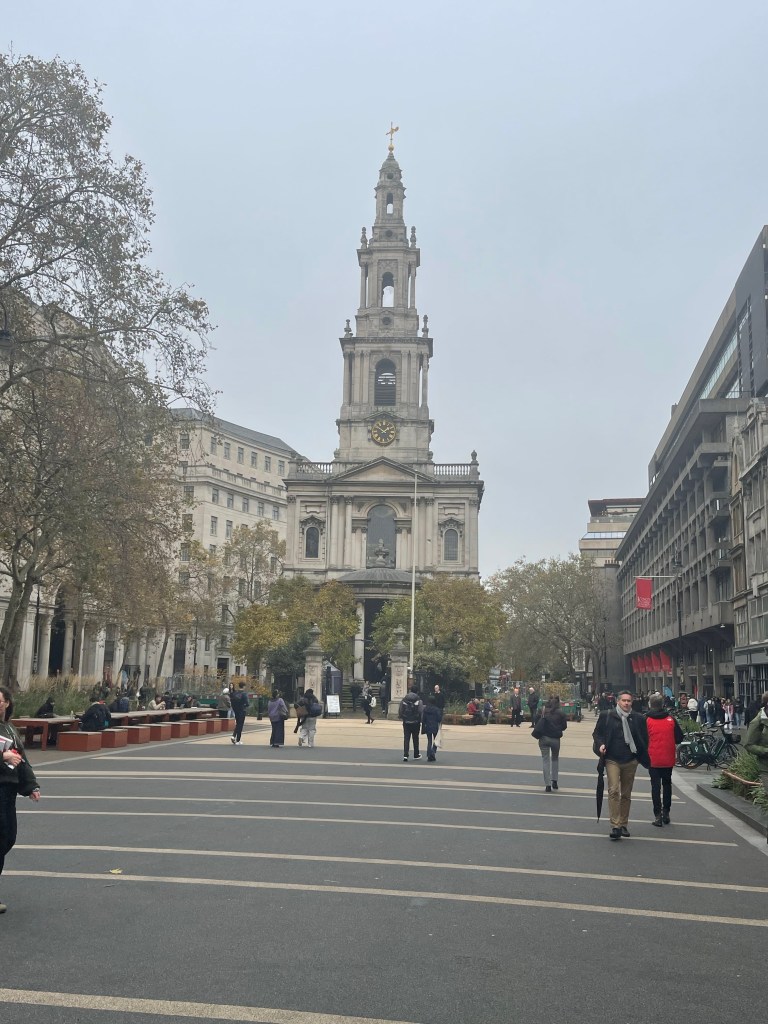
Nicolas Ventura played at St Mary Le Strand, this beautiful church now let out to pasture as the roundabout of roads that until recently encircled it have been trasformed into a pedestrian paradise.
Now we can relish the beauty of this church as it echoes to the sounds of great music .
A gleaming Steinway piano at the foot of the gold and white cupola is where wondrous sounds can now reverberate freely.
And what sounds we heard today!


A young Tuscan pianist who was born in Massa the place that provided Michelangelo with the marble that he transformed into eternal masterpieces.
But this young man had come to study music at the Royal Academy and Royal College with two Russian master trainers of great pianists.Tatyana Sarkissova for his Masters at the RAM and Dina Parakhina for his Artists Diploma at the RCM .
They have bequeathed him a technical mastery and authority that was evident from the very first notes of Haydn’s ebullient English sonata in C .
A rhythmic drive and subtle contrast in dynamics with ornaments that unwound with jewel like precision as they added sparkle to Haydn’s joyously playful Sonata.A real interpreter as he translated Haydn’s music box pedal markings into a magic box of glistening sounds.
An Adagio that was grandiloquent as the melodic line was allowed to unfold with purity and simplicity.Elegance and beauty combined with intelligence and charm.And what fun he had as he gave irresistible character to Haydn in truly jocular mood.

Nicolas introducing the programme


This was just a curtain raiser for a masterly performance of Brahms’s epic second sonata.An opening that had revealed the remarkable gifts of this sensitive musician.
A work of both orchestral and virtuosistic form with so many changes of character that it is difficult to find a cohesive architectural shape.I have often found these early sonatas rather longwinded and episodic as indeed I had until recently Rachmaninov’s first Sonata.
Kantarow was the one who unlocked the mysterious form of Rachmaninov as he had also the First Brahms Sonata – both op.1 of the respective composers.It was this young Tuscan pianist who unlocked today the elusive Sonata op 2 of Brahms.Grandeur and exhilarating virtuosity combined with orchestral colours.The secret of course comes from thinlking always from the bass upwards with a rhythmic drive like riding on a great wave.Moments of subtle ravishing sounds combine with the enormous sonorities of symphonic proportions.All linked together with an overall sound palette that no matter how passionate or exciting was alway sumptuous and full and never hard or brittle.The excitement of the ‘Più mosso’ coda was immediately defused by the two quiet closing chords that opened the gate for the ‘Andante con espressione’.A movement that in this young artists hands was poignant and deeply moving with a wondrous sense of colour as the tenor melodic line became ever more intense with merely whispered comments from on high.The ‘Scherzo’ too entering on the last note of the ‘Andante’. With dynamic contrasts and rhythmic drive very similar but more grandiose that the rarely heard scherzo in E flat minor op 4.The Trio was bathed in pedal as Brahms asks and contrasted so beautifully with the rhythmic precision of the ‘Scherzo’.A beautiful sense of improvisation as Brahms searches for the last movement ‘Allegro non troppo e rubato’.A simple melodic line continually interrupted by ever more dynamic episodes until the final page that is cadenza like and that was played with filigree care and beauty.A sense of improvised freedom but always with the overall view of a true musician.A masterly performance of youthful passion and control that held the audience in his hands as he took them on a wondrous musical journey .

He extensively played throughout Italy, Belgium, Norway, Sweden, the Netherlands, Poland, Hungary, Spain and the UK. His last appearances include such halls as the Jacqueline Du Pré Music Building in Oxford, Duke’s Hall and the Brazilian Embassy in London, Palau de la Music Catalana in Barcelona, Fazioli Concert Hall, Teatro Manzoni in Pistoia, Teatro la Fenice in Venice, the Castle of Kalmar, Florianka Concert Hall in Kraków and Danube Palace in Budapest among many others.

In recent years he received many awards among which the “Sir Reginald Thatchers Prize”, “Franz Simmons Prize”, as well as the “Goetze Bequest Award” and the Diploma of the Royal Academy of Music for and outstanding performance in his final recital. Nicolas regularly performs as soloist and with orchestra, recently he performed works by Beethoven, Liszt and Rachmaninov collaborating with the Orchestra Sinfonica di Chioggia, the Philharmonic Orchestra of Bacau and the Danube Symphony Orchestra. Nicolas is an active chamber musician and transcriber, among his latest activities are his original piano transcription of Prokofiev’s “Scythian Suite” and Copland’s “Lincoln Portrait”.

Nicolas is supported by the Oleg Prokofiev Trust and the following months will see him involved in the production and publication of his first commercial recording entirely devoted to Prokofiev and in a series of recitals in halls including the Impavidi Theatre, the Austrian Cultural Forum, Southwark Cathedral and Wigmore Hall in London.

Born in Tuscany, Nicolas studied with Konstantin Bogino and Tatiana Sarkissova. He is an alumnus of the Conservatorio “Cesare Pollini” of Padua, where he graduated with the highest honours and a special mention, and the Royal Academy of Music in London, graduating with First Class. He has just obtained his Artist Diploma at the Royal College of Music under the guidance of Dina Parakhina. He participated in masterclasses and had important musical influences from such artists as Boris Berman, Benedetto Lupo, Anna Malikova, Håkon Autsbo, Imogen Cooper, Dmitri Alexeev, Marios Papadopoulos, Peter Donohoe, Vanessa Latarche and Federico Colli.

Nicolas is an avid reader and writer about classic literature and philosophy.

Surrounded by admirers after his remarkable performances

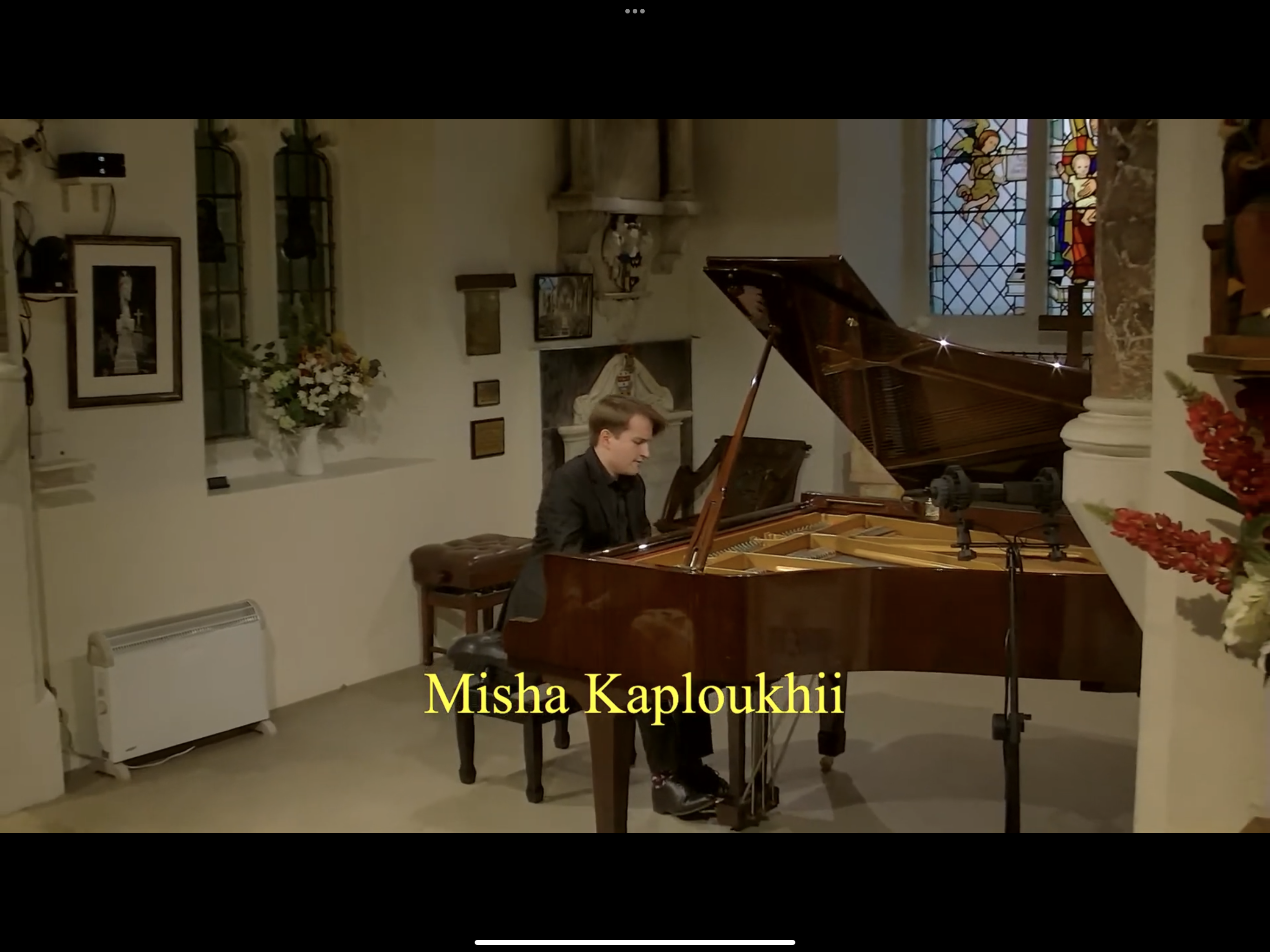
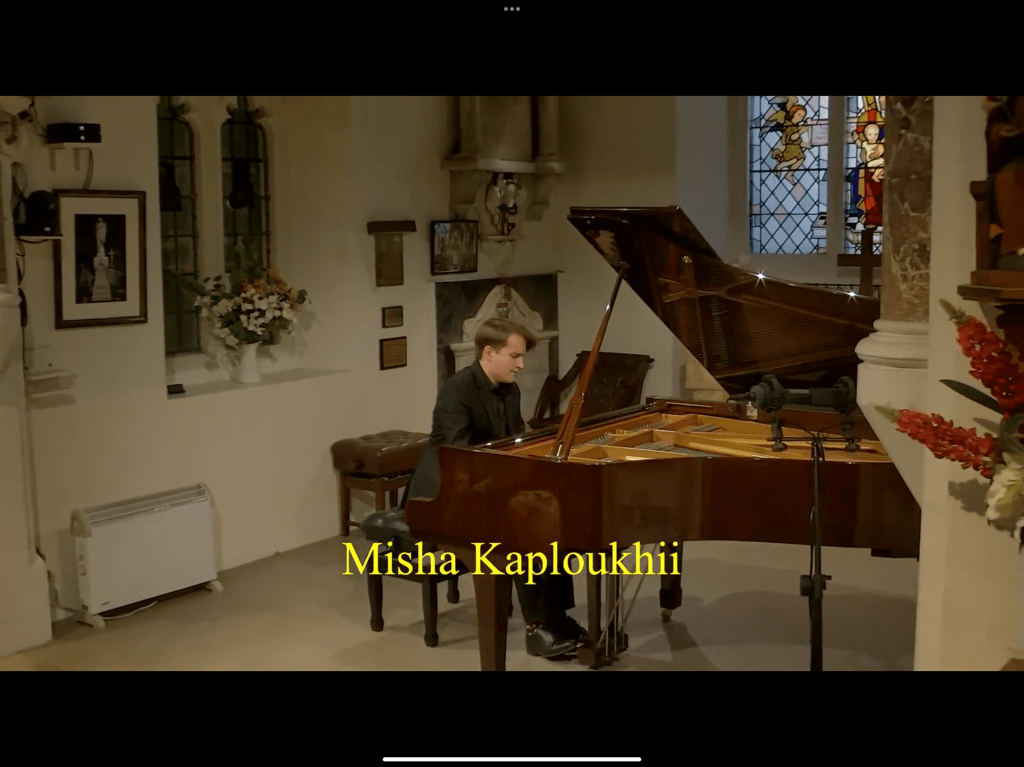
Misha Kaploukhii at St James’s Piccadilly.The intelligence and maturity of a young master

https://youtube.com/live/wCEJADe3HWU?feature=shared

I have heard Misha play many times over the past two years since his mentor and teacher at the Royal College of Music Ian Jones asked me to listen to his performance in Cadogan Hall of the Rachmaninov First Piano Concerto.Misha who had recently left his homeland as Ukraine was being invaded and sought refuge in the UK .Ian has become his mentor and in these two years since first listening to him he has grown in stature and is fast becoming a master.His Beethoven op 110 and the Godowsky ‘Fledermaus’ I have written about just a month ago when he played them in the Autumn Festival in Perivale for the Keyboard Trust.

Misha Kaploukhii at St Mary’s Perivale The Keyboard Trust Autumn Festival 2023

They were remarkable performances then but now even in this short space of time his Beethoven has grown in weight and authority.The simplicity and maturity he brought to op 110 was masterly.An important statement where he had understood the real meaning of an interpreter to transmit the wishes as written in the score to the listener.Beethoven was completely deaf when he wrote these last sonatas but he could obviously hear them in his head and miraculously was able to write down meticulously the sounds that he wanted.Of course it is not only the notes but the meaning behind the notes too that depends on the personality and technical mastery of the performer.So it was quite remarkable how this 21 year old could have played with such mature mastery today.

Godowsky ‘Fledermaus’ too was thrown off with the ease of the great virtuosi of the golden age of piano playing.The age when Godowsky,Lhevine,Rosenthal,Levitski could ravish and seduce their listeners with a range of sounds that only Tobias Matthay could explain.Every note has an infinite number of sounds in it and the real virtuoso is the pianist who can seek out the most sounds ,not he who plays fastest and loudest but he who can play the quietest with what is known as jeux perlé.Encore pieces could be used to excite and seduce their audiences as we have in our time experienced only with Horowitz or Rubinstein.As Joan Chissell remarked in a review of Rubinstein playing Villa Lobos :”Mr Rubinstein turned baubles into gems’.

It was exactly this that Misha did today too.After the intelligence and faithfulness to a masterwork by Beethoven he was able to seduce,beguile,enchant and excite with a piece by Godowsky written especially as a crowd pleaser.Busoni was a pupil of Liszt – the greatest showman after Paganini who ever lived.Noble ladies would be turned into a screaming mob trying to grab any souvenir they could when Liszt played in the aristocratic salons of the day.But Busoni like Liszt was a musical genius too with a mind always pointed to the future.He was able to continue the sound world of late Liszt and bring it to its ultimate conclusion as explained so magnificently by Kirill Gerstein in a recent lecture recital at the Wigmore Hall .

Kirill Gerstein – Busoni is alive and well and returned to the Wigmore Hall

The Elegie that Misha played took me by surprise as I had not heard it since Ogdon used to play it in his recitals.It is a fantasy on Greensleeves just as Busoni had written a Sonatina sopra Carmen better known as the Carmen Fantasy.They are showpieces too but written by an intellectual not a showman.

Misha brought a ravishing beauty to the arpeggiated opening bars of intermingled harmonic changes before bursting into bucolic rhythmic chords out of which emerged the melody that we know as Greensleeves.The melodic line embellished as Liszt or Thalberg might have done and played with a nonchalant ease and old world style. Busoni always ending with a question mark as if to say where are we going to now? A remarkable performance of intelligence and virtuosity added to a sense of style that was absolutely enticing.The Liszt del Petrarca Sonnetto 123 was played in grand style with golden sounds of great beauty.Passion and beauty combined with ravishing glistening sounds and a remarkable sense of elasticity to the melodic line without ever losing the architectural thread that weaves it all together into a sumptuous whole.The Bartok Study op 18 n.2 was a tour de force of virtuosity which again showed Misha’s remarkable musicianship as he managed to find the musical line within the enormous technical demands that Bartok requests from the performer.

An ovation as rarely heard at St James’s greeted this young artist headed for the heights.

Kaploukhii – Matthews at St James’s Piccadilly – Two stars of Talent Unlimited shining brightly

Misha Kaploukhii at St Mary’s Perivale The Keyboard Trust Autumn Festival 2023

Misha I have heard play many times over the past two years and the young teenager I was so impressed with when he played Rachmaninov First Concert at Cadogan Hall is fast turning into a considerable musician of great stature.I also heard him play Liszt Second Concerto as winner of the RCM Concerto Prize but now at the ripe old age of 20 we can judge his playing not only of virtuoso gymnastics but of a true thinking interpreter of the deepest thoughts of the classical composers.It is thanks to the careful help of Ian Jones that this Russian trained pianist from the Gnessin School in Moscow is now delving deep into the scores of the great classics.It is only here that he will learn the real secrets of a true interpreter who thinks more of the composers wishes than his own!
It was the very first bars of Beethoven’s penultimate sonata that revealed a profound interpreter of the composers very precise indications.The wonderful way that the opening trill was just a vibration that lead to the opening sublime melodic outpouring.But there were also the cascades of delicate arpeggios played with a clarity and shape that was enthralling.The rising and falling scales that accompany the development section were beautifully realised as was the magic change of key from the E flat to D flat just before, played so simply allowing Beethoven’s genius to speak for itself.The measured tempo of the Allegro molto and the absolute authority of the treacherous Trio was a great contrast to the mellifluous outpouring of the ‘Moderato cantabile molto espressivo’.The ending just disappearing on a cloud of pedal as Beethoven reaches on high to one of his most sublime creations.There was a clarity to the fugue that made the return of the Arioso even more poignant as the fugue returns in a whispered backward turn leading inexorably to the final glorious exultation and the triumphant arrival home on A flat.A performance of great maturity and intelligence allied of course to a superb technical command.
There was luminosity and an atmosphere of deep contemplation in Liszt’s magical tone poem of St Francis preaching to the birds.An artist is known by his programmes and Misha’s choice of this Liszt ,in particular,to follow Beethoven’s most mellifluous sonata just showed what an artist we have before us.
Now Misha could let his hair down and like the great virtuosi of the Golden Age of piano playing he could show us his beguiling seductive waltz steps of breathtaking virtuosity and subtlety.Godowsky was known as the pianist’s pianist and the performances in his studio were the stuff that legends were made of.A very private man who could play better in his studio than on the stage but left many transcriptions and some original piano works that show what the word virtuoso really means.Not loud and fast but pianissimo and pianississimo with a range of colours that could turn a box of hammers and strings into a box of jewels that could entrance and hypnotise all those that were lucky enough to be caught in it’s spell.
Misha has this sense of style allied to a transcendental technical command and it was this wonderful performance that had us clicking our heels and with a smile on our face coming to the end of a piano marathon of ten wonderful pianists over two afternoons wanting even more .

Misha Kaploukhii

Misha Kaploukhii was born in 2002 and is an alumnus of the Moscow Gnessin College of Music. He is currently studying at the Royal College of Music and is an RCM and ABRSM award holder generously supported by the Robert Turnbull Piano Foundation and Talent Unlimited studying for a Bachelor of Music with Prof. Ian Jones.

Misha has gained inspiration from lessons and masterclasses with musicians such as Claudio Martínez Mehner, Dmitri Bashkirov, Jerome Lowenthal and Konstantin Lifschitz. He has performed with orchestras around the world including his recent debut in Cadogan Hall performing Rachmaninov’s First Piano Concerto. His repertoire includes a wide range of solo and chamber music. Recently, Misha won prizes in the RCM Concerto Competition (playing Liszt’s Second Piano Concerto) and in the International Ettlingen Piano Competition.

Misha Kaploukhii plays Rachmaninov Beauty and youthfulness triumph

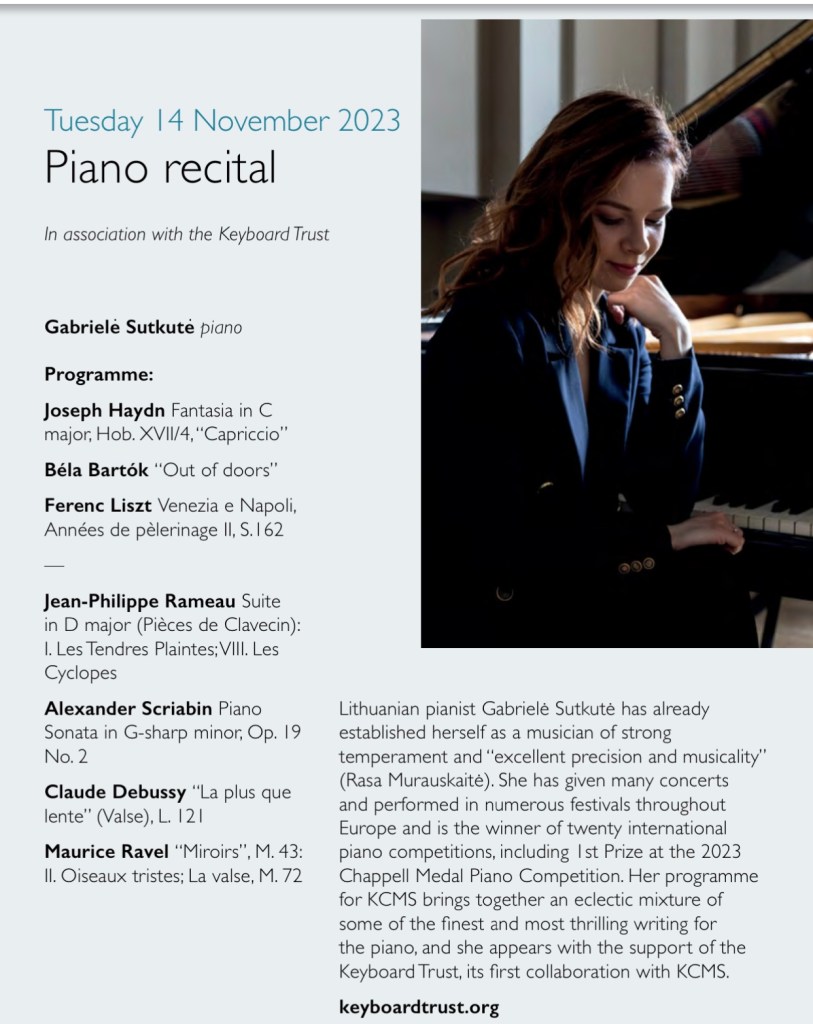
Gabrielé Sutkuté at Leighton House ‘a star is born’

https://christopheraxworthymusiccommentary.com/2023/06/23/gabriele-sutkute-at-steinway-hall-for-the-keyboard-trust/

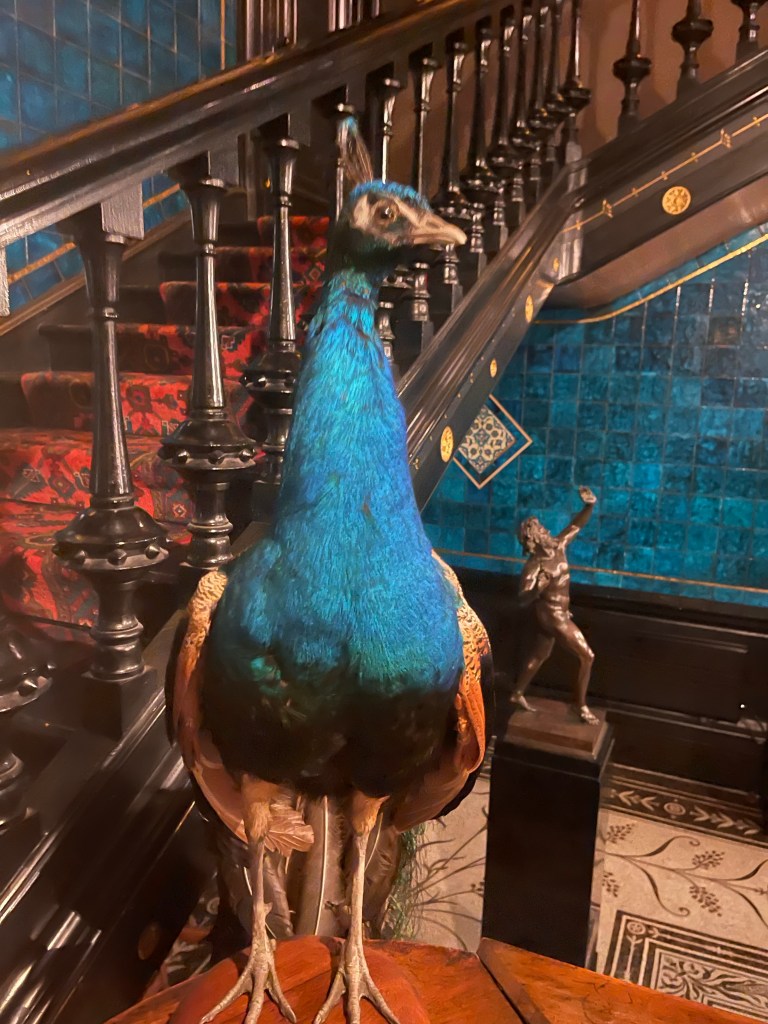
Birds of a feather they say but at Leighton house tonight it was pure coincidence that Gabrielé Sutkuté chose the same ravishing colour as the bird that sits at the foot of the imposing staircase up to the music room


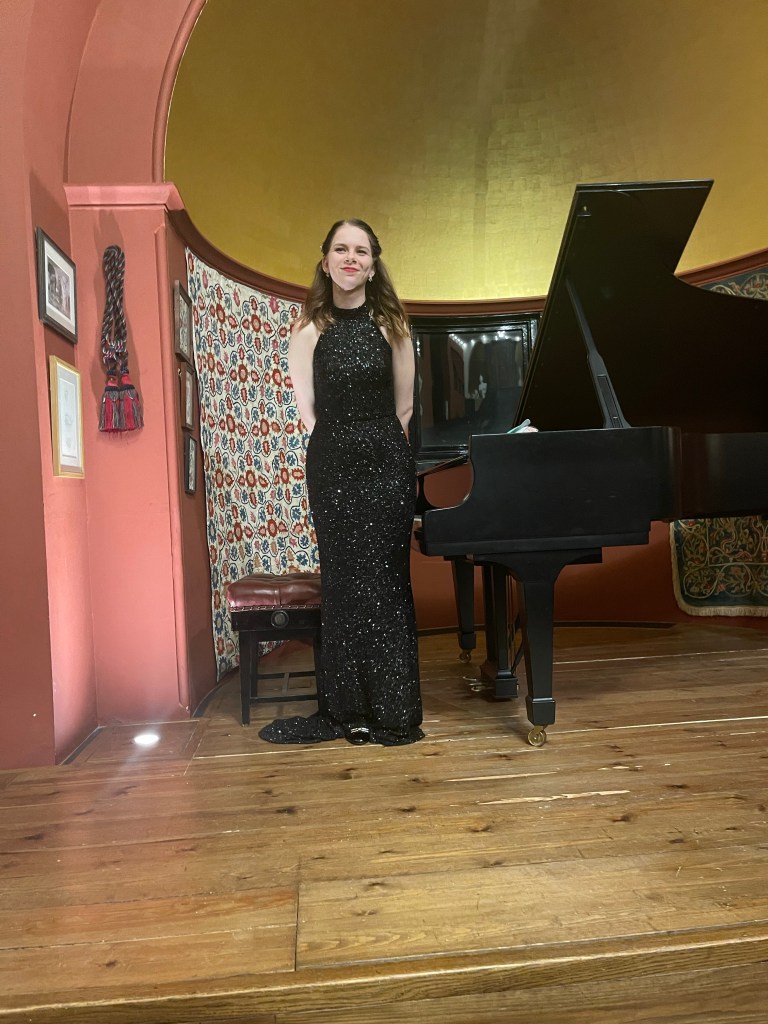
Changing in the interval into a black lamé dress worthy of Marlene Dietrich her wonderful attire paled into insignificance with playing of such of such mastery.


A star was truly in our midst as was obvious from the moment she was on stage hardly able to wait to tickle the keys in this sumptuous art deco music room.What fun she had looking for the ‘farmers cat’ in Haydn’s hilarious Capriccio before the earth shattering Drums and pipes of Bartok exploded onto the scene.If only our star would smile and show us how much fun she was having.

The Bartok was like an atom bomb as she attacked the piano with very unseemly vehemence.A transcendental control that took us into the bleak night mists where creatures buzzed all around the keyboard in an astonishing display of dynamic fantasy.The ‘Chase’ was now on but,who was chasing whom! No time to stop and question with such exhilaration and driving excitement.
Liszt’s delicious memories of Italy were revealed by Gabrielé with subtlety and showmanship.The Italian temperament of warmth and passionate participation for the good things in life brought Liszt’s ‘biondina’ beguilingly to life as a great Italian tenor entered the scene intoning ‘ no greater pain than this ‘ .But it was the ‘Tarantella’ that truly astonished and seduced with scintillating fireworks and mouth watering heart on sleeve sentiments.


After the interval she was transformed into a true Hollywood star with a slinky sparkling gown with the pure Parisian charm and passionate commitment of a Piaf with Debussy’s ‘La plus que lente.’
Birds that sang with such ravishingly sweet tones ,how could they ever be sad?!
It was the insinuating waltz of Ravel that astonished though as it crept in almost unobserved , gradually building in frenzied tones to a climax where all hell was let loose as our scintillating star turned into a wild animal of bravura.
Scriabin’s ‘Fantasy Sonata’ had been played with passionate involvement and glistening refined sounds never for a moment losing control of the architectural shape and swooping phrases of red hot passion.


Raring to go even at the end of such a ‘tour de force’ of bravura she offered her public,most of whom were by now on their feet to cheer such a star,an even more scintillating ‘Etude Tableau’ by Rachmaninov op 39 n 1 .

A full more detailed review of the programme can be seen here in recent recitals in London :

Gabrielé Sutkuté takes Mayfair by Storm ‘passion and power with impeccable style’

Gabrielé with William Vann (chair of KCMS) and Sarah Biggs(CEO of the KT ) with the first collaboration between the KCMS and the Keyboard Trust
With guitarist from the RAM Gonçalo Maia Caetano
https://christopheraxworthymusiccommentary.com/2023/06/02/the-gift-of-music-the-keyboard-trust-at-30/

Lithuanian pianist Gabrielė Sutkutė has already established herself as a musician of strong temperament and “excellent precision and musicality” (Rasa Murauskaitė from 7 days of Art). She has given many concerts and performed in numerous festivals throughout Europe and appeared in famous halls such as the Wigmore Hall, Cadogan Hall, the Steinway Hall UK, the Musikhuset Aarhus and Lithuanian National Philharmonic Hall.

In addition to being a soloist, Gabrielė frequently performs with chamber ensembles and symphony orchestras. This year she performed Grieg’s Piano Concerto with the YMSO at the Cadogan Hall, conducted by James Blair. In 2020, she performed Rachmaninov’s 2nd Piano Concerto with the Grammy-nominated Kaunas Symphony Orchestra, conducted by Markus Huber, and was also invited to play with the renowned Kaunas String Quartet in Lithuania twice.

Gabrielė is a winner of twenty international piano competitions where she also received numerous special awards. She was awarded 1st Prize at the Chappell Medal Piano Competition 2023 and won the 2nd Prize and the Audience Prize at the Birmingham International Piano Competition 2022. For her musical achievements she received Lithuanian Republic Presidents’ certificates of appreciation six times. The pianist is also an artist at Talent Unlimited the Keyboard Trust and is the recipient of the prestigious Mills Williams Junior Fellowship 2022/23.

From 2016-22, she had been studying with Professor Christopher Elton and received her Bachelor of Music Degree (First Class Honours) and Master of Arts Degree with Distinction from the Royal Academy of Music. For the outstanding performance in her Postgraduate Final Recital, she also received a Postgraduate Diploma (DipRAM). Gabrielė was awarded a full scholarship for the Artist Diploma course at the Royal College of Music and began her studies there with Professor Vanessa Latarche and Professor Sofya Gulyak in September 2022 and graduated with honours in 2023.

A recent performance in the Landsdown Club in Mayfair

https://christopheraxworthymusiccommentary.com/2023/09/13/gabriele-sutkute-takes-mayfair-by-storm-passion-and-power-with-impeccable-style/
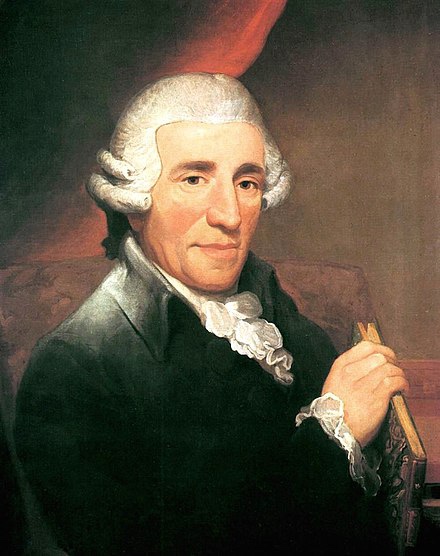
Franz Joseph Haydn 31 March 1732 – 31 May 1809 Born in Rohrau,Austria .
On 26 May Haydn played his “Emperor’s Hymn” with unusual gusto three times; the same evening he collapsed and was taken to what proved to be to his deathbed.He died peacefully in his own home at 12:40 a.m. on 31 May 1809, aged 77.On 15 June, a memorial service was held in the Schottenkirche at which Mozart’s Requiem was performed. Haydn’s remains were interred in the local Hundsturm cemetery until 1820, when they were moved to Eisenstadt by Prince Nikolaus. His head took a different journey; it was stolen by phrenologists shortly after burial, and the skull was reunited with the other remains only in 1954, now interred in a tomb in the north tower of the Bergkirche!

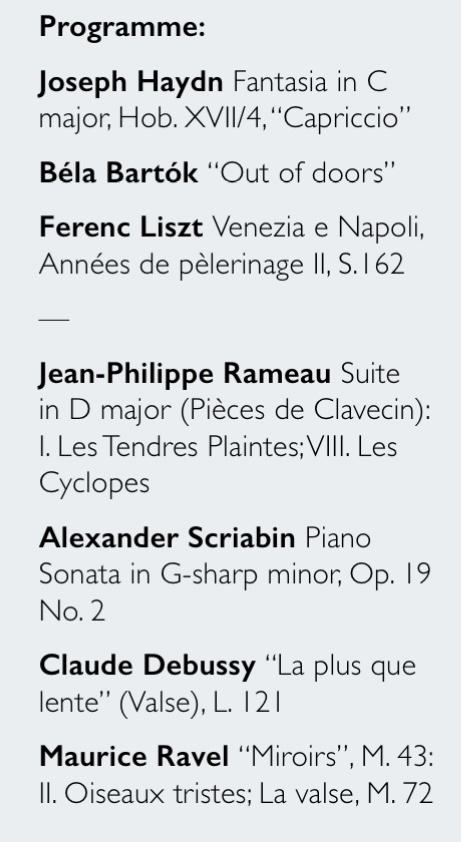
Fantasia in C major, Hob XVII/4, “Capriccio“, is based on the Austrian folk song D’ Bäurin hat d’Katz verlor’n (“The farmer’s wife has lost her cat”).

In March 1789,Joseph Haydn wrote to the publishing company Artaria saying, “In a moment of great good humour I have completed a new Capriccio for fortepiano, whose taste, singularity and special construction cannot fail to receive approval from connoisseurs and amateurs alike. In a single movement, rather long, but not particularly difficult.”The fact that Haydn wrote the fantasia “for connoisseurs and amateurs alike” was most likely a nod to C.P.E Bach’s Für Kenner und Liebhaber (“For Connoisseurs and Amateurs”) that he had requested from Artaria the year before.However, the piece was more difficult than Haydn thought it would be, with zany virtuosity and orchestral effects, recalling the last movement of his Sonata No. 48.

Béla Viktor János Bartók 25 March 1881 – 26 September 1945

Out of Doors ,sz.81, BB 89, was written in 1926 and is among the very few instrumental compositions by Bartók with programmatic titles.A suite of five pieces :

  1. “With Drums and Pipes” – Pesante
  2. “Barcarolla” – Andante
  3. “Musettes” – Moderato.
  4. “The Night’s Music” – Lento – (Un poco) più andante
  5. “The Chase” – Presto.

After World War 1 (1914–1918), Bartók was largely prevented from continuing his folk music field research outside Hungary.This increased the development of his own personal style, marked by a sublimation of folk music into art music. Bartók composed Out of Doors in the ‘piano year’ of 1926,together with his Piano Sonata , his First Piano Concerto and Nine Little Pieces.

This particularly fruitful year followed a period of little compositional activity. The main trigger to start composing again was a performance on 15th March 1926 of Stravinsky’s Concerto for piano and wind instruments in Budapest with the composer as pianist. Bartók’s compositions of 1926 are thus marked by the treatment of the piano as a percussion instrument writing early 1927:

‘It seems to me that the inherent nature [of the piano tone] becomes really expressive only by means of the present tendency to use the piano as a percussion instrument.Written for his new wife, the pianist Ditta Pásztory-Bartók – Bartok ,whom he had married in 1923 shortly after divorcing his first wife, and who had given him his second son in 1924.

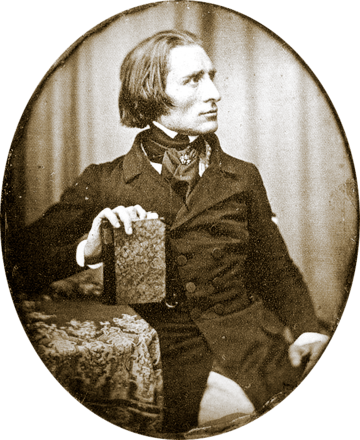
Franz Liszt
Born
22 October 1811
Doborjan,Kingdom of Hungary,Austrian Empire
Died
31 July 1886 (aged 74)
Bayreuth ,Kingdom of Bavaria German Empire,
Earliest known photograph of Liszt (1843) by Hermann Biow

Venezia e Napoli S.162 was composed in 1859 as a partial revision of an earlier set with the same name composed around 1840. There are three movements :

  1. Gondoliera (Gondolier’s Song) in F♯ major – Based on the song “La biondina in gondoletta” by Giovanni Battista Peruchini.
  2. Canzone (Canzone ) in E♭ minor – Based on the gondolier’s song “Nessun maggior dolore” from Rossini’s Otello
  3. Tarantella in G minor – Uses themes by Guillaume-Louis Cottrau, 1797–1847. It is interesting to note as Leslie Howard has pointed out that Canzone and Tarantella are linked by a very specific pedal indication by the composer.

Published in 1861 as a supplement to the Second Year of Années de pèlerinage which are widely considered as the masterwork and summation of Liszt’s musical style and are in three volumes Liszt wrote ‘Having recently travelled to many new countries, through different settings and places consecrated by history and poetry; having felt that the phenomena of nature and their attendant sights did not pass before my eyes as pointless images but stirred deep emotions in my soul, and that between us a vague but immediate relationship had established itself, an undefined but real rapport, an inexplicable but undeniable communication, I have tried to portray in music a few of my strongest sensations and most lively impressions.

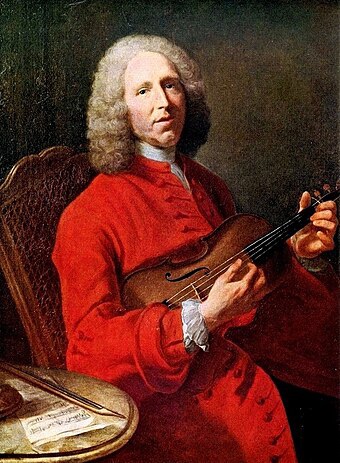
Jean-Philippe Rameau, by Joseph Aved, 1728

The French Baroque composer Jean – Philippe Rameau wrote three books of Pièces de clavecin for the harpsichord .The first, Premier Livre de Pièces de Clavecin, was published in 1706 ; the second, Pièces de Clavessin, in 1724; and the third, Nouvelles Suites de Pièces de Clavecin, in 1726 or 1727. They were followed in 1741 by Pièces de clave in En concerts, in which the harpsichord can either be accompanied by violin (or flute) and viola da gamba or played alone. An isolated piece, “La Dauphine“, survives from 1747.

The two played tonight are from 1724 and are the first and eighth from his Suite in D : Les Tendres Plaintes – Les Cyclopes

  1. Les Tendres Plaintes. Rondeau .An almost tongue-in-cheek character piece, with a title so hackneyed that Rameau was surely poking a bit of fun: Les tendres plaintes (‘The tender sighs ‘) It is nevertheless a ravishing pearl piece , and Rameau clearly thought enough of it to rework it as a ballet movement in Zoroastre (1749).
  2. Les Niais de Sologne – Premier Double des Niais – Deuxième Double des Niais
  3. Les Soupirs. Tendrement
  4. La Joyeuse. Rondeau
  5. La Follette. Rondeau
  6. L’Entretien des Muses
  7. Les Tourbillons. Rondeau
  8. Les Cyclopes. Rondeau. Is the jewel of the set with a musical description of the mythological smithies who forged Jupiter’s thunderbolts in the deep recesses of the Earth. Here Rameau uses his special technique of ‘batteries’ which he claimed to have invented. As he explains in the preface to the 1724 collection: ‘In one of the batteries the hands make between them the consecutive movement of two drumsticks; and in the other, the left hand passes over the right to play alternately the bass and treble.’ Incidentally, Les cyclopes is believed to be one of the pieces played by the Jesuit Amiot before the Chinese Emperor; sadly, it seems to have not made much of an impression.
  9. Le Lardon. Menuet
  10. La Boiteuse

Alexander Nikolayevich Scriabin
Born
25 December 1871 ( 6 January 1872) Moscow Russian Empire
Died
14 April 1915 (aged 43)
Moscow Russian Empire

Scriabin’s Piano Sonata No. 2 in G-sharp minor,op 19, Sonata-Fantasy took five years for him to write. It was finally published in 1898, at the urging of his publisher.It is the second of ten sonatas plus an early but youthful Sonata published after his death which shows an astonishingly sure hand developing in the fourteen-year-old.

There are two movements, with a style combining Chopin -like Romanticism with an impressionistic touch. Scriabin described the Sonata : “The first section represents the quiet of a southern night on the seashore; the development is the dark agitation of the deep, deep sea. The E major middle section shows caressing moonlight coming up after the first darkness of night. The second movement represents the vast expanse of ocean in stormy agitation.”

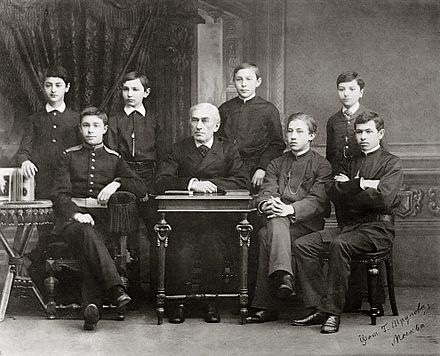
Scriabin studied the piano from an early age with Nikolai Zverev, a strict disciplinarian, who was also the teacher of Rachmaninov and other piano prodigies.Scriabin on left seated and Rachmaninov on right behind Zverev
1908
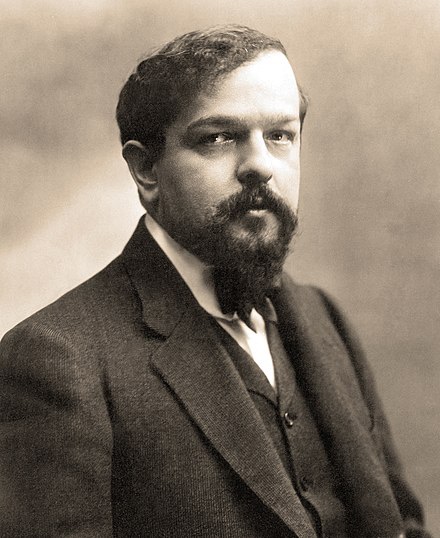
(Achille) Claude Debussy
22 August 1862 – 25 March 1918

La plus que lente L.121 was written for solo piano in 1910,shortly after his publication of the Préludes Book 1.It was first played at the New Carlton Hotel in Paris, where it was transcribed for strings and performed by the popular ‘gipsy’ violinist, Léoni, for whom Debussy wrote it (and who was given the manuscript by the composer).La plus que lente is, in Debussy’s wryly humorous way, the valse lente to outdo all others.”It is marked “Molto rubato con morbidezza” indicating Debussy’s encouragement of a flexible tempo.

During the same year of its composition, an orchestration of the work was conceived, but Debussy opposed the score’s heavy use of percussion and proposed a new one, writing to his publisher:

“Examining the brassy score of La plus que lente, it appears to me to be uselessly ornamented with trombones,kettle drums,triangles , etc., and thus it addresses itself to a sort of de luxe saloon that I am accustomed to ignore!—there are certain clumsinesses that one can easily avoid! So I permitted myself to try another kind of arrangement which seems more practical. And it is impossible to begin the same way in a saloon as in a salon. There absolutely must be a few preparatory measures. But let’s not limit ourselves to beer parlours. Let’s think of the numberless five-o’-clock teas where assemble the beautiful audiences I’ve dreamed of.” Claude Debussy, 25 August 1910

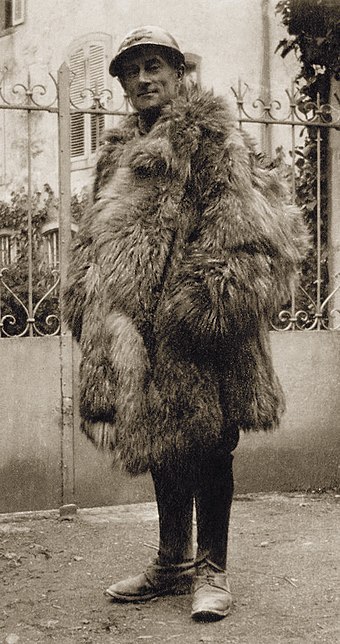
Joseph Maurice Ravel. 7 March 1875 – 28 December 1937.

Photo of Ravel in the French Army in 1916.
Ravel finally joined the Thirteenth Artillery Regiment as a lorry driver in March 1915, when he was forty.Stravinsky expressed admiration for his friend’s courage: “at his age and with his name he could have had an easier place, or done nothing”.Some of Ravel’s duties put him in mortal danger, driving munitions at night under heavy German bombardment.

Oiseaux tristes” (“Sad Birds”) is dedicated to Ricardo Vines, and is a lone bird whistling a sad tune, after which others join in. The excited middle section is offset by a cadenza which brings back the melancholy mood of the beginning.Written between 1904 and 1905 and first performed by Vines in 1906, Miroirs contains five movements, each dedicated to a fellow member of the French avant-Garde artist group ‘Les Apaches’.

The idea of La valse began first with the title “Vienne” as early as 1906, where Ravel intended to orchestrate a piece in tribute to the waltz form and to Johann Strauss.As he himself stated:’You know my intense attraction to these wonderful rhythms and that I value the joie de vivre expressed in the dance much more deeply than Franckist puritanism.Ravel completely reworked his idea of Wien into what became La valse, which was to have been written under commission from Diaghilev as a ballet. However, he never produced the ballet after hearing a two-piano reduction performed by Ravel and Marcelle Meyer saying it was a “masterpiece” but rejected Ravel’s work as “not a ballet. It’s a portrait of ballet”. Ravel, hurt by the comment, ended the relationship and when the two men met again during 1925, Ravel refused to shake Diaghilev’s hand. Diaghilev challenged Ravel to a duel, but friends persuaded Diaghilev to recant. The men never met again.Ravel described La valse with the following preface to the score:
‘Through whirling clouds, waltzing couples may be faintly distinguished. The clouds gradually scatter: one sees at letter A an immense hall peopled with a whirling crowd. The scene is gradually illuminated. The light of the chandeliers bursts forth at the fortissimo letter B. Set in an imperial court, about 1855.’

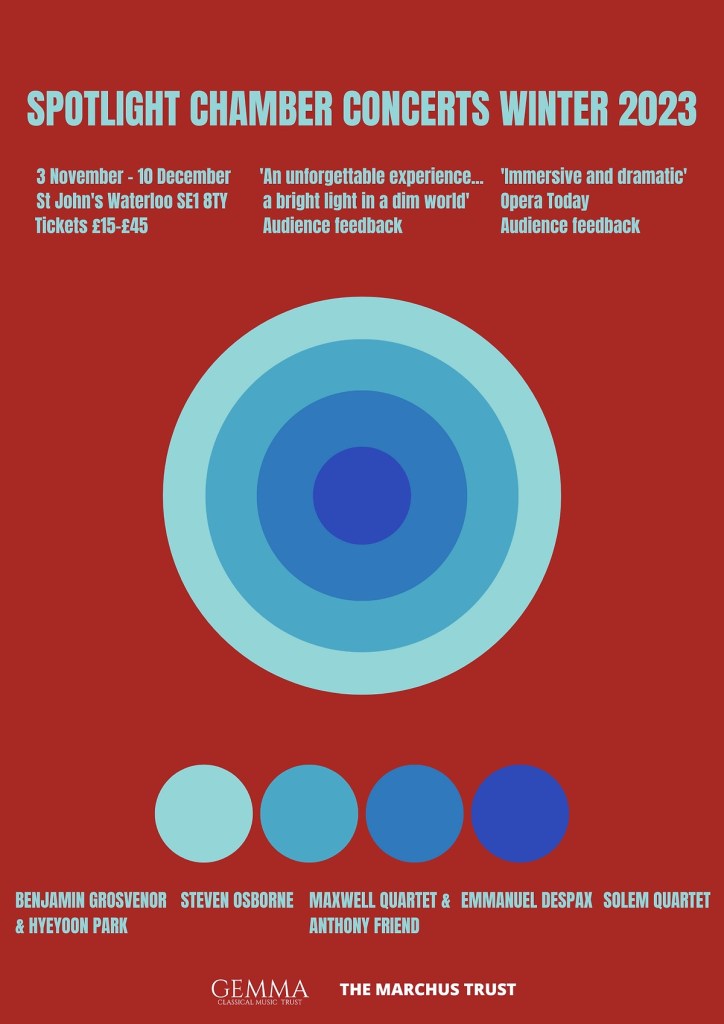
Steven Osborne in the spotlight ‘ The secret world of a supremely sensitive artist’

Steven Osborne

The ‘most thoughtful and questing of British pianists’ (Telegraph), Steven Osborne will perform Schubert’s Six moments musicaux and the late Sonata in A, D. 959, separated by a short Beethoven Bagatelle, Op. 33 No. 4. It is ten years since he was declared Instrumentalist of the Year by the Royal Philharmonic Society, but he remains one of Britain’s finest musicians, and a recent Wigmore Hall concert celebrating Rachmaninov’s 150th birthday received 5 stars in The Guardian and The Independent.

Park- Grosvenor ‘A sumptuous duo,spot on at St John’s where their light was shining brightly’

Another magnificent concert for spotlight at St John’s Waterloo.I have not heard such wonders since Zimerman or Uchida .Playing that drew us in to a secret world of ravishing beauty but also of startling contrasts.All with a palette of sounds that was truly a marvel, creating a world in which music evolves directly from the composer to the public through the hands of a supremely sensitive artist.One that with the humility of someone who thinks more of the music than himself and with superhuman mastery can communicate the music as if the ink was still wet on the page.
I have heard great things of Steven Osborne in repertoire of Prokofiev and Messiaen and never would have imagined what miracles he could produce with Schubert’s elusive Moments Musicaux D .780 and the great A major Sonata D .959.They were linked together with a single Beethoven Bagatelle op 33 n.4 of simple innocence.A monumental performance of the A major sonata in which time seemed to stand still. We were transported by this great artist to a much better world than the one we live in and it was only the sumptuous whispered sonorities of Schumann’s Romance in F sharp ,played as an encore, that prepared us for the world that awaited outside after this hour of escape to a much better place than we have ever known.

Schubert Moments Musicaux were six magic moments of heartrending emotions.Whether etherial,poetic,beguiling or exciting there was an astonishing range where Schubert was not only the spinner of seemingly endless melodic invention but also the one who could shock and surprise, in Brendel’s and now Osborne’s hands, even more than Beethoven.Unexpected outbursts with moments of such red hot intensity that Osborne like Brendel shied away abruptly from the keyboard as though they risked getting their fingers burnt. It was exactly these contrasts allied to a ravishing sense of balance that made these six miniature tone poems so emotionally satisfying.
The first was played with a delicacy as the harmonies seemed to change so continually with outbursts of Florestan and Eusebius proportions.The second was played with subdued almost whispered chords of subtle richness interrupted by outbursts of unexpected vehemence.The beguiling third,so much the realm of Curzon,but by Osborne played with the same buoyancy,delicacy and joyous luminosity.There were whispered contrapuntal meanderings of the fourth with its etherial utterances and the surprise interruption of a lilting dance in its midst. Suddenly an eruption of rhythmic energy with a dynamic impulse of life.Playing like a man possessed pulling his fingers from the keys as though scolded by the burning intensity.The last was of purity and innocence with delicate confessions of etherial whispered sounds of pure magic.
The Beethoven Bagatelle was the ideal link between the differing worlds of Schubert miniature and monumental.This early Beethoven ‘trifle’ was a music box of sounds of golden luminosity and ornaments incorporated into the melodic line as only a great bel canto singer could do.
The grandiose opening of the A major Sonata immediately dissolved into streams of golden sounds that made one grateful that he did the repeat and we could relish the magnificent architectural force of this intelligent and sensitive artist.There followed the development of driving rhythmic energy and dynamic contrasts with an extraordinary range of sounds.Sometimes his hands merely dusting the keys followed by sudden changes of character with injections of nervous energy.
There was a desolate beauty to the ‘Andante’ with a marvel of phrasing of poignancy and beauty unwinding almost unnoticeably into an tumultuous Lisztian storm of notes and emotions.The beseeching recitativo lone voice was interrupted by sudden electric shocks followed by a whispered act of contrition as the opening melody returned embroidered with the heavenly counterpoints from the place that awaited Schubert just a few months later.What depth of meaning Osborne gave to the seemingly innocent final arpeggiated chords – a heart beating with a breathless feeling of hopelessness.
The ‘Scherzo’ just floated in with refined graceful delicacy with sudden injections of humour at the cadences .A ‘Trio’ with its pleading question and fleeting reply.
Sublime simplicity to the Rondo with a wondrous shaping of the long melodic lines with the jeux perlé accompaniment glistening above like jewels of shining stars.Breathtaking injections of energy nowhere more than in the ‘Presto’ of the coda.The breathtaking grandiloquence of the final chords at the end of such an exhilarating journey were from a great artist who had held us in his spell as he transmitted Schubert ‘s world to us so faithfully and where time had seemed to stand still.

Schubert Moments Musicaux Op.94 D 780 (Piano)

  1. Moderato in C
  2. Andantino in A flat
  3. Allegro moderato in F minor (ending in F major)
  4. Moderato in C sharp minor
  5. Allegro vivace in F minor (ends in F major)
  6. Allegretto in A♭ major (ends on an open octave in an A♭ minor context)

Schubert’s well-known collection of “Moments Musicaux” was published in 1828, during the last year of the composer’s life, but some of the pieces date back to the beginning of the 1820s. In 1823 he published his extremely popular “Air russe” which later became the third piece of the “Moments Musicaux” and during the following year the chordal sixth piece entitled “Plaintes d’un Troubadour”. The multi-faceted lyrical atmospheric pieces similar to Beethoven’s Bagatelles in their brevity and quixotic character and were written to satisfy the Viennese public’s growing appetite for Albumblätter – literally “album leaves” – short pieces which could be played and enjoyed at home. Like the Impromptus these short piano pieces seem to owe a debt to the Bohemian composer Tomasek and his pupil Jan Vorisek. The third of the set is in Rosamunde vein and the fourth in Baroque style.

The Bagatelles, op .33, for solo piano were composed in 1801–02 and published in 1803 through the Viennese publisher Bureau des arts et d’industrie. The seven bagatelles are quite typical of Beethoven’s early style, retaining many compositional features of the early classical period.Beethoven wrote three sets of Bagatelles : 7 op 33;11 op 119;6 op 126 written between 1801 and 1823.

Portrait by Anton Depauly , of Schubert at the end of his life

Schubert’s last three piano sonatas D 958, 959 and 960, are his last major compositions for solo piano. They were written during the last months of his life, between the spring and autumn of 1828, but were not published until about ten years after his death, in 1838–39.Like the rest of Schubert’s piano sonatas, they were mostly neglected in the 19th century.The last year of Schubert’s life was marked by growing public acclaim for the composer’s works, but also by the gradual deterioration of his health. On March 26, 1828, together with other musicians in Vienna .Schubert gave a public concert of his own works, which was a great success and earned him a considerable profit.Schubert had been struggling with syphilis since 1822–23, and suffered from weakness, headaches and dizziness. However, he seems to have led a relatively normal life until September 1828, when new symptoms such as effusions of blood appeared. At this stage he moved from the Vienna home of his friend Franz von Schober to his brother Ferdinand’s house in the suburbs, following the advice of his doctor; unfortunately, this may have actually worsened his condition. However, up until the last weeks of his life in November 1828, he continued to compose an extraordinary amount of music, including such masterpieces as the three last sonatas.

Schubert played from the sonata trilogy at an evening gathering in Vienna on September 28th .In a letter to Probst (one of his publishers), dated October 2, 1828, Schubert mentioned the sonatas amongst other works he had recently completed and wished to publish.However, Probst was not interested in the sonatas,and by November 19, Schubert was dead.

In the following year, Schubert’s brother Ferdinand sold the sonatas’ to another publisher, Anton Diabelli ,who would only publish them about ten years later, in 1838 or 1839.Schubert had intended the sonatas to be dedicated to Hummel , whom he greatly admired. Hummel was a leading pianist, a pupil of Mozart .However, by the time the sonatas were published in 1839, Hummel was dead, and Diabelli, the new publisher, decided to dedicate them instead to composer Schumann who had praised many of Schubert’s works in his critical writings.The negative attitude towards Schubert’s piano sonatas persisted well into the twentieth century. Only around the centennial of Schubert’s death did these works begin to receive serious attention and critical acclaim, with the writings of Donald Francis Tovey , and the public performances of Artur Schnabel and Eduard Erdmann .During the following decades, the sonatas, and especially the final trilogy, received growing attention, and by the end of the century, came to be regarded as essential part of the repertoire One of the reasons for the long period of neglect of Schubert’s piano sonatas seems to be their dismissal as structurally and dramatically inferior to the sonatas of Beethoven. In fact, the last sonatas contain distinct allusions and similarities to works by Beethoven, a composer Schubert venerated. However, musicological analysis has shown that they maintain a mature, individual style. Schubert’s last sonatas are now praised for their mature style, manifested in unique features such as a cyclical formal and tonal design, chamber music textures, and a rare depth of emotional expression.

Thomas Kelly the ‘outrageous virtuoso’ The Devil of the Deep Blue Sea in Hampstead Garden Suburb Fellowship House

Scarlatti 2 Sonatas B minor K 27. D major K 96.

Hummel. Rondo Favori E flat major op 11.

Chopin Ballade n.1 op 23 G minor

Mendelssohn/ Rachmaninov Scherzo from a Midsummer Nights Dream

Rachmaninov. Lilacs op 21 n.5.

Liszt Paganini Study. N.2 in E flat major

n. 3 La Campanella ( Liszt arr Busoni )10 min

Liszt / Busoni/ Horowitz Mephisto waltz n.1.

Thomas Kelly in Hampstead today with a programme fit for a King with scintillating show pieces by Scarlatti,Hummel,Chopin,Mendelssohn,Rachmaninov and Liszt.
A programme from a modern day heir to the Golden age of piano playing that included transcriptions by three of the greatest showmen from the past Liszt ,Busoni and Horowitz .I have reviewed Thomas’s performances recently on Ischia in Italy and in the National Liberal Club in London .The more detailed reviews you can read here:

Thomas Kelly on Ischia – The Walton Foundation at La Mortella -‘The Devil and the Deep blue Sea’

Thomas Kelly at the National Liberal Club The ‘outrageous’ virtuoso with a heart of pure gold.


It must have been a long time since the sedate respectable ladies of this garden suburb were seen to cheer and clap with such fervour!
Just as the refined noble ladies of the Parisian salons of the eighteenth century were transformed into wild admirers of Liszt with animalesque fervour.Or the critics in the 1920’s exclaiming on the the arrival of Horowitz in their midst as ‘the greatest pianist alive or dead!’
This surely was the Hampstead Garden Suburb’s equivalent as they were astonished,amazed and seduced by piano playing that had such a bewitching power over the audience.

A gift presentation from Debora Calland for a remarkable young artist


A ‘Campanella’ of Busoni proportions or a Midsummer night in Rachmaninov’s dream hands .There followed a ‘Mephisto Waltz’ of Horowitzian contortions but above all the calming balm of Ravel’s Jeux d’eau that revealed even more the remarkably delicate artistry of this young virtuoso.

Andrew Botterill presenting the concert and explaining about their successful fund raising for Ukraine Relief from voluntary donations
The ballade dates to sketches Chopin made in 1831, during his eight-month stay in Vienna.It was completed in 1835 after his move to Paris, where he dedicated it to Baron Nathaniel von Stockhausen, the Hanoverian ambassador to France.
In 1836, Robert Schumann wrote: “I have a new Ballade by Chopin. It seems to me to be the work closest to his genius (though not the most brilliant). I even told him that it is my favourite of all his works. After a long, reflective pause he told me emphatically: ‘I am glad, because I too like it the best, it is my dearest work.’”
Johann Nepomuk Hummel (14 November 1778 – 17 October 1837) was an Austrian composer and virtuoso pianist. His music reflects the transition from the Classical to the Romantic musical era. He was a pupil of Mozart,Salieri and Clementi and also knew Beethoven and Schubert

While in Germany, Hummel published A Complete Theoretical and Practical Course of Instruction on the Art of Playing the Piano Forte (1828), which sold thousands of copies within days of its publication and brought about a new style of fingering and of playing ornaments. Later 19th-century pianistic technique was influenced by Hummel, through his instruction of Carl Czerny who later taught Franz Liszt . Czerny had transferred to Hummel after studying three years with Beethoven. Liszt himself idolized the work and influence of Hummel and often performed his works.Robert Schumann also practiced Hummel (especially the Sonata op 81) and considered becoming his pupil. Liszt’s father Adam refused to pay the high tuition fee Hummel was used to charging (thus Liszt ended up studying with Czerny). Czerny, Thalberg and Henselt were among Hummel’s most prominent students. He also briefly gave some lessons to Felix Mendelssohn.

The Rondo is an early work that dates from 1804 .It was played with a beguiling jeux perlé full of grace and sparkling notes of a ‘joie de vivre’ of irresistible charm

With Andrew Botterill
Sarah Biggs CEO of the Keyboard Trust with Barry Millington
Introducing his Ravel encore .

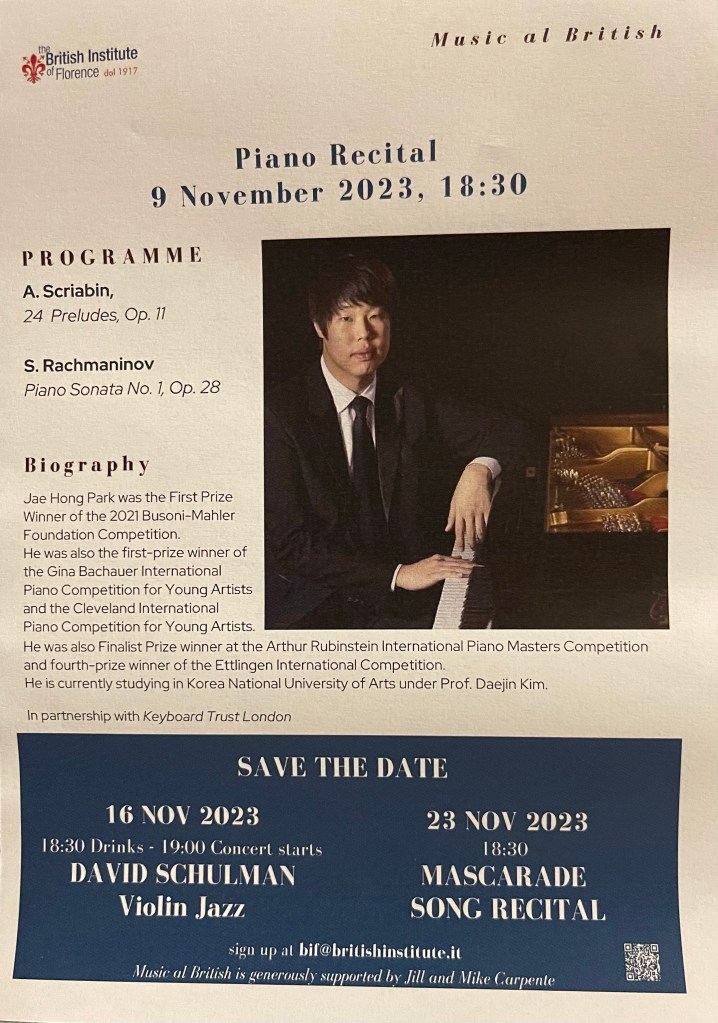
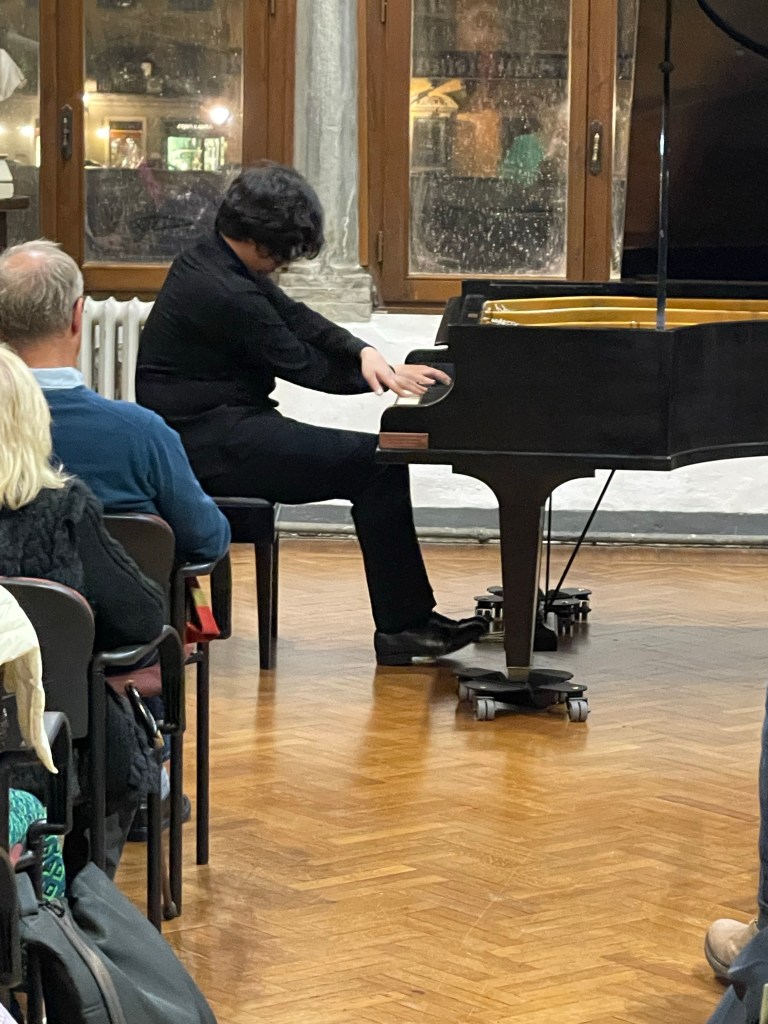
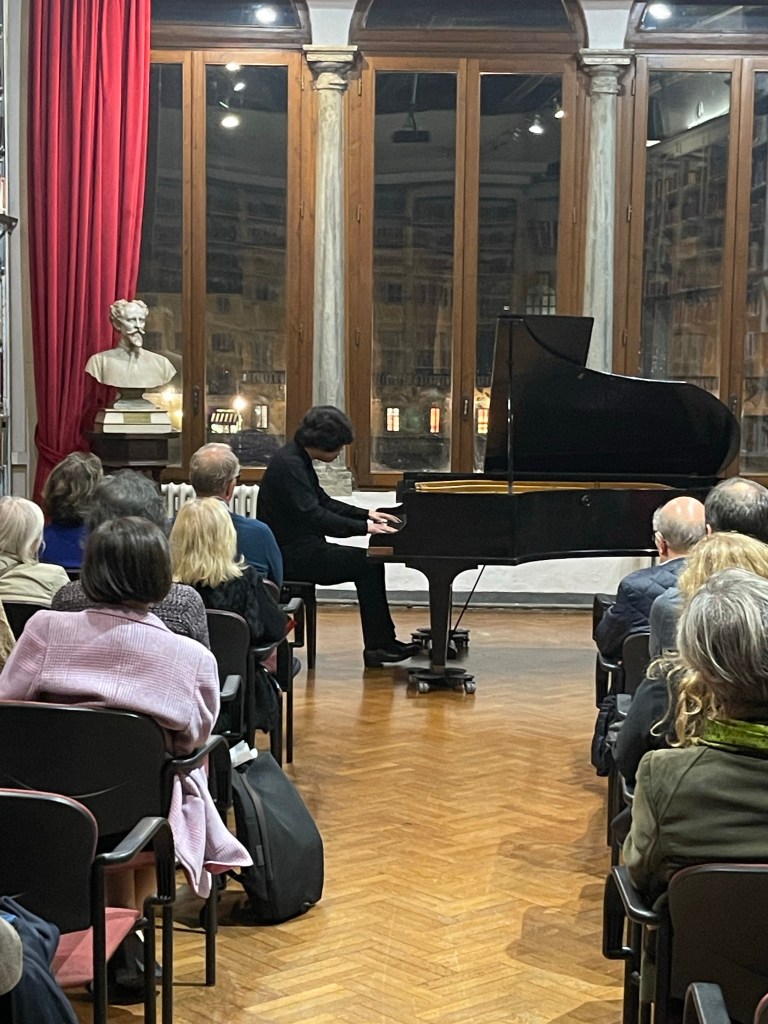
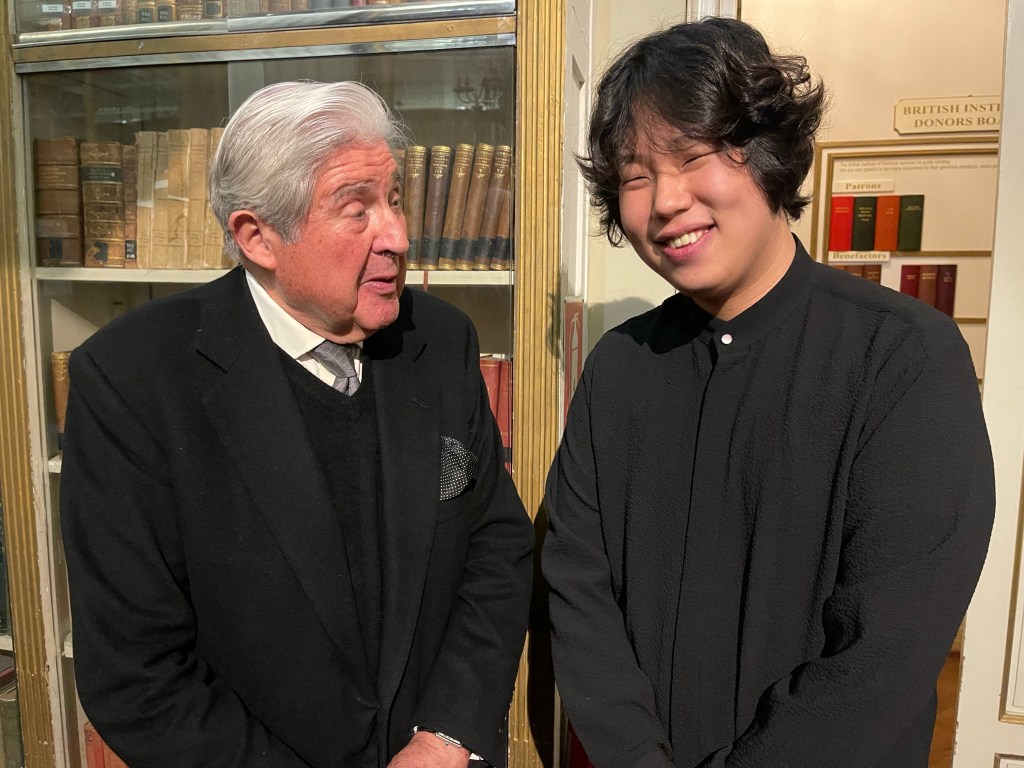
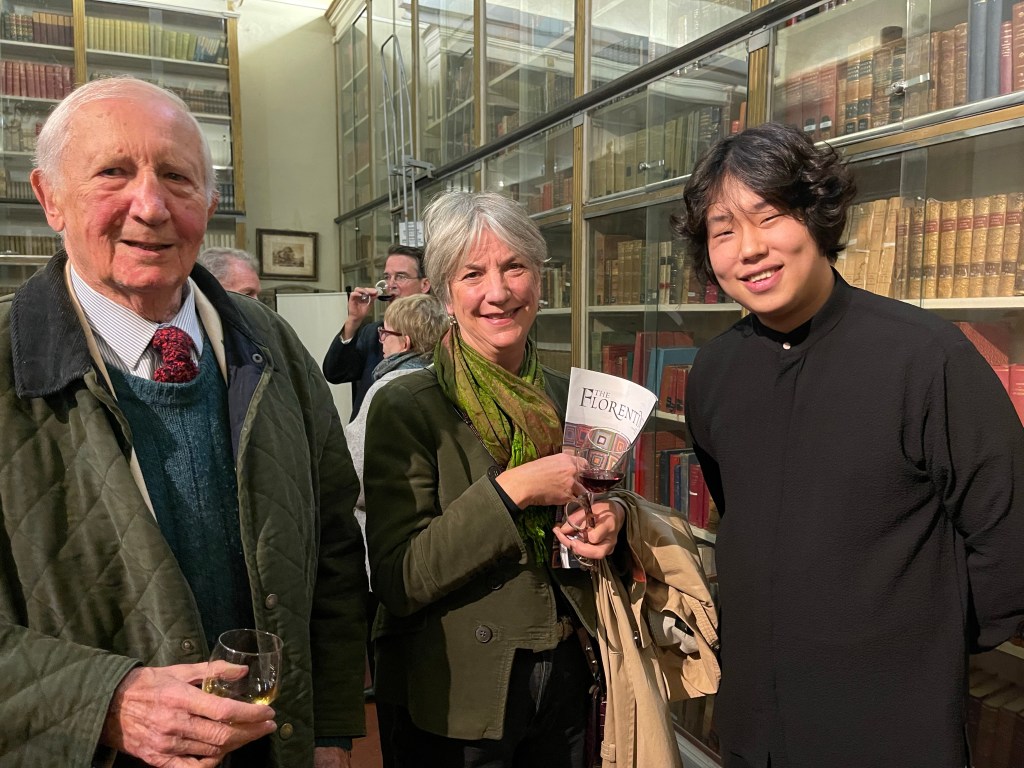
Jae Hong Park in Florence and Milan – ‘The poetic sensibility and virtuosity of a great musician.’

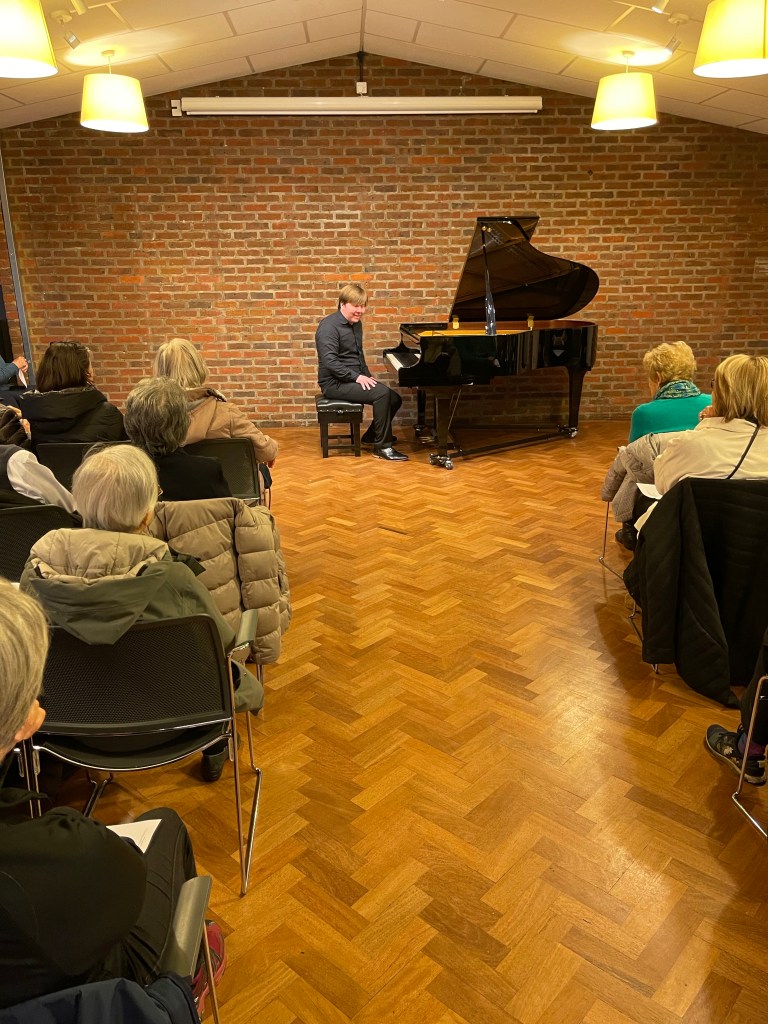
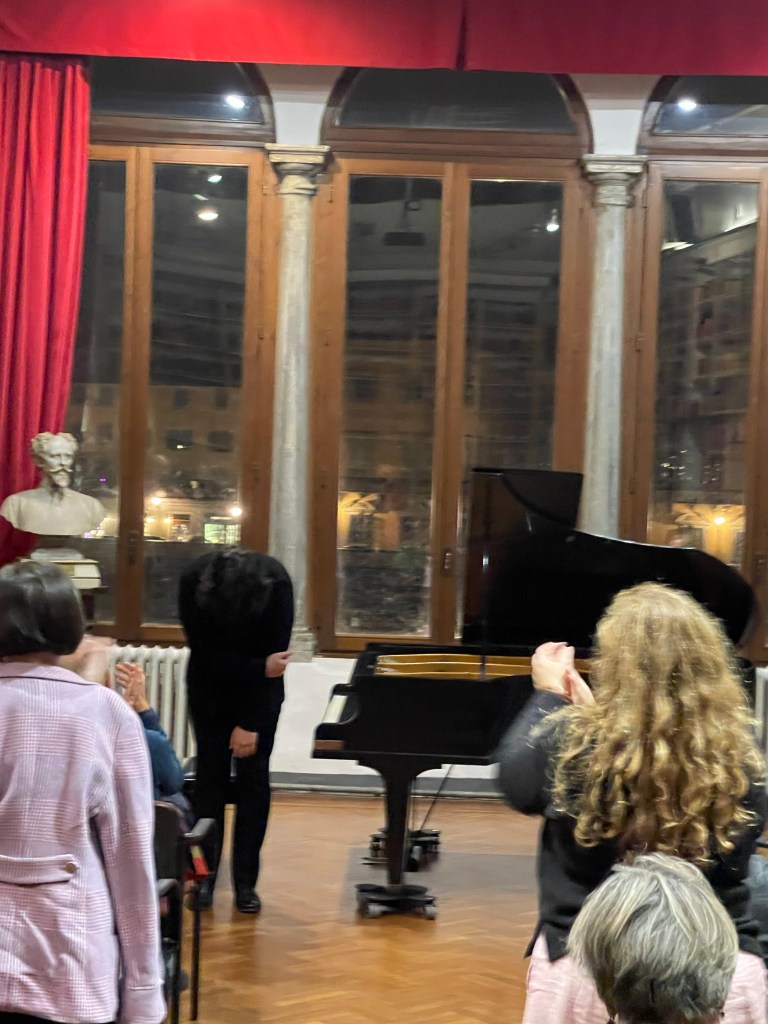
A standing ovation for the 2021 Busoni Winner in the Harold Acton Library in Florence with a ‘Bouquet of Flowers ‘ from Scriabin with his 24 Preludes op 11 and the Canons covered in Flowers of Rachmaninov with his elusive First Sonata op.1 . The last in the present series of Busoni winners presented by the Keyboard Trust going British in Florence.


A quite extraordinary ‘tour de force’ of poetic sensibility and virtuosity but above all intelligence from the refined palette of a deeply dedicated musician.Jae Hong had swept the board in Bolzano with a ‘Hammerklavier’ that will go down in the history of the competition.

Busoni International Piano Competition 2021


His Scriabin was full of insinuating perfumed sounds and sudden bursts of passion.His extraordinary control of sound allowed these 24 gems to glisten and shine on a 1898 Bechstein bequeathed by that never forgotten aesthete Harold Acton.
Not an easy task , as he said later, this is a piano with a unique voice for Beethoven and Schubert but for the Russian school it was missing a few gears!


Such was his mastery that he was able to persuade us,as Richter could do,that this was an instrument that could detonate the bomb shells and range of sounds that this repertoire demands.
Like a man possessed he threw himself into the cauldron of sounds that make up Rachmaninov’s early sonata.As he explained to me afterwards he had to pace himself and find the point of arrival in both Scriabin and Rachmaninov that would give a coherant architectural shape to these two hidden masterpieces.


It was Rachmaninov himself in 1908 who had had such difficulty in finding a form for his op.1 as he struggled with the idea of a sonata based on Goethe’s Faust.He was persuaded to abandon that idea for a more formal form by Medtner and other colleagues trimming down the sonata from 45 to 35 minutes.But little did they realise that this leit motiv was so ingrained that it is there for all those that can find this secret web.It is the formula for a master work that has been misunderstood for too long. It takes the intelligent searching minds of the young super sensitive virtuosi of today to show us the way.
For me it had been Kantarow recently who illuminated a work I had always struggled with since Ogdon brought it to light ( by coincidence with 50 years difference both winners of the Tchaikowsky Competition in Moscow ).It was a light like the ‘star’ in Scriabin that had been shining brightly but only for those with super sensitive antennae able to follow its seemingly impenetrable rays.
Jae Hong with his complete mastery and ultra sensitivity brought it vibrantly alive to all those lucky enough to be present in the cradle of culture that is Florence.
A breathtaking performance where a Guinness book of record of notes were turned into shimmering sounds of gossamer gold and silver out of which emerged fragments that gradually were pieced together to give a coherant form to this gargantuanly sprawling work.


A spontaneous standing ovation greeting this ‘tour de force’and with disarming simplicity this extraordinary artist simply said :‘and now I will show you what this instrument can really do!’
The heavens truly openened as he unlocked the intimate secrets of Brahms’ Intermezzo op 117 n.1 with rarified luminous sounds of delicate whispered secrets.The minutes of aching silence that greeted the last chord were golden indeed .
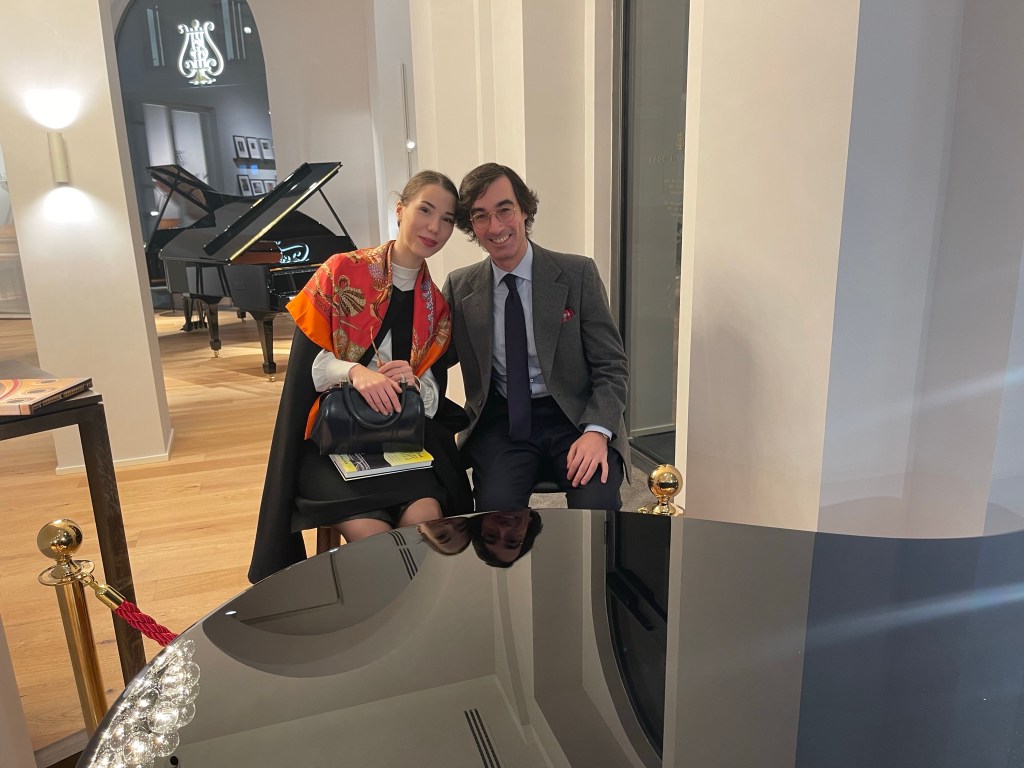
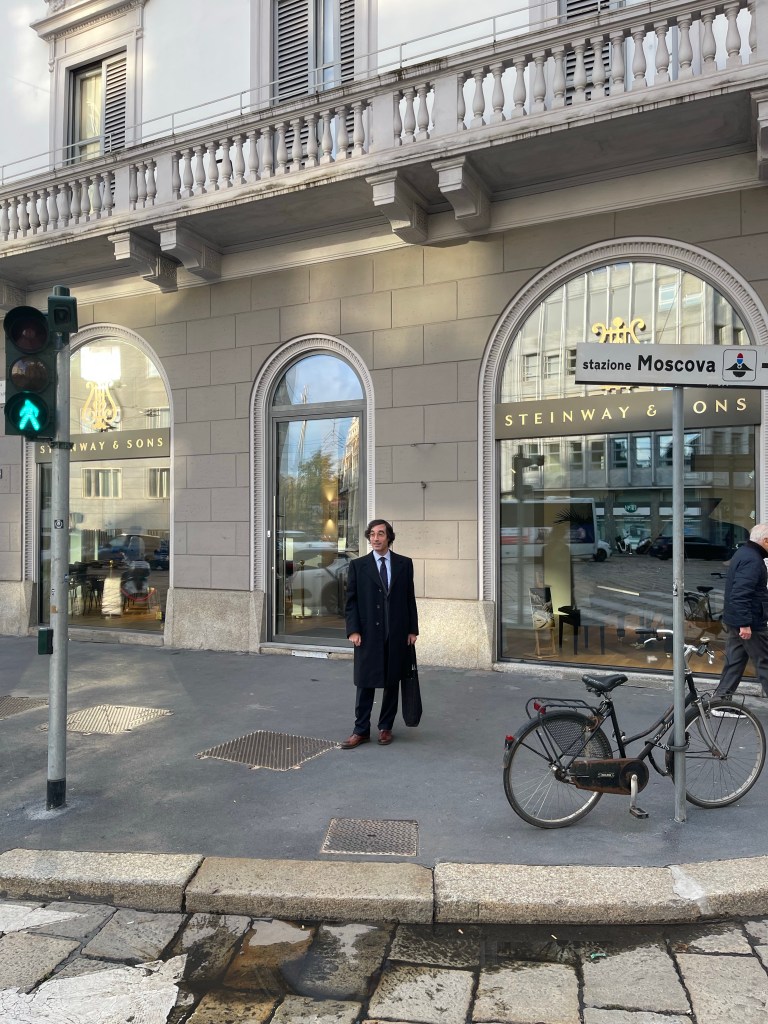
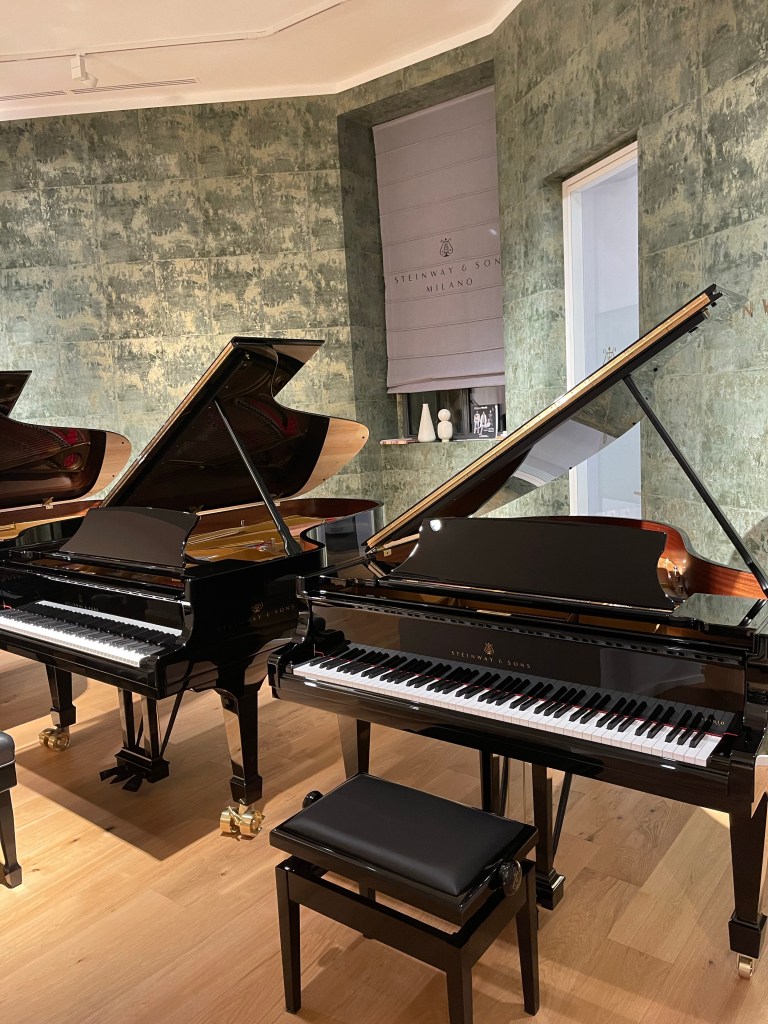
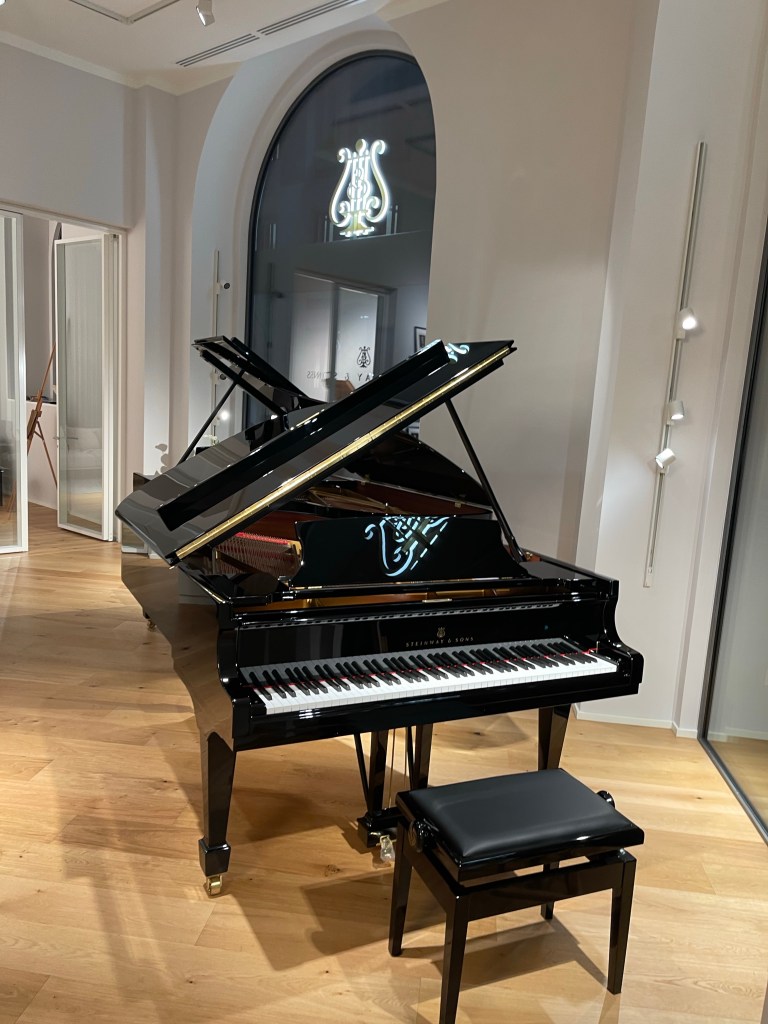
Lucky Milan that will be able to experience such wonders today in the magnificent new Steinway Studio in the hands of Maura Romano the true saviour for all discerning musicians.

With Sir David Scholey
With Michael Griffiths and Nicky Swallow (organiser of the “Terra di Siena’ Festival of Antonio Lysy )
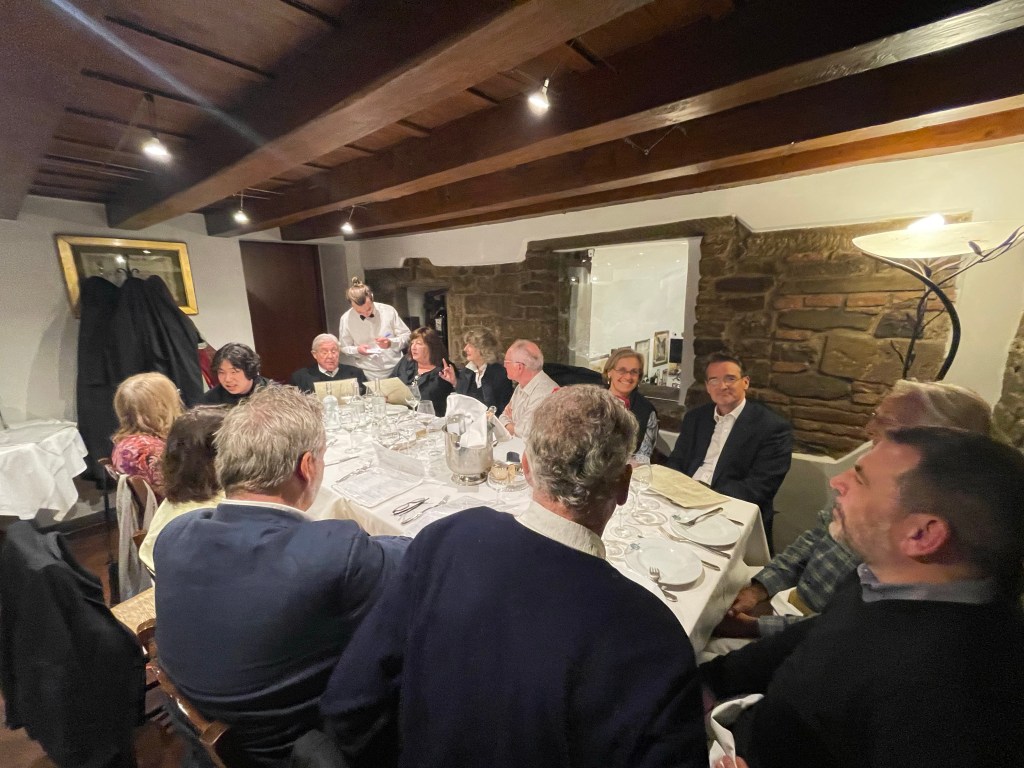
A feast fit for a King with the governors of the British Institute at the Trattoria Camillo

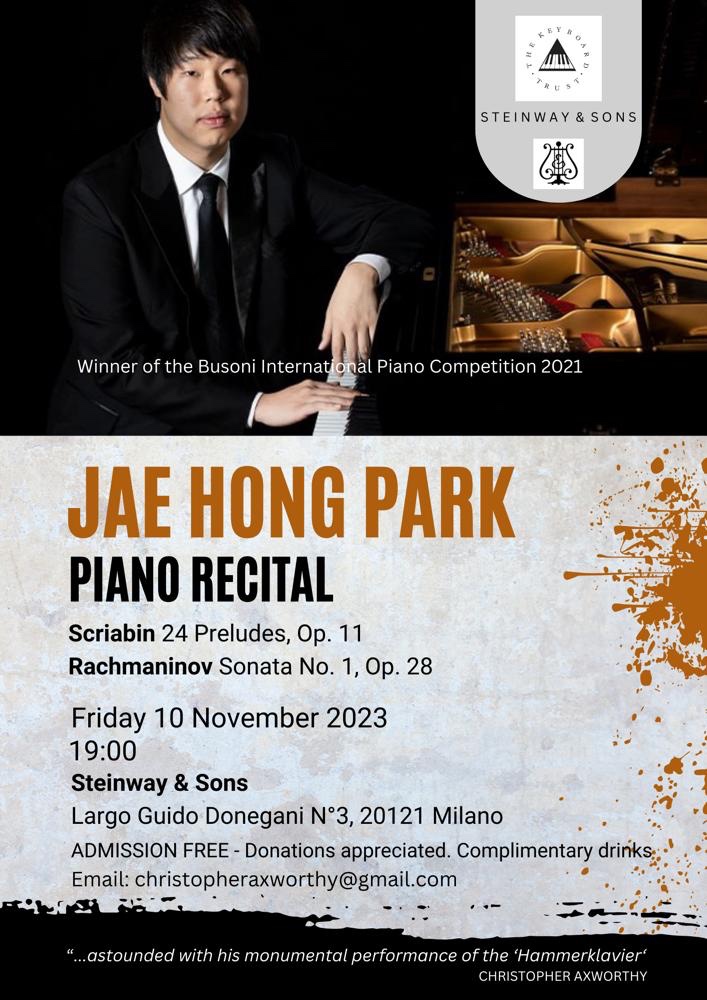
Jae Hong Park at Steinway Hall

The indomitable promoter of Steinway pianos and the young artists that aspire to play them

And so to the adorable Maura Romano in the new Steinway Flagship in Milan with Jae Hong Park …..a triumph pre-announced with breathtaking performances of Scriabin and Rachmaninov but then really letting his hair down Debussy style with Flaxen locks of ravishing colour.The last word of course went to the miracles that only Bach can offer with the Prelude in B minor bathed in the Russian sound world of Rachmaninov in Siloti’s magical transcription.


A joyous occasion for the first collaboration between Milan and the Keyboard Trust.Jae Hong spending the day hypnotised by the most beautiful piano that Steinways keep for special guests.A day that heard all five Beethoven concertos and the trilogy of late sonatas from the hands of a young master about to play them in two day cycles in Seol on his return on Monday.

All that before his beguiling, breathtaking performances of Scriabin and Rachmaninov for a select invited audience on the magnificent Concert Grand that sits in this magnificent new Steinway Flagship just a stones throw from La Scala.
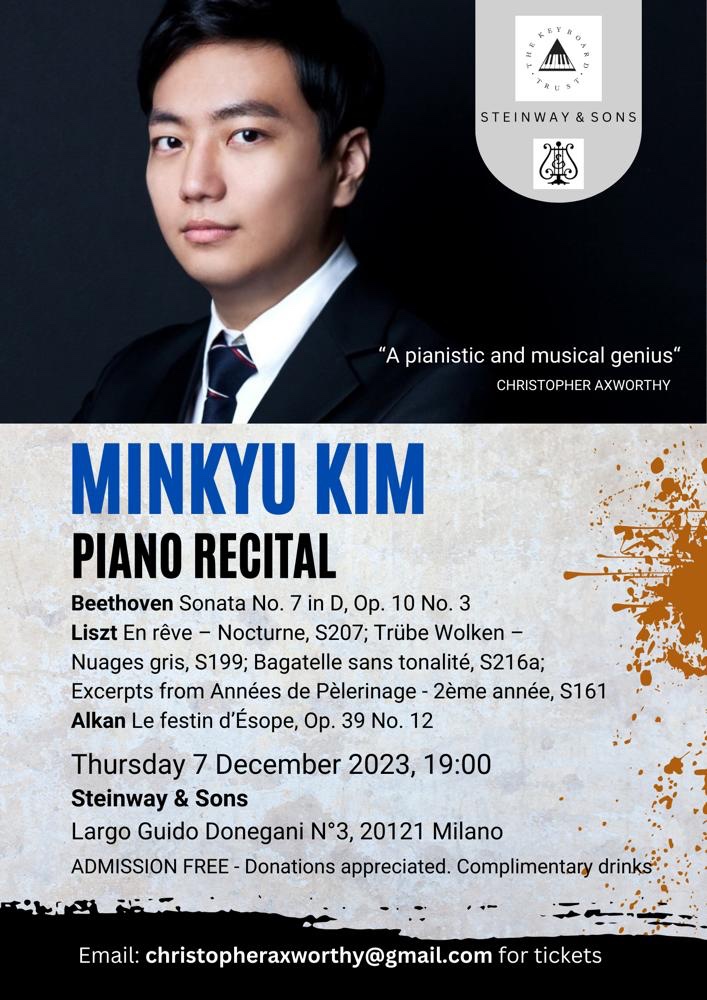
Next concert on the 7th December with Minkyu Kim.

Minkyu Kim a pianistic and musical genius at St Mary’s

Maura’s ‘family’ with Massimiliano Trebo ( behind Jae Hong) who will give a duo recital with Jae Hong in Bolzano tomorrow
The man with the red scarf
Ioana and Alberto Chines our people in Milan .
With my host in Milan Alberto Chines another artist from the KT family

https://christopheraxworthymusiccommentary.com/2022/01/24/alberto-chines-artistry-and-scholarship-in-rome/
The new Steinway Flagship in Milan just a stone’s throw from the temple of music that is La Scala
Sold out for an astonishing performance from a star
A well earned celebration with the Trebo’s who will drive him back to Bolzano to give a concert with their son Massimiliano a student of Pavel Gililov in Salzburg
The next concert for the KT in Italy .Florence 5th December Milan 7th
https://christopheraxworthymusiccommentary.com/2022/04/18/minkyu-kim-a-pianistic-and-musical-genius-at-st-marys/

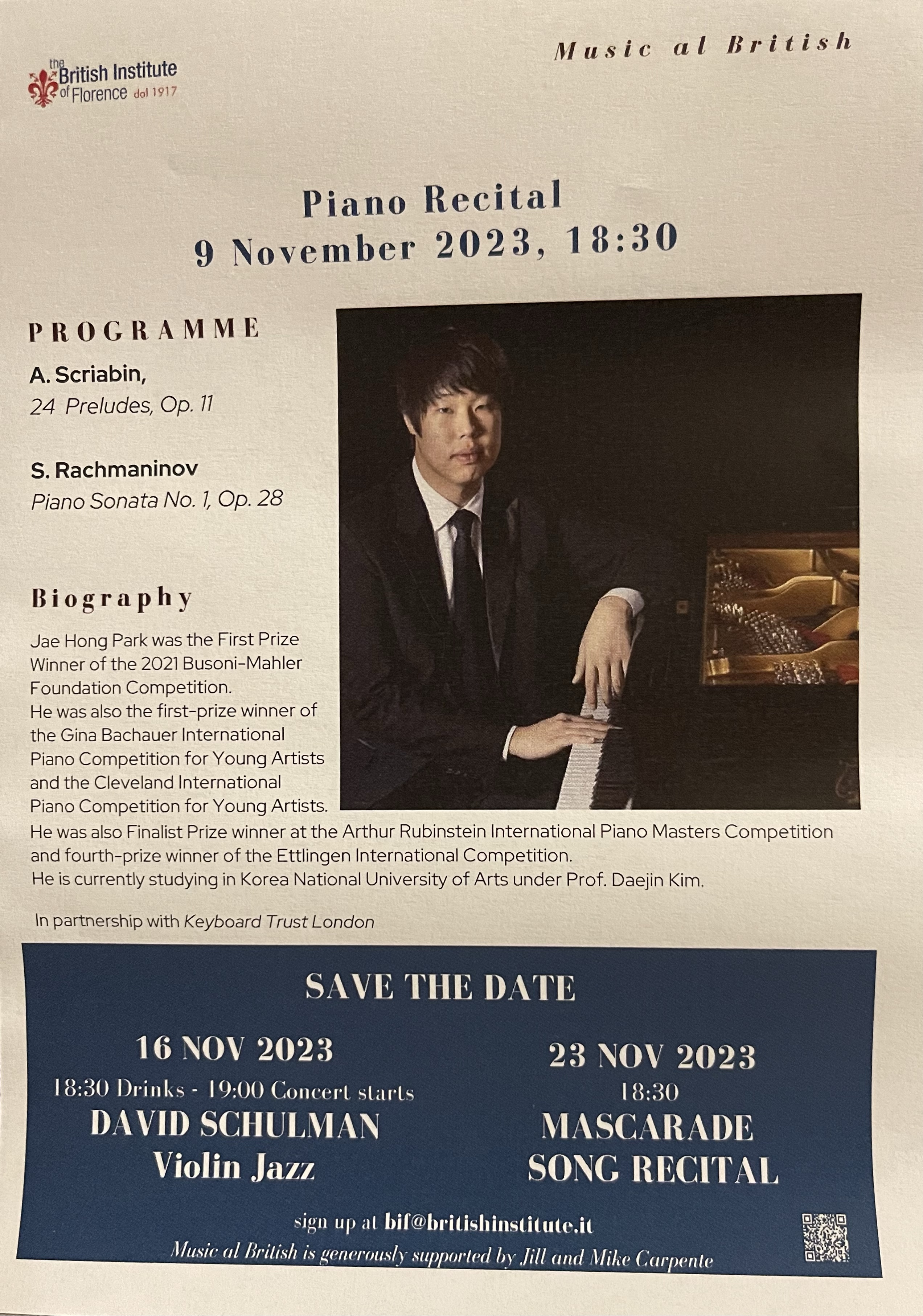
Jae Hong Park was the First Prize Winner of the 2021 Busoni-Mahler Foundation Competition.

He was also the first-prize winner of the Gina Bachauer International Piano Competition for Young Artists and the Cleveland International Piano Competition for Young Artists. He was also Finalist Prize winner at the Arthur Rubinstein International Piano Masters Competition and fourth-prize winner of the Ettlingen International Competition.

He has performed recitals in many countries including Italy, Argentina, Netherlands, Poland, Spain and the United States. He has performed with the Israel Philharmonic Orchestra, Jerusalem Camerata, Utah Symphony Orchestra and many other orchestras.

He has been invited to the Washington Piano Festival, the Gina Bachauer Piano Festival, Grachten Festival and other festivals to give recitals. He is currently studying in Korea National University of Arts under Prof. Daejin Kim.

Sergei Vasilyevich Rachmaninoff. 1 April (20 March) 1873 – 28 March 1943

Piano Sonata No. 1 in D minor op 28 was completed in 1908.It is the first of three “Dresden pieces”, along with the symphony n.2 and part of an opera, which were composed in the quiet city of Dresden.It was originally inspired by Goethe’s tragic play Faust,although Rachmaninoff abandoned the idea soon after beginning composition, traces of this influence can still be found.After numerous revisions and substantial cuts made at the advice of his colleagues, he completed it on April 11, 1908. Konstantin Igumnov gave the premiere in Moscow on October 17, 1908. It received a lukewarm response there, and remains one of the least performed of Rachmaninoff’s works.He wrote from Dresden, “We live here like hermits: we see nobody, we know nobody, and we go nowhere. I work a great deal,”but even without distraction he had considerable difficulty in composing his first piano sonata, especially concerning its form.Rachmaninoff enlisted the help of Nikita Morozov , one of his classmates from Anton Arensky’s class back in the Moscow Conservatory, to discuss how the sonata rondo form applied to his sprawling work.Rachmaninov performed in 1907 an early version of the sonata to contemporaries including Medtner.With their input, he shortened the original 45-minute-long piece to around 35 minutes and completed the work on April 11, 1908. Igumnov gave the premiere of the sonata on October 17, 1908, in Moscow, 

Lukas Geniusas writes about his premiere recording of the Rachmaninov Sonata n. 1 to be issued in October : ‘About a year ago I came across a very rare manuscript of the Rachmaninov’s Sonata no.1 in its first, unabridged version. It had never been publicly performed.
This version of Sonata is not significantly longer (maybe 3 or 4 minutes, still to be checked upon performing), first movement’s form is modified and it is also substantially reworked in terms of textures and voicings, as well as there are few later-to-be-omitted episodes. The fact that this manuscript had to rest unattended for so many years is very perplexing to me. It’s original form is very appealing in it’s authentic full-blooded thickness, the truly Rachmaninovian long compositional breath. I find the very fact of it’s existence worth public attention, let alone it’s musical importance. Pianistic world knows and distinguishes the fact that there are two versions of his Piano Sonata no.2 but to a great mystery there had never been the same with Sonata no.1.’

Lukas Geniušas Maturity and mastery in Duszniki


Alexander Nikolayevich Scriabin

25 December 1871
(6 January 1872)
Moscow
Died
14 April 1915 (aged 43)
Moscow,

Alexander’s 24 Preludes, Op. 11 is a set of preludes composed in the course of eight years between 1888–96,being also one of Scriabin’s first published works with M.P.Belaieff in 1897,in Leipzig , together with his 12 Études, Op. 8 (1894–95).

Scriabin’s 24 preludes were modeled after Chopin’s own set of op .They also covered all 24 major and minor keys and they follow the same key sequence: C major, A minor, G major, E minor, D major, B minor and so on, alternating major keys with their relative minors, and following the ascending circle of fifths .

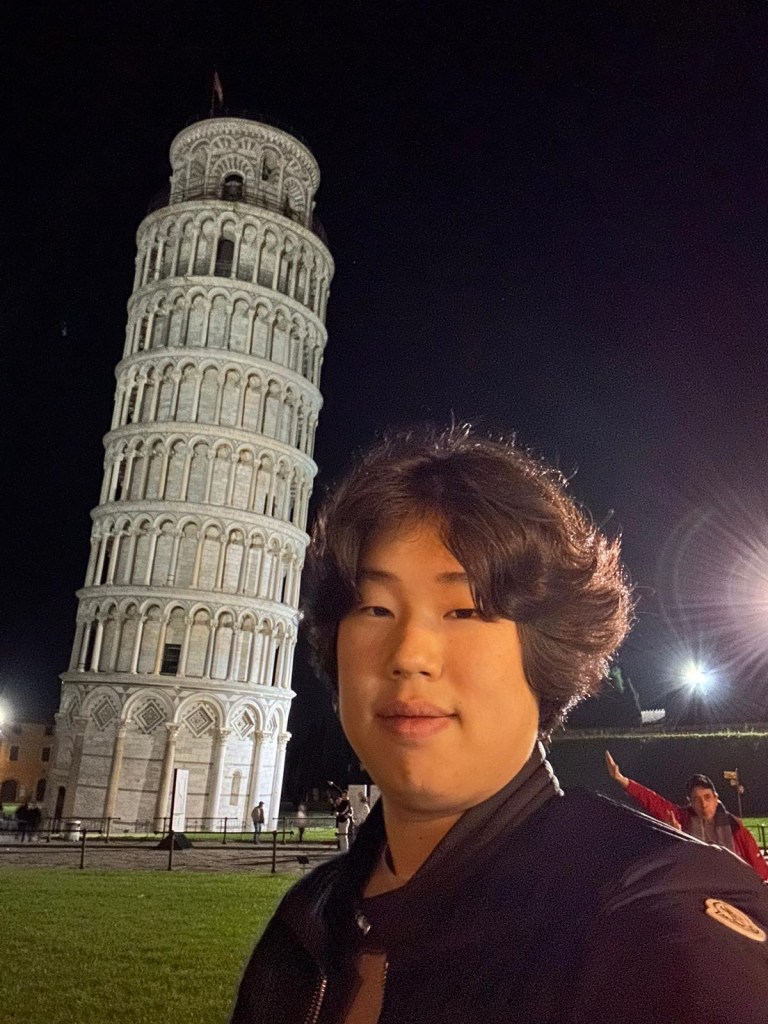
Jae- Hong in Pisa

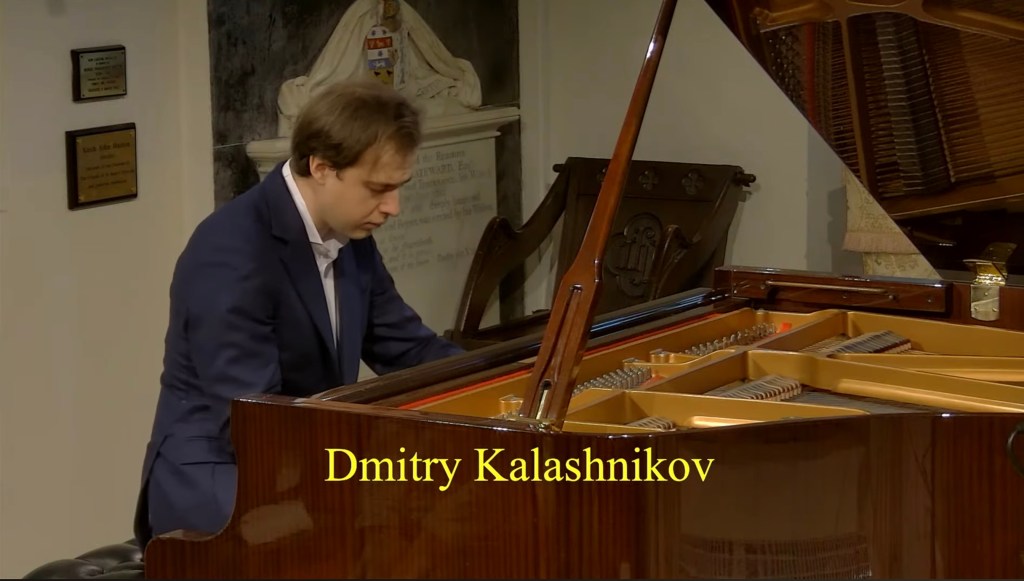
Dmitry Kalashnikov at St Marys The poetic mastery and genius of a great pianist

https://youtube.com/live/QAV5CY4PYj0?feature=shared

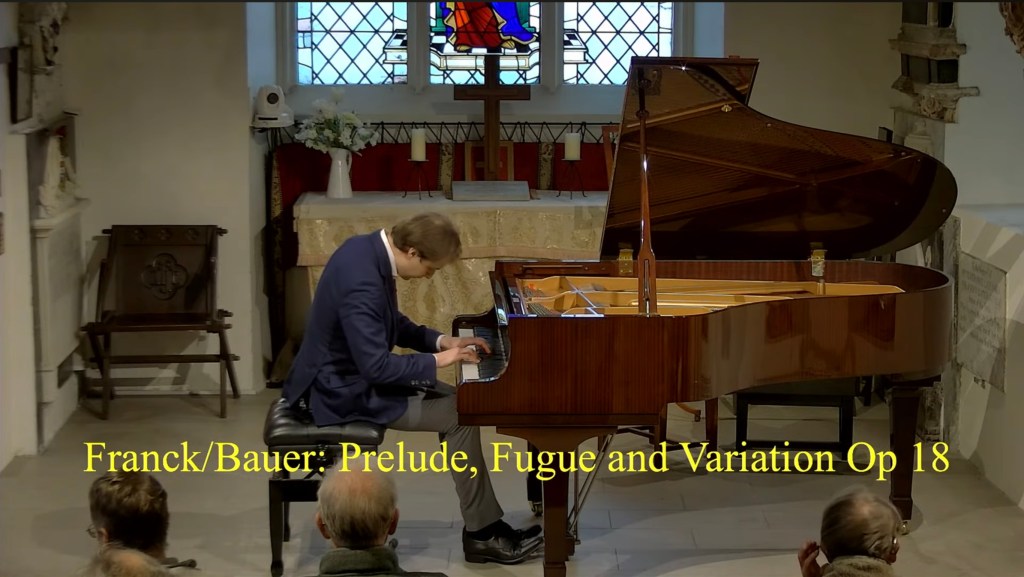
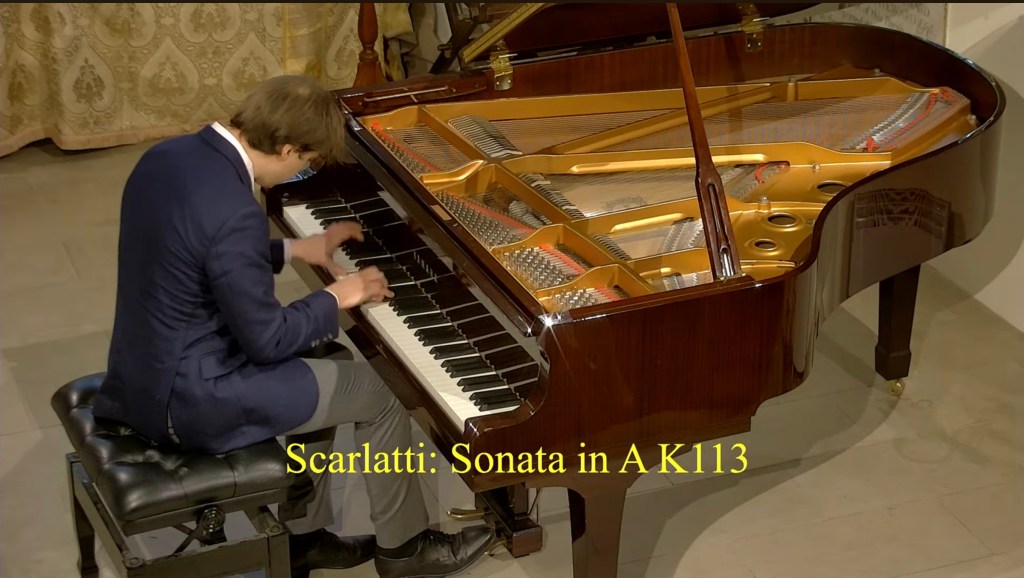
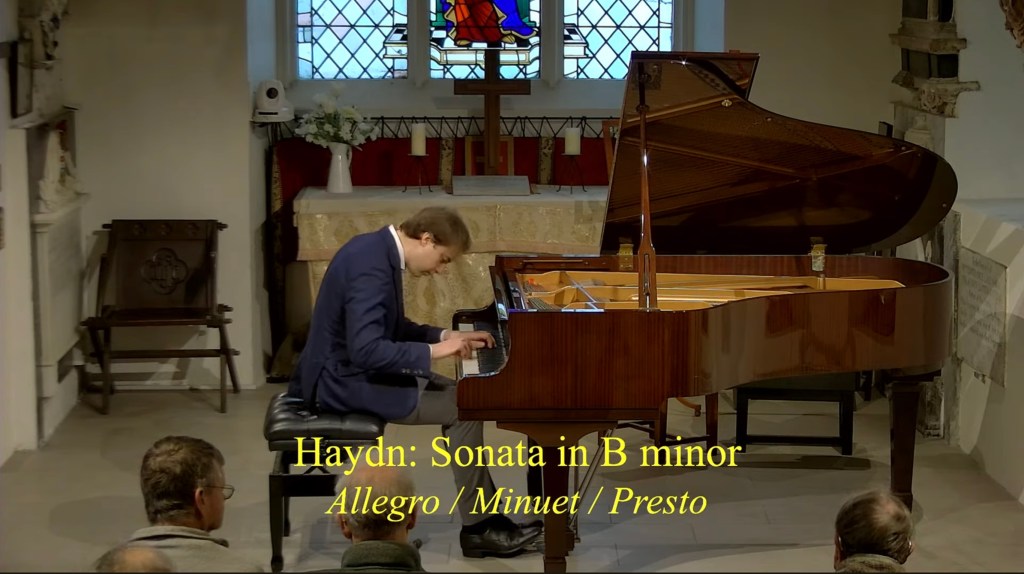
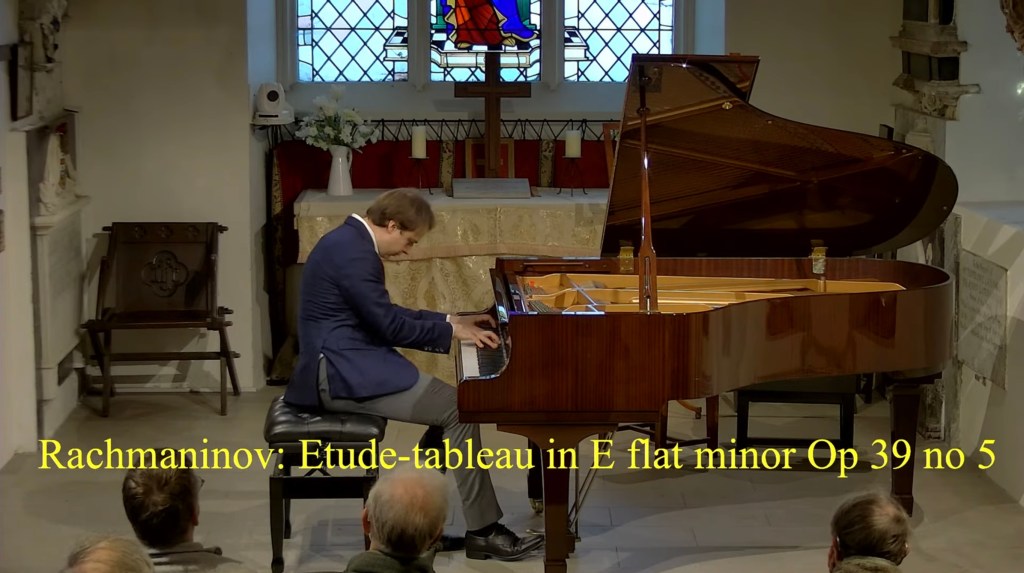
I think Dr Mather said it all when he thanked Dmitri for a phenomenal performance of spectacular proportions and that it was a privilege to have heard such playing.Playing that reminded me of the young Tamas Vasary or even more Sokolov of today .There was a sound that was very clean,crisp and clear but also multi coloured and in the greatest of climaxes sumptuously rich and never hard or ungrateful.A technical mastery allied to a musicianship that could change with chameleonic speed from the purity of Franck to the clarity of Scarlatti and Haydn and then turn the piano into an orchestra with Tchaikowsky and Saint- Saens.I have heard many remarkable hands play on this very instrument, in this extraordinary series that the genial Dr Mather and his team are dedicated to offering to young musicians,but I have never heard such sumptuous sounds as in the hands of this piano genius.A name that defies the beauty ,poetry and total mastery he has in his hands but surely a name to remember!

There was a beauty of sound from the first notes with a subtle refined tone palette.Deep bass notes barely touched that just opened up this magic box of jewels that were flooding from his fingers.There was a sumptuous full sound even when reaching the climax that was done with intelligent architectural understanding.A beautifully improvised link lead to the gently persuasive fugue. There were rich sounds added to a delicate tone palette of refined colours.Magical arabesques paved the way for the celestial apparition of the opening theme.A quite magnificent performance for the overall shape that he gave to the entire work without sacrificing the etherial beauty of Bauer’s transformation.
A hidden masterpiece revealed to us today by a true poet of the keyboard .
There was a refreshing clarity and rhythmic energy to one of Scarlatti’s busiest sonatas.It made the ideal link between the two Romantic and Classical worlds.
Ornaments that unwound like well oiled springs added to a crisp delicacy. A rhythmic drive with runs that sparkled with the ‘joie de vivre’ that was in his agile fingertips.A clarity and purity of sound with a subtle sense of architectural shaping of almost unnoticeable contrasts in dynamics because they were so interwoven into the whole.Elegance and beauty in the Minuet went delicately hand in hand even with the rhythmic meanderings of the Trio.A dynamically driven ‘presto’ that even at such a pace there was absolute clarity and precision in a movement shaped with an extraordinary sense of style.
A sumptuous full Philadelphian sound world with a breathtaking sense of colour and passionate involvement.What a poet he is too a lone voice was momentarily suspended over a cauldron of rumbling sounds leading to an incredible climax before the magically poetic whispered ending of golden luminosity.
Playing of this grandeur and mastery I have only ever heard from Sokolov
‘Fake ,fool or genius’ was the title of an article I wrote after I had heard Pletnev play.
In this suite there is no doubt that we have real genius.The same unsettling genius of Tchaikowsky – but then genius is never easy to live with!
A magnificent performance from Dmitry who obviously relished this wonderfully written transcription.A ‘March’ of delicious charm and exhilaration as notes spread with ease over the entire keyboard.A luminosity to the ‘Sugar Plum Fairy ‘ with wondrous sounds that would make any orchestra green with envy.A ‘Tarantella’ with a beguiling web of notes ,and a truly wondrous sense of balance as the melody seemed to float on a stream of arpeggiated sounds in the ‘Intermezzo’.Virtuositic hi jinx of rhythmic energy abound in the ‘Trepak’ but what a wonder the ‘Chinese Dance’ was with the deep rumbling in the bass and the spirited melody at the opposite end of the keyboard all played with clockwork precision and irresistible charm.The Andante maestoso must be one of the greatest transcriptions ever made .Like Liszt’s Norma fantasy the secret world of Thalberg is taken to genial heights of sublime piano playing.
And that is what we heard today from the hands of a true master.
The simple stroked tolling bell at the opening gave us no idea of what was in store for us .Vibrant playing of devilish virtuosity.Unbelievable glistening streams of notes with a virtuosity of refined mastery.When Horowitz first arrived in Paris in the ‘20’s with such gems the critic simple stated that he was the ‘greatest pianist alive or dead’ .Today we caught more than a glimpse of what would have thrilled those audiences and judging from the reactions still does today!This was better than any orchestra because of its subtle refinement and freedom with a knotty twine that never for a second caught Dmitry out.He played like a man possessed by the Devil indeed.After such bewitching playing there unfolded a coda of beautiful atmospheric sounds with a golden chain of notes that just seemed to disappear by magic into the realms of the heights.

Dmitrii Kalashnikov was born in Moscow in 1994. He graduated with distinction from the Gnessin Moscow Special School of Music (2012; classes of Ada Traub and Tatiana Vorobieva) and the Tchaikovsky Moscow State Conservatory (2017; class of Elena Kuznetsova). In 2021 he completed his postgraduate studies at the Royal College of Music in London (class of Vanessa Latarche). He was a prize-winner at the Concours International de Piano du Conservatoire Russe Alexandre Scriabine (Paris, 2008; 1 st prize), the Jaques Samuel Pianos Intercollegiate Piano Competition (London, 2019; 1 st prize) and the Beethoven Senior Intercollegiate Piano Competition (London, 2021; 1 st prize). He is a grant-recipient of the New Names foundation, the Yuri Rozum International Charitable Foundation and the Homecoming Culture Development Fund, and has received the Prize of the Support for Talented Youth of the Government of the Russian Federation, the City of Moscow Prize and the George Stennett Award. He was also supported by a Neville Wathen Scholarship. He gives recitals at the Moscow Conservatory, the Gnesin Russian Academy of Music, the Moscow International Performing Arts Centre, London’s Wigmore Hall and at various venues in France, Austria, Poland, Estonia, Italy, Belgium and the United Kingdom. He has appeared on several occasions with the Russian National Orchestra under the baton of Mikhail Pletnev and in a duet with Pletnev on two pianos (conducted by Mischa Damev). He regularly performs at the Mariinsky International Piano Festival. In December 2018 he appeared at the Concert Hall of the Mariinsky Theatre with the Mariinsky Orchestra. He has taken part in various projects of the State Tretyakov Gallery. For several years he ran artistic soirees with the artist Gavriil Kochevrin for charitable events for orphans at the Marina Tsvetaeva House Museum (Moscow). These concert performances have seen the participation of Yevgeny Knyazev, Alexander Rudin and Boris Andrianov. In September 2019 he took part in the opening of the season at the Nizhny Novgorod State Academic Opera and Ballet Theatre named after A.S. Pushkin.

Dmitry Kalashnikov at St Mary’s Mastery and intelligence with explosions of virtuosity at the service of the music.

Concert Suite from Ballet ‘The Nutcracker’:
March
Dance of the Sugar-Plum Fairy
Tarantella
Intermezzo
Trepak (Russian Dance)
Chinese Dance
Andante maestoso
https://christopheraxworthymusiccommentary.com/2022/07/25/mikhail-pletnev-in-verbier-fakefool-or-genius/

https://christopheraxworthymusiccommentary.com/2023/10/08/the-secret-world-of-pletnev-in-eindhoven-private-musings-of-ravishing-beauty/

14 April 1957 (age 66) was born into a musical family in Arkhangelsk part of the Soviet Union .He studied for six years at the Special Music School of the Kazan Conservatory before entering the Moscow Central Music School at the age of 13, where he studied under Evgeny Timakin. In 1974, he entered the Moscow Conservatory , studying under Yakov Flier and Lev Vlassenko At age 21, he won the Gold Medal at the VI international Tchaikovsky Competition in 1978, which earned him international recognition and drew great attention worldwide.
César-Auguste-Jean-Guillaume-Hubert Franck
10 December 1822 – 8 November 1890

Franck was inspired to write this organ piece for the instrument at the church of Sainte-Clotilde. While it sounds majestic on the organ, it is also frequently heard in Harold Bauer’s transcription for the piano.The Prelude, Fugue and Variation, Op. 18 is one of Franck’s Six Pieces for organ, premiered by the composer at Sainte-Clotilde on 17 November 1864. They mark a decisive stage in his creative development, revealing how he was building on the post-Beethoven Germanic tradition in terms of the importance given to musical construction.
The Prelude, Fugue and Variation is dedicated to Saint-Saëns. Years earlier, when Franck published his Op. 1 trios, Liszt was among their admirers but had advised his younger colleague to write a new finale for the third of the trios and create a separate work from the original finale – this became Franck’s Fourth Piano Trio, Op. 2, dedicated to Liszt. In spring 1866, the Hungarian composer was in Paris for the French premiere of his Missa solennis for the consecration of the Basilica in Gran (Esztergom) at the Église Saint-Eustache on 15 March, a work about which Franck was enthusiastic. At the beginning of his stay, Liszt had come to listen to Franck improvising at Sainte-Clotilde and, apparently at Duparc’s instigation, a second private performance took place on 3 April. Franck wanted to play Liszt’s Prelude and Fugue on the Name BACH but the latter asked instead to hear Franck’s own Prelude, Fugue and Variation.
The piano transcription of this organ work was made by Harold Bauer (1873-1951), the British pianist who gave the world premiere of Debussy’s Children’s Corner and was the dedicatee of Ondine, the first piece in Ravel’s Gaspard de la nuit.Harold Bauer made his debut as a violinist in London in 1883, and for nine years toured England. In 1892, however, he went to Paris and studied with Paderewski for a year.In 1900, Harold Bauer made his debut in America with the Boston Symphony Orchestra, performing the U.S. premiere of Brahms’Piano Concerto No.1 in D minor. On 18 December 1908, he gave the world premiere performance of Debussy’s Children’s Corner Suite in Paris.After that he settled in the United States.He was also an influential teacher and editor, heading the Piano Department at the Manhattan School of Music . Starting in 1941, Bauer taught winter master classes at the University of Miami and served as a Visiting Professor at the University of Hartford Hartt .Students of Harold Bauer include notably Abbey Simon and Dora Zaslavsky.

Franz Joseph Haydn
31 March 1732 – 31 May 1809

The 55 Haydn Sonatas are perhaps the least-known treasures of the piano repertoire. In them one can hear Haydn virtually inventing the classical style, from the early, somewhat tentative beginnings, through the bold experiments of the 1770s, to the adventurous late works. As with Beethoven (Haydn’s somewhat recalcitrant student) each sonata is a new exploration, and the element of surprise is ever present. Haydn delights in abrupt transitions, twists and turns, sudden pauses, and apparent non sequiturs; listening to him demands a constant alertness.

The 1770s, when Haydn’s Sonata in B minor was composed, was the age of Sturm und Drang (storm and stress) in German culture, an age when aberrant emotions were all the rage in music; and what better tonal avouring than the minor mode to convey these emotions?

It is also important to note that the 1770s was the period in which the harpsichord was gradually giving way to the new fortepiano, precursor of the modern grand, and there is much in this sonata to suggest that it still lingered eagerly on the harpsichord side of things, at least texturally.

This cross-over period between harpsichord and fortepiano plays out in the nature of the first movement’s two contrasting themes.

In place of a lyrical slow movement, Haydn offers us a minuet and trio which features thematic material as dramatically contrasting as the first and second themes of the first movement. The minuet is in the major mode, set high in the register, sparkling with trills

The trio is daringly in the minor mode, set low, and grinds grimly away in constant 16th-note motion.

Haydn wouldn’t be Haydn if he didn’t send you away with a toe-tapping finale and such a movement ends this sonata. To that end, Haydn’s go-to rhythmic device is repeated notes, and this nale chatters on constantly at an 8th-note patter, interrupted at random, it would seem, by surprising silences and dramatic pauses – as if to allow the performer to turn sideways and wink at his audience.

Charles-Camille Saint-Saëns 9th October 1835 – 16 December 1921)

Danse macabre, Op 40, is a symphonic poem for orchestra, written in 1874 and was first performed on 24 January 1875. It started out in 1872 as an art song for voice and piano with a French text by the poet Henri Cazalis , based on the play Danza macàbra by Camillo Antona-Traversi.In 1874, the composer expanded and reworked the piece into a symphonic poem, replacing the vocal line with a solo violin part Shortly after the premiere, the piece was transcribed into a piano solo arrangement by Franz Liszt S.555 a good friend of Saint-Saëns in 1942, Vladimir Horowitz made extensive changes to the Liszt transcription and it is this version that is played most often today.

Magdalene Ho – the genial ‘Clara Haskil’ winner at 19 takes Leighton House by storm

Genius is hard to define but when you hear it there is no doubt of it’s presence .Tonight Magdalene Ho kept us enraptured by her total concentration and burning intensity mixed with an obvious shyness when her hands left the keys and she had to join us mortals on equal ground .
I remember hearing an 18 year old fresher at the RCM electrifying the audience at the Joan Chissell Schumann Competition with the Eighth Novelette of such luminosity and ravishing beauty but also total commitment to the sounds that were pouring out of her minuscule frame .
The next I knew Patsy Fou rang me during the night to say she had won first prize in the Clara Haskil competition in Switzerland.(Haskil one of the greatest musicians of her time similar today to Pires)
Now in the great hands of Dmitri Alexeev her playing has grown in strength and nobility as a young girl becomes a sensitive woman more aware of the world around her.
Bach playing of such clarity and architectural strength .
Beethoven’s op 109 of radiance and searing aristocratic beauty. But it was the Schumann Carnaval of extraordinary character and authority ,where Florestan and Eusebius could finally live together in such secure sensitive hands,that showed us what the word genius can really mean.

From the very first notes of Bach it was evident that we were in the presence of a great personality.
A rhythmic energy within the notes themselves that gave nobility and architectural shape to the fantasy.
The whispered entry of the fugue that was played with clarity and purity but with that same burning intensity that brought every strand of this genial knotty twine vividly to life.It built almost unnoticeably to a climax such was her control of the sound within the notes themselves.
A magnificent declaration of faith by a fervent believer.
With baited breath we awaited her reappearance.There was a long pause where I imagine that she was not convinced that the piano was responding to her call for colour and luminosity.
The two things that had been so astonishing in her Schumann performance in the RCM.
She like Thomas Kelly five years previously in the Joan Chissell Schumann contest had a ‘sound’.A sound that is created by artists who have a musical palette that comes from who knows where,but leads to a dedicated search for sounds as the music speaks directly to them.
Rubinstein likened it to the Bees who search out different flowers to make their pollen ,drawn by the scent that appeals to their senses.No Honey is the same as each one represents the personal choice of the Bee.For the musician it is the total dedication to the sound that they are making and may indeed be considered a musical genius as it is so very rare to find in such an early age.But these young artists have dedicated their youth to searching for the beauty that their soul demands.The trial and tribulations of life – like for Beethoven – are not part of the equation for them.Both Magdalene and Tom are lucky to have the Alexeev’s to guide them through this incomprehensible maze so their great talent can find the road where it can grow and prosper.They have been bequeathed to the Alexeev’s :two genial young musicians – by Andrew Ball for Thomas Kelly ( who will close this season of ‘Discoveries’ on the 27th February )
https://christopheraxworthymusiccommentary.com/2023/02/14/a-celebration-of-the-life-of-andrew-ball-the-thinker-pianist-at-the-r-c-m-london
and by Patsy Fou,the widow of Fou Ts’ong, for Magdalene Ho.
https://christopheraxworthymusiccommentary.com/2021/01/13/roberto-prosseda-pays-tribute-to-the-genius-of-chopin-and-the-inspirational-figure-of-fou-tsong/
There was again absolute clarity in the beautifully mellifluous opening of Beethoven’s op 109 with a scrupulous attention to the composers indications.She even avoided (mostly) the pianistic splitting of difficult runs between the hands.This was Beethoven deliberately showing the struggle that was certainly not an easy stroll in the countryside!(a debatable point but one in which at least the struggle must remain).Magdalene brought the same burning intensity to the recitative interruptions where she played with vehemence and startling conviction.It was the same forward movement that was so evident in the scherzo where the trio,so feared by lesser hands, was filled with buoyancy and character.
There was a maturity and aristocratic purity to the Theme and Variations that is the true heart of this work.The theme was played like the Arietta of op 111 with the same string quartet quality that was to be so overwhelmingly poignant in the last great string quartets.
The variations unfolded so naturally with the expressive ornaments on the beat in the first variation that added weight to what in lesser hands can sound so frivolous!Here was a whole world unfolding with just so few notes.The lightness of the staccato of the second variations was miraculously answered by the delicate legato of the answering phrases.The third variation shot from her fingers with enviable security but it was also shaped like a living stream of sounds.Rosalyn Tureck crossed my mind on experiencing such mastery .She simply said :’but I do not play wrong notes’- because every note had a meaning in a chain that made an architectural whole,just as Magdalene revealed today.
There was a nobility and driving energy to the fourth variation as it lead into the miraculous sublimation of the theme where Beethoven, like Scriabin a century later,was to see and experience the ‘star’.Magdalene played like a woman possessed with passion and beauty but above all with simplicity where the music was allowed to speak for itself.
Schumann Carnaval was a work that won the hearts of the jury in the Clara Haskil competition.It was indeed a ‘tour de force’ of artistic sensibility and virtuosity allied to a feeling for the characters than enter and exit with such wondrous variety from Schumann’s pen.
All the fun of the fair you might say but there is much,much more to it than that as a secret world opens up which Magdalene shared with us again today.
She even included the ‘Sphinxes’although not quite as Mussorgskian as Rachmaninov did in his famous recording :
https://youtube.com/watch?v=qU4ZLZF2gZY&feature=shared.
The opening was a call to arms but not of the military but more the sumptuously civilised sounds of the Vienna Philharmonic.A fullness without hardness as she opened the door to all the fun of the Carnaval with a fast and furious ‘Più moto’.There was time for charm too but her sense of line and burning intensity realised that this was just the introduction and the characters she would introduce to us with loving care later.
A subdued ‘Pierrot’ was beautifully shaped and ‘Arlequin’ just flew from her fingers with enviable ease and precision.I doubt the ‘Valse Noble ‘ has ever sounded so grandiloquent.’Eusebius’ was allowed to murmur with innocent purity before the fun she was about to have playing with ‘Florestan’.A remarkable sense of character that I have rarely heard so evidently joyous.
‘Coquette’ and ‘Replique’ that followed were played with fleeting chameleonic charm and beguiling ease.After the simple exposition of the almost too serious ‘Sphinxes’ ‘Papillons’ just shot from her fingers with subtle gentle sounds.’Lettres Dansantes’ flew over the keys ,with the same ease, from her well oiled fingers but with an infectious buoyancy that reminded us that this was after all a Carnaval!
‘Chiarina’ was taken rather fast for Schumann’s dedication to his beloved but it was played with great intensity building up to a climax on which ‘Chopin’ made his entry. Not the sickly composer of tradition but the greatest poet of the piano of fervent sentiments of aristocratic nobility.’Estrella’ just exploded as Chopin lead her into this Carnaval with his own hand. ‘Reconnaissance’ fluttered with beguiling ravishing brilliance before the squabbling of ‘Pantalon et Colombine’ who almost made peace in the ‘meno presto’ legato conversation.The final word though goes to ‘Pantalon’ after the beseeching requiescense of Colombine.An ending played with simple child like charm.’Valse Allemande’ was coquettish but also refined and eloquent before Paganini interrupted the proceedings with the same truly phenomenal virtuosity that this first great showman who could ignite animalistic passion in the refined salons of the period.Magdalene played with the passion and virtuosity of someone truly possessed and when she finally landed on the last chord she had enough breath left to allow a glimmer of it to rise from the ashes as the Valse nonchalantly re-entered the scene.’Passionato’ Schumann marks ‘Aveu’ but Magdalene saw it differently and gave us a beautifully shaped interlude before greeting an old friend in the deeply nostalgic ‘Promenade’.The demonically busy ‘pause’ lead into the triumphant March of the ‘Davidsbundler’ against the ‘Philistines.’
This for Magdalene was like a red rag to the bull and she went for it with breathtaking energy and drive earning her spontaneous cheers from her pianist friends in the audience who had come to support their dear companion de voyage.
‘Hats off Gentlemen a Genius’ ……were Schumann’s own words!
A Liszt transcription of ‘Fruhlingsglaube’’ by Schubert was her way of thanking a hall that was full to the brim with music lovers who had obviously heard that someone very special had arrived on the musical scene.Played by a true musician but I felt ,like her I am sure ,that all those colours that she has in her fingertips were not given the opportunity to seek out more than the sounds this piano could offer.
Patsy Toh ,Tatyana Sarkissova ,Yish Xue and friend
Patsy Toh
Magdalene with Dmitri Alexeev after the concert
That man with the red scarf

Carnaval. Scènes mignonnes sur quatre notes Robert Schumann

Robert Schumann
Born 8 June 1810
Zwickau,Kingdom of Saxony
Died 29 July 1856 (aged 46)
Bonn , Rhine Province,Prussia

Carnaval had its origin in a set of variations on a Sehnsuchtswalzer by Franz Schubert , whose music Schumann had discovered only in 1827. The catalyst for writing the variations may have been a work for piano and orchestra by Schumann’s close friend Ludwig Schuncke,a set of variations on the same Schubert theme. Schumann felt that Schuncke’s heroic treatment was an inappropriate reflection of the tender nature of the Schubert piece, so he set out to approach his variations in a more intimate way, working on them in 1833 and 1834.

Schumann’s work was never completed, however, and Schuncke died in December 1834, but he did re-use the opening 24 measures for the opening of Carnaval

The 21 pieces are connected by a recurring motif . The four notes are encoded puzzles, and Schumann predicted that “deciphering my masked ball will be a real game for you.”

Both Schumann and his wife Clara considered his solo piano works too difficult for the general public. ( Chopin is reported to have said that Carnaval was not music at all.Chopin did not warm to Schumann on the two occasions they met briefly and had a generally low opinion of his music.) Consequently, the works for solo piano were rarely performed in public during Schumann’s lifetime, although Liszt performed selections from Carnaval in Leipzig in March 1840, omitting certain movements with Schumann’s consent. Six months after Schumann’s death, Liszt later wrote that Carnaval was a work “that will assume its natural place in the public eye alongside Beethoven’s Diabelli Variations, which in my opinion it even surpasses in melodic invention and conciseness”.

Sphinxs consists of three sections, each consisting of one bar on a single staff in bass (F) clef, with no key, tempo, or dynamic indications. The notes are written as breves . The pitches given are the notes E♭C B A (SCHA) and A♭C B (AsCH) and A E♭C B (ASCH). Many pianists and editors, including Clara Schumann, advocate for omitting the Sphinxs in performance.
These are musical cryptograms , as follows:

  • A, E♭, C, B – German: A–Es–C–H (the Es is pronounced as a word for the letter S)
  • A♭, C, B – German: As–C–H
  • E♭, C, B, A – German: as Es–C–H–A

The first two spell the German name for the town of Asch (now As in the Czech Republic), in which Schumann’s then fiancée, Ernestine von Fricken, was born.The sequence of letters also appears in the German word Fasching, meaning carnival. In addition, Asch is German for “Ash”, as in Ash Wednesday , the first day of Lent. Lastly, it encodes a version of the composer’s name, Robert Alexander Schumann. The third series, S–C–H–A, encodes the composer’s name again with the musical letters appearing in Schumann, in their correct

Portrait of Bach, 1748
Born 21 March 1685 31 March 1685
Eisenach
Died 28 July 1750 (aged 65)
Leipzig

Fantasia and fugue in A minor as is often the case with Bach, little is known about the origins of the piece. It is not even clear whether he intended it for organ, clavichord or harpsichord. In his interview about the work, The Fantasia begins with a series of descending notes in the bass, and descending lines continue to dominate the rest of the piece. The Fugue builds up steadily to a four-part web of harmonies. Then halfway through, there is a chromatically descending line as a second theme, which takes the idea of the descending bass in the Fantasia one step further. And then Bach weaves both themes together to form a rich harmonic whole. Rather than dexterous virtuosity,

Ludwig van Beethoven baptised 17 December 1770 died 26 March 1827
Picture of Beethoven 1820

The three movements of the sonata op 109 :

  1. Vivace ma non troppo — Adagio espressivo
  2. Prestissimo.
  3. Gesangvoll, mit innigster Empfindung. Andante molto cantabile ed espressivo.
Manuscript of Op. 109 (start of the first movement)

The Sonata op 109 is dedicated to Maximiliane Brentano, the daughter of Beethoven’s long-standing friend Antonie Brentano for whom Beethoven had already composed the short Piano Trio in B flat Wo039 in 1812.There is an April entry in Beethoven’s conversation book describing a “small new piece” that is, according to William Meredith, identical to the first movement of Op. 109. In fact, the outline of the movement makes the idea of a Bagatelle interrupted by fantasia-like interludes seem very plausible.Beethoven’s secretary Franz Oliva then allegedly suggested the idea of using this “small piece” as the beginning of the sonata that Schlesinger wanted.The date of the first performance is unknown. The first pianists to undertake bringing Beethoven’s last sonatas, including Op. 109, to public attention were Franz Liszt,who regularly included them in his programs between 1830 and 1840,and Hans von Bulow, who even included several of the late sonatas in one evening.