Saturday 25 November 2023
THE LISZT SOCIETY ANNUAL DAY 2023
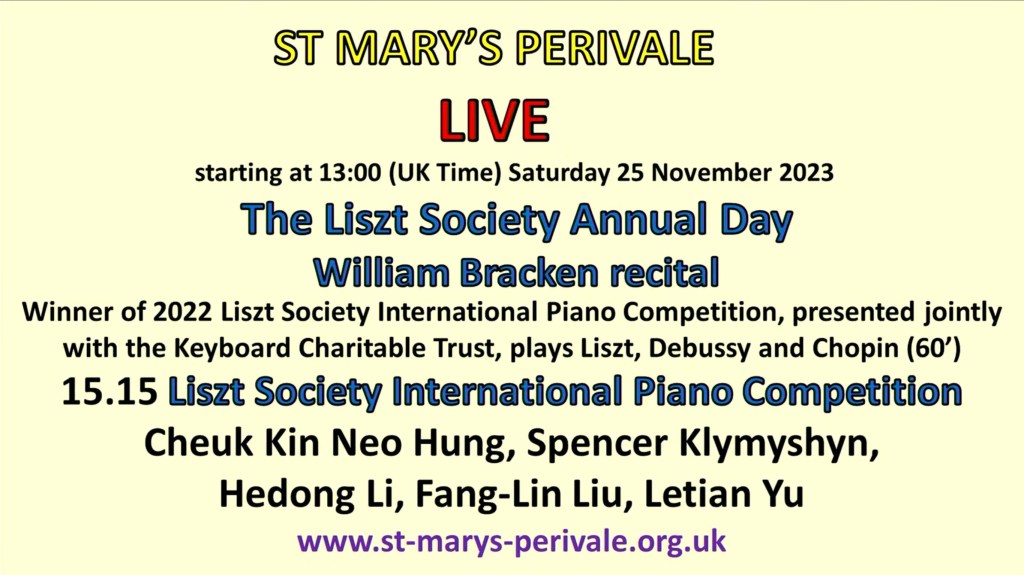
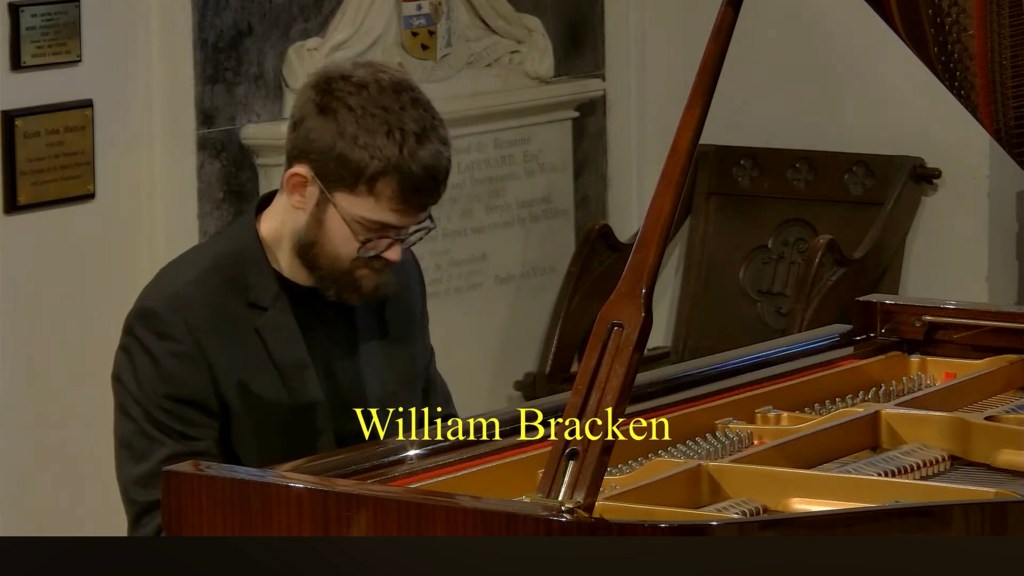
William Bracken ,winner of the 2022 Liszt Competition revealed only a year on to be a musician of mastery and remarkably committed artistry.I have heard this young artist over the past few years as his studies progressed at the Guildhall and was astonished and delighted today to hear how he has developed into a mature artist of stature .With a kaleidoscope of sounds he brought a fluidity and luminosity to the ‘bells’ as portrayed by Liszt and Debussy.It was a very interesting juxtaposition to hear Liszt’s rarely played ‘Les Cloches de Genèvre’ with Debussy’s bells from Images Bk 2 and as William very eloquently said they were both at different times in history painting pictures through music.Liszt in a more formal way whereas Debussy was more fragmented and improvisatory.
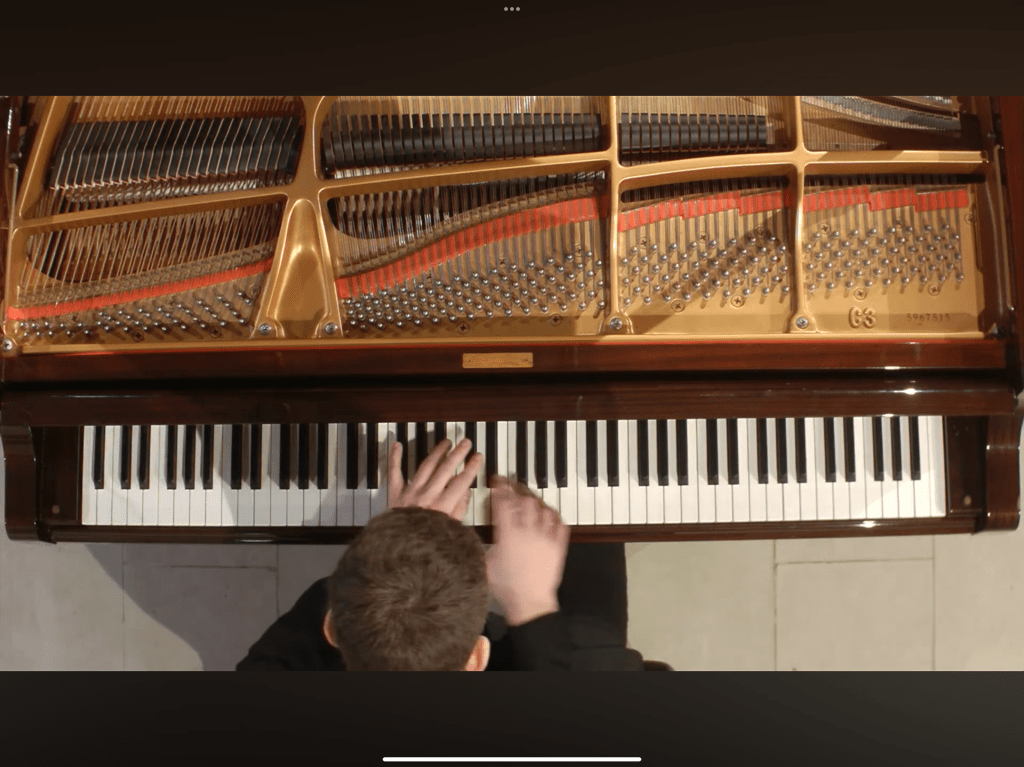
The two Liszt opening pieces were revelations of simplicity and beauty. ‘Au Bord d’une source’ is a miniature masterpiece and obviously was the inspiration for Ravel’s ‘Jeux d’eau’, but has been neglected in the concert hall since the famous recording of Horowitz .It is a perfect miniature tone poem and a continuous flow of jewels glistening over a constant stream of gentle sounds like water flowing over a mountain stream.Williams sound world was of a clarity and cleanliness never hard but always luminous even in the gently exciting climax.It was a sound that reminded me of Tamas Vasary and the very fluid Hungarian school of playing of Anda ,Kocsis or Ranki.
William has some strange rather eccentric ways though of taking his hands off the keys and leaving the sounds to finish the piece with the pedal still on or throwing his hands in the air like a cat on a hot tin roof ( better than last time I heard him but wonder if they are really necessary).He would do good to take Brendel’s own advice to himself as he said he did not sing or moan like Gould but he did make grimaces that he too was aware of and tried to cure by having a mirror next to the piano in the practice studio. A small point when a young artist actually listens to himself with sensitivity and intelligence and at times great passionate involvement.His passionate vehemence was especially noticeable in ‘Les Cloche de Genèvre’ where his magical embellishments and sense of balance also allowed the melodic line to shine with purity and beauty.The ending of this remarkable work was pure magic as he had endowed this tone poem with beauty combined with architectural shape.
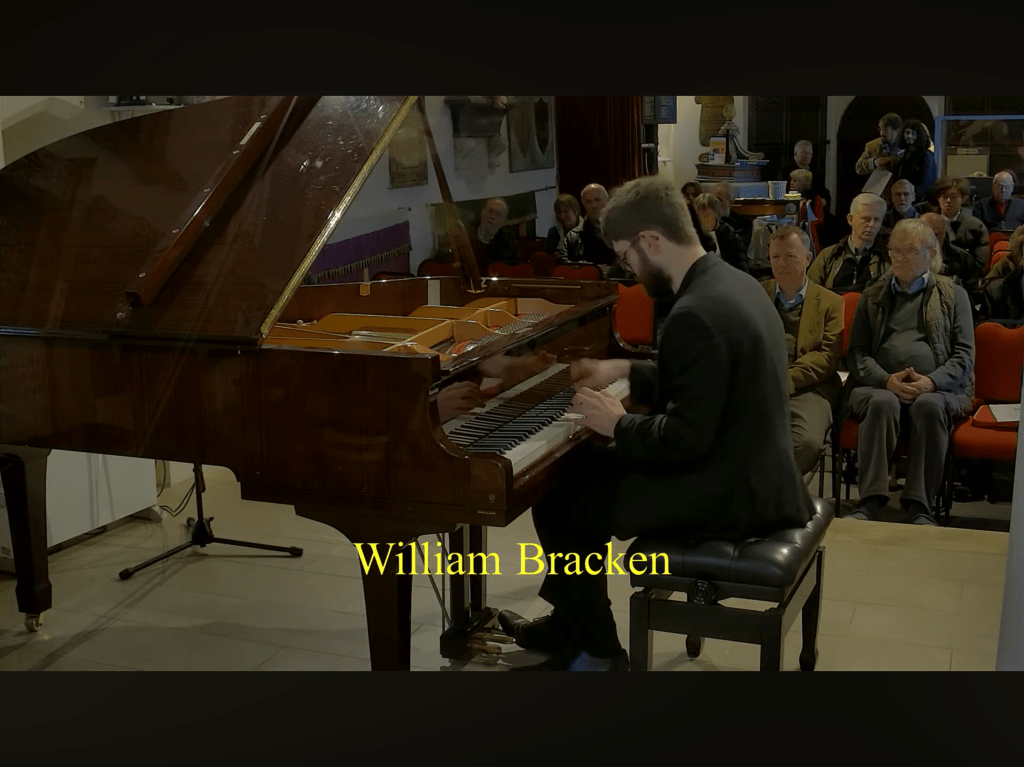
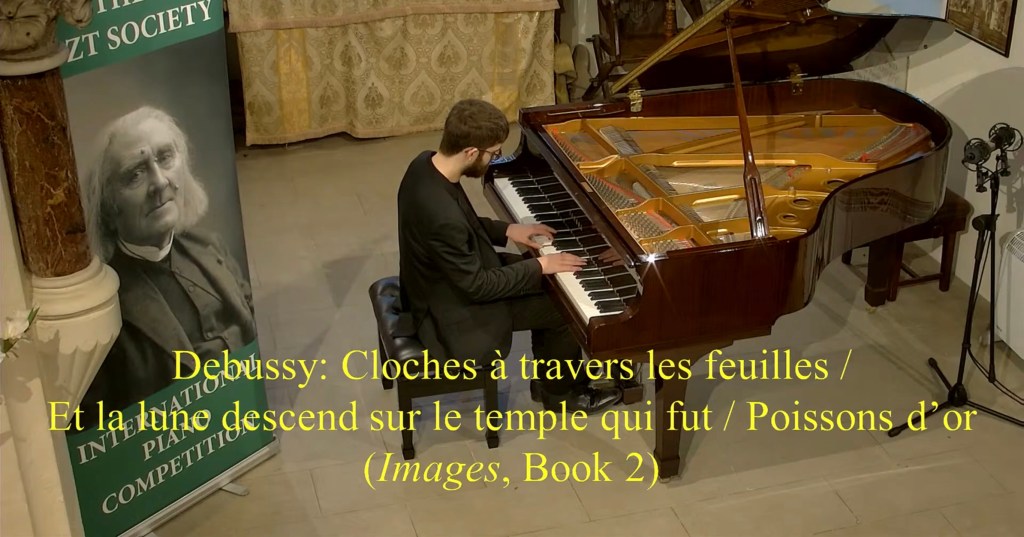
The three Debussy Images were played with a luminosity and bathed in pedal but still managing to keep the utmost clarity with a wondrous sense of balance and superb use of the pedals .The moon shone as never before as it illuminated so magically the remains of the distant temple and it was a true jewel box of sounds as William’s touch was so varied with gong like precision as he struck the keys with such sensitivity.The ‘Poissons d’or’ were allowed to flitter fleetingly in absolutely clear waters unimpeded and at ease ,at times in very suave French style.
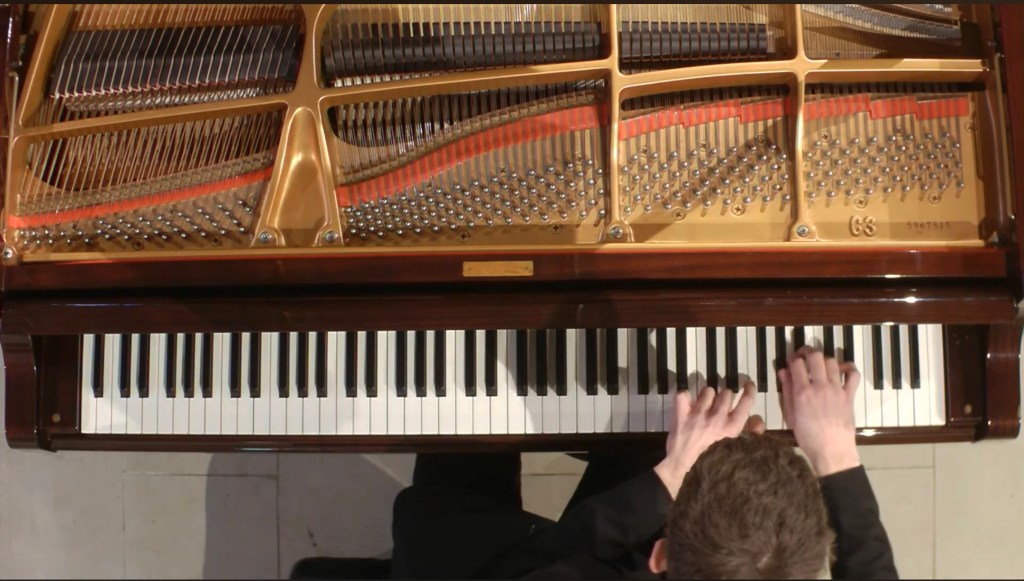
In the Chopin Fourth Scherzo he brought a sense of discovery and living a story to every strand.The quicksilver changes of character were revealed with virtuosity and passion – some strange pianistic jiggery pokery in fast passages but always with the musical meaning uppermost in mind.The mellifluous central episode unwound with simplicity and aristocratic fluidity and contrasted with the subtle refined virtuosity that surrounds it.The grandeur and nobility he brought to the final pages was quite breathtaking.
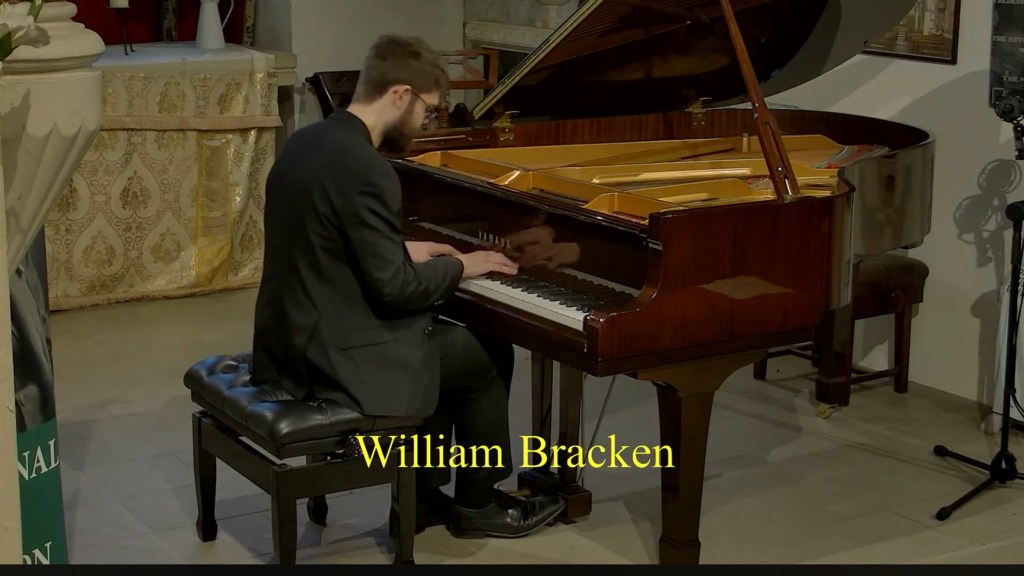
‘En rève’’ a late piece by Liszt that ends on a question mark pointing into the distance with such optimistic uncertainty .It was a piece that my old teacher Gordon Green used to enthuse about and insist that we all play – it is only a page long and is of the same simplicity of Mozart such had Liszt distilled his musical thoughts into a few essential notes of such poignant meaning.
The Variations on ‘Weinen,Klagen,Sorgen,Zagen’ were given a monumental performance where Williams mastery both technical and musical were exposed to the full as this work unfolded with its beseeching descending chromaticism .His astonishing virtuosity contrasted with the simplicity of the chorale melody before the triumphant ending in the blaze of glory of a fervent believer.
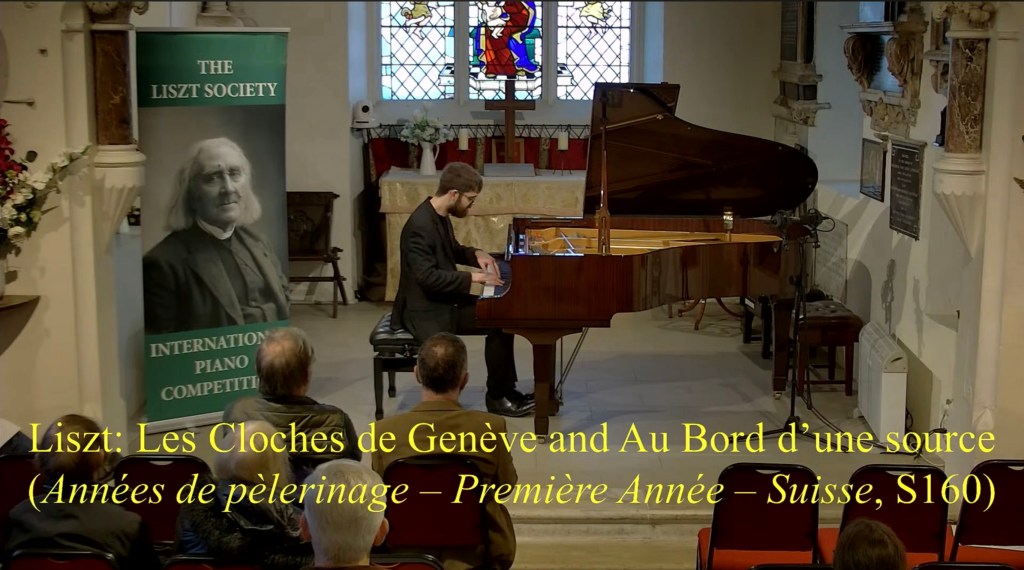
Au bord d’une source (“Beside a Spring”) is the 4th piece of the first of Années de Pèlerinage,
There are three separate versions of Au bord d’une source. The first version appears in Liszt’s set Album d’un voyageur (1834–1838), and the second in the first suite of Liszt’s Années de pèlerinage (1836–1855). The last version is almost identical to the second, except for the final nine bars, which were added by Liszt as a coda for his Italian piano student Giovanni Sgambati (who was the composer of the popular transcription of Gluck’s Orpheus ) this lengthened the piece by about 30 seconds. The coda was written in 1863.
The second version of Au bord d’une source is often regarded as the most popular. In the first version the technical difficulties are considerably higher to the pianist, whilst the last version adds the coda.
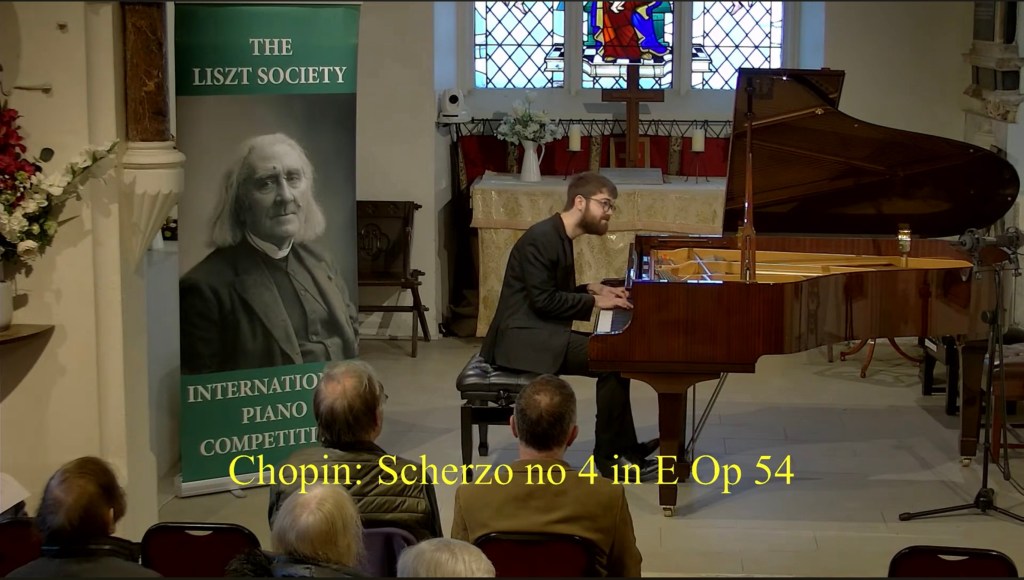
The Scherzo No. 4, Op. 54, was composed in 1842 in Nohant and published in 1843 It is one of Chopin’s most elegiac works, and without doubt contains some of the most profound and introspective music the composer ever wrote and the only one of the four in a major key .A particular favourite of Saint Saens ,which is hardly surprising as jeux perlé abounds to ravishingly meaningful effect.

Over a gently rocking accompaniment, a beautifully sculpted melody lulls and soothes us – but then an unexpected dissonance disturbs the mood … just briefly … peace is restored, the melody returns, and its final turn of phrase modulates down and down again and again … below quiet trills the pulse slows … silence … and the final chord hovers on the second inversion of the tonic without resolving onto root position. It has been suggested that the Answer lies within the Question. Food for thought indeed
where the late works of Liszt are a fascinating collection of pieces which look far into the future.
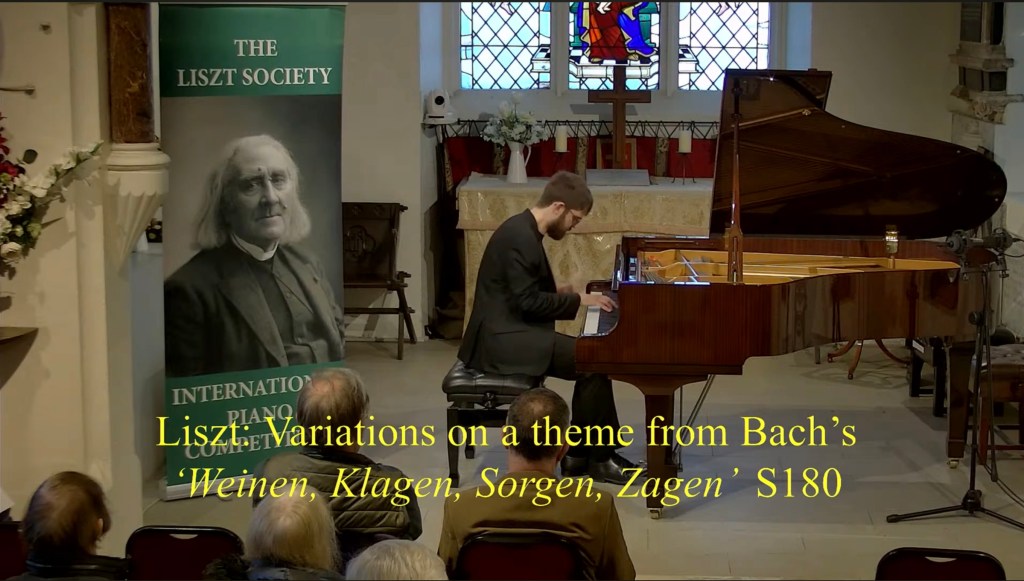
Variations on “Weinen, Klagen, Sorgen, Zagen,” S. 180 is one of Franz Liszt’s most significant works. Written after Liszt joined the Third Order of Saint Francis and during a time of deep personal tragedy, it reflects both Liszt’s religious journey and his coping with suffering and shows daring explorations of chromaticism that pushed the limits of tonality. It was arranged for organ one year after the piano version was composed and became one of his best-known compositions for organ.The work dates from 1862 and was motivated by the death of Liszt’s elder daughter, Blandine and is dedicated to Anton Rubinstein.This massive set of variations was written by Franz Liszt when two of his three children had died within three years of each other; he had resigned his position of Kapellmeister to the court of Weimar due to continued opposition to his music, and finally his long sought marriage to Princess Caroline Wittgenstein had been thwarted by political intrigue.
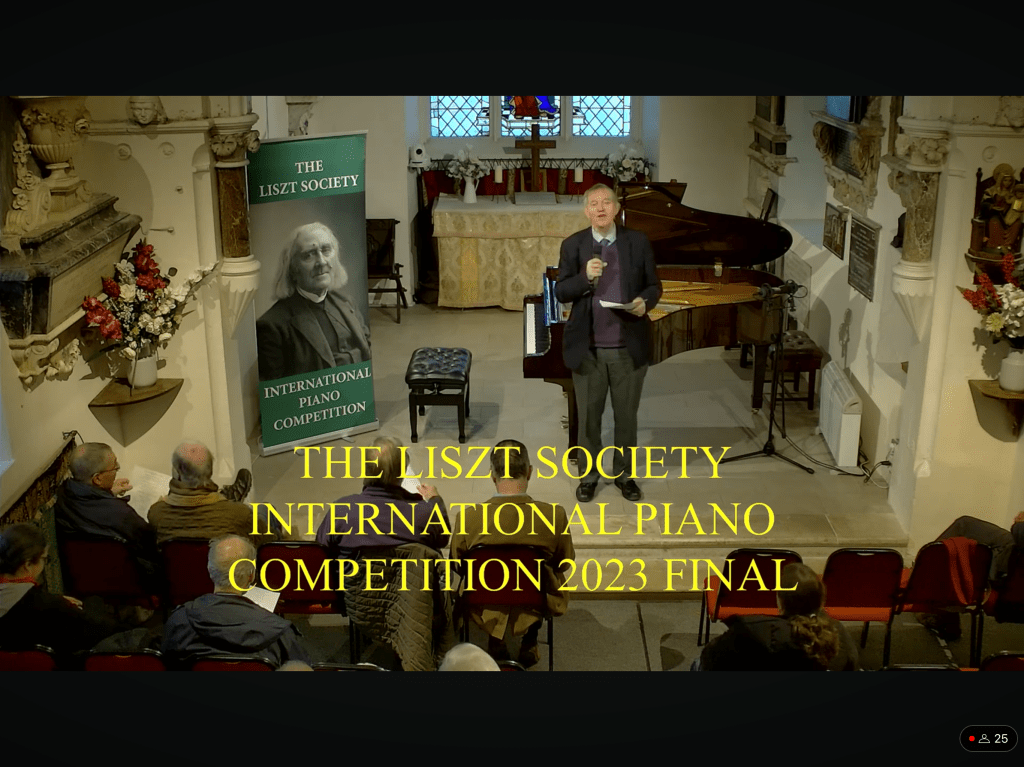
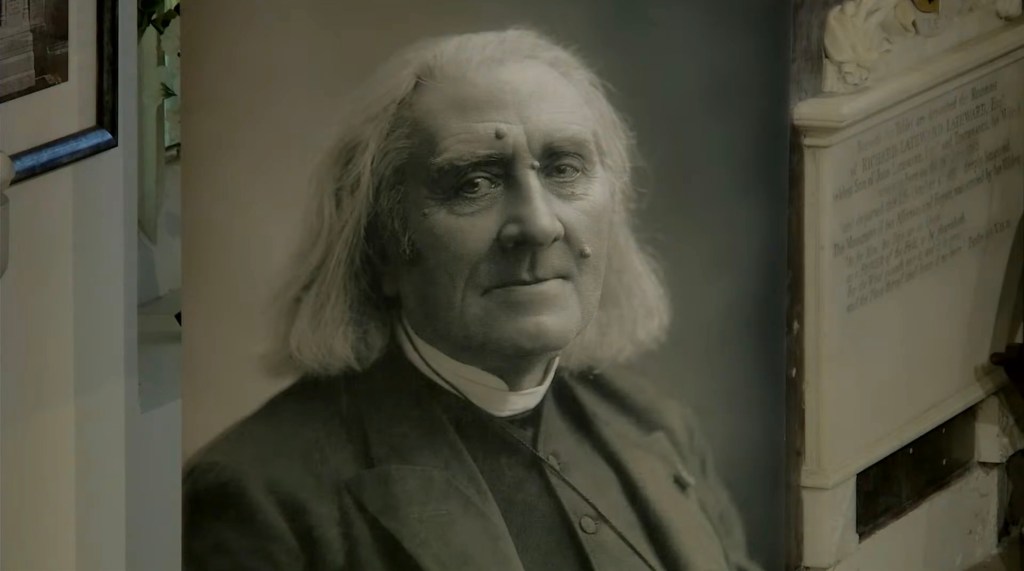
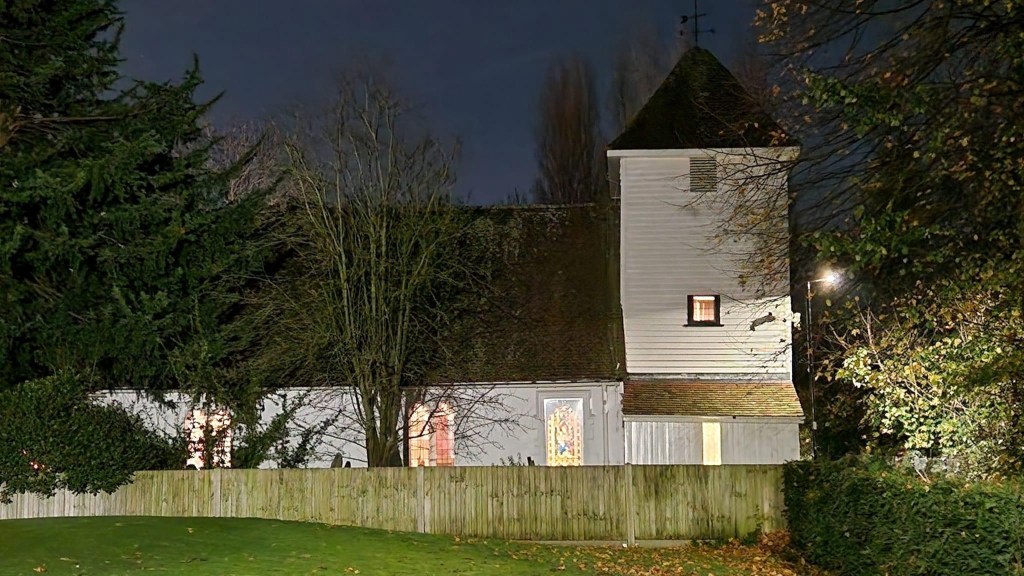
Liszt is alive and well and today in Perivale

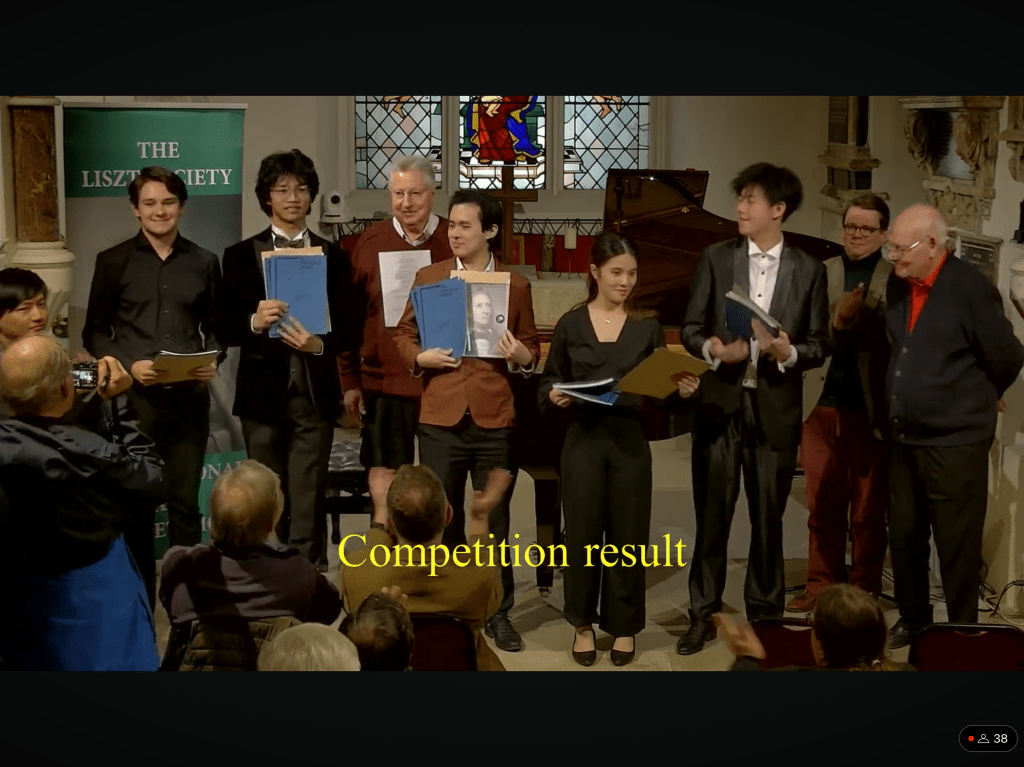
1. Cheuk Kin Neo Hung (China, b 2003) 3rd Prize
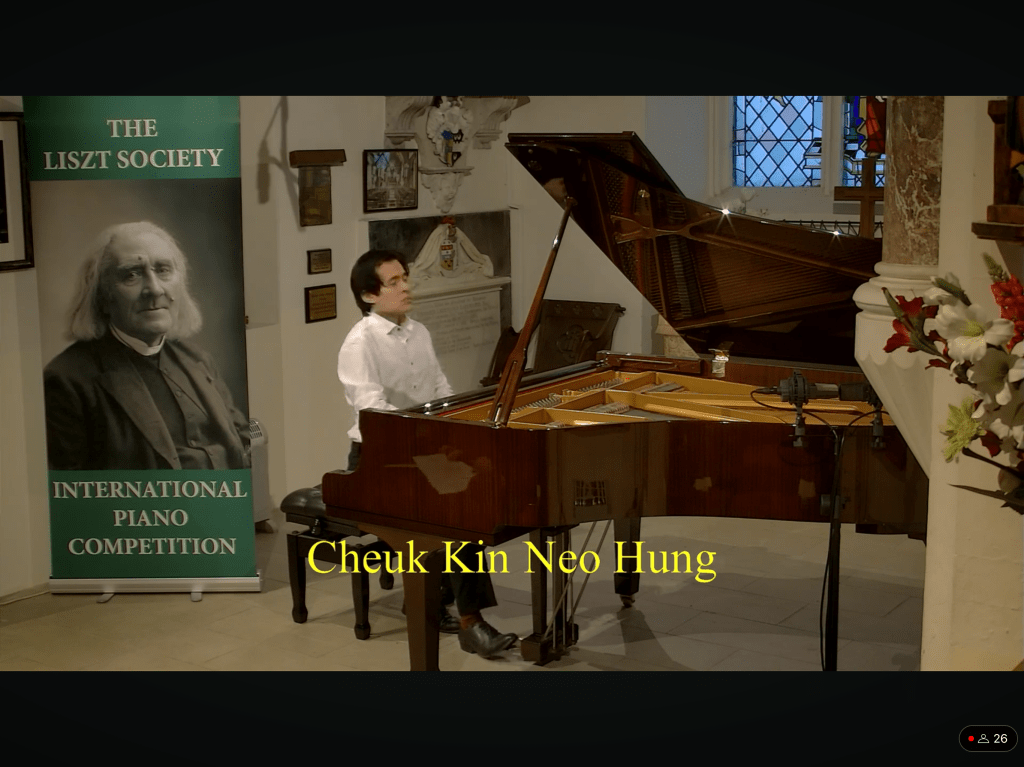
‘Les jeux d’eaux à la Villa d’Este’
from Années de pèlerinage – Troisième Année – Italie, S163
Variations on a theme from Bach’s ‘Weinen, Klagen, Sorgen, Zagen’ S180
2. Spencer Klymyshyn (Canada, b.1999) 2nd Prize
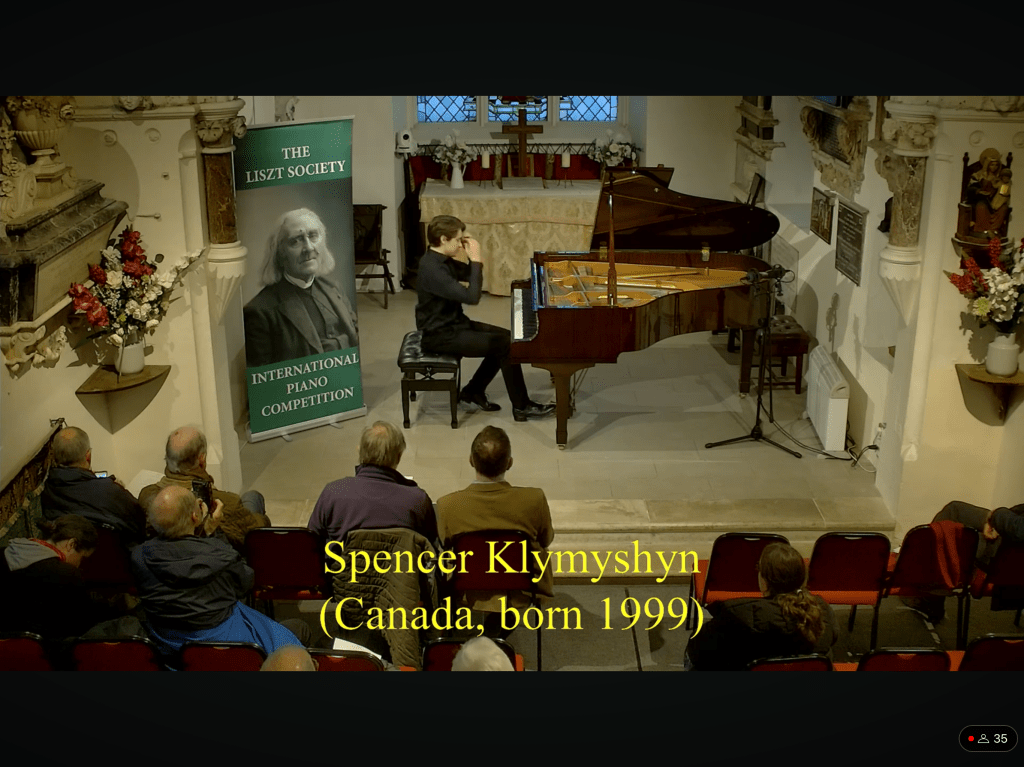
Petrarch sonnet no 104
from Années de pèlerinage – Deuxième Année – Italie, S161
‘Bénédiction de Dieu dans la solitude’
from Harmonies poétiques et religieuses, S173
3. Hedong Li (Hong Kong, China, b.2004) Highly Commended
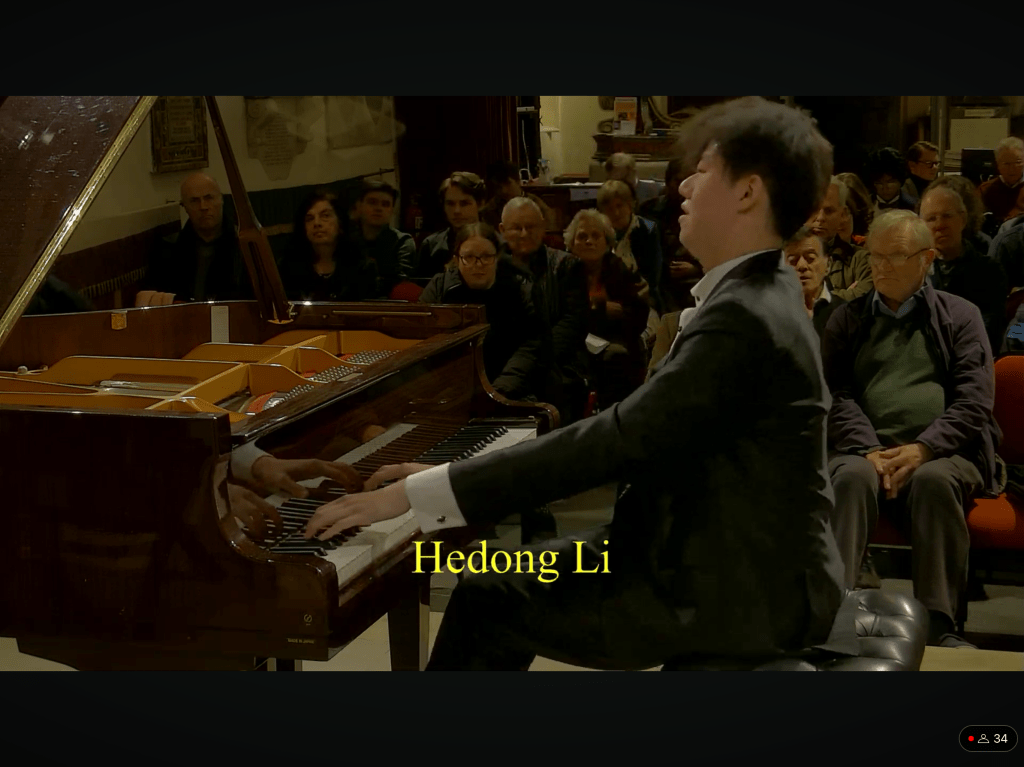
Rigoletto concert paraphrase S434
‘Après une lecture de Dante – Fantasia quasi sonata’
from Années de pèlerinage – Deuxième Année – Italie, S161
4. Fang-Lin Liu (Taiwan, b. 2001) Highly Commended
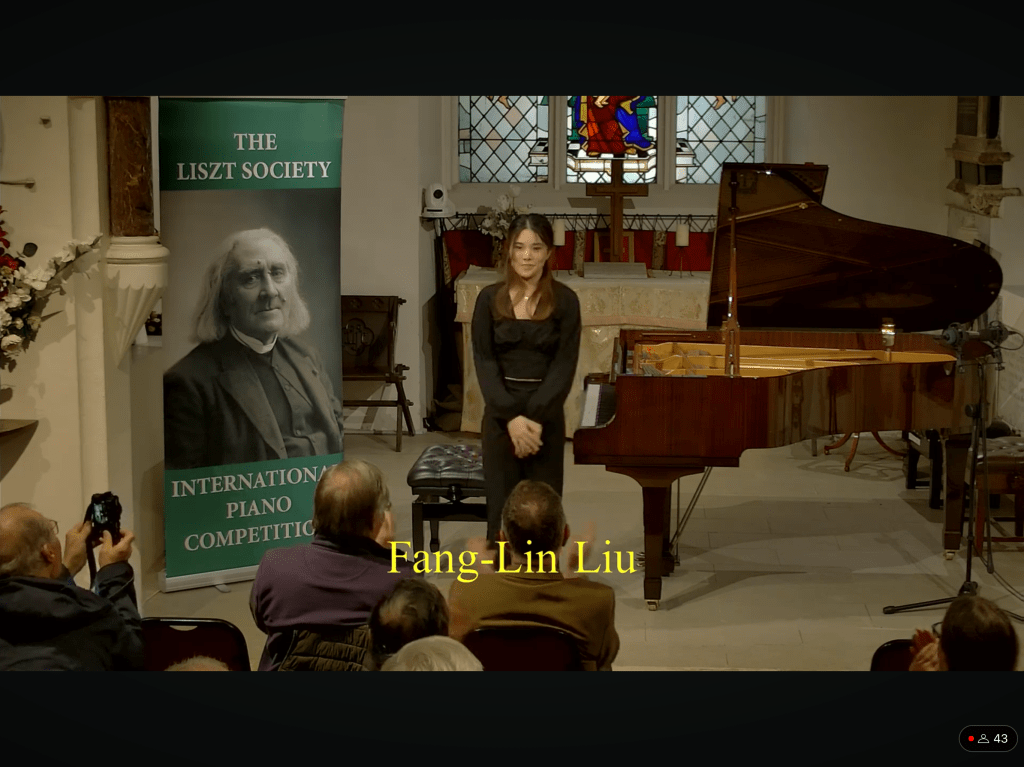
La lugubre gondola (I) S200/1
‘Chasse-neige’
from 12 Études d’exécution transcendente, S139
Hungarian Rhapsody no 12 in C sharp minor S244
5. Letian Yu (China, b.2008). First Prize
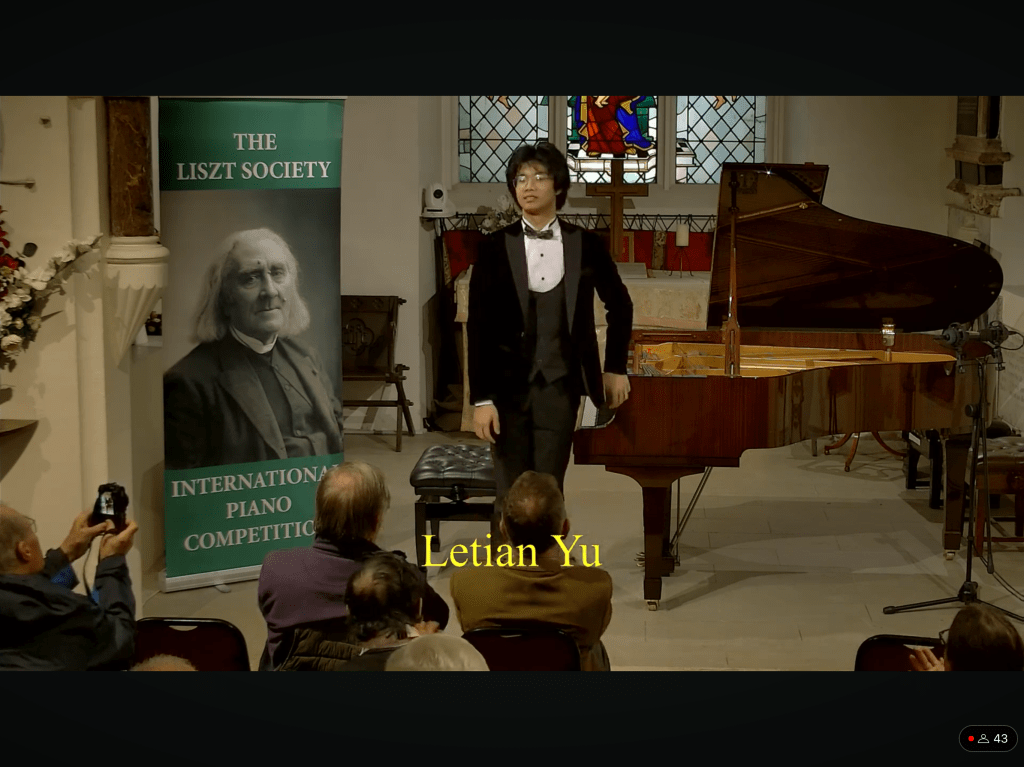
Valses oubliées, S215
No. 1 in F sharp major
No. 2 in A flat major
No. 3 in D flat major
‘La Campanella’
from Études d’exécution transcendante d’après Paganini, S140
‘Danse macabre’ – transcription of Saint-Saëns Op 40 S555
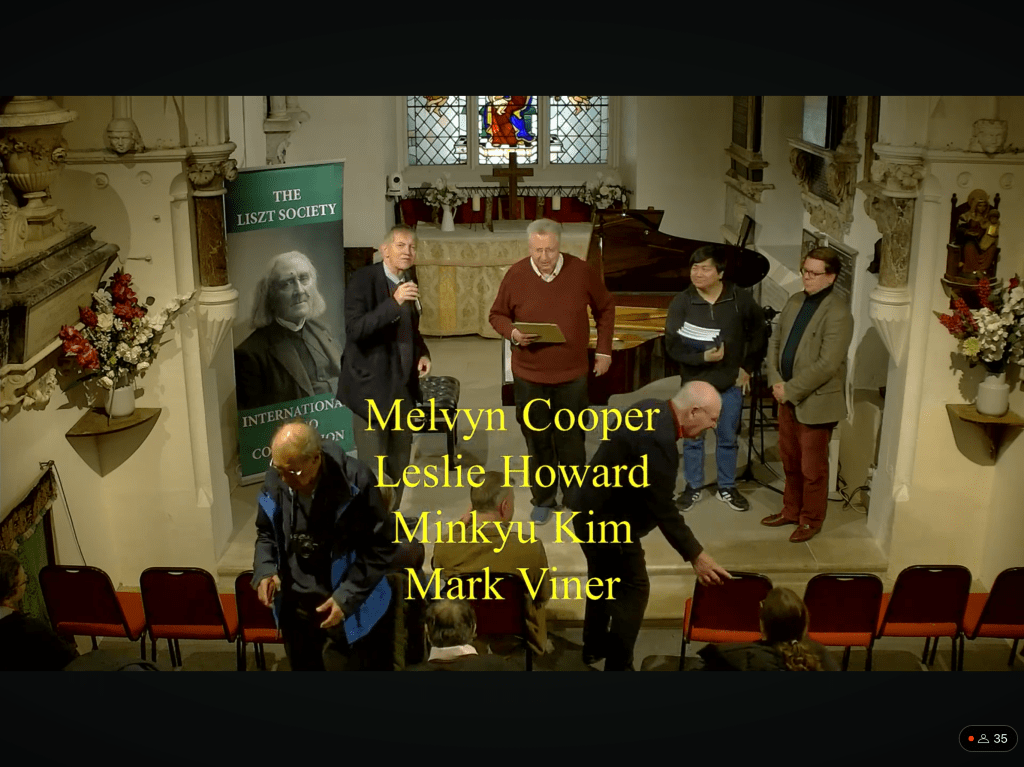
Performances will be followed by Jury Deliberation and Winner Announcement
Jury:
Melvyn Cooper, Leslie Howard, Minkyu Kim and Mark Viner.
It was a unanimous decision to award first prize to the fifteen year old Letian Yu
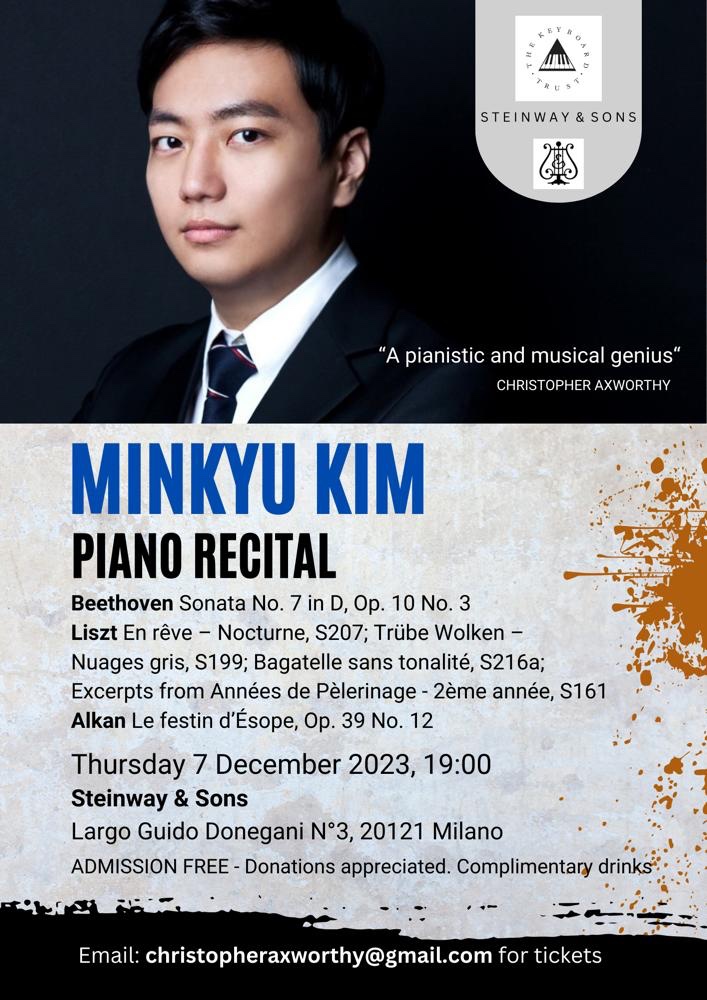
https://christopheraxworthymusiccommentary.com/2022/04/18/minkyu-kim-a-pianistic-and-musical-genius-at-st-marys/
Minkyu Kim – mastery exults to the glory of Liszt
https://christopheraxworthymusiccommentary.wordpress.com/2019/12/01/liszt-comes-to-perivale/

 ChristopherAxworthy-MusicCommentary
2 risposte a "Liszt in Perivale – The Universal Genius – The voyage of discovery continues"