
Scarlatti 2 Sonatas B minor K 27. D major K 96.
Hummel. Rondo Favori E flat major op 11.
Chopin Ballade n.1 op 23 G minor
Mendelssohn/ Rachmaninov Scherzo from a Midsummer Nights Dream
Rachmaninov. Lilacs op 21 n.5.
Liszt Paganini Study. N.2 in E flat major
n. 3 La Campanella ( Liszt arr Busoni )10 min
Liszt / Busoni/ Horowitz Mephisto waltz n.1.
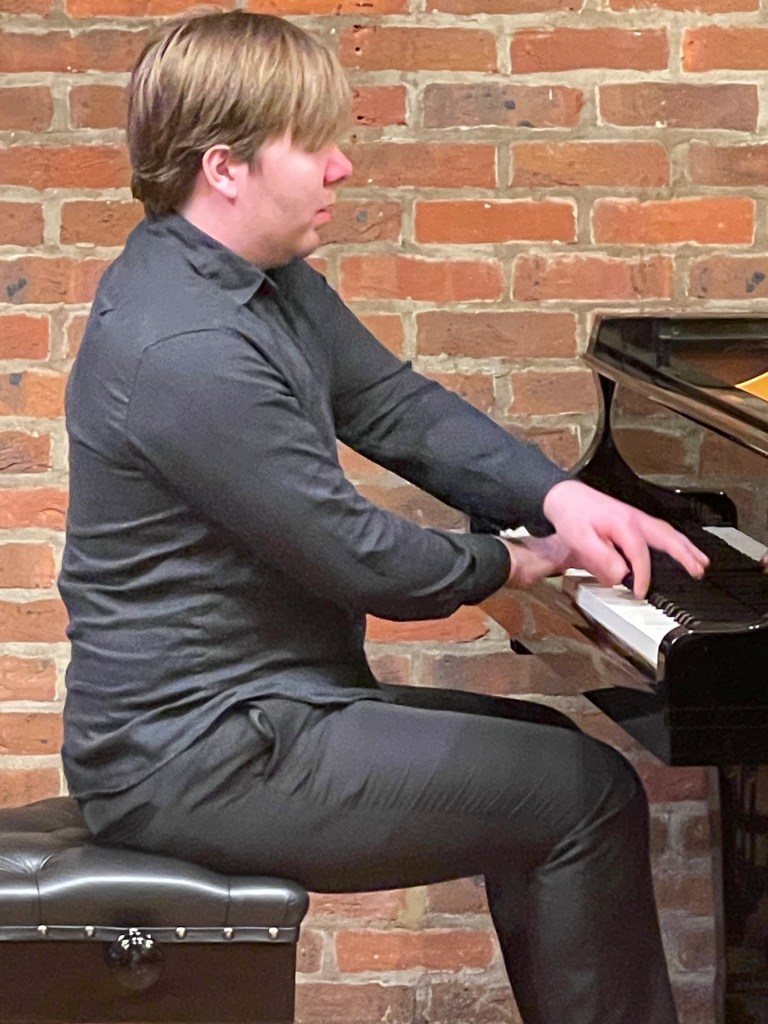
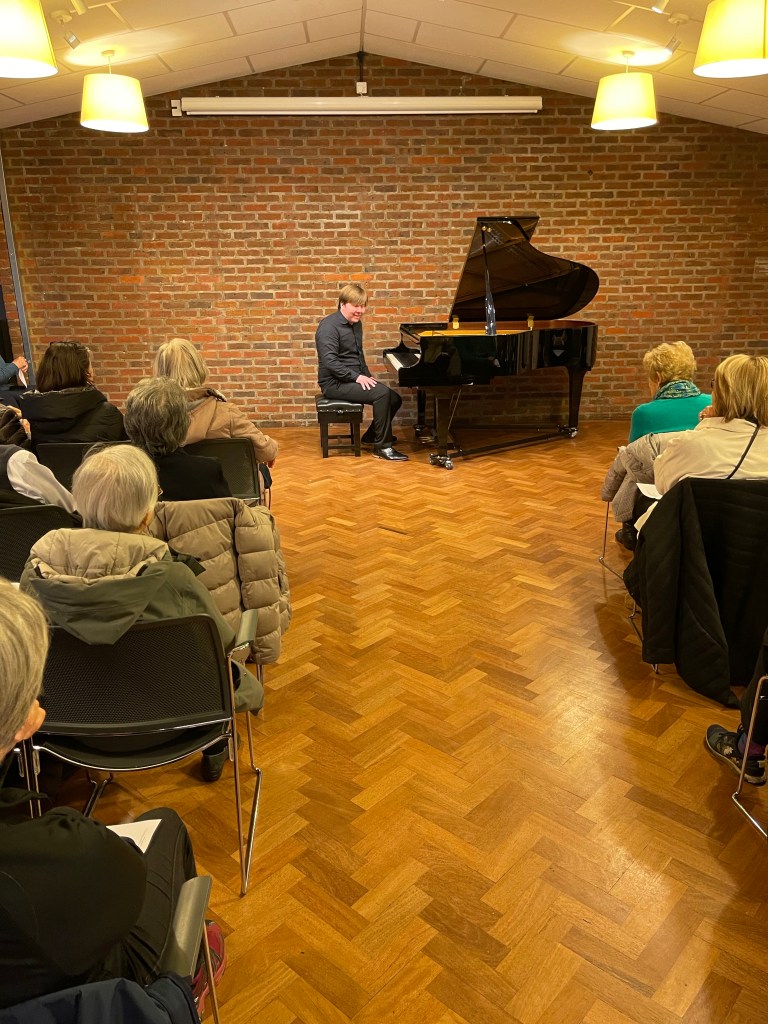
Thomas Kelly in Hampstead today with a programme fit for a King with scintillating show pieces by Scarlatti,Hummel,Chopin,Mendelssohn,Rachmaninov and Liszt.
A programme from a modern day heir to the Golden age of piano playing that included transcriptions by three of the greatest showmen from the past Liszt ,Busoni and Horowitz .I have reviewed Thomas’s performances recently on Ischia in Italy and in the National Liberal Club in London .The more detailed reviews you can read here:
Thomas Kelly on Ischia – The Walton Foundation at La Mortella -‘The Devil and the Deep blue Sea’
Thomas Kelly at the National Liberal Club The ‘outrageous’ virtuoso with a heart of pure gold.

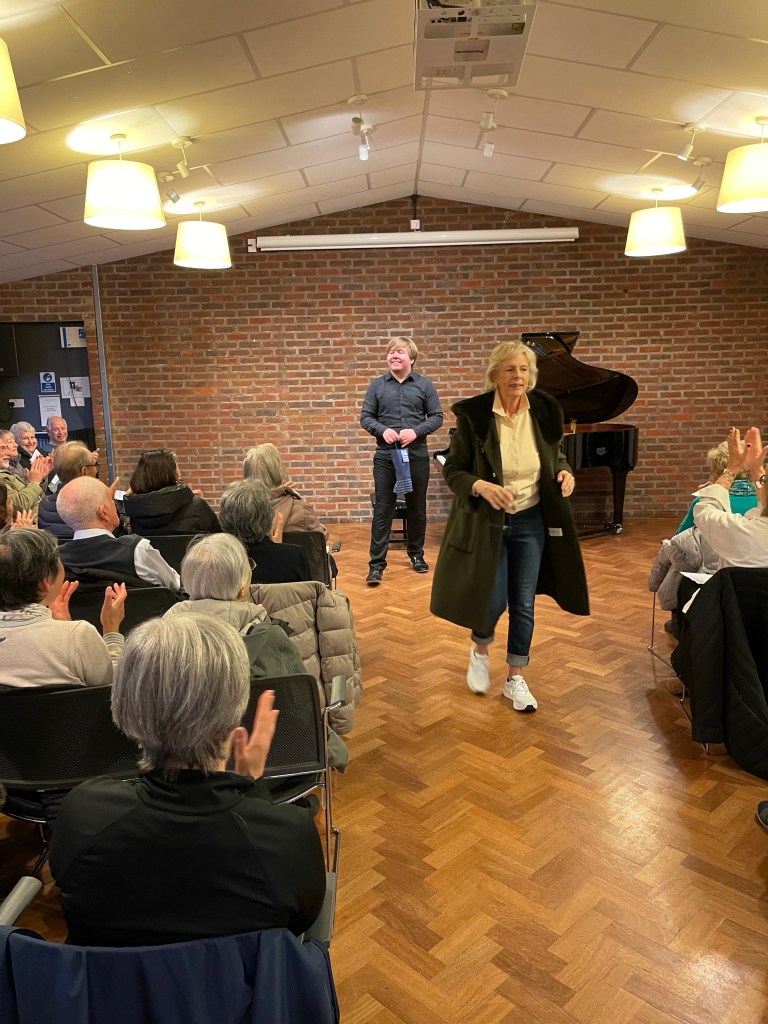
It must have been a long time since the sedate respectable ladies of this garden suburb were seen to cheer and clap with such fervour!
Just as the refined noble ladies of the Parisian salons of the eighteenth century were transformed into wild admirers of Liszt with animalesque fervour.Or the critics in the 1920’s exclaiming on the the arrival of Horowitz in their midst as ‘the greatest pianist alive or dead!’
This surely was the Hampstead Garden Suburb’s equivalent as they were astonished,amazed and seduced by piano playing that had such a bewitching power over the audience.
A ‘Campanella’ of Busoni proportions or a Midsummer night in Rachmaninov’s dream hands .There followed a ‘Mephisto Waltz’ of Horowitzian contortions but above all the calming balm of Ravel’s Jeux d’eau that revealed even more the remarkably delicate artistry of this young virtuoso.


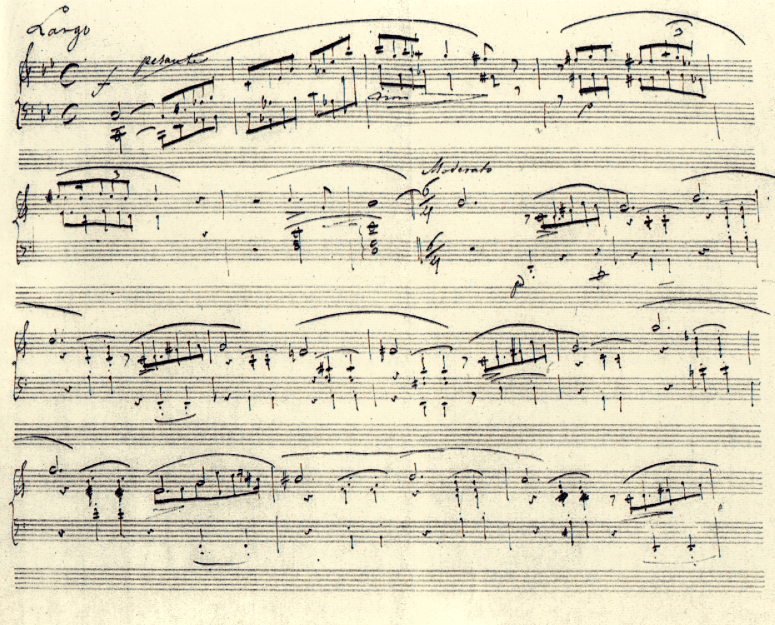
In 1836, Robert Schumann wrote: “I have a new Ballade by Chopin. It seems to me to be the work closest to his genius (though not the most brilliant). I even told him that it is my favourite of all his works. After a long, reflective pause he told me emphatically: ‘I am glad, because I too like it the best, it is my dearest work.’”

While in Germany, Hummel published A Complete Theoretical and Practical Course of Instruction on the Art of Playing the Piano Forte (1828), which sold thousands of copies within days of its publication and brought about a new style of fingering and of playing ornaments. Later 19th-century pianistic technique was influenced by Hummel, through his instruction of Carl Czerny who later taught Franz Liszt . Czerny had transferred to Hummel after studying three years with Beethoven. Liszt himself idolized the work and influence of Hummel and often performed his works.Robert Schumann also practiced Hummel (especially the Sonata op 81) and considered becoming his pupil. Liszt’s father Adam refused to pay the high tuition fee Hummel was used to charging (thus Liszt ended up studying with Czerny). Czerny, Thalberg and Henselt were among Hummel’s most prominent students. He also briefly gave some lessons to Felix Mendelssohn.
The Rondo is an early work that dates from 1804 .It was played with a beguiling jeux perlé full of grace and sparkling notes of a ‘joie de vivre’ of irresistible charm

 ChristopherAxworthy-MusicCommentary