
- Serghei Rachmaninov 1873 -1943
- Suite from Violin Partita in E by JS Bach:
- –II. Gavotte
- George Xiaoyuan Fu b. 1991
- Transformation on Gigue from Bach’s Violin Partita No. 2
- Matthew Aucoin b. 1990
- Claude Debussy 1862-1918
- Etudes Book I:
- –Pour les cinq doigts
- –Pour les tierces
- Etudes Book II:
- –Pour les agréments
- –Pour les sonorités opposées
- –Pour les arpèges composés
- Etudes Book I:
- –Pour les octaves
- –Pour les huit doigts
Etudes are an endless source of fascination, inviting composers to push both physical and musical possibilities – from the ethereal to the virtuosic. George Xiaoyuan Fu presents Debussy’s Etudes alongside three works by pianist-composers that discover possibilities through transcriptions for solo piano.
Promoted by the Royal Academy of Music
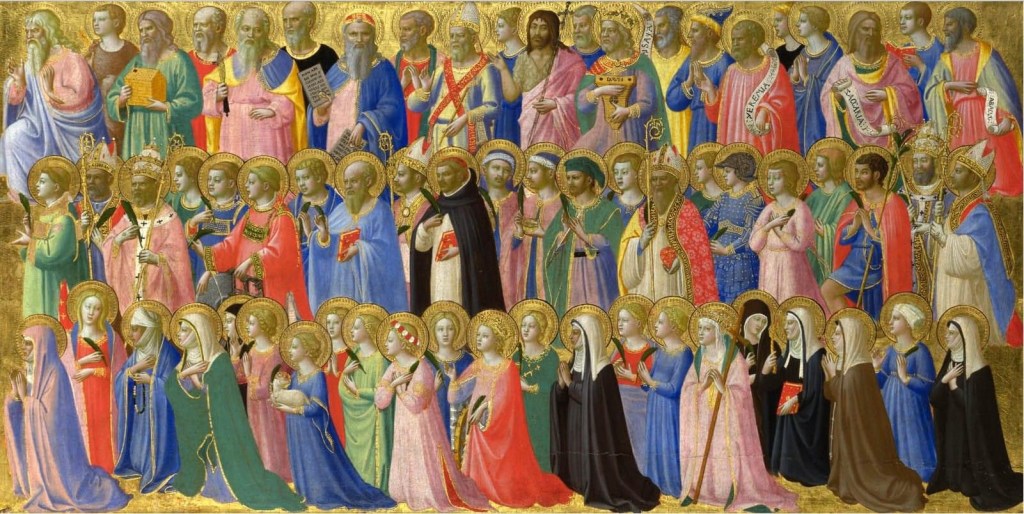
The amazing Mr Fu must be amongst these Fra Angelico Ognissanti as after all it is All Saints today.
Lent to the Wigmore Hall by the Royal Academy for a lunchtime concert where he astonished and amazed us with his superhuman feats of musical trickery and mastery.
The centre piece an absolutely mind boggling world premiere of a ‘friend ‘ Matthew Aucoin.Just a years’difference united them and it would need a year for any mortal to master a work of such diabolical intricacy.
George only early thirties with degrees from Harvard,Curtis ,a Fellowship from the Royal Academy and recently married amazes and delights us all with his simple open intelligence and complete mastery of music matters.
He is also one of the nicest people I know and I am proud to call a friend.
The only defect is his applauding with hands raised high, so be sure to never sit behind him in a concert !


In two movements and lasting about 20 minutes it is a work of transcendental technical difficulty with a massive number of notes that must outdo even Messiaen’s Vingt Regards .Chiselled sounds play over ponderous bass chords with the first movement gradually growing in searing intensity with a diabolical technical tour de force of extraordinary difficulty.
No matter the complexity George managed to convey a line and architectural sense that made a coherent whole and an extraordinarily intese experience. The second movement was of more tender melodic outpourings and with a whispered luminosity of echoing reverberations growing in intensity.
There had also been a cohesion of sound between Rachmaninov,Fu and Aucoin ,that was to open up into the extraordinarily visionary sound world of the last work for piano of Debussy.

This was indeed Art that conceals Art as this is Debussy’s greatest work for piano but as the composer himself said they were ‘a warning to pianists not to take up the musical profession unless they have remarkable hands’.And I would add a super sensitive palette of sounds and a musical intelligence that can weave its way through a seeming maze of notes.
And what better way to finish than with the insinuating sounds of the fourth of Debussy’s Preludes :’Les sons et les perfumes tournent dans l’air du soir’.


“Mr. Aucoin demonstrated his piano virtuosity in his own parts, from rumblings in the bass register to right-hand minor key trills that set the teeth on edge.” – Superconductor
Claude Debussy’s Études ( L 136) are a set of 12 études composed in 1915. Debussy described them as “a warning to pianists not to take up the musical profession unless they have remarkable hands”.They are broadly considered his late masterpieces.
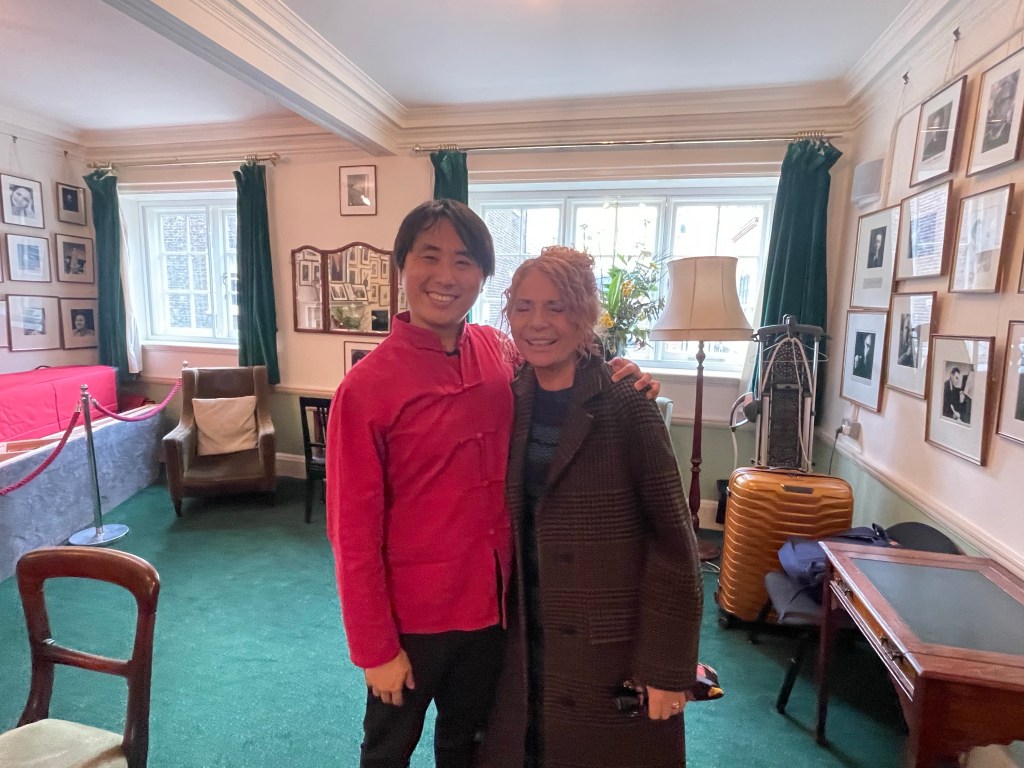
George Fu his joy and exhilaration saves the day and uplifts our spirits
George X Fu ravishing the senses as a young eagle descends on St Mary’s
 ChristopherAxworthy-MusicCommentary