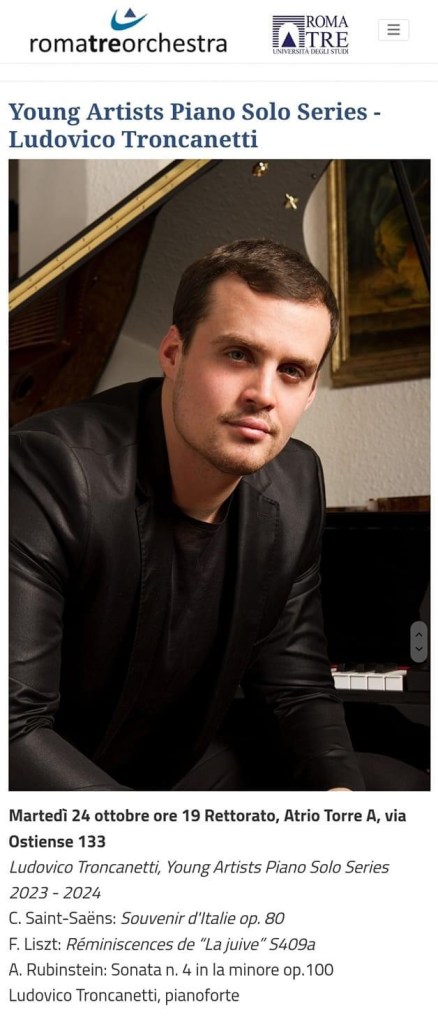
An eclectic Sienese pianist bringing intellectual curiosity and mastery to Roma 3.
Ludovico Troncanetti playing to the manner born rarities of Saint -Saens ,Halevy/Liszt and Rubinstein.
Totally dedicated to discoveries from the vast piano repertoire often overlooked by less curious musicians.
It is hardly surprising to learn that he has been under the wing of Leslie Howard ,that master of eclectic musicians, since his teens.
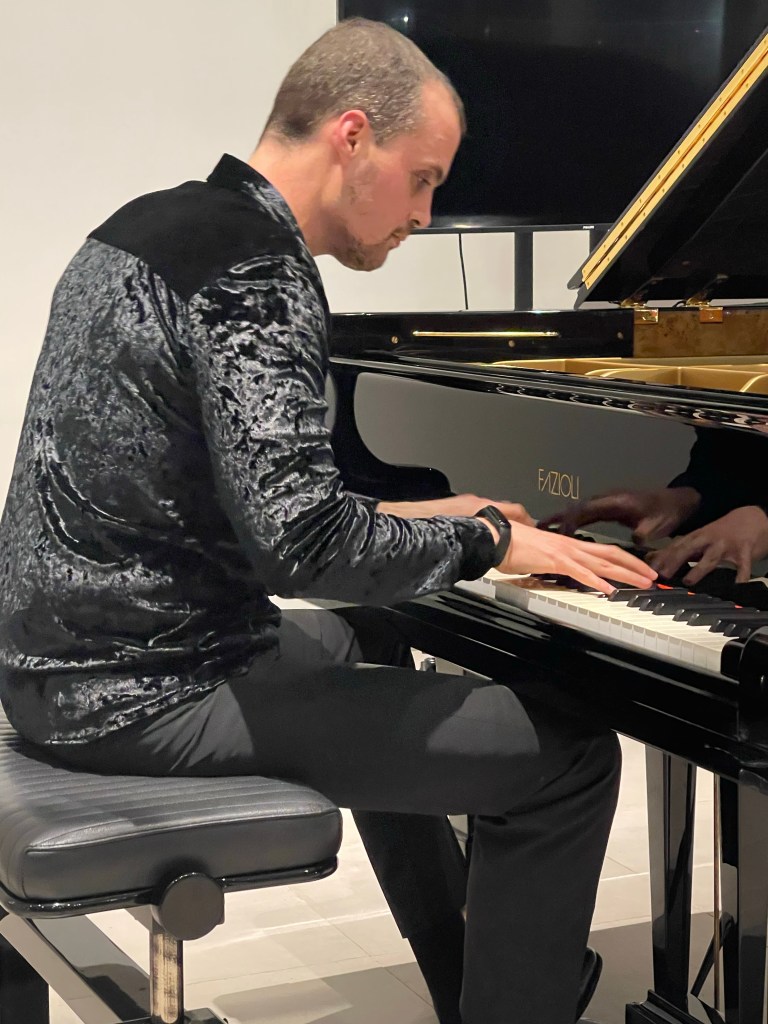
The Saint-Saens ‘Souvenir d’Italie’ was written when the master was visiting Florence and Siena in 1887.It is based on popular Italian songs and is a salon piece of great effect especially when played with the beauty and shape with which Ludovico endowed it.Cascades of embellishments thrown off with an ease and sense of style but one remained a little perplexed that the recital should start with an encore!
It was immediately apparent why as he struck up the imposing opening of Liszt’s early paraphrase of Halevy’s ‘La Juive’.Two much more substantial works where the pill was sugared with the genial Saint-Saens.This Liszt paraphrase is a remarkable work for the amount of notes that Ludovico consumed with ease but one could not be totally involved or convinced as one is with Liszt’s later masterly paraphrases of Norma and Don Giovanni.However it was courageous to present such an unknown paraphrase and to prepare it in such a convincing professional way.
The Fourth Sonata of Rubinstein left me even more perplexed as I could not seem to find a musical line to follow for the enormous amount of notes involved and tempestuous virtuosity that seemed to get in the way of real musical thought.I cannot see yet the wood for the trees like I found with Rachmaninov’s First Sonata.That also seemed to lack form until I heard revelatory accounts by Kantarow and Kelly where the form had been hidden in a leit motiv that pervades the whole Sonata.Even Rachmaninov had sought help with the form of his first sonata.I had found the same with Thomas Kelly’s remarkable performance of the Reubke Sonata for piano – a much admired student of Liszt who died at only 24 leaving only two Sonatas – one very well known for organ and the other completely neglected for piano.It is the second or third time I have tried to get to grips with this work that by many is considered Rubinstein’s masterpiece and I will try again until I am able to break the code.For now I can’t help thinking of Clara Schumann’s words :”I was furious, for he no longer plays. Either there is a perfectly wild noise or else a whisper with the soft pedal down. And a would-be cultured audience puts up with a performance like that!” But she also called the masterpiece that is Liszt’s Sonata (dedicated to her husband) a cacophonous noise when presented with it at home,her husband was already in an asylum.
Vieuxtemps,violinist and composer,on the other hand said:”His power over the piano is something undreamt of; he transports you into another world; all that is mechanical in the instrument is forgotten”.It was Anton Rubinstein who said that the pedal was the ‘soul’ of the piano.Ludovico certainly played with remarkable authority and mastery where there was not a moment’s doubt of his total belief in all that he was doing.A master on a crusade – Hats off !
Roma 3 Waltzing with Ludovico Troncanetti
Leslie Howard and Ludovico Troncanetti at St Mary’s A wondrous voyage of discovery
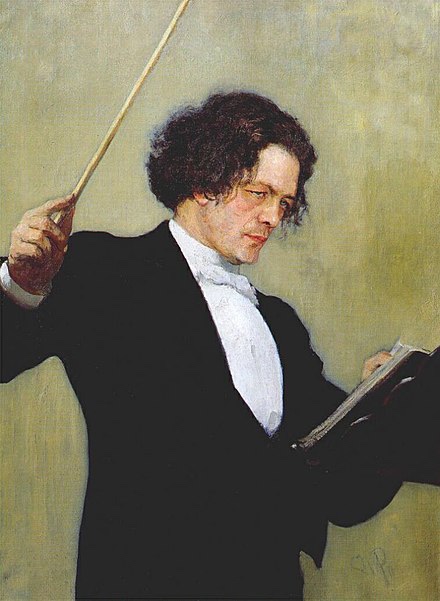
Anton Grigoryevich Rubinstein
28 November [o.s.16 November] 1829
Vikhvatinets,Baltsky Uyezd,Podolia Governorate, Russian Empire
Died
20 November [o.s 8 November] 1894 (aged 64)
Petergof ,Saint Petersburg , Russian Empire
“Rubinstein’s features and short, irrepressible hair remind me of Beethoven.” Liszt referred to Rubinstein as “Van II.” This resemblance was also felt to be in Rubinstein’s keyboard playing. Under his hands, it was said, the piano erupted volcanically. Audience members wrote of going home limp after one of his recitals, knowing they had witnessed a force of nature.

Anton Grigoryevich Rubinstein was a Russian pianist, composer and conductor who became a pivotal figure in Russian culture when he founded the Saint Petersburg Conservatory. He was the elder brother of Nikolai Rubinstein, who founded the Moscow Conservatory.
As a pianist, Rubinstein ranks among the great 19th-century keyboard virtuosos. He became most famous for his series of historical recitals, seven enormous, consecutive concerts covering the history of piano music. Rubinstein played this series throughout Russia and Eastern Europe and in the United States when he toured there.
Although best remembered as a pianist and educator (most notably as the composition teacher of Tchaikovsky), Rubinstein was also a prolific composer; he wrote 20 operas , the best known of which is the Demon. He composed many other works, including five piano concertos, six symphonies and many solo piano works along with a substantial output of works for chamber ensemble.
LESLIE HOWARD WRITES :In the more than a quarter of a century which separates the third from the fourth of the Rubinstein sonatas (the fourth appeared in 1880) lie only two of his major works for piano—the Fantasy, Opus 77, and the Theme and Variations, Opus 88, both of which are larger than any of the earlier sonatas and show a very different weight of thought from the dozens of character pieces which otherwise fill the Rubinstein piano œuvre. The fourth sonata turns out to be in this grand mould, on a much broader scale than the others, and is almost leisurely in its expansiveness.
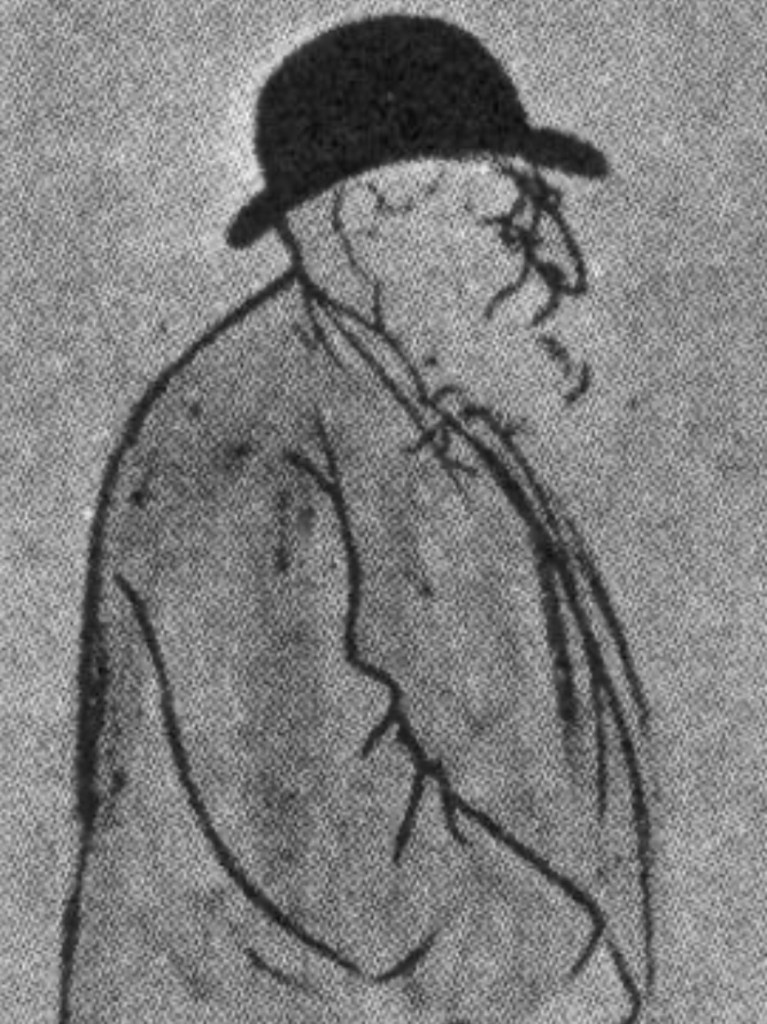
Once described as the French Mendelssohn, Camille Saint-Saëns was talented and precocious as a child, with interests by no means confined to music. He made an early impression as a pianist. Following established French tradition, he was for nearly 20 years organist at the Madeleine in Paris and taught briefly at the École Niedermeyer, where he befriended his pupil Gabriel Fauré. He was a co-founder of the important Société Nationale de Musique with the patriotic aim of promoting contemporary French music in the aftermath of the Franco-Prussian war of 1870-01, in which he had served in the Garde Nationale de la Seine. Prolific and versatile as a composer, he contributed to most genres of music, but by the time of his death in 1921 his popularity in France had diminished considerably, as fashions in music had changed.
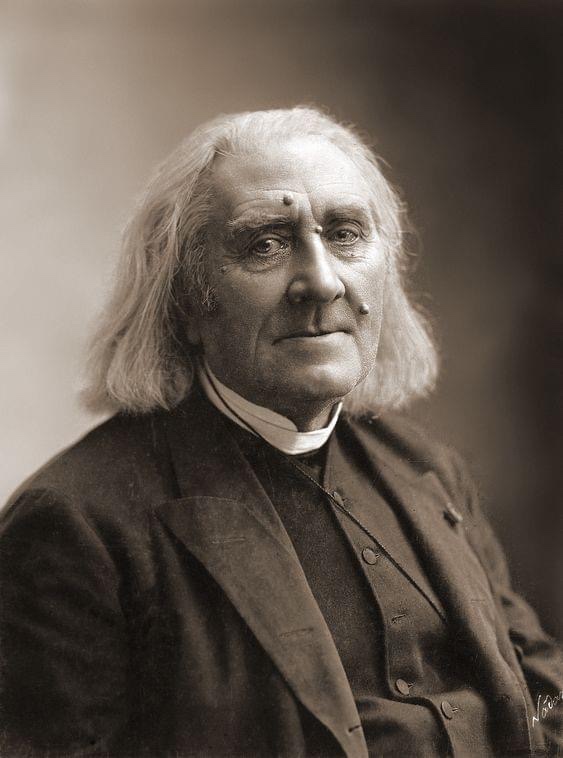
22 October 1811
Doborján, Kingdom of Hungary, Austrian Empire
Died
31 July 1886 (aged 74)
Bayreuth, Kingdom of Bavaria, German Empire

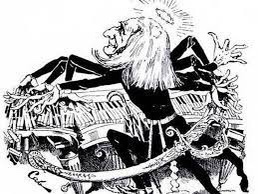
LESLEY HOWARD WRITES :’As he did so often in the early fantasies, Liszt composed his piano work within the year of the first performance of Halévy’s most celebrated work La juive. Using motifs from Acts 3 and 5, Liszt produced a work of much originality; the shape of the opening Molto allegro feroce is entirely his, even if the thematic fragments are Halévy’s, and it is not until the recognizable martial chorus (Marziale molto animato, from bar 131) that he uses a whole theme. The succeeding Boléro is only loosely based on Halévy, but is the theme for two variations. The Finale (Presto agitato assai) begins as if it were a third variation but gives way to frenetically foreshortened recollections of the march and the introductory material. The ferocious opening foreshadows the ‘infernal’ music of Liszt’s Weimar period, but also shows immediate kinship with the Valse infernale from Meyerbeer’s Robert le diable, with which the La juive fantasy was reissued—along with the Huguenots fantasy and the Don Giovanni fantasy—in about 1842.’
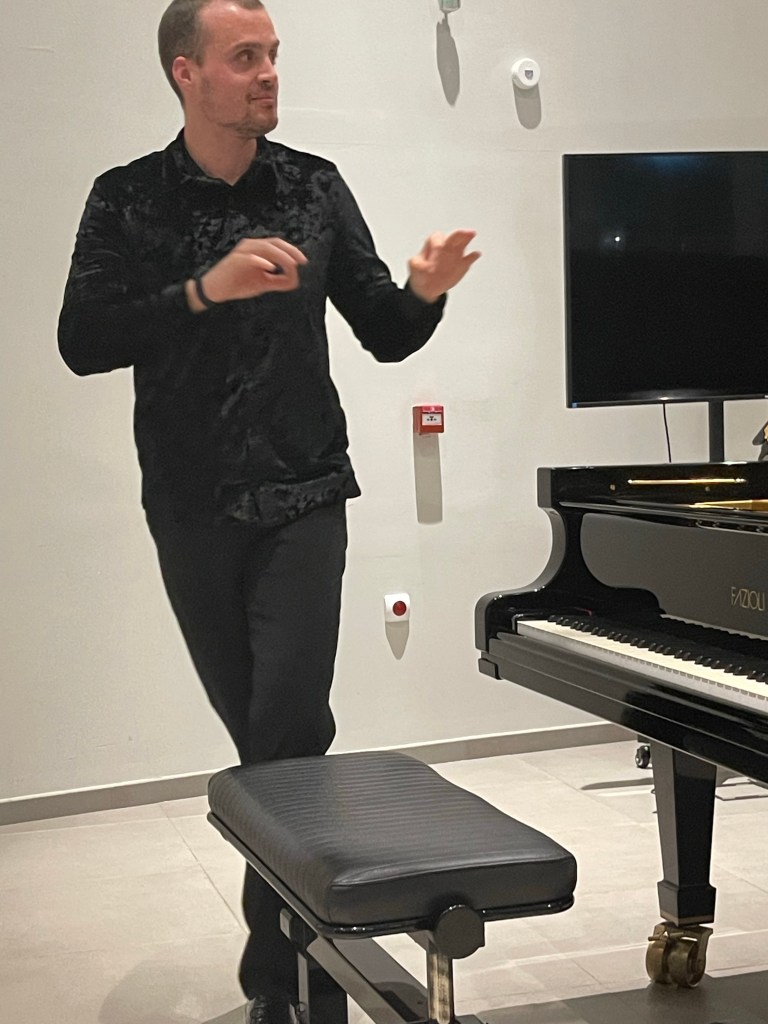
Ludovico Troncanetti, senese, si diploma al Conservatorio di Milano, dove studia anche Composizione con il M°Gianni Possio. Segue corsi di perfezionamento con i M° Pier Narciso Masi, Andrea Lucchesini ed Henri Sigfridsson. Nel 2009 l’incontro a Londra con il M°Leslie Howard, pianista di fama mondiale noto anche peressere l’unico ad avere inciso l’integrale dell’opera pianistica d Franz Liszt in più 100 CD, con cui si forma e successivamente creerà, nel 2016, un duo stabile (2 pianoforti e 4 mani). Collabora anche con il pianista portoghese Artur Pizarro.Come solista ha suonato in varie importanti realtà concertistiche sia in Italia (Società del Quartetto Milano, Orchestra Sinfonia Città di Milano, Amici della Musica Trapani e Mazara del Vallo, Camerata Musicale Sulmonese, Società Filarmonica Messina, Roma Tre Orchestra, Palermo Classica, Monteverdi Tuscany, Pienza International Music Festival etc) che soprattutto all’estero (Germania, Spagna, Inghilterra, Bulgaria,Portogallo, Russia, Uzbekistan, India, UAE etc) ed ha suonato con prestigiose orchestre tra cui la St Petersburg Northern Sinfonia, Elbland Philharmonie Sachsen, Filarmonica Arturo Toscanini, Gyumri State Symphony Orchestra, National Symphony Orchestra of Uzbekistan.Il suo ampio repertorio spazia da J. S. Bach ai grandi compositori dei primi del ‘900 con particolare focus sul periodo romantico. In autunno 2019 esce sulla rivista AMADEUS il suo primo disco per l’etichetta Movimento Classical sulle 4 Sonate per pianoforte di Anton Rubinstein, compositore e pianista russo dell’800 per cui si adopera nel revival musicale pianistico anche con il M°Howard; sempre dello stesso compositore ad agosto 2023 pubblica il secondo disco, per la rivista SUONARE, con le ciclopiche Tema e Variazioni opus 88
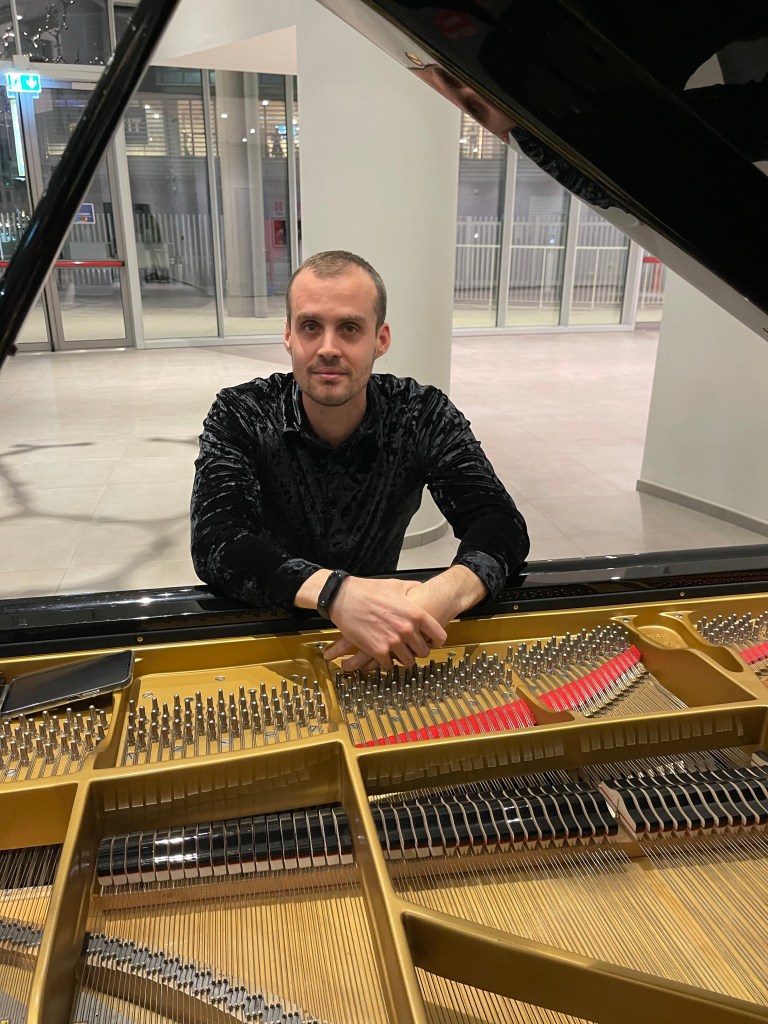
Ludovico Tronconetti at Roma Tre
 ChristopherAxworthy-MusicCommentary