https://christopheraxworthymusiccommentary.com/2022/02/16/louis-victor-bak-at-st-jamess-piccadilly/ https://christopheraxworthymusiccommentary.com/2024/11/03/louis-victor-bak-at-the-royal-albert-hall-aristocratic-music-making-of-refined-good-taste/ https://christopheraxworthymusiccommentary.com/2025/05/05/louis-victor-bak-in-wingham/
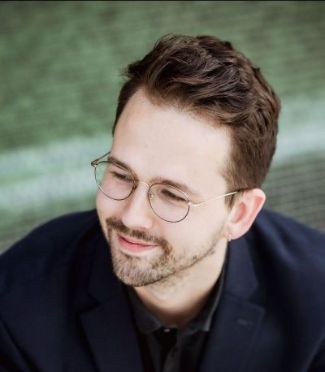
Haydn Sonata No. 31 in A flat major, Hob XVI:46
Debussy Images Book 1, L. 110
Debussy Images Book 2, L. 111
Chaminade Sonata Op. 21 in C minor
Steinway Hall
44 Marylebone Lane, London W1U 2DB
Wednesday 18 October 2023 at 6.30pm
Born in France, Louis-Victor Bak is a solo and chamber music pianist. He began piano lessons at the age of fourteen, following seven years of flute studies. In 2017, he moved to Berlin to study with Laurent Boullet; and in 2019, he came to London to study at the Royal College of Music with Edna Stern. In 2023, he graduated from the RCM and is currently studying for a Master of Performance with Edna Stern and Vanessa Latarche, as an Ilona Eibenschutz Award Holder.
Louis-Victor has recently performed as a soloist at St James’s Piccadilly, St James’s Paddington and at the Amaryllis Fleming Hall at the RCM. He has also performed at St Bride’s, St John’s Waterloo, St Paul’s Bedford, the Russia Culture House of London, the Routh Hall Bromsgrove and in France (Salle Witkowski, Palais St Jean, Musée des Tissus et des Arts Décoratifs de Lyon, Salle Debussy), Sardinia and Switzerland. He was invited to perform in the Second Prokofiev Festival in London and in the Festival Musique et Or in 2021.
In 2021, he won First Prize at the North International Music Competition, Third Prize at the Windsor International Piano Competition, Second Prize at the Franz Liszt Centre International Piano Competition, Second Prize at the International Music Competition Opus 2021 and the special Prize ‘Debut in Transylvania Recital Award’ at the Youth of Music International Competition. In 2022, he was also selected to take part in the prestigious Maria Canals Competition in Barcelona.
Louis-Victor was a 2022 recipient of the Royal Philharmonic Society Julius Isserlis Scholarship.
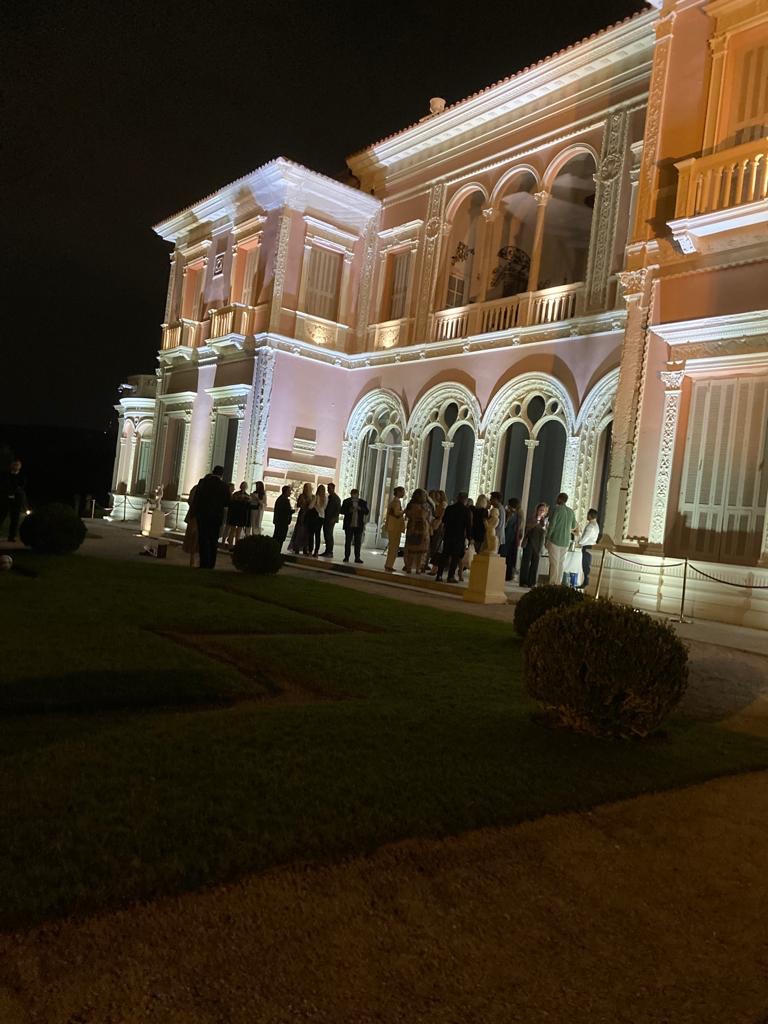
The Mosaic Festival with Master and student series that included Edna Stern with Louis- Victor Bak and Elisabeth Leonskaja with Evelyne Beresowsky
Dear Edna Stern,
It was nice to meet you today in the Royal College of Music together with William Naboré and to listen again to your very fine student before you go to perform together in the Mosaic festival in Cap Ferrat.(Edna ,now a Professor at the RCM had studied with William Naboré at the International Piano Academy Lake Como https://christopheraxworthymusiccommentary.com/2023/10/03/william-grant-nabore-bestrides-the-rcm-like-a-colossus/)
‘Louis-Victor’s Chaminade was like the sun suddenly coming out .Images sounded so woolly and tired and indifferent like an old love . He almost started to move in Chaminade as the new love of his life ignited his playing.
He needs to play chamber music and like Peter Frankl a cat looking in all directions ready to pounce
Movements should be like on a knife edge not like on a cosy velvet cushion.Relets needed more icy sounds to contrast with the beauty that was too evident throughout infact submerged with beauty .Homage needed that aristocratic Rubinstein French sound before opening the gate to paradise at the end.
Chaminade left me exhilarated and excited instead of bored and indifferent
Why not Images Book 2 and get a quick divorce from Book 1
You know indifference and boredom can kill even the greatest of loves’(Note Leslie Howard’s comment below of Book 2 n.2!)
Dear Christopher, I will pass on to Edna ; but thank you for coming and for your kind words ! This was truly inspirational for me, and I am sure this will help me to give these Debussy’s a fresh eye – I am looking forward to experimenting new things and give back all the magic in this music

‘I know you’ll be able to listen online, but just want to report that Louis-Victor Bak did us proud at SH last night..A really lovely programme with a stylishly authentic account of Haydn’s 31st Sonata (perfect ornaments!), marvellously characterised Debussy Images (Et la lune descend was deeply moving) and a cracking account of the neglected but fascinating sonata by Chaminade.He is a first-rate musician!’Leslie Howard

THE FRENCH CONNECTION review by Angela Ransley
The Keyboard Trust was delighted to welcome French pianist LOUIS-VICTOR BAK to Steinway Hall on Wednesday 18 October 2023 where we heard an imaginative programme, followed by a conversation with Artistic Director Leslie Howard in which he outlined his musical journey and hopes for the future. He is no stranger to London audiences, having been an undergraduate at the Royal College of Music where he is now completing his Masters Degree in Piano Performance under Edna Stern and Vanessa Latarche. In addition to London recitals, for example at St James Piccadilly, he has performed in France, Switzerland and Sardinia. He has also won prizes in a number of international competitions.
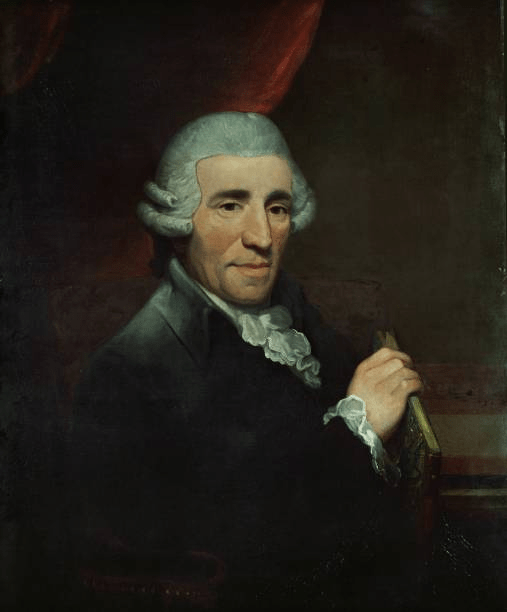
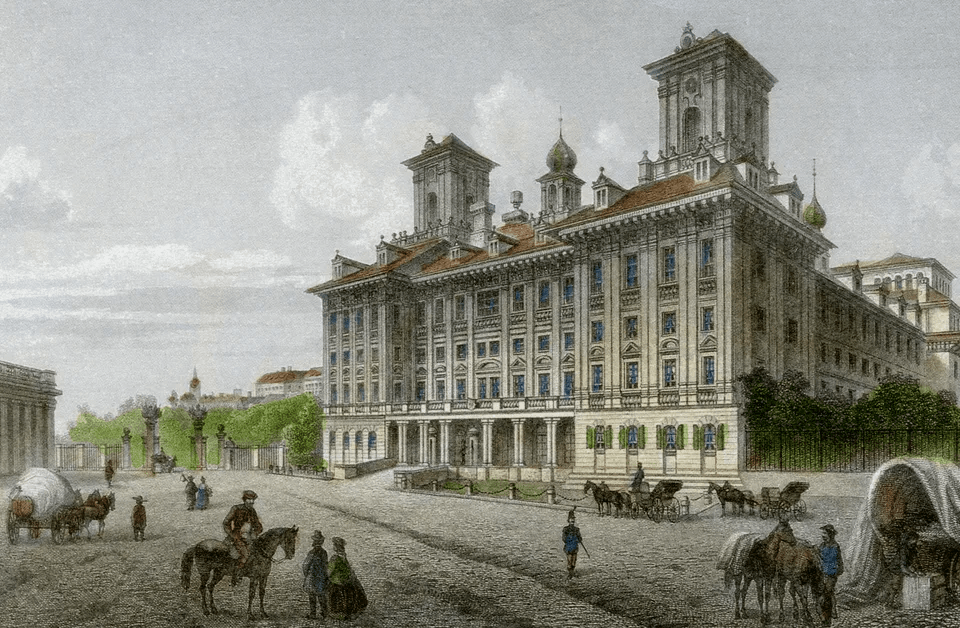
The recital began with the Sonata in Ab Hob XVI/46 by Joseph Haydn. It has a late entry in the catalogue because it was not published until 1786, although being written about twenty years earlier. The vitality and musical invention here speak of a particular point in Haydn’s long life, when he could at last assume control as Director of Music at the Esterhazy Palace in Eisenstadt. This post involved isolation from his fellow musicians and Haydn himself remarked: ‚I was forced to become original‘ Expect the unexpected in sudden turns of harmony, densely woven lines, little figures that tickle the ear, and of course the long toccata-like passages unique to Haydn’s keyboard writing. Is it possible that the diversity found in a single movement has led these sonatas to become less popular than those of Mozart? How to hold all these ideas together? Louis-Victor seems to have found the answer by listening intently to the inner narrative and then giving each passage its time and place.The first movement alternates highly-decorated melodies that reflect in sound the intricate stucco of the palace with nimble finger work. Each were played with meticulous accuracy and the passages always sparkled. The middle movement is an oasis of calm in the remote key of Db – daring for its time.The final Presto gallops home in a whirl of semiquavers performed by Louis-Victor with unerring pulse and precision.
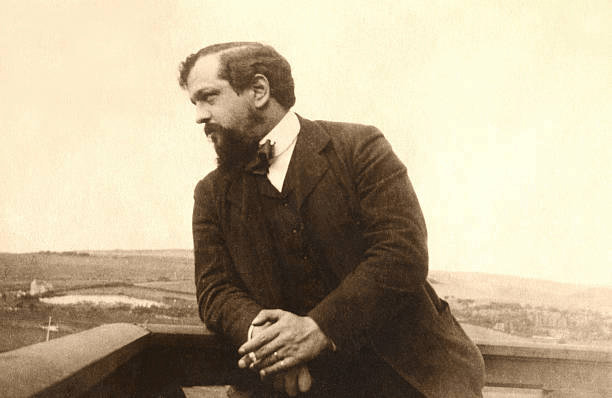
We were fortunate to hear all six of Debussy’s extraordinary Images, the first three being written in 1905 and the last three over the next two years. What a wealth of imagination, colour, textures and sonority when they are all heard together! Three of Debussy’s major preoccupations are in evidence: the beauty of the natural world (Reflets dans l’eau, Cloches parmi les feuilles); the past and its timeless quality (Hommage a Rameau, La lune descend sur the temple qui fut); exuberant vitality (Mouvement, Poissons d’Or). In Reflets and Cloches Debussy shares with us nature’s moments of pure magic: reflections in water and the moon shining on an ancient temple.
‚There is nothing more musical than a sunset. He who feels what he sees will find no more beautiful example of development in all that book which, alas,musicians read but too little – the book of Nature.‘ (Claude Debussy)
Louis-Victor showed his native understanding of Debussy here by bringing specifically French qualities to his interpretation: intelligent control and fastidious attention to detail in these gentle, reflective scenes.

Debussy wrote, first performed and recorded many of his solo piano works in his fifties and they are the fruit of his mature style and global interests, which, although still employing key signatures, venture far beyond tonality with whole-tone scales and passages with no tonal focus at all. In his book The Art of French Piano Music, Dr Roy Howat proposes that it was Debussy’s deep engagement with the gamelan music of the Far East that changed for ever his approach to writing for the piano. In his Cloches and La lune, the layering of the gamelan orchestra and piano equivalents of the high gongs are clearly heard.
In Mouvement and Poissons d’Or, we hear Debussy the virtuoso pianist. He is known to have said: ‚the century of airplanes has a right to its own music‘: the driven toccata that is Mouvement suggest to me the arrival of the machine that shattered the peace of so many at the turn of the century.Poissons d’Or are likely to be the fish found near Asian temples connected to the symbol of the dragon, not goldfish. (French for goldfish is ‚Poisson rouge‘, not ‚Poissons d‘Or’). Debussy’s pianism was held in the highest regard by his contemporaries: simple, unaffected, rhythmically precise. A number of recordings of Debussy performing his own music are available – see link below. Louis-Victor performed these different character pieces with full knowledge of their tradition with many revelatory moments.
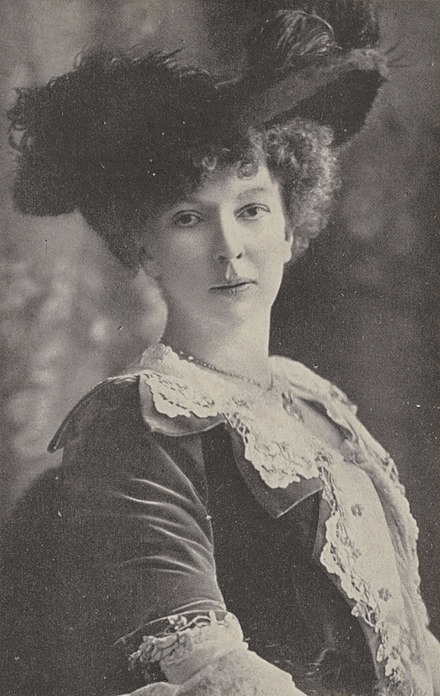
Louis-Victor closed his recital with a French rarity: the Sonata in C minor by Cecile Chaminade (1857 -1944). Cecile was prevented by her father from attending the Paris Conservatoire but studied privately with its teachers instead. Her compositions began early and with time she emerged as pianist and composer, only performing her own works. Her career developed beyond France in the UK and North America and her published music had financial success. Her English contemporary, Ethel Smyth one remarked: ‚I fear that when I die, my music will die with me’. This is exactly what happened. Cecile was totally ignored in the second half of the 20th century and it is thanks to champions such as Louis-Victor that her music is now being revived.
‚I am essentially of the Romantic School, as all of my work shows‘ Chaminade wrote. All the hallmarks of that School are present in this sonata: C minor, the key of passionate outpouring favoured by Beethoven and Chopin, dazzling octaves, certain tonality, the ability to build and deliver exciting climaxes. What Cecile adds is her own individual voice: the unexpected fugal exposition in the first movement, the wonderful use of a short rhythmic motif to structure the second movement and the ability to unleash elemental fury in the left hand of the final Allegrowhich may well have led Ambroise Thomas to say ‚This is not a woman who composes but a composer who happens to be a woman‘. With over 6000 neglected composers ‚who happen to be women‘ now listed, it is time for Cecile Chaminade to be granted her proper place by posterity.
All of Louis-Victor’s musical and technical strengths – the intellectual insight, sensitivity, colour – were required and employed to deliver both the poetic and the passionate sides of this demanding sonata and its rousing climax drew impressive applause from an impressed audience.
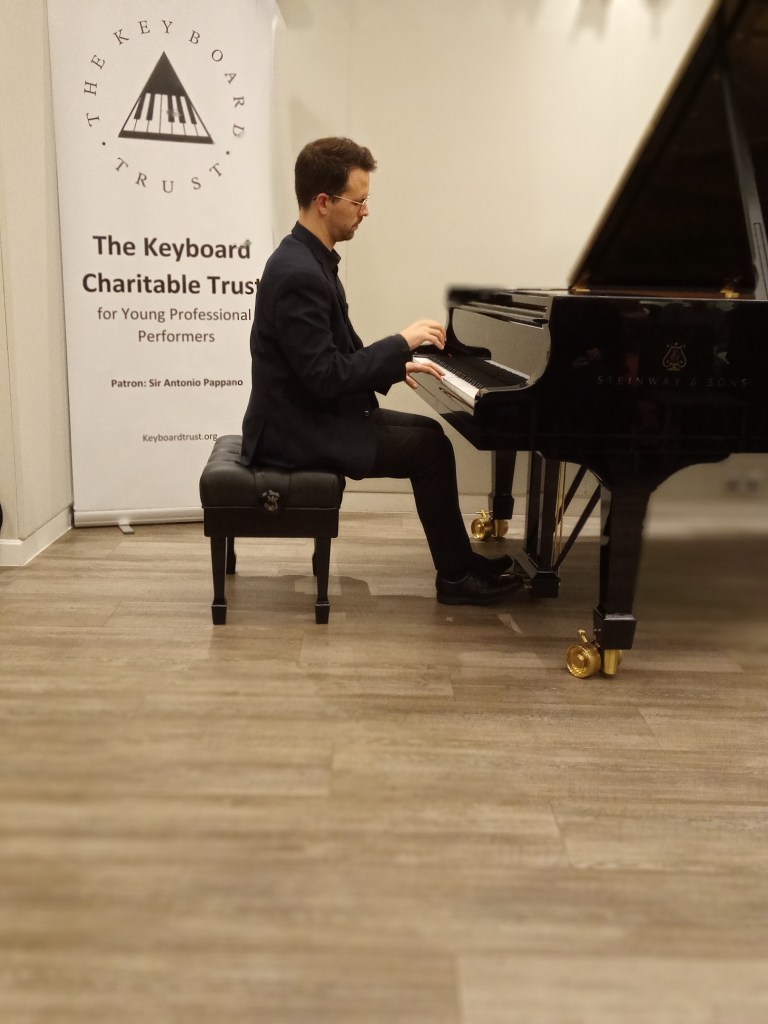
It is a feature of the Steinway Hall evenings that, following the recital, the soloist is heard in conversation with one of the Artistic Directors, on this occasion Dr Leslie Howard. Louis-Victorshared with us how he studied the flute for seven years before taking up the piano seriously at the late age of 14. When asked about his future, he revealed that his heart lies in the French tradition and he wishes to bring lesser known French composers including Chaminade to public knowledge. We wish him joy and every success in this venture and look forward eagerly to the delight of fresh pianistic treasures.

References:
The Art of French Piano Music Roy Howat (Yale University Press, 2009)
Debussy Plays His Own Music:https://www.youtube.com/playlist?list=PLNW5TIrhZRwmReY1Xhvs4gtsboEeg0TYM
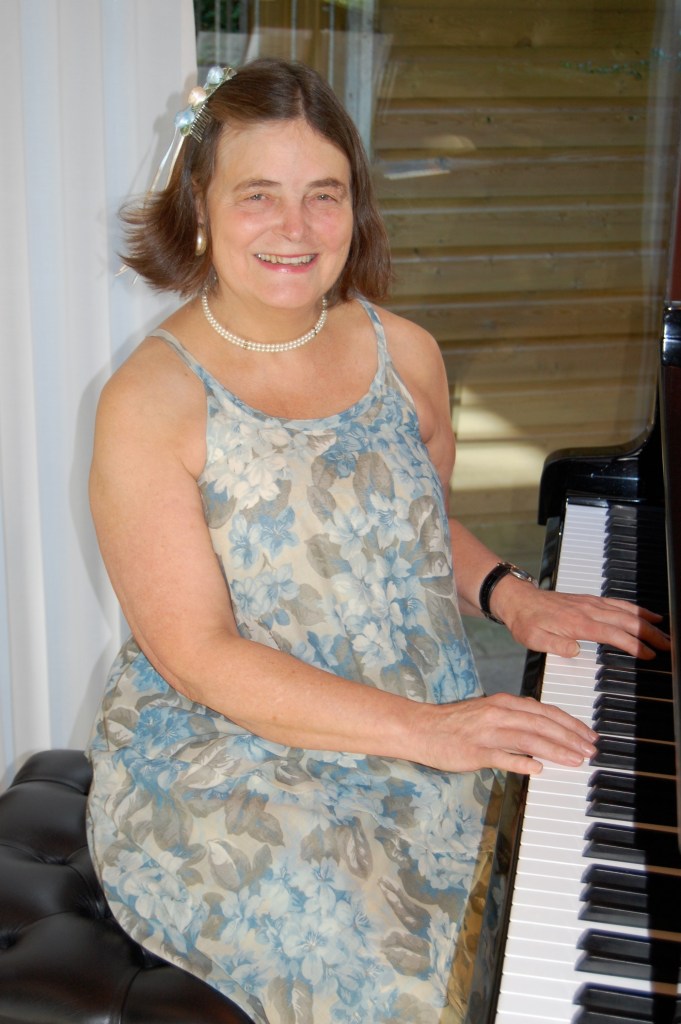
ANGELA RANSLEY, Director of the Harmony School of Pianoforte, is an advanced piano teacher and writer and works closely with the Keyboard Trust.
 ChristopherAxworthy-MusicCommentary
Una risposta a "Louis – Victor Bak at Steinway Hall for the Keyboard Trust – A review by Angela Ransley ‘THE FRENCH CONNECTION’"