

Mercoledì 18 ottobre ore 19 Rettorato, Atrio Torre A, via Ostiense 133
Filippo Tenisci, Young Artists Piano Solo Series 2023 – 2024
J. Haydn: Sonata n. 55 Hob. XVI/41
L. v. Beethoven: Bagatelle op.126
R. Wagner/F. Liszt: Feierlicher Marsch zum heiligen Gral aus Parsifal S.450; Walhall aus Der Ring des Nibelungen, S.449; Ouverture zu Tannhäuser S.442
Filippo Tenisci, pianoforte
Today saw the opening of the new piano recital series for Roma 3 University in their new home in the University buildings.
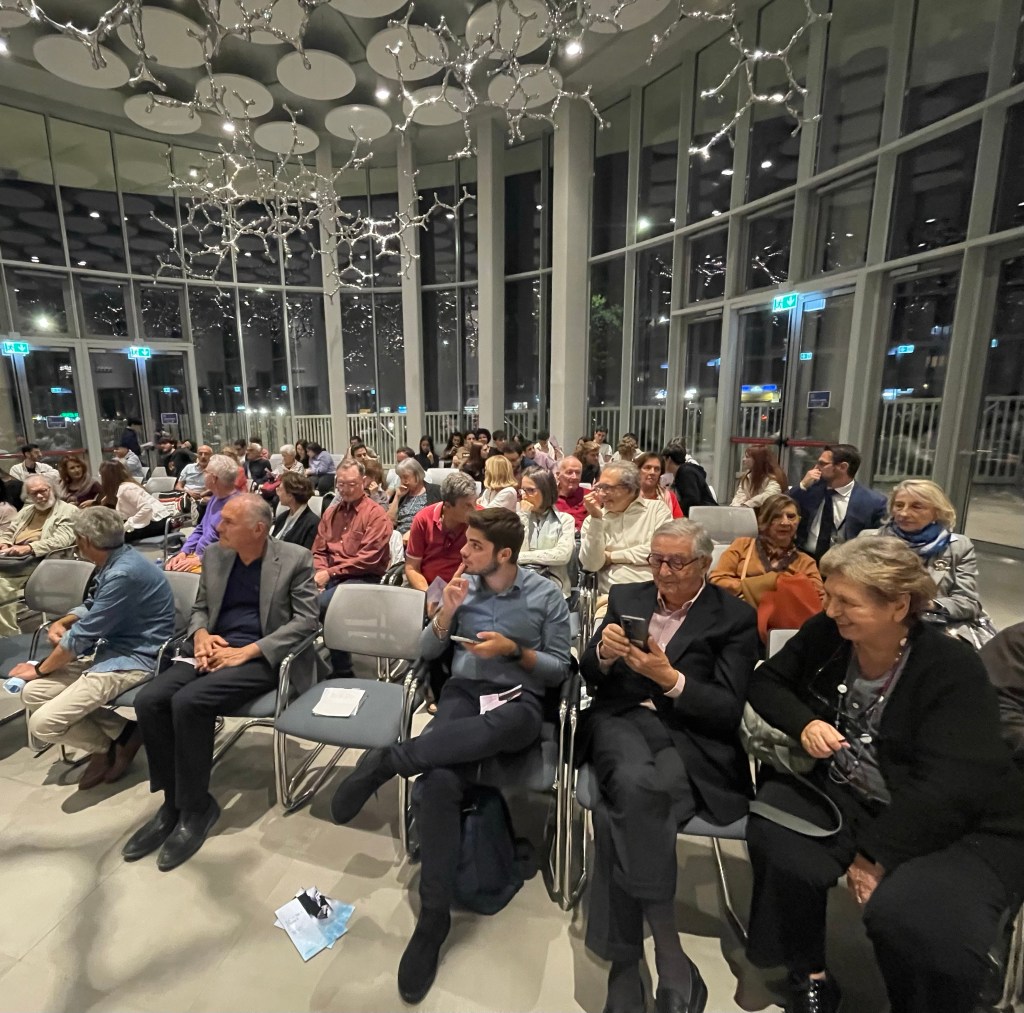
It was nice to see one of the last of the great critics,Dino Villatico,joining us today too especially as Filippo had dedicated the recital to that great musicologist and pianofile Prof Piero Rattalino whose heart had been with the beginnings of great music at Roma 3 University.

Filippo Tenisci was playing an unusually interesting Haydn sonata in two movements but of astonishing intricacy and invention and it was the ideal partner to Beethoven’s last work for piano :The Bagatelles op 126 .Coming close on the heels of the monumental Diabelli Variations and just after the 9th symphony Beethoven had returned to the simplicity of a child.A simplicity that hides a lifetime of strife and struggles and now finds an outlet with a refined series of baubles within which treasures are embedded with visionary poignancy.

Beethoven’s Six Bagatelles were six stories told with remarkable intelligence and sumptuous attention to Beethoven’s very precise indications.It is one of the marvels of the genius of Beethoven that he could write down for posterity the precise indications for a score that only he could visualise in his inner ear.
The first three Bagatelles were played very beautifully but slightly missed the weight of Beethoven’s simple poignancy.Some rather literal staccatos and unnecessary highlighting of counterpoints in the first Bagatelle were compensated for by the gently martellato irascibility of the second.Typical Beethoven violent changes of mood were superbly characterised by Filippo but the third Andante cantabile was rather too ponderous for the sting in the tail of ‘grazioso’ indication.Some strange highlighting of the final chords but then a masterly control of the pedal for the final etherial notes that Beethoven asks to be floated timelessly in space.
The last three Bagatelles were magnificently played because Filippo just let the music speak for itself with out ‘ doing things’- to quote Alfred Brendel.There was the dynamic drive of the fourth with its marcato outpouring transformed to the sublime beauty of legatissimo strands of melody just floating over the keys.Beauty of delicacy and intelligence combined to recreate one of Beethoven’s most poignant outpourings in the Quasi Allegretto.The shock wave of the last Bagatelle was visibly felt by the very large mainly young audience in the hall who were then ready to be transported into the secret world of Beethoven with fragments of melody magically floated in the thin rarified air of Beethoven’s final years ,with a feeling for the freedom that at last Beethoven had found.
His definitive performances of Wagner in Liszt’s hands I have written about before but enough to say that it was a wonderful way to open a season dedicated to inspired young musicians at the start of their careers.
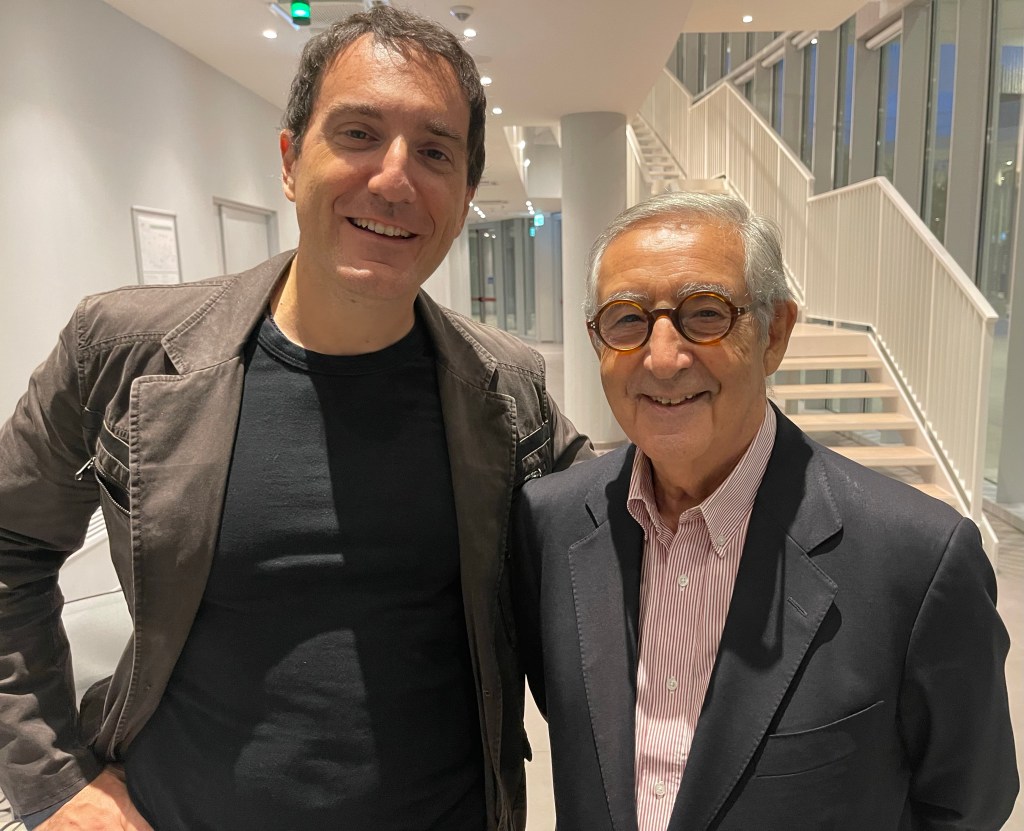
Liszt’s noble transcriptions of his son in law’s masterpieces have long been a speciality of Filippo who is in the process of recording the complete works .I had heard some of them in a recital by Filippo in Velletri on an 1876 Erard piano similar to the one that Liszt would have played at the Villa D’Este.
Filippo Tenisci exults the genius of Wagner and Liszt in Velletri
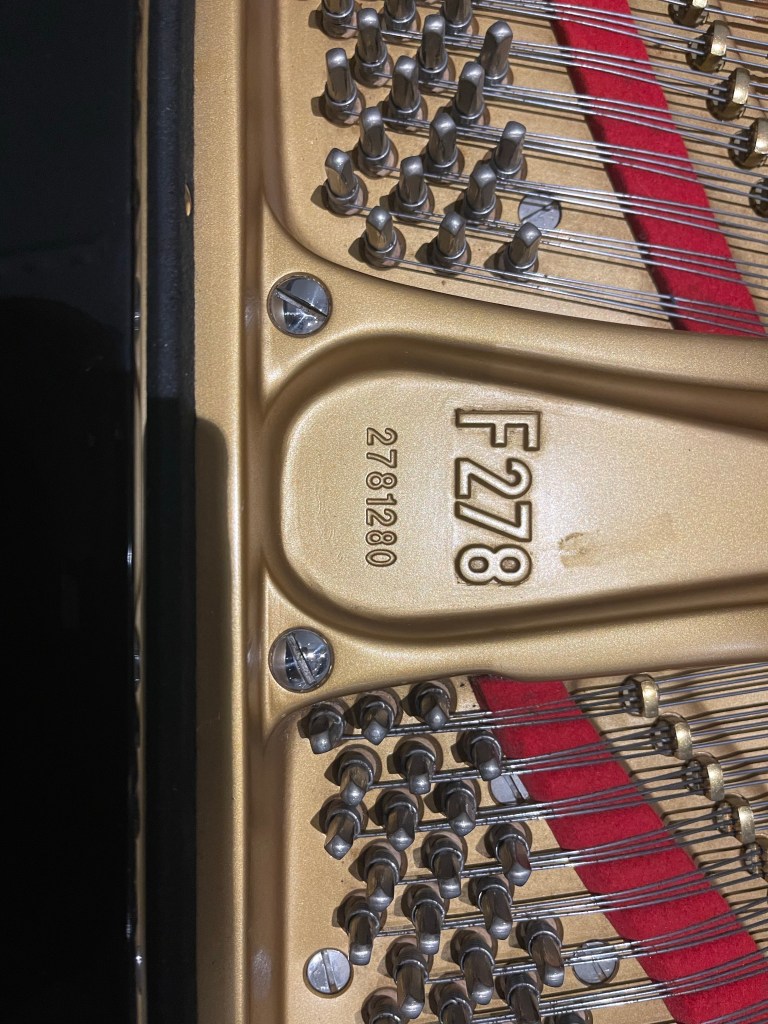
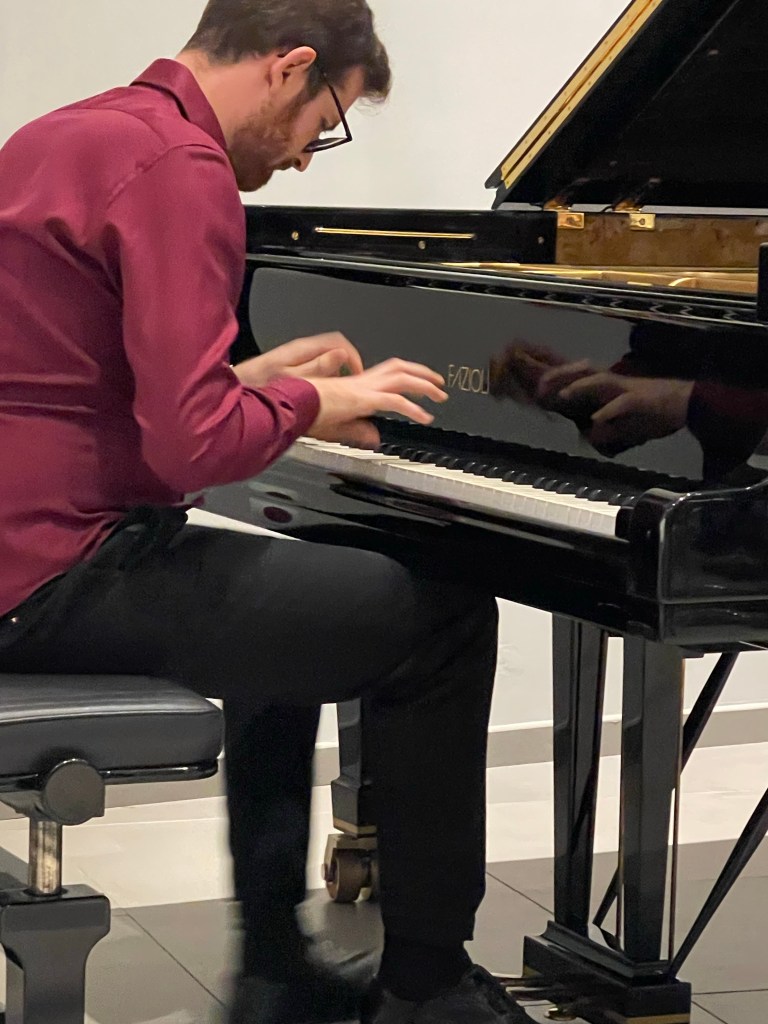
Tonight on the magnificent Fazioli concert grand that sits in the Roma 3 Concert Hall he played just two short paraphrases with a moving performance of the Pilgrims March and the multicoloured Walhalla S.449 .But it was the almost literal transcription of the Tannhauser Overture that ignited this rarified atmosphere.
Autumn Piano Festival Saturday 30th September Sunday 1st October 2003
Here were pianistic gymnastics and overwhelming sonorities combined with a transcendental display of piano virtuosity.
But it was the serious musicianship and scholarly study that shone through all he did.A pianist who is also a musicologist who can delve into the archives and bring such gems vividly to life.
After the funambulistic antics of the Tannhauser Overture ,long a vehicle for virtuosi of the past like Moiseiwitch or Bolet, it was a sign of serious intent that Filippo should end his recital with the simple beauty of the melody that Schumann said had been sent to him by the Angels.
A refined recital by a real thinking musician who just happens to be a virtuoso pianist too – a rare combination indeed.
I just wish he would appear to enjoy it as much we did.Music is a serious business but it can also be fun when played with such obvious mastery .

Joseph Haydn was born in the village of Rohrau in 1732, the son of a wheelwright. Trained at the choir-school of St Stephen’s Cathedral in Vienna, he spent some years earning a living as best he could from teaching and playing the violin or keyboard, and was able to learn from the old musician Porpora, whose assistant he became. Haydn’s first appointment was in 1759 as Kapellmeister to a Bohemian nobleman, Count von Morzin. This was followed in 1761 by employment as Vice-Kapellmeister to one of the richest men in the Empire, Prince Paul Anton Esterházy, succeeded on his death in 1762 by his brother Prince Nikolaus. On the death in 1766 of the elderly and somewhat obstructive Kapellmeister, Gregor Werner, Haydn succeeded to his position, to remain in the same employment, nominally at least, for the rest of his life.On the completion of the magnificent palace at Esterháza, in the Hungarian plains under the new Prince, Haydn assumed command of an increased musical establishment. Here he had responsibility for the musical activities of the palace, which included the provision and direction of instrumental music, opera and theatre music, and music for the church. For his patron he provided a quantity of chamber music of all kinds, particularly for the Prince’s own peculiar instrument, the baryton, a bowed string instrument with sympathetic strings that could also be plucked.On the death of Prince Nikolaus in 1790, Haydn was able to accept an invitation to visit London, where he provided music for the concert season organized by the violinist-impresario Salomon. A second successful visit to London in 1794 and 1795 was followed by a return to duty with the Esterházy family, the new head of which had settled principally at the family property in Eisenstadt, where Haydn had started his career. Much of the year, however, was to be spent in Vienna, where Haydn passed his final years, dying in 1809, as the French armies of Napoleon approached the city yet again.
The classical keyboard sonata developed during the 18th century, the changes in its form and content taking place during Haydn’s lifetime. This formal development took place during a period when keyboard instruments themselves were changing, with the harpsichord and clavichord gradually replaced by the new hammer-action fortepiano. There are some 14 early harpsichord sonatas attributed to Haydn. Of his 47 later keyboard sonatas, dating from about 1765, the first 30 were designed for harpsichord and the next nine for harpsichord or piano. The remaining eight sonatas include seven specifically intended for piano and one for piano or harpsichord. The principal musical difference between music for harpsichord and that for the piano lies in the possibilities for gradual dynamic change, indications of which appear in Haydn’s later sonatas.
The boldly assertive opening Allegro of No 41 is the only movement in the three Marie Esterházy sonatas in full sonata form.It is a far cry from these delectable lightweight works composed for amateur domestic performance to the large-scale sonatas written during Haydn’s second London visit of 1794–5 for the professional pianist Therese Jansen (c1770–1843). Born in Aachen, Jansen became a star pupil of Clementi’s after her move to England. Haydn warmly admired her playing, composing for her not only the sonatas Nos 50 and 52 (possibly, too, the slighter D major, No 51) but also three of his greatest piano trios, Nos 27–29. In May 1795 he was a witness at her wedding, in St James’s Piccadilly, to the picture dealer Gaetano Bartolozzi, son of the famous engraver Francesco Bartolozzi.The three sonatas Hob.XVI:40–42 appeared in 1784 and were dedicated to Princess Marie Esterházy, who had married the grandson of Haydn’s patron Prince Nicolaus in the early autumn of 1783. It has been suggested that the set was in the nature of a wedding present to the wife of Haydn’s future patron, the younger Prince Nicolaus. Each of the sonatas is in two movements.The second sonata, in B flat major, has a principal theme in dotted rhythm, while a triplet accompaniment predominates in the subsidiary theme. Interesting twists of harmony, even in the second bar, are carried further in the central development, which opens in D flat major. Much use is made of answering figures between right and left hands in the lively second movement. Again the two sections of the principal theme are each repeated, before a B flat minor version of the material, leading to a more decorated version of the first theme in the tonic major key.

,Beethoven’s birthplace. It was unveiled on 12 August 1845,in honour of the 75th anniversary of the composer’s birth.Liszt involved himself in the project in October 1839 when it became clear it was in danger of foundering through lack of financial support and returned to the concert stage for this purpose; he had earlier retired to compose and spend time with his family. He also wrote a special work for occasion of the unveiling, Festival Cantata for the Inauguration of the Beethoven Monument in Bonn, S.67 (Festkantate zur Enthüllung des Beethoven-Denkmals in Bonn).
Beethoven’s Bagatelles, Op. 126 were published late in his career, in the year 1825 and dedicated to his brother Nikolaus (1776–1848),and wrote to his publisher that the Opus 126 Bagatelles “are probably the best I’ve written”Beethoven intended the six bagatelles to be played in order as a single work, at least insofar as this can be inferred from a marginal annotation Beethoven made in the manuscript: “Ciclus von Kleinigkeiten” (cycle of little pieces).Another reason to regard the work as a unity rather than a collection: starting with the second Bagatelle, the keys of the pieces fall in a regular succession of descending major thirds.
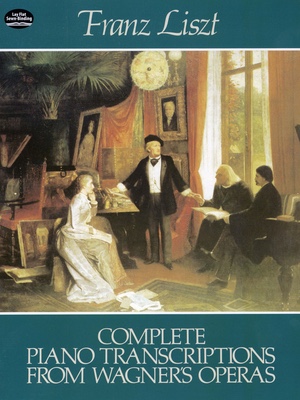

After Liszt’s retirement from the concert stage in 1847, his attention turned increasingly to composition. His admiration for the music of Richard Wagner,his son in law ,led him to promote Wagner’s operas as well as to compose piano transcriptions from many of them. The present volume presents all fifteen of these compositions, dating from 1848 to 1882. Full of familiar melody and brilliant pianism, they are masterful transformations of Wagner’s great opera themes into unforgettable music for the piano. The compositions included Fantasy on Themes from Rienzi; Spinning Chorus from The Flying Dutchman; Overture to Tannhauser; Recitative and Romance “Evening Star” from Tannhauser; three more pieces from Tannhauser and Lohengrin; Pilgrim’s Chorus from Tannhauser; Isolde’s Liebestod from Tristan and Isolde; “Am Stillen Herd” from Die Meistersinger; Valhalla from Der Ring des Nibelungren; and Solemn March to the Holy Grail from Parsifal.
This Dover edition, published under the auspices of The American Liszt Society, reproduces the pieces from a rare Russian critical edition of Liszt’s work. Russian text on the music page has been translated into English especially for this edition, while Liszt scholar Charles Suttoni has provided a perceptive introduction discussing Liszt’s transcription in general and those of Wagner’s music in particular.
These scores are not readily available in any other one-volume series. This Dover edition brings them together in a convenient low-cost format for students, pianists, music lovers — all who delight in brilliant, idiomatic translations of orchestral language into that of the piano.
Schumann believed that he was surrounded by spirits who played him music, both “wonderful” and “hideous”. They offered him “most magnificent revelations”, but also threatened to send him to Hell. On the 17 or 18 February 1854, Schumann wrote down a theme he said was dictated to him by voices like those of angels. He did not recognize that it was actually a theme which he had composed previously.It is this theme from Bunte Blatter op 99 .N 4 – Ziemlich Langsam – that Filippo chose to close his very interesting recital today.(Several days later, he wrote a set of variations on this theme. While he was still working on the composition, on 27 February he suddenly threw himself half clothed into the freezing Rhine river, from which he was rescued .After surviving the suicide attempt, he continued to work on these Geister Variations completing them next day and sent the manuscript to his wife, who had left him the night before, on the advice of a doctor).

Nato nel 1998 a Tirana, Filippo Tenisci ha iniziato i suoi studi musicali in età infantile in Albania e successivamente in Italia con la M^ Emira Dervinyte. Ha continuato la sua formazione pianistica principalmente sotto la guida dei Maestri Daniel Rivera, Massimo Spada, Roberto Galletto e Maurizio Baglini. Ha concluso i suoi studi nel 2022 presso il Conservatorio Pietro Mascagni di Livorno laureandosi con 110, Lode e Menzione d’Onore ed è stato eletto come Miglior Laureato Accademico 2021/22 ottenendo il Premio Galletta.
In occasione della Festa della Repubblica Italiana 2023, su invito del Console Generale, ha debuttato alla City Hall di Hong Kong. È vincitore assoluto del Concorso Armonie della Sera 2023 e nello stesso anno vincitore del 2° premio al Premio Giannoni. Nel 2022 ha ottenuto il primo premio al “Premio Crescendo” di Firenze e il 2° premio allo storico concorso “Marco Bramanti” di Forte dei Marmi (LU).
Roma 3 Orchestra The Mozart Project
Nel 2021 ha debuttato con Roma Tre Orchestra eseguendo il Concerto n.15 K.450 di W.A.Mozart, sotto la direzione del M° Sieva Borzak. Sempre con Roma Tre Orchestra, nell’ambito del Baglini Project, ha suonato nel concerto per 3 pianoforti e orchestra di W.A.Mozart, con i pianisti Giuseppe Rossi ed il M° Maurizio Baglini, che ha anche curato la direzione e concertazione. Nello stesso anno ha registrato la 2^ Sinfonia Op. 36 di Beethoven nella virtuosa trascrizione pianistica di Liszt per RAI 5, nel format “Ut Musica – Il Mascagni a Livorno”. Nell’ottobre 2019 ha vinto il secondo premio e il premio “Scarlatti” al Riga International Competition for Young Pianists. Nel 2018: è stato proclamato vincitore assoluto dell’International Competition for Youth “Dinu Lipatti”; ha vinto il primo premio al concorso Franz Liszt presso l’Accademia di Ungheria a Roma; si è classificato tra i primi 8 semifinalisti del prestigioso Pianale Academy & Competition, ricevendo anche una borsa di studio. Nel 2016 ha vinto il terzo premio al Concorso Internazionale “Resonances” di Parigi e il premio come miglior esecutore della musica ucraina.
Ha frequentato diverse masterclass e con i rinomati maestri Beatrice Rana, Elisso Virsaladze, Boris Petrushansky, Andrea Lucchesini, Ewa Pobłocka, Justas Dvarionas, Uta Weyand, Jun Kanno, Ralf Nattkemper e Elisabetta Guglielmin.
Attualmente è impegnato nell’incisione integrale delle trascrizioni Wagner/Liszt, progetto che prevede la realizzazione di un doppio disco entro il 2024. Questo progetto gli ha dato la possibilità di ottenere la prestigiosa borsa di studio del Bayreuth Festspiele del 2023.
Una stagione ricca di luoghi, eventi, protagonisti, affermati musicisti del panorama nazionale e internazionale e tanti giovani talenti.


 ChristopherAxworthy-MusicCommentary