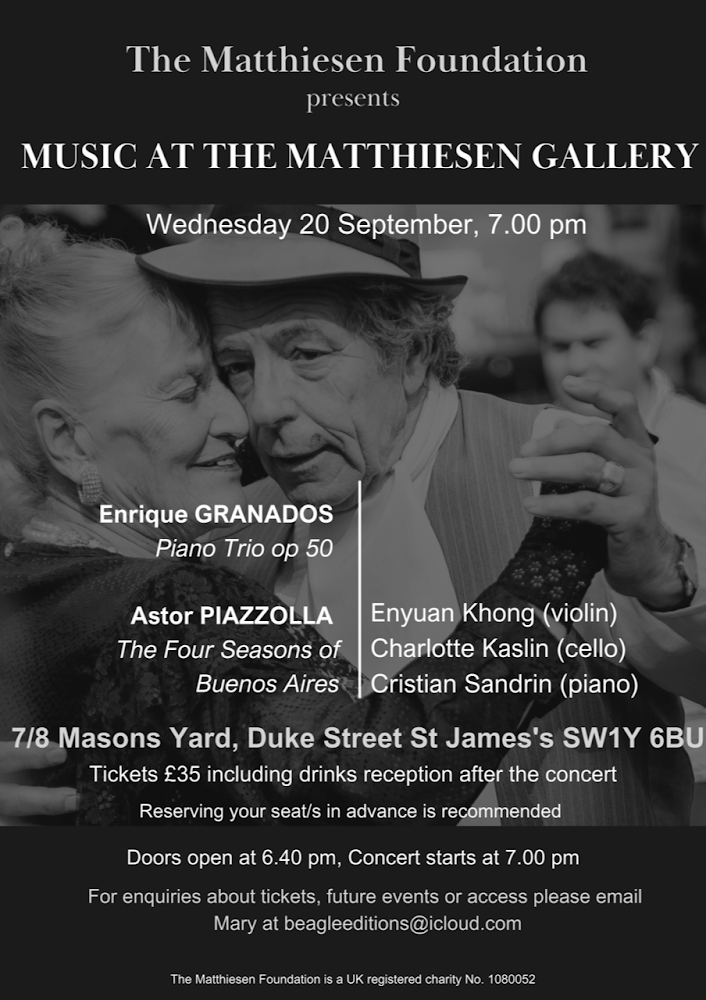
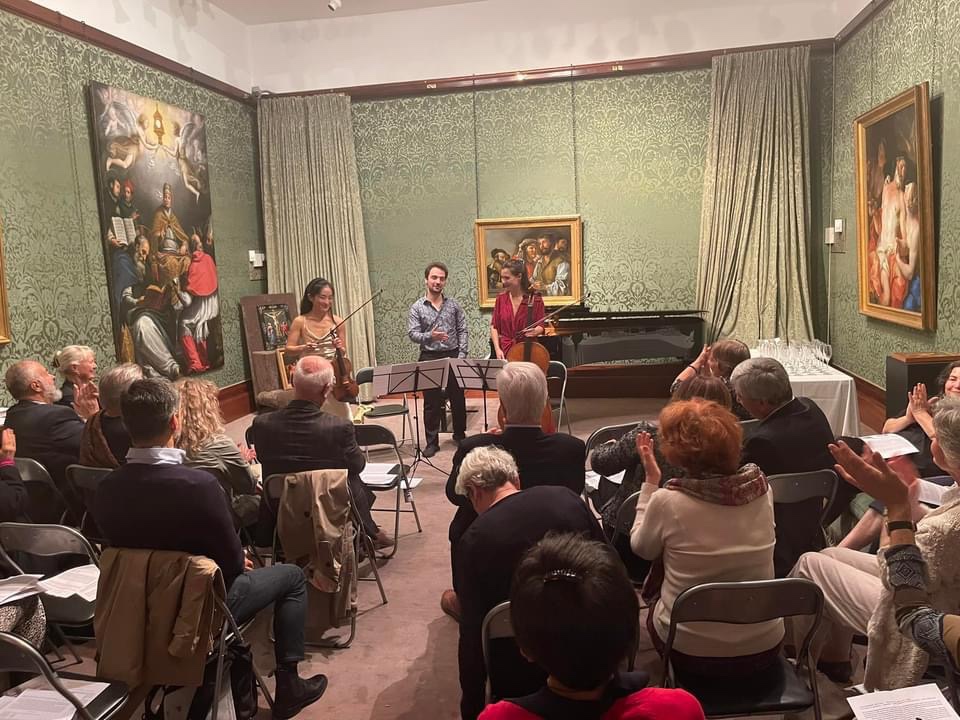
A sumptuous feast of exhilaration and seduction surrounded by beauty in Mary Orr’s salon at the Matthiesen Gallery in Mayfair
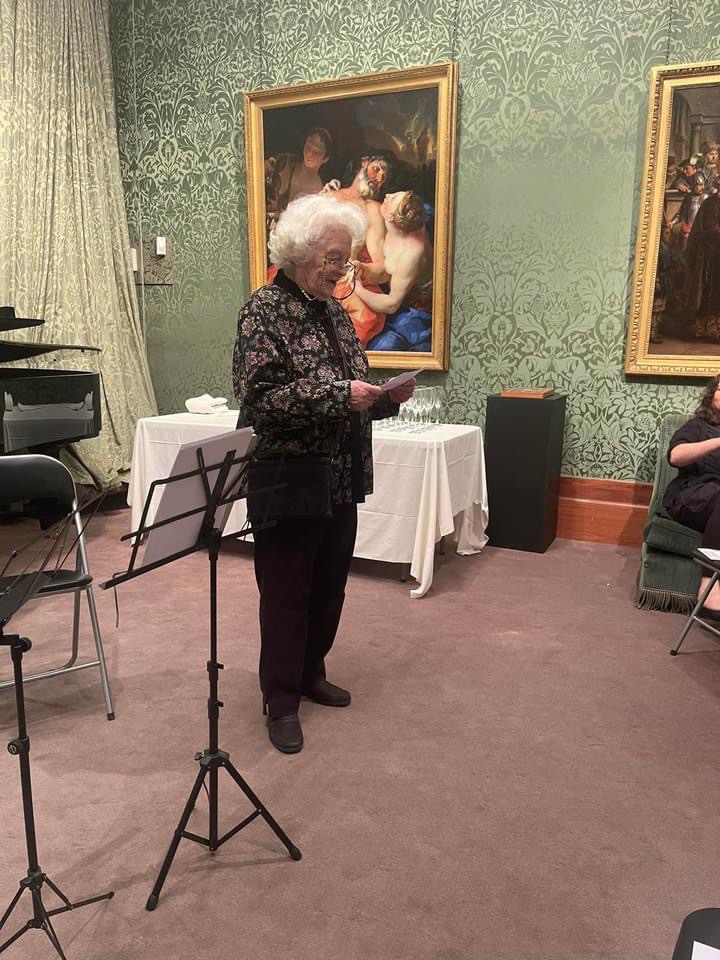
A trio of Mendelssohnian delight from a composer who after being summonsed to play to President Wilson after the enormous success of the premiere of his opera Goyescas which turned out to be Granados’s last performance before returning home on a ship that was torpedoed in the English Channel.
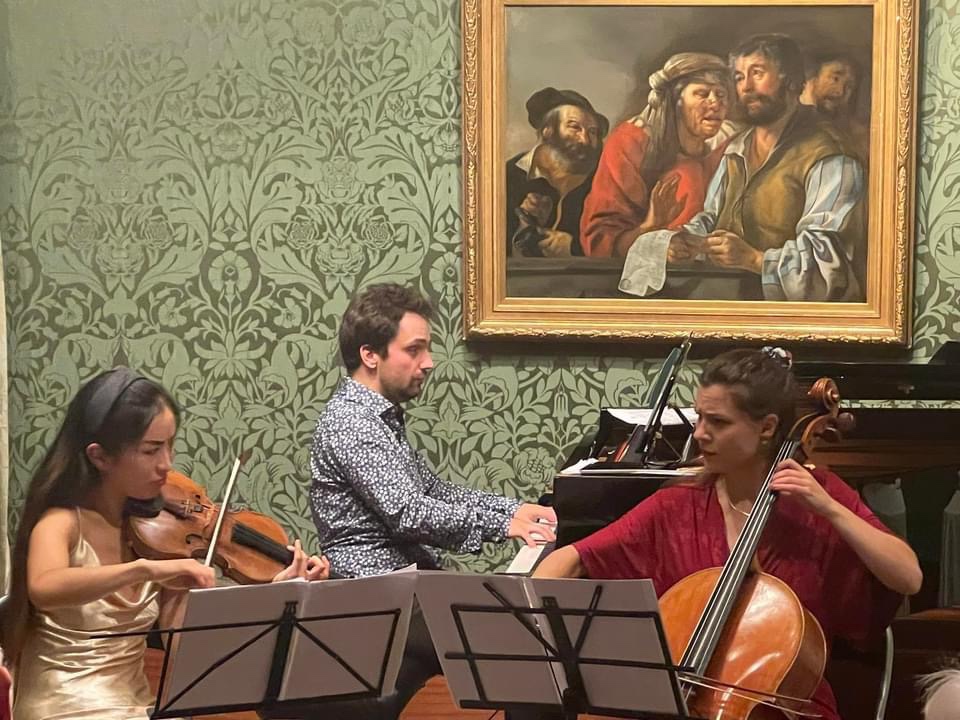
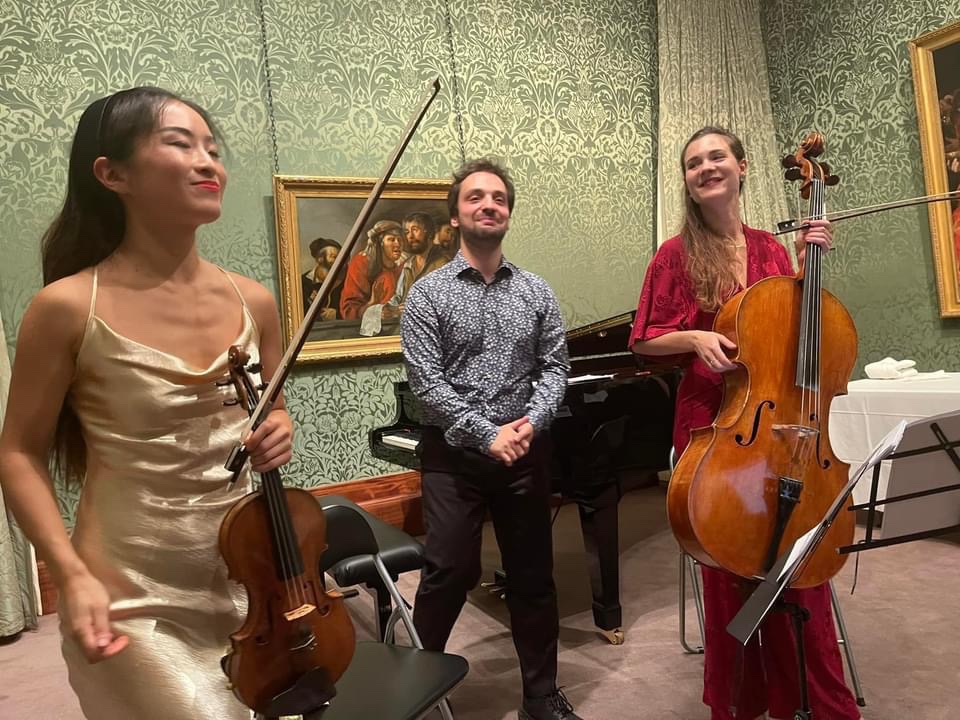
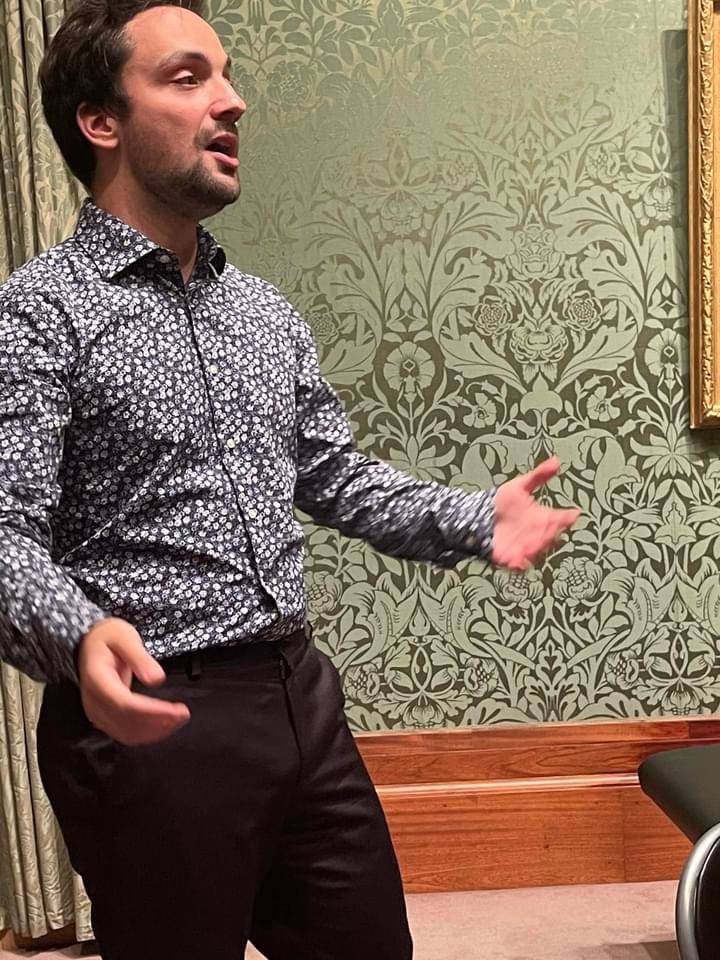
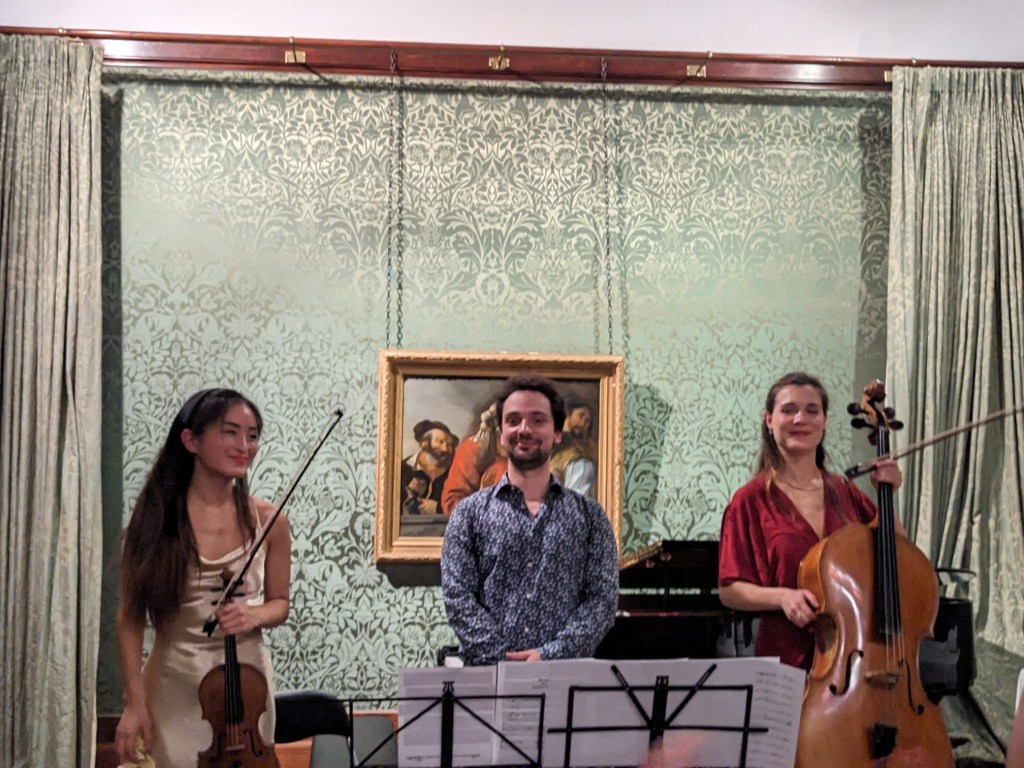
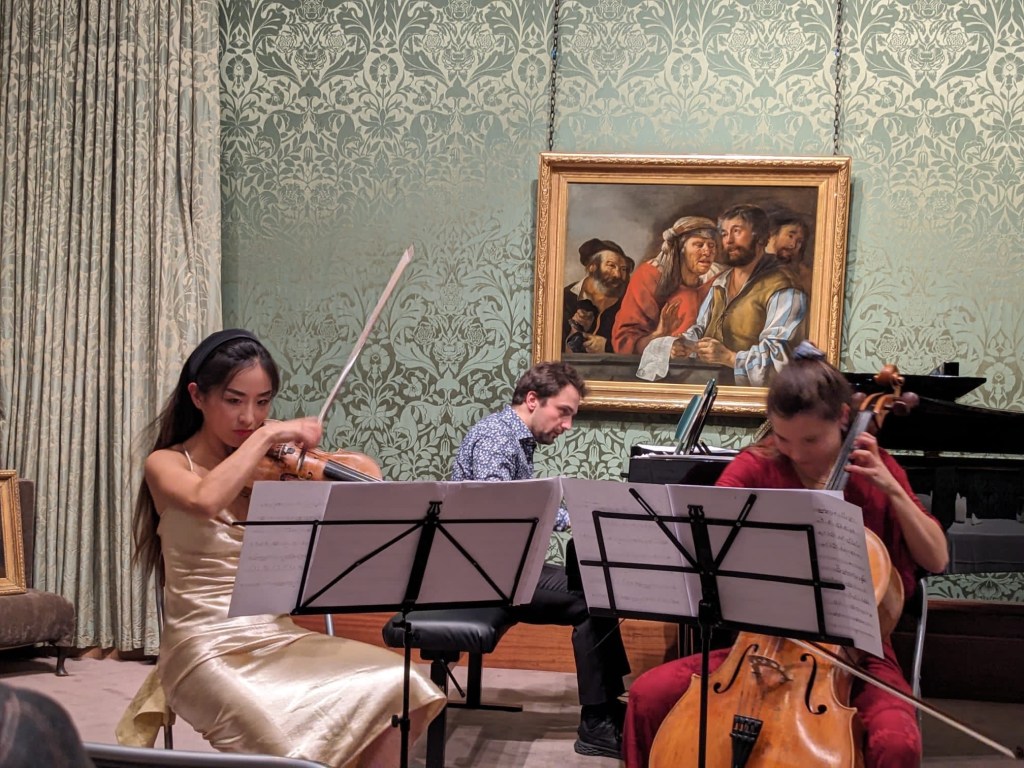
Piazzola on the other hand bringing the seduction of the night life and ravishing sleeze of Buenos Aires into the concert hall with the tangos of San Martin brought to life with passionate conviction by the Khong,Kaslin,Sandrin Trio.There was the unmistakable smoky atmosphere of Argentina missing slightly the slightly larger ensemble and of course the bandoneon but made up for with the choice of the more refined Tangos of insinuating melodic outpourings.Enyuan Khong adding some very expressive slides to her superb violin playing and Charlotte giving just that much more throbbing rubato.Cristian of course like the chameleon he is was able with the twitch of his shoulder and the switch of his foot to create just the sleeze that Mr Matthiessen had contributed to by turning down the house lights!
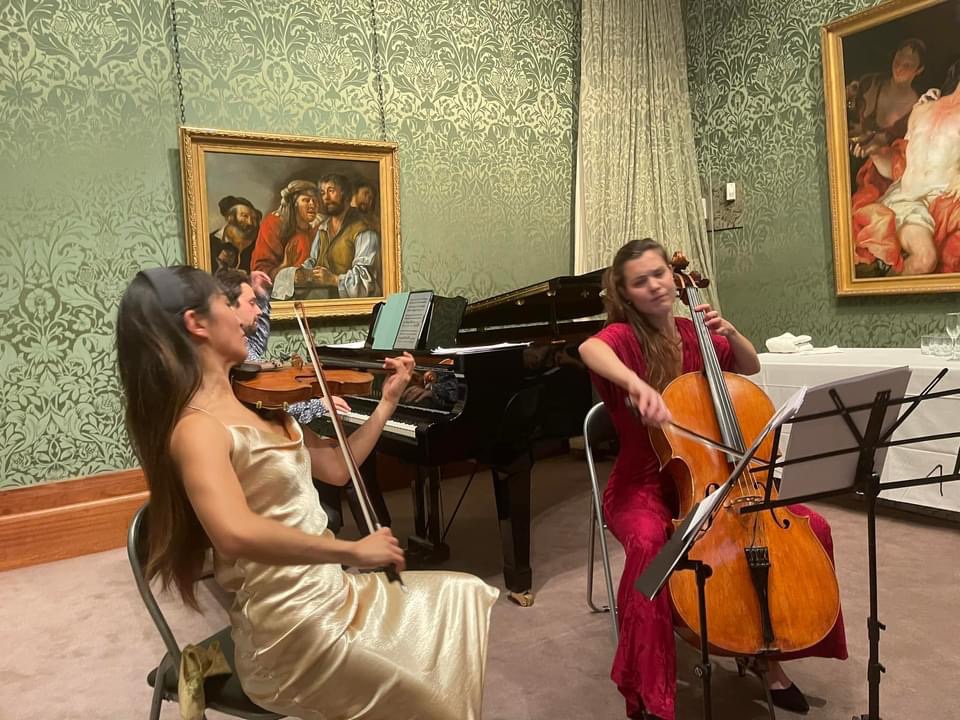
The Granados Trio an early work only discovered in 1976 and rarely programmed since.A great sweep and passion to the first movement in which the violin and cello play together with searing intensity of sumptuous sounds but of course the piano has the last word that in Cristians hands were of a purity and disarming simplicity.A ‘Scherzetto’ very much in the style of Mendelssohn with its lightweight rhythmic energy played with an evident ‘joie de vivre’.The musette Trio was full of buoyancy and life but interrupted by a solo piano recitativo before the return to the ‘Scherzetto’ with its impishly capricious ending.There was a veiled beauty to the ‘Duetto’ of a real ‘song without words’ and showed the superb ensemble of this newly formed trio.A finale truly ‘Dumka’ style followed with its infectious dance rhythms.
I wonder if Granados would have published it had he not perished so ignominiously near to our shores.
I imagine it was eventually found right at the bottom of his cupboard 80 years after it’s premiere in 1895 with the seventeen year old Pablo Casals.Forgotten about as he discovered his true genius for his native Spanish idioms wrapped up in transcendental pianistic trickery.
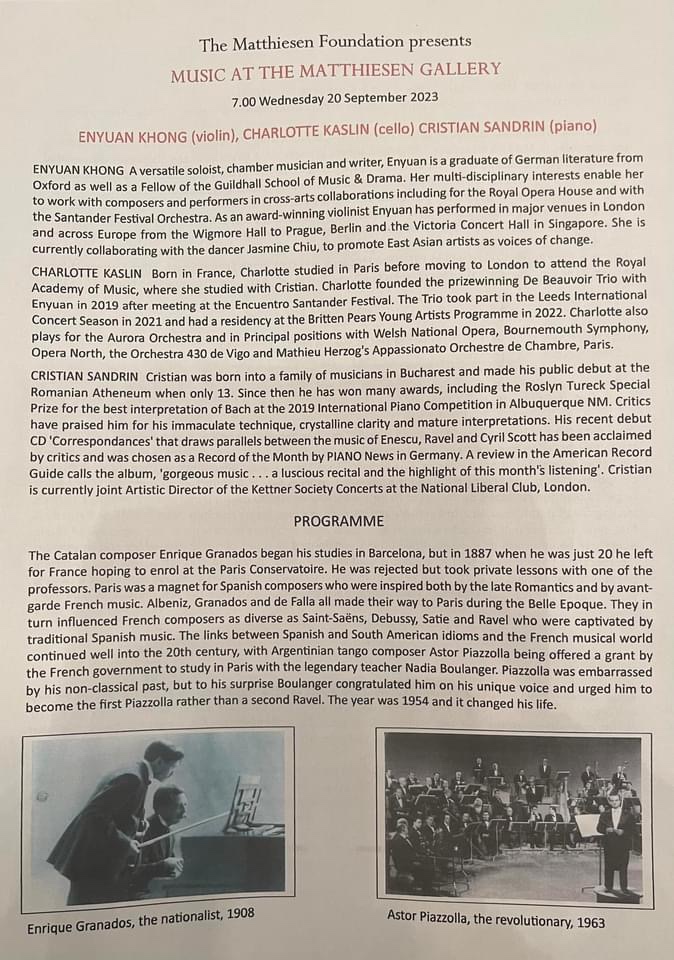
The Trio op. 50 in C major by Enrique Granados, one the most important Spanish works for piano was written in 1895.It was inspired and an attempt to reconcile the grand late-romantic Central European musical forms with a distinctly Spanish language based on the teachings of Felipe Pedrell. A work with a very complex musical structure in consonance with the late-romantic European tradition and an inspired content of a personal and poetical nature.
The Granados trio was premiered in Madrid with the composer himself at the piano, the violinist Julio Francés and a 17 year-old cellist Pablo Casals, at the time a student at the Madrid Conservatory. The work was never again performed during Granados’ life. After his tragic death it remained in complete oblivion until its publication in 1976 by Unión Musical Española.

Died: 24 March 1916, English Channel
A delay in New York, incurred by accepting a recital invitation from President Wilson caused him to miss his boat back to Spain. Instead, he took a ship to England, where he boarded the passenger ferry SS Sussex for Dieppe France. On the way across the English Channel , the Sussex was torpedoed by a German U boat , as part of the German World War I policy of unrestricted submarine warfare.According to witness Daniel Sargent, Granados’s wife, Amparo, was too heavy to get into a lifeboat. Granados refused to leave her and positioned her on a small life raft on which she knelt and he clung. Both then drowned within sight of other passengers.However, according to a different account from another survivor, “A survivor of the 1916 torpedo attack on a Cross channel ferry, Sussex, recognised Spanish composer Granados in a lifeboat, his wife in the water. Granados dived in to save her and perished.”The ship broke in two parts, and only one sank (along with 80 passengers). Ironically, the part of the vessel that contained his cabin did not sink and was towed to port, with most of the passengers, except for Granados and his wife, who were on the other side of the boat when it was hit. Granados and his wife left six children: Eduard (a musician), Solita, Enrique (a swimming champion), Víctor, Natalia, and Francisco.
The personal papers of Enrique Granados are preserved in, among other institutions, the National Library of Catalonia.
The Trio by Granados is an inspired and solid attempt to reconcile the grand late-romantic Central European musical forms with a distinctly Spanish language
— Juan Carlos Garvayo,
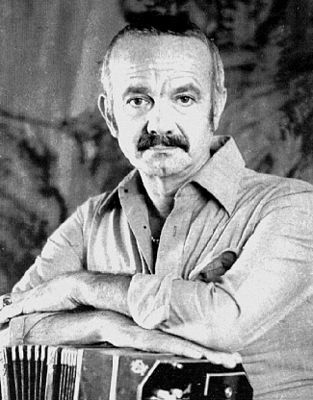
March 11, 1921 Mar dei Plata ,Argentina Died
July 4, 1992 (aged 71)Buenos Aires ,Argentina
The Cuatro Estaciones Porteñas, also known as the Estaciones Porteñas or The Four Seasons of Buenos Aires, are a set of four tango compositions written by Astor Piazzola ,which were originally conceived and treated as different compositions rather than one suite, although Piazzolla performed them together from time to time. The pieces were scored for his quintet of violin (viola), piano, electric guitar, double bass and bandoneon.By giving the adjective portenoreferring to those born in Buenos Aires,the Argentine capital city, Piazzolla gives an impression of the four seasons in Buenos Aires. The order of performance Piazzolla gave to his “Estaciones Porteñas” is: Otoño (Autumn), Invierno (Winter), Primavera (Spring), Verano (Summer). It was different from Vivaldi’s order.
The Seasons
- Verano Porteño (Buenos Aires Summer)
written in 1965,originally as incidental music for the play ‘Melenita de oro’by Alberto Rodríguez Muñoz. - Invierno Porteño (Buenos Aires Winter)
written in 1969. - Primavera Porteña (Buenos Aires Spring)
premiered in 1969,contains counterpoint. - Otoño Porteño (Buenos Aires Autumn)
premiered 1969. Astor Pantaleón Piazzolla (March 11, 1921 – July 4, 1992) was an argentine tango composer, bandoneon player, and arranger. His works revolutionized the traditional tango into a new style termed nuevo tango , incorporating elements from jazz and classical music A virtuoso bandoneonist, he regularly performed his own compositions with a variety of ensembles. Described as “the world’s foremost composer of Tango music”.At Ginastera’s urging, on August 16, 1953, Piazzolla entered his classical composition “Buenos Aires Symphony in Three Movements” for the Fabian Sevitzky Award. The performance took place at the law school in Buenos Aires with the symphony orchestra of Radio del Estado under the direction of Sevitzky himself. At the end of the concert, a fight broke out among members of the audience who were offended by the inclusion of two bandoneons in a traditional symphony orchestra. In spite of this Piazzolla’s composition won him a grant from the French government to study in Paris with the legendary French composition teacher Nadia Boulanger at the Fontainebleau conservatory. Piazzolla was tired of tango and tried to hide his tango and bandoneon compositions from Boulanger, thinking that his destiny lay in classical music. Introducing his work, Piazzolla played her a number of his classically inspired compositions, but it was not until he played his tango Triunfal that she congratulated him and encouraged him to pursue his career in tango, recognising that this was where his talent lay. This was to prove a historic encounter and a crossroads in Piazzolla’s career.With Boulanger he studied classical composition, including counterpoint which was to play an important role in his later tango compositions.
https://christopheraxworthymusiccommentary.com/2023/07/06/ignas-maknickas-and-wouter-valvekens-music-at-the-matthiesen-gallery-if-music-be-the-food-of-love-pleaseplease-play-on/

 ChristopherAxworthy-MusicCommentary