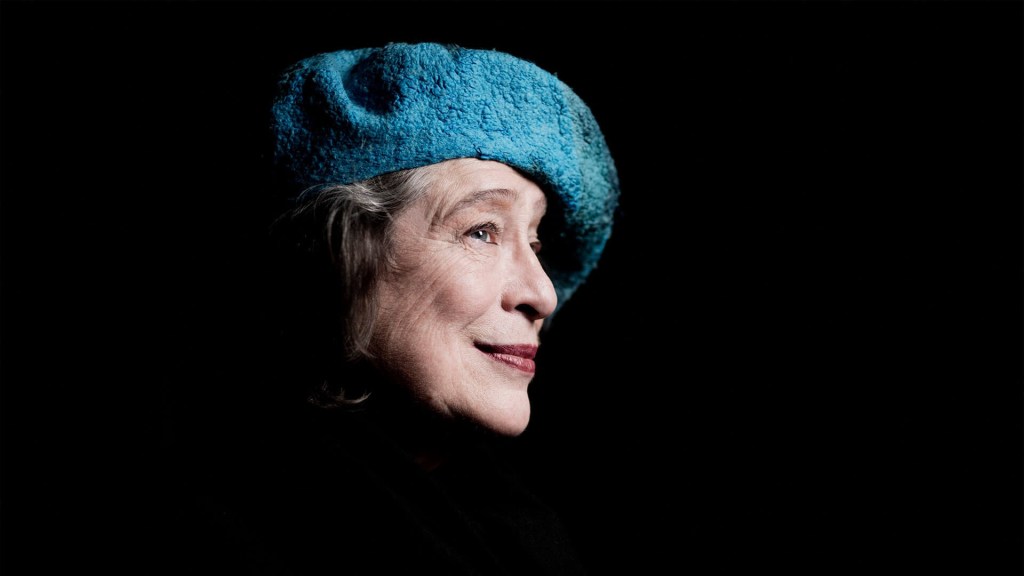

Johannes Brahms (1833-1897)
Piano Sonata No. 1 in C Op. 1 (1852-3) I. Allegro
II. Andante (nach einem altdeutschen Minneliede) III. Allegro molto e con fuoco – Più mosso
IV. Allegro con fuoco – Presto non troppo ed agitato
Piano Sonata No. 2 in F sharp minor Op. 2 (1852)
I. Allegro non troppo, ma energico
II. Andante con espressione
III. Scherzo. Allegro – Trio. Poco più moderato
IV. Finale. Sostenuto – Allegro non troppo e rubato
Interval
Piano Sonata No. 3 in F minor Op. 5 (1853) I. Allegro maestoso
II. Andante espressivo
III. Scherzo. Allegro energico
IV. Intermezzo. Andante molto
V. Finale. Allegro m moderato ma rubato

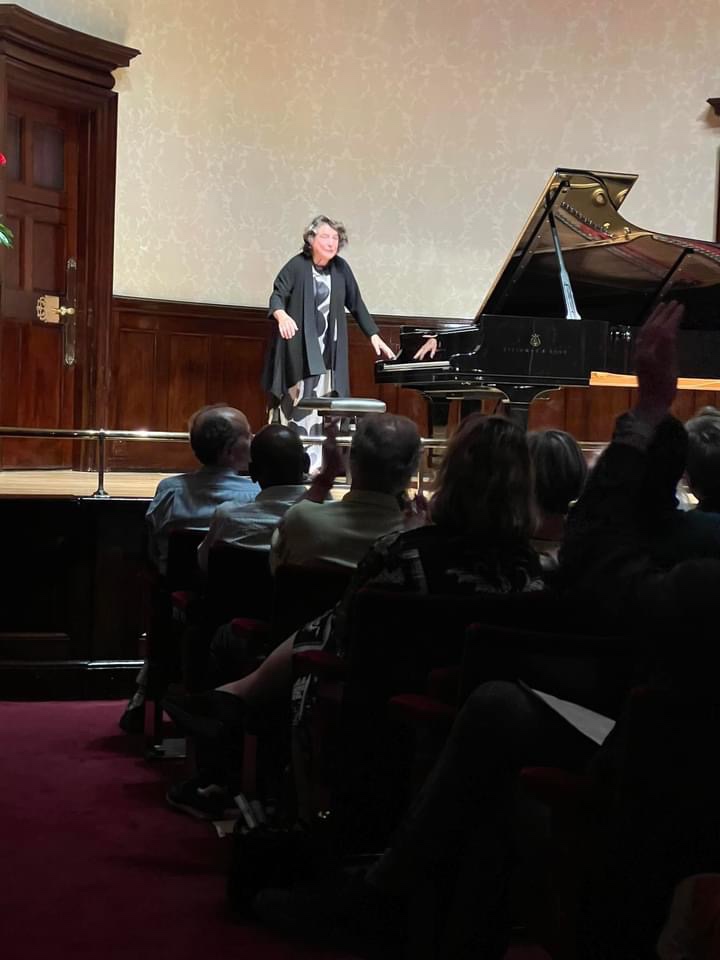
Elisabeth Leonskaja the Queen of the Keyboard .Music pure music just erupted from the depths of her soul and struck us with unusual force .
Not since Tatyana Nikolaeva or Annie Fischer have we experienced a direct communication between the composer, the music and the audience.
Rushing on and off as she was a lady on a mission with total self effacing authority.Gradiosity,Majesty,Etherial ,Orchestral,Nobility and above all seductive …….breathtaking in its architectural shape with the construction of three great monuments before our astonished eyes.
We are not used to such overwhelming authority and music pure music.
It puts us all to shame as we listen enraptured seduced and totally overwhelmed ……Why are there no others like this left from the days of Wilhelm Kempff ,Edwin Fischer ,Rudolf Serkin?A musician where the medium becomes almost irrelevant and is the means through which music can live and breathe as it did when the ink was still wet on the page.Alexei Lubimov was a revelation recently too ,in Warsaw, but with out this Leonine temperament that I also remember from Wilhelm Kempff when he played op 5 in London in the 70’s before his Indian Summer of sublime introspection.
Kapellmeister Lubimov leads us to the very heart of music with simplicity and mastery
There was a beauty and flexibility of her arms and wrists as she seemed to be swimming in a tide of sounds with a naturalness that was extraordinarily beautiful to see.There was an etherial beauty to the question and beseeching answer in the Andante of op 1 followed by the grandeur of the Scherzo and the contrasting fluidity of the Trio.An opening of great orchestral sounds played from on high with a dynamic drive that was like a Lioness being let loose to devour the keys.There was colour and mystery added to the declamatory outpourings of the Allegro non troppo,ma energico op 2 .Absolute desolation of the Scherzo again contrasting with the fluidity of the Trio.The veiled luminosity of the chorale in the Finale of op 5 I have never heard so whispered as she drew us in to listen as the music became ever more noble and passionate.Her control of sonority and sense of balance allied to a passionate wild abandon was surely the sum of a great master.
A vision of space and timeless wonder.
Curzon and Rubinstein are the only memories I have of the coda of the Andante espressivo of op 5 with sounds that I never expected to hear again until today. The final arpeggios thrown into the air to capture that luminosity but then catching the sound as it reverberated within the piano and nourished our souls .
A Scherzo that shot from these ethereal chords like someone igniting a rocket.
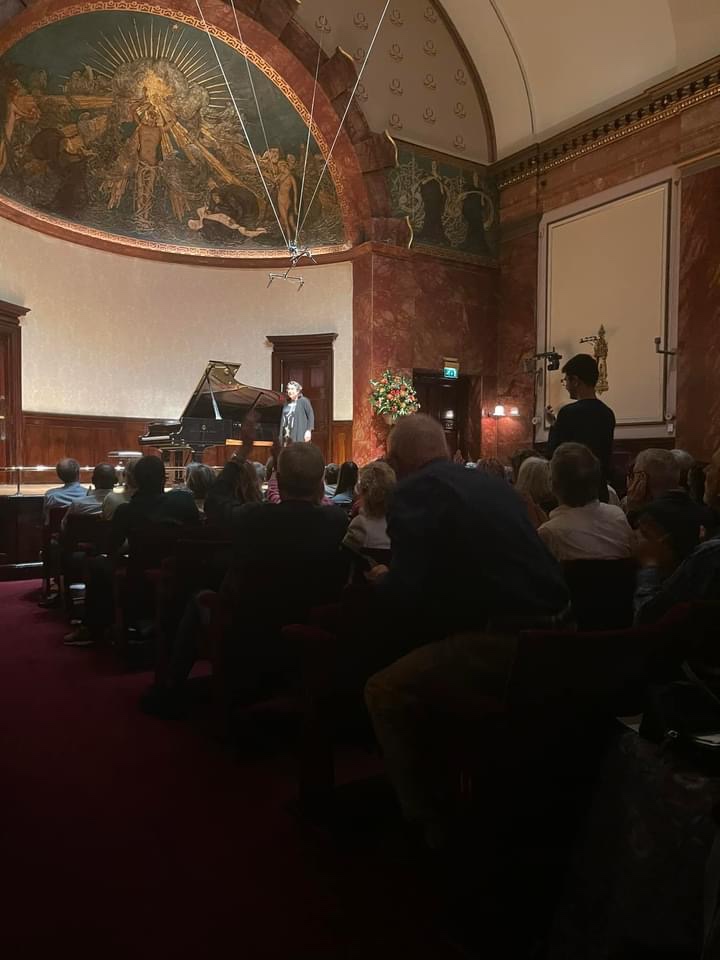
The aristocratic grandeur she brought to the last pages will resound in the walls of this hallowed hall for long to come .
But seated at the piano and visibly exhausted she allowed Chopin’s Nocturne in E flat to flow from her fingers like water flowing over some celestial stream .To watch her fingers on high play every note like bells being caressed and to hear such whispered secrets made one wonder was it just a dream that we had just experienced the greatest performances of Brahms this hall has ever known!

In the autumn of 1853 having met some of the biggest names in music, the young man travelled to Düsseldorf and rang the Schumanns’ doorbell.
The visit was life-changing. Robert and Clara Schumann could not have been warmer or more extravagant in their praise.
Schumann’s famous description of the young Brahms appeared in the Leipzig Neue Zeitschrift für Musik of 28 October 1853, in an article headed ‘Neue Bahnen’ (‘New paths’). Less than a month earlier, Brahms had called at the house of Robert and Clara Schumann in Düsseldorf. (‘He played us sonatas, scherzos etc. by him, all of them full of effusive imagination, intimate feeling and masterly form’, wrote Clara in her diary.)
Seated at the piano, he began to reveal wondrous regions to us. We were drawn into ever more magical spheres. In addition, the playing was absolutely inspired, transforming the piano into an orchestra of lamenting and loudly jubilant voices. There were sonatas, more like veiled symphonies; songs, whose poetry would be understood without knowing the words, although a profound vocal melody runs through them all; individual piano pieces, some of them demonic in nature while graceful in form; then sonatas for violin and piano, string quartets—and each work so different from the next that it seemed to stream forth from its own individual source. And then it seemed as though he were uniting them all like a stream roaring forth into a waterfall, with a peaceful rainbow above its tumultuously descending waves, and butterflies flitting about on the banks accompanied by the song of nightingales.
Two of the ‘veiled symphonies’ (Robert Schumann’s words) that Brahms played to the Schumanns were the first two works in tonight’s programme. The Piano Sonata No. 1 in C (dedicated to Joachim) was completed after the Piano Sonata No. 2, but was
published first.
The Piano Sonata No. 1 in C major, Op. 1, was written in Hamburg in 1853, and published later that year. Despite being his first published work, he had actually composed his Piano Sonata n. 2 first, but chose this work to be his first published opus because he felt that it was of higher quality. The piece was sent with his second sonata to Breitkopf &. Härtel with a letter of recommendation from Schumann who had already praised Brahms enthusiastically, and the sonata shows signs of an effort to impress in its symphonic grandeur, technical demands, and dramatic character. It was dedicated to Joseph Joachim
The sonata is in four movements:
- Allegro
- Andante (nach einem altdeutschen Minneliede),
- Allegro molto e con fuoco — Più mosso
- Allegro con fuoco — Presto non troppo ed agitato
Text of song
Verstohlen geht der Mond auf.
Blau, blau Blümelein!
Durch Silberwölkchen führt sein Lauf.
Blau, blau Blümelein!
Rosen im Tal,
Mädel im Saal,
O schönste Rosa!Stealthily rises the moon.
Blue, blue flower!
Through silver cloudlets makes its way.
Blue, blue flower!
Roses in the dale,
Maiden in the hall,
O handsomest Rosa!
The first movement is in conventional sonata form with a repeated exposition. The opening of the first theme resembles the opening of Beethoven’s “Hammerklavier Sonata . The second movement is a theme and variations inspired by the song Verstohlen geht der Mond auf. Brahms was to rewrite it for female chorus in 1859 (WoO 38/20). The third movement is a scherzo and trio. The fourth is a loose rondowhose theme is noticeably changed at every recurrence. It is highly technically demanding on the performer, with toccata-like intensity and rapid thirds throughout. The form of the rondo is a palindrome ABACACABA.
The Piano Sonata No. 2 in F♯ minor, Op. 2 of was written in Hamburg but in 1852, and published the year after.
It was dedicated to Clara Schumann
The sonata is in four movements:
- Allegro non troppo, ma energico
- Andante con espressione
- Scherzo: Allegro — Poco più moderato
- Finale: Sostenuto — Allegro non troppo e rubato — Molto sostenuto
The first movement is in the conventional sonata -allegro form. The second movement is a theme and variations based on the German Minnesang “Mir ist leide“. Like the theme and variations of the first Sonata ,the variations move from the minor mode to the parallel major. The third movement is a scherzo and trio whose beginning theme is almost identical to that of the second movement. The finale begins with a brief introduction in A the relative major of F sharp minor. The main subject of the introduction serves as the first theme of this movement, which is in sonata form and contains a repeated exposition. The codaof the finale, marked pianissimo and to be played with the soft pedal, returns to and expands upon material from the movement’s introduction.

The Piano Sonata No. 3 in F minor, Op. 5 of was written in 1853 and published the following year. The sonata is unusually large, consisting of five movements as opposed to the traditional three or four. When he wrote this piano sonata, the genre was seen by many to be past its heyday. Brahms, enamored of Beethoven and the classical style, composed Piano Sonata No. 3 with a masterful combination of free Romantic spirit and strict classical architecture. As a further testament to Brahms’ affinity for Beethoven, the Piano Sonata is infused with the instantly recognizable motive from Beethoven’s Symphony n. 5 during the first, third, and fourth movements.Composed in Dusseldorf , it marks the end of his cycle of three sonatas and was presented to Schumann in November of that year; it was the last work that Brahms submitted to Schumann for commentary. Brahms was barely 20 years old at its composition. The piece is dedicated to Countess Ida von Hohenthal of Leipzig.
Brahms worked on his Sonata No. 3 in F minor while staying with the Schumanns as a guest. Its most obvious feature is the addition of an Intermezzo between the Scherzo and the Finale. This casts a look back to the passionate Andante second movement, at the top of which Brahms briefly quoted a poem by CO Sternau about lovers in the moonlight. The closing bars, where the measure changes from three to four beats in a bar, magically discharge some of the most erotic music Brahms wrote.
The sonata is in five movements:
- Allegro maestoso
- Andante Andante espressivo — Andante molto
- Scherzo . Allegro energico avec trio (F minor – D♭ major – F minor)
- Intermezzo (Rückblick / Regard en arrière) Andante molto
- Finale. Allegro moderato ma rubato (F minor, ending in F major)
The second movement begins with a quotation above the music of a poem by Otto Inkermann under the pseudonym C.O. Sternau.Perhaps symbolizing the two beating hearts in this Andante are its two principal themes which alternate throughout the movement.
Der Abend dämmert, das Mondlicht scheint,
da sind zwei Herzen in Liebe vereint
und halten sich selig umfangen
Through evening’s shade, the pale moon gleams
While rapt in love’s ecstatic dreams
Two hearts are fondly beating.

Elisabeth Leonskaya at the Wigmore Hall. True Queen of the keyboard

https://christopheraxworthymusiccommentary.com/2022/03/24/andrea-molteni-at-steinway-hall/

Elisabeth Leonskaya – The Oracle Speaks
 ChristopherAxworthy-MusicCommentary