
I have never forgotten the appearances of Rudolf Serkin in London in the ‘70’s .Playing the two Brahms concerti at the reopening of the refurbished Festival Hall heralded sporadic visits for recitals and also complete Mozart Concertos with Abbado down the road at the newly opened Barbican.How could one ever forget his monumental performance of the ‘Hammerklavier’ where the tension created was so great that even he was left shaken and astonished by the genius of Beethoven as he struck the final mighty chord.Diabelli Variations that were like thirty three electric shocks until the atomic explosion of the fugue.But there was also early Beethoven op 2 n.1 that was played with the same humility and respect as op 111 in a programme that also included Schumann’s Carnaval and Busoni’s Berceuse and Toccata.One year I remember him playing the Reger Variations too.Serkin was not a stylist but a great pianist with a technical mastery that knew no difficulties but it was placed at the service of the composer of which he was the humblest of servants.A dedication that was ready to work 8 hours a day even in his old age to be able to do justice to the composers he was serving.
I have followed Ariel Lanyi’s career since his arrival in London and after today’s performances I have no doubt that here at last we have a musician of honesty,integrity and modesty with an uncontaminated sound.A prophet for whom we have been in such need to save us from certain schools of playing that are fast becoming confused with entertainers!
Perahia,Zimmerman,Brendel,Arrau all have one thing in common which is exactly the rare gift to illuminate the thoughts of the composer and to turn a page of black dots qnd dashes into a living breathing thing as it must have been when the ink was still wet on the page.I remember Richard Goode discovering a very young Perahia and sending him to play for his own teacher Serkin.’You told me he was good’ exclaimed the master ‘but you did not tell me HOW good’.Agosti,my own teacher and friend was like Brendel and would ask students to bring only the greatest of works to his class as a lifetime was not enough for an in-depth study of masterworks by Mozart,Beethoven or Bach.There was no time to waste on anything less .Andras Schiff prefers not to announce his programmes years in advance and knows his public will trust him to play only the greatest of music as he announces the programme as the concert progresses..Ariel too has this intellectual curiosity allied to a transcendental pianistic command that he can search out and delve deeply into the great compositions of the masters.

Beethoven’s Piano Sonata No. 2 in A major op.2 n.2 was written in 1795 and dedicated to Joseph Haydn . It was published simultaneously with his first and third sonatas in 1796 .It was was the first Beethoven sonata to reach America and was performed in New York on June 5, 1807.
Today Ariel made us aware of the genius of Beethoven even in the very first Sonatas of the 32 that were to span a lifetime.This group of three Sonatas dedicated to his teacher Haydn already show a unique personality that whilst using the standard forms can astonish and inspire rather than just bowing and curtsying with the eloquence and elegance of their time.Beethoven the revolutionary was already sending sparks flying.Ariel brought a clarity and rhythmic drive to op 2 n. 2 and a sound that was so similar to Serkin that I was quite astonished and was pleasurably surprised to discover that my memory had not been playing tricks as I was reminded what simplicity and intelligence could bring to these early scores.Simple,pure Beethoven – easily said but as Schnabel said of Mozart :’too easy for children but too difficult for adults’.There were orchestral colours in the ‘Largo appassionato’ with the beautiful legato cantabile melody accompanied by the pizzicato bass- a real tour de force of technical control.It was even more astonishing at the end where Beethoven incorporates counterpoints in its midst that Ariel managed to play with layers of sound that were an extraordinary technical feat.There was grace and charm to the scherzo and a beautifully flowing Trio that contrasted so poignantly with the return of the Scherzo .A complete change of landscape with the Rondo written ‘Grazioso’ and with pedal indications that were beautifully transposed into sounds of ravishing beauty and fluidity.The Beethovenian outbursts were played with dynamic drive and energy and were like electric shocks in this pastoral landscape where Beethoven’s rapid changes of humour could so rudely interrupt the proceedings.

It was a great privilege to be reminded of the Reger Variations and to realise what a great work has been ignored for too long in the concert hall.The deeply expressive Bach Cantata gradually trasformed into variations of sublime beauty but also of the same technical difficulty as one finds often in Brahms.Ariel never lost sight of the musical line as the variations led to the final triumphant fourteenth variation.Out of the sound of the last chord emerged the fugue with simplicity and clarity much as in Beethoven op 110.Leading to the final intricate pages of knotty twine clarified for us with the same simplicity and drive of someone who has had the same vision as the composer and can guide us through the maze with simple transcendental ease.
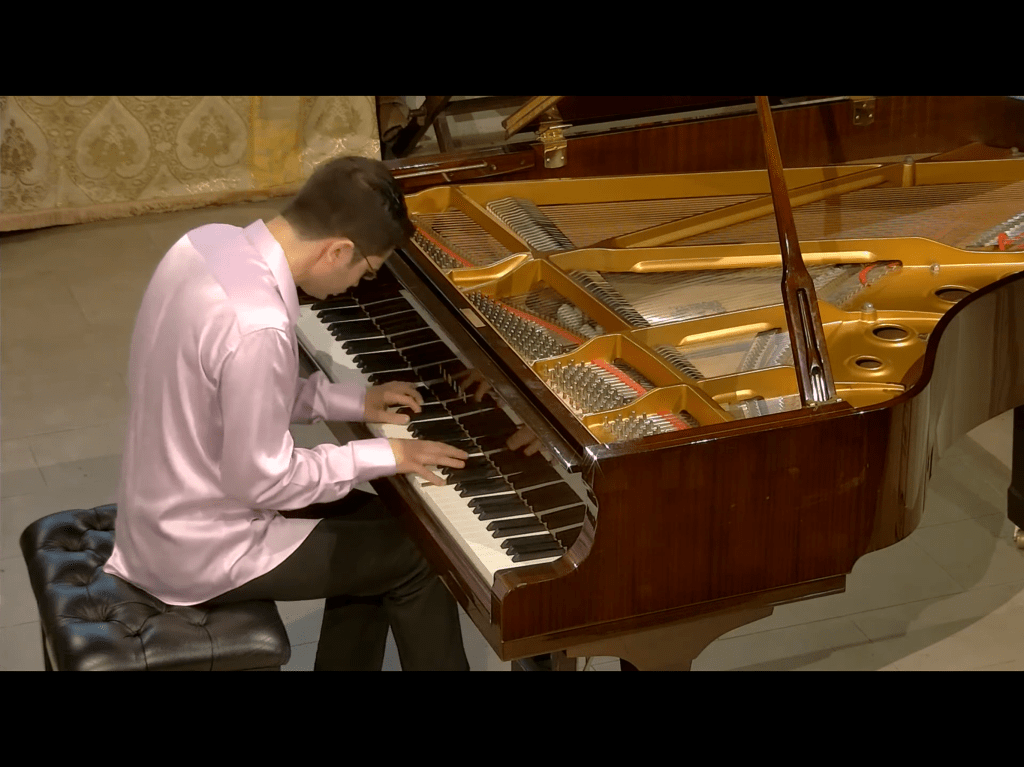
Johann Baptist Joseph Maximilian Reger (19 March 1873 – 11 May 1916), commonly known as Max Reger, was a German composer, pianist, organist, conductor, and academic teacher. He worked as a concert pianist, as a musical director at the Leipzig University Church, as a professor at the Royal Conservatory in Leipzig, and as a music director at the court of Duke Georg II of Saxe-Meiningen.Reger seemed determined to create as epic a sound from the piano as possible, uniting the harmonic chromaticism of Liszt and Wagner, the rhythmic hemiola and chordal density of Brahms, and the contrapuntal mastery of Bach. Arnold Schoenberg, who famously emancipated dissonance from tonal contexts, considered Reger a genius, and indeed, we can only speculate how much further Reger’s musical expressionist tendencies might have gone had he not died of a heart attack in 1916.Ironically enough, the Bach theme in Op. 81 was not chosen by Reger himself but by one of his performer advocates, the pianist August Schmid-Lindner.
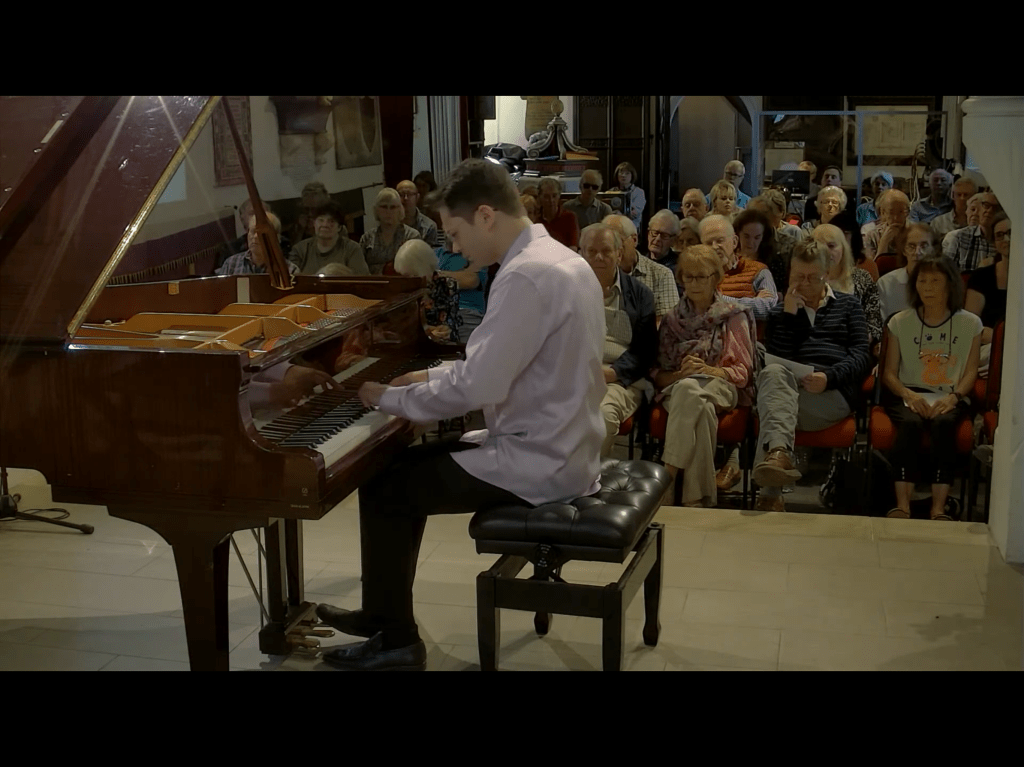
Reger’s dedication to Bach bore especially rich creative fruit, not only in the noble ‘Bach’ Variations , but in a number of ingenious keyboard transcriptions, not least the complete orchestral Suites and Brandenburg Concertos (arranged for piano four hands), and the two-part Inventions, various Preludes and Fugues from The Well-tempered Clavier and sundry Fantasias and Toccatas (refashioned for organ solo). The Variations and Fugue on a theme of Johann Sebastian Bach dates from the summer of 1904, although perennial in their eloquence and vitality and the uncommon richness of their modulations, the Variations are nonetheless rooted in the musical past, much as Bach’s own music had been.The main theme is taken from the beautiful contralto/tenor duet ‘Seine Allmacht zu ergründen, wird sich kein Mensche finden’ (‘No man can fathom His omnipotence’) which is, in turn, from Bach’s Cantata No 128, Auf Christi Himmelfahrt allein. Reger asks for the melody to be played ‘sweetly and always very legato—that is to say, like an oboe solo’ (Bach’s original is scored for oboe d’amore and continuo) and, while treating it to appreciative pianistic colours, opts thereafter to home in on particular elements of the theme rather than to vary it ‘whole’. There is the Fugue at the end after fourteen variations and it is a colossal, three-tier edifice, the first two episodes being four-part fugues (Bach’s original melody reappears in the treble towards the end of the second), the last section combining them both for a towering grand finale.

In March 2023, Ariel Lanyi was honored to receive the Prix Serdang, a Swiss prize awarded by the distinguished Austrian pianist Rudolf Buchbinder. The prize is endowed with CHF 50,000 and is not a competition, but a recognition of a young pianist’s achievements and an investment in their future. Prior to this Ariel won 3rd Prize at the 2021 Leeds International Piano Competition. In the same year he was a prize winner in the inaugural Young Classical Artists Trust (London) and Concert Artists Guild (New York) International Auditions. Highlights this season include a recording with the Mozarteumorchester Salzburg under the auspices of the Orpheum Stifftung as part of their Next Generation Mozart Soloist series. Further afield Ariel takes part in the Bendigo Chamber Music Festival in Australia, gives concerts in the USA, and undertakes a tour of Colombia. In 2023 he was nominated as a Rising Star Artist by Classic FM. Over the last year Ariel returned to Wigmore Hall (as soloist and chamber musician), the Miami International Piano Festival, and Marlboro Music Festival in Vermont. He undertook a tour of Argentina and gave recitals in the Homburg MeisterKonzert series in Germany, the Menton Festival in France, Perth Concert Hall (broadcast by BBC Radio 3), and across the UK including the Brighton and Bath Festivals. In 2021 Linn Records released his recording of music by Schubert to critical acclaim.
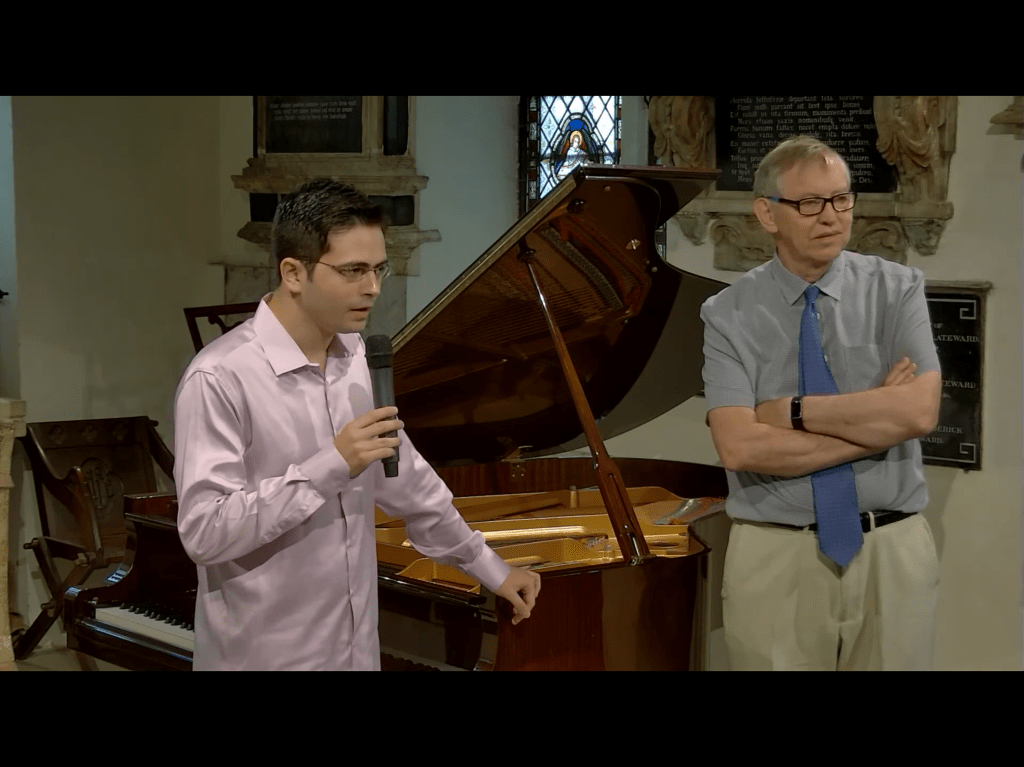
Born in Jerusalem in 1997, Ariel studied with Lea Agmon and Yuval Cohen. Based in London, he recently completed his studies at the Royal Academy of Music with Hamish Milne and Ian Fountain. He has received extensive tuition from eminent artists such as Robert Levin, Murray Perahia, Imogen Cooper, Leif Ove Andsnes, Steven Osborne, and the late Leon Fleisher and Ivan Moravec. Awards include 1st Prize at the 2018 Grand Prix Animato Competition in Paris and 1st Prize in the Dudley International Piano Competition, as well as a finalist award at the Rubinstein Competition.


Ariel Lanyi the simplicity and poetry of a great musician at St Marys
Ariel Lanyi – Imogen Cooper Music Trust The trials and tribulations of a great artist
Ariel Lanyi flying high at St Mary’s
Ariel Lanyi – The return of a star – The sublime Schubert of a master musiciankpp0p
The Aristocratic Brahms of Ariel Lanyi – with Henry Kennedy and the Resonate Symphony Orchestra
 ChristopherAxworthy-MusicCommentary