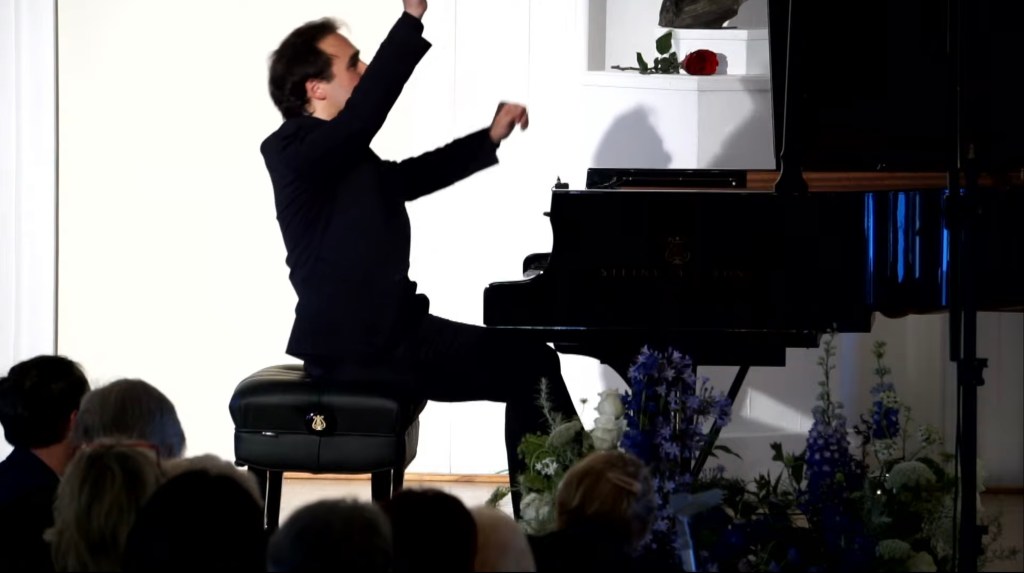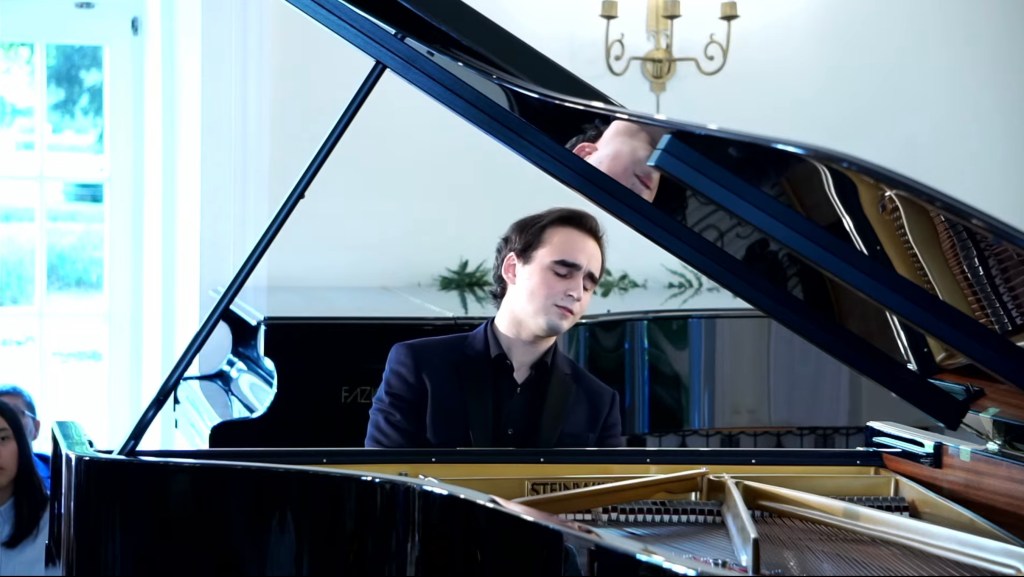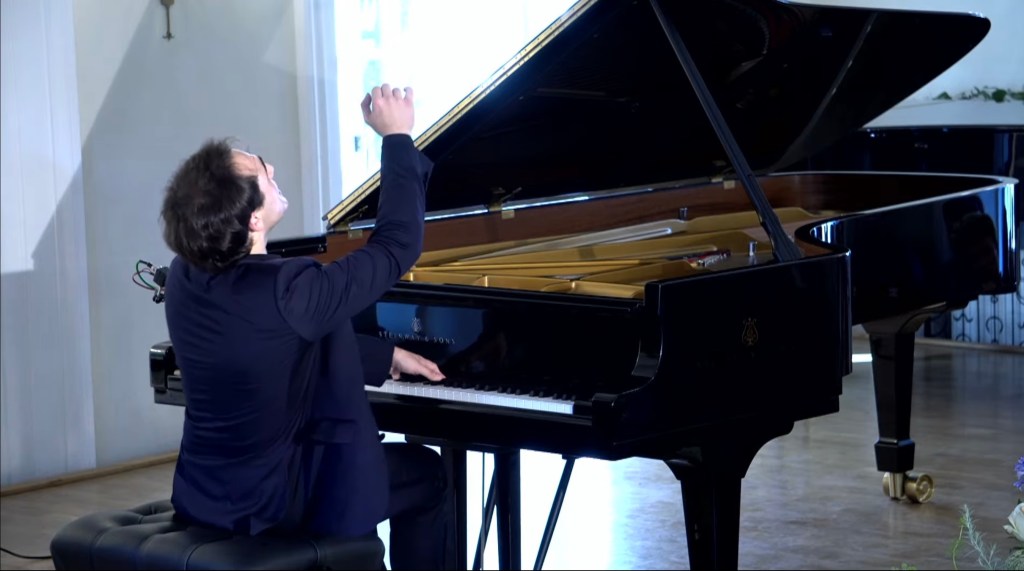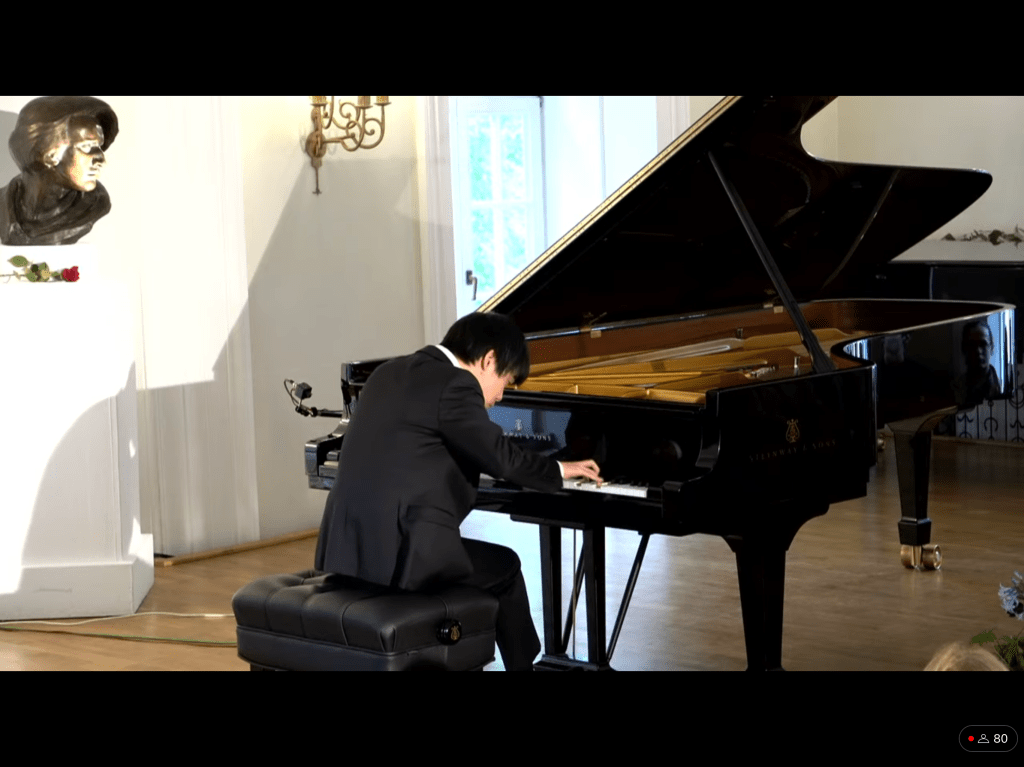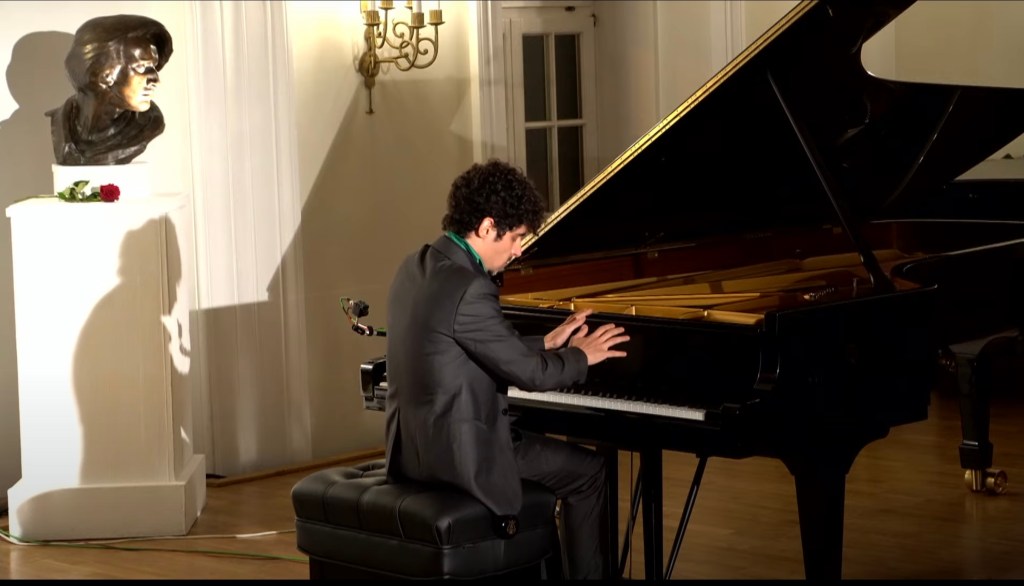
All the fun of the circus.The Busoni Competition

Christopher Axworthy·Last edited 13 March 2021·0-minute read

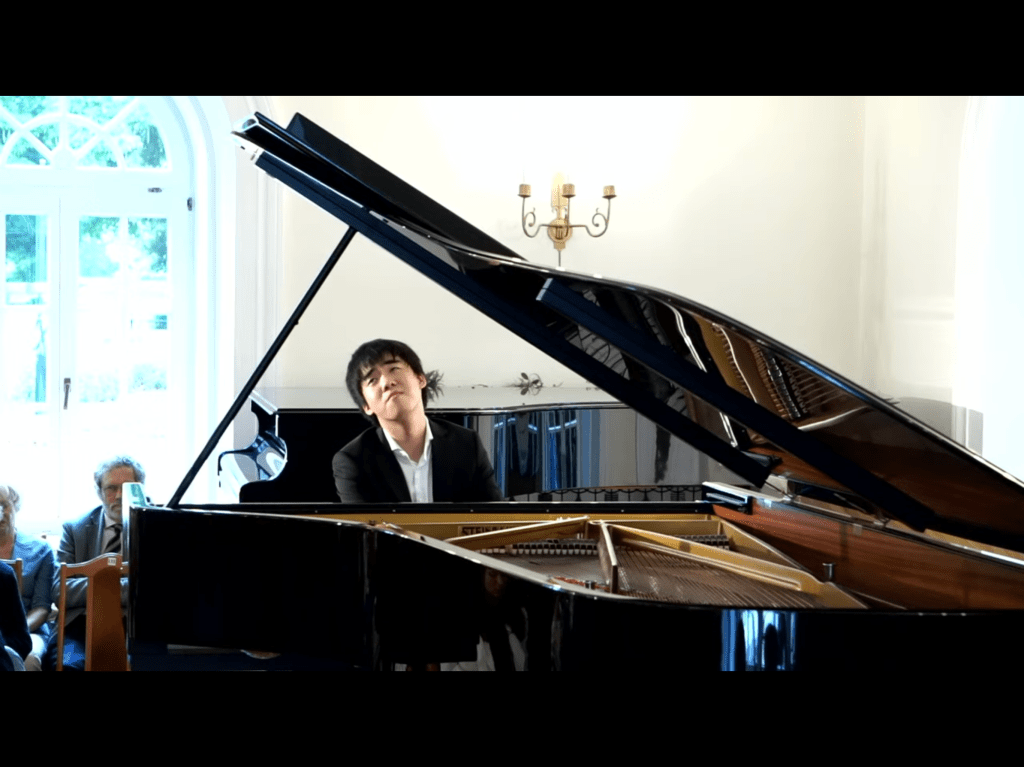
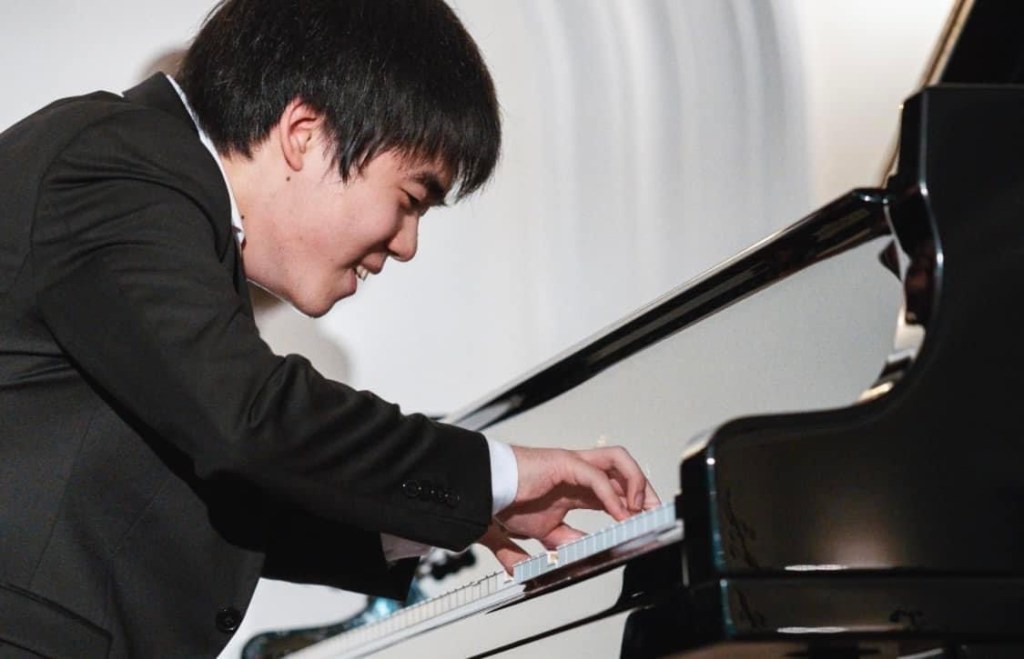
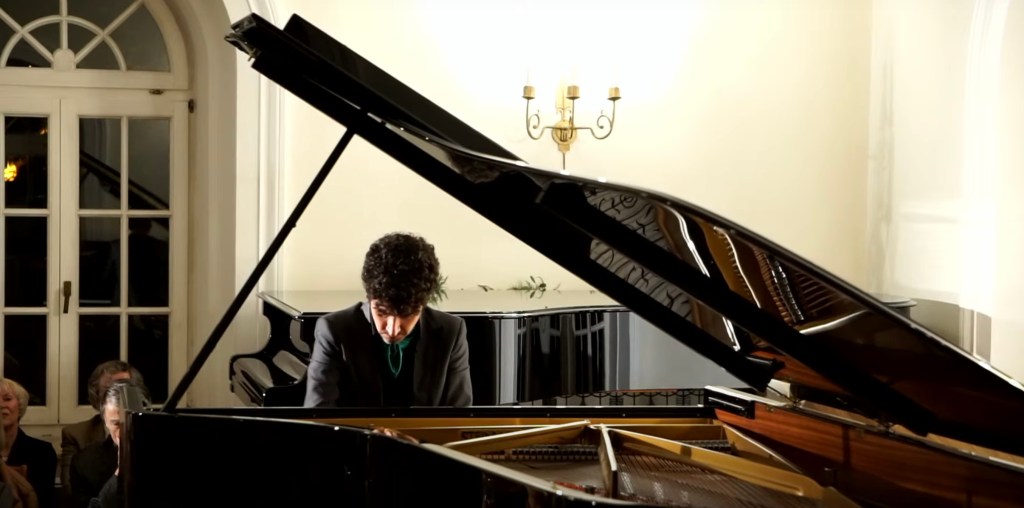
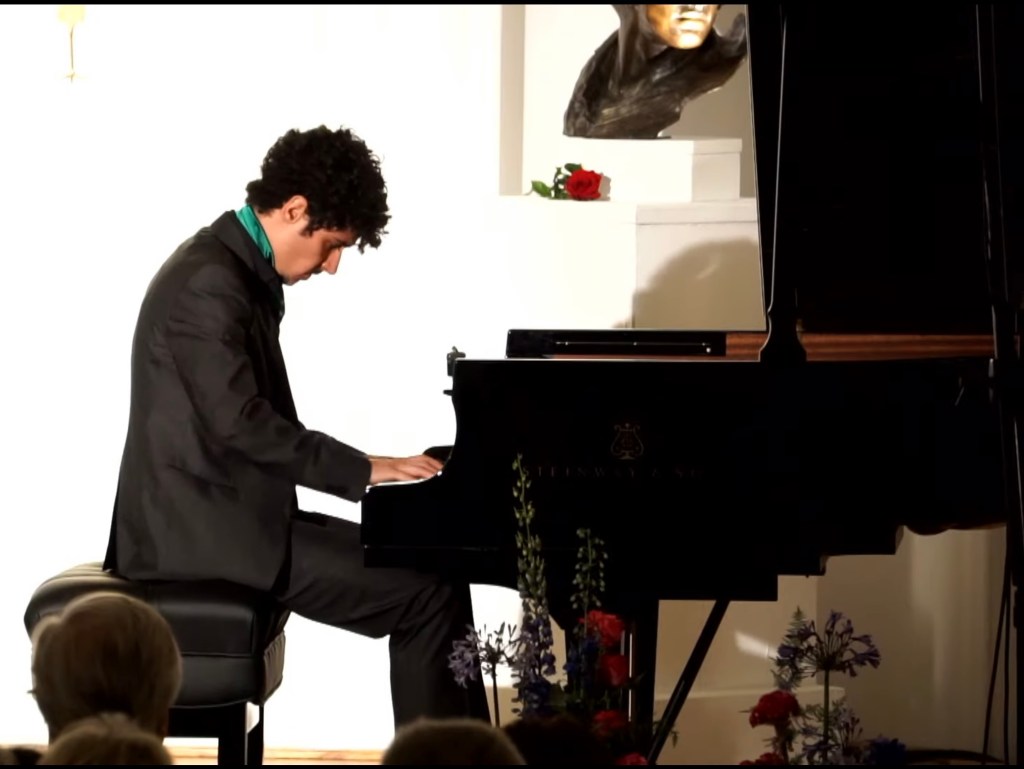
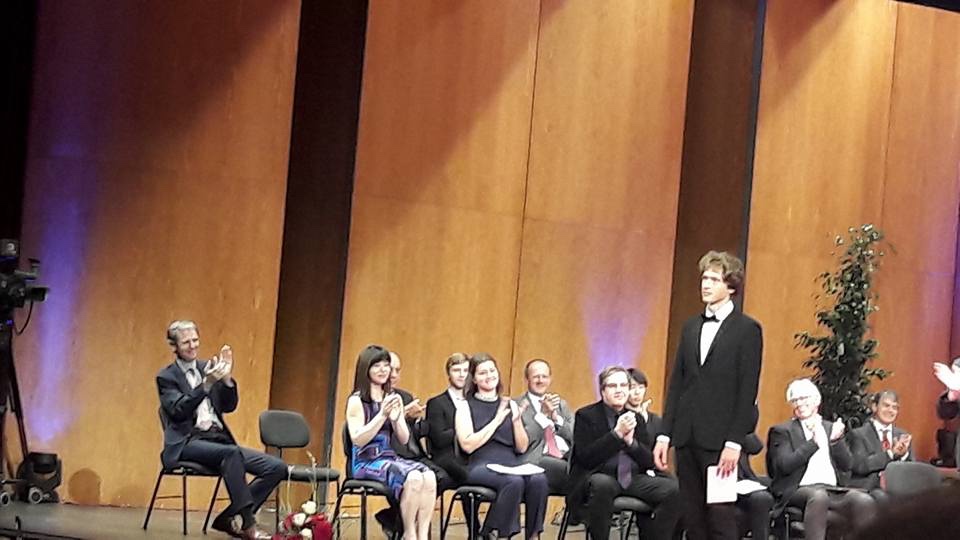
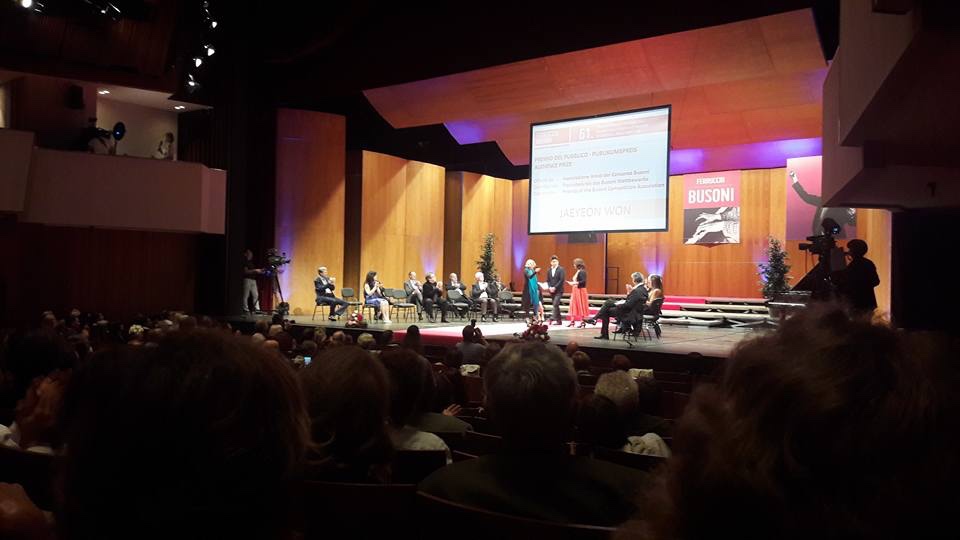
Busoni winner the young Croatian outsider Ivan Krpan ; second Jaeyeon Won; third Anna Geniushene ;fourth Eun Seong Kim; fifth Xingyu Lu;sixth Dmytro Choni…………….all of whom received monetary prizes
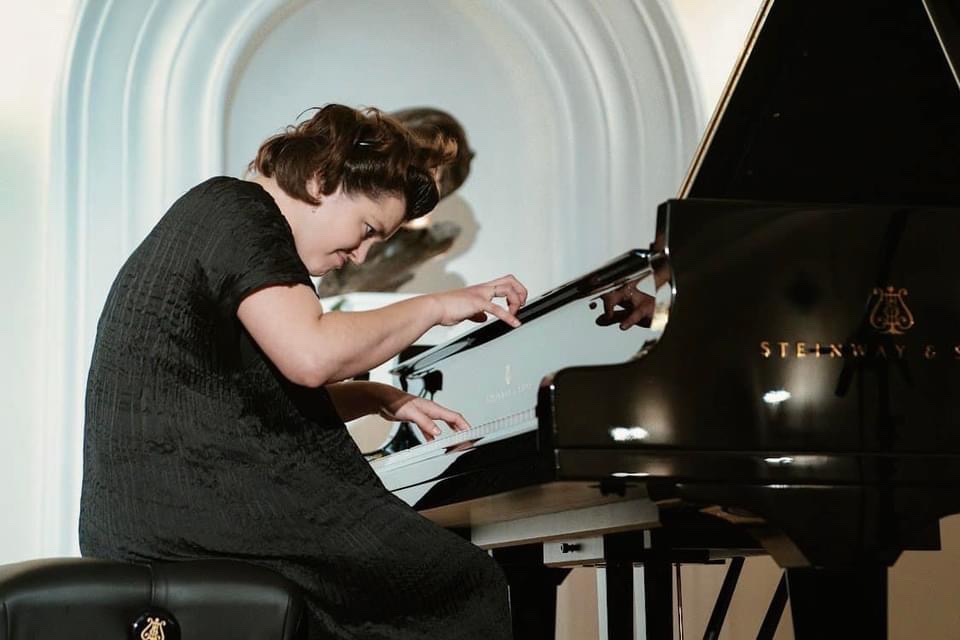
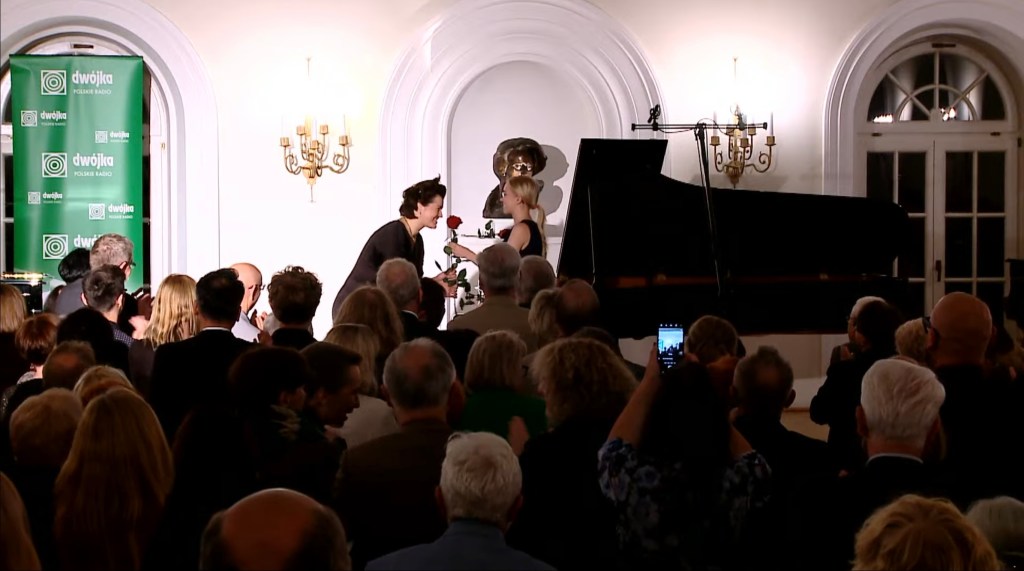
Anna Geniushene also won the Quartet and audience prize.

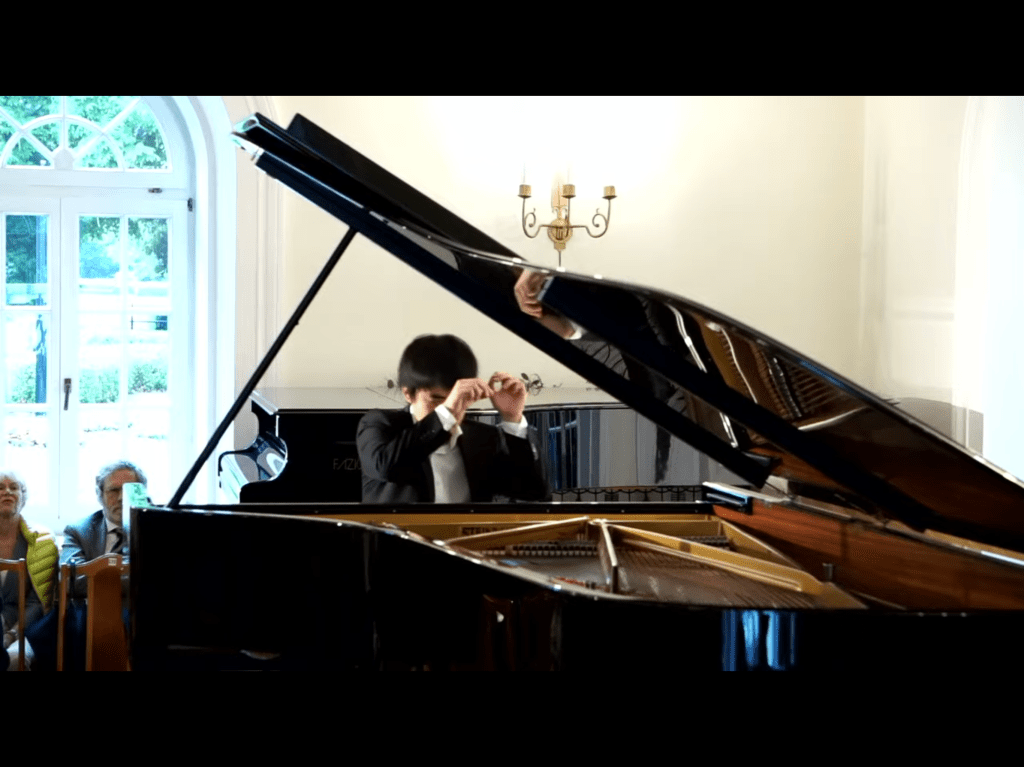
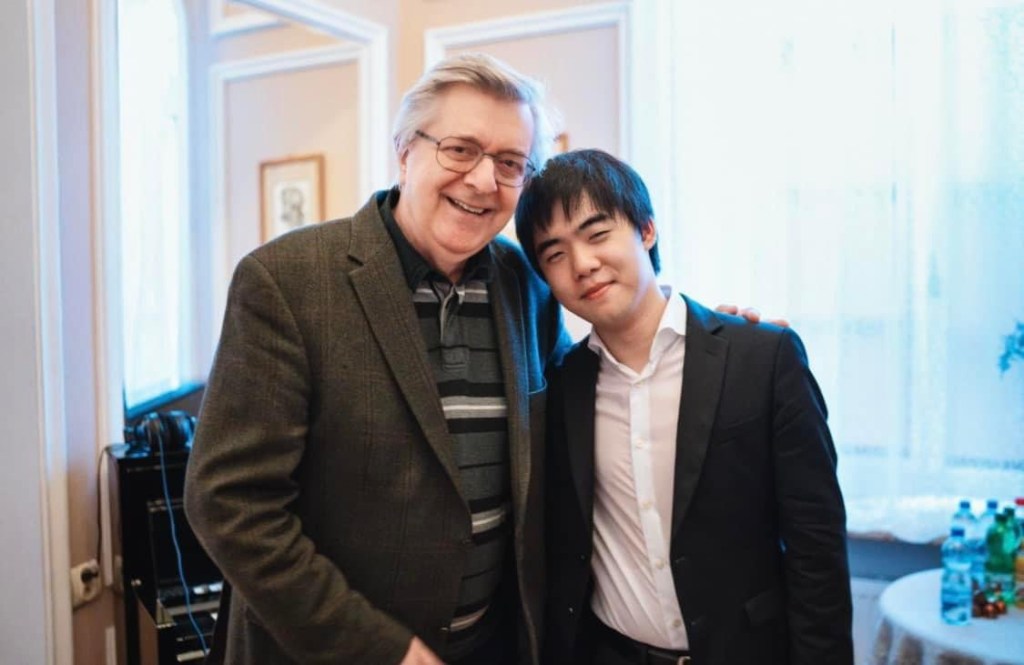
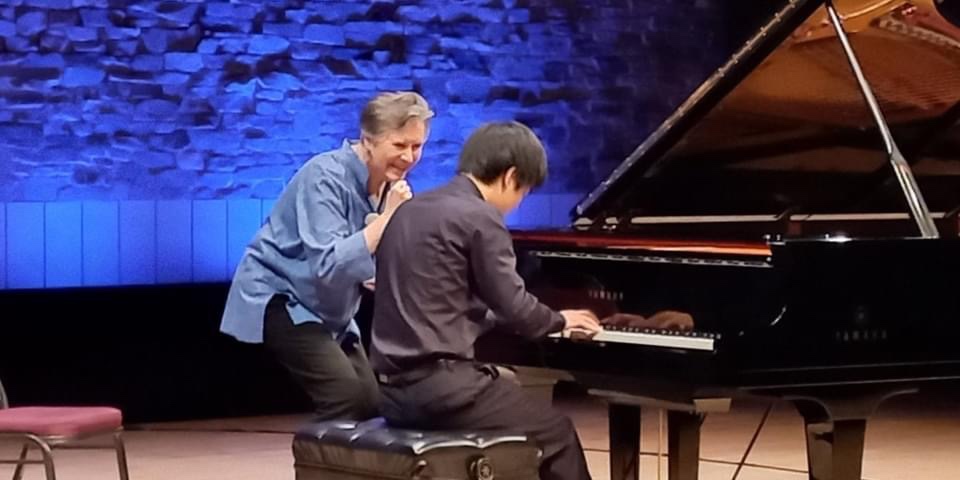
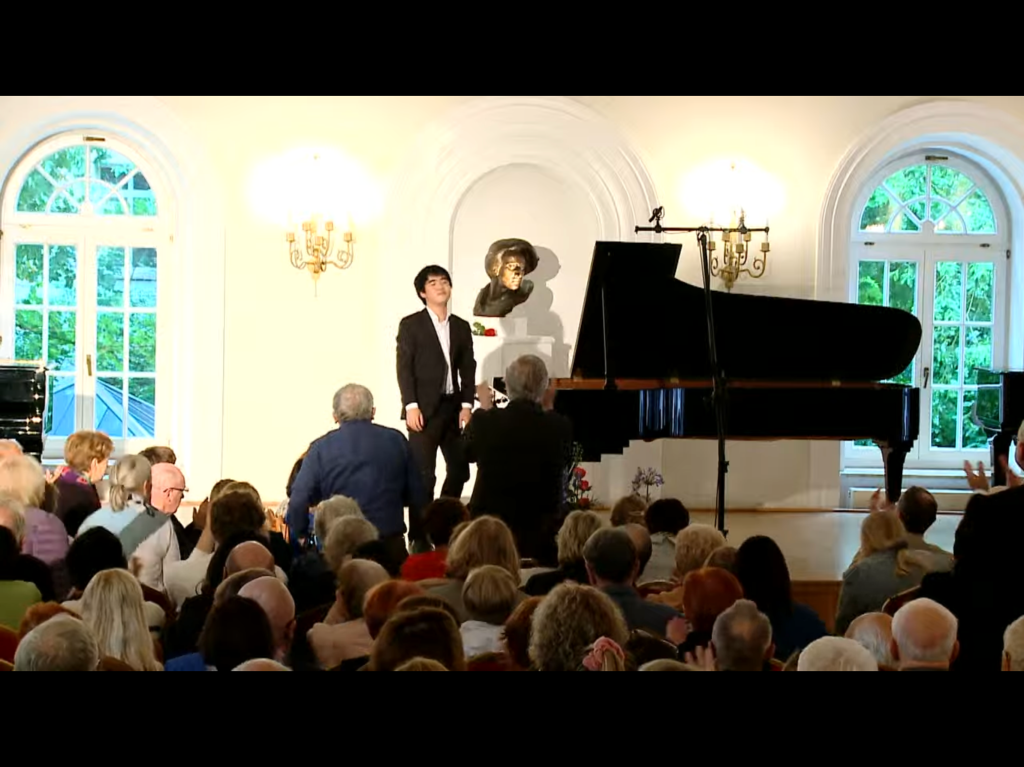
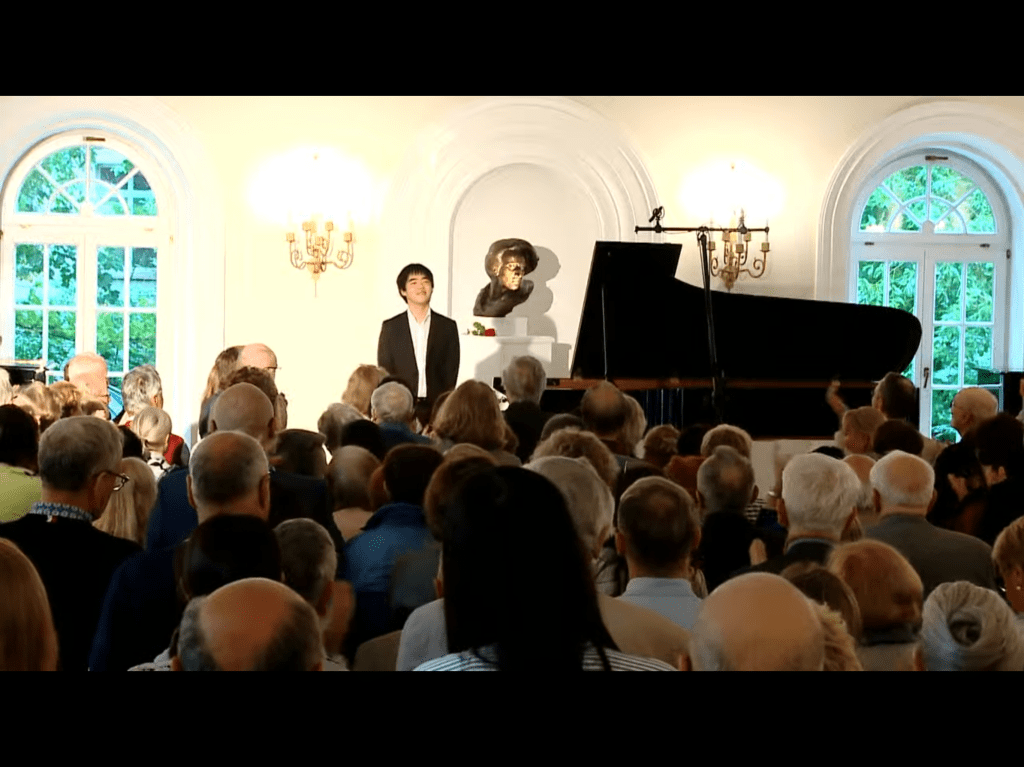
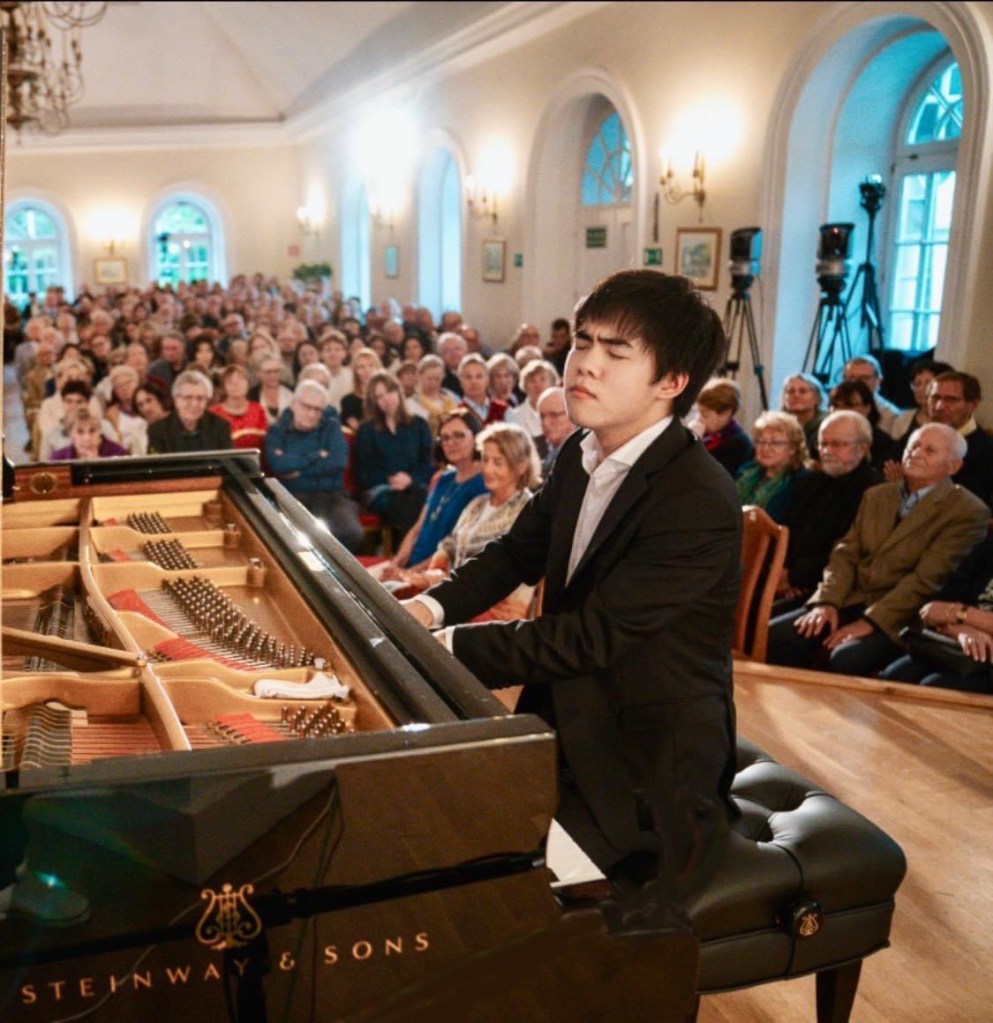
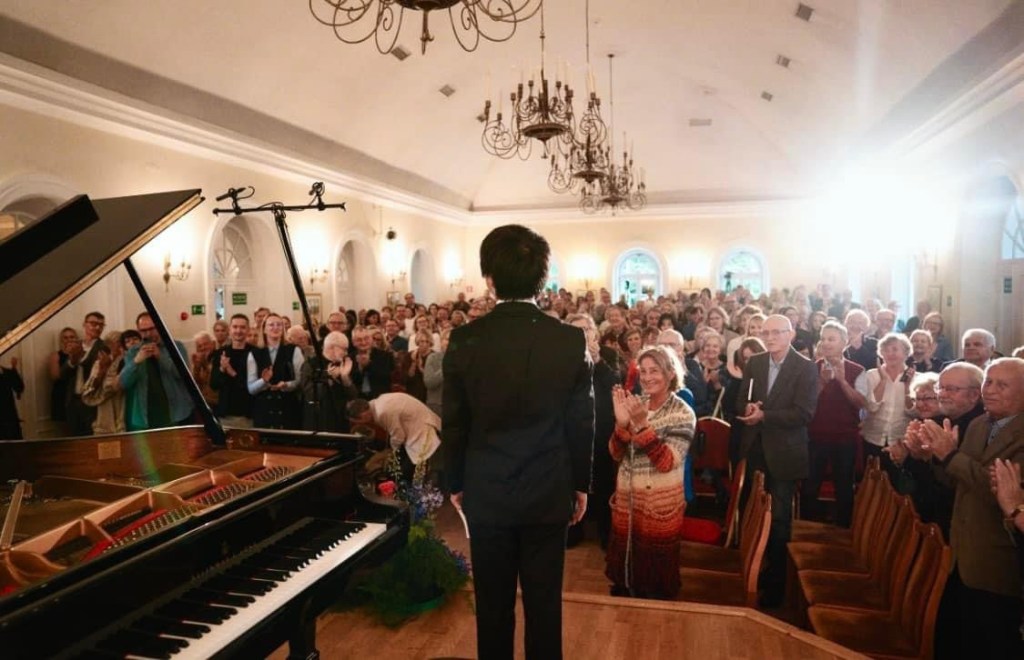
All the fun of the Circus at the 61st Busoni Competition in Bolzano.
On tenterhooks right until the last moment the enlightened jury led us to a result that is of fairy story proportions.
A young Croation that from his first appearance had shown his natural talent but also lack of experience compared to some of his remarkably well trained colleagues. I followed his progress and was so sorry to hear the muddle he got into in the Chopin Funeral March Sonata.
Very apt title and presumed that that would be the end of him .
Little did I expect to see him accepted to the next round. But then the surprise here at the Busoni this year is a jury that are not only counting the notes but above all the real talent behind them.

And so it was that this very unassuming young man just made music as he obviously was born to do. Up against some of the most remarkably well prepared and experienced performers his talent swept the board and was so rightly awarded last night the Busoni prize to the delight of the audience of his fellow competitors and adoring public . We had lived the dream with him and the Busoni jury too had not let us down. A competition that shares its wares so generously with the world is indeed an arena to be cherished.
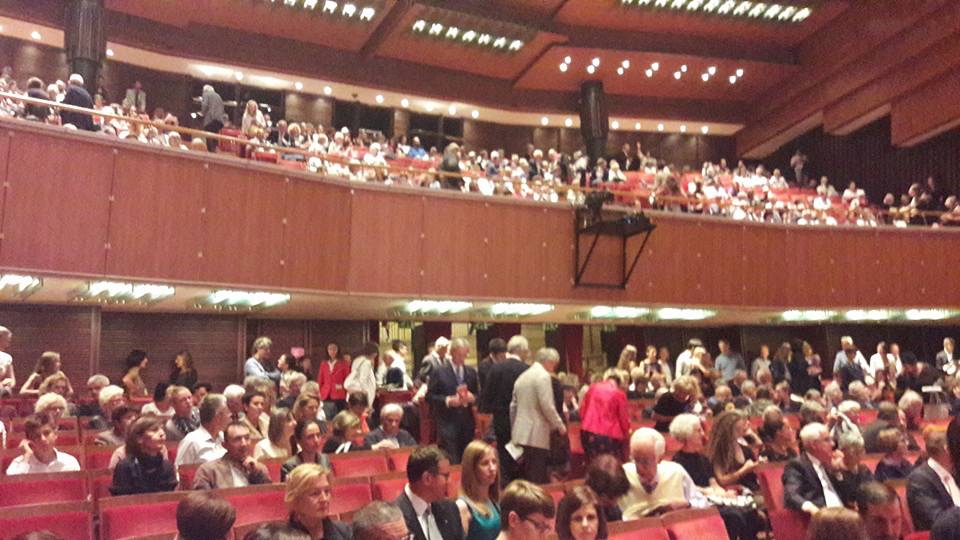

The superb streaming allowed us all to share in every minute of some remarkable performances that for one reason or another did not proceed to the final.

Busoni winner the young Croatian outsider Ivan Krpan ; second Jaeyeon Won; third Anna Geniushene ;fourth Eun Seong Kim; fifth Xingyu Lu;sixth Dmytro Choni…………….all of whom received monetary prizes
Anna Geniushene also won the Quartet and audience prize. All the fun of the Circus at the 61st Busoni Competition in Bolzano.
On tenterhooks right until the last moment the enlightened jury led us to a result that is of fairy story proportions.
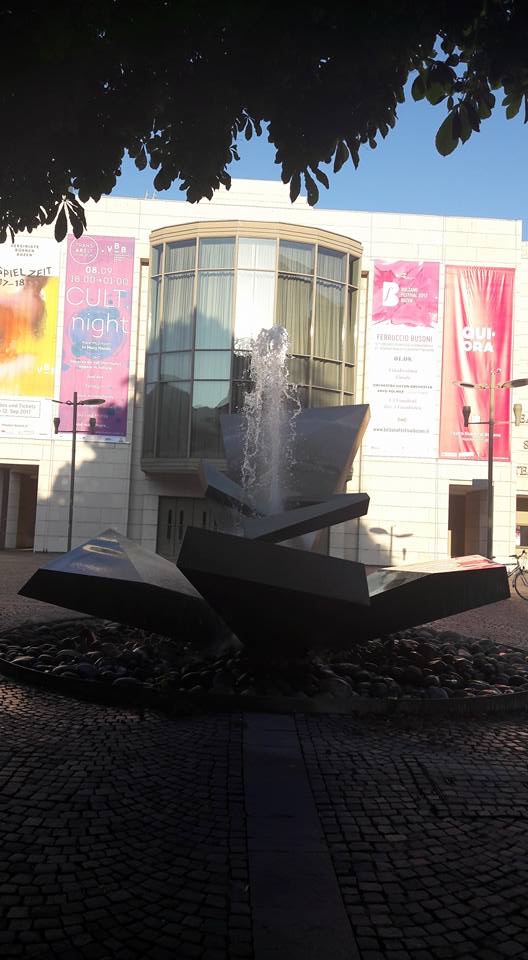
I heard from my own home some very fine things from Julian Trevelyan ,the 18 year old english pianist ,winner to everyone’s astonishment at the age of 16 of the Marguerite Long Competition .A Haydn sonata that was noted as one of the finest performances in the competition by Maria Tipo from her home in Florence . Another twenty year old Julius Asal gave some remarkable performances notably a very fine Bach Chaconne and some very fine readings of four Rachmaninov Preludes. Leonora Armellini already and established artist and a refined stylist gave a beautiful performance of Chopin’s Fourth Ballade and a very subtle quite marvellous account of Beethoven’s very elusive Sonata op 101.
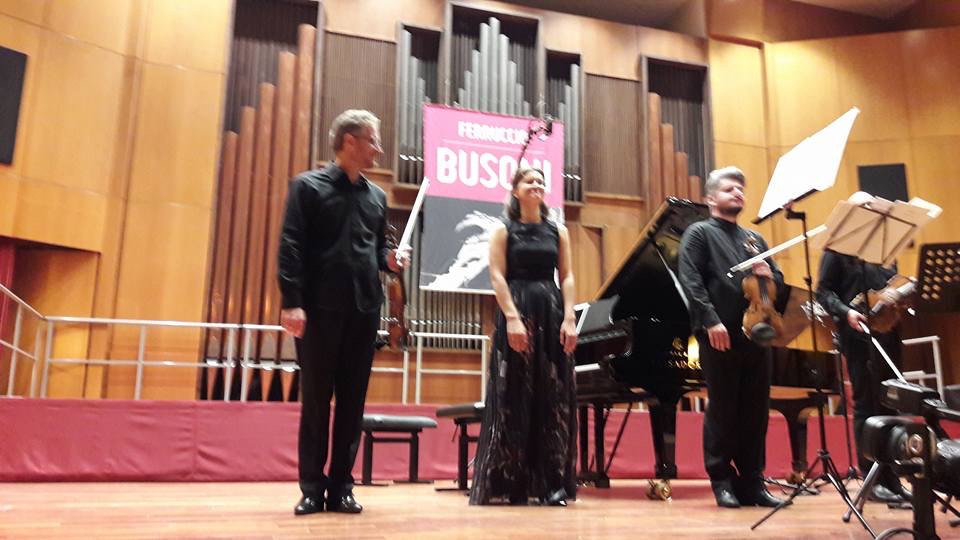
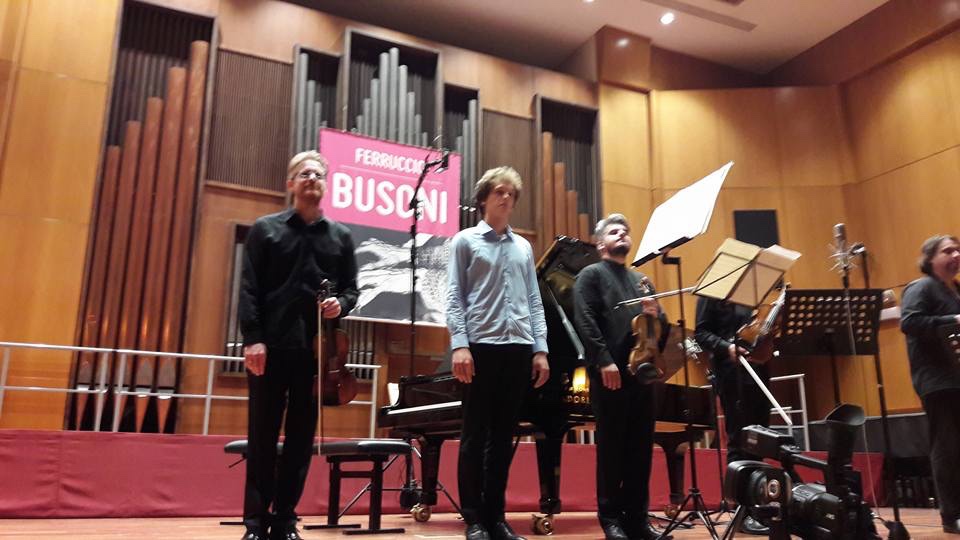
Anna Geniushene gave a magnificent performance of Prokofiev 8th Sonata and was considered by many the favourite to win .Her Schumann Quintet with the marvellous Cremona Quartet was a highlight and justly awarded the Quartet’s own prize of a series of future concerts with them.Anna is now a post graduate student at my old Alma Mater the Royal Academy in London ,guided by Christopher Elton, that very fine musician and trainer of so many magnificent pianist before the public today.
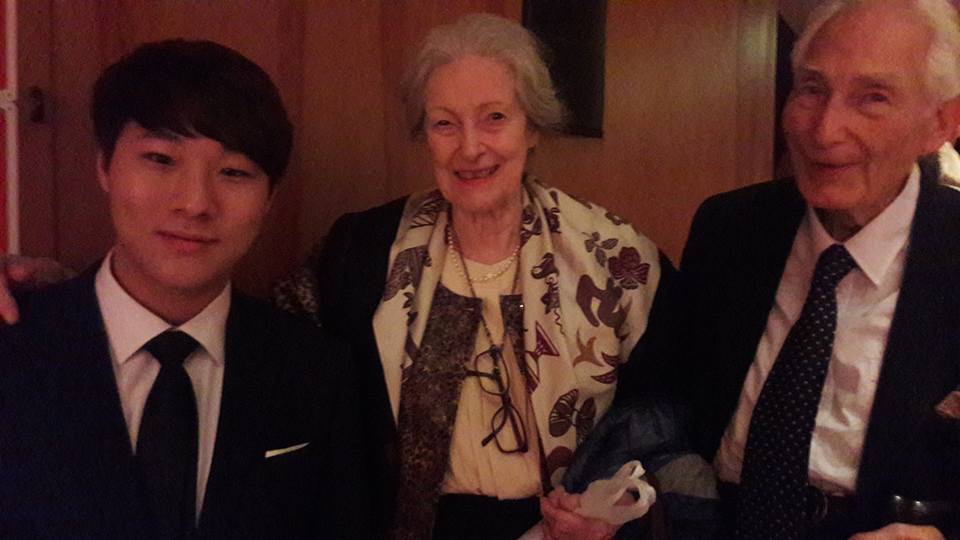
For me the greatest talent of all was a young Korean boy (student of the same teacher as the last Busoni Winner Chloe Mun) Eun Seong Kim .
His performance of Beethoven’s last Sonata was memorable for its control and intelligent musicianship as we have come to expect from the school of Dae Jin Kim .Actually studying with Minsoo Sohn, 1999 winner of third prize in Bolzano and now sharing his experience at the same University in Corea.Eun Seong has that God given gift that cannot be taught but can be nurtured and helped to grow as is the case here but it can also so easily be destroyed .His Scriabin fifth was one of the most intelligent and exciting that I have ever heard. These are just a few of the performances that will remain in my memory. That there can only be one winner is the Circus aspect of an International Piano Competition.

But as the amazing Murray MacLachlan said the other day in another competition in Manchester :”all the competitors are winners for the joy of making music at such a level.” Unfortunately there are prizes to be won and sponsors to be cherished and prize money to be awarded. Who fell at the first hurdle.
Who survived to the second but was then knocked off the pedestal for one reason or another . The jury always gets blamed for what the public may consider a lack of consideration for their favourite performance or performer.
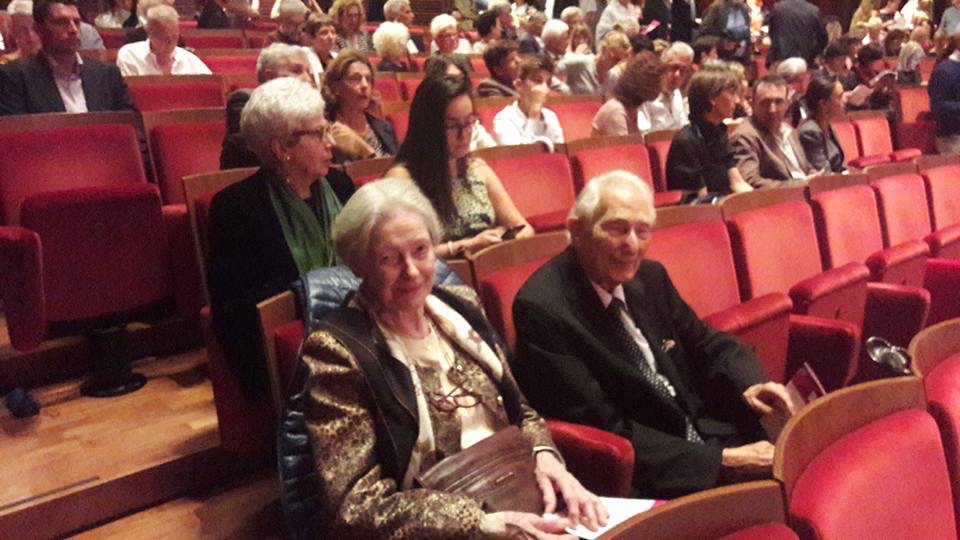

That is part of the Circus aspect but it draws people into the fray sometimes unfortunately in the heat of the moment lacking in kind words towards a jury that has a near impossible task. But do the same people ever consider that the performer is not always right and can have some good performances mingled with less too. I had noted Krpan from the beginning but had also noted his youthful inexperience . Allowing him into the Chamber Music round he came into his own and stood the ground with our favourite charming Russian and a very experienced 29 year old Corean who up until that moment I had not heard .
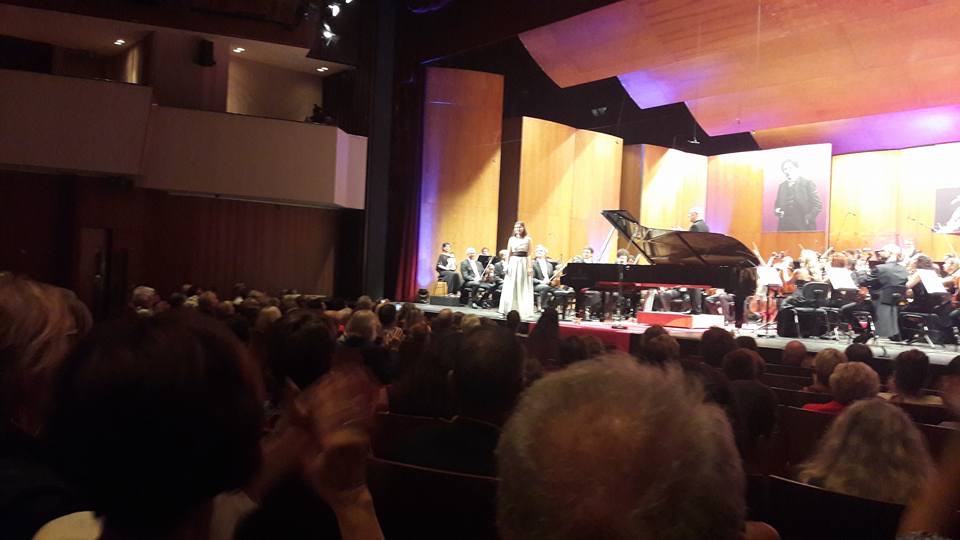

.
The fact that these young people have dedicated their youth in search of beauty is something the mass media never talk about in their pursuit to give us the most detailed accounts of all the disasters and scandals worldwide . All the competitiors have now been give a stage worldwide by the Busoni Competition Streaming .
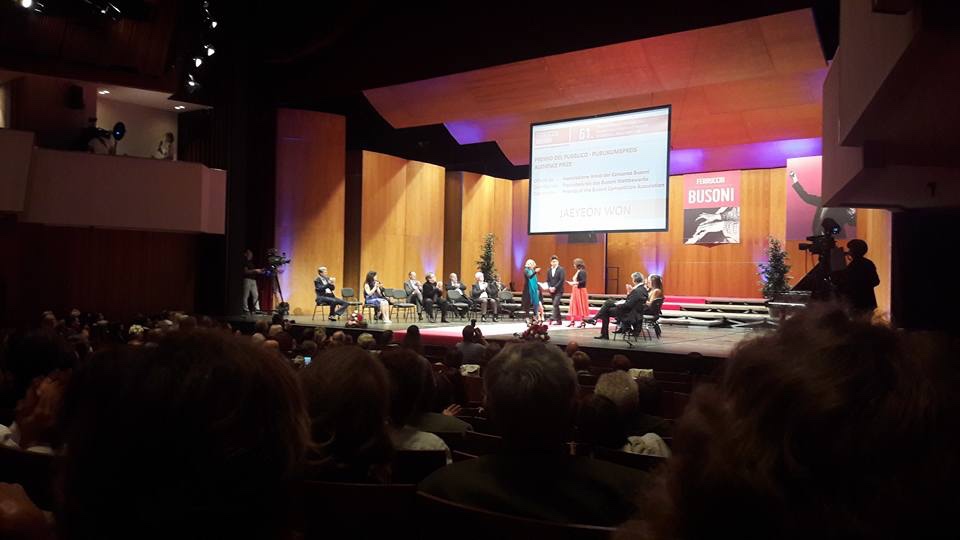

The Italian Radio and Television have broadcast the final evening and prize giving .
The world awaits and what an exciting platform it has been and will be in the future for many of these young musicians. Hats off to Peter Paul Kainrath and his dedicated colleagues who have shown just what it means and what responsability it is to be called the BUSONI Competition.
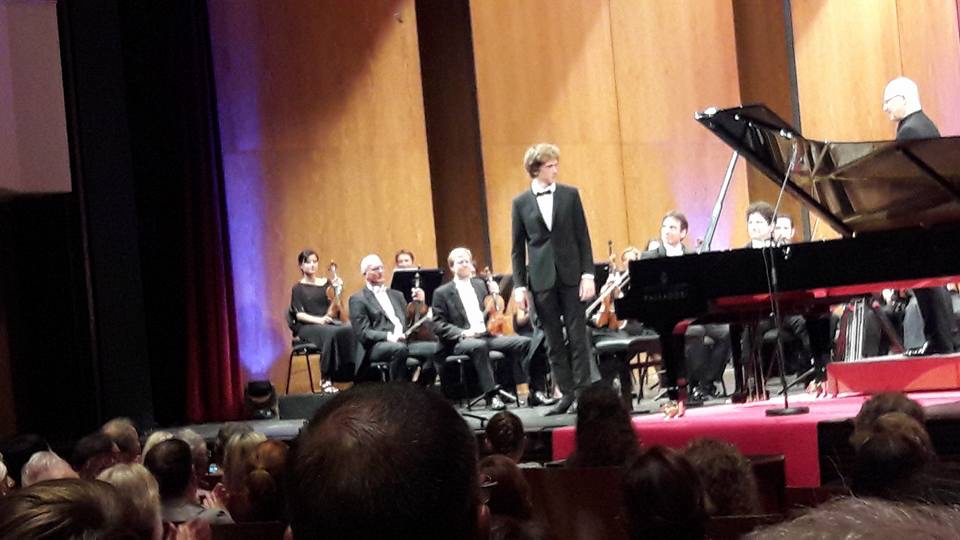

They have risen magnificently to the challenge and I know that it has not been an easy path to follow. Looking through the very interesting programme I notice the following that puts the Circus aspect of a competition into perspective:
1949 Alfred Brendel 4th prize;
1952 Ingrid Habler and Walter Klien 4th prize ex aequo;
1956 Bruno Canino and Michael Ponti 4th prize ex aequo
1960 John Ogdon 5th prize etc etc
Q.E.D
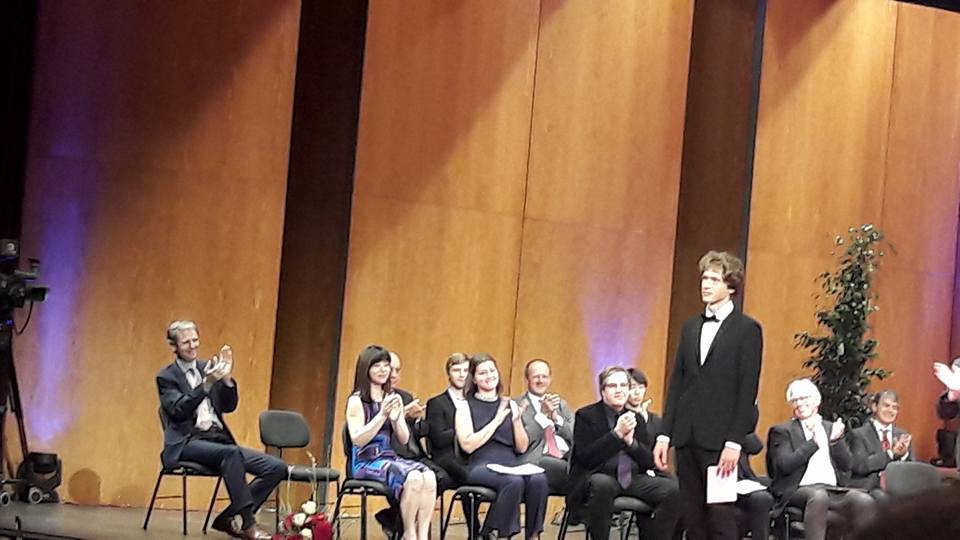
The fact that these young people have dedicated their youth in search of beauty is something the mass media never talk about in their pursuit to give us the most detailed accounts of all the disasters and scandals worldwide .


Our own Eun Seong Kim unfortunately fell at this hurdle to Krpan. That classical music can generate such excitement and partecipation is the phenomena of the event called International Piano Competition of which there are an abundance these days.
Gone is the passive acceptance so often found in classical music concerts .Here it is a real almost animal partecipation that can reach the same frenzied following that is so much part of sporting events. Great day by day – blow by blow – account from a very informed young correspondent from the Amadeus magazine – Alessandro Tommasi and his charming companion Sofia .Two faces designed to light up every day with youthful exuberance and down to earth intelligence.

There are an abundance of competitions because there is so much more talent around that ever before .
Such magnificent teaching and encouragement for the arts at an early age

All the competitiors have now been give a stage worldwide by the Busoni Competition Streaming .
The Italian Radio and Television have broadcast the final evening and prize giving .
The world awaits and what an exciting platform it has been and will be in the future for many of these young musicians.

Hats off to Peter Paul Kainrath and his dedicated colleagues who have shown just what it means and what responsability it is to be called the BUSONI Competition.
They have risen magnificently to the challenge and I know that it has not been an easy path to follow.

Looking through the very interesting programme I notice the following that puts the Circus aspect of a competition into perspective:
1949 Alfred Brendel 4th prize;
1952 Ingrid Habler and Walter Klien 4th prize ex aequo;
1956 Bruno Canino and Michael Ponti 4th prize ex aequo
1960 John Ogdon 5th prize etc etc
Q.E.D
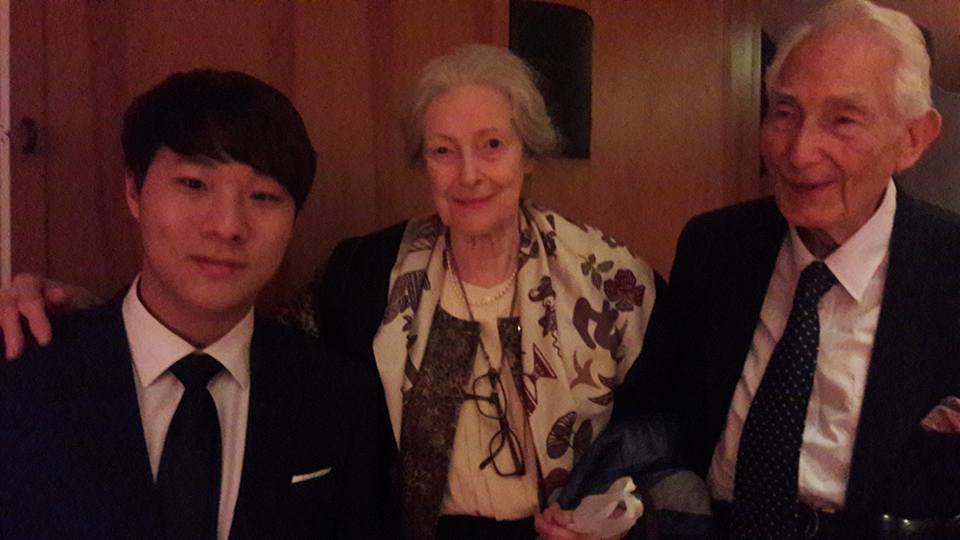
Vive la France …Brocal and Bavouzet in London

Vive la France …..Brocal and Bavouzet in London

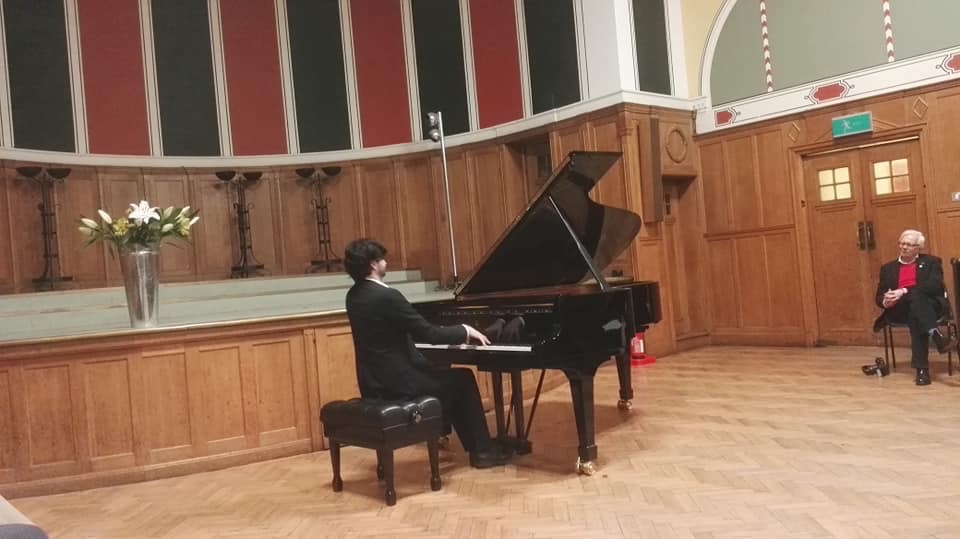
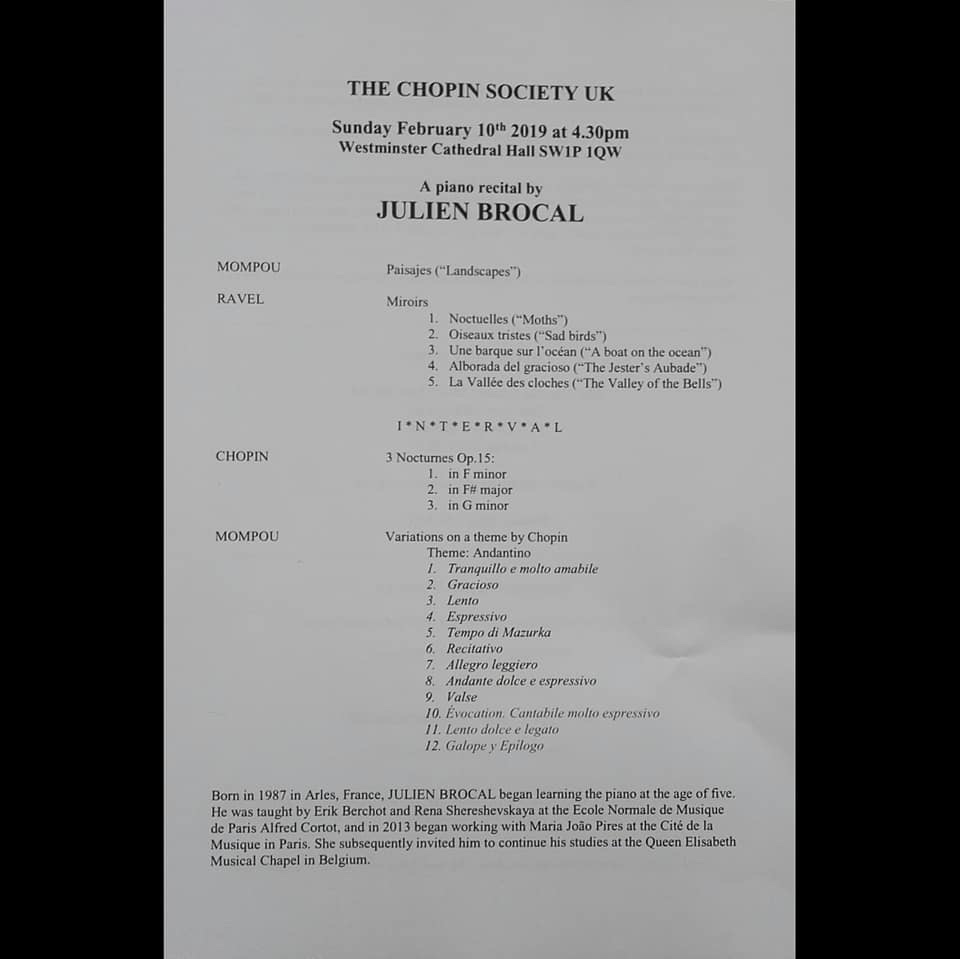
Julien Brocal at the Chopin Society London.
A real French infusion today . Julien for Lady Rose and Jean- Efflam at Wigmore. Some wonderful clear luminous playing from both.
Also an overlap of waves from Miroirs. Julien Brocal at Westminster Hall at 16.30 on Sunday afternoon for the The Chopin Society UK .
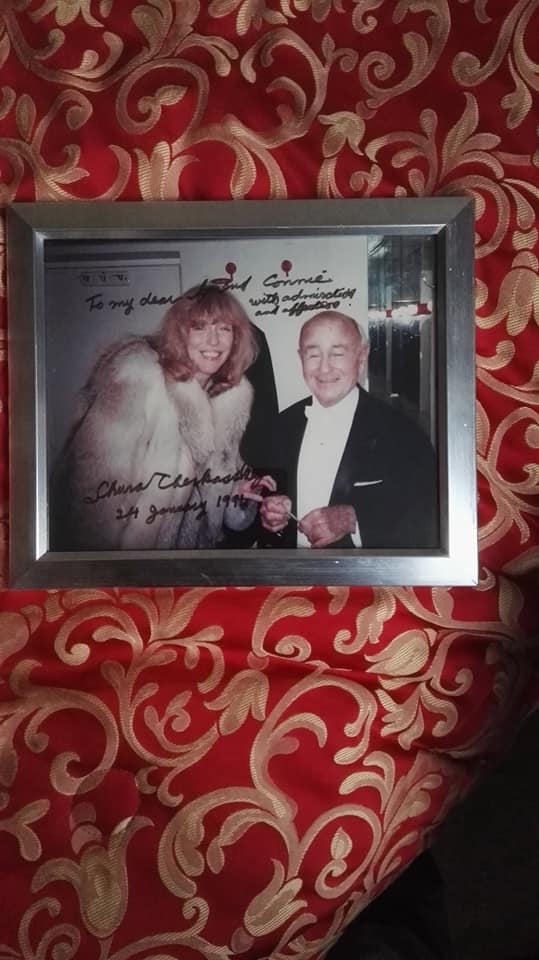
I first heard Julien Brocal in Monza when I was on the jury of the Rina Sala Gallo International Piano Competition-I do not accept invitations to judge my betters but on this occasion my dearest friend Constance Channon – Douglass was too ill to be present and asked me to step in for her.

Julien Brocal at Westminster Hall at 16.30 on Sunday afternoon for the The Chopin Society UK
I first heard Julien Brocal in Monza when I was on the jury of the Rina Sala Gallo International Piano Competition-I do not accept invitations to judge my betters but on this occasion my dearest friend Constance Channon-Douglass was too ill to be present and asked me to step in for her.

She has since passed on to a better life with her beloved husband Cesare and her adored Shura and many many other friends who loved her joie de vivre and intelligence and warmth.
A young french pianist played an extraordinary Schumann Carnaval in one of the rounds and although he did not make the final I had noted his quite exceptional artistry.
He asked me what advice I could give him but it was Maria Jose Pires who answered that by taking him under her wing and sharing the concert platform with him in her ever generous way.
I heard them play Mozart Double together in Oxford and when I went back to thank her for all that she was doing to help these remarkably talented young pianists reach a public and start a career.She said that it was she that should thank them for all that they gave her with their youthful enthusiasm and dedication!


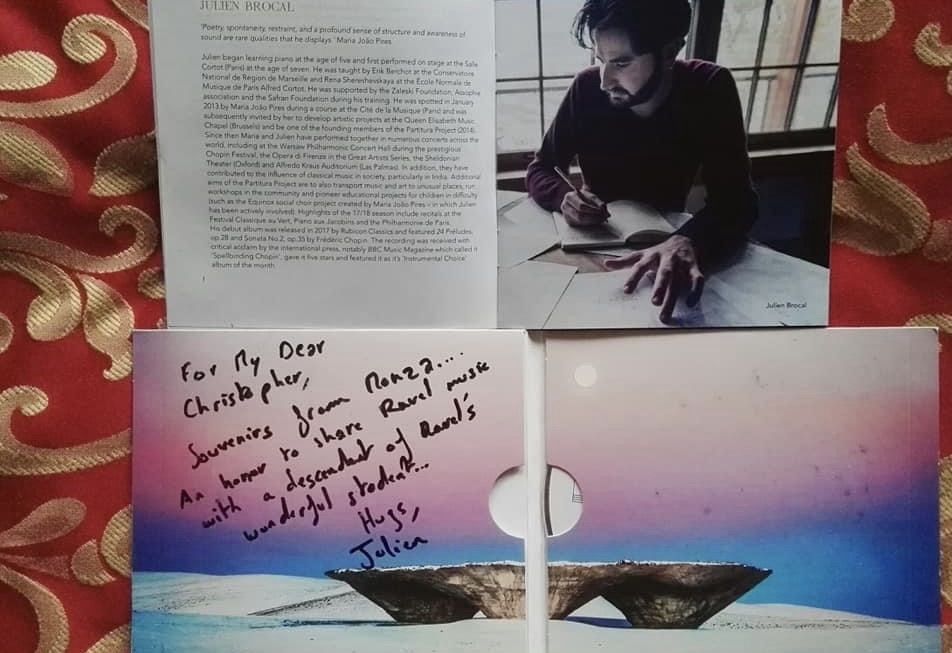
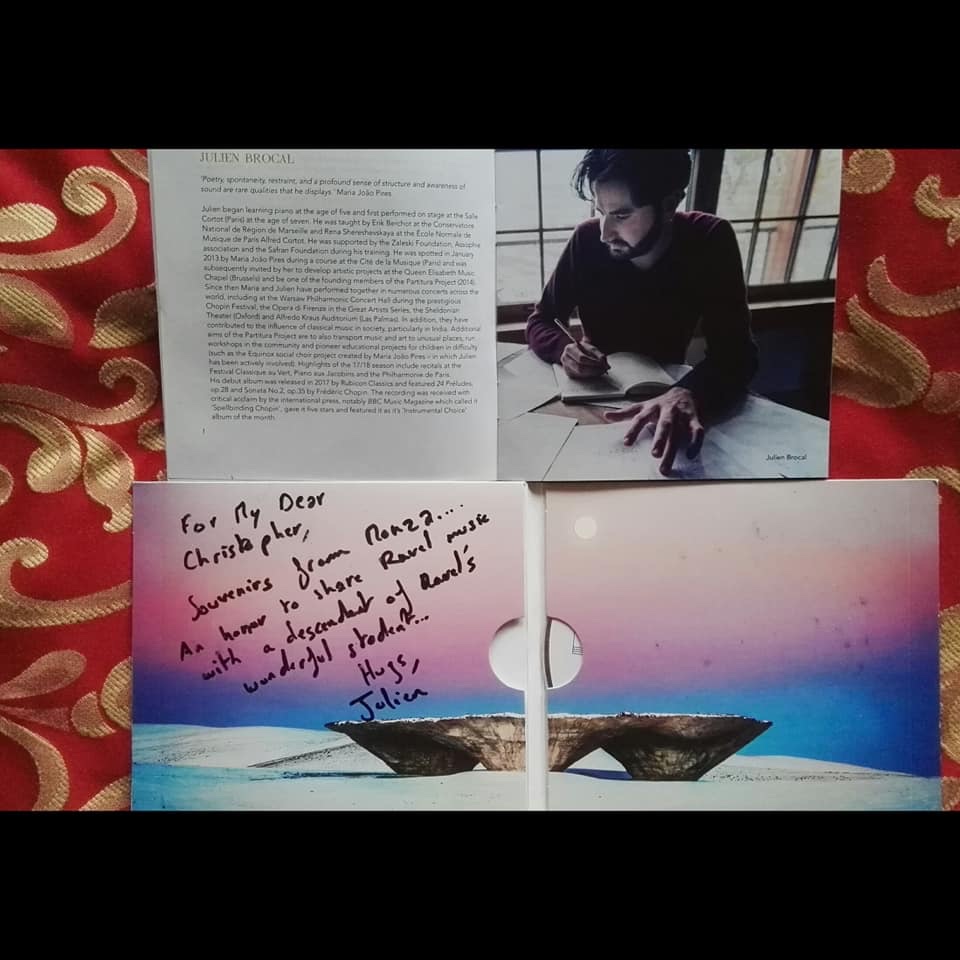
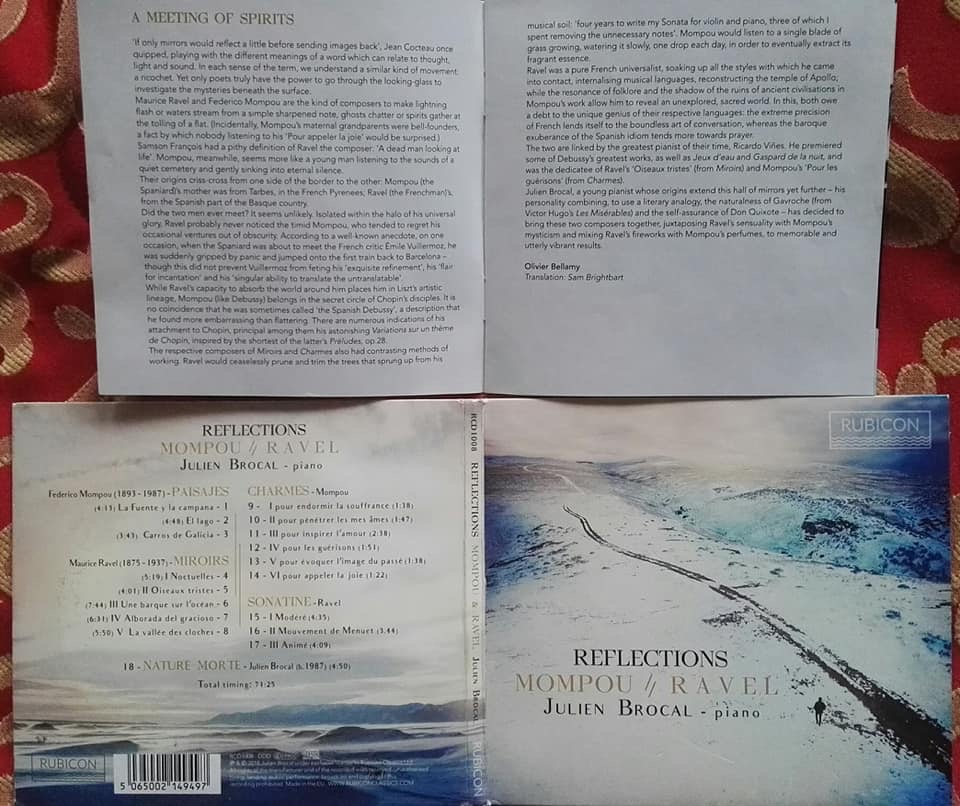
I bought on line his first CD and when he found out that it was me he wrote this beautiful inscription.
So pleased he is doing well….but I did tell you so!!!!!
The beautiful red and gold background here is the bedspread that I bought with the fee they very generously gave me in Monza for having such a wonderful time…….so all is well that ends well ……..sweet dreams indeed!

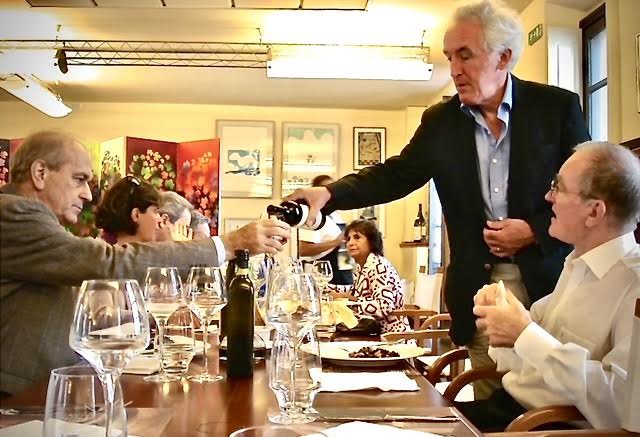
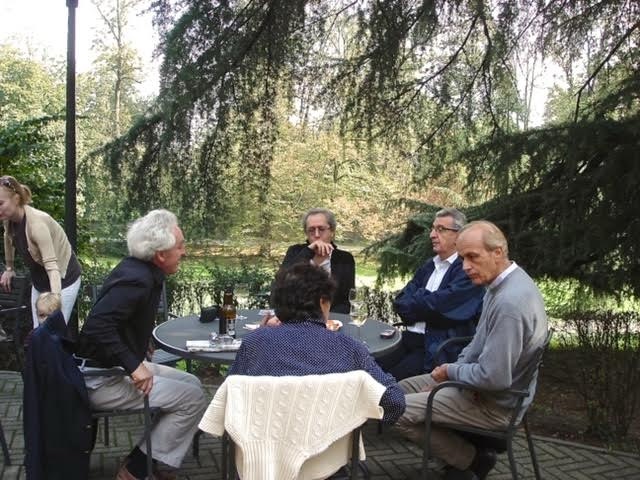
Some photos sent to me by fellow jury member Marcel Baudet ( he sent them in 2024)

Connie with Shura after one of his many recitals at the Ghione theatre and the bedspread from Monza

She has since passed on to a better life with her beloved husband Cesare and her adored Shura and many many other friends who loved her joie de vivre,intelligence and warmth.
A young french pianist played an extraordinary Schumann Carnaval in one of the rounds and although he did not make the final I had noted his quite exceptional artistry.
He asked me what advice I could give him but it was Maria Jose Pires who answered that by taking him under her wing and sharing the concert platform with him in her ever generous way.
I heard them play Mozart Double together in Oxford and I went back to thank her for all that she was doing to help these remarkably talented young pianists reach a public and start a career.She said that it was she that should thank them for all that they gave her with their youthful enthusiasm and dedication!

Julien at the Chopin Society
I bought on line his first CD and when he found out that it was me he wrote this beautiful inscription.
So pleased he is doing well….but I did tell you so!!!!!


The beautiful red and gold background here is the bedspread that I bought with the fee they very generously gave me in Monza for having such a wonderful time…….so all is well that ends well ……..sweet dreams indeed!

Wonderful cantabile sound from Julien and very beautiful Mompou Variations on Chopin op 28 n.7.
Superb Chopin Nocturnes op 15 too, even if rather fast the G minor n.3 .
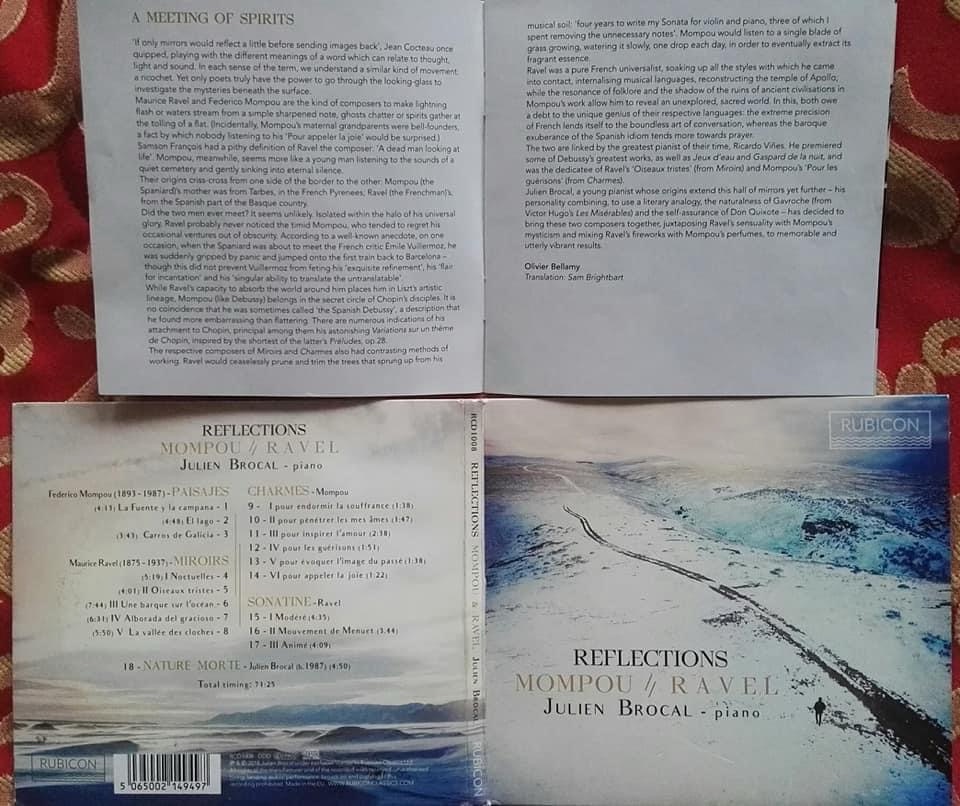
His wonderful Miroirs have been encapsulated for posterity on his new CD (see below.)
Raindrop as an encore where you could have heard a pin drop.The moments of silence at the end spoke much louder than any applause

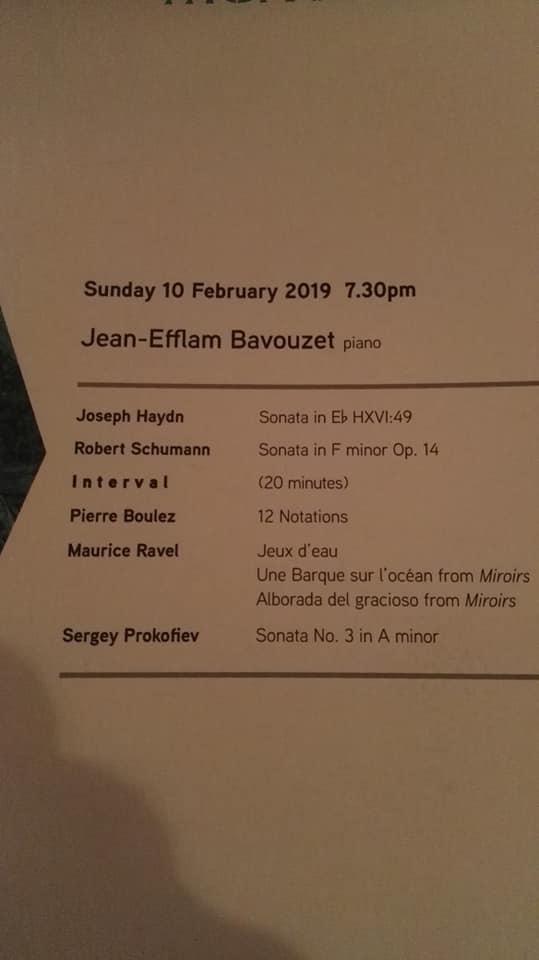
. https://www.facebook.com/notes/christopher-axworthy/condolences-mr-debussy-and-hats-off-to-bavouzet/10155563303742309/ Jean- Efflam’s amusing and informed introduction to Boulez Notations was a revelation.I will Always remind myself of the signposts when taking up the driving seat in foreign parts!
Magical Jeux d’eau . The same clarity of Julien in the two Miroirs offered – Une Barque sur l’ocean and Alborada del gracioso. An astonishing op 14 Schumann …..which is on on his new CD in the Horowitz edition to whom he played it. A quite extraordinarily rhythmic performance of Prokofiev’s 3rd Sonata .With a clockwork precision that Ravel would have much admired.Allied to a great sense of colour and above all a clarity and sense of direction. Feux d’Artifice was the encore. La Marseillaise a mere vision in the distance! Vive la France indeed.

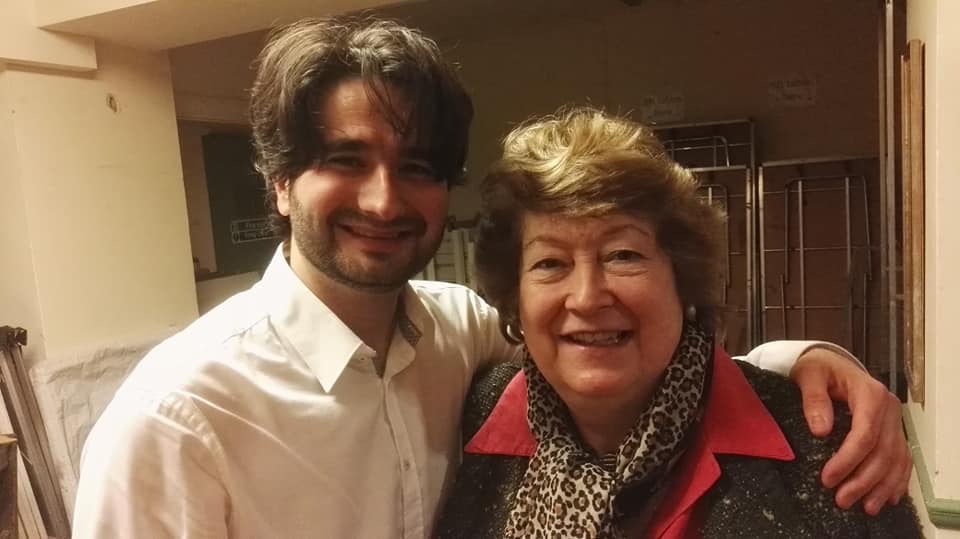
Julien Brocal with Lady Rose Cholmondeley

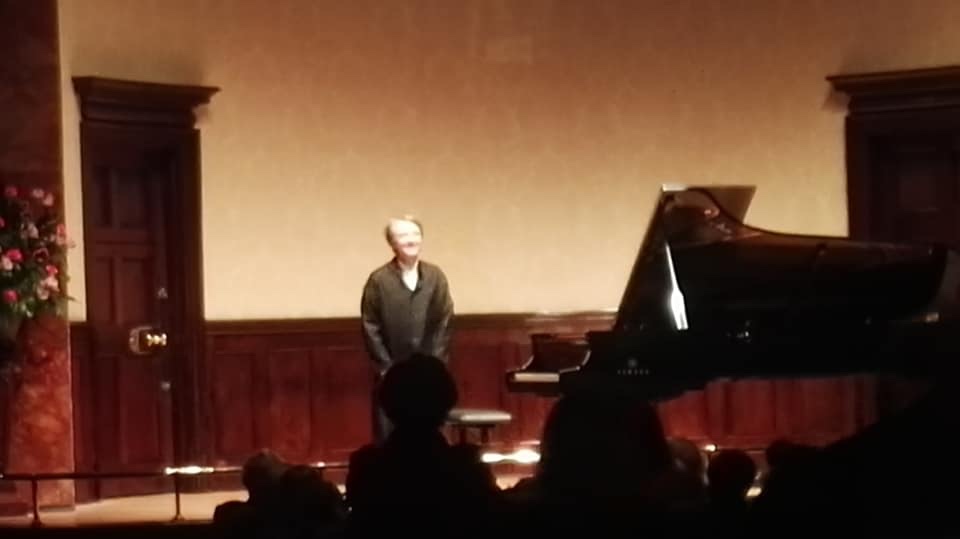
Jean Efflam Bavouzet at the Wigmore Hall

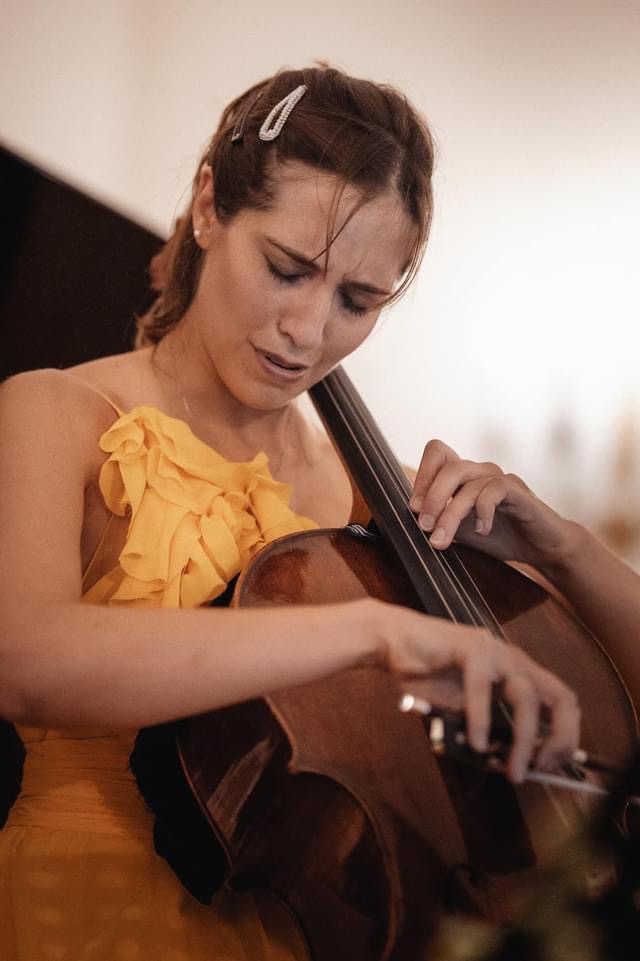
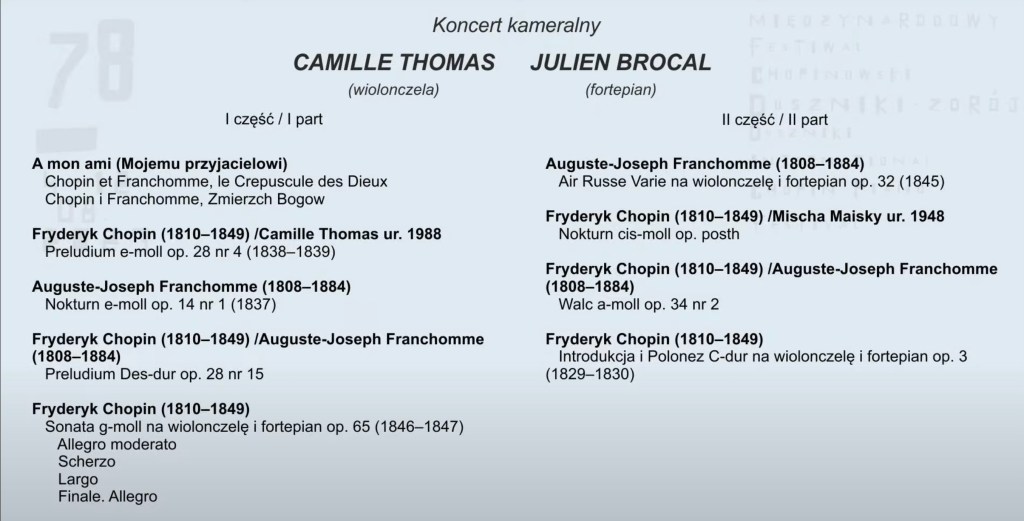
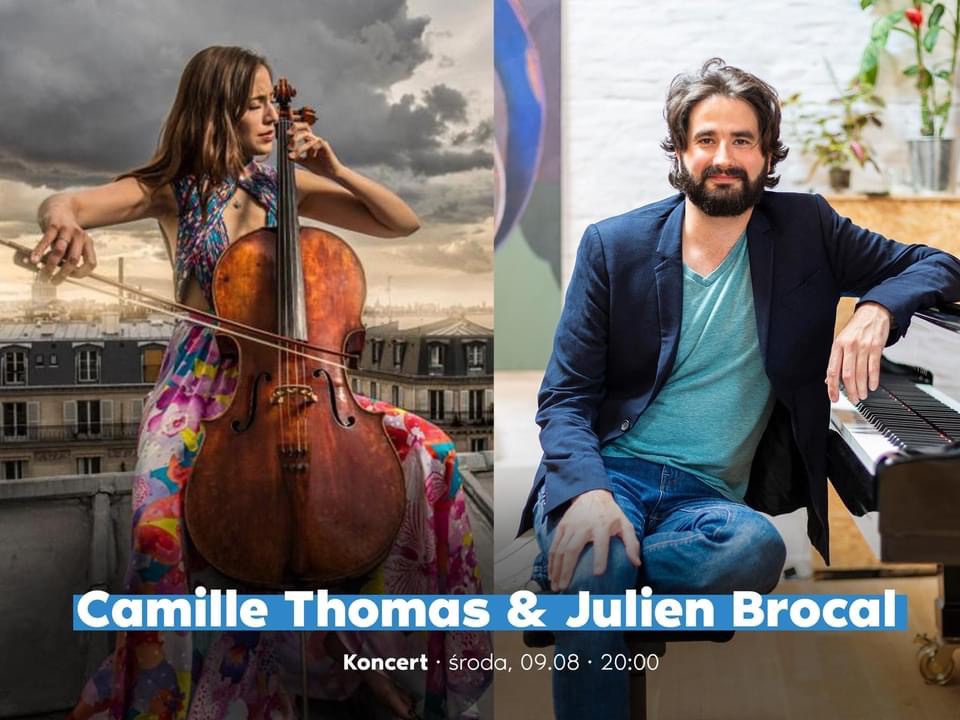
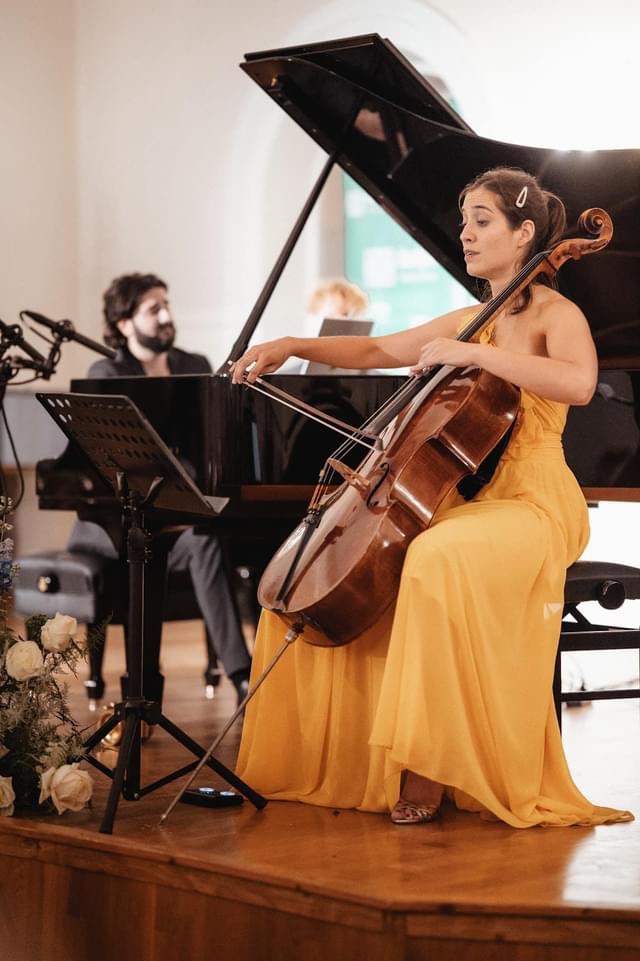
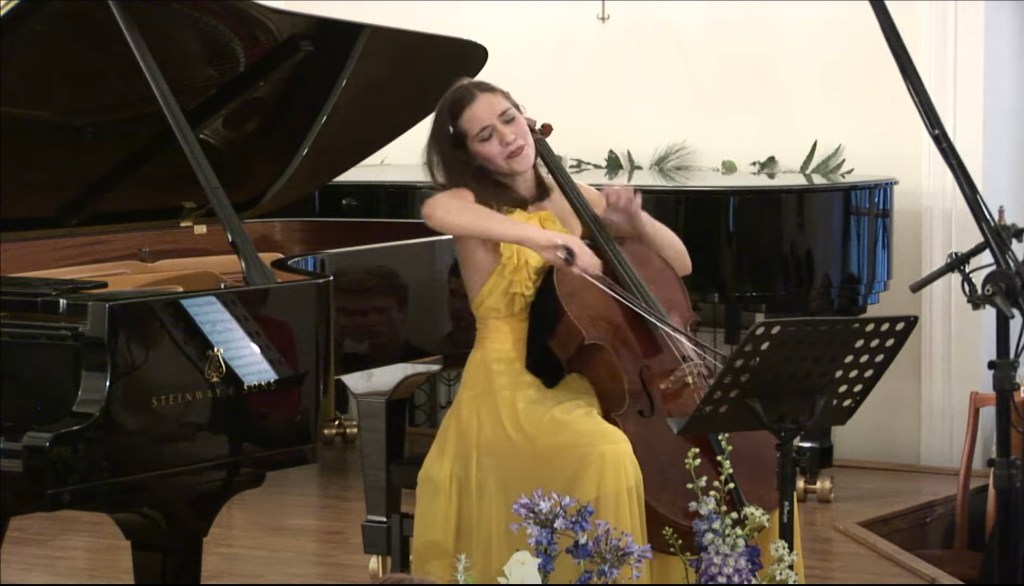
Camille Thomas and Julien Brocal ‘On Wings of Song’ in Duszniki

https://youtu.be/ZLLX9grOu_8

Camille THOMAS – Cello
Julien BROCAL – piano
👏👏👏👏
Unusual chamber recital !
In “Chopin Palace” – in a place blessed with Fryderyk’s recitals, the cellist Antonio Stradivari played. A cello whose sound was listened to by Fryderyk Chopin a few days before his death – in October 1849.
Then, at Chopin’s request, the Largo from Sonata g-moll op. 65 was played for Fryderyk by his friend, cellist and former owner of this instrument Auguste Franchomme.

A fascinating recital of two of the only nine works that Chopin wrote for instruments other than the piano.Transcriptions of Chopin and an original work by Auguste Franchomme on the ‘cello that Chopin would have certainly known.

A transcription by Misha Maisky of Chopin’s Nocturne op posth in C sharp minor completed this refreshing panorama of chamber music.Chopin as Julien told us was very much influenced by ‘bel canto’ and the voice of the ‘cello is perhaps the nearest to the human voice and to Chopin’s soul.Chopin also admired the sound of the bassoon that is most noticeable in the few works he wrote for piano and orchestra.

Jardin Musical Misha & Lily Maisky in Julien Brocal’s wonderful garden

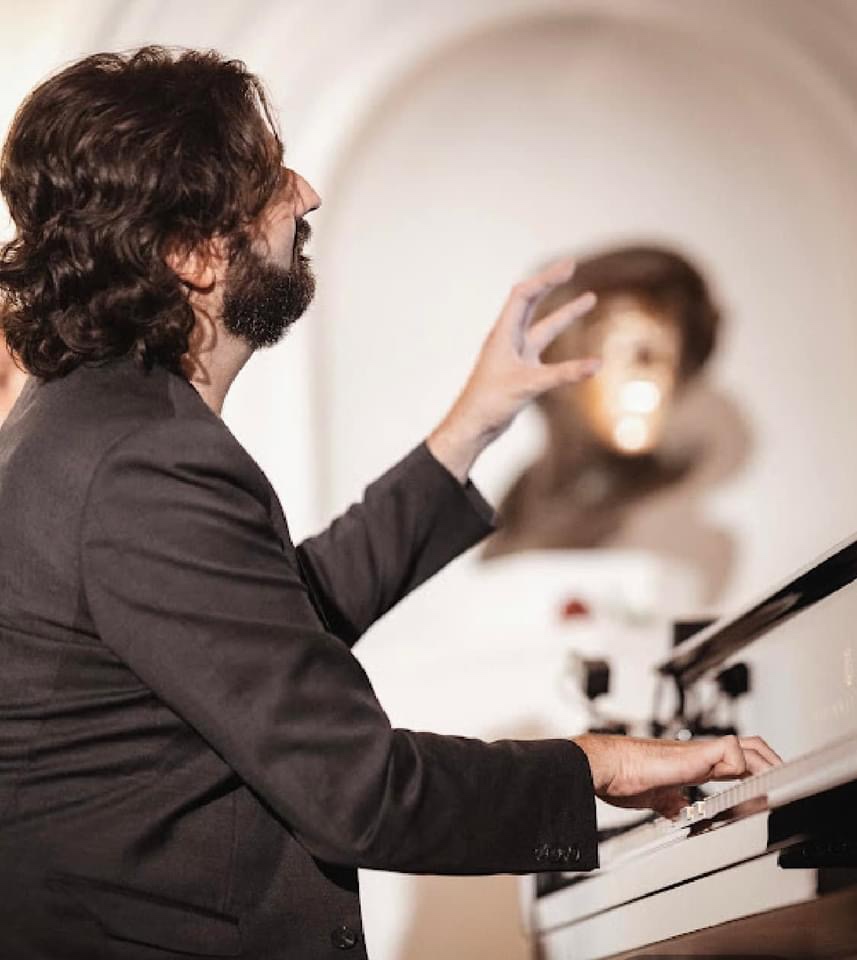
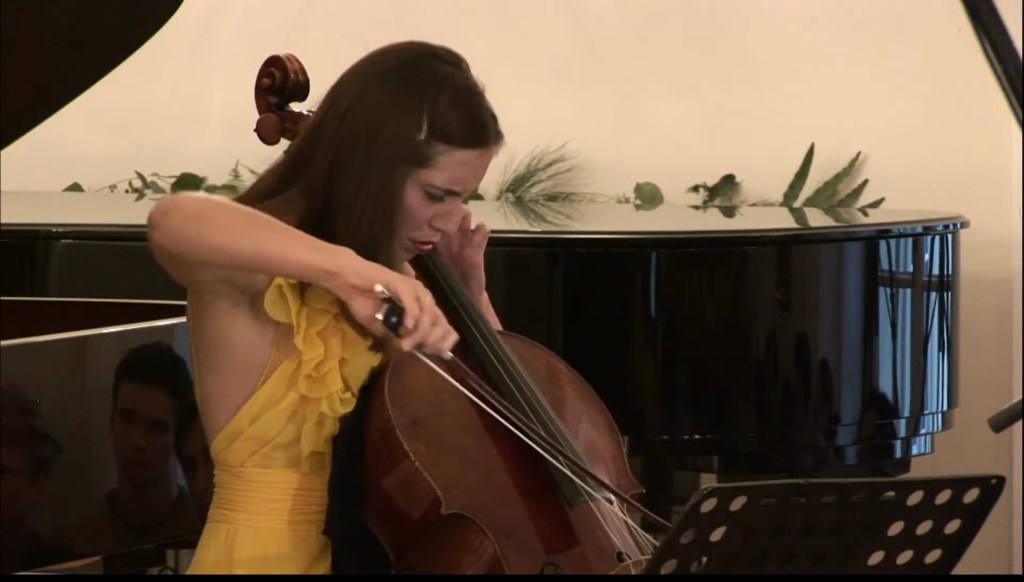
It is the deep intense sound that obviously Chopin loved and it was exactly this that Camille Thomas shared with us today.A ravishing sound and a sense of rubato that was indeed as Chopin was to describe to his students .’A tree with the roots firmly planted in the ground with the branches free to flow with the wind above’.The two preludes op 28 n.4 and 15 (Raindrop) were played with real weight and a simple intensity where the ‘cello became part of her being.Swaying with the music in such a natural way as she found a range of sound that gave deep meaning to all she did.The Prelude n.4 in Camille’s beautiful transcription was indeed a revelation as this page became a real tone poem of shape and intensity.Of course all this would not have been possible without the sensitive playing of Julien who coaxed magical sonorities out of the piano with fingers that seemed to caress but never hit the keys in sympathy with the glorious sounds his partner was sharing with him.

In particular the Nocturne in C sharp minor and the encore of the slow movement of the E minor concerto showed the artist that Pires had noted and had willingly helped him to be justly recognised by a discerning public.I had heard Julien in the Monza competition in 2008 and have never forgotten his wonderful ‘Carnaval.’I was a jury member and he asked me what steps I would suggest to help him in a career in music.Julien was shortly after that noted by Maria Joao Pires and the rest is history.

In Julien Brocal’s magic garden with Maria Joao Pires

There is one detail though that the public might have missed.I thanked Madame Pires for all she was doing to help young musicians, after a performance of Mozart Double concerto with Julien in Oxford.She immediately rebuked me by saying it was what they did for her that was more important!Humility and humanity that are the essence of the greatest of artists.

Julien demonstrated today his wonderful artistry and musicianship with ravishing sounds but also playing of real chamber music where the two instrumentalists became one.

The piano lid fully open but if you know how to drive there is no problem ( as Graham Johnson the Gerald Moore of today would say ).It opens up the sound of the piano with the cello sharing in the reflection of sound too.It united their music making with sumptuous shared sounds that were reflected to an audience who showed their appreciation with a standing ovation.

The Sonata in G minor is a long and difficult work but it was played with such mastery as the technical difficulties just disappeared in music making of rare beauty and unity.The early Introduction and Polonaise has a very difficult piano part too but it was thrown off with ease and ravishing beauty by Julien just as I am sure Chopin would have done in his virtuoso days before leaving Warsaw for ever to conquer the salons of Paris.

Camille had given a truly virtuoso performance of the only original work by Franchomme on the programme.His ‘Air Russe varié’ was played with great authority and conviction and more than made up for Franchomme’s rather misunderstood transcription of Chopin’s Waltz in A minor op 34 n.2.Could this deep growling opening of one of Chopin’s most original creations have been accepted by the composer?A beautiful second encore of subtle beautiful sounds that with Camille and Julien’s beautiful recorded performance was finally sanctioned with thanks by the composer Arvo Part.It added a different dimension to the ravishing beauty of the slow movement from the E minor piano concerto. A remarkable recital from two master musicians and a breath of fresh air from the magnificent solo piano recitals that honour Chopin every summer in Duszniki.

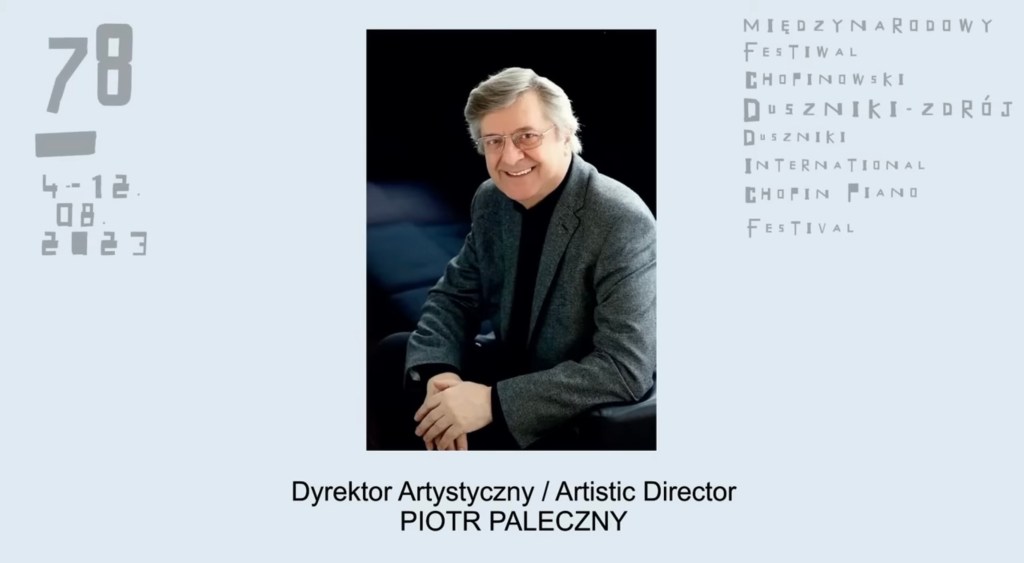
with artistic director Piotr Paleczny

Photos by Szymon Korzuch

Julien Brocal at the Wigmore Hall on Wings of Song

Vive la France …Brocal and Bavouzet in London

Auguste-Joseph Franchomme (10 April 1808 – 21 January 1884) was a French cellist and composer. In addition to his work in Paris, he collaborated with Spanish cellist Victor Mirecki Larramat and Belgian cellist Adrien-Francois Servais in founding what is considered the Spanish school of cellists, influencing future generations there. For his many contributions to music, he was decorated with the French Légion d’honneur in 1884.

Born
10 April 1808 Lille, France
Died
21 January 1884 Paris, France

Born in Lille, Franchomme studied at the local conservatoire with M. Mas and Pierre Baumann. He moved to continue his education at the Conservatoire de Paris , where he won his first prize only after one year.

Franchomme began his career playing with various orchestras and was appointed solo cello at Sainte – Chapelle in 1828. Along with violinist Jean-Delphin Alard , teacher of Pablo de Sarasate , and pianist Charles Hallé, creator of the Hallé Orchestra , he was a founding member of the Alard Quartet . The Quartet was rare for a its time because it consisted of professional musicians.

Franchomme forged close friendships with Mendelssohn, when the latter visited Paris in 1831, and with Frédéric Chopin . In 1833, Chopin and Franchomme collaborated to write a Grand Duo concertant for piano and cello, based on themes from Meyerbeer’s opera Robert le diable .Franchomme also rewrote the cello parts for Chopin’s Polonaise Brillante, Op. 3, and was the dedicatee of Chopin’s Cello Sonata op 65.

With the exception of a trip to England in 1856, Franchomme hardly left Paris, where he became a central figure of the city’s musical life. In 1843, he acquired the Duport Stradivarius from the son of Jean-Louis Duport for the then-record sum of 22,000 French francs.He also owned the De Munck Stradivarius of 1730. Franchomme succeeded Norblin as the head professor of cello at the Paris Conservatory in 1846.

He died in his sleep of heart attack on 21 January 1884 at the age of 75, four days after he received the Légion d’honneur.

Legacy

Franchomme was among the most celebrated cellists of his time and contributed to the refinement of the bowing technique—elegant, sweet, and light—which distinguished the French school developed by Jean-Pierre and Jean-Louis Duport. His left hand was renowned for its deft, precise, and expressive powers of execution. On 3 May 1856, the Weekly Chronicle and Register noted that he “carefully abstains from all abuse of the tremolo and of the exaggerated expression which are the distinguishing features in most modern violoncello playing”.

As a composer, Franchomme published some fifty-five works for cello, including the Twelve Caprices, Op. 7, and the Twelve Etudes , with optional second cello, Op. 35; one cello concerto , Op. 33; as well as numerous other pieces with piano, orchestral, or chamber accompaniment.

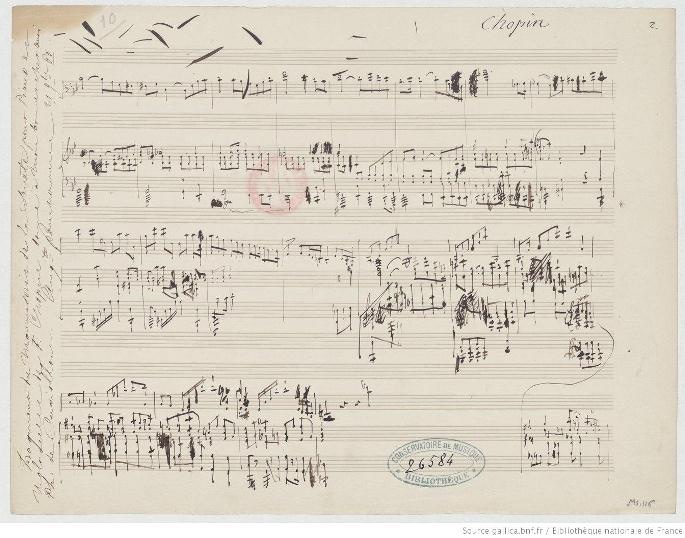
The Cello Sonata in G minor,Op. 65, was written in 1846-1847. It is one of only nine works of Chopin published during his lifetime that were written for instruments other than piano (although the piano still appears in every work he wrote) and was the last of Chopin’s works to be published in his lifetime.

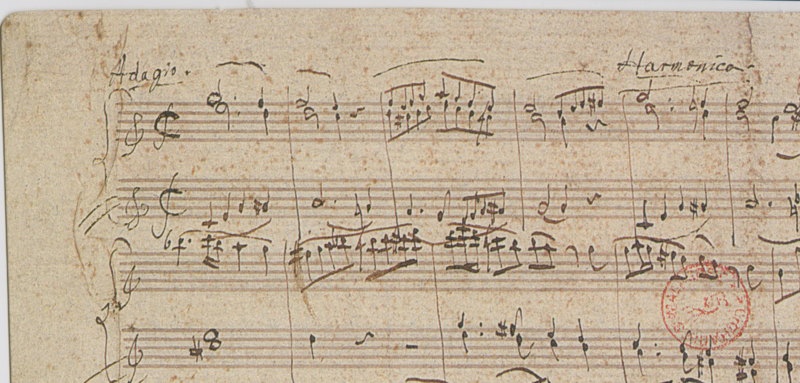
‘Sonate pour piano et violoncelle op. 65′, Frédéric Chopin’, French National Library, pubic domain
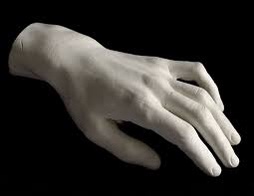
Plaster cast of Chopin’s left hand

Introduction and Polonaise brillante in C major, Op. 3, was one of Chopin’s first published compositions.

The Polonaise was written between 20 and 28 October 1829 during a visit to the estate of Antoni Radziwill in Antonin. In a letter to Chopin’s friend Tytus Woyciechowski,, Chopin indicated that he wanted Princess Wanda, the daughter of Prince Antoni, to practice it. The Introduction was written in April 1830.The work was published in 1831 and dedicated to the Austrian cellist Joseph Mark . In a letter, Chopin wrote “On Thursday there was a soiree at Fuchs’s, when Limmer introduced some of his own compositions for four violoncellos. Merk as usual made them more beautiful than they really were by his playing, which is so full of soul. He is the only violoncellist I really respect”.

Jean Francais orchestrated the work in 1951 in collaboration with Maurice Gendron.

Camille Thomas with the ‘Feuermann’ cello

The Stradivarius 1730 Cello ‘Feuermann’ has been loaned for one year by the Nippon Music Foundation to the cellist Camille Thomas .

The cello, which has previously been played by Steven Isserlis and  Danjulo Ishizaka, has an illustrious history. In the 1860’s, it was in the possession of a well-known Parisian amateur, Monsieur de Barrau, and was lent to the well-known cellist August-Joseph Franchomme (1808-1884) for the use of his son, who died young.

In 1934, W. E. Hill and Sons sold the cello to Emanuel Feuermann, who used it for many concerts and recordings, hence the instrument’s name. After Feuermann’s death in 1942, it was acquired by the American collector Mr. Russell B. Kingman, and then sold in 1956 to Aldo Parisot. In December 1996, Nippon Music Foundation acquired this cello from Aldo Parisot through a luthier, and there has been speculation as to which cellist would get to play it.

Noticed and invited by Seiji Ozawa and Steven Isserlis to perform at their festivals, Camille Thomas has appeared as soloist with ensembles including Sinfonia Varsovia, the Baden Baden Philharmonic Orchestra, the Lille National Orchestra, the Hamburg Philharmonischen Staatsorchester, the Brussels Philhamonic Orchestra and the Slovak Philharmonic.

Thomas studied with Stephan Forck and Frans Helmerson in Berlin; and with Wolfgang-Emmanuel Schmidt at the Hochschule für Musik Franz Liszt in Weimar, and has won numerous competitions: the Leopold Bellan Competition in Paris, the Edmond Baert Competition in Brussels and the 7th International Antonio Janigro Competition in Croatia amongst others. She recorded her debut album with the Swiss pianist Beatrice Berrut in 2013.

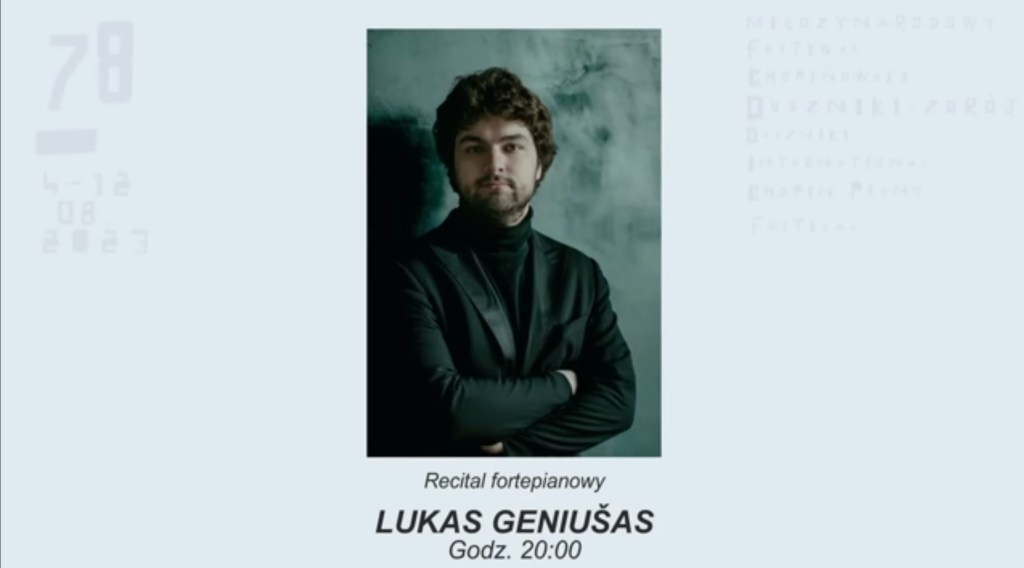
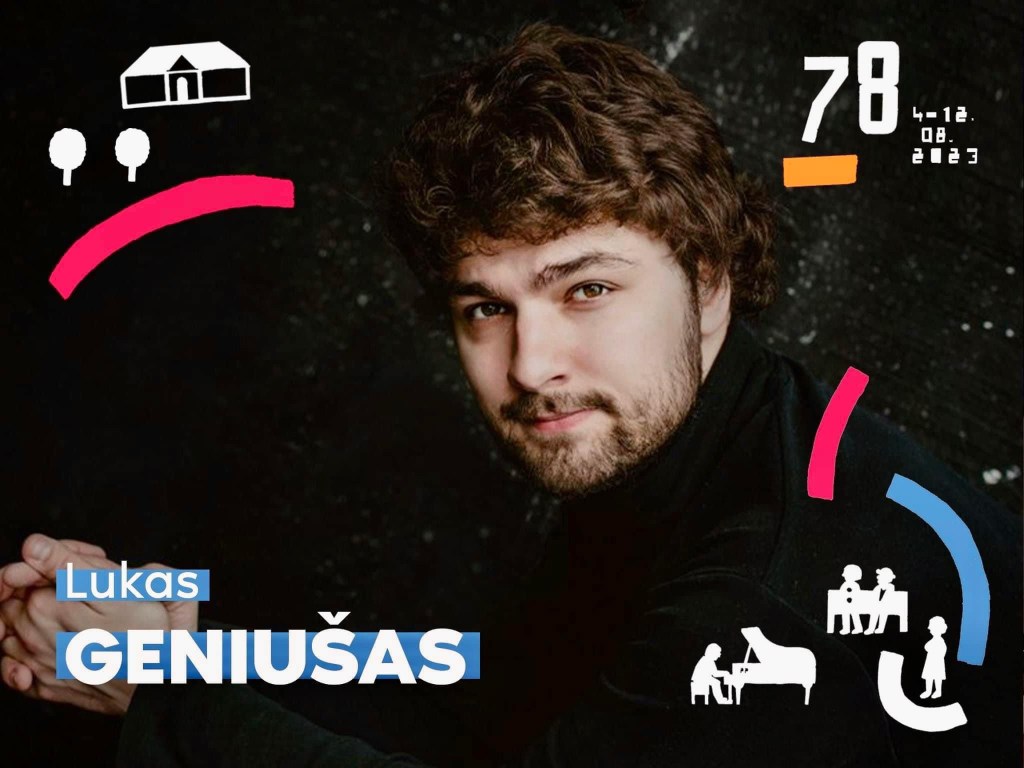
Lukas Geniušas Maturity and mastery in Duszniki

photo Szymon Karzuch

Piotr Paleczny surprises us every summer in Duszniki with recitals by some of the most important musical talents of our time who are generously shared with the world by their superb streaming.Michael Moran supplies old style reviews full of historic references and invaluable information.This is indeed an oasis of culture that is fast disappearing in a world where quantity rather than quality is the deciding factor.http://www.michael-moran.com/2023/07/78th-international-chopin-festival-in.html?m=1

And today another surprise with a pianist who has grown in stature since he first appeared on the scene to astonish us in London at the Wigmore Hall with the studies op 10 .He had just won a top prize at the Chopin Competition in Warsaw.A line up of giants indeed where Yulianna Avdeeva ran off with first prize (her application recording having been turned down and then re admitted at the last minute due to the intervention of Fou Ts’ong),Lukas was second,Trifonov was third,Bozhanov fourth,and Dumont fifth https://christopheraxworthymusiccommentary.com/2022/01/21/francois-dumont-remembering-the-genius-of-fou-tsong-at-the-rasumovsky-academy/

Geniušas seems to know how to do everything better than anyone…’Diapason Jan.2019

Russian-Lithuanian pianist Lukas Geniušas has since firmly established himself as one of the most exciting and distinctive artists of his generation.Praised for his ‘brilliance and maturity’ (The Guardian) he is invited to give recitals in the most prestigious venues all over the world A musical pedigree that would be hard to beat .His father is the Lithuanian pianist Petras Geniusas and his mother is professor Xenia Knorre .Lukas’s grandmother is the Russian pianist pianist Vera Gornostayeva.His father,Petras, is a very distinguished Professor at Glasgow Conservatory where he has established a school of playing of great importance.Lukas plays in duo with his wife Anna Geniushene who won the Silver Medal at the Van Cliburn Competition last year (2022.)They have two children and were the first to leave Russia in protest and solidarity with the brutal invasion of the Ukraine.Anna was eight months pregnant when she astonished the public in Texas with playing of sensitivity and mastery.

Both Anna and Lukas have brought a humanity and maturity to their already quite extraordinary training that is bearing fruit with a family of musicians dedicated to honesty and integrity – two words almost obsolete in this world of quantity at any cost!

Chopin studies but this time op 25 where Chopin had indeed covered canons with flowers.An innovative technical mastery from Chopin who more than any other of his time showed us that this box of hammers and strings that were no longer plucked but struck could sing as beautifully as the Bel Canto artists of the day.A use of the pedals that indeed became the ‘soul of the piano’.The first set of studies op 10 whilst being unique are more of the gentle,considerate virtuoso than the poet of the second set.

It was this poetry that Lukas showed us with such simplicity and beauty.There were never any harsh sounds as can be so often associated with a certain type of Russian school but there were startling contrast and an unusual clarity that shone a new light on these twelve much loved jewels.

Op 25 n.5

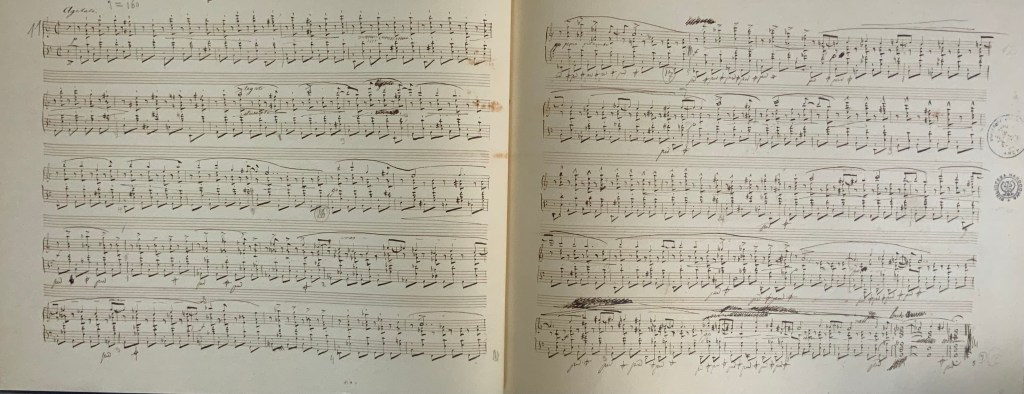
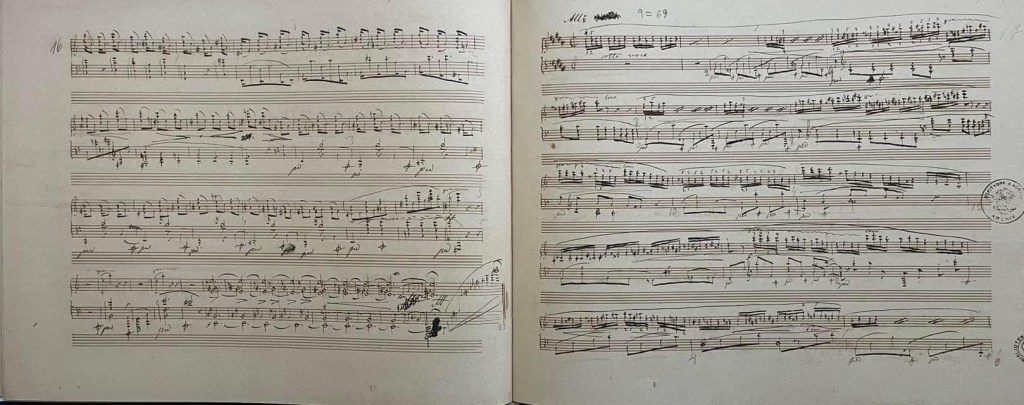
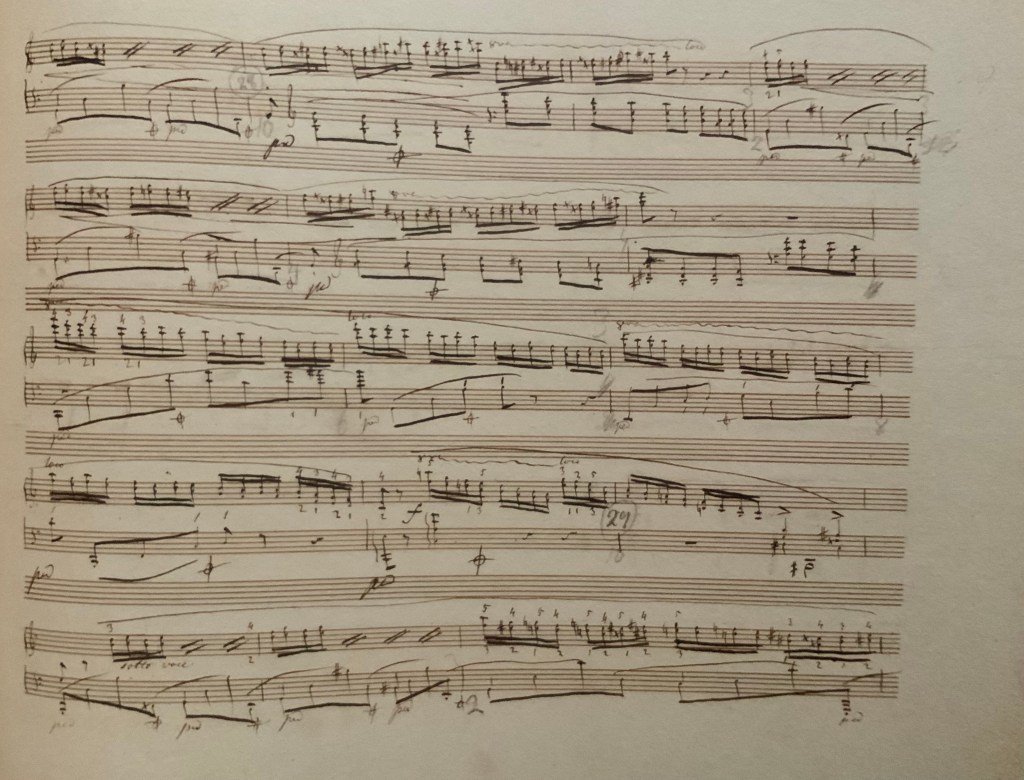
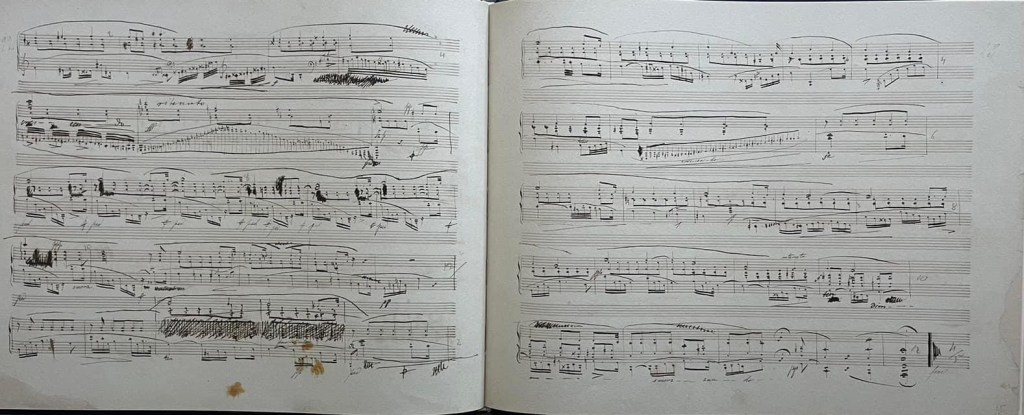
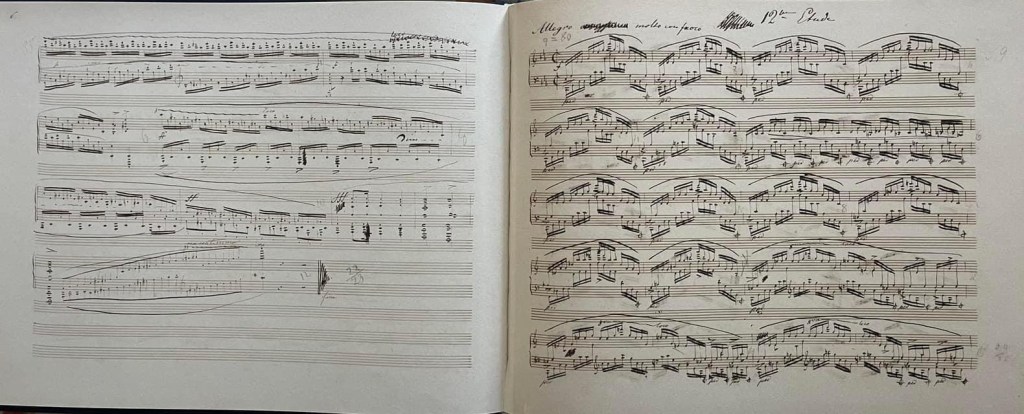
The opening of the fifth seemed unusually rhythmic until one looks at the score and can see quite clearly Vivace ,leggiero and above all scherzando.This melted in Lukas’s sensitive hands into a moment of pure magic with sounds of ravishing beauty as Chopin writes ‘Più lento’ and ‘leggiero’ and in the bass ,’sostenuto’,with the pedalling marked with the precision of a singer breathing .

Op 25 n.1

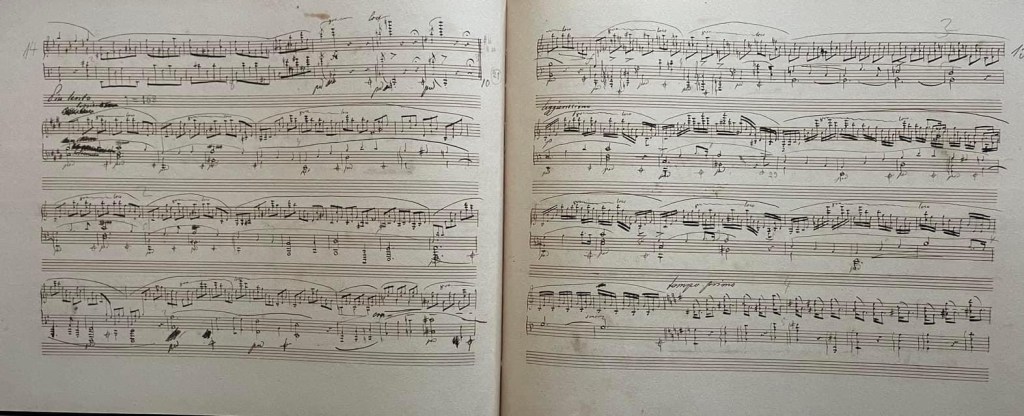
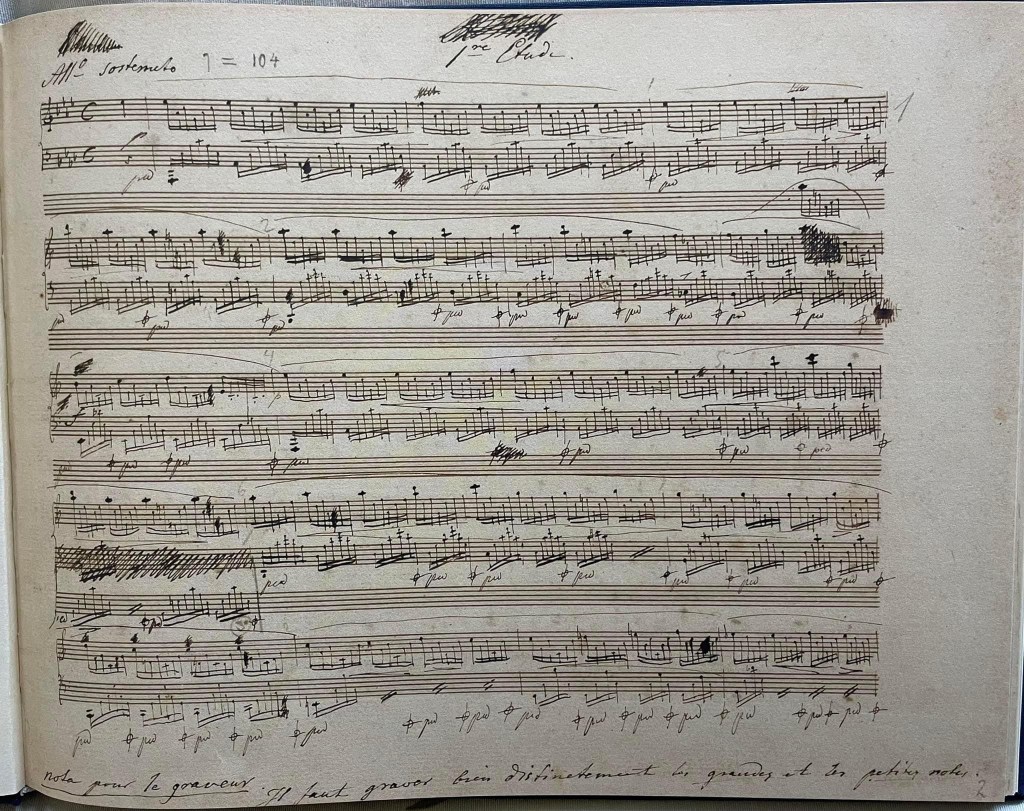
The first study too was played with disarming simplicity with the melody sustained by the underlying changing harmonies.Here Chopin again makes a note for the printer to make the melody notes larger than the accompaniment with very precise pedal indications.Of course the modern day piano is much more advanced but the pedal indications give a very good indication of the sound and phrasing that Chopin had in his mind at the moment of creation.Sir Charles Halle in Manchester noted how Chopin played this study where there were no single notes but moving harmonies.We can read in a review of one of Chopin’s concerts in Manchester in the home of the Earl of Falmouth, that was announced in The Times. Being a fashionable event, this performance was covered by The Athenaeum, The Illustrated London News and The London Daily News as well as The Manchester Times 107.

‘When we hear Chopin himself, these difficulties vanish; everything is executed with such absence of effort; and everything sounds so plain and simple, to a cultivated ear, that we cannot imagine where the difficulties lay. In truth, to Chopin they are not difficulties at all, they are the most obvious modes of execution, which have naturally suggested themselves to him in order to give utterance and expression to his characteristic and original modes of his musical thought and feeling. Hence Chopin’s music has a mechanism peculiar to itself: and if this mechanism, reduced to principles, were studied and understood, the peculiar difficulties of his music would vanish.’

Op 25 n.2

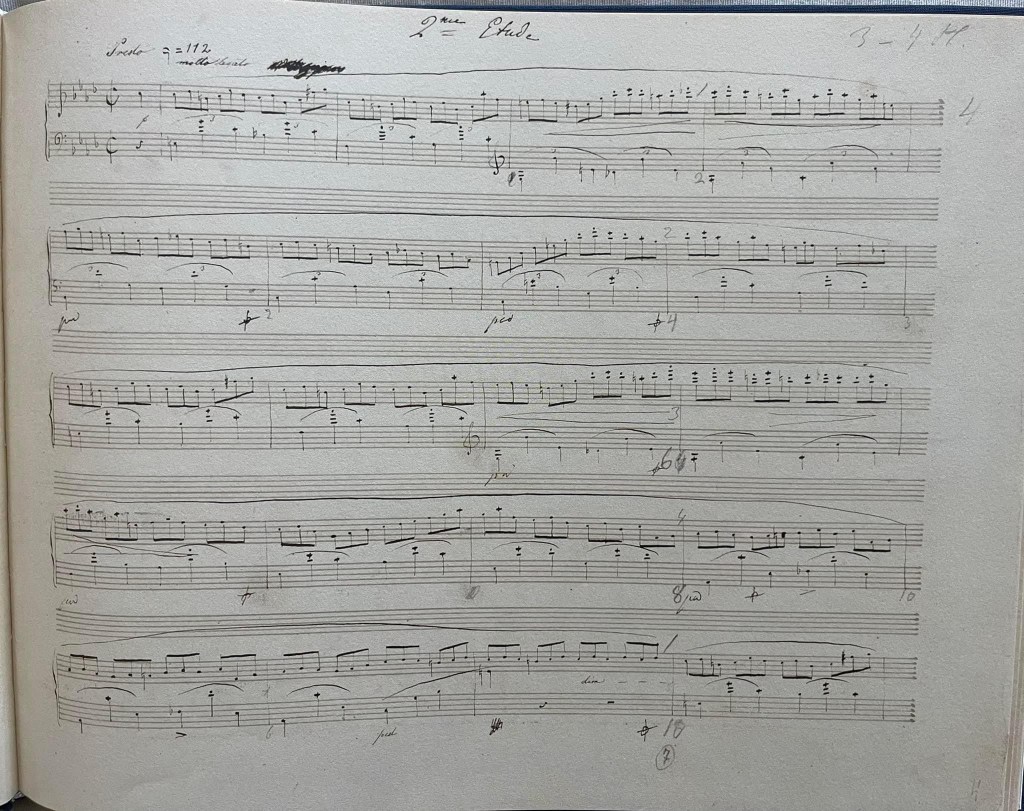
The second study in F minor was the one that Rubinstein surprised us with at his last recital in 1976.He was almost blind and could not see out of the corner of his eyes which made ending with the B flat minor Scherzo a dangerous proposition.The master stopped half way through and played this study just to prove that it was only his sight that was failing!He also famously exclaimed in the Green Room afterwards that he may be blind but not too blind to a recognise a beautiful lady when she is standing in front of him.Lauren Bacall was of course charmed as everyone had been in Rubinstein’s long life .Lukas played it with the same clarity and precision that is also so apparent in the autograph score.A simple undulating beauty as smooth as silk just as Rubinstein in his 90th year farewell concert had done.

Op 25 n.4

The third study too was played with a rhythmic clarity and subtle shaping of the melodic line before disappearing in a wisp of smoke and three gentle sumptuous chords.The fourth was brilliantly played,lightweight and a true butterfly but I missed the legato melodic line as a contrast to the marcato that Chopin so clearly defines.

Op 25 transition from 5 to 6

The double thirds study was beautifully played and followed the masterly performance of Kevin Chen the day before.Chopin though clearly marks the fingering for the final descending scales that Lukas decided to play with two hands!

Q.E.D The composer knows best ….or does he ?
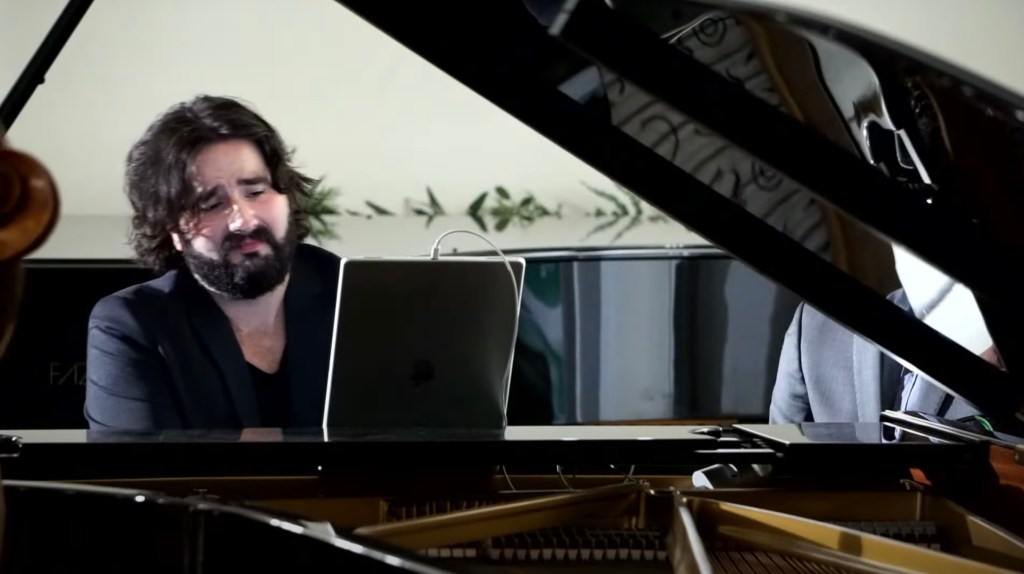
A pianistic trick that I have never seen before and makes me wonder how he might approach Beethoven – as a pianist or faithful interpreter!However it was masterly playing and I just wonder looking at the score if Chopin intended the fifth and sixth to be linked by pedal out of which the double thirds emerge ?Beatrice Rana proved that this worked and had me searching the score for the evidence that is not conclusive but very convincing.

Op 25 n. 7
Op 25 n. 7

The beautiful slow seventh study was obviously that which Chopin struggled with as he delved deeply into his soul and found the same aristocratic voice that Lukas found today too.Lukas has a mature personality and not only interprets the composers wishes but adds his own distinctive voice too just as Rubinstein did with aristocratic good taste and fire.The final studies were brilliantly and poetically played with the fleeting continual movement of the eighth and the ‘Butterfly’ lightness of the ninth.

Op 25 n.11

The tenth and eleventh were played with extraordinary fire and architectural shape.The long flowing octave study interlude played with ravishing beauty and legato.How wise he was to note Chopin’s ‘forte’ indication at the beginning of the ‘Ocean’ study.With the magnificent waves of changing harmonies and at the end an indication to play as loud as possible followed by a crescendo to ‘Fortississimo’.The composer always knows best !

Op 25 transition from n.11 to 12
photo Szymon Karzuch

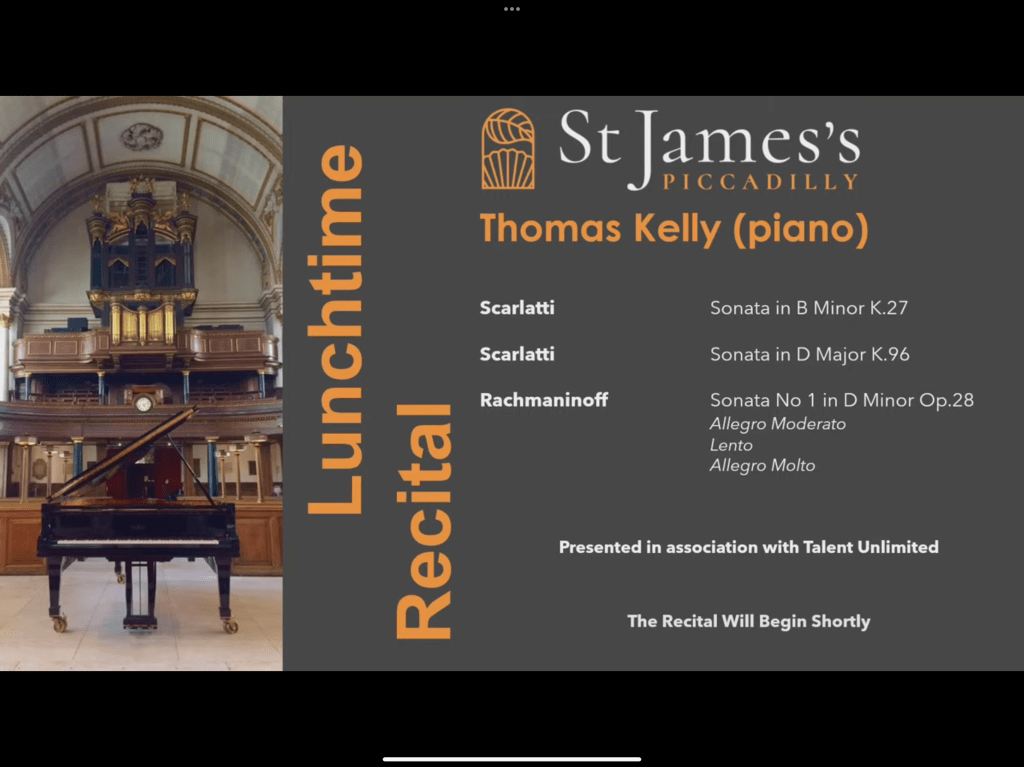
The Rachmaninov first Sonata is gradually appearing on concert programmes more frequently after Kantarow’s illuminating lock down performance streamed live from Paris.It takes a great musician to make sense of a work that even the composer found a challenge to give a coherent form to.Thomas Kelly gave a remarkable performance in London just a few days ago where the miriad of notes were turned into streams of sumptuous sounds. https://christopheraxworthymusiccommentary.com/2023/08/03/thomas-kelly-at-st-jamess-piccadilly-musicianship-and-mastery-mark-the-return-of-a-golden-age-but-of-the-thinking-virtuoso/

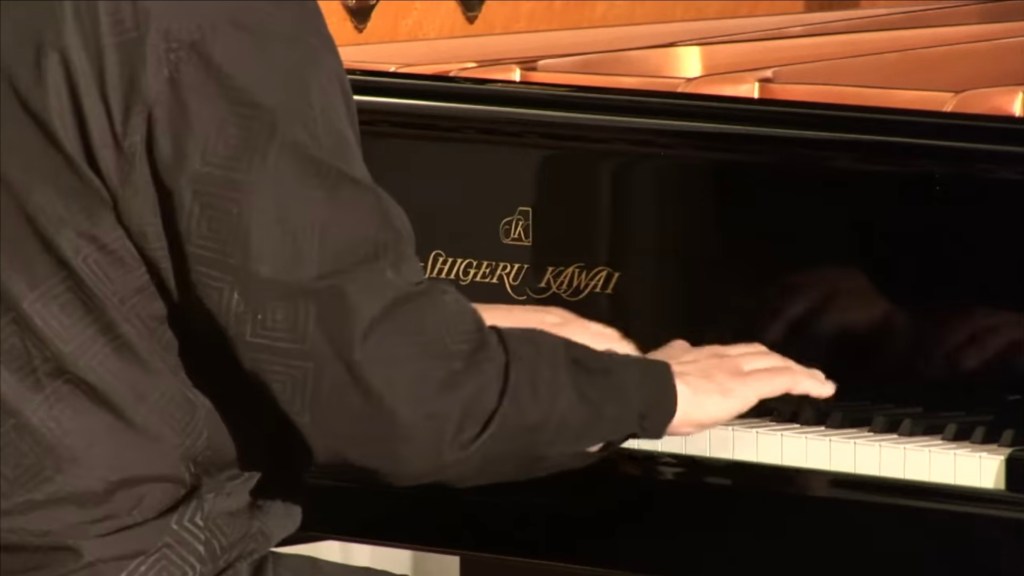
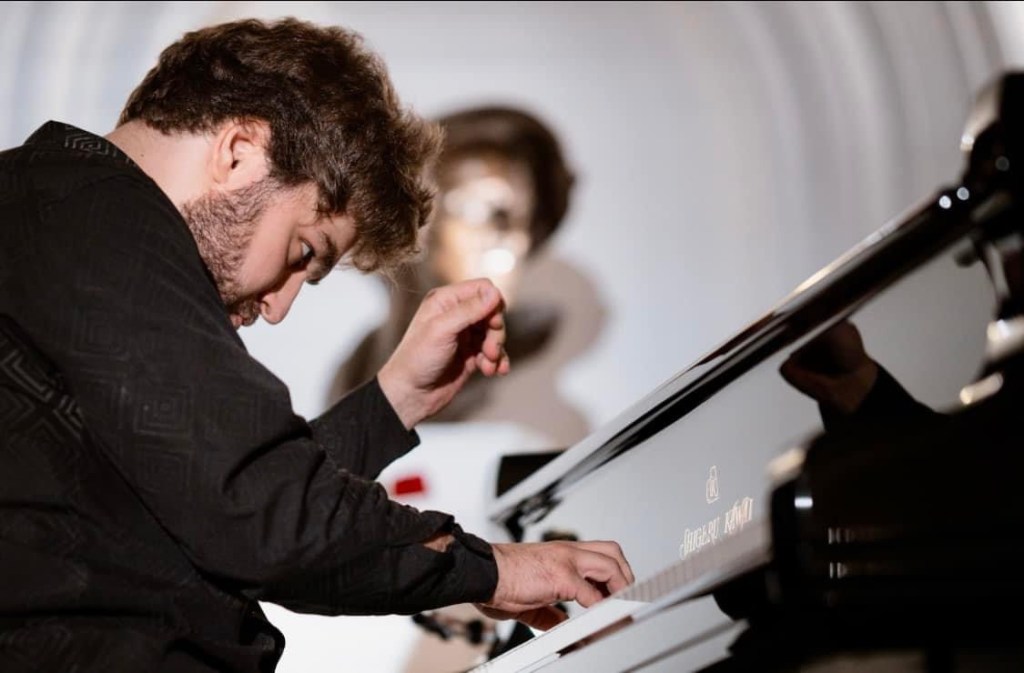
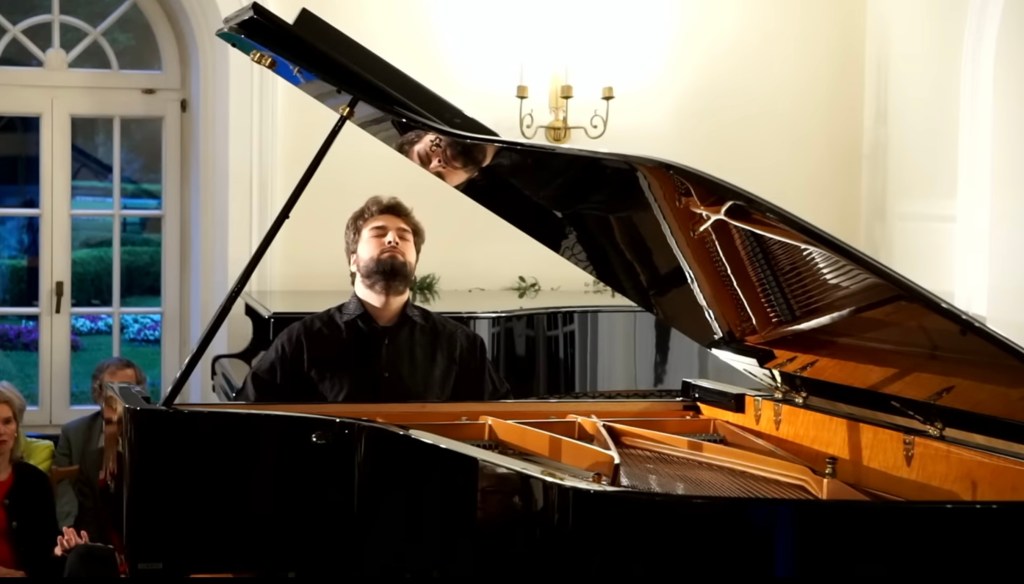
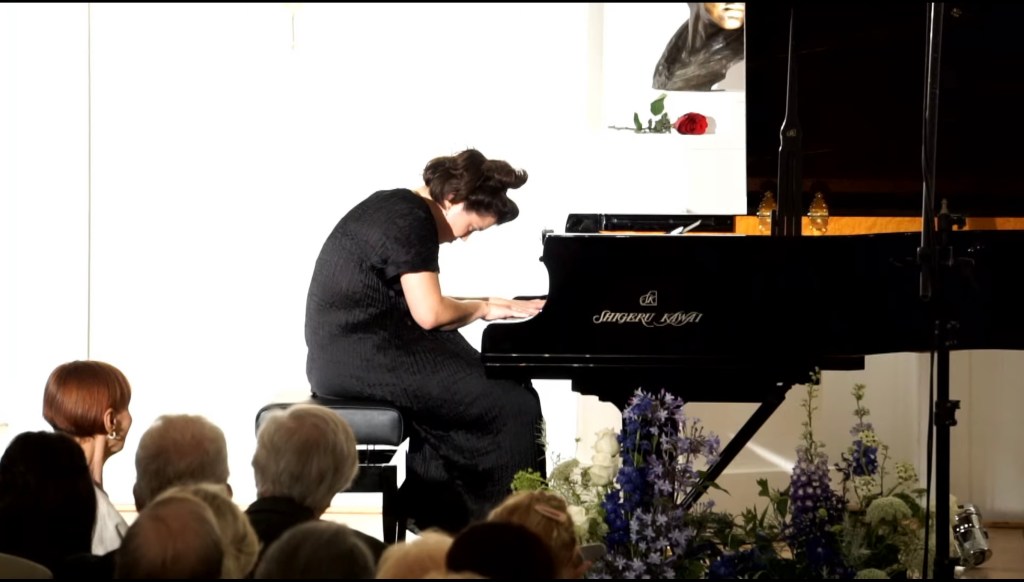
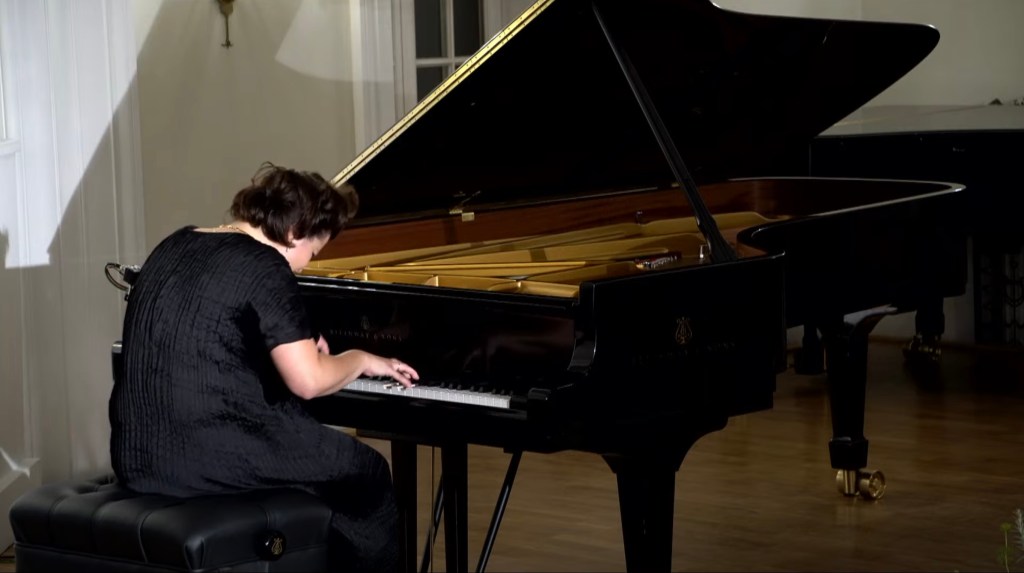
Lukas had the same poetic vision too that gave a distinctive shape to what is in effect a tone poem concealed in Sonata clothes!His performance today was just as convincing and had a maturity that allowed him to play with astonishing clarity and a remarkable musicianly shape giving a different but just as convincing vision to the golden sheen of colour that others had added to a seemingly endless flow of notes.Lukas had chosen to play a Shegeru Kwai that with its Bosendorfer richness and sumptuous tone palette gave such significance and meaning to the thirty minutes of early Rachmaninov meanderings.As a curiosity I wonder what is meant by the ‘original’ version?We know about the 1913 and 1931 versions of the Second Sonata and also the Horowitz reduction sanctioned by his close friend the composer.But this first Sonata I was not aware of other versions until today.

A performance that was greeted with a subdued ovation in this hall where Chopin is God.It was a quite remarkable performance from a mature master musician.He offered three short encores from a brief barely whispered page of Scriabin to Prokofiev or Shostakovich that I did not recognise but were certainly from the twentieth century Russian school .

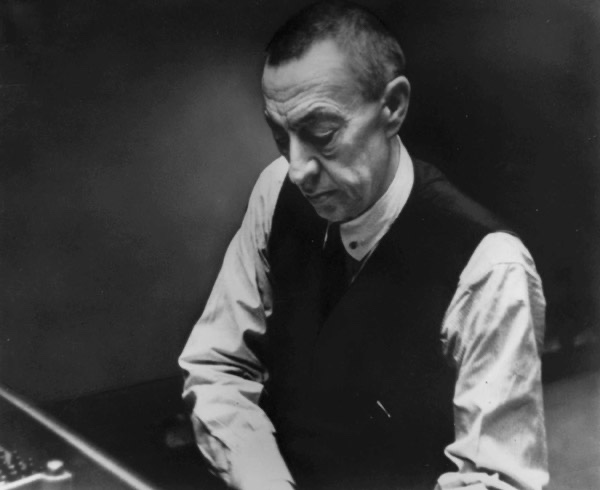
Serghei Rachmaninov

Piano Sonata No. 1 in D minor op 28 was completed in 1908.It is the first of three “Dresden pieces”, along with the symphony n.2 and part of an opera, which were composed in the quiet city of Dresden.It was originally inspired by Goethe’s tragic play Faust,although Rachmaninoff abandoned the idea soon after beginning composition, traces of this influence can still be found.After numerous revisions and substantial cuts made at the advice of his colleagues, he completed it on April 11, 1908. Konstantin Igumnov gave the premiere in Moscow on October 17, 1908. It received a lukewarm response there, and remains one of the least performed of Rachmaninoff’s works.He wrote form Dresden, “We live here like hermits: we see nobody, we know nobody, and we go nowhere. I work a great deal,”but even without distraction he had considerable difficulty in composing his first piano sonata, especially concerning its form.Rachmaninoff enlisted the help of Nikita Morozov , one of his classmates from Anton Arensky’s class back in the Moscow Conservatory, to discuss how the sonata rondo form applied to his sprawling work.Rachmaninov performed in 1907 an early version of the sonata to contemporaries including Medtner.With their input, he shortened the original 45-minute-long piece to around 35 minutes and completed the work on April 11, 1908. Igumnov gave the premiere of the sonata on October 17, 1908, in Moscow,

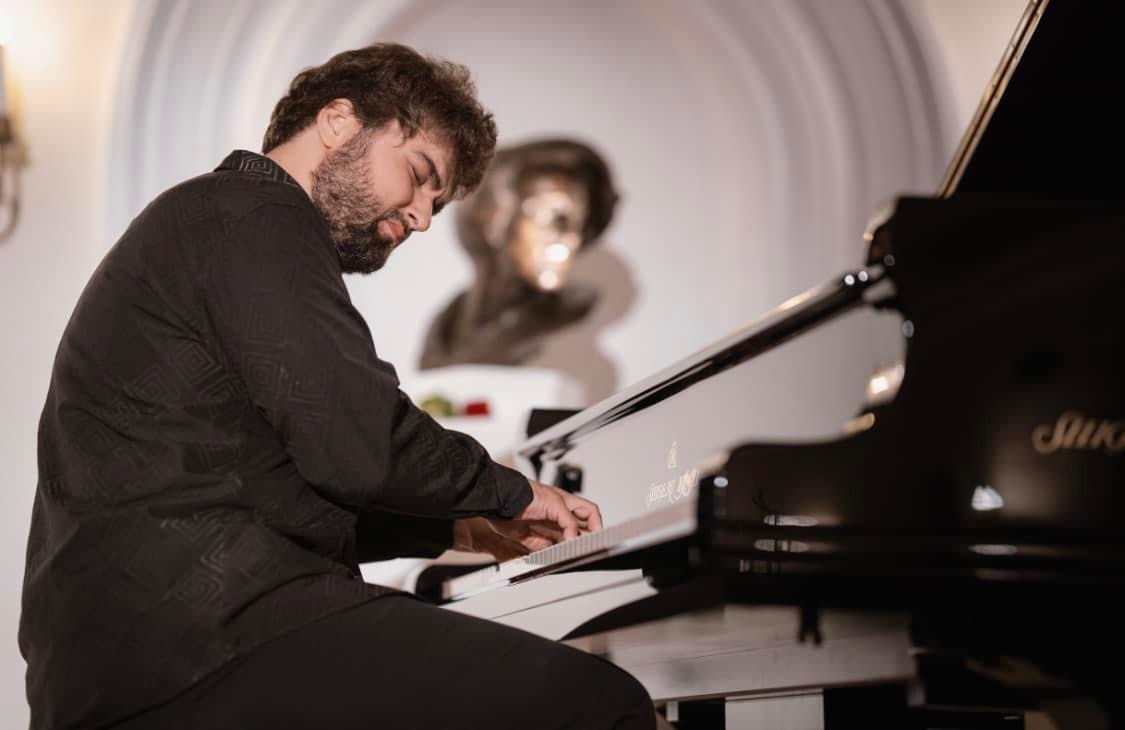
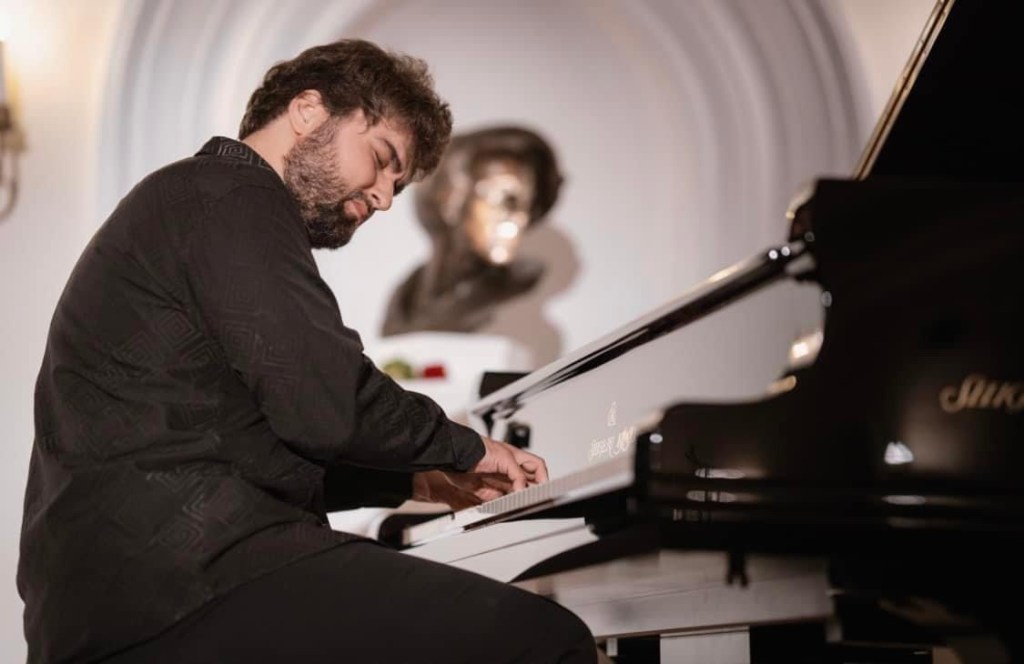
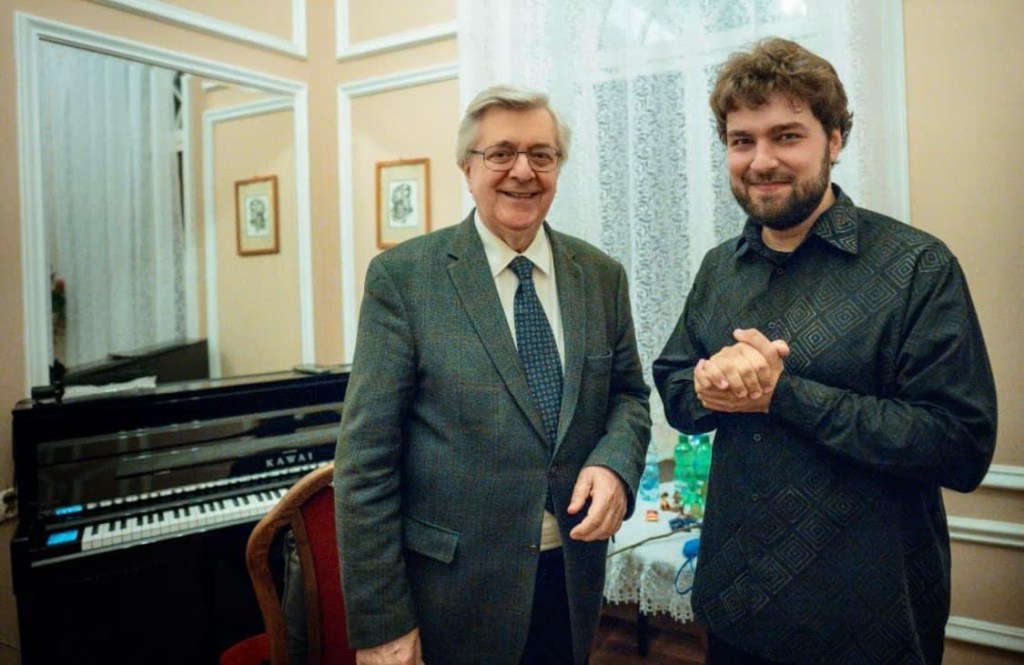
Lukas with Piotr Paleczny
(photo Szymon Karzuch)
Cutting down to essentials, it is two crucial things that happened to me in 2020: my son Tomas was born and Rachmaninov piano sonata no.1 was coped with. The latter you can find in a video link below. Warmest season’s greetings to all!
See you around next year.
https://m.youtube.com/watch?v=wKZW8WjuQeY&t=38m12s&feature=youtu.be
Photocredits: Ira Polyarnaya

Lukas writes:’About a year ago I came across a very rare manuscript of the Rachmaninov’s Sonata no.1 in its first, unabridged version. It had never been publicly performed.
This version of Sonata is not significantly longer (maybe 3 or 4 minutes, still to be checked upon performing), first movement’s form is modified and it is also substantially reworked in terms of textures and voicings, as well as there are few later-to-be-omitted episodes. The fact that this manuscript had to rest unattended for so many years is very perplexing to me. It’s original form is very appealing in it’s authentic full-blooded thickness, the truly Rachmaninovian long compositional breath. I find the very fact of it’s existence worth public attention, let alone it’s musical importance. Pianistic world knows and distinguishes the fact that there are two versions of his Piano Sonata no.2 but to a great mystery there had never been the same with Sonata no.1.’

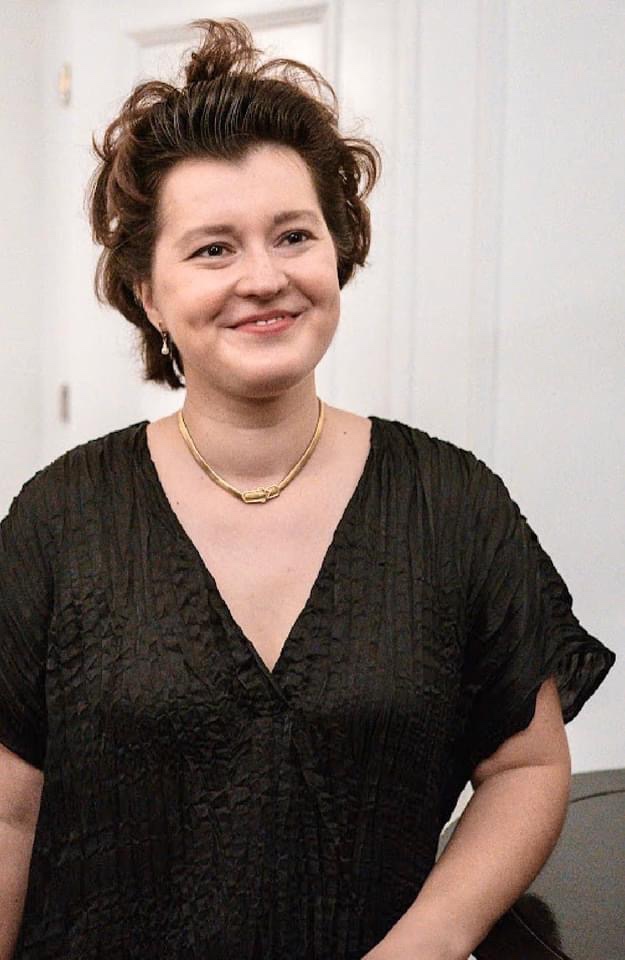
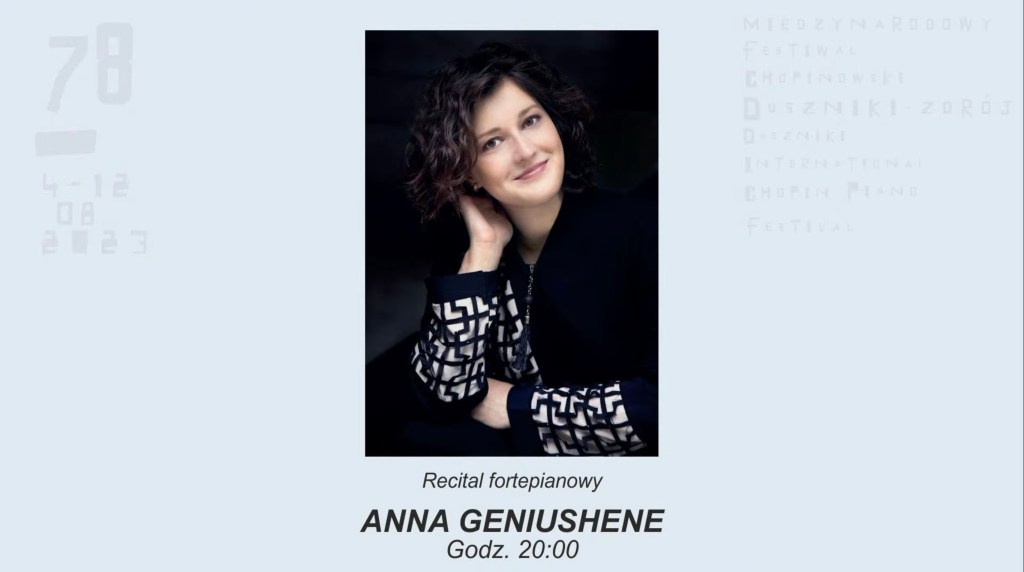
Anna Geniushene takes Duszniki by storm Hats off,Gentlemen,a genius!

photo Szymon Karsuch
https://youtu.be/5agSsd062l4

I have heard Anna play many times over the past years as she had a period of study at the Royal Academy of London and I remember her performance of Prokofiev 8th Sonata both at her graduation recital but also at the Busoni piano competition .

Anna Geniushene at the Royal Academy

‘Anna goes to war’ was the title of the few words of appreciation that I wrote on that occasion.Anna was a big pianist with an arsenal of technical mastery that was earned with years of study at a very early age. There was however a lack of colour and sensitivity to sound that was substituted for by a driving rhythmic energy and enormous sonorities together with an infallible technical command of overpowering authority.

All the fun of the circus.The Busoni Competition

photo Szymon Karzuch

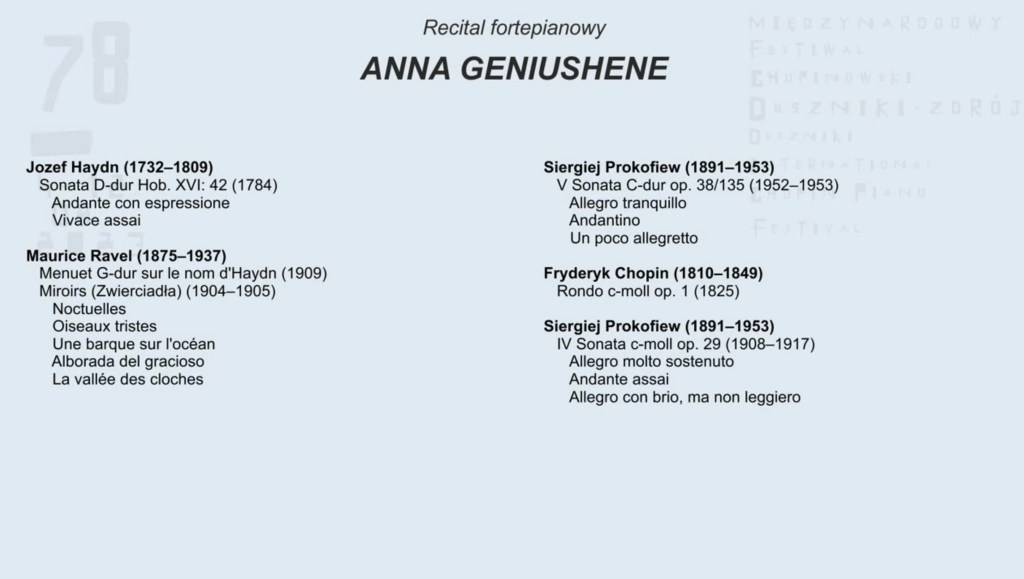
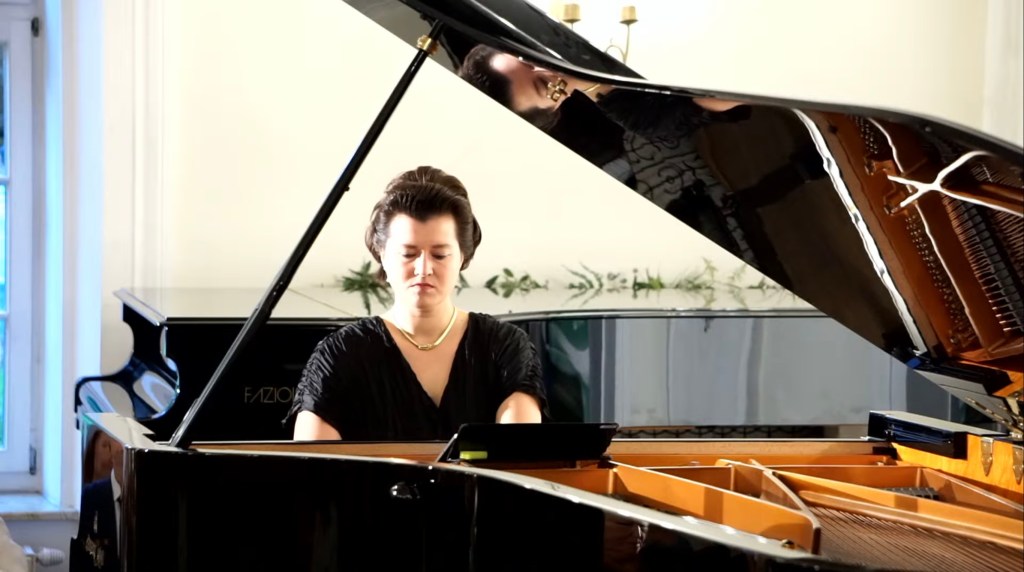
Today Anna is reborn as I heard the same technical command and authority but a sensitivity to sound and colour that was of breathtaking beauty and delicacy. The Haydn sonata was played with infinite grace and charm as streams of sound were played with a teasing and enticing sense of humour.Ravel’s ‘Miroirs’ were just that with sounds of unbelievable subtlety and a kaleidoscope of changing colours.Could these moths have had a more fleeting and glistening flight as they flew over the keyboard with will o’ the wisp lightness and simplicity?Birds of such luminosity and beauty created a truly haunting landscape, as in Anna’s hands these ‘Oiseaux tristes’ were played with desolate purity and innocence.Has an ocean ever sounded so calm and serene only to be caught up in a terrifying tempest out of which a vision of beauty brings back the calm as though this was indeed a prosperous voyage?The hair raising technical hurdles of ‘Alborada’were played with astonishing ease and mastery and the magic atmosphere she created in the Valley of Bells’ was quite ravishing.Already Anna had convinced me that motherhood had opened up another dimension for her playing.Substituting a rather militaristic training for that of an artist aware of all that surrounds her.Adapting and shaping her playing with chameleonic character as she caressed the keys searching for the infinite secrets that lay within.

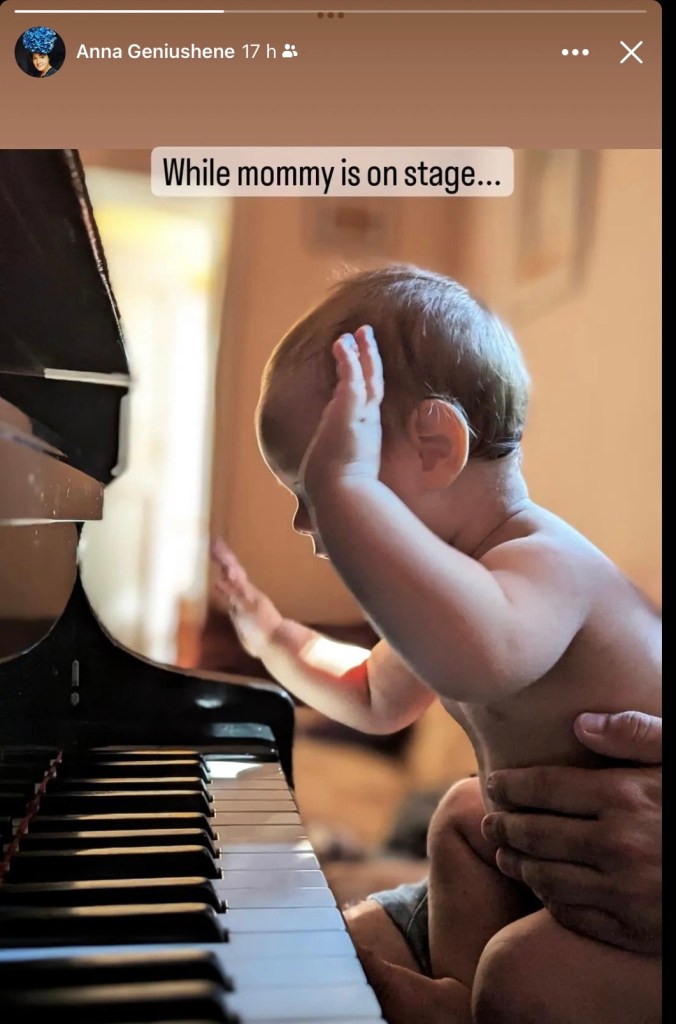
Anna had posted this on social media yesterday!Pity it was not available in Clara Schumann’s time!

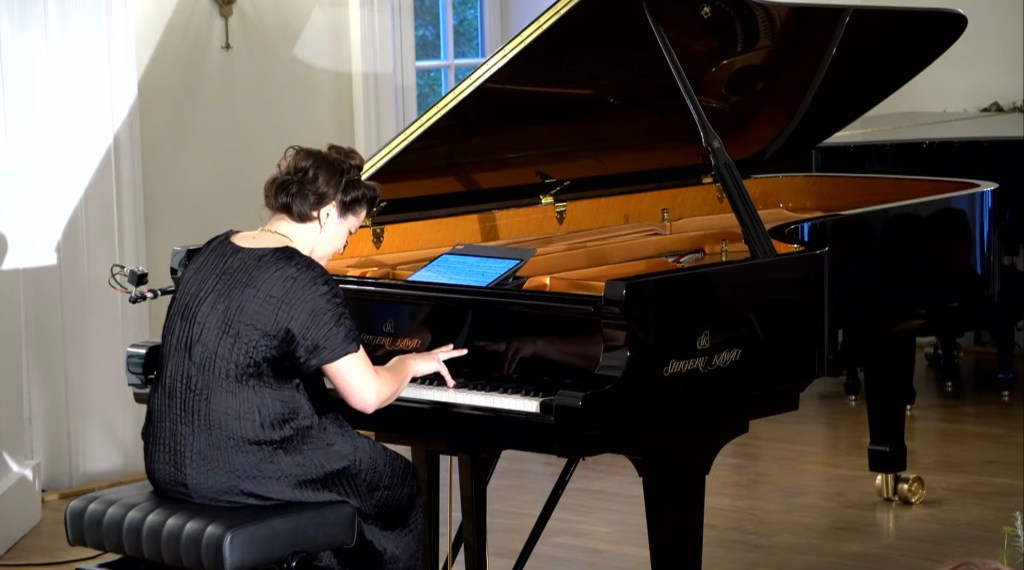
In the first half Anna had understandably had a discreet aide memoire hidden in the piano as she had left not one but two young children in the wings whilst she went on stage.Anna adds ‘Regarding the iPad, I actually used it for literally one line of music during Ravel’s Menuet as I realised there is a huge difference between my score and the Durand edition. I realised it 30 mins before the stage’

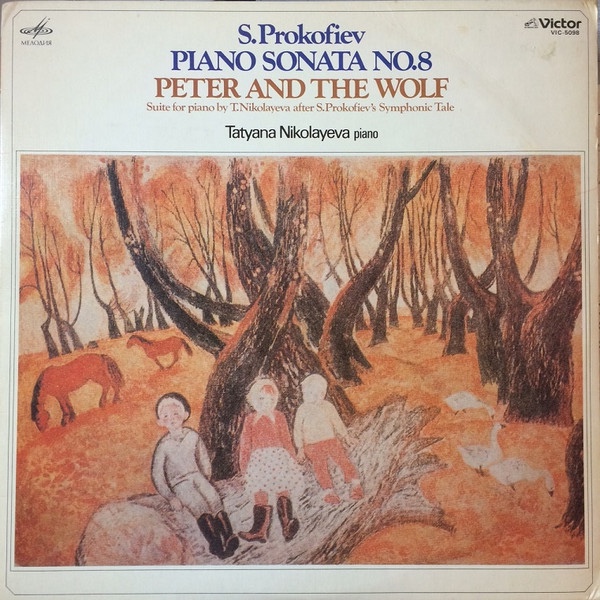
The second half she was on her own as she obviously had decided on an all or nothing approach to Prokofiev’s Fourth and Fifth Sonatas.This was truly an overwhelming experience as she threw herself into the keyboard with the same terrifying passion that so astonished the western world with the advent of Sviatoslav Richter.There are no words to describe such an overwhelming experience of total mastery .There was no minute of doubt or relaxing of tension as Anna was like a person possessed searching for sonorities and colours that most do not know exist.A dynamic drive and a technical mastery that seemed to have no limits. In between these two extraordinary Sonatas she played the Rondo op 1 by Chopin with grace and beguiling charm but with the same authority and command that reminded me in many ways of Tatyana Nikolaeva.Anna has grown in stature not only artistically but also physically and her imposing presence held us all spellbound as we realised that we were in the presence of a musical genius.A Beethoven Bagatelle was played with the same driving energy of a Serkin and the second encore ,that I did not recognise,was played with masterly authority too.Anna writes :

Oh thank you so much!!
Of course: it was Tchaikovsky Scherzo a la Russe op.1!

Sergei Prokofiev’s Piano Sonata No. 4 in C minor, Op. 29, subtitled D’après des vieux cahiers, or After Old Notebooks, was composed in 1917 and premiered on April 17 the next year by the composer himself in Petrograd.The work was dedicated to Prokofiev’s late friend Maximilian Schmidthof, whose suicide in 1913 had shocked and saddened the composer.Whether the restrained, even brooding quality of much of the Fourth Sonata relates in any direct way to Schmidthof’s death is uncertain, but it is certainly striking that the first two movements both start gloomily in the piano’s low register.Poles apart from the high-energy display of its twin, the Fourth Sonata looks inwardly. Its first movement is the most tenebrous movement in all of the Sonatas. Buried deep in the lower third of the keyboard where the close motion and full chords speak with difficulty,

The Piano Sonata No. 5 in C Major, Opus 38, was written at Ettal near Oberammergau in the Bavaian Alps during the composer’s stay there in 1923. He would revise it thirty years later, at the end of his life, but not drastically, as his Opus 135, and it is this version that is usually played. The work is dedicated it to Pierre Souvychinski, a musicologist and friend.All eight of Prokofiev’s other piano sonatas were written in Russia.The revisions to this piece, made in 1952–53 in Russia, are mostly in the last movement.To Nestyev’s description of the music composed in the 1920s
and early 1930s as new and strange, Prokofiev replied, ‘A
good thing too, that means a widening of range’, adding I
benefited from my period abroad for my work in the Soviet
period… it was only by passing through the “philosophical
period” that I was able to develop properly in the following
Prokofiev acknowledged that the Paris musical scene of
the 1920s greatly influenced his writing of that period. With
the Second Symphony of 1924 and the Fifth Piano Sonata,
Prokofiev tried in vain to win the hearts of the Parisians.
Stravinsky dominated the musical climate: Paris is
adamant: Stravinsky, Stravinsky, Stravinsky! No wonder
Prokofiev’s star is setting on that horizon and art circles
speak of him as though he were dead. Prokofiev does not
exude the stench of ripe cheese so dear to the nostrils of
the Paris bourgeois.

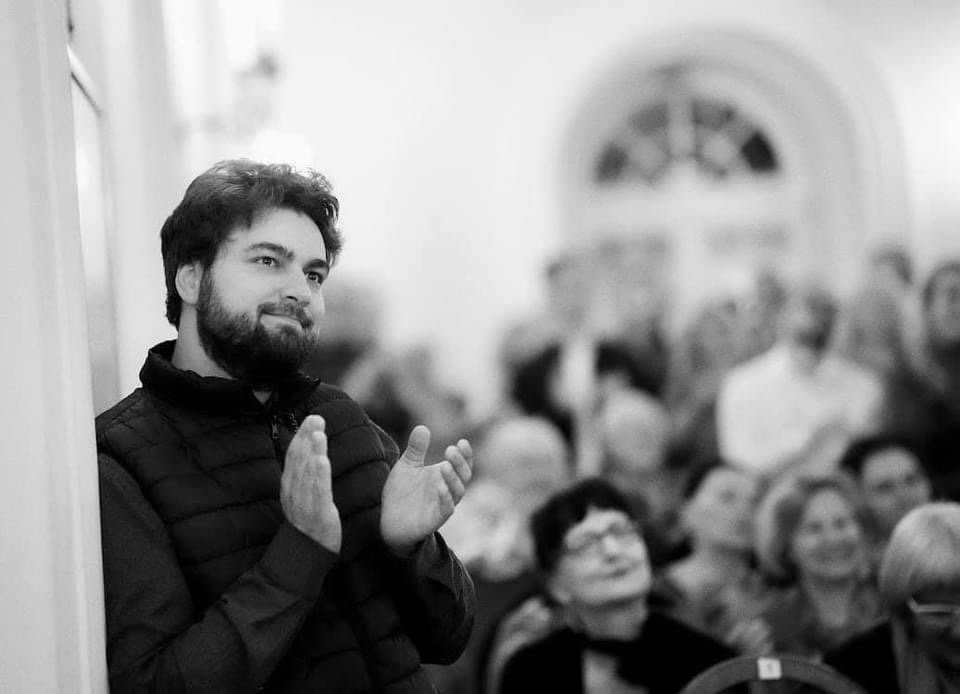
Anna’s husband Lukas applauding his wife https://christopheraxworthymusiccommentary.com/2023/08/11/lukas-geniusas-maturity-and-mastery-in-duszniki/

The Rondo in C minor, Op. 1, is Chopin’s first published work, published in 1825,and dedicated to “Madame de Linde”, the wife of the headmaster of the Lyceum at which Chopin was studying., a family friend with whom Chopin played duets. It was originally published under the title “Adieu à Varsovie” (“Farewell to Warsaw”).Chopin premiered the work at a concert on 10 June 1825 in the auditorium of the Warsaw Conservatory.

Schumann wrote to his teacher Friedrich Wieck of the Rondo in 1832:”Chopin’s first work (I believe firmly that it is his 10th) is in my hands: a lady would say that it was very pretty, very piquant, almost Moschelesque.But I believe you will make Clara study it; for there is plenty of spirit in it and few difficulties. But I humbly venture to assert that there are between this composition and Op. 2 two years and twenty works.”

Miroirs (French for “Mirrors”) is in five-movements written between 1904 and 1905.First performed by Ricardo Vines in 1906, each movement is dedicated to a fellow member of the French avant- Garde artist group Les Apaches.Around 1900, Maurice Ravel joined a group of innovative young artists, poets, critics, and musicians referred to as Les Apaches or “hooligans”, a term coined by Ricardo Vines to refer to his band of “artistic outcasts”.

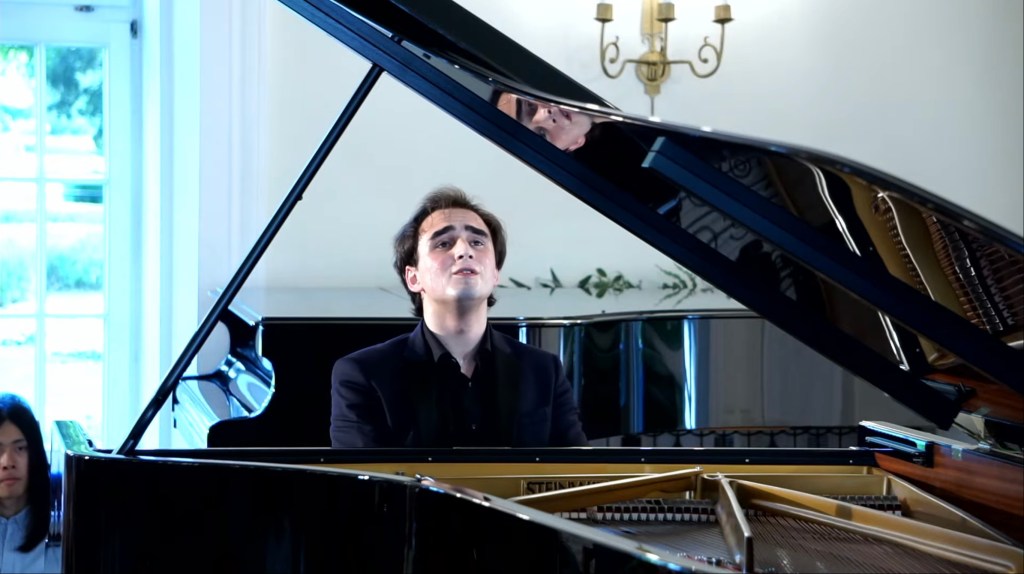
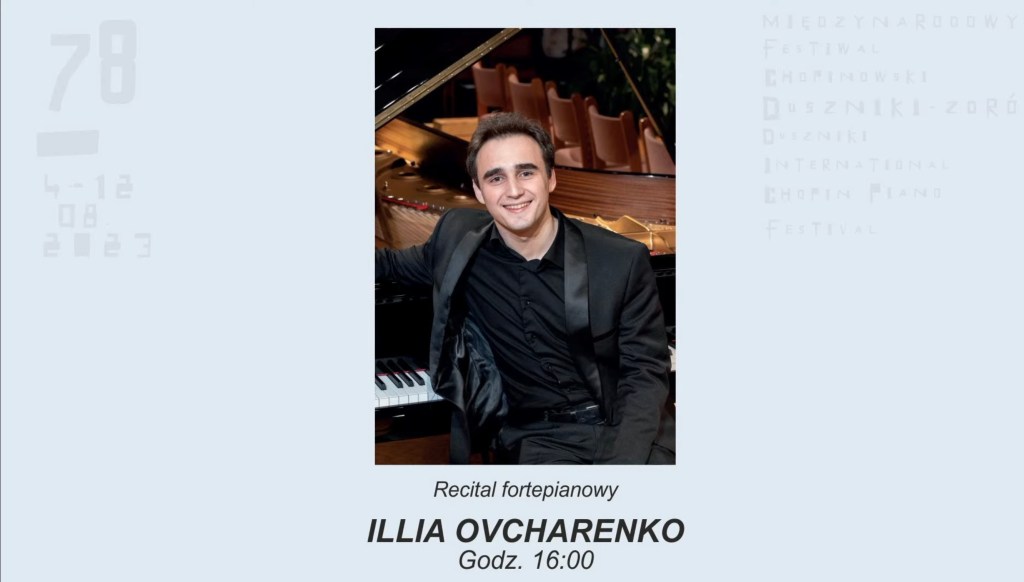
Illia Ovcharenko in Duszniki A great artist with a heart of gold

https://youtu.be/X6w2WfN4yro

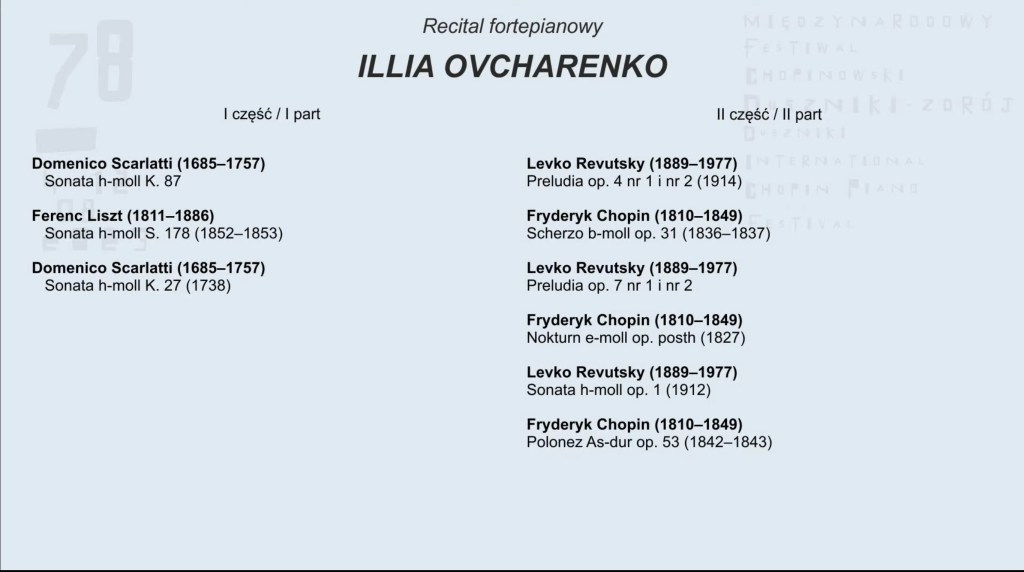
Illia has long been noticed on the competition circuit by very distinguished musicians who have helped this extraordinarily gifted young man reach the maturity that led him to winning the prestigious Honens Competition in Canada last year.A competition that gives three year career guidance and that has seen Illia make his sold out New York debut at Carnegie Hall. His artistry and youthful innocence have been allowed to blossom into the maturity that we heard today in this pianistic oasis that Piotr Paleczny creates every summer in Duszniki .An artist is also known by his programmes that reflect their personality and musical integrity.Arrau would play four great blocks of masterworks but never any crowd pleasing encores.Rubinstein on the other hand would never play a work like Schumann’s ‘Davidsbundler’ in public because he could not end on a contemplative note before the interval.Serkin would play the ‘Hammerklavier’ or ‘Diabelli’ where he and the audience were far too exhausted and exhilarated to expect any more.Illia today presented a fascinating programme of the monumental Liszt Sonata in B minor – the pinnacle of the romantic piano repertoire.It was accompanied before and after by two extraordinarily poignant sonatas also in B minor by Scarlatti.In the second half he chose to share his heart with his homeland and to share it with Chopin whose heart had never really left his.Ending with the hugely significant Polonaise Héroique where nobility and national fervour combine with hope and longing for a just future!A mixture with a rarely heard Ukrainian composer,Revutsky,the teacher of the composer,Silvestrov,who has become an emblem of Ukraine in these days of the barbaric invasion of their homeland.A sonata too by Revutsky in B minor written 60 years after Liszt’s visionary masterpiece.

There was simplicity and sublime beauty from the very first noble outpouring of Bachian fervour in a Scarlatti Sonata that has never sounded so pure and simple as it seemed to pour so naturally and with deeply moving intensity from this young artist’s sensitive hands .The Liszt Sonata received a truly monumental performance of driving rhythmic energy but with grandeur and character.The opening page where Liszt’s detailed indications are so often misunderstood was played with the true understanding that here were the seeds that were to bear fruit in this visionary masterpiece.The opening marcato G’s barely whispered, as at the very end of the Sonata, were followed by a deeply dark brooding downward scale each one played by Illia with a different inflection where the music was allowed to speak so poignantly.Erupting but not too much into the two more rhythmic seeds that together become the key to a sonata that Liszt unravels with such innovative genius.Illia with great maturity had been careful to show us Liszt’s key before allowing his youthful energy and virtuosity full reign.The scene was set and now Illia could astonish and seduce us with playing of mastery and beauty.There was always a sense of architectural line and a sense of balance that never allowed this line to become broken by passion or empty virtuosity.The great opening octaves were given a shape and colour as they led so dramatically to the first ‘Grandioso’ outpouring.The simplicity and beauty of the ‘cantando espressivo’ was even more beautiful for the way that Illia had led us into it.It was a sign of Illia’s musical maturity that he could not be so overcome by the driving forward passion that he could not hold back for a moment before unleashing the full emotional impact.A recitativo that was of startling contrast to the purity of the ‘ritenuto ed appassionato’ that followed .Have the rising upward chords and menacing bass marcato ever struck so much terror as in today’s performance?

It gradually came to a moment of peace out of which flowed the sublime ‘Andante sostenuto’.A paradise of beauty and serenity played with disarming simplicity and aristocratic control.This is the very heart of the work as it builds to the climax with a driving passion that knows no limits.Dying away exhausted as etherial scales just dissolved with a legato of real weight where every ounce of sound was gently squeezed out of each note.The fugato just seemed to creep in almost unnoticed as it built with aristocratic control to an overwhelming orchestral climax .Illia’s care of sound and balance was as truly astonishing as I remember from Gilels many years ago .Who could ever forget Agosti’s unforgettable sound when the musical world flocked to Siena to hear him every year in his studio.Agosti,a prodigy of Busoni a disciple of Liszt knew well that the secret of the piano is a question of balance and control and one must hold back until the crucial moment when all the stops can be opened with overwhelming effect.Illia showed us this today as he brought beauty,intelligence and control to this work but never sacrificing his youthful passion and love of sound.Mind over heart indeed.When you have a real musical soul it can all sound so natural and simple as there is an overall architectural vision and respect for the composers wishes.This was followed by another Scarlatti sonata in the same key that was played with disarming simplicity and crystalline clarity.Searing beauty where Illia’s phrasing and shaping brought calm and poignancy after the ‘Sturm und drang’ of Liszt.

The second half was dedicated to Chopin and Revutsky.Chopin with his B flat minor Scherzo op 31 and Polonaise op 53 that were played with aristocratic poise and scintillating virtuosity.The middle episode of the Scherzo was played with the beauty of desolate sounds of great weight and meaning as they unravelled with simplicity and ‘joie de vivre’ leading to the final exhilarating outpouring of great virtuosity.The Polonaise too started in a quite subdued manner only to build to the tumultuous final climax of grandeur and nobility.Cavalry that proceeded with extraordinary determination and transcendental skill before dissolving into an oasis of peace and the final ‘heroic’ outpouring of national pride and fervour.There was moving simplicity to Chopin’s final nocturne in E minor op 72 n.1 that was played with luminosity and ravishing beauty.

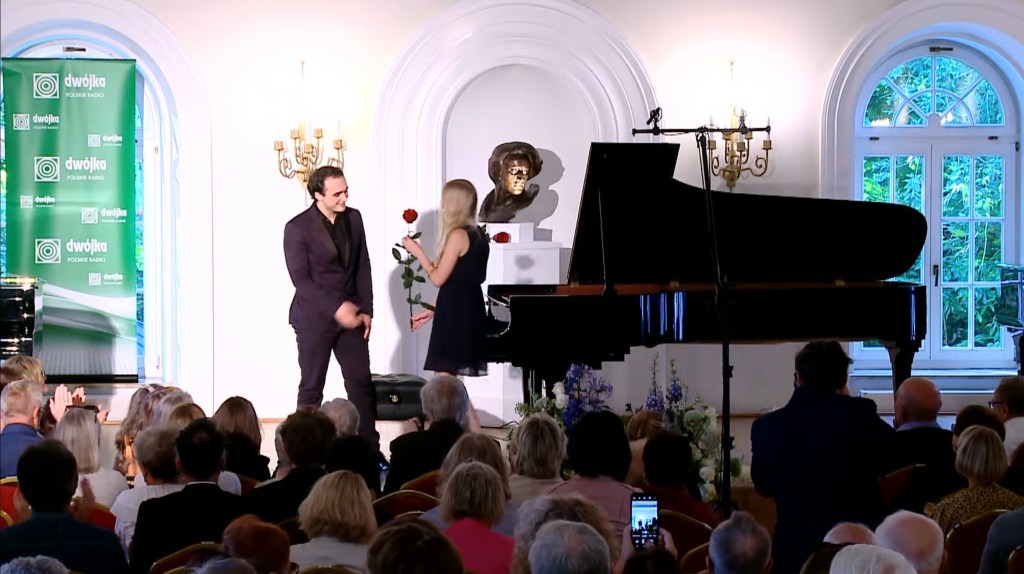
It was interesting to hear the works by Revutsky played with such fervent conviction and transcendental mastery.I could see links with Scriabin,Berg and even Rachmaninov and the Sonata was indeed an impressive tone poem played with passionate conviction by a fellow countryman.It was a just tribute from an artist who like Chopin has a heart that is born deep in the soul of his homeland.A highly charged performance of Chopin’s ‘Ocean’ study was Illia’s way of thanking this wonderfully warm audience that follows these great young artists with such love and admiration year after year.A last word ,by great demand, from the Prelude op 3 n. 4 by Revutsky played with the youthful elan and artistry that had been the hallmark of an exhilarating recital from an artist on the crest of the wave and heading for the heights.

Levko Revutsky 20 February 1889 – 30 March 1977 was a ukrainian composer ,teacher and activist .Amongst his students at the Lysenko Music Institute were the composers Arkady Filippenko and Valentin Silvestrov.The creative legacy of Levko Revutsky is celebrated in his native Ukraine, where his contributions to vocal and orchestral music are considered a crucial part of its musical heritage.Many of his works—including the Symphony No. 2 and Piano Concerto—are considered to be the first mature examples of Ukrainian compositions in various genres. Revutsky also made an important contribution to the development in Ukraine of folk song arrangements; he composed approximately 120 altogether.His piano works include Piano Sonata Allegro in B minor opus 1 (1912) Three Preludes for piano opus 4 (1914) Seven Preludes for piano opus 7 Seven Preludes for piano opus 11 (1924 Two Pieces for piano opus 17 (1929) Piano Concerto in F major (1929) Piano Concerto No. 2 in F major, Op. 18 (1934)

Levko Revutsky

Liszt noted on the sonata’s manuscript that it was completed on 2 February 1853,but he had composed an earlier version by 1849.The Sonata was dedicated to Robert Schumann in return for Schumann’s dedication of his Fantasie in C op 17 (published 1839) to Liszt.A copy of the work arrived at Schumann’s house in May 1854, after he had entered Endenich sanatorium. Pianist and composer Clara Schumann did not perform the Sonata despite her marriage to Robert Schumann as she found it “merely a blind noise”.

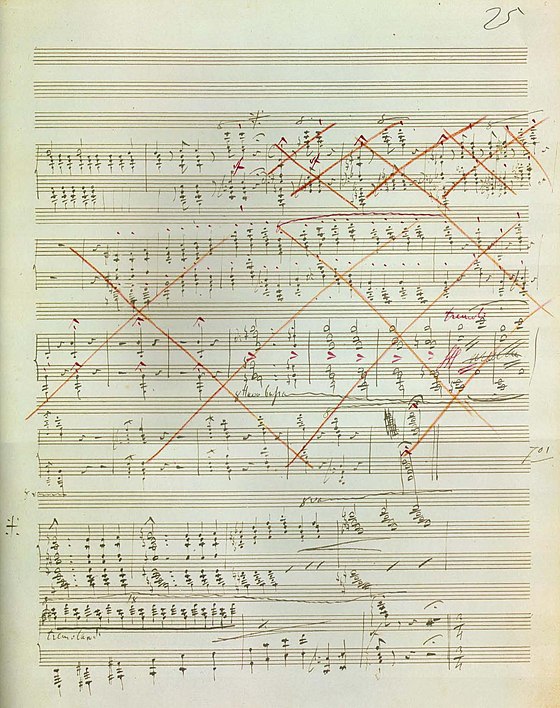
The original loud ending crossed out by Liszt and replaced with the visionary afterthought of a Genius.
photo Szymon Korzuch

Lukas Geniušas Maturity and mastery in Duszniki

photo Szymon Karzuch

Piotr Paleczny surprises us every summer in Duszniki with recitals by some of the most important musical talents of our time who are generously shared with the world by their superb streaming.Michael Moran supplies old style reviews full of historic references and invaluable information.This is indeed an oasis of culture that is fast disappearing in a world where quantity rather than quality is the deciding factor.http://www.michael-moran.com/2023/07/78th-international-chopin-festival-in.html?m=1

And today another surprise with a pianist who has grown in stature since he first appeared on the scene to astonish us in London at the Wigmore Hall with the studies op 10 .He had just won a top prize at the Chopin Competition in Warsaw.A line up of giants indeed where Yulianna Avdeeva ran off with first prize (her application recording having been turned down and then re admitted at the last minute due to the intervention of Fou Ts’ong),Lukas was second,Trifonov was third,Bozhanov fourth,and Dumont fifth https://christopheraxworthymusiccommentary.com/2022/01/21/francois-dumont-remembering-the-genius-of-fou-tsong-at-the-rasumovsky-academy/

Geniušas seems to know how to do everything better than anyone…’Diapason Jan.2019

Russian-Lithuanian pianist Lukas Geniušas has since firmly established himself as one of the most exciting and distinctive artists of his generation.Praised for his ‘brilliance and maturity’ (The Guardian) he is invited to give recitals in the most prestigious venues all over the world A musical pedigree that would be hard to beat .His father is the Lithuanian pianist Petras Geniusas and his mother is professor Xenia Knorre .Lukas’s grandmother is the Russian pianist pianist Vera Gornostayeva.His father,Petras, is a very distinguished Professor at Glasgow Conservatory where he has established a school of playing of great importance.Lukas plays in duo with his wife Anna Geniushene who won the Silver Medal at the Van Cliburn Competition last year (2022.)They have two children and were the first to leave Russia in protest and solidarity with the brutal invasion of the Ukraine.Anna was eight months pregnant when she astonished the public in Texas with playing of sensitivity and mastery.

Both Anna and Lukas have brought a humanity and maturity to their already quite extraordinary training that is bearing fruit with a family of musicians dedicated to honesty and integrity – two words almost obsolete in this world of quantity at any cost!

Chopin studies but this time op 25 where Chopin had indeed covered canons with flowers.An innovative technical mastery from Chopin who more than any other of his time showed us that this box of hammers and strings that were no longer plucked but struck could sing as beautifully as the Bel Canto artists of the day.A use of the pedals that indeed became the ‘soul of the piano’.The first set of studies op 10 whilst being unique are more of the gentle,considerate virtuoso than the poet of the second set.

It was this poetry that Lukas showed us with such simplicity and beauty.There were never any harsh sounds as can be so often associated with a certain type of Russian school but there were startling contrast and an unusual clarity that shone a new light on these twelve much loved jewels.

Op 25 n.5

The opening of the fifth seemed unusually rhythmic until one looks at the score and can see quite clearly Vivace ,leggiero and above all scherzando.This melted in Lukas’s sensitive hands into a moment of pure magic with sounds of ravishing beauty as Chopin writes ‘Più lento’ and ‘leggiero’ and in the bass ,’sostenuto’,with the pedalling marked with the precision of a singer breathing .

Op 25 n.1

The first study too was played with disarming simplicity with the melody sustained by the underlying changing harmonies.Here Chopin again makes a note for the printer to make the melody notes larger than the accompaniment with very precise pedal indications.Of course the modern day piano is much more advanced but the pedal indications give a very good indication of the sound and phrasing that Chopin had in his mind at the moment of creation.Sir Charles Halle in Manchester noted how Chopin played this study where there were no single notes but moving harmonies.We can read in a review of one of Chopin’s concerts in Manchester in the home of the Earl of Falmouth, that was announced in The Times. Being a fashionable event, this performance was covered by The Athenaeum, The Illustrated London News and The London Daily News as well as The Manchester Times 107.

‘When we hear Chopin himself, these difficulties vanish; everything is executed with such absence of effort; and everything sounds so plain and simple, to a cultivated ear, that we cannot imagine where the difficulties lay. In truth, to Chopin they are not difficulties at all, they are the most obvious modes of execution, which have naturally suggested themselves to him in order to give utterance and expression to his characteristic and original modes of his musical thought and feeling. Hence Chopin’s music has a mechanism peculiar to itself: and if this mechanism, reduced to principles, were studied and understood, the peculiar difficulties of his music would vanish.’

Op 25 n.2

The second study in F minor was the one that Rubinstein surprised us with at his last recital in 1976.He was almost blind and could not see out of the corner of his eyes which made ending with the B flat minor Scherzo a dangerous proposition.The master stopped half way through and played this study just to prove that it was only his sight that was failing!He also famously exclaimed in the Green Room afterwards that he may be blind but not too blind to a recognise a beautiful lady when she is standing in front of him.Lauren Bacall was of course charmed as everyone had been in Rubinstein’s long life .Lukas played it with the same clarity and precision that is also so apparent in the autograph score.A simple undulating beauty as smooth as silk just as Rubinstein in his 90th year farewell concert had done.

Op 25 n.4

The third study too was played with a rhythmic clarity and subtle shaping of the melodic line before disappearing in a wisp of smoke and three gentle sumptuous chords.The fourth was brilliantly played,lightweight and a true butterfly but I missed the legato melodic line as a contrast to the marcato that Chopin so clearly defines.

Op 25 transition from 5 to 6

The double thirds study was beautifully played and followed the masterly performance of Kevin Chen the day before.Chopin though clearly marks the fingering for the final descending scales that Lukas decided to play with two hands!

Q.E.D The composer knows best ….or does he ?
A pianistic trick that I have never seen before and makes me wonder how he might approach Beethoven – as a pianist or faithful interpreter!However it was masterly playing and I just wonder looking at the score if Chopin intended the fifth and sixth to be linked by pedal out of which the double thirds emerge ?Beatrice Rana proved that this worked and had me searching the score for the evidence that is not conclusive but very convincing.

Op 25 n. 7
Op 25 n. 7

The beautiful slow seventh study was obviously that which Chopin struggled with as he delved deeply into his soul and found the same aristocratic voice that Lukas found today too.Lukas has a mature personality and not only interprets the composers wishes but adds his own distinctive voice too just as Rubinstein did with aristocratic good taste and fire.The final studies were brilliantly and poetically played with the fleeting continual movement of the eighth and the ‘Butterfly’ lightness of the ninth.

Op 25 n.11

The tenth and eleventh were played with extraordinary fire and architectural shape.The long flowing octave study interlude played with ravishing beauty and legato.How wise he was to note Chopin’s ‘forte’ indication at the beginning of the ‘Ocean’ study.With the magnificent waves of changing harmonies and at the end an indication to play as loud as possible followed by a crescendo to ‘Fortississimo’.The composer always knows best !

Op 25 transition from n.11 to 12
photo Szymon Karzuch

The Rachmaninov first Sonata is gradually appearing on concert programmes more frequently after Kantarow’s illuminating lock down performance streamed live from Paris.It takes a great musician to make sense of a work that even the composer found a challenge to give a coherent form to.Thomas Kelly gave a remarkable performance in London just a few days ago where the miriad of notes were turned into streams of sumptuous sounds. https://christopheraxworthymusiccommentary.com/2023/08/03/thomas-kelly-at-st-jamess-piccadilly-musicianship-and-mastery-mark-the-return-of-a-golden-age-but-of-the-thinking-virtuoso/

Lukas had the same poetic vision too that gave a distinctive shape to what is in effect a tone poem concealed in Sonata clothes!His performance today was just as convincing and had a maturity that allowed him to play with astonishing clarity and a remarkable musicianly shape giving a different but just as convincing vision to the golden sheen of colour that others had added to a seemingly endless flow of notes.Lukas had chosen to play a Shegeru Kwai that with its Bosendorfer richness and sumptuous tone palette gave such significance and meaning to the thirty minutes of early Rachmaninov meanderings.As a curiosity I wonder what is meant by the ‘original’ version?We know about the 1913 and 1931 versions of the Second Sonata and also the Horowitz reduction sanctioned by his close friend the composer.But this first Sonata I was not aware of other versions until today.

A performance that was greeted with a subdued ovation in this hall where Chopin is God.It was a quite remarkable performance from a mature master musician.He offered three short encores from a brief barely whispered page of Scriabin to Prokofiev or Shostakovich that I did not recognise but were certainly from the twentieth century Russian school .

Serghei Rachmaninov

Piano Sonata No. 1 in D minor op 28 was completed in 1908.It is the first of three “Dresden pieces”, along with the symphony n.2 and part of an opera, which were composed in the quiet city of Dresden.It was originally inspired by Goethe’s tragic play Faust,although Rachmaninoff abandoned the idea soon after beginning composition, traces of this influence can still be found.After numerous revisions and substantial cuts made at the advice of his colleagues, he completed it on April 11, 1908. Konstantin Igumnov gave the premiere in Moscow on October 17, 1908. It received a lukewarm response there, and remains one of the least performed of Rachmaninoff’s works.He wrote form Dresden, “We live here like hermits: we see nobody, we know nobody, and we go nowhere. I work a great deal,”but even without distraction he had considerable difficulty in composing his first piano sonata, especially concerning its form.Rachmaninoff enlisted the help of Nikita Morozov , one of his classmates from Anton Arensky’s class back in the Moscow Conservatory, to discuss how the sonata rondo form applied to his sprawling work.Rachmaninov performed in 1907 an early version of the sonata to contemporaries including Medtner.With their input, he shortened the original 45-minute-long piece to around 35 minutes and completed the work on April 11, 1908. Igumnov gave the premiere of the sonata on October 17, 1908, in Moscow,

Lukas with Piotr Paleczny
(photo Szymon Karzuch)

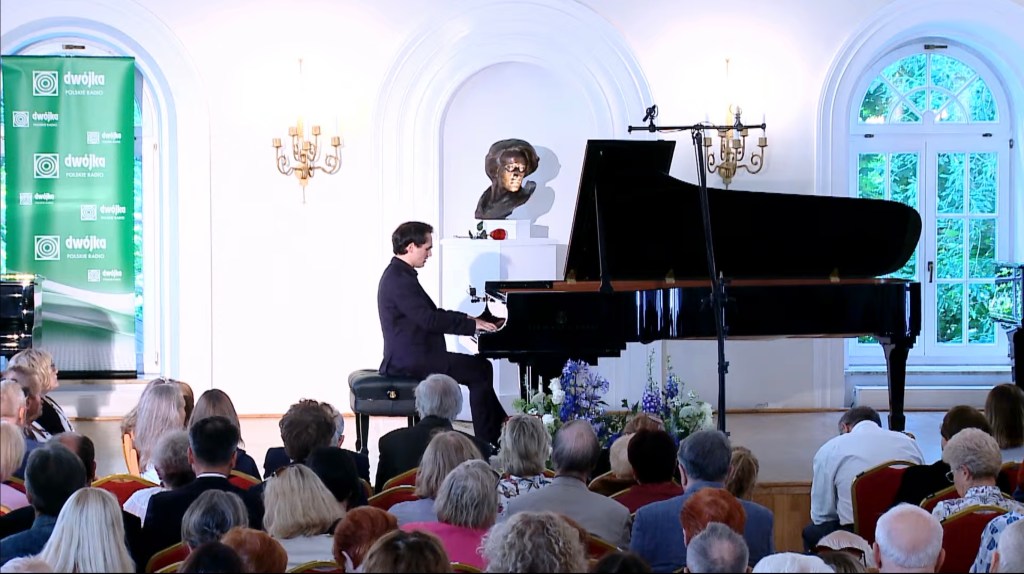
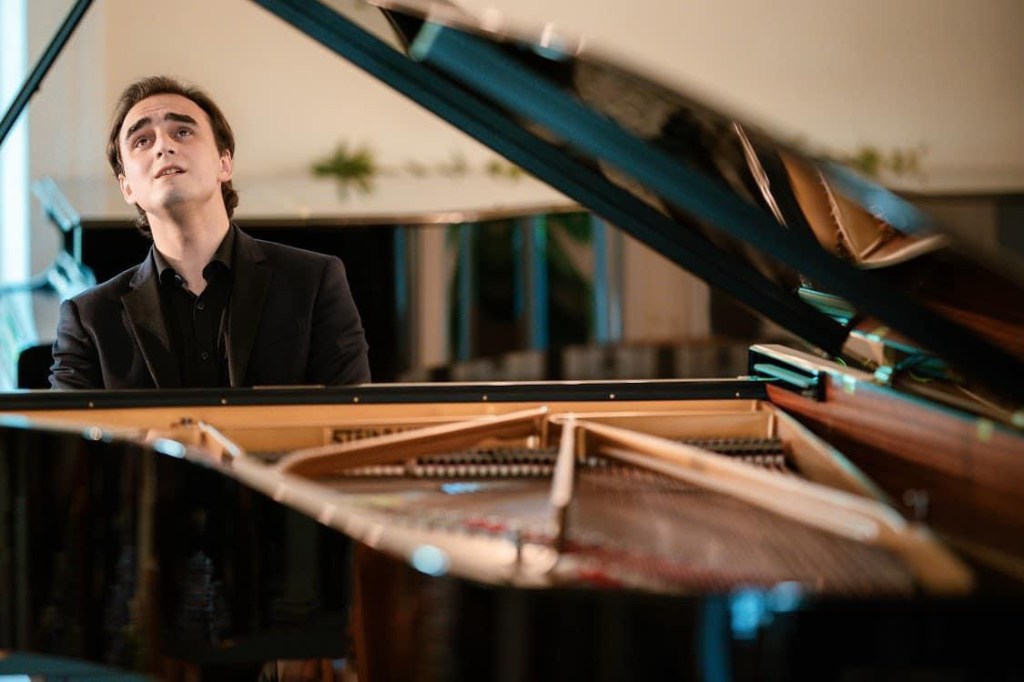
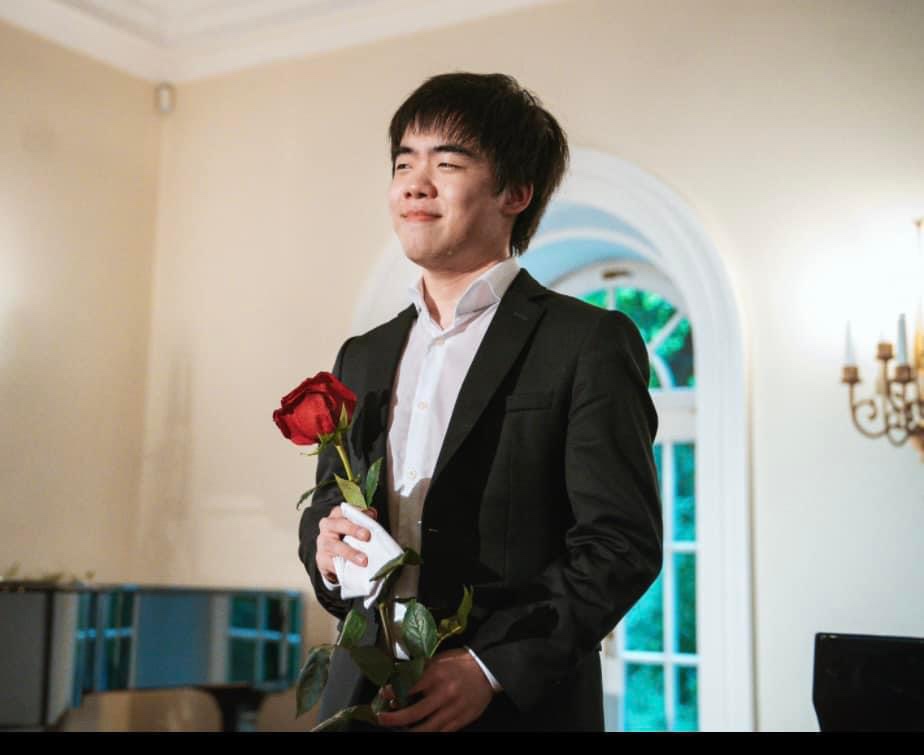
Kevin Chen A gentle giant of humility and genius

Photo by Szymon Korzuch

https://youtube.com/live/NJn2GThijuI?feature=share

Astonishing Kevin Chen in Poland ………….winner of Budapest at 14 Geneva at 17 and Rubinstein at 18 and now we know why …There is a Genius in our midst ….,…….ctd https://youtube.com/live/NJn2GThijuI?feature=share

Prof Piotr Paleczny the first to cheer Kevin Chen in his inimitable series of recitals every year in Poland

Hats of to Prof Piotr Paleczny who has treated us again to such marvels and such wonderful streaming.It was the fourteen year old ‘unknown’ who suddenly appeared in Budapest and astonished the world with playing of mature mastery and superhuman technical polish from a young Canadian pianist from the unknown school of Marilyn Engle.Today having gone on to win the Gold Medals in Geneva and Tel Aviv – the ultimate accolade was to be awarded the Artur Rubinstein Gold Medal at the age of 18.

Kevin Chen with Prof.Paleczny

Janina Fialkowska and Linn Hendry Rothstein both Canadian trained pianists grew up as students together with Marilyn Engle.They both agree that she was the most talented of them all.Janina ready to pursue a political career was unexpectedly taken under the wing of Artur Rubinstein who persuaded her to pursue a career as a pianist .He helped her in the first stages by insisting that wherever he played she should play too.Janina despite health problems has maintained a world wide career and is the true heir to the simplicity and artistry of her mentor.

Masterclass in Canada with Janina Fialkowska

It was interesting to see her passing on her experience and sharing her artistry with Bruce Liu before he won the Chopin Competition and it was refreshing to see with what generosity she shared her time with Kevin Chen recently in masterclasses in Canada.Kevin Chen plays like a young Solomon ( with wisdom,of course,but I mean the inexplicably forgotten great pianist who together with Lipatti were the forerunners of modern piano playing)He plays with extraordinary mature musicianship with honesty and integrity and has a formidable technical preparation that seems to have no limitations.

A programme that recently took La Roque d’Anthéron by storm (https://www.radiofrance.fr/francemusique/podcasts/le-concert-du-soir/le-pianiste-kevin-chen-a-la-roque-d-antheron-dans-un-programme-liszt-wagner-et-chopin-3570009) before arriving at the amazing array of star pianists that Piotr Paleczny surprises us with every summer in Duszniki and that is so generously shared with the world via their superb streaming.Michael Moran supplies old style reviews full of historic references and invaluable information.This is indeed an oasis of culture that is fast disappearing in a world where quantity rather than quality is the deciding factor.http://www.michael-moran.com/2023/07/78th-international-chopin-festival-in.html?m=1

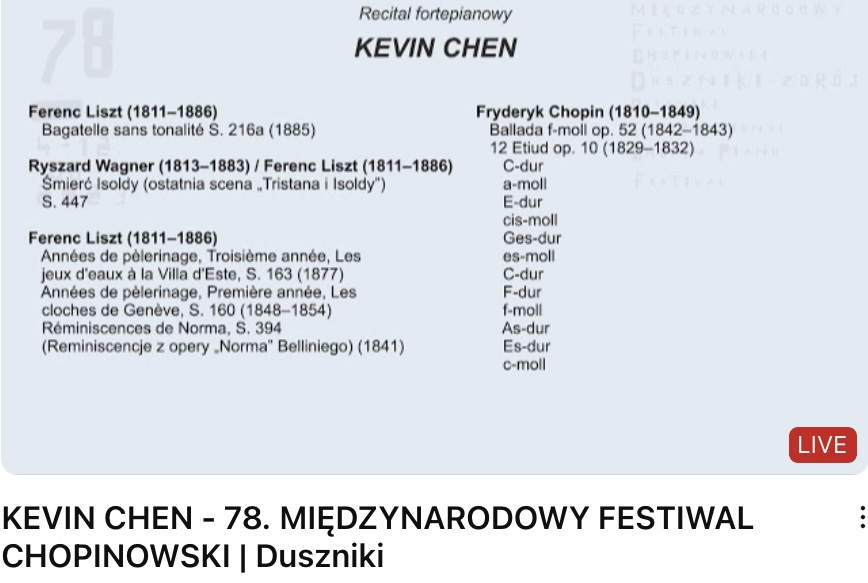
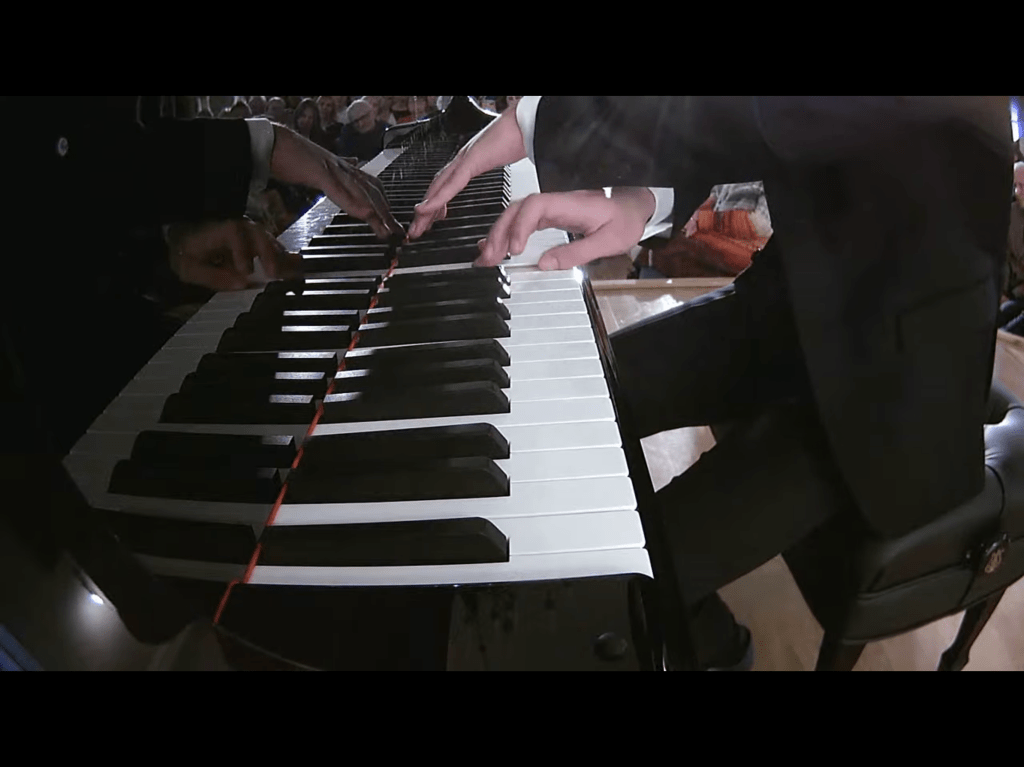
After a recital of unbelievable pianistic and musical perfection in which even Liszt’s old war horse of ‘Norma’ was given a new vibrant life Kevin Chen sat at the piano and ravished us with two song transcriptions by Liszt :”Fruhlingsnacht”and “Widmung”.Delicacy ,beauty and intelligence combined with technical brilliance captured the imagination and and enthusiasm of an audience already astounded by Chopin Studies op.10 that have rarely if never been played with such mastery.As if this was not enough this very young looking young man placed his right hand on the keyboard and allowed the sounds of Chopin’s double thirds study op 25 to reverberate with the perfection of a Rosenthal.But there was much more than just technical perfection Kevin realised that the music was in the left hand (as in that other pianistic tour de force :Liszt’s Feux Follets) and that the right hand notes were just streams of sounds that accompanied the deep pulsating bass melody.An astonishing display of humility where musical values are fundamental,the very raison d’etre and the actual superhuman technical mastery needed is just incidental.No barnstorming or demonstrative virtuosity but a young man who has been raised to put musical meaning and the composers wishes before any other consideration.He will as he matures gain more of his own personality and have a voice like Rubinstein that can be shared with simplicity and artistry and just add to the mature understanding and God given talent that he has been blessed with.

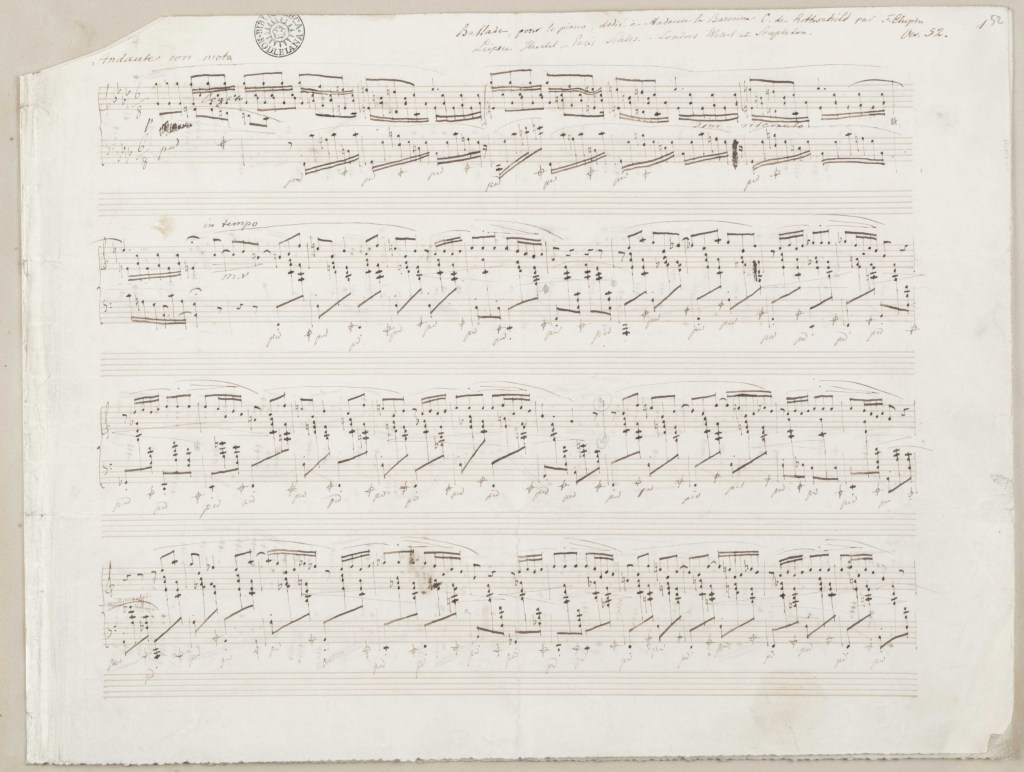
A fourth Ballade where the music just seemed to flow with such naturalness from the beauty of the opening and the following theme and variations that were a continual flow of forward movement to the final passionate outpouring of romantic fervour.

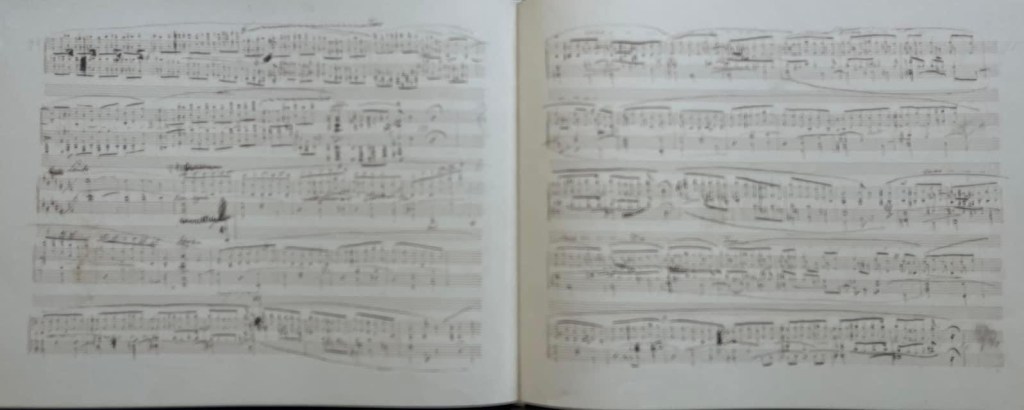
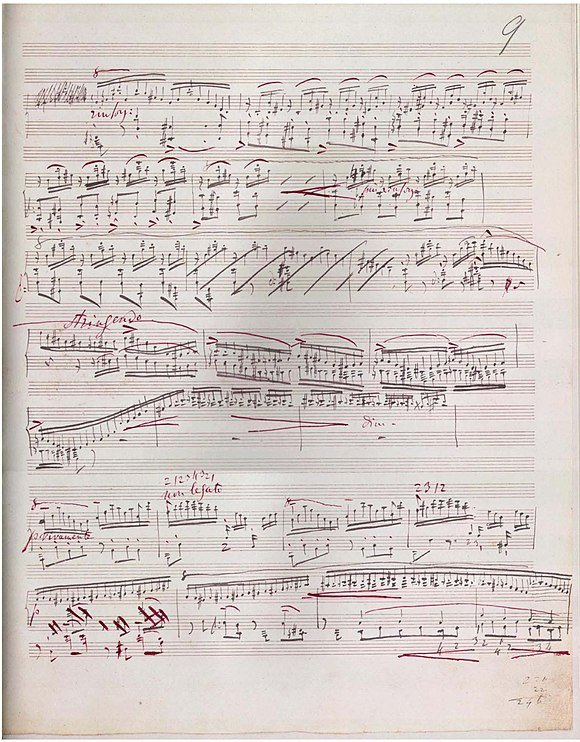
Autograph of the opening of the Fourth Ballade

The five delicate chords and catching of breath before the wave of impending sounds was heralded with a sforzando deep in the bass.A tornado of romantic sounds of transcendental difficulty that in Kevin’s hands became a sculptured wave of undulating movement leading to the final cascade of notes and the nobility of the door being so definitively shut.

Photo Szymon Korsuch

This was just a prelude to the twelve Studies op 10 that were twelve miniature tone poems of breathtaking beauty and brilliance.The transcendental difficulties of the first two just disappeared as the first became a great monument of vibrant sounds from deep in the bass and the second a fleeting wisp of sound as the right hand weaved a web of golden sounds as the bass just quite calmly added the carefree dance rhythm.Astonishing speed and ease we were aware off afterwards as it was the musical message that was so captivating and enticing.The third study and the sixth were both played with aristocratic style and a sense of balance that allowed the melodic line to sing with such luminosity being sustained by the ravishing harmonies that were being woven all around.I have never been aware of the great pealing bells in the third study like a Great Gate and an integral part of this heartrending study that is so often misunderstood and divided into two separate episodes.In Kevin’s hands the genius of Chopin was at last revealed where the composers innovative use of the piano was so apparent as never before.The fourth and famous black key fifth were played with astonishing character and ease – the phenomenal speed and perfection were but a detail to the passionate ending of the fourth or the charm and delight not to mention the cascades of octaves of the fifth.The seventh could almost be called the ‘butterfly’ study such was the gossimer lightness of the repeated notes on which the melodic line was revealed with such subtle artistry.Cascades of notes in the eighth were just the accompaniment to the melodic line in the bass.The same agitated bass that dominated the ninth as the melodic line floated on a current of forward moving sounds.The beauty of the tenth and the eleventh just belied the actual detailed technical indications of the composer.The tenth floated on a wave of harmonious sounds like the treacherously difficult nineteenth Prelude.Art that conceals art but of a difficulty that only Richter up until now seemed to have found the perfect legato for something so technically demanding.The ‘Revolutionary’ study was played with fire and passion where the whispered answering phrases were judged to absolute perfection as we were swept along on a wave of emotion every bit as moving as the Polonaise Héroique.Poland was very much in Chopin’s heart and the sense of yearning never more apparent.

A fascinating opening with four short tone poems by Liszt .A ‘Bagatelle sans tonalité ‘ with its amazing clarity and precision that just seems to obstinately stop in mid air.A ‘Liebestod’ where we were treated to phrasing of subtlety from the etherial to the sumptuous .All played with an orchestral shape and mature understanding of sound but never interfering with the natural youthful passion of which this work above all is a yearning sigh of longing.A fluidity and jeux perlé brilliance of the fountains at the Villa d’Este was played not as a show piece but as a work full of the same colours and sounds that are still to be found on the hills around Rome that Liszt loved so much.’Les Cloches de Genèvre’ must have rung a bell for Kevin who just a year or so ago won the Gold medal in the International Competition there .A work rarely heard in concert but is an outpouring of mellifluous sounds played by Kevin with sumptuous colour revealing his masterly sense of pedalling that Anton Rubinstein always referred to as the ‘soul’ of the piano.

Photo Szymon Korsuch

The Norma Fantasy was at last restored to the great work that it really can be.Beauty of phrasing,masterly sense of balance allied to a technical mastery that was breathtaking. Even the ending where the two themes are so cleverly combined the tempo never slackened as the tension rose to almost boiling point.Giant scales that were a mere wind passing over the keyboard with the melodic line being hinted at from afar. The Thalberg trick of a tenor melodic line in the midst of cascades of notes all around making one believe that there must be more than one pianist involved was played with astonishing ease and a mounting passion that was mesmerising.There were driving rhythms of an ending of astonishing rhythmic energy and precision as octaves were bantered about with enviable ease.

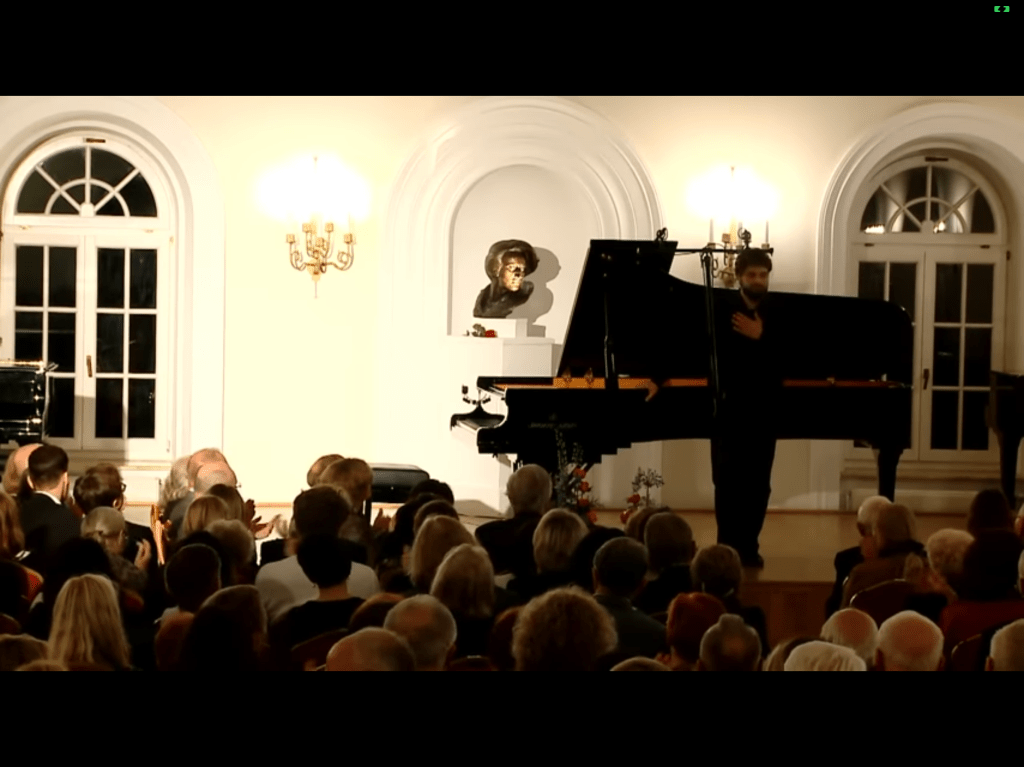
A standing ovation for a master

https://www.radiofrance.fr/francemusique/podcasts/le-concert-du-soir/le-pianiste-kevin-chen-a-la-roque-d-antheron-dans-un-programme-liszt-wagner-et-chopin-3570009

Bagatelle sans tonalité S 216a was written in 1885 a year before his death.The manuscript bears the title “Fourth Mephisto Waltz”and may have been intended to replace the piece now known as the Fourth Mephistopheles Waltz when it appeared Liszt would not be able to finish it; the phrase Bagatelle ohne Tonart actually appears as a subtitle on the front page of the manuscript.Written in waltz form,the Bagatelle remains one of Liszt’s most adventurous experiments in pushing beyond the bounds of tonality, concluding with an upward rush of diminished sevenths.Unlike the Third and Fourth Mephisto Waltzes, the Bagatelle received its premiere within Liszt’s lifetime, by his pupil Hugo Mansfield in Weimar on June 10, 1885.Like the Fourth Mephisto Waltz, however, it was not published until 1955.

The Bells of Geneva is a work taken from the first year of the years of Pilgrimage : Switzerland.A collection that would undoubtedly have as a preface another small collection of three pieces, Apparition (1834). This first Swiss year evokes Liszt’s stay in this country 20 years earlier with Marie d’Agoult.Dedicated to his first daughter Blandine (1835-1862),it is accompanied by a quote from Byron taken from Childe Harold : “I do not live in myself, but I become part of what surrounds me”.

Norma Fantasy :During the 1800s opera had a lot of appeal to audiences. From big dramatic storylines to emotional arias, opera was in its prime during this century. Although opera was perceived to have a glamorous aura, it was actually quite inaccessible for a large part of the public due to price and cultural differences. Therefore it is not surprising that many pianists sought to gain more audiences by composing, arranging and performing their own operatic fantasies. Liszt undertook the challenge of diluting Bellini’s opera Norma into a 15 minute solo piano work in 1841. The work easily equals the dramatic impact of the original opera through Liszt’s dynamic and highly virtuosic writing. No less than seven arias dominate Liszt’s transcription of Norma which are threaded together to create a nearly continuous stream of music.The title role of Norma is often said to be one of the hardest roles for a soprano to sing, and this adds to the drama and intensity of the music. ‘Norma, a priestess facing battle against the Romans, secretly falls in love with a Roman commander, and together they have two illegitimate children. When he falls for another woman, she reveals the children to her people and accepts the penalty of death. The closing scenes and much of the concert fantasy reveal Norma begging her father to take care of the children and her lover admitting he was wrong.”Liszt, arguably the most charismatic virtuoso of all time, was challenged for supremacy by Sigismond Thalberg, a pianist who could apparently not only counter Liszt’s legendary fire and thunder with subtlety but who played as if with three hands. Three hands were heard, two were visible! A confrontation took place in the Salon of Princess Belgioso and although it was diplomatically concluded that ”Liszt was the greatest pianist; Thalberg the only one”, the outcome was inevitable. Liszt continued on his protean and trail-blazing course while Thalberg was consigned to virtual oblivion.

At the midpoint of Franz Liszt’s Les jeux d’eaux à la Villa d’Este (The Fountains of the Villa d’Este), as the music modulates into a radiant D major, the composer places in the score the following inscription from the Gospel According to John: Sed aqua quam ego dabo ei, fiet in eo fons aquae salientis in vitam aeternam (But the water that I shall give him shall become in him a well of water springing up into eternal life).The two great halves of Liszt’s long life (he lived from 1811 to 1886) are synthesized here. His early touring years as perhaps the greatest piano virtuoso of all time are manifested in the brilliant instrumental effects that abound in the music; a true test of any performer’s technical mastery. And his later years of spiritual enlightenment and teaching shine through in the serene ecstasy sustained throughout.While Les jeux d’eaux à la Villa d’Este is the progenitor of all pianistic water-music to come (Ravel and Debussy lay decades ahead), its intent goes beyond the musical depiction of the rilling and leaping of waters in fountains. It offers water as the symbolic focus of profound contemplation.
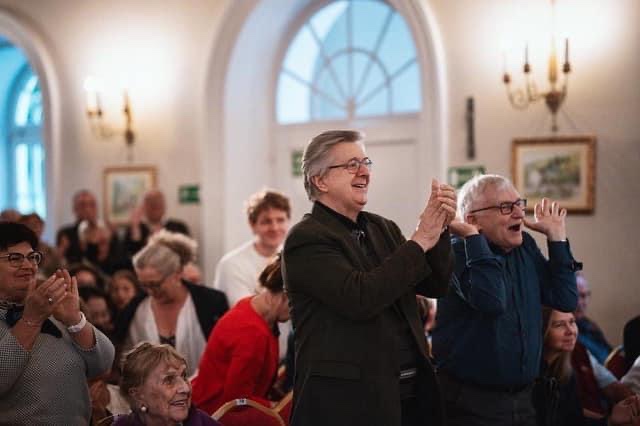
Cutner Solomon

British pianist Solomon was born on August 9, 1902, which is 121 years ago this year. He was an astounding musician and pianist whose brilliant career was tragically cut short by a stroke in 1956, though he would live for over three more decades.As I mentioned in a post about the artist last month, his studio discography gives but a glimpse into the fullness of his repertoire and capabilities. He recorded about an hour of Chopin in the 78rpm era but none in the LP era (though he was due to record the Sonatas when his stroke occurred); he made just a few wonderful Debussy records (among his teachers was the French legend Lazare-Levy) but only on 78s, and these were rarely reissued. His handful of Liszt recordings also demonstrate a fiery temperament and blazing technical capacity at odds with the prevailing perception of him as a more reserved interpreter – which he could be … Like many, his artistry had many facets, only a portion of which is revealed by his sanctioned records.Linked in the comments is my 120th birthday tribute to the artist prepared last year, which features links to a number of my favourite recordings set down of course of roughly a quarter century, from 1929 to 1956. Also included are two radio interviews with Solomon that are very insightful, and a podcast I produced about his 78rpm recordings.I thought I’d also include in the comments a Liszt recording not included in the written feature, his superb December 16, 1932 (somewhat abridged) account of Liszt’s Hungarian Rhapsody No.15. His dazzling fingerwork is even more magnificent when one considers how beautiful his tone is throughout, every note glistening like a diamond: I’ve often said that if someone seems to have great technique because they have impressive dexterity but the sound they produce is not beautiful, then it is not actually integrated technique and merely dexterity. Solomon had it all.And finally, his Hammerklavier, part of what was due to be a recording of the complete Beethoven Sonatas, sadly interrupted by his health crisis. This is by many considered one of the finest accounts of this titanic masterpiece – it certainly is an account worth hearing and revisiting.

Federico Colli at Duszniki Festival-Ravishing beauty,showmanship and authority of a great artist

https://youtu.be/UHdgqAqMdlE

Astounding Federico Colli in Poland …. Winner of Leeds in 2012 now conquering the world with his artistry .
https://youtube.com/live/UHdgqAqMdlE?feature=share
Playing of ravishing beauty I never thought I would hear Prokofiev like that since Rubinstein’s Visions in Carnegie Hall …….beauty and artistry combined with showmanship and charm ….an artist with a wondrous choice of programme ………..A fascinating start with Mozart and the two Fantasies in C minor .A fragment of a violin fantasy only 27 bars long but completed by Stadler which showed immediately the credentials of Federico Colli with delicacy and luminosity and phrases of insinuating subtlety.An almost improvised work of great dynamic contrasts that was the ideal preparation for Mozart’s mighty C minor fantasy that was the introduction to his most Beethovenian of Sonatas,that in C minor.There was a mysterious opening to the fantasy and an almost capricious sense of timing which led to the beauty and freedom of the mellifluous central episode.The Allegro was sometimes erratic with exaggerated fluctuations of tempo but it was always of great effect and brought Mozart’s genial improvised fantasy vividly to life with originality but also faithfulness to the score.After a cadenza of true Beethovenian proportions there followed the Andantino with even more noticeable fluctuations of tempo before the dynamic and brilliant Più Allegro and the mystery of the return of the opening question and answer of such dramatic effect.

The Schubert Fantasy is well known to all those who have ever attempted to play piano duets.The haunting opening melody over a gently lapping accompaniment was played with ravishing sound and a subtle freedom that brought to life this well known opening with a freshness and etherial beauty that made one wonder why Schubert himself had not written it for two hands instead of four.These were indeed magic hands of a sensitivity to sound and colour that I have only heard from Horowitz .It was a wonderful moment of discovery every time the theme returned with ever more poetic beauty.The transcription by Grinberg became rather overpowering at some stages though and began showing its age.Like Busoni like with the same triumphant return at the very end with the opening theme returning in a blaze of Lisztian triumph just as in Busoni’s vision of Bach’s Goldberg Variations.The Scherzo too was more Brahms than Schubert with is rather full harmonic filling and pedal clinging harmonies.The Largo too with its shimmering vibrated chords where Schubert even with four hands was much more simple and less dramatic.The Fugue on the other hand was played with a clarity and simplicity building to a climax with Busoni like octaves in the left hand and great bass notes clouding the simplicity of Schubert’s etherial final vision of paradise.But having commented on the transcription it was worth its weight in gold to hear how Federico with such subtle artistry could turn such a well known and love theme into a wondrous jewel of unforgettable beauty.If a thing of beauty is a joy forever then play on say I.

It was in the ‘Visions Fugitives’ that Federico revealed his true fantasy and kaleidoscopic sense of colour.An ability to create with a minimum of strokes a continuous change of atmosphere and character.From the spacious landscape to the elegance and even quixotic charm of these jewels so rarely heard these days.I have heard Gilels and Richter play them with ravishing effect but it was Rubinstein like Colli today that could make them speak so eloquently and simply.An extraordinary quixotic range of sounds that like a chameleon seemed to change colour before our very eyes.

It was the same sense of character that her brought to Nikolaeva’s Suite from Peter and the Wolf.A short series of pieces all based on the famous theme that was played at the beginning with utmost purity and simplicity only to be embroidered and elaborated with transcendental fantasy and skill .A work worthy of being heard more often in the concert hall.It is much more than a mere transcription but is a paraphrase by a pianist where music just poured from her fingers whether it be the Art of Fugue or Mussorgsky’s Pictures.

A recital in which Federico brought vividly to life everything he played.A supreme stylist playing with intelligence,artistry and an authority that was spellbinding.Even the encores were stimulating and quite a revelation of both beauty and technical mastery.

Mozart autograph score

Mozart’s Adagio for Glass Harmonica was played with a purity and luminosity of sound as he etched the delicate sounds out of the piano with such icy precision.An overblown transcription followed of an equally overblown work by Kreisler who had admitted that the Preludium and Allegro was not by Pugnani but indeed by himself.This Busoni type transcription for piano revealed the enormous technical reserves of a pianist who can devour the keyboard when he chooses to do so.But Federico is above all an artist and a poet as was shown by his heartrending transcription of Handel ‘Lascia ch’io Piango’ offered as a goodnight elixir for an audience by now on their feet wanting ever more.

Visions fugitives, Op 22, is a cycle of twenty miniatures.They were written between 1915 and 1917, individually, many for specific friends of the composer, and premiered by him as a cycle lasting some twenty minutes on April 15, 1918, in Petrograd. In August 1917, Prokofiev played them for Russian poet Konstantin Balmont ,among others, at the home of a mutual friend. Balmont was inspired to compose a sonnet on the spot, called “a magnificent improvisation” by Prokofiev who named the pieces Mimolyotnosti from these lines in Balmont’s poem: “In every fleeting vision I see worlds, Filled with the fickle play of rainbows”. A French-speaking friend at the house, Kira Nikolayevna, immediately provided a French translation for the pieces: Visions fugitives. Prokofiev often performed only a couple of them at a time as encores at the end of his performances.The miniatures are vignette-like, whimsical, effervescent and bright.In 1935 Prokofiev made recordings of ten pieces from the set, and his playing is notable for its wistfulness, subtle shadings and — in places — rhythmic freedom.Rubinstein included ten of them in his historic Carnegie Hall recital series https://youtube.com/watch?v=Gk0jJyUh0T4&feature=share

Fantasia No. 2 in C minor K.396/385f is a fragment of a violin Sonata by Mozart in Vienna in August or September 1782.Its is marked Adagio and consists of 27 bars , the violin part entering at bar 23.Maximilian Stadler later composed a “completion” of the work for solo piano which is 70 bars long and ends in C major ,copy of which in Stadler’s hand contains a dedication to Constanze Mozart Maximilian Johann Karl Dominik Stadler, Abbé Stadler (4 August 1748, in Melk – 8 November 1833, in Vienna ), was an Austrian composer, musicologist and pianist.In 1766 he entered the Benedictine Monastery in Melk Abbe where he served as Benedictine monk, and then Prior from 1784 to 1786. In 1786, he was Abbot of the Monastery of Lilienfeld , and from 1789 in Kremsmunster Monastery.From 1791 he lived in Linz and from 1796 in Vienna, where he settled the estate of Mozart and was in charge of the Imperial Music Archive.Fantasia No. 4 in C minor, K. 475 was composed by Mozart in Vienna on 20 May 1785.published as Opus 11, in December 1785, together with the Sonata in C minor K.457, the only one of Mozart’s piano sonatas to be published together with a work of a different genre.

Caroline Esterházy

The work was dedicated to Caroline Esterházy, with whom Schubert was in (unrequited) love. Schubert died in November 1828. After his death, his friends and family undertook to have a number of his works published. This work is one of those pieces; it was published by Anton Diabelli in March 1829.The basic idea of a fantasia with four connected movements also appears in Schubert’s Wanderer Fantasy, and represents a stylistic bridge between the traditional sonata form sand the essentially free-form tone poem.

Autograph in the Austrian National Library
Maria Grinberg

Maria Grinberg September 6, 1908 – July 14, 197 was born in Odessa. Until the age of 18, Maria took piano lessons from Odessa’s noted teacher David Aisberg. Eventually she became a pupil of Felix Blumenfeld (who also taught Horowitz) and later, after his death, continued her studies with Konstatin Igumnov at the Moscow Conservatory .She became a major figure of the Russian piano school. However, in 1937 both her husband and her father were arrested and executed as “enemies of the people”.She was fired by the state-run management and got a job as an accompanist of an amateur choreography group and later was readmitted as a piano soloist. She became a much-sought-after pianist in Moscow ,and other cities all over the Soviet Union.At the age of 50, after Stalin died, she was finally allowed to travel abroad. In all, Grinberg went on 14 performing tours – 12 times in the Soviet bloc countries and twice in the Netherlands where she became a nationally acclaimed figure. Critics compared her performances with those of Horowitz ,Rubinstein and Haskil.She died on July 14, 1978, in Tallinn Estonia , ten weeks before her seventieth birthday. The Gnessin Institute’s director, chorus master Vladimir Minin (who a year before had forced Grinberg to resign from her teaching position), refused to hold a memorial ceremony on the Institute’s premises, and it was only thanks to the efforts of Deputy Minister of Culture Kukharsky, the great pianist was given her last honor in a proper way.

Tatyana Nikolaeva with Ileana Ghione

Tatyana Petrovna Nikolayeva May 4, 1924 – November 22, 1993 was was born in Bezhitsa, in the Bryansk district, on May 4, 1924. Her mother was a professional pianist and studied at the Moscow Conservatory under the renowned pedagogue Alexander Goldenweiser, and her father was an amateur violinist and cellist. When in Leipzig the International Johann Sebastian Bach Competition was founded to mark the bicentenary of Bach’s death in 1750, Nikolayeva won first prize in 1950; as a member of the jury, Dmitri Shostakovich he composed and dedicated the 24 Preludes and Fugues, Op.87, to her: it remained an important part of her piano repertoire.She sat as a jury member on international competitions such as the International Tchaikovsky Competition and the Leeds Piano Competition. She recorded her own transcription of Sergei Prokofiev’s Peter and the Wolf. Nikolayeva was the teacher of Nikolai Lugansky; shortly before her death, she declared him “The Next One” in the line of great Russian pianists. Among her other students was András Schiff, whom she taught in summer courses at the Hochschule für Musik Franz Liszt, Weimar. She died on November 22, 1993 in San Francisco after succumbing to a brain haemorrhage during a performance of one of the Op.87 fugues at the Herbst Theatre.

Federico Colli in Poland

Thomas Kelly at St James’s Piccadilly musicianship and mastery mark the return of a Golden Age but of the thinking virtuoso.

Photo by James Keates
https://youtube.com/live/gQPt4QxHd4s?feature=share

Some extraordinary piano playing from Thomas Kelly at St James’s Piccadilly.Rachmaninov is certainly being celebrated regally today.Thomas Kelly this lunchtime at St James’s ,Yuga Wang this evening at the Proms and the 13th year old Taige Wang this night with the Cleveland Symphony Orchestra in the USA.(https://vimeo.com/event/3598732/embed/5837f34ae2 )

Yuga and Taige both playing Rhapsody on a theme of Paganini which is the very theme that Thomas chose to close his recital with in the version by Liszt that is his 6th of his Paganini studies.Thomas gave an astonishing display of technical wizardry where technical difficulties just disappeared in a display of a kaleidoscope of colour and fantasy as though Thomas was improvising as the Master himself must have done.

Stimulated and completely refreshed by a phenomenal performance of Rachmaninov’s elusive First Sonata he still had the energy to amaze,seduce and ravish the senses whilst astonishing us mortals with a display of piano playing that was as natural as water flowing in a stream.I was astonished by Benjamin Grosvenor’s recital at the Albert Hall a few weeks ago but was even more astounded by the performance today from a magician who could turn a Fazioli piano into casket of jewels of such subtle insinuating colours.Benjamin Grosvenor,Stephen Hough and Thomas Kelly all have the same thing in common which is an undying love of the sounds that can be conjured out of the piano.

The Golden Age of piano playing was justly questioned by a very learned colleague when I mentioned it in my review of Grosvenor’s concert .https://christopheraxworthymusiccommentary.com/2023/07/18/benjamin-grosvenor-at-the-proms-the-reincarnation-of-the-golden-age-of-piano-playing/

Quite rightly he pointed out that the level of piano playing has never been so high these days so why always look backwards?Pianists think nothing of playing with ease Brahms 2,Rach 3 or Prokofiev 3 that in my day was a rarity and it was only with the arrival of the Russians who showed us what real piano playing was all about.But let us not forget Uncle Tobbs the mentor of Dame Myra Hess and Dame Moura Lympany with the Matthay Method where every note had a hundred gradations of sound in it depending on how it was hit,stroked or caressed.But the English school did not seem to have the phenomenal digital mastery as the pianists from Odessa who had been trained from the cradle to acquire fingers of steel whilst never loosing the relaxed natural position of rubbery wrists and arms.We are not built to sit in front of a box of hammers and strings and to let our fingers run up and down the keys for hours on end , so any natural movement allied to the shape of the music on the page leads to a more well oiled way of playing.Volodos of course is the prime example these days of beauty of sound allied to beauty of movement.The pianists of the Golden Age were able to charm and seduce,astonish and ravish but were not always respectful of the composers wishes thinking that it was the sentiment behind the notes that was more important rather than the actual notation so carefully written on the page.Beethoven of course is the prime example of a composer,even when deaf,who could write with minute attention exactly how he wanted the music to sound.

We live in an age now thanks to the advent of masters like Schnabel,Serkin,Pollini Brendel or Perahia to mention just a few where the composers intentions are of fundamental importance and it is only here than an interpretation can begin with honesty and integrity.But there has been also a school where this attention to the score has produced a very monocrome type of playing where colour,fantasy and beguiling insinuating sounds have not been part of the pianists palette.

With the arrival of our magnificent three a new era is opening up where the Golden Age has returned but with the integrity and honesty of the most intellectually informed musicians.

This was obvious from the way Thomas played the two opening Scarlatti Sonatas.With great respect for the style but as Horowitz had shown us a few years ago with a kaleidoscope of colours .It was imbued with a ravishing sense of colour but also a classical discipline that never faltered as the music was played with driving vitality and grace.Tom even opened up another stop towards the end of the B minor Sonata where deep bass notes shone down on the precedings with the scintillating effect of a prism.There was purity and clarity in the Sonata in D with astonishing repeated notes shaped with tantalising ease and a digital delight of a jeux perlé that was indeed of another era.A supremely stylish performance of insinuating harmonies and colours.

This was just the gate to Pandora’s box where the dark questioning of the opening of Rachmaninov’s First Sonata was whispered with frightening burning intensity and foreboding before an explosion of notes that were in Tom’s hands but streams of sound.It was like sitting on a cauldron of a boiling mass of sound ready to explode or dissolve into throbbing ecstasy or triumphant glory.A vision of a distant marvellous land was floated into thin air as if on a magic carpet and was to be the link between the movements that for Rachmaninov had been such a problem .But Tom today had seen with such clarity the architectural shape to a work that even for the composer was elusive.Tom ,like recently Kantarow,has a vision and passionate conviction of the meaning of this work that is captivating and enthralling and has at last placed it on a pinnacle with the much more accessible and vastly overplayed Second Sonata.There was even a magic link, a mere wisp of sound that linked the first movement to the second .Rachmaninov floating with insinuating nostalgia strands of melody of luminosity and ravishing beauty.The Allegro molto was a maze of sumptuous sounds contrasted with episodes of clarity and rhythmic energy of driving passion .Amazing virtuosity that was scintillating and exhilarating as in the distance appeared the magic land from afar that we had overheard in the first movement.The whole sonata was played with incredible musicianly understanding allied to the sheer joy of creating the sounds of a truly grand piano.The Golden Age has returned but on a rock of dedicated musicianship of integrity and honesty .

Photo by James Keates


Thomas Kelly was born on 5th of November 1998. He started playing the piano aged 3, and in 2006 became Kent Junior Pianist of the Year and attained ABRSM Grade 8 with Distinction. Aged 9, Thomas performed Mozart Concerto No. 24 in the Marlowe Theatre with the Kent Concert Orchestra. After moving to Cheshire, he regularly played in festivals, winning prizes including in the Birmingham Music Festival, 3rd prize in Young Pianist of The North 2012, and 1st prize in WACIDOM 2014.
Since 2015, Thomas has been studying with Andrew Ball, initially at the Purcell School of Music and now at the Royal College of Music. Thomas has also gained inspiration from lessons and masterclasses withmusicians such as Vanessa Latarche, William Fong, Ian Jones, Valentina Berman, Wei-Yi Yang, Boris Berman, Paul Lewis, Mikhail Voskresensky, Dina Yoffe. Thomas will begin studying Masters at the Royal College of Music in 2021, sharing with Professors Andrew Ball and Dmitri Alexeev.
Thomas has won 1st prizes including Pianale International Piano Competition 2017, Kharkiv Assemblies 2018, at Lucca Virtuoso e Bel Canto festival 2018, RCM Joan Chissell Schumann competition 2019, Kendall Taylor Beethoven competition 2019, BPSE Intercollegiate Beethoven competition 2019 and the 4th Theodor Leschetizky competition 2020.
He has performed in a variety of venues, including the Wigmore Hall, the Cadogan Hall, Holy Trinity Sloane Square, St James’ Piccadilly, Oxford Town Hall, St Mary’s Perivale, St Paul’s Bedford, the Poole Lighthouse Arts Centre, the Stoller Hall, at Paris Conservatoire, the StreingreaberHaus in Bayreuth, the Teatro Del Sale in Florence, North Norfolk Music Festival and in Vilnius and Palanga. Since the pandemic restrictions in 2020, Thomas’ artistic activities include participating in all 3 seasons of the “Echo Chamber” an online concert series curated by Noah Max, and releasing 3 singles under the Ulysses Arts label on digital platforms.
Thomas is a C. Bechstein Scholar supported by the Kendall-Taylor award. He is being generously supported by the Keyboard Charitable Trust since 2020, and Talent Unlimited since 2021.
Presented in association with Talent Unlimited

Thomas Kelly at St Mary’s a programme fit for a Prince

Piano Sonata No. 1 in D minor op 28 was completed in 1908.It is the first of three “Dresden pieces”, along with the symphony n.2 and part of an opera, which were composed in the quiet city of Dresden.It was originally inspired by Goethe’s tragic play Faust,although Rachmaninoff abandoned the idea soon after beginning composition, traces of this influence can still be found.After numerous revisions and substantial cuts made at the advice of his colleagues, he completed it on April 11, 1908. Konstantin Igumnov gave the premiere in Moscow on October 17, 1908. It received a lukewarm response there, and remains one of the least performed of Rachmaninoff’s works.H e wrote form Dresden, “We live here like hermits: we see nobody, we know nobody, and we go nowhere. I work a great deal,”but even without distraction he had considerable difficulty in composing his first piano sonata, especially concerning its form.Rachmaninoff enlisted the help of Nikita Morozov , one of his classmates from Anton Arensky’s class back in the Moscow Conservatory, to discuss how the sonata rondo form applied to his sprawling work.Rachmaninov performed in 1907 an early version of the sonata to contemporaries including Medtner.With their input, he shortened the original 45-minute-long piece to around 35 minutes and completed the work on April 11, 1908. Igumnov gave the premiere of the sonata on October 17, 1908, in Moscow,

A very enthusiastic audience at St James’s Piccadilly
Yisha Xue a mentor of Tom who we have to thank for todays incredible performance
Canan Maxton ,Lisa Peacock,Yisha Xue- Tom’s three untiring mentors who have helped him arrive at the pinnacle of his pianistic powers that we heard today
The entire team
The magnificence that is St James’s Piccadilly a stones throw from Piccadilly Circus.