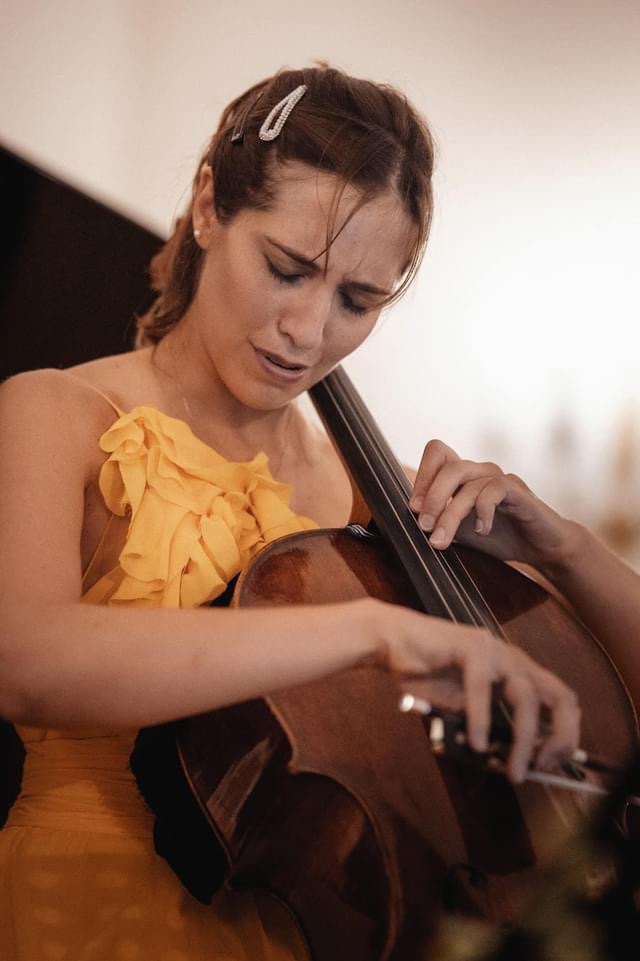
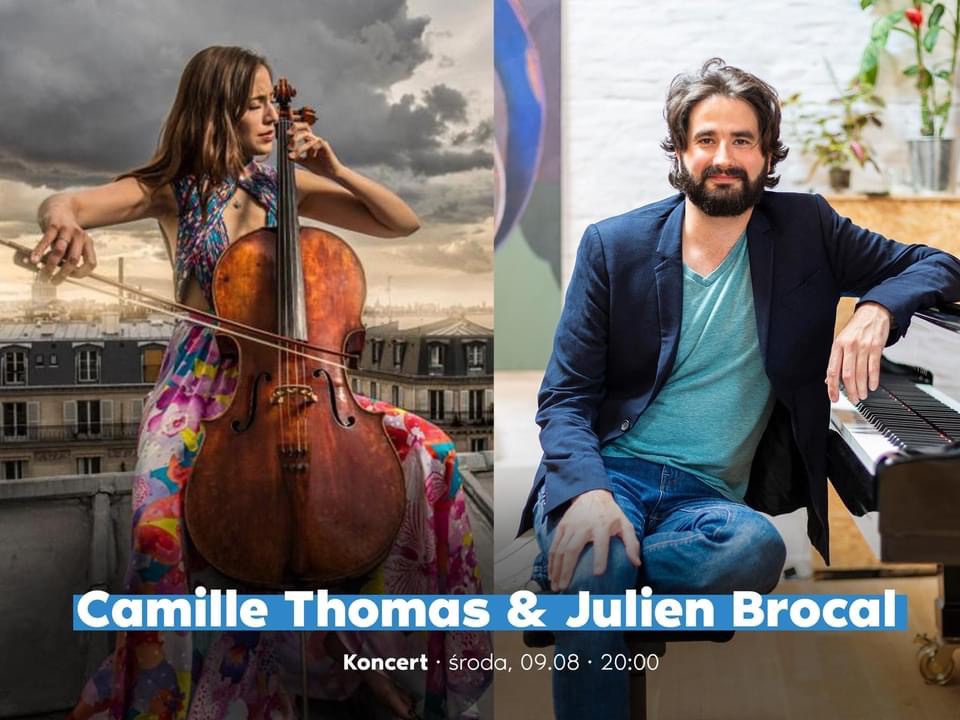
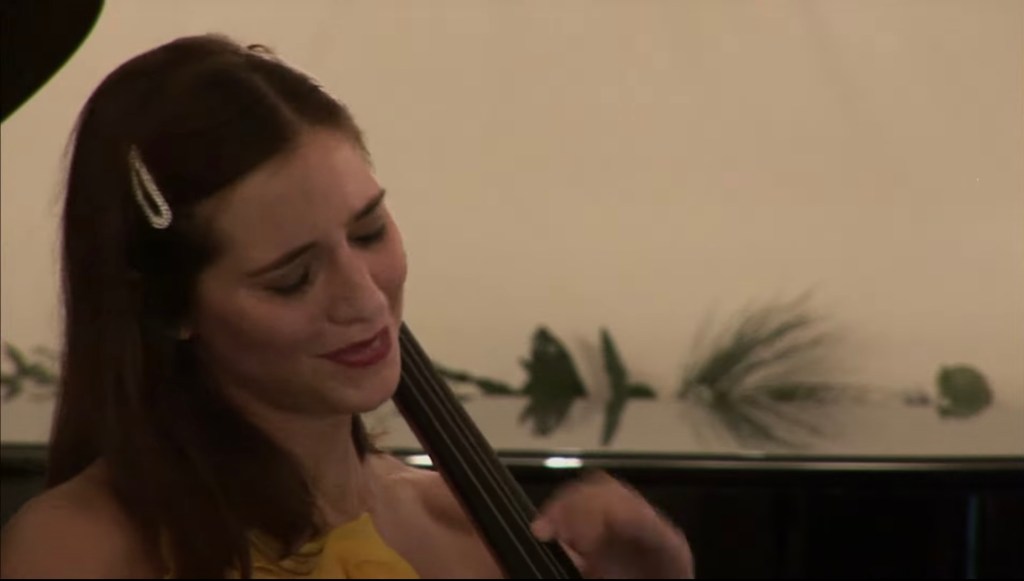
Camille THOMAS – Cello
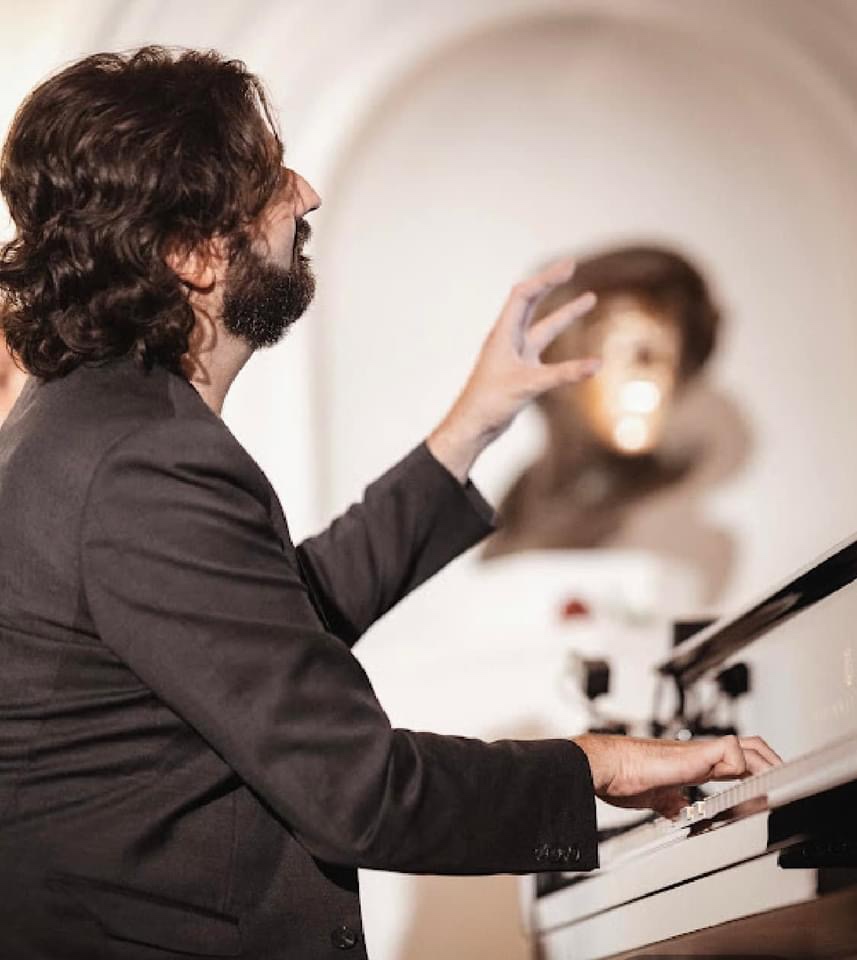
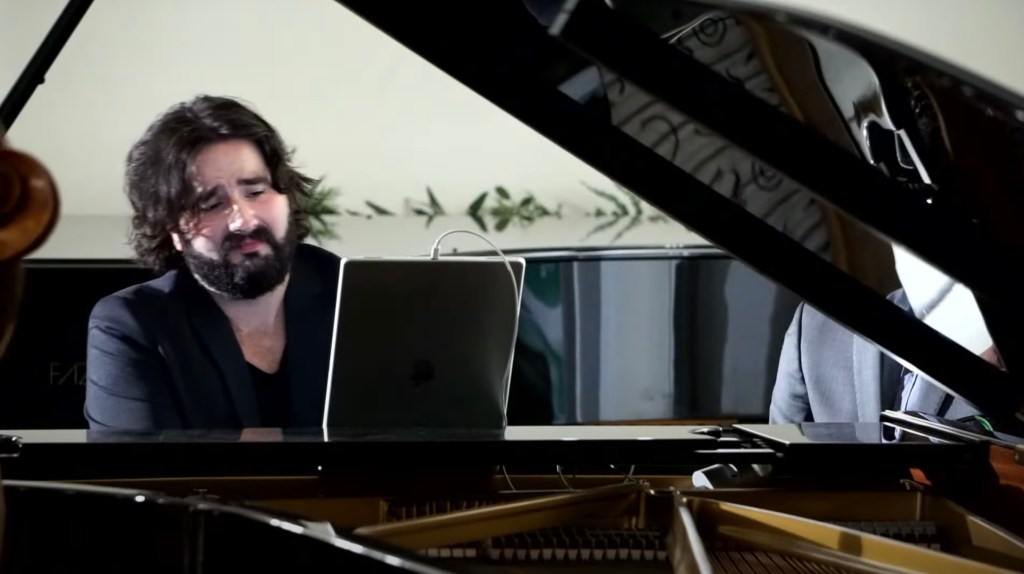
Julien BROCAL – piano
👏👏👏👏
Unusual chamber recital !
In “Chopin Palace” – in a place blessed with Fryderyk’s recitals, the cellist Antonio Stradivari played. A cello whose sound was listened to by Fryderyk Chopin a few days before his death – in October 1849.
Then, at Chopin’s request, the Largo from Sonata g-moll op. 65 was played for Fryderyk by his friend, cellist and former owner of this instrument Auguste Franchomme.
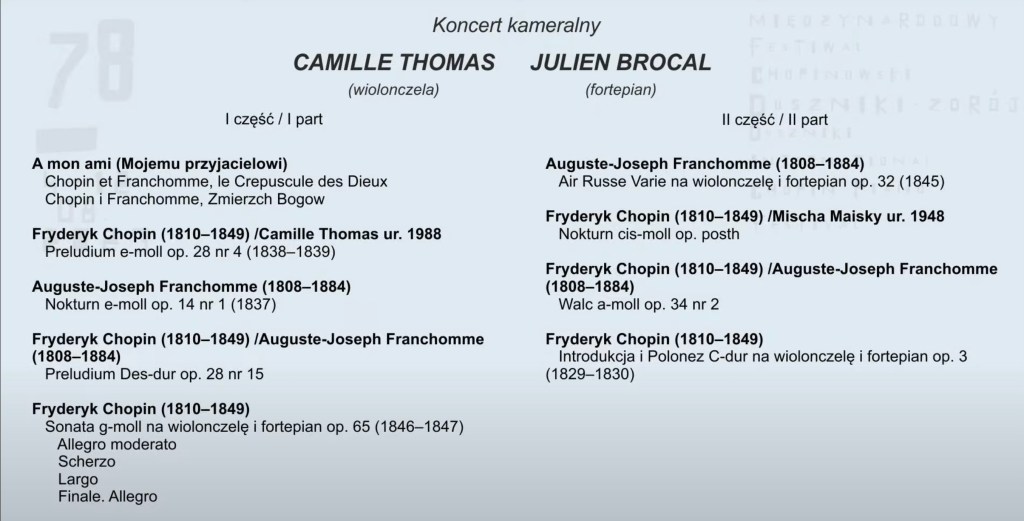
A fascinating recital of two of the only nine works that Chopin wrote for instruments other than the piano.Transcriptions of Chopin and an original work by Auguste Franchomme on the ‘cello that Chopin would have certainly known.
A transcription by Misha Maisky of Chopin’s Nocturne op posth in C sharp minor completed this refreshing panorama of chamber music.Chopin as Julien told us was very much influenced by ‘bel canto’ and the voice of the ‘cello is perhaps the nearest to the human voice and to Chopin’s soul.Chopin also admired the sound of the bassoon that is most noticeable in the few works he wrote for piano and orchestra.
Jardin Musical Misha & Lily Maisky in Julien Brocal’s wonderful garden
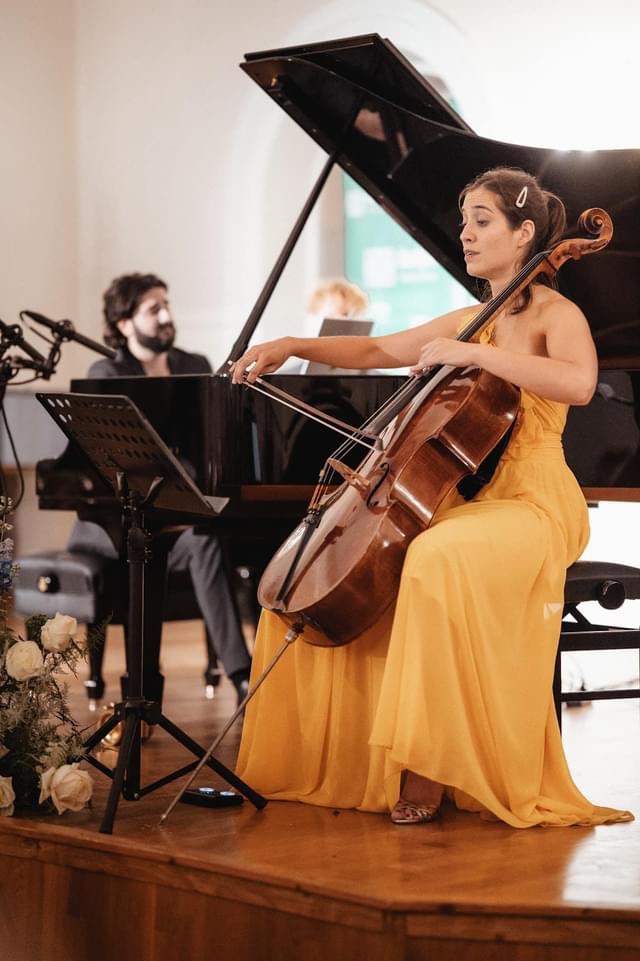
It is the deep intense sound that obviously Chopin loved and it was exactly this that Camille Thomas shared with us today.A ravishing sound and a sense of rubato that was indeed as Chopin was to describe to his students .’A tree with the roots firmly planted in the ground with the branches free to flow with the wind above’.The two preludes op 28 n.4 and 15 (Raindrop) were played with real weight and a simple intensity where the ‘cello became part of her being.Swaying with the music in such a natural way as she found a range of sound that gave deep meaning to all she did.The Prelude n.4 in Camille’s beautiful transcription was indeed a revelation as this page became a real tone poem of shape and intensity.Of course all this would not have been possible without the sensitive playing of Julien who coaxed magical sonorities out of the piano with fingers that seemed to caress but never hit the keys in sympathy with the glorious sounds his partner was sharing with him.
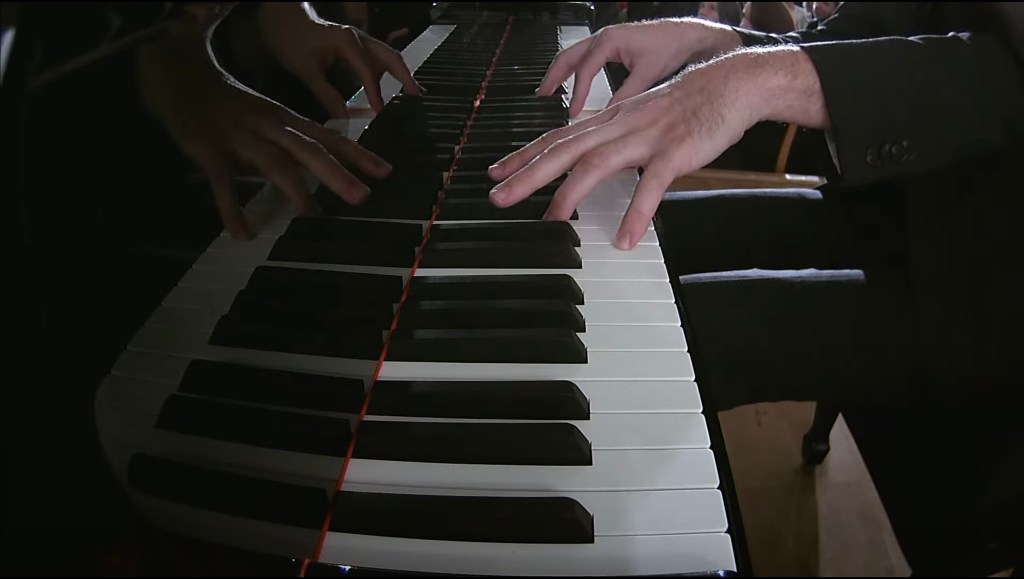
In particular the Nocturne in C sharp minor and the encore of the slow movement of the E minor concerto showed the artist that Pires had noted and had willingly helped him to be justly recognised by a discerning public.I had heard Julien in the Monza competition in 2008 and have never forgotten his wonderful ‘Carnaval.’I was a jury member and he asked me what steps I would suggest to help him in a career in music.Julien was shortly after that noted by Maria Joao Pires and the rest is history.
In Julien Brocal’s magic garden with Maria Joao Pires
There is one detail though that the public might have missed.I thanked Madame Pires for all she was doing to help young musicians, after a performance of Mozart Double concerto with Julien in Oxford.She immediately rebuked me by saying it was what they did for her that was more important!Humility and humanity that are the essence of the greatest of artists.
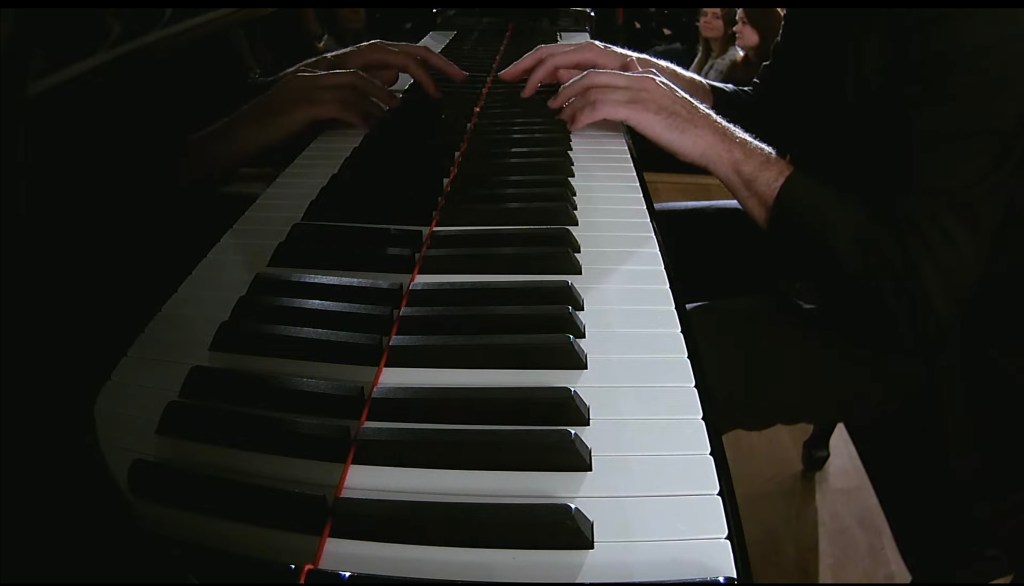
Julien demonstrated today his wonderful artistry and musicianship with ravishing sounds but also playing of real chamber music where the two instrumentalists became one.
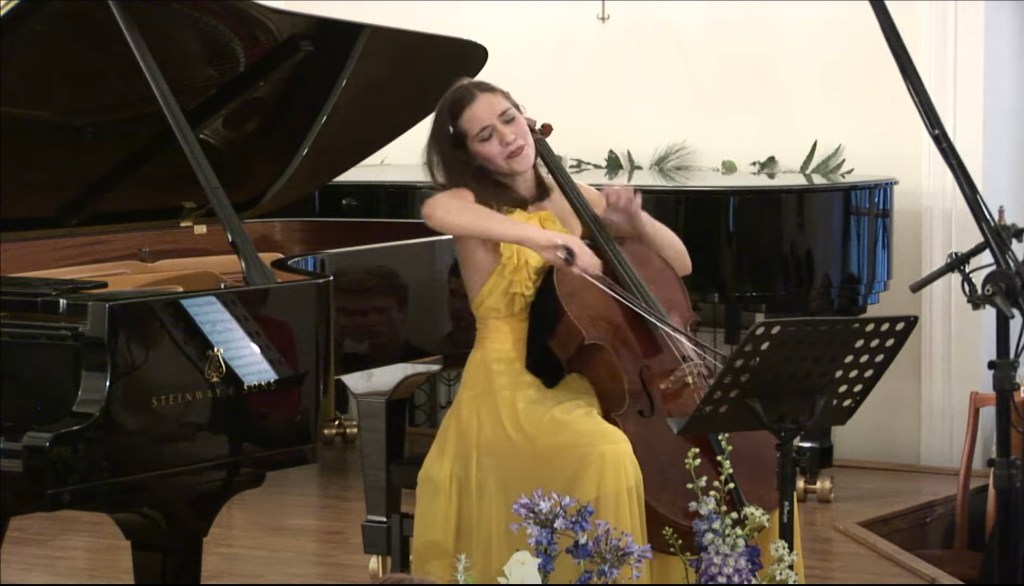
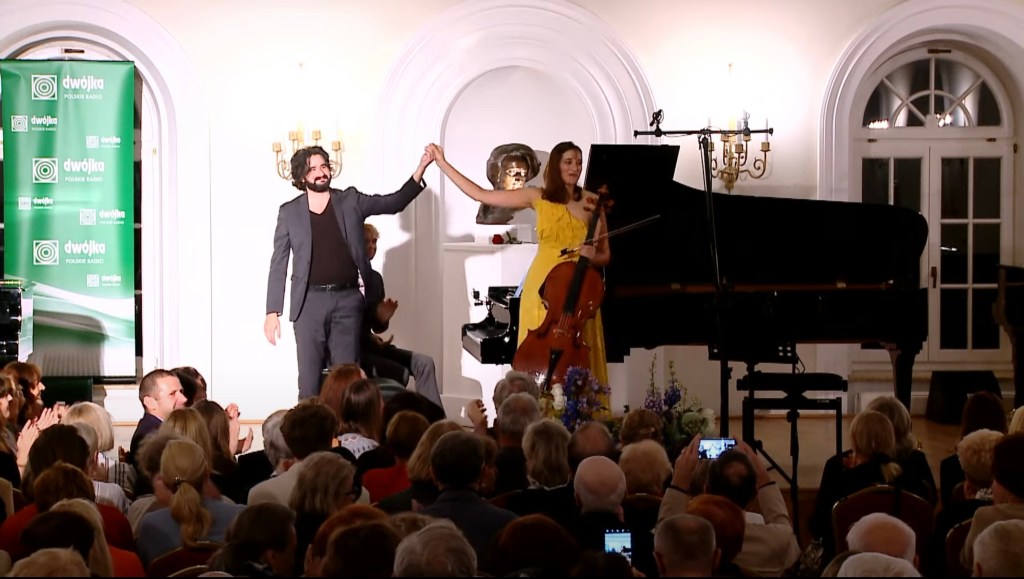
The piano lid fully open but if you know how to drive there is no problem ( as Graham Johnson the Gerald Moore of today would say ).It opens up the sound of the piano with the cello sharing in the reflection of sound too.It united their music making with sumptuous shared sounds that were reflected to an audience who showed their appreciation with a standing ovation.
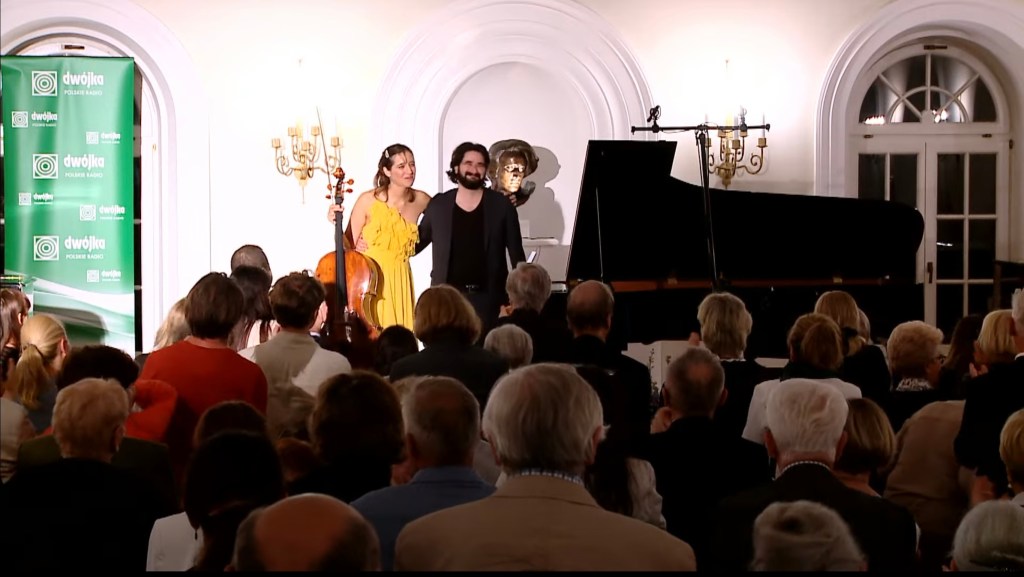
The Sonata in G minor is a long and difficult work but it was played with such mastery as the technical difficulties just disappeared in music making of rare beauty and unity.The early Introduction and Polonaise has a very difficult piano part too but it was thrown off with ease and ravishing beauty by Julien just as I am sure Chopin would have done in his virtuoso days before leaving Warsaw for ever to conquer the salons of Paris.
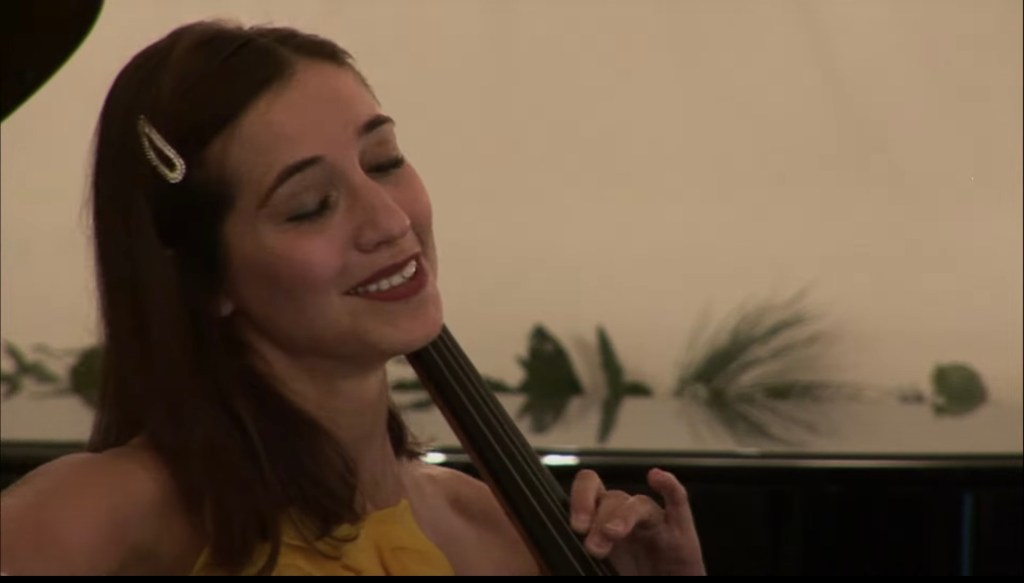
Camille had given a truly virtuoso performance of the only original work by Franchomme on the programme.His ‘Air Russe varié’ was played with great authority and conviction and more than made up for Franchomme’s rather misunderstood transcription of Chopin’s Waltz in A minor op 34 n.2.Could this deep growling opening of one of Chopin’s most original creations have been accepted by the composer?A beautiful second encore of subtle beautiful sounds that with Camille and Julien’s beautiful recorded performance was finally sanctioned with thanks by the composer Arvo Part.It added a different dimension to the ravishing beauty of the slow movement from the E minor piano concerto. A remarkable recital from two master musicians and a breath of fresh air from the magnificent solo piano recitals that honour Chopin every summer in Duszniki.
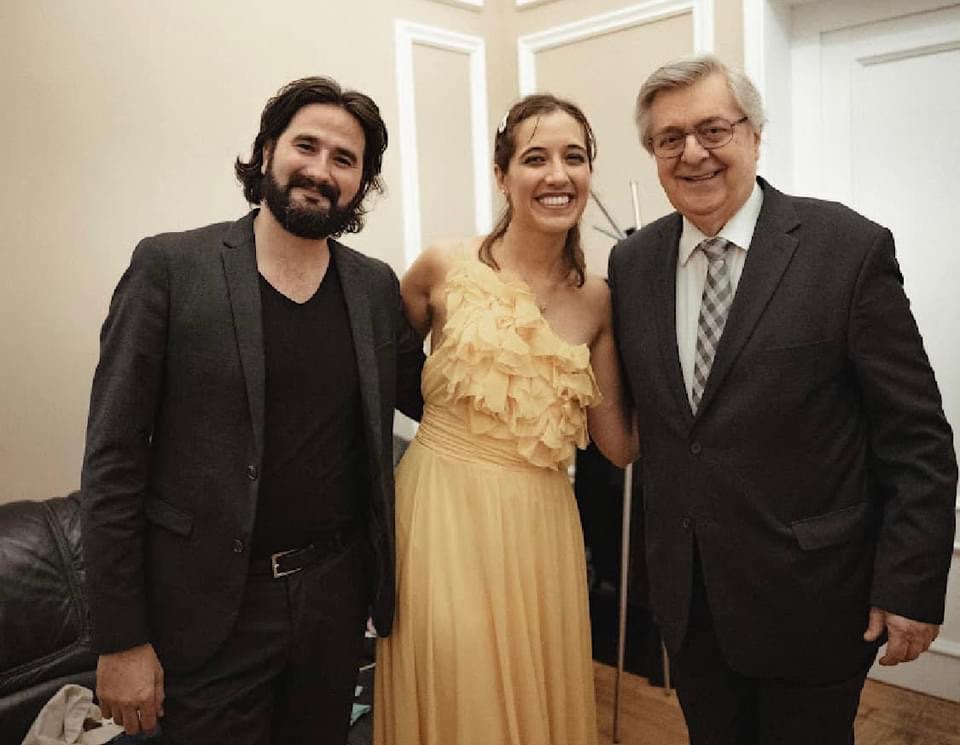
Photos by Szymon Korzuch
Julien Brocal at the Wigmore Hall on Wings of Song
Vive la France …Brocal and Bavouzet in London
Auguste-Joseph Franchomme (10 April 1808 – 21 January 1884) was a French cellist and composer. In addition to his work in Paris, he collaborated with Spanish cellist Victor Mirecki Larramat and Belgian cellist Adrien-Francois Servais in founding what is considered the Spanish school of cellists, influencing future generations there. For his many contributions to music, he was decorated with the French Légion d’honneur in 1884.
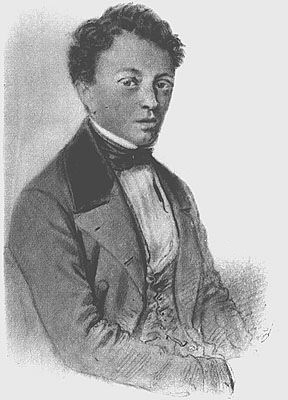
10 April 1808 Lille, France
Died
21 January 1884 Paris, France
Born in Lille, Franchomme studied at the local conservatoire with M. Mas and Pierre Baumann. He moved to continue his education at the Conservatoire de Paris , where he won his first prize only after one year.
Franchomme began his career playing with various orchestras and was appointed solo cello at Sainte – Chapelle in 1828. Along with violinist Jean-Delphin Alard , teacher of Pablo de Sarasate , and pianist Charles Hallé, creator of the Hallé Orchestra , he was a founding member of the Alard Quartet . The Quartet was rare for a its time because it consisted of professional musicians.
Franchomme forged close friendships with Mendelssohn, when the latter visited Paris in 1831, and with Frédéric Chopin . In 1833, Chopin and Franchomme collaborated to write a Grand Duo concertant for piano and cello, based on themes from Meyerbeer’s opera Robert le diable .Franchomme also rewrote the cello parts for Chopin’s Polonaise Brillante, Op. 3, and was the dedicatee of Chopin’s Cello Sonata op 65.
With the exception of a trip to England in 1856, Franchomme hardly left Paris, where he became a central figure of the city’s musical life. In 1843, he acquired the Duport Stradivarius from the son of Jean-Louis Duport for the then-record sum of 22,000 French francs.He also owned the De Munck Stradivarius of 1730. Franchomme succeeded Norblin as the head professor of cello at the Paris Conservatory in 1846.
He died in his sleep of heart attack on 21 January 1884 at the age of 75, four days after he received the Légion d’honneur.
Legacy
Franchomme was among the most celebrated cellists of his time and contributed to the refinement of the bowing technique—elegant, sweet, and light—which distinguished the French school developed by Jean-Pierre and Jean-Louis Duport. His left hand was renowned for its deft, precise, and expressive powers of execution. On 3 May 1856, the Weekly Chronicle and Register noted that he “carefully abstains from all abuse of the tremolo and of the exaggerated expression which are the distinguishing features in most modern violoncello playing”.
As a composer, Franchomme published some fifty-five works for cello, including the Twelve Caprices, Op. 7, and the Twelve Etudes , with optional second cello, Op. 35; one cello concerto , Op. 33; as well as numerous other pieces with piano, orchestral, or chamber accompaniment.
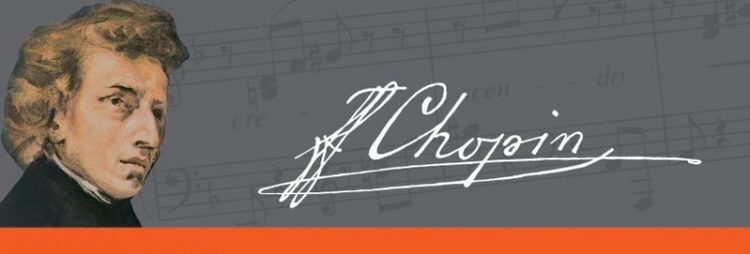
The Cello Sonata in G minor,Op. 65, was written in 1846-1847. It is one of only nine works of Chopin published during his lifetime that were written for instruments other than piano (although the piano still appears in every work he wrote) and was the last of Chopin’s works to be published in his lifetime.
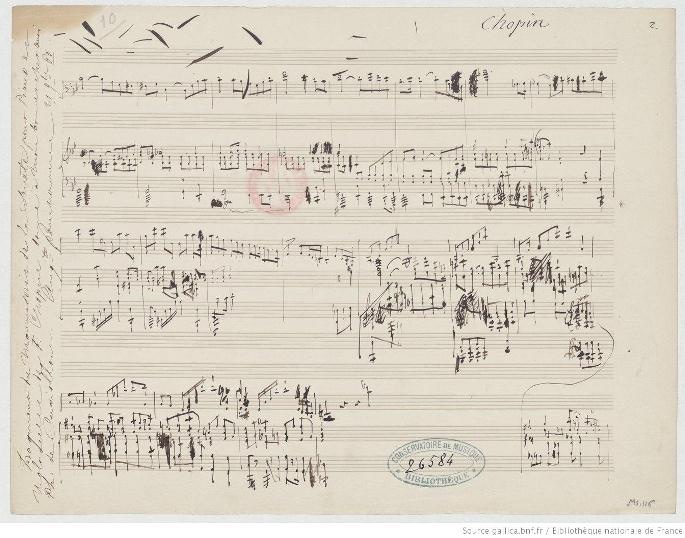
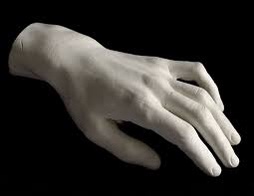
Introduction and Polonaise brillante in C major, Op. 3, was one of Chopin’s first published compositions.
The Polonaise was written between 20 and 28 October 1829 during a visit to the estate of Antoni Radziwill in Antonin. In a letter to Chopin’s friend Tytus Woyciechowski,, Chopin indicated that he wanted Princess Wanda, the daughter of Prince Antoni, to practice it. The Introduction was written in April 1830.The work was published in 1831 and dedicated to the Austrian cellist Joseph Mark . In a letter, Chopin wrote “On Thursday there was a soiree at Fuchs’s, when Limmer introduced some of his own compositions for four violoncellos. Merk as usual made them more beautiful than they really were by his playing, which is so full of soul. He is the only violoncellist I really respect”.
Jean Francais orchestrated the work in 1951 in collaboration with Maurice Gendron.
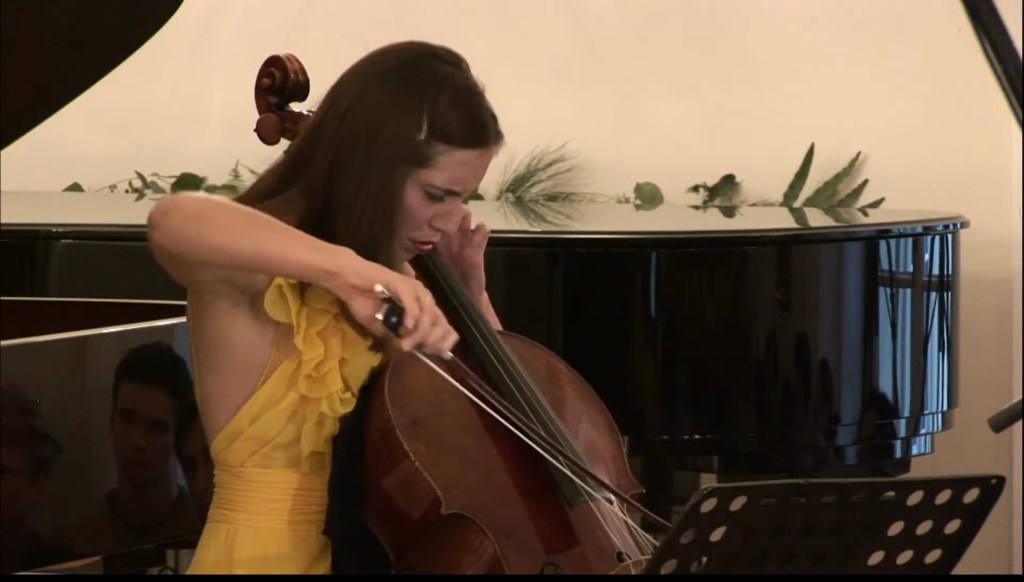
Camille Thomas with the ‘Feuermann’ cello
The Stradivarius 1730 Cello ‘Feuermann’ has been loaned for one year by the Nippon Music Foundation to the cellist Camille Thomas .
The cello, which has previously been played by Steven Isserlis and Danjulo Ishizaka, has an illustrious history. In the 1860’s, it was in the possession of a well-known Parisian amateur, Monsieur de Barrau, and was lent to the well-known cellist August-Joseph Franchomme (1808-1884) for the use of his son, who died young.
In 1934, W. E. Hill and Sons sold the cello to Emanuel Feuermann, who used it for many concerts and recordings, hence the instrument’s name. After Feuermann’s death in 1942, it was acquired by the American collector Mr. Russell B. Kingman, and then sold in 1956 to Aldo Parisot. In December 1996, Nippon Music Foundation acquired this cello from Aldo Parisot through a luthier, and there has been speculation as to which cellist would get to play it.
Noticed and invited by Seiji Ozawa and Steven Isserlis to perform at their festivals, Camille Thomas has appeared as soloist with ensembles including Sinfonia Varsovia, the Baden Baden Philharmonic Orchestra, the Lille National Orchestra, the Hamburg Philharmonischen Staatsorchester, the Brussels Philhamonic Orchestra and the Slovak Philharmonic.
Thomas studied with Stephan Forck and Frans Helmerson in Berlin; and with Wolfgang-Emmanuel Schmidt at the Hochschule für Musik Franz Liszt in Weimar, and has won numerous competitions: the Leopold Bellan Competition in Paris, the Edmond Baert Competition in Brussels and the 7th International Antonio Janigro Competition in Croatia amongst others. She recorded her debut album with the Swiss pianist Beatrice Berrut in 2013.
 ChristopherAxworthy-MusicCommentary