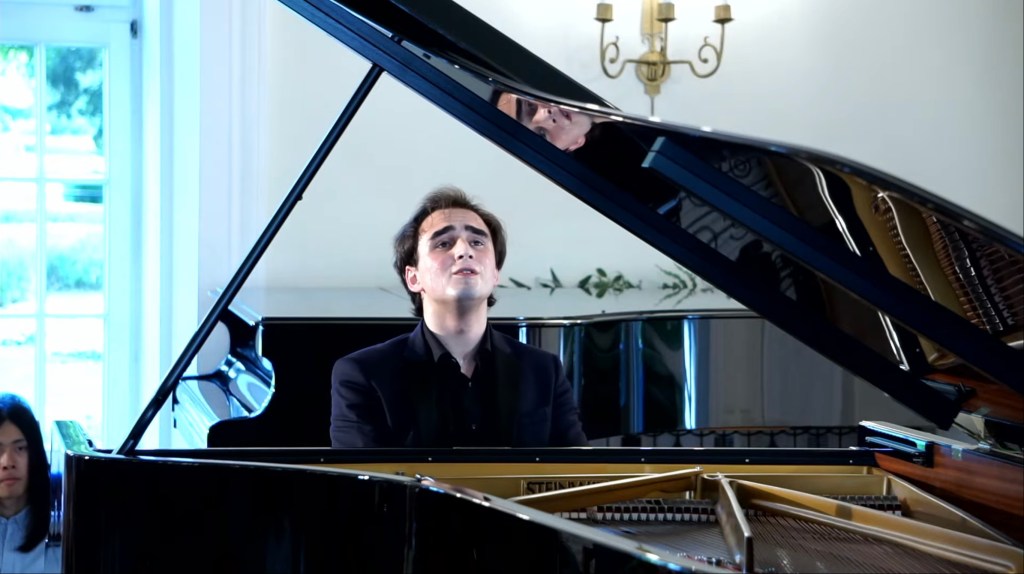
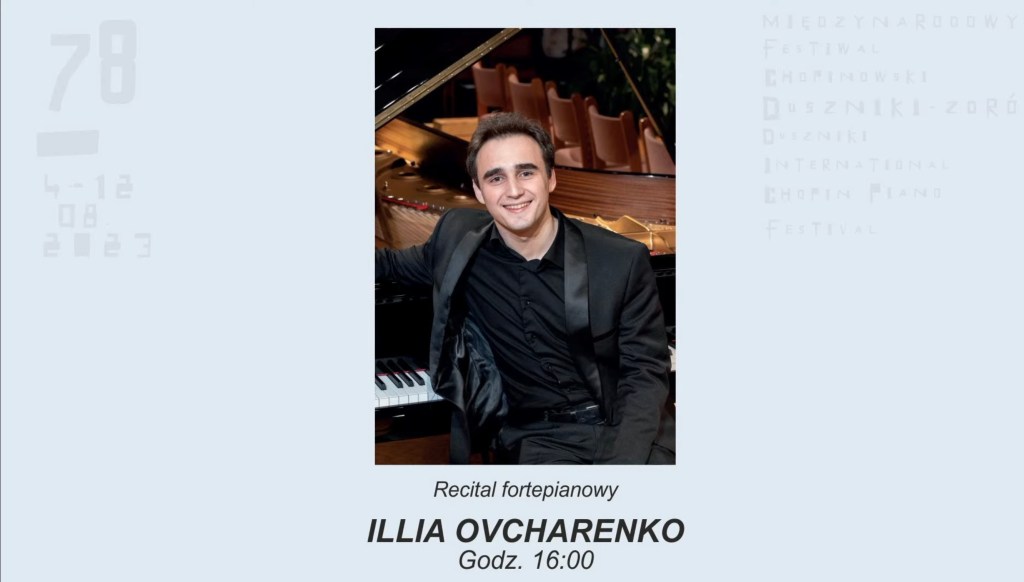
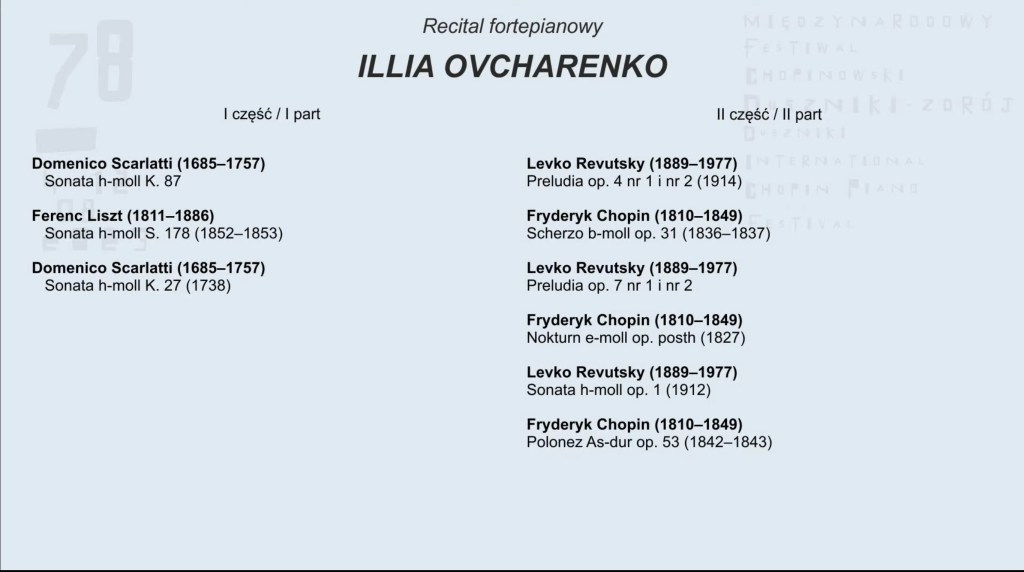
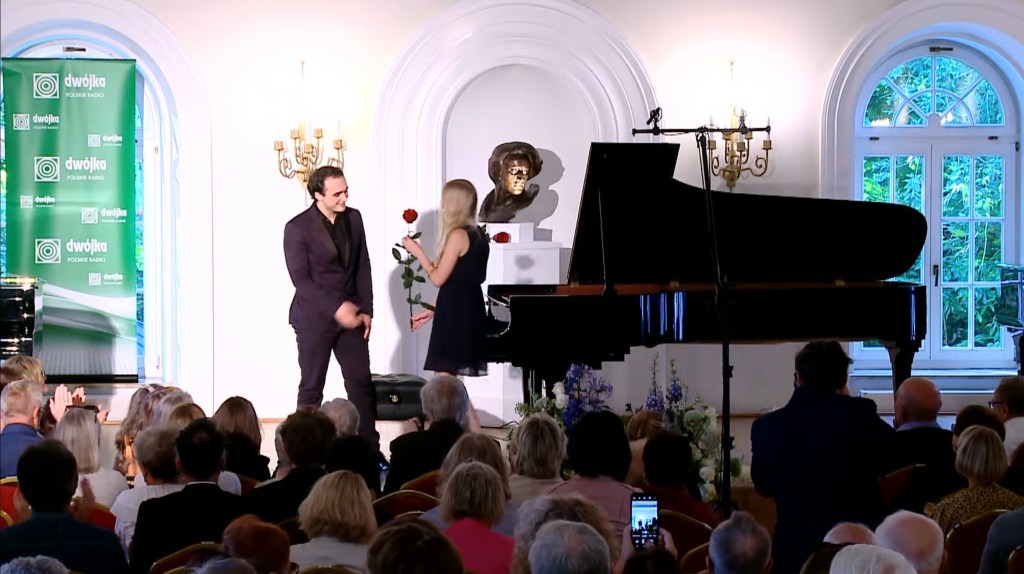
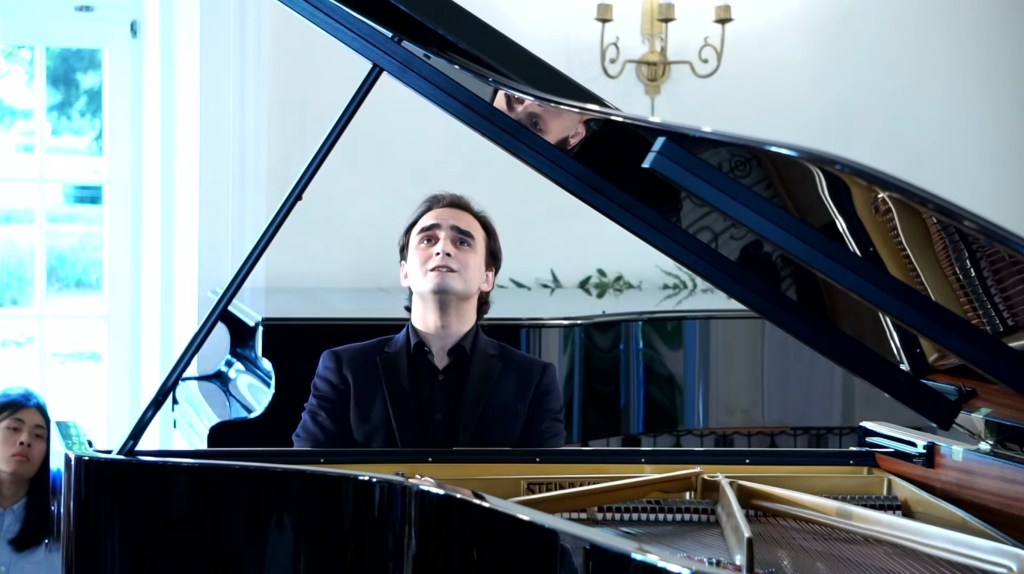
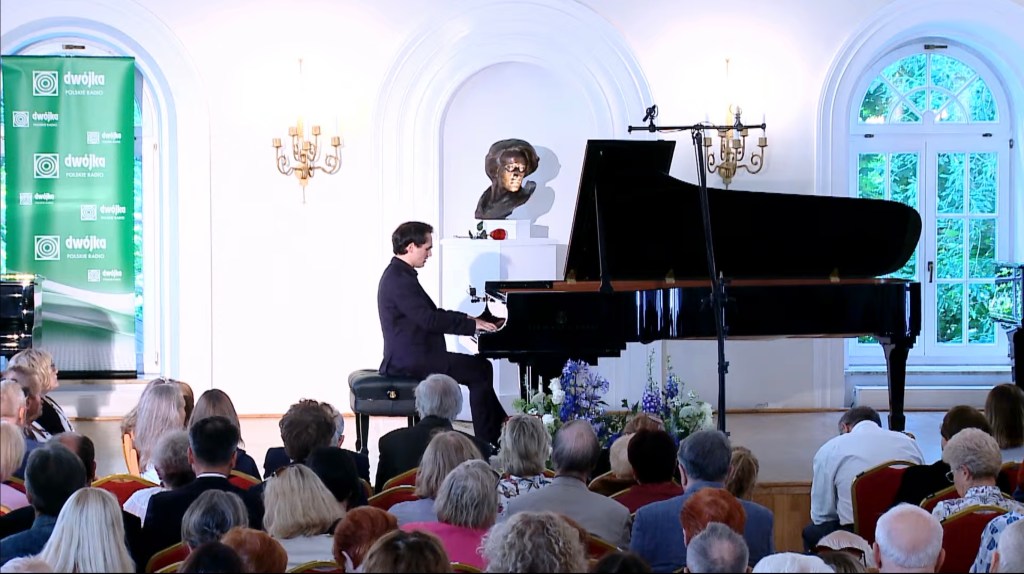
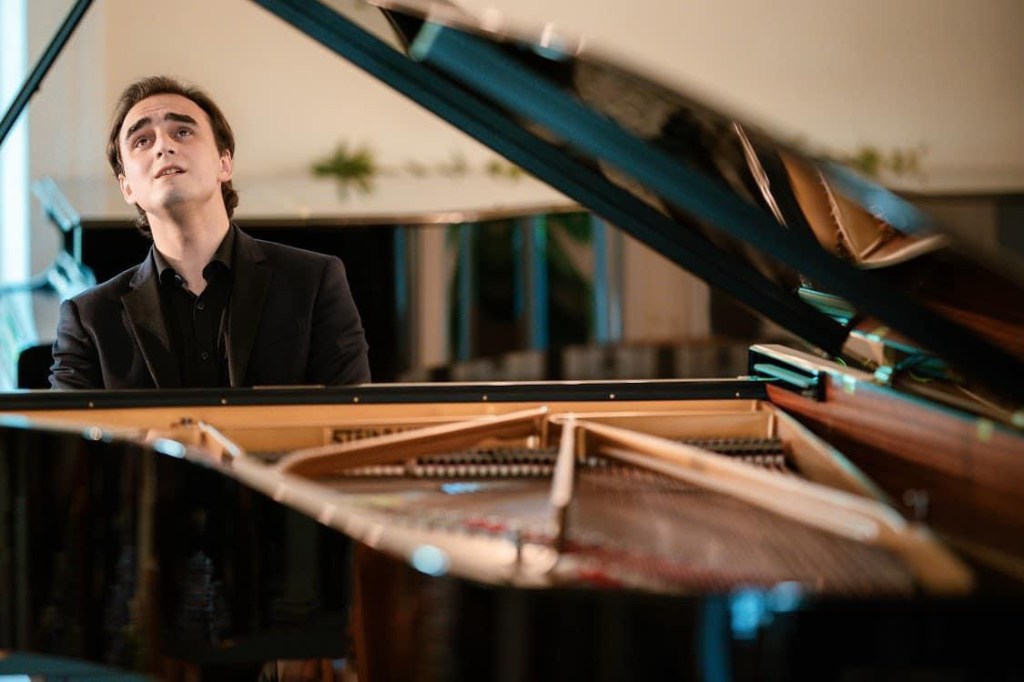
Illia has long been noticed on the competition circuit by very distinguished musicians who have helped this extraordinarily gifted young man reach the maturity that led him to winning the prestigious Honens Competition in Canada last year.A competition that gives three year career guidance and that has seen Illia make his sold out New York debut at Carnegie Hall. His artistry and youthful innocence have been allowed to blossom into the maturity that we heard today in this pianistic oasis that Piotr Paleczny creates every summer in Duszniki .An artist is also known by his programmes that reflect their personality and musical integrity.Arrau would play four great blocks of masterworks but never any crowd pleasing encores.Rubinstein on the other hand would never play a work like Schumann’s ‘Davidsbundler’ in public because he could not end on a contemplative note before the interval.Serkin would play the ‘Hammerklavier’ or ‘Diabelli’ where he and the audience were far too exhausted and exhilarated to expect any more.Illia today presented a fascinating programme of the monumental Liszt Sonata in B minor – the pinnacle of the romantic piano repertoire.It was accompanied before and after by two extraordinarily poignant sonatas also in B minor by Scarlatti.In the second half he chose to share his heart with his homeland and to share it with Chopin whose heart had never really left his.Ending with the hugely significant Polonaise Héroique where nobility and national fervour combine with hope and longing for a just future!A mixture with a rarely heard Ukrainian composer,Revutsky,the teacher of the composer,Silvestrov,who has become an emblem of Ukraine in these days of the barbaric invasion of their homeland.A sonata too by Revutsky in B minor written 60 years after Liszt’s visionary masterpiece.
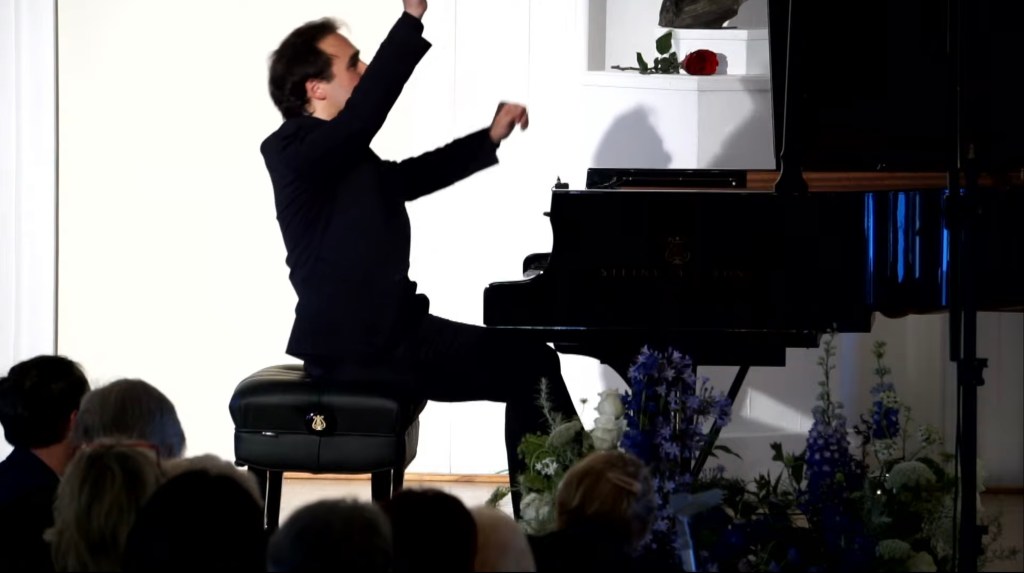
There was simplicity and sublime beauty from the very first noble outpouring of Bachian fervour in a Scarlatti Sonata that has never sounded so pure and simple as it seemed to pour so naturally and with deeply moving intensity from this young artist’s sensitive hands .The Liszt Sonata received a truly monumental performance of driving rhythmic energy but with grandeur and character.The opening page where Liszt’s detailed indications are so often misunderstood was played with the true understanding that here were the seeds that were to bear fruit in this visionary masterpiece.The opening marcato G’s barely whispered, as at the very end of the Sonata, were followed by a deeply dark brooding downward scale each one played by Illia with a different inflection where the music was allowed to speak so poignantly.Erupting but not too much into the two more rhythmic seeds that together become the key to a sonata that Liszt unravels with such innovative genius.Illia with great maturity had been careful to show us Liszt’s key before allowing his youthful energy and virtuosity full reign.The scene was set and now Illia could astonish and seduce us with playing of mastery and beauty.There was always a sense of architectural line and a sense of balance that never allowed this line to become broken by passion or empty virtuosity.The great opening octaves were given a shape and colour as they led so dramatically to the first ‘Grandioso’ outpouring.The simplicity and beauty of the ‘cantando espressivo’ was even more beautiful for the way that Illia had led us into it.It was a sign of Illia’s musical maturity that he could not be so overcome by the driving forward passion that he could not hold back for a moment before unleashing the full emotional impact.A recitativo that was of startling contrast to the purity of the ‘ritenuto ed appassionato’ that followed .Have the rising upward chords and menacing bass marcato ever struck so much terror as in today’s performance?
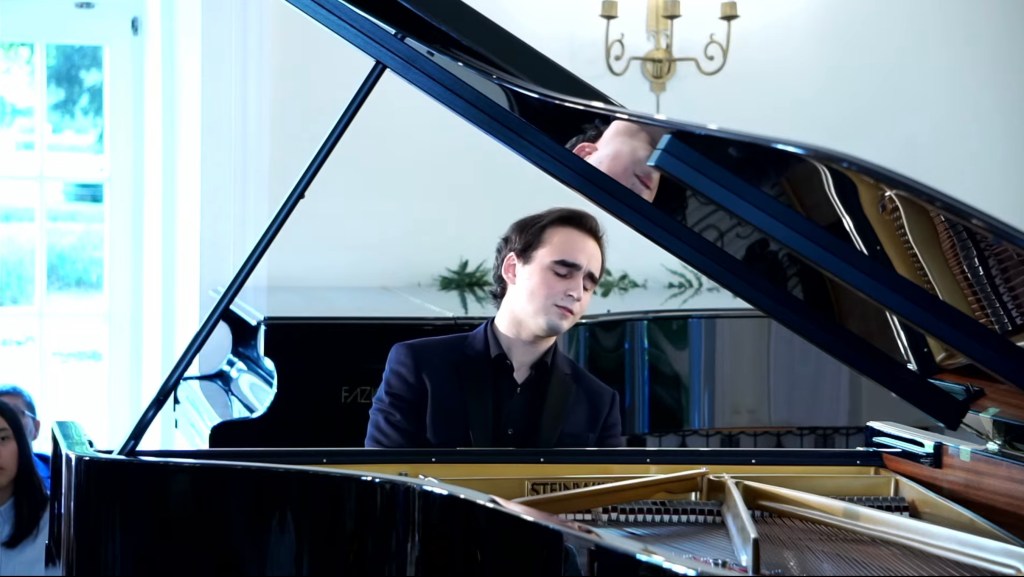
It gradually came to a moment of peace out of which flowed the sublime ‘Andante sostenuto’.A paradise of beauty and serenity played with disarming simplicity and aristocratic control.This is the very heart of the work as it builds to the climax with a driving passion that knows no limits.Dying away exhausted as etherial scales just dissolved with a legato of real weight where every ounce of sound was gently squeezed out of each note.The fugato just seemed to creep in almost unnoticed as it built with aristocratic control to an overwhelming orchestral climax .Illia’s care of sound and balance was as truly astonishing as I remember from Gilels many years ago .Who could ever forget Agosti’s unforgettable sound when the musical world flocked to Siena to hear him every year in his studio.Agosti,a prodigy of Busoni a disciple of Liszt knew well that the secret of the piano is a question of balance and control and one must hold back until the crucial moment when all the stops can be opened with overwhelming effect.Illia showed us this today as he brought beauty,intelligence and control to this work but never sacrificing his youthful passion and love of sound.Mind over heart indeed.When you have a real musical soul it can all sound so natural and simple as there is an overall architectural vision and respect for the composers wishes.This was followed by another Scarlatti sonata in the same key that was played with disarming simplicity and crystalline clarity.Searing beauty where Illia’s phrasing and shaping brought calm and poignancy after the ‘Sturm und drang’ of Liszt.
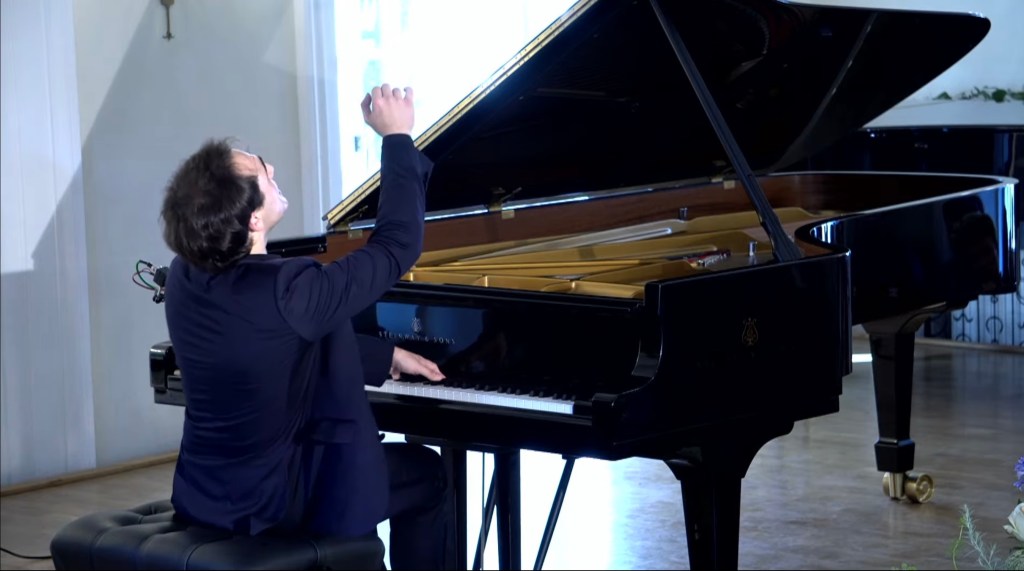
The second half was dedicated to Chopin and Revutsky.Chopin with his B flat minor Scherzo op 31 and Polonaise op 53 that were played with aristocratic poise and scintillating virtuosity.The middle episode of the Scherzo was played with the beauty of desolate sounds of great weight and meaning as they unravelled with simplicity and ‘joie de vivre’ leading to the final exhilarating outpouring of great virtuosity.The Polonaise too started in a quite subdued manner only to build to the tumultuous final climax of grandeur and nobility.Cavalry that proceeded with extraordinary determination and transcendental skill before dissolving into an oasis of peace and the final ‘heroic’ outpouring of national pride and fervour.There was moving simplicity to Chopin’s final nocturne in E minor op 72 n.1 that was played with luminosity and ravishing beauty.
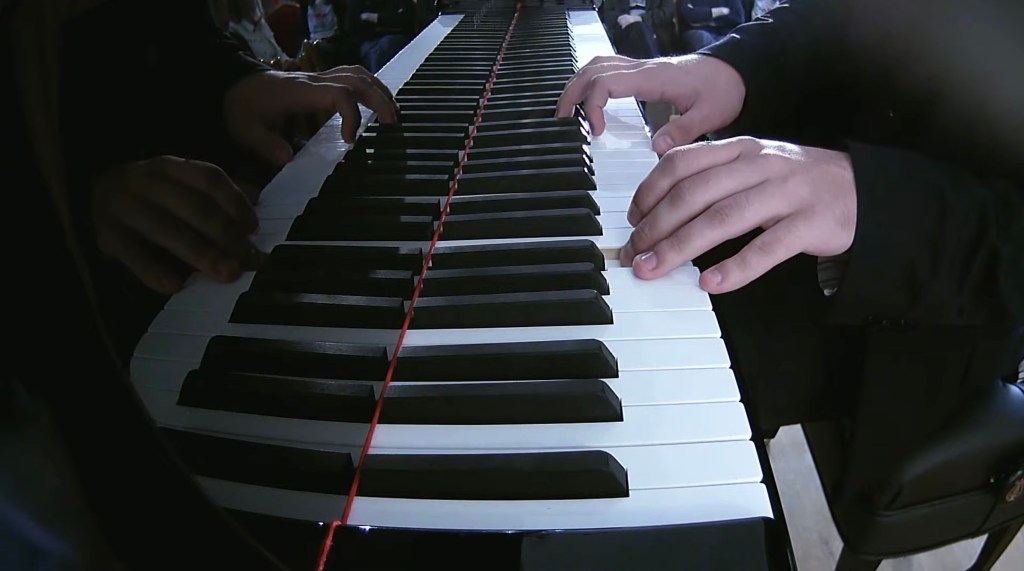
It was interesting to hear the works by Revutsky played with such fervent conviction and transcendental mastery.I could see links with Scriabin,Berg and even Rachmaninov and the Sonata was indeed an impressive tone poem played with passionate conviction by a fellow countryman.It was a just tribute from an artist who like Chopin has a heart that is born deep in the soul of his homeland.A highly charged performance of Chopin’s ‘Ocean’ study was Illia’s way of thanking this wonderfully warm audience that follows these great young artists with such love and admiration year after year.A last word ,by great demand, from the Prelude op 3 n. 4 by Revutsky played with the youthful elan and artistry that had been the hallmark of an exhilarating recital from an artist on the crest of the wave and heading for the heights.
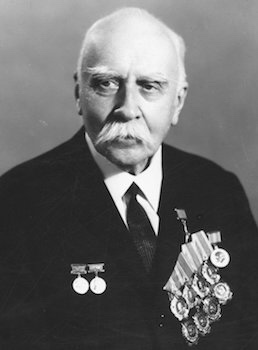
Levko Revutsky 20 February 1889 – 30 March 1977 was a ukrainian composer ,teacher and activist .Amongst his students at the Lysenko Music Institute were the composers Arkady Filippenko and Valentin Silvestrov.The creative legacy of Levko Revutsky is celebrated in his native Ukraine, where his contributions to vocal and orchestral music are considered a crucial part of its musical heritage.Many of his works—including the Symphony No. 2 and Piano Concerto—are considered to be the first mature examples of Ukrainian compositions in various genres. Revutsky also made an important contribution to the development in Ukraine of folk song arrangements; he composed approximately 120 altogether.His piano works include Piano Sonata Allegro in B minor opus 1 (1912) Three Preludes for piano opus 4 (1914) Seven Preludes for piano opus 7 Seven Preludes for piano opus 11 (1924 Two Pieces for piano opus 17 (1929) Piano Concerto in F major (1929) Piano Concerto No. 2 in F major, Op. 18 (1934)
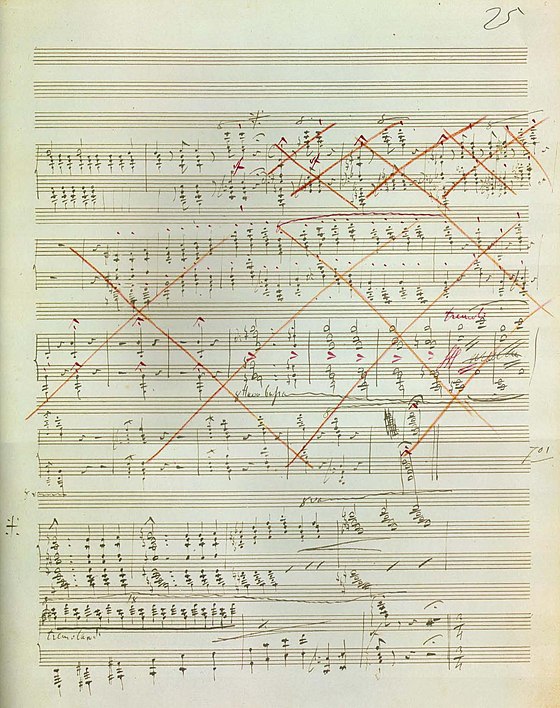
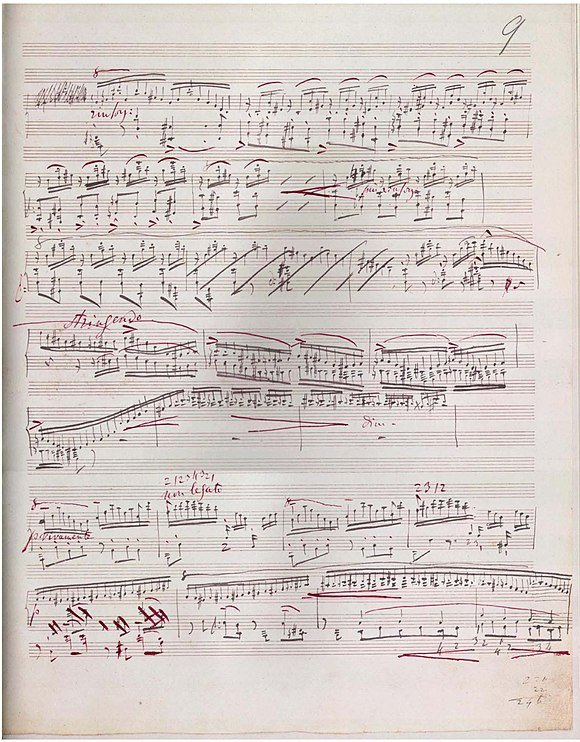
Liszt noted on the sonata’s manuscript that it was completed on 2 February 1853,but he had composed an earlier version by 1849.The Sonata was dedicated to Robert Schumann in return for Schumann’s dedication of his Fantasie in C op 17 (published 1839) to Liszt.A copy of the work arrived at Schumann’s house in May 1854, after he had entered Endenich sanatorium. Pianist and composer Clara Schumann did not perform the Sonata despite her marriage to Robert Schumann as she found it “merely a blind noise”.
 ChristopherAxworthy-MusicCommentary