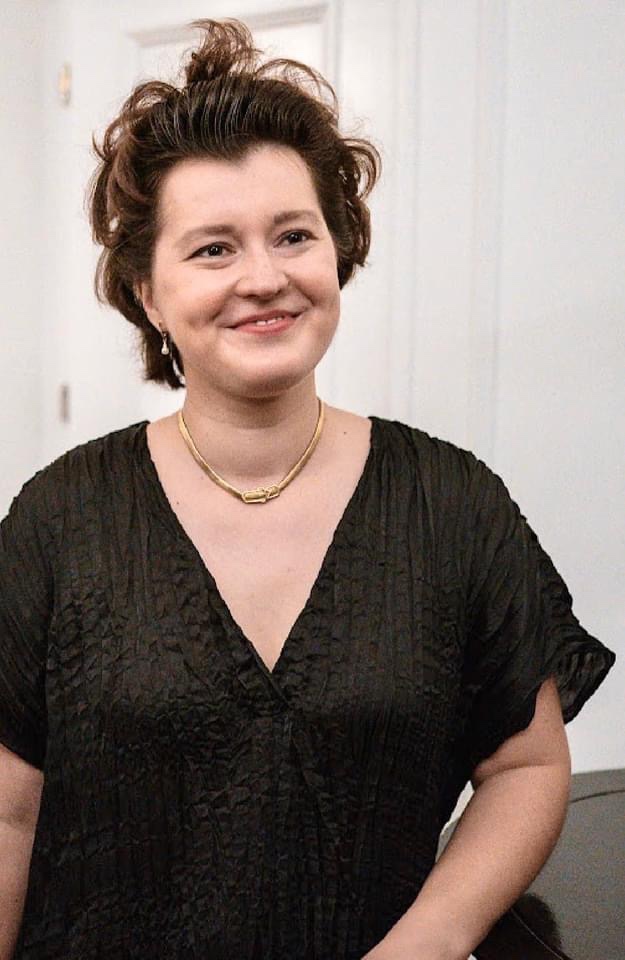
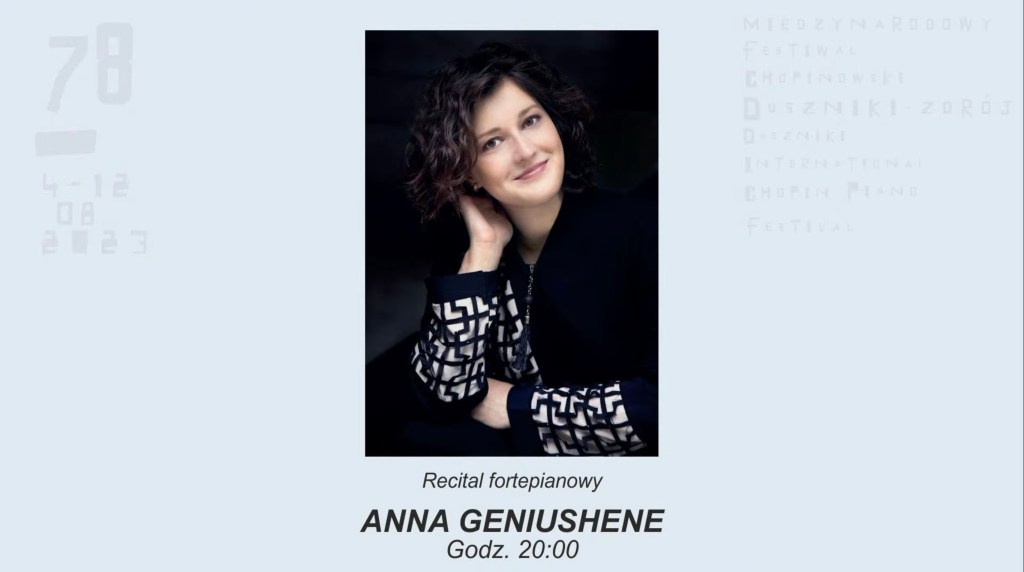
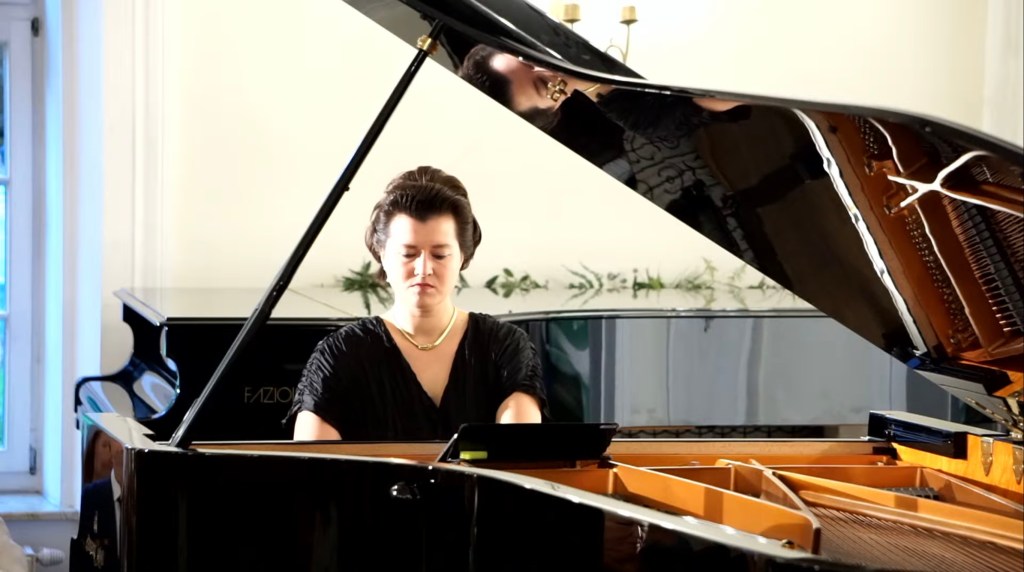
I have heard Anna play many times over the past years as she had a period of study at the Royal Academy of London and I remember her performance of Prokofiev 8th Sonata both at her graduation recital but also at the Busoni piano competition .
Anna Geniushene at the Royal Academy
‘Anna goes to war’ was the title of the few words of appreciation that I wrote on that occasion.Anna was a big pianist with an arsenal of technical mastery that was earned with years of study at a very early age. There was however a lack of colour and sensitivity to sound that was substituted for by a driving rhythmic energy and enormous sonorities together with an infallible technical command of overpowering authority.
All the fun of the circus.The Busoni Competition
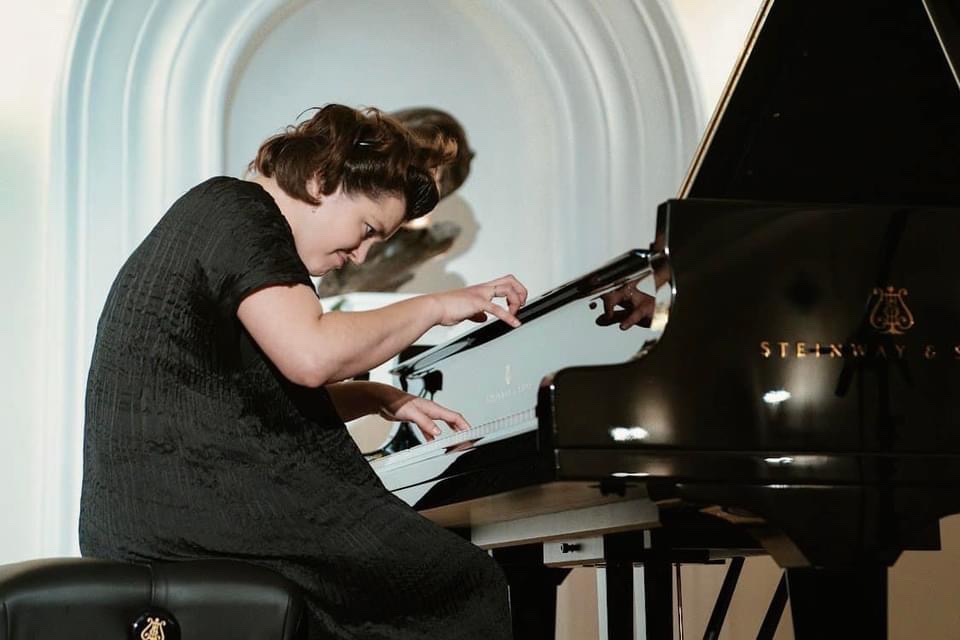
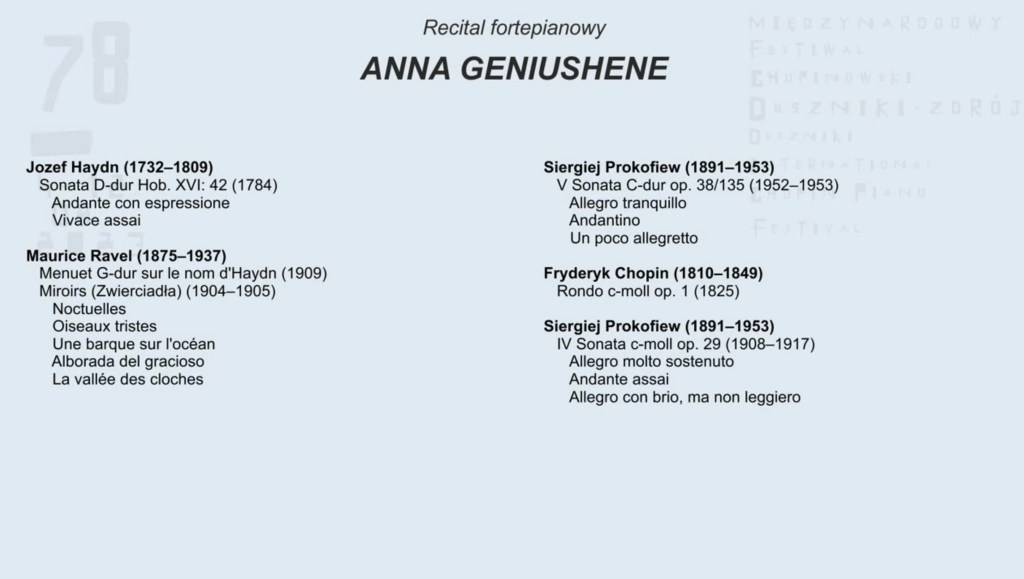
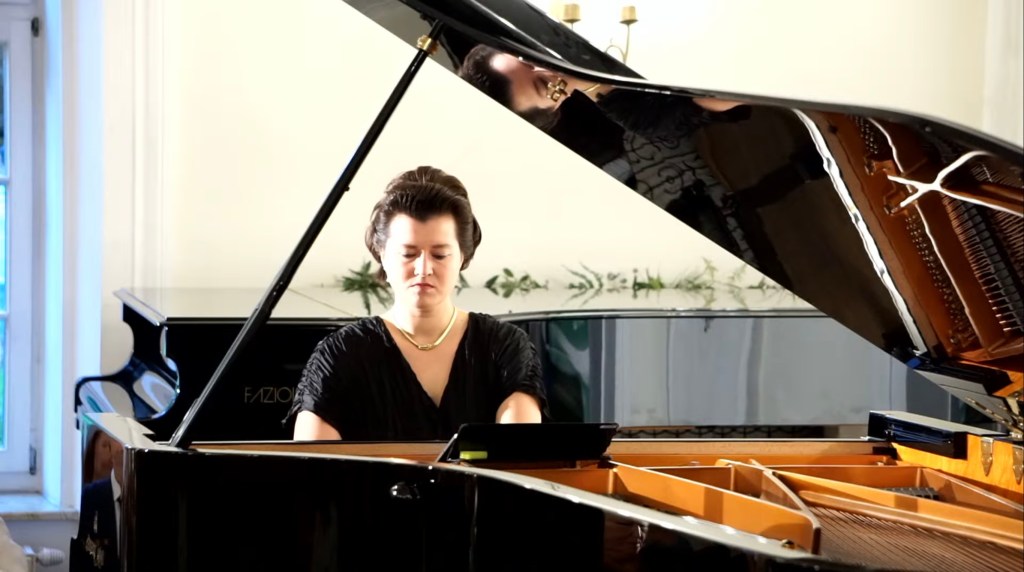
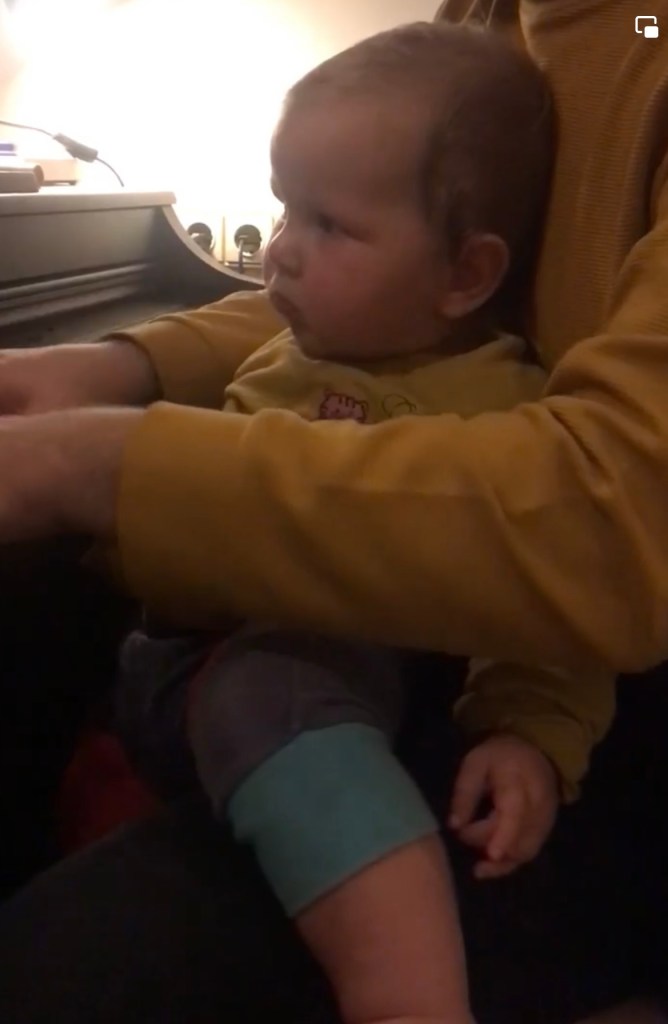
Today Anna is reborn as I heard the same technical command and authority but a sensitivity to sound and colour that was of breathtaking beauty and delicacy. The Haydn sonata was played with infinite grace and charm as streams of sound were played with a teasing and enticing sense of humour.Ravel’s ‘Miroirs’ were just that with sounds of unbelievable subtlety and a kaleidoscope of changing colours.Could these moths have had a more fleeting and glistening flight as they flew over the keyboard with will o’ the wisp lightness and simplicity?Birds of such luminosity and beauty created a truly haunting landscape, as in Anna’s hands these ‘Oiseaux tristes’ were played with desolate purity and innocence.Has an ocean ever sounded so calm and serene only to be caught up in a terrifying tempest out of which a vision of beauty brings back the calm as though this was indeed a prosperous voyage?The hair raising technical hurdles of ‘Alborada’were played with astonishing ease and mastery and the magic atmosphere she created in the Valley of Bells’ was quite ravishing.Already Anna had convinced me that motherhood had opened up another dimension for her playing.Substituting a rather militaristic training for that of an artist aware of all that surrounds her.Adapting and shaping her playing with chameleonic character as she caressed the keys searching for the infinite secrets that lay within.
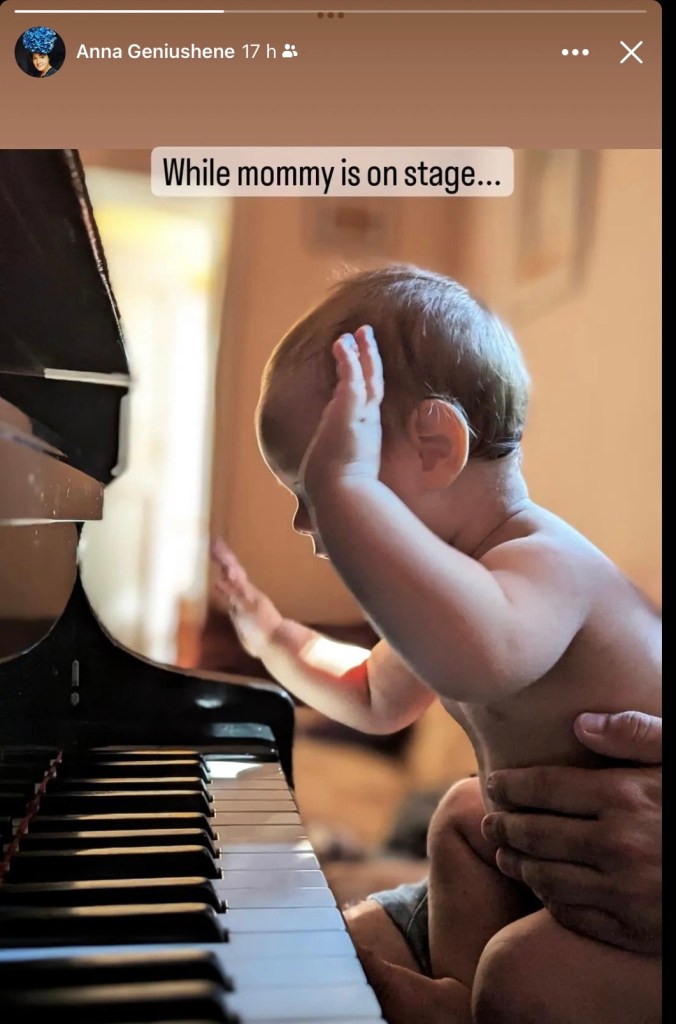
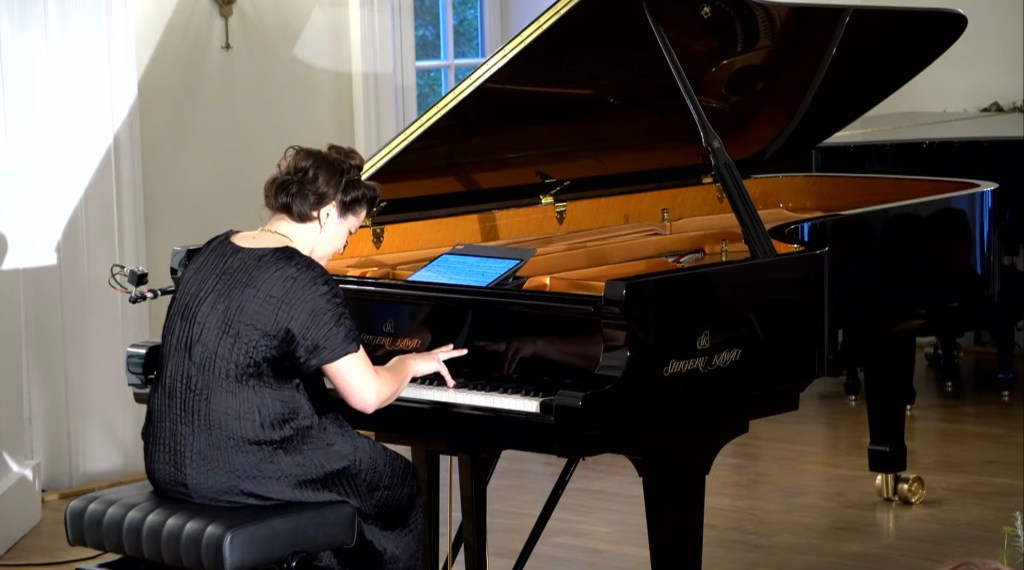
In the first half Anna had understandably had a discreet aide memoire hidden in the piano as she had left not one but two young children in the wings whilst she went on stage.Anna adds ‘Regarding the iPad, I actually used it for literally one line of music during Ravel’s Menuet as I realised there is a huge difference between my score and the Durand edition. I realised it 30 mins before the stage’
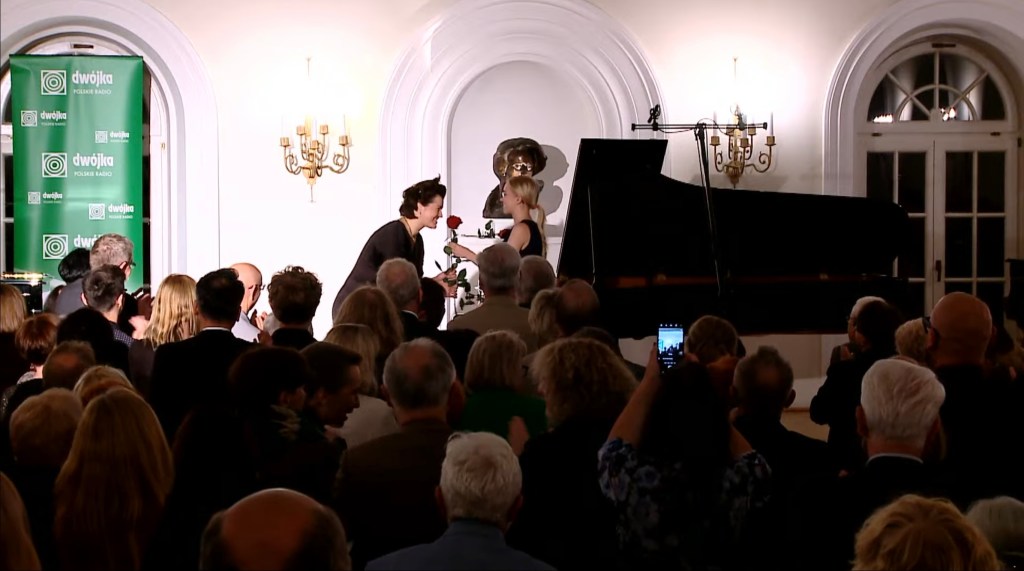
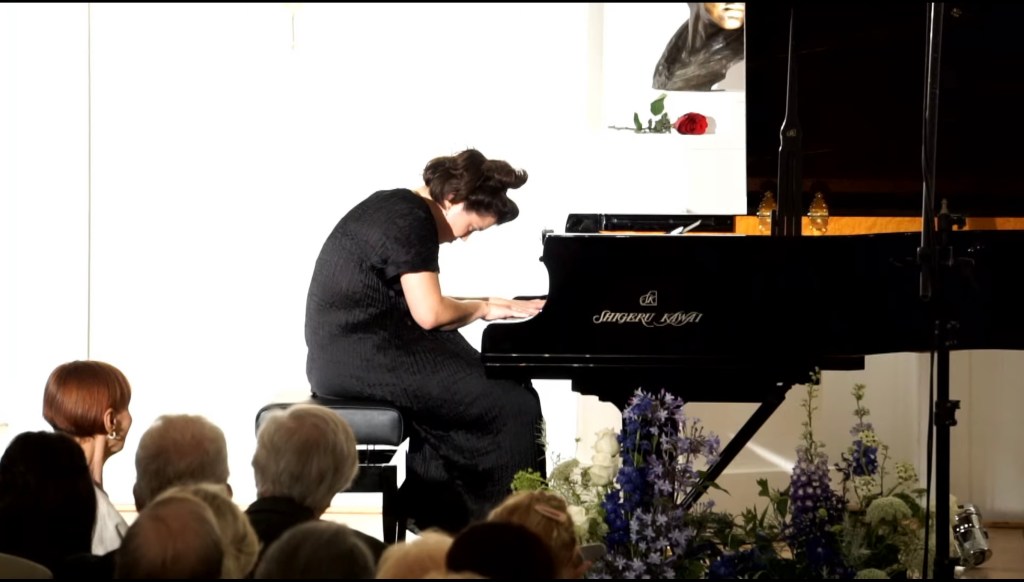
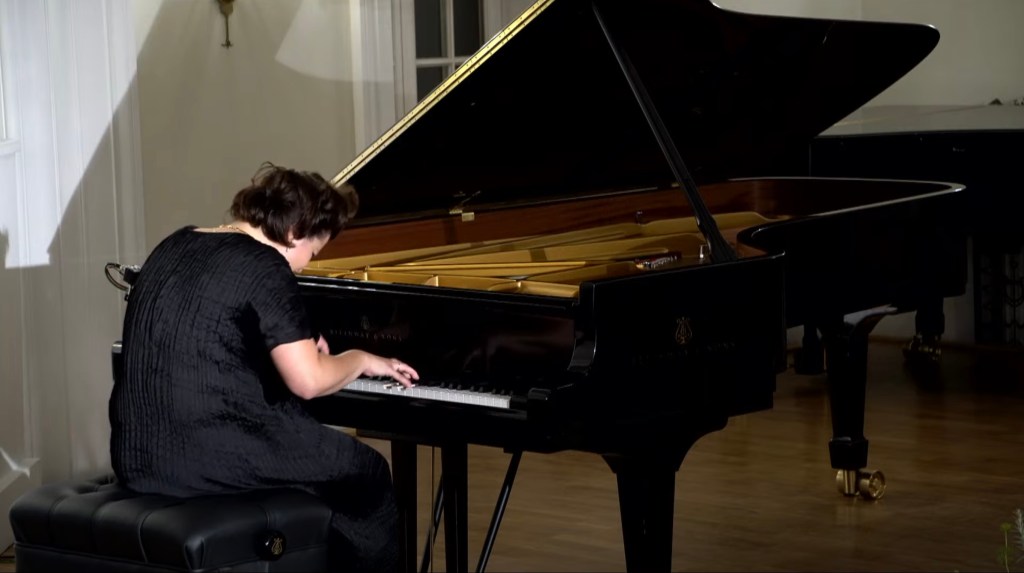
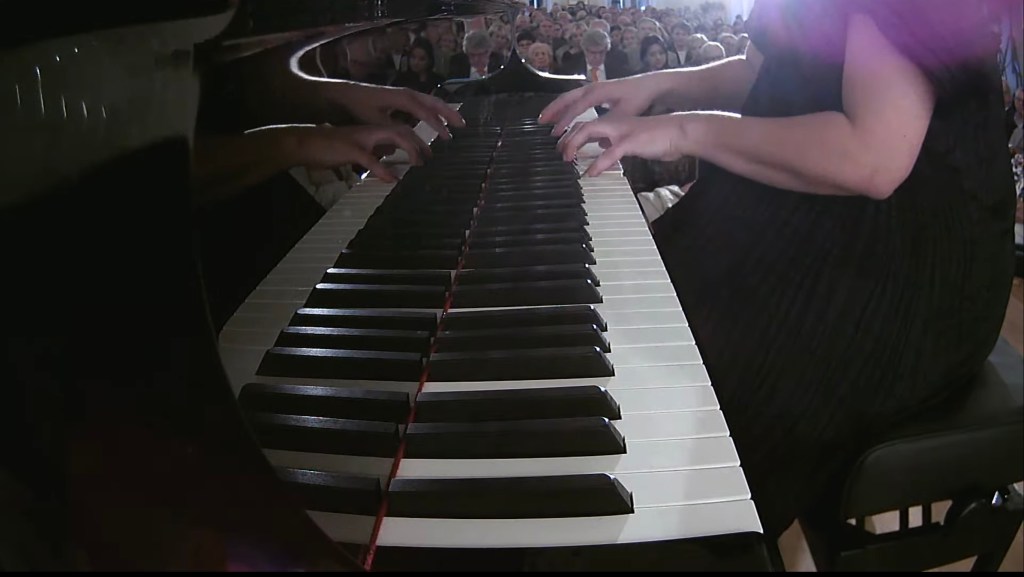
The second half she was on her own as she obviously had decided on an all or nothing approach to Prokofiev’s Fourth and Fifth Sonatas.This was truly an overwhelming experience as she threw herself into the keyboard with the same terrifying passion that so astonished the western world with the advent of Sviatoslav Richter.There are no words to describe such an overwhelming experience of total mastery .There was no minute of doubt or relaxing of tension as Anna was like a person possessed searching for sonorities and colours that most do not know exist.A dynamic drive and a technical mastery that seemed to have no limits. In between these two extraordinary Sonatas she played the Rondo op 1 by Chopin with grace and beguiling charm but with the same authority and command that reminded me in many ways of Tatyana Nikolaeva.Anna has grown in stature not only artistically but also physically and her imposing presence held us all spellbound as we realised that we were in the presence of a musical genius.A Beethoven Bagatelle was played with the same driving energy of a Serkin and the second encore ,that I did not recognise,was played with masterly authority too.Anna writes :
Oh thank you so much!!
Of course: it was Tchaikovsky Scherzo a la Russe op.1!
Sergei Prokofiev’s Piano Sonata No. 4 in C minor, Op. 29, subtitled D’après des vieux cahiers, or After Old Notebooks, was composed in 1917 and premiered on April 17 the next year by the composer himself in Petrograd.The work was dedicated to Prokofiev’s late friend Maximilian Schmidthof, whose suicide in 1913 had shocked and saddened the composer.Whether the restrained, even brooding quality of much of the Fourth Sonata relates in any direct way to Schmidthof’s death is uncertain, but it is certainly striking that the first two movements both start gloomily in the piano’s low register.Poles apart from the high-energy display of its twin, the Fourth Sonata looks inwardly. Its first movement is the most tenebrous movement in all of the Sonatas. Buried deep in the lower third of the keyboard where the close motion and full chords speak with difficulty,
The Piano Sonata No. 5 in C Major, Opus 38, was written at Ettal near Oberammergau in the Bavaian Alps during the composer’s stay there in 1923. He would revise it thirty years later, at the end of his life, but not drastically, as his Opus 135, and it is this version that is usually played. The work is dedicated it to Pierre Souvychinski, a musicologist and friend.All eight of Prokofiev’s other piano sonatas were written in Russia.The revisions to this piece, made in 1952–53 in Russia, are mostly in the last movement.To Nestyev’s description of the music composed in the 1920s
and early 1930s as new and strange, Prokofiev replied, ‘A
good thing too, that means a widening of range’, adding I
benefited from my period abroad for my work in the Soviet
period… it was only by passing through the “philosophical
period” that I was able to develop properly in the following
Prokofiev acknowledged that the Paris musical scene of
the 1920s greatly influenced his writing of that period. With
the Second Symphony of 1924 and the Fifth Piano Sonata,
Prokofiev tried in vain to win the hearts of the Parisians.
Stravinsky dominated the musical climate: Paris is
adamant: Stravinsky, Stravinsky, Stravinsky! No wonder
Prokofiev’s star is setting on that horizon and art circles
speak of him as though he were dead. Prokofiev does not
exude the stench of ripe cheese so dear to the nostrils of
the Paris bourgeois.
The Rondo in C minor, Op. 1, is Chopin’s first published work, published in 1825,and dedicated to “Madame de Linde”, the wife of the headmaster of the Lyceum at which Chopin was studying., a family friend with whom Chopin played duets. It was originally published under the title “Adieu à Varsovie” (“Farewell to Warsaw”).Chopin premiered the work at a concert on 10 June 1825 in the auditorium of the Warsaw Conservatory.
Schumann wrote to his teacher Friedrich Wieck of the Rondo in 1832:”Chopin’s first work (I believe firmly that it is his 10th) is in my hands: a lady would say that it was very pretty, very piquant, almost Moschelesque.But I believe you will make Clara study it; for there is plenty of spirit in it and few difficulties. But I humbly venture to assert that there are between this composition and Op. 2 two years and twenty works.”
Miroirs (French for “Mirrors”) is in five-movements written between 1904 and 1905.First performed by Ricardo Vines in 1906, each movement is dedicated to a fellow member of the French avant- Garde artist group Les Apaches.Around 1900, Maurice Ravel joined a group of innovative young artists, poets, critics, and musicians referred to as Les Apaches or “hooligans”, a term coined by Ricardo Vines to refer to his band of “artistic outcasts”.

 ChristopherAxworthy-MusicCommentary