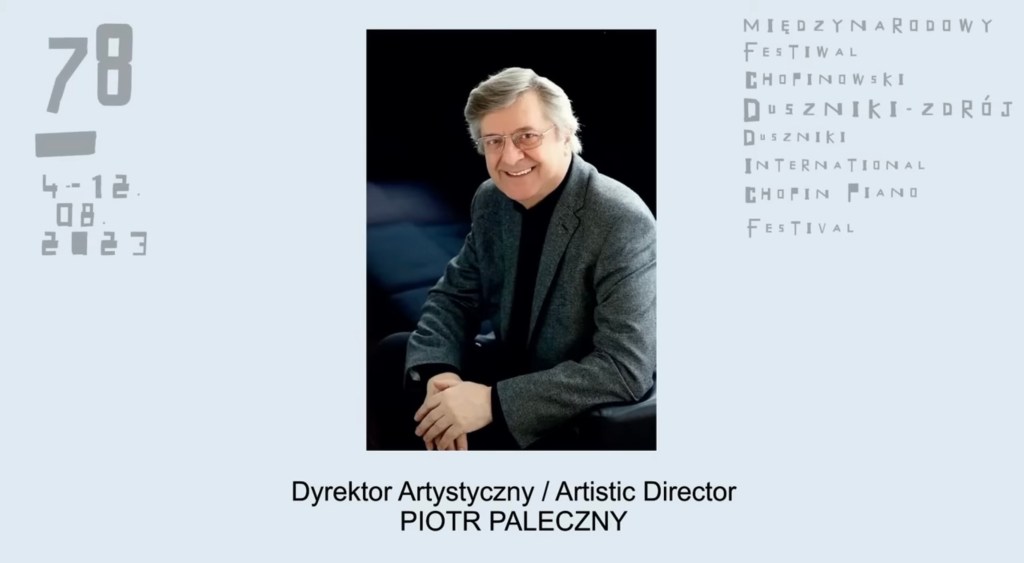
Piotr Paleczny surprises us every summer in Duszniki with recitals by some of the most important musical talents of our time who are generously shared with the world by their superb streaming.Michael Moran supplies old style reviews full of historic references and invaluable information.This is indeed an oasis of culture that is fast disappearing in a world where quantity rather than quality is the deciding factor.http://www.michael-moran.com/2023/07/78th-international-chopin-festival-in.html?m=1
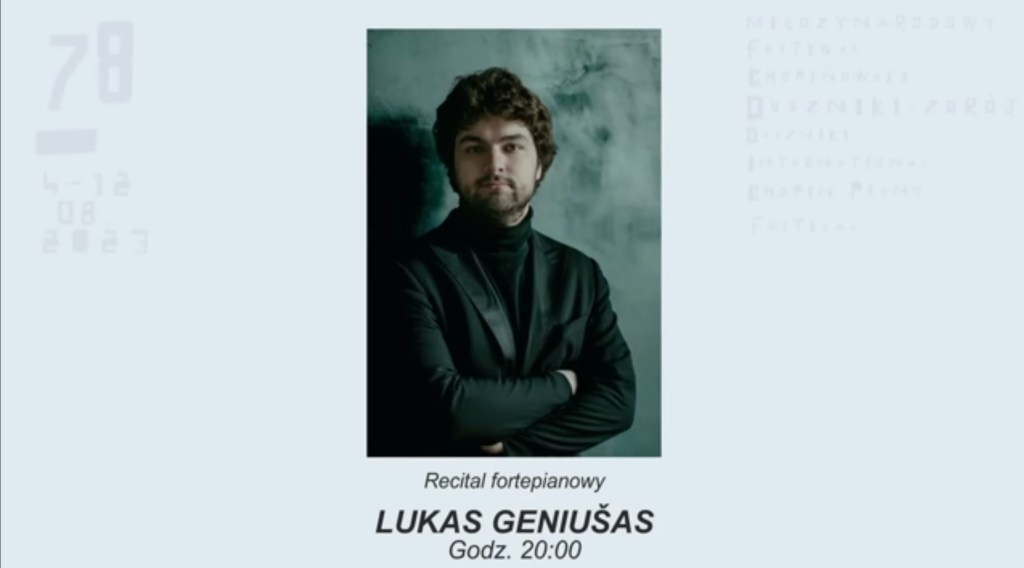
And today another surprise with a pianist who has grown in stature since he first appeared on the scene to astonish us in London at the Wigmore Hall with the studies op 10 .He had just won a top prize at the Chopin Competition in Warsaw.A line up of giants indeed where Yulianna Avdeeva ran off with first prize (her application recording having been turned down and then re admitted at the last minute due to the intervention of Fou Ts’ong),Lukas was second,Trifonov was third,Bozhanov fourth,and Dumont fifth https://christopheraxworthymusiccommentary.com/2022/01/21/francois-dumont-remembering-the-genius-of-fou-tsong-at-the-rasumovsky-academy/

Geniušas seems to know how to do everything better than anyone…’Diapason Jan.2019
Russian-Lithuanian pianist Lukas Geniušas has since firmly established himself as one of the most exciting and distinctive artists of his generation.Praised for his ‘brilliance and maturity’ (The Guardian) he is invited to give recitals in the most prestigious venues all over the world A musical pedigree that would be hard to beat .His father is the Lithuanian pianist Petras Geniusas and his mother is professor Xenia Knorre .Lukas’s grandmother is the Russian pianist pianist Vera Gornostayeva.His father,Petras, is a very distinguished Professor at Glasgow Conservatory where he has established a school of playing of great importance.Lukas plays in duo with his wife Anna Geniushene who won the Silver Medal at the Van Cliburn Competition last year (2022.)They have two children and were the first to leave Russia in protest and solidarity with the brutal invasion of the Ukraine.Anna was eight months pregnant when she astonished the public in Texas with playing of sensitivity and mastery.
Both Anna and Lukas have brought a humanity and maturity to their already quite extraordinary training that is bearing fruit with a family of musicians dedicated to honesty and integrity – two words almost obsolete in this world of quantity at any cost!

Chopin studies but this time op 25 where Chopin had indeed covered canons with flowers.An innovative technical mastery from Chopin who more than any other of his time showed us that this box of hammers and strings that were no longer plucked but struck could sing as beautifully as the Bel Canto artists of the day.A use of the pedals that indeed became the ‘soul of the piano’.The first set of studies op 10 whilst being unique are more of the gentle,considerate virtuoso than the poet of the second set.
It was this poetry that Lukas showed us with such simplicity and beauty.There were never any harsh sounds as can be so often associated with a certain type of Russian school but there were startling contrast and an unusual clarity that shone a new light on these twelve much loved jewels.
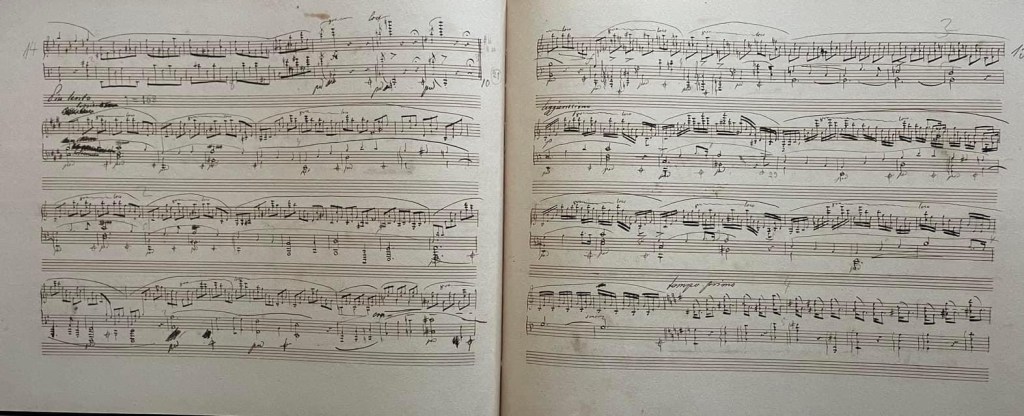
The opening of the fifth seemed unusually rhythmic until one looks at the score and can see quite clearly Vivace ,leggiero and above all scherzando.This melted in Lukas’s sensitive hands into a moment of pure magic with sounds of ravishing beauty as Chopin writes ‘Più lento’ and ‘leggiero’ and in the bass ,’sostenuto’,with the pedalling marked with the precision of a singer breathing .
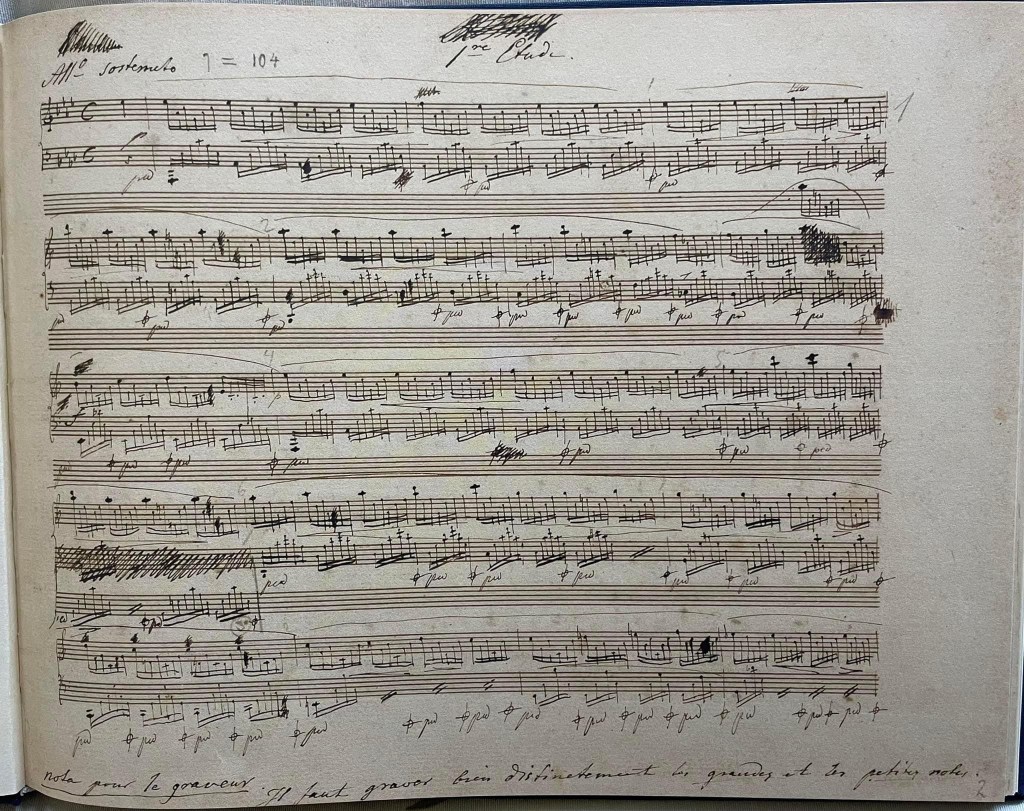
The first study too was played with disarming simplicity with the melody sustained by the underlying changing harmonies.Here Chopin again makes a note for the printer to make the melody notes larger than the accompaniment with very precise pedal indications.Of course the modern day piano is much more advanced but the pedal indications give a very good indication of the sound and phrasing that Chopin had in his mind at the moment of creation.Sir Charles Halle in Manchester noted how Chopin played this study where there were no single notes but moving harmonies.We can read in a review of one of Chopin’s concerts in Manchester in the home of the Earl of Falmouth, that was announced in The Times. Being a fashionable event, this performance was covered by The Athenaeum, The Illustrated London News and The London Daily News as well as The Manchester Times 107.
‘When we hear Chopin himself, these difficulties vanish; everything is executed with such absence of effort; and everything sounds so plain and simple, to a cultivated ear, that we cannot imagine where the difficulties lay. In truth, to Chopin they are not difficulties at all, they are the most obvious modes of execution, which have naturally suggested themselves to him in order to give utterance and expression to his characteristic and original modes of his musical thought and feeling. Hence Chopin’s music has a mechanism peculiar to itself: and if this mechanism, reduced to principles, were studied and understood, the peculiar difficulties of his music would vanish.’
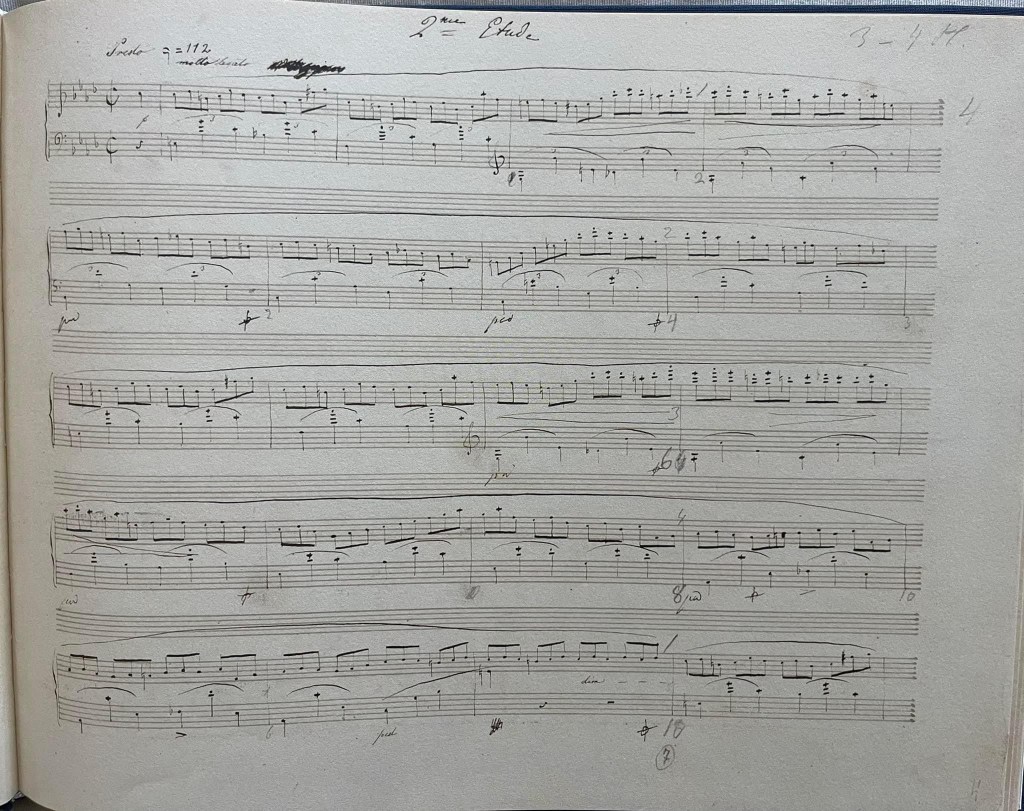
The second study in F minor was the one that Rubinstein surprised us with at his last recital in 1976.He was almost blind and could not see out of the corner of his eyes which made ending with the B flat minor Scherzo a dangerous proposition.The master stopped half way through and played this study just to prove that it was only his sight that was failing!He also famously exclaimed in the Green Room afterwards that he may be blind but not too blind to a recognise a beautiful lady when she is standing in front of him.Lauren Bacall was of course charmed as everyone had been in Rubinstein’s long life .Lukas played it with the same clarity and precision that is also so apparent in the autograph score.A simple undulating beauty as smooth as silk just as Rubinstein in his 90th year farewell concert had done.
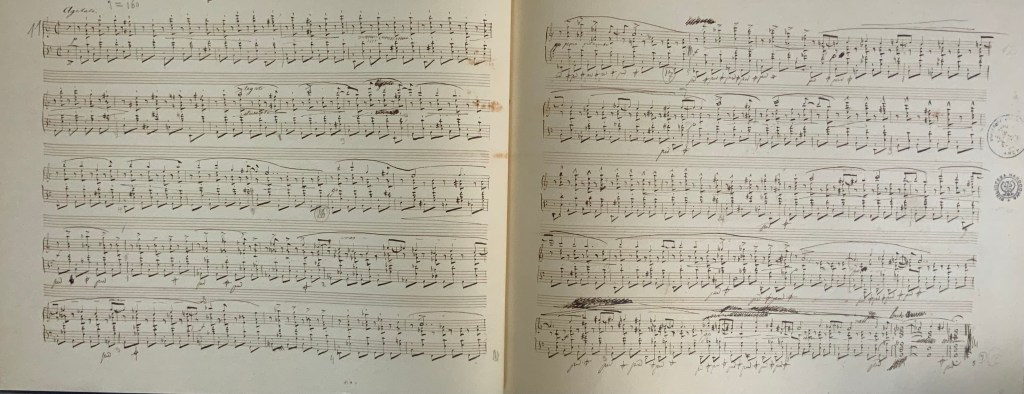
The third study too was played with a rhythmic clarity and subtle shaping of the melodic line before disappearing in a wisp of smoke and three gentle sumptuous chords.The fourth was brilliantly played,lightweight and a true butterfly but I missed the legato melodic line as a contrast to the marcato that Chopin so clearly defines.
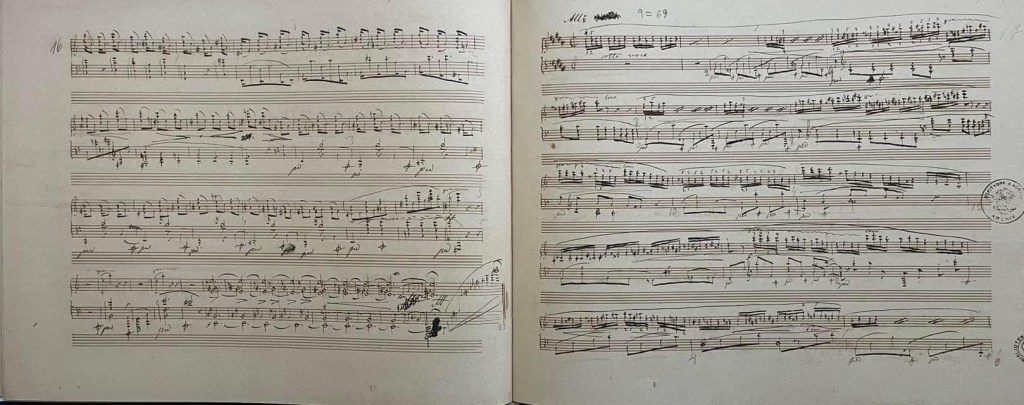
The double thirds study was beautifully played and followed the masterly performance of Kevin Chen the day before.Chopin though clearly marks the fingering for the final descending scales that Lukas decided to play with two hands!
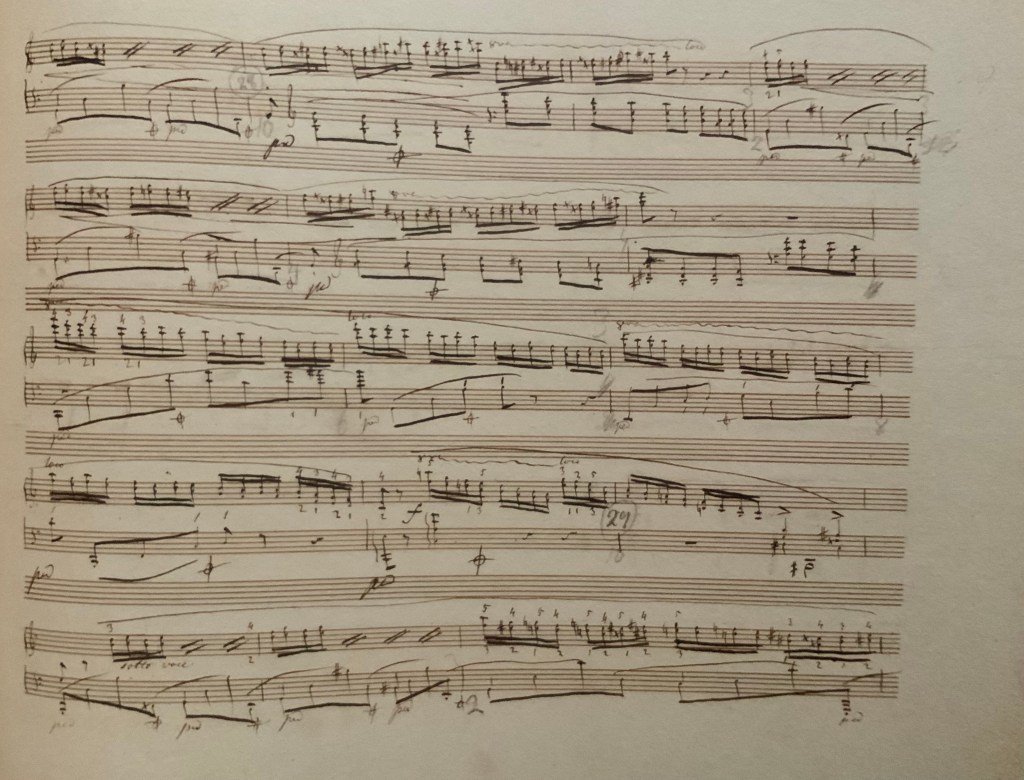
A pianistic trick that I have never seen before and makes me wonder how he might approach Beethoven – as a pianist or faithful interpreter!However it was masterly playing and I just wonder looking at the score if Chopin intended the fifth and sixth to be linked by pedal out of which the double thirds emerge ?Beatrice Rana proved that this worked and had me searching the score for the evidence that is not conclusive but very convincing.

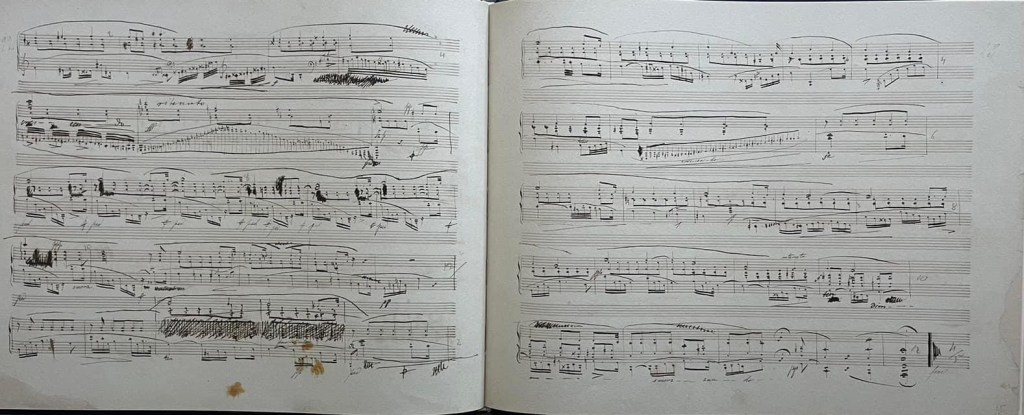
The beautiful slow seventh study was obviously that which Chopin struggled with as he delved deeply into his soul and found the same aristocratic voice that Lukas found today too.Lukas has a mature personality and not only interprets the composers wishes but adds his own distinctive voice too just as Rubinstein did with aristocratic good taste and fire.The final studies were brilliantly and poetically played with the fleeting continual movement of the eighth and the ‘Butterfly’ lightness of the ninth.
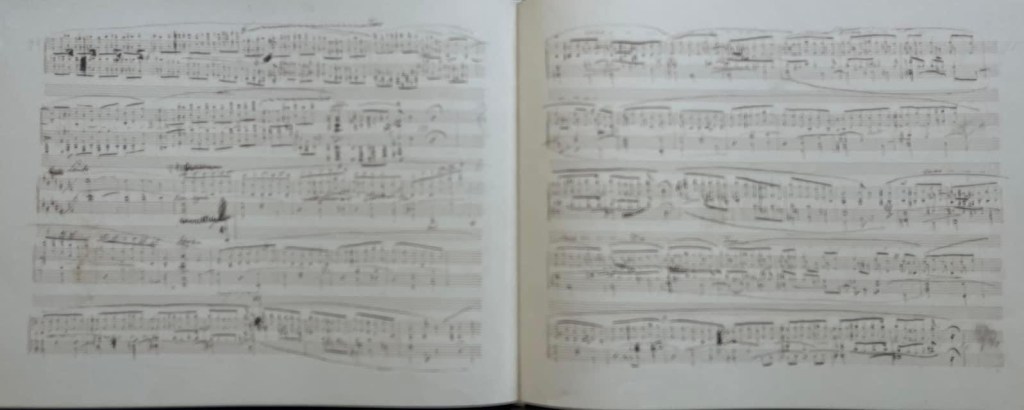
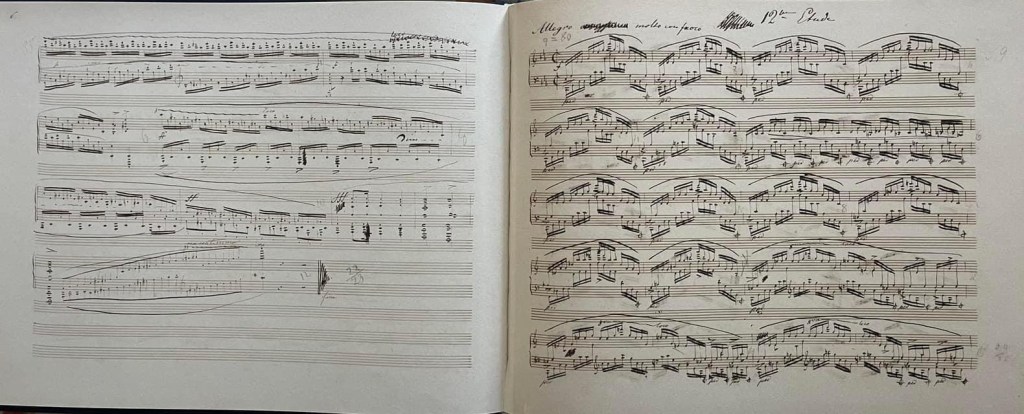
The tenth and eleventh were played with extraordinary fire and architectural shape.The long flowing octave study interlude played with ravishing beauty and legato.How wise he was to note Chopin’s ‘forte’ indication at the beginning of the ‘Ocean’ study.With the magnificent waves of changing harmonies and at the end an indication to play as loud as possible followed by a crescendo to ‘Fortississimo’.The composer always knows best !
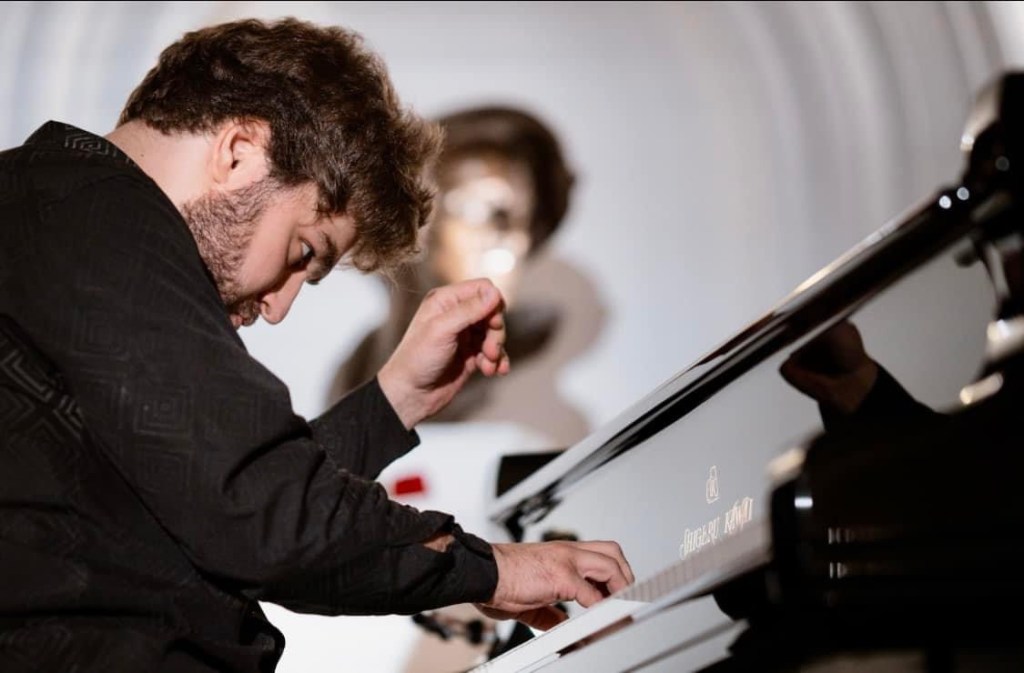
The Rachmaninov first Sonata is gradually appearing on concert programmes more frequently after Kantarow’s illuminating lock down performance streamed live from Paris.It takes a great musician to make sense of a work that even the composer found a challenge to give a coherent form to.Thomas Kelly gave a remarkable performance in London just a few days ago where the miriad of notes were turned into streams of sumptuous sounds. https://christopheraxworthymusiccommentary.com/2023/08/03/thomas-kelly-at-st-jamess-piccadilly-musicianship-and-mastery-mark-the-return-of-a-golden-age-but-of-the-thinking-virtuoso/
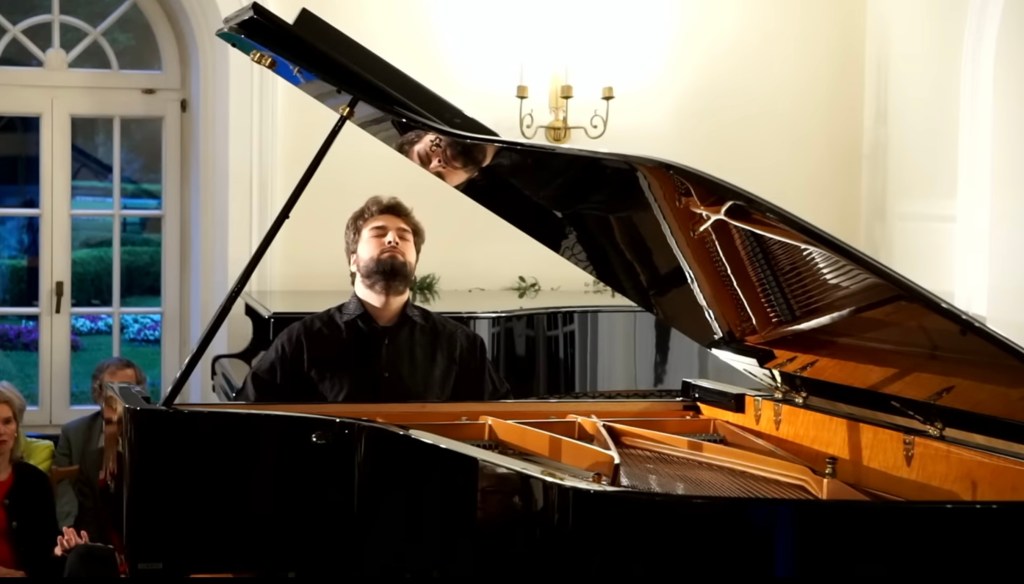
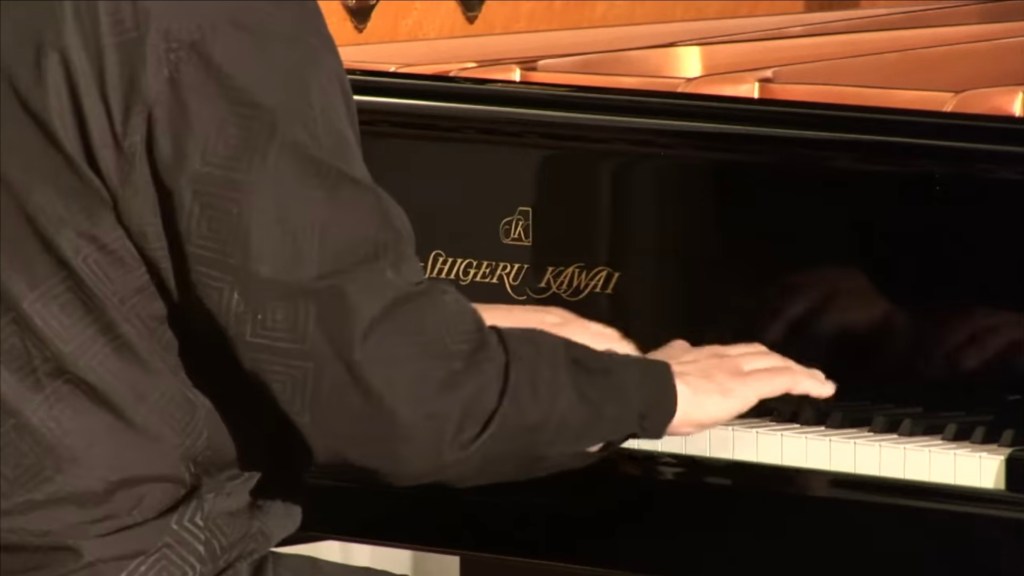
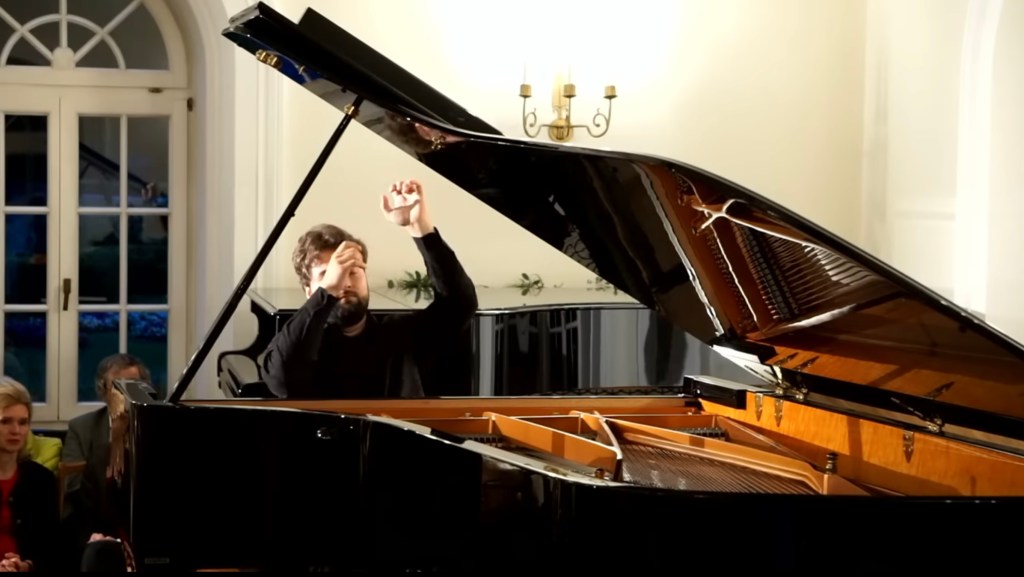
Lukas had the same poetic vision too that gave a distinctive shape to what is in effect a tone poem concealed in Sonata clothes!His performance today was just as convincing and had a maturity that allowed him to play with astonishing clarity and a remarkable musicianly shape giving a different but just as convincing vision to the golden sheen of colour that others had added to a seemingly endless flow of notes.Lukas had chosen to play a Shegeru Kwai that with its Bosendorfer richness and sumptuous tone palette gave such significance and meaning to the thirty minutes of early Rachmaninov meanderings.As a curiosity I wonder what is meant by the ‘original’ version?We know about the 1913 and 1931 versions of the Second Sonata and also the Horowitz reduction sanctioned by his close friend the composer.But this first Sonata I was not aware of other versions until today.
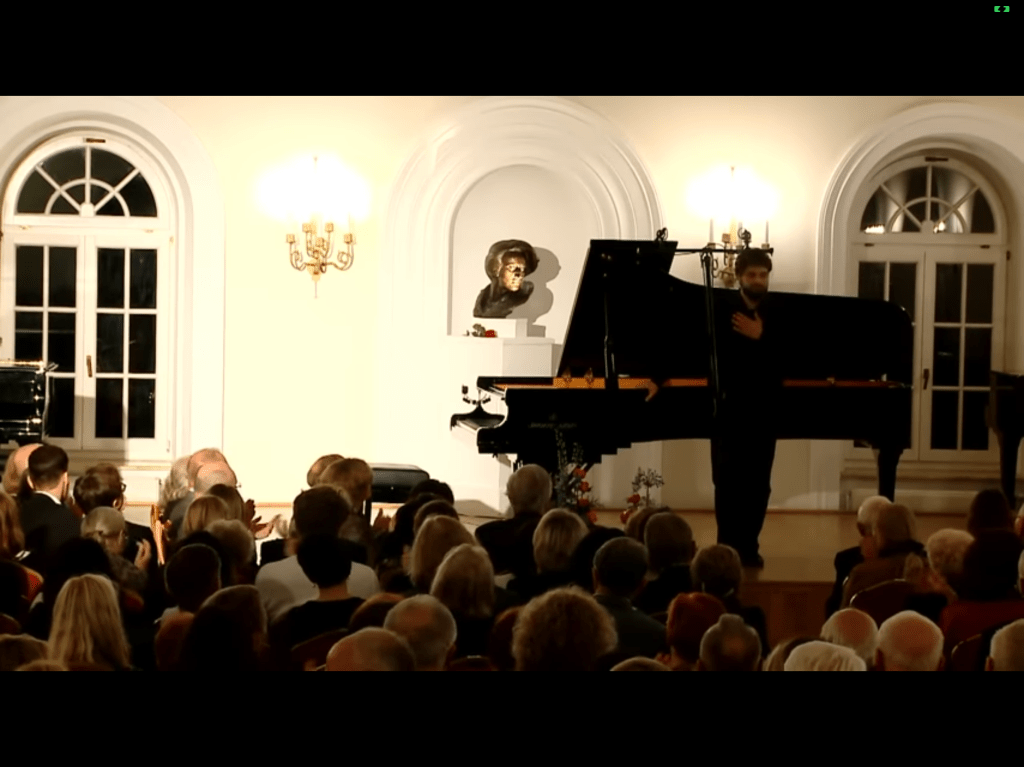
A performance that was greeted with a subdued ovation in this hall where Chopin is God.It was a quite remarkable performance from a mature master musician.He offered three short encores from a brief barely whispered page of Scriabin to Prokofiev or Shostakovich that I did not recognise but were certainly from the twentieth century Russian school .
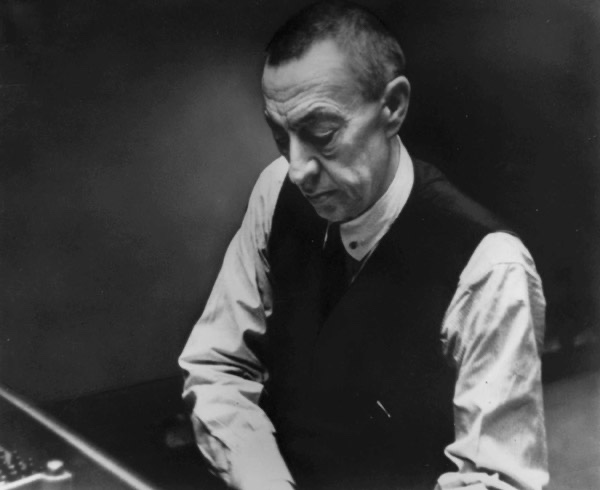
Piano Sonata No. 1 in D minor op 28 was completed in 1908.It is the first of three “Dresden pieces”, along with the symphony n.2 and part of an opera, which were composed in the quiet city of Dresden.It was originally inspired by Goethe’s tragic play Faust,although Rachmaninoff abandoned the idea soon after beginning composition, traces of this influence can still be found.After numerous revisions and substantial cuts made at the advice of his colleagues, he completed it on April 11, 1908. Konstantin Igumnov gave the premiere in Moscow on October 17, 1908. It received a lukewarm response there, and remains one of the least performed of Rachmaninoff’s works.He wrote form Dresden, “We live here like hermits: we see nobody, we know nobody, and we go nowhere. I work a great deal,”but even without distraction he had considerable difficulty in composing his first piano sonata, especially concerning its form.Rachmaninoff enlisted the help of Nikita Morozov , one of his classmates from Anton Arensky’s class back in the Moscow Conservatory, to discuss how the sonata rondo form applied to his sprawling work.Rachmaninov performed in 1907 an early version of the sonata to contemporaries including Medtner.With their input, he shortened the original 45-minute-long piece to around 35 minutes and completed the work on April 11, 1908. Igumnov gave the premiere of the sonata on October 17, 1908, in Moscow,
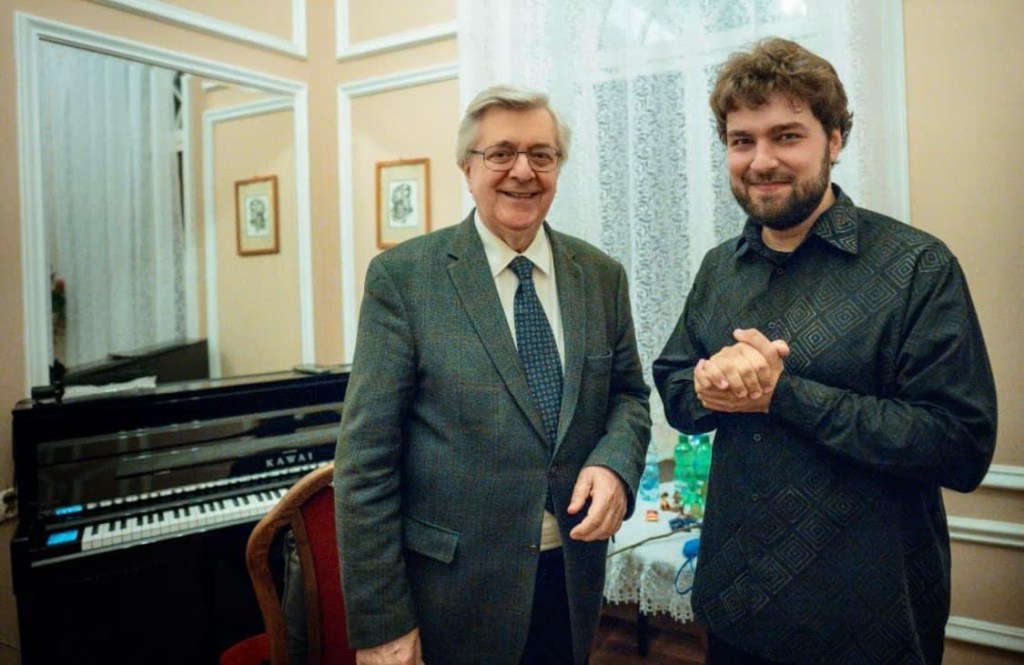
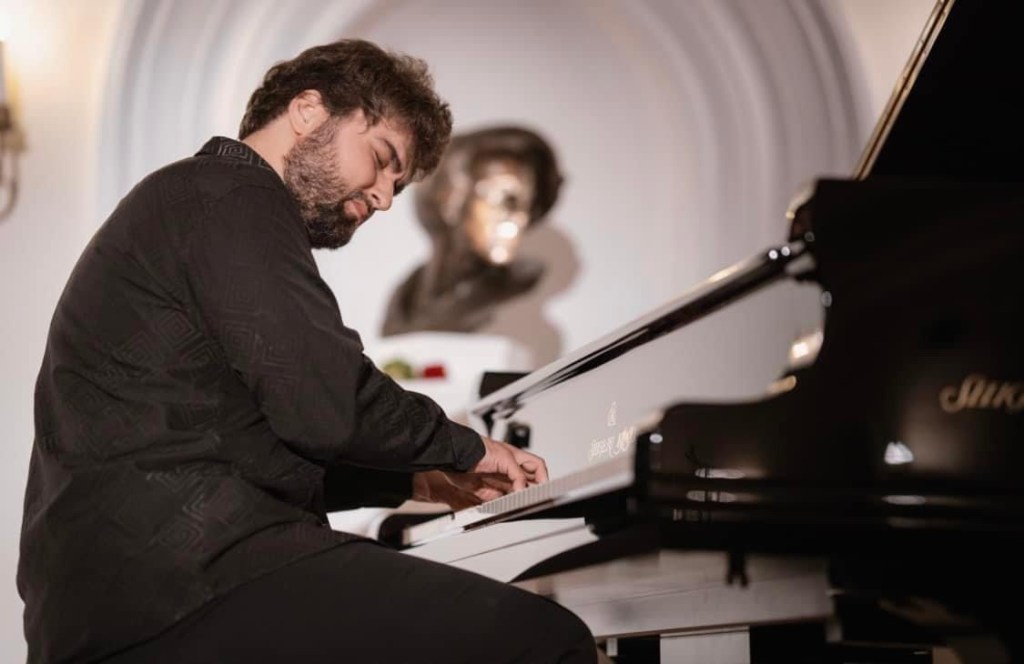
(photo Szymon Karzuch)

 ChristopherAxworthy-MusicCommentary