https://youtube.com/live/NJn2GThijuI?feature=share
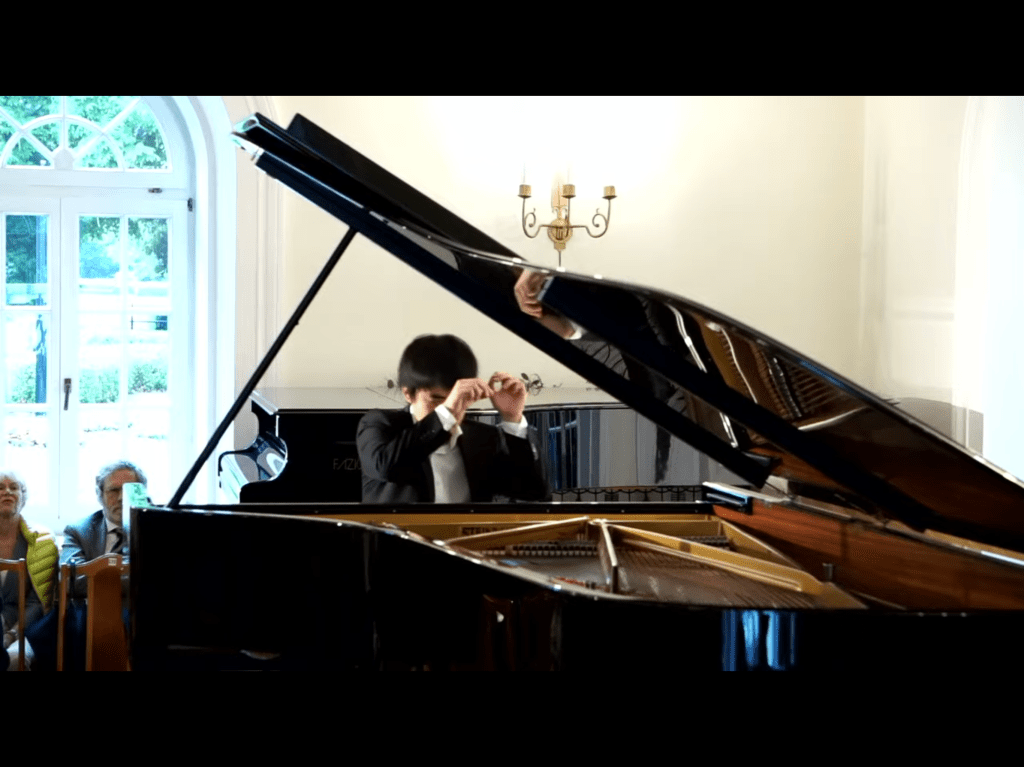
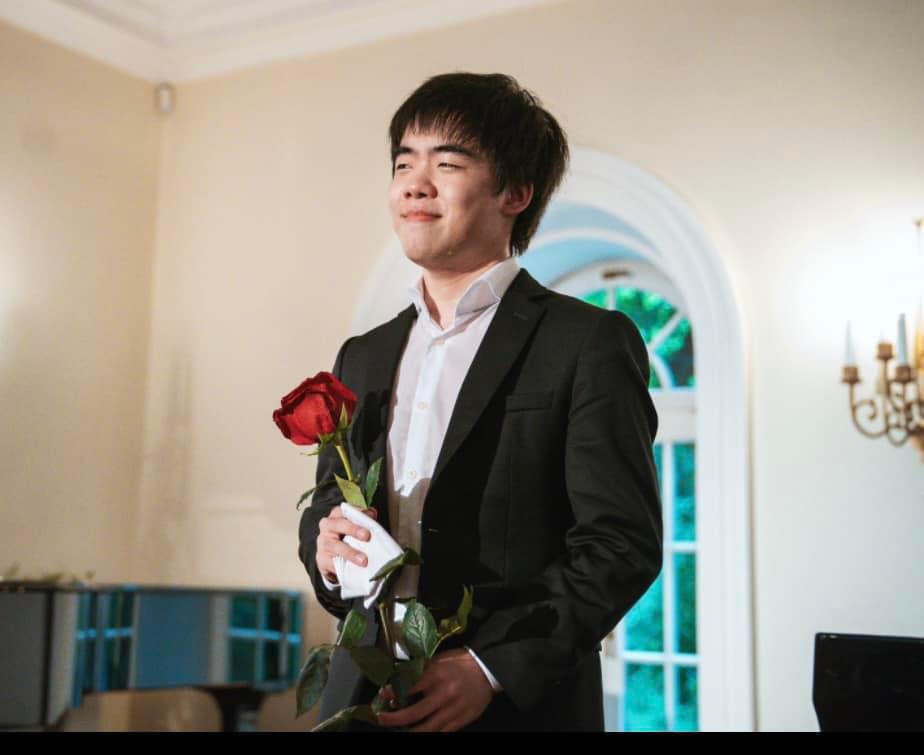
Astonishing Kevin Chen in Poland ………….winner of Budapest at 14 Geneva at 17 and Rubinstein at 18 and now we know why …There is a Genius in our midst ….,…….ctd https://youtube.com/live/NJn2GThijuI?feature=share
Hats of to Prof Piotr Paleczny who has treated us again to such marvels and such wonderful streaming.It was the fourteen year old ‘unknown’ who suddenly appeared in Budapest and astonished the world with playing of mature mastery and superhuman technical polish from a young Canadian pianist from the unknown school of Marilyn Engle.Today having gone on to win the Gold Medals in Geneva and Tel Aviv – the ultimate accolade was to be awarded the Artur Rubinstein Gold Medal at the age of 18.
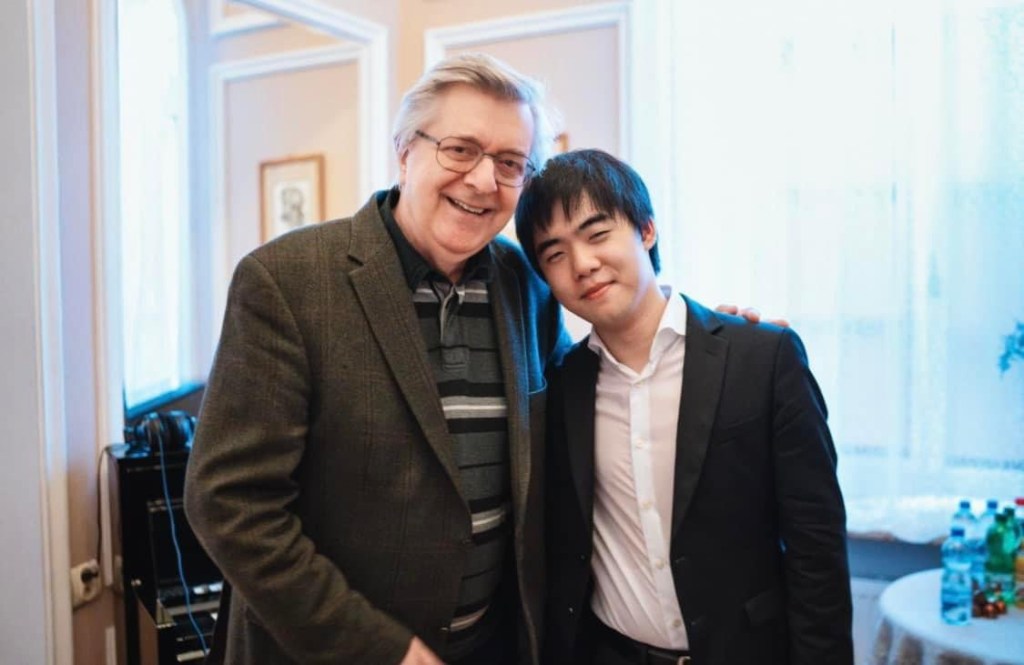
Janina Fialkowska and Linn Hendry Rothstein both Canadian trained pianists grew up as students together with Marilyn Engle.They both agree that she was the most talented of them all.Janina ready to pursue a political career was unexpectedly taken under the wing of Artur Rubinstein who persuaded her to pursue a career as a pianist .He helped her in the first stages by insisting that wherever he played she should play too.Janina despite health problems has maintained a world wide career and is the true heir to the simplicity and artistry of her mentor.
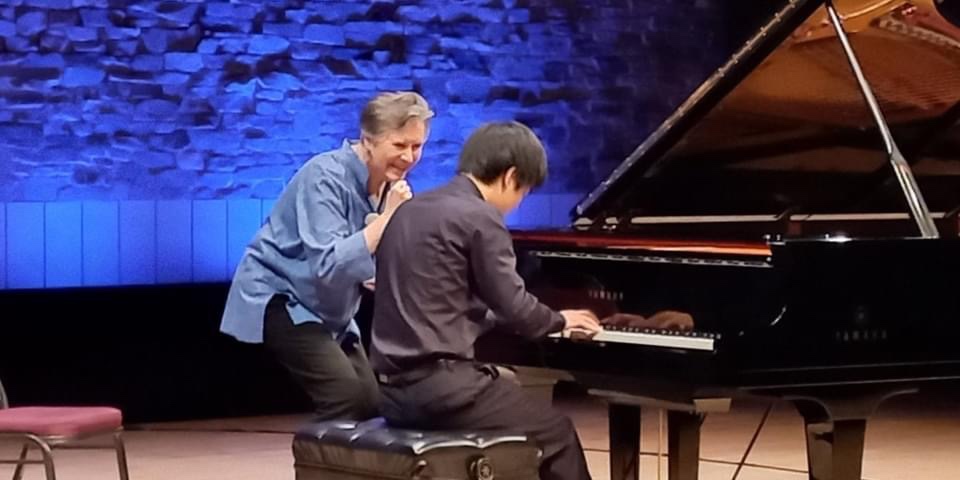
It was interesting to see her passing on her experience and sharing her artistry with Bruce Liu before he won the Chopin Competition and it was refreshing to see with what generosity she shared her time with Kevin Chen recently in masterclasses in Canada.Kevin Chen plays like a young Solomon ( with wisdom,of course,but I mean the inexplicably forgotten great pianist who together with Lipatti were the forerunners of modern piano playing)He plays with extraordinary mature musicianship with honesty and integrity and has a formidable technical preparation that seems to have no limitations.
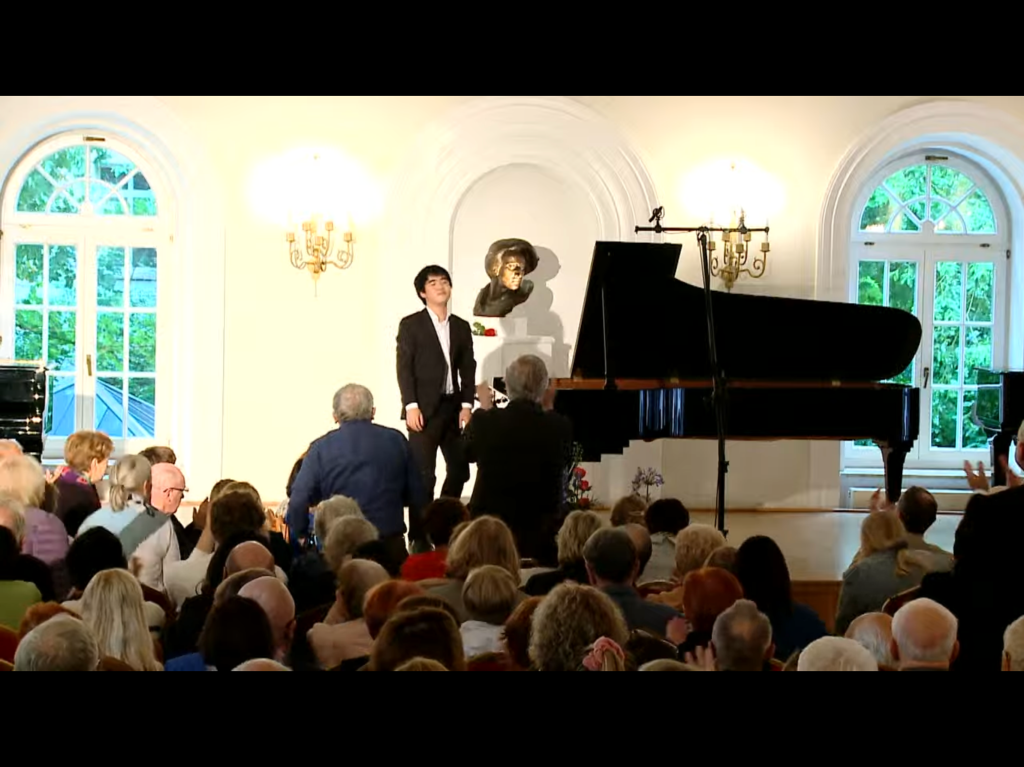
A programme that recently took La Roque d’Anthéron by storm (https://www.radiofrance.fr/francemusique/podcasts/le-concert-du-soir/le-pianiste-kevin-chen-a-la-roque-d-antheron-dans-un-programme-liszt-wagner-et-chopin-3570009) before arriving at the amazing array of star pianists that Piotr Paleczny surprises us with every summer in Duszniki and that is so generously shared with the world via their superb streaming.Michael Moran supplies old style reviews full of historic references and invaluable information.This is indeed an oasis of culture that is fast disappearing in a world where quantity rather than quality is the deciding factor.http://www.michael-moran.com/2023/07/78th-international-chopin-festival-in.html?m=1
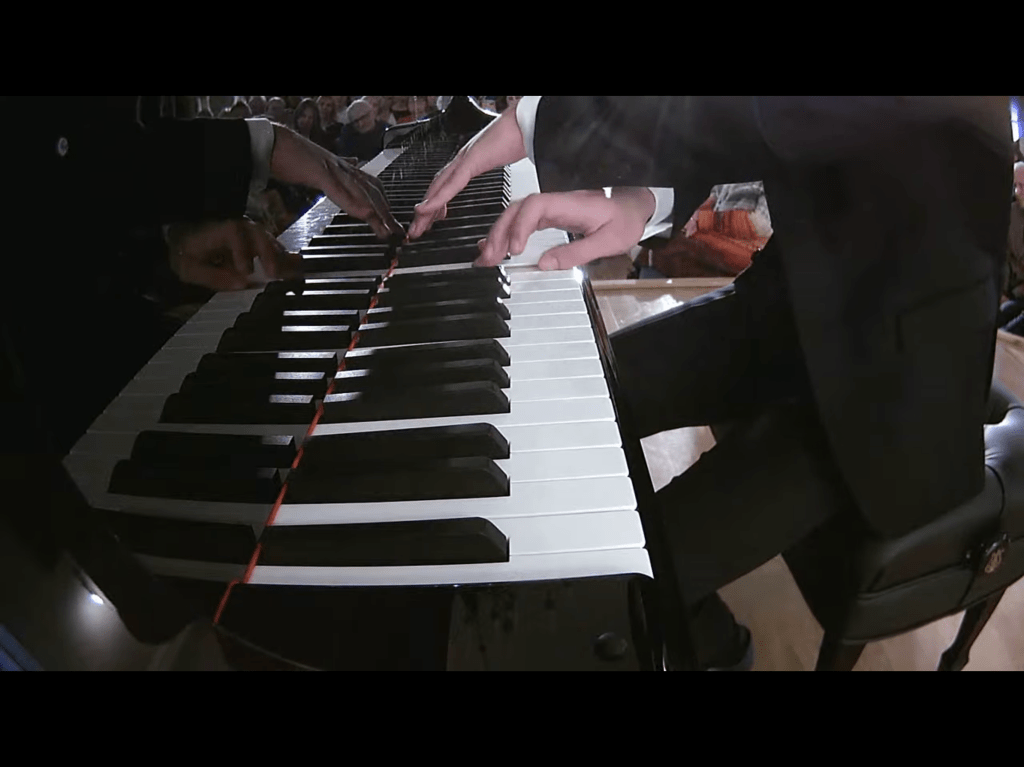
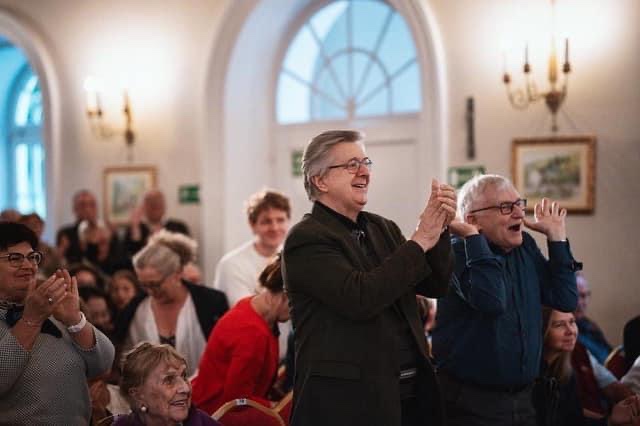
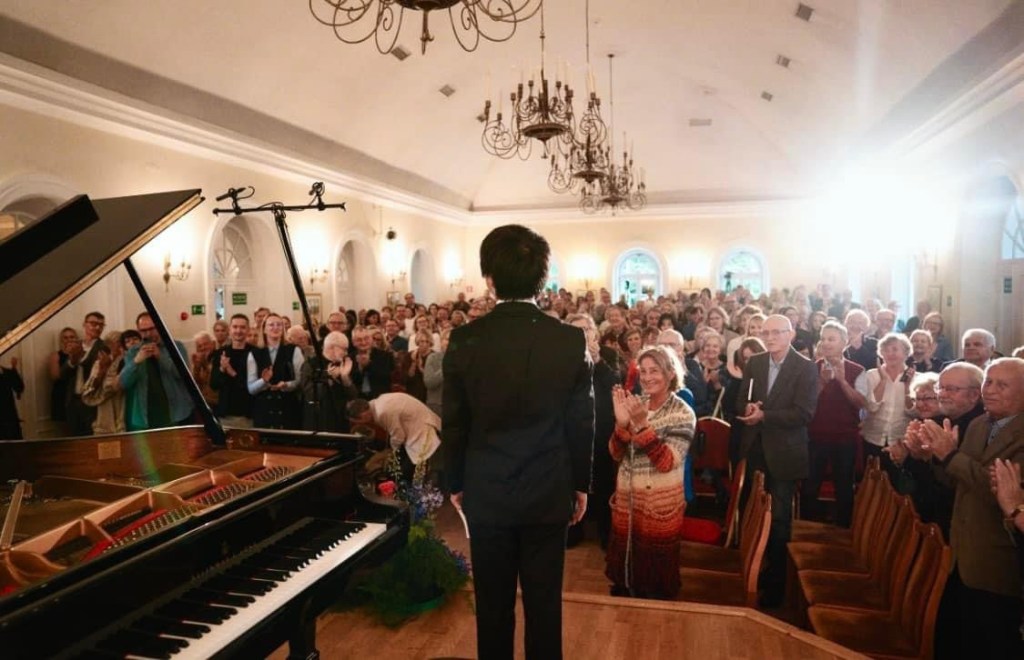
After a recital of unbelievable pianistic and musical perfection in which even Liszt’s old war horse of ‘Norma’ was given a new vibrant life Kevin Chen sat at the piano and ravished us with two song transcriptions by Liszt :”Fruhlingsnacht”and “Widmung”.Delicacy ,beauty and intelligence combined with technical brilliance captured the imagination and and enthusiasm of an audience already astounded by Chopin Studies op.10 that have rarely if never been played with such mastery.As if this was not enough this very young looking young man placed his right hand on the keyboard and allowed the sounds of Chopin’s double thirds study op 25 to reverberate with the perfection of a Rosenthal.But there was much more than just technical perfection Kevin realised that the music was in the left hand (as in that other pianistic tour de force :Liszt’s Feux Follets) and that the right hand notes were just streams of sounds that accompanied the deep pulsating bass melody.An astonishing display of humility where musical values are fundamental,the very raison d’etre and the actual superhuman technical mastery needed is just incidental.No barnstorming or demonstrative virtuosity but a young man who has been raised to put musical meaning and the composers wishes before any other consideration.He will as he matures gain more of his own personality and have a voice like Rubinstein that can be shared with simplicity and artistry and just add to the mature understanding and God given talent that he has been blessed with.
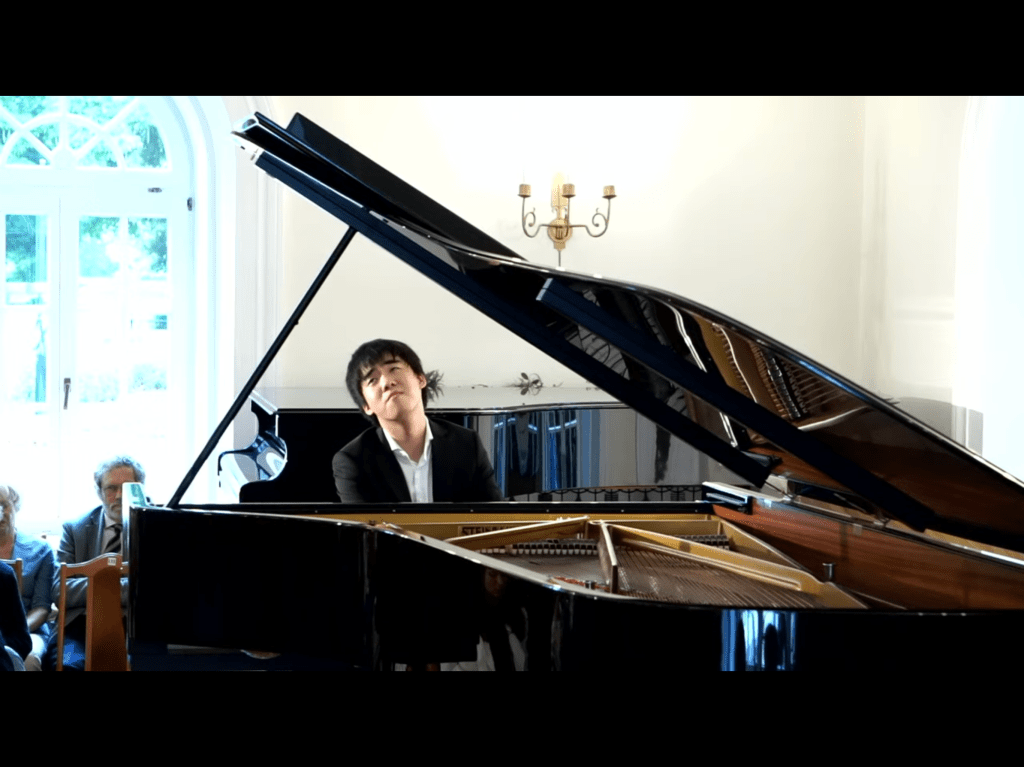
A fourth Ballade where the music just seemed to flow with such naturalness from the beauty of the opening and the following theme and variations that were a continual flow of forward movement to the final passionate outpouring of romantic fervour.
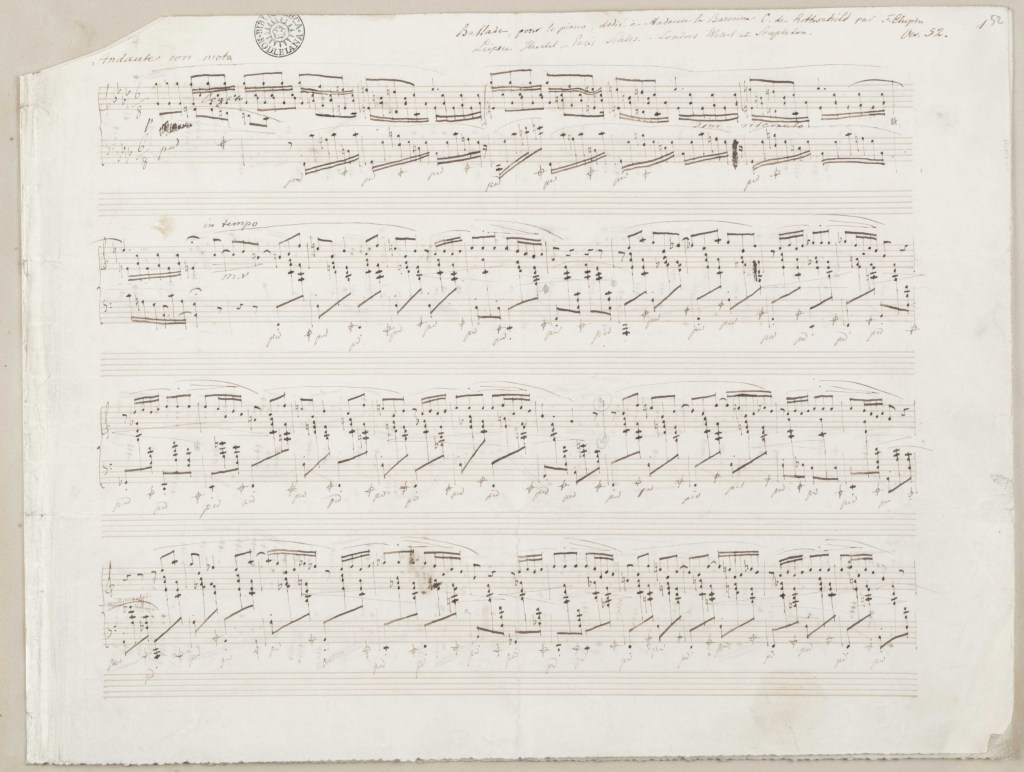
The five delicate chords and catching of breath before the wave of impending sounds was heralded with a sforzando deep in the bass.A tornado of romantic sounds of transcendental difficulty that in Kevin’s hands became a sculptured wave of undulating movement leading to the final cascade of notes and the nobility of the door being so definitively shut.
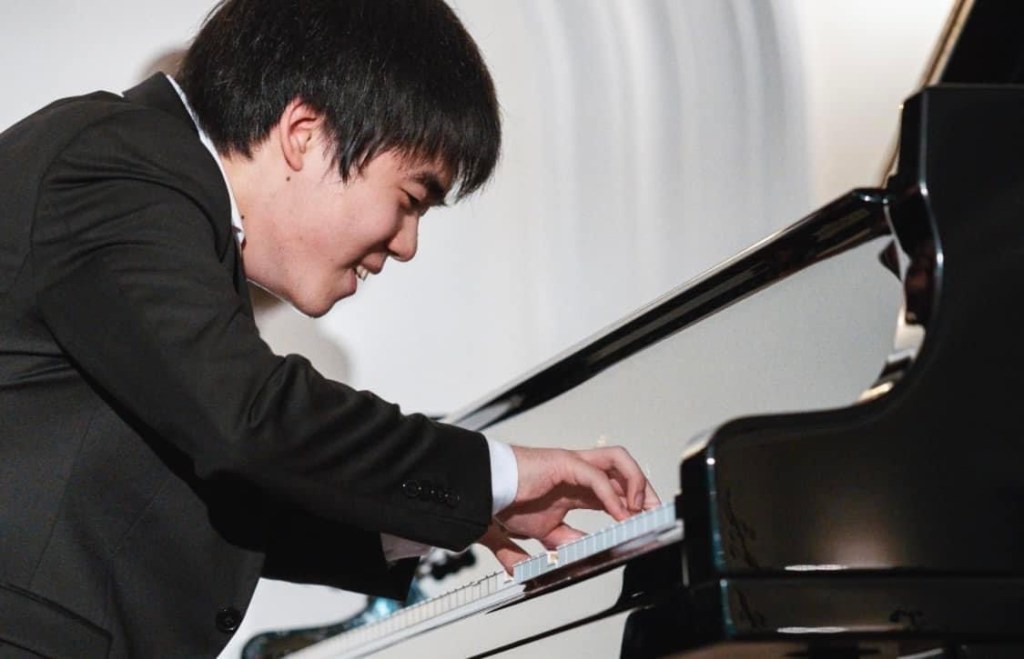
This was just a prelude to the twelve Studies op 10 that were twelve miniature tone poems of breathtaking beauty and brilliance.The transcendental difficulties of the first two just disappeared as the first became a great monument of vibrant sounds from deep in the bass and the second a fleeting wisp of sound as the right hand weaved a web of golden sounds as the bass just quite calmly added the carefree dance rhythm.Astonishing speed and ease we were aware off afterwards as it was the musical message that was so captivating and enticing.The third study and the sixth were both played with aristocratic style and a sense of balance that allowed the melodic line to sing with such luminosity being sustained by the ravishing harmonies that were being woven all around.I have never been aware of the great pealing bells in the third study like a Great Gate and an integral part of this heartrending study that is so often misunderstood and divided into two separate episodes.In Kevin’s hands the genius of Chopin was at last revealed where the composers innovative use of the piano was so apparent as never before.The fourth and famous black key fifth were played with astonishing character and ease – the phenomenal speed and perfection were but a detail to the passionate ending of the fourth or the charm and delight not to mention the cascades of octaves of the fifth.The seventh could almost be called the ‘butterfly’ study such was the gossimer lightness of the repeated notes on which the melodic line was revealed with such subtle artistry.Cascades of notes in the eighth were just the accompaniment to the melodic line in the bass.The same agitated bass that dominated the ninth as the melodic line floated on a current of forward moving sounds.The beauty of the tenth and the eleventh just belied the actual detailed technical indications of the composer.The tenth floated on a wave of harmonious sounds like the treacherously difficult nineteenth Prelude.Art that conceals art but of a difficulty that only Richter up until now seemed to have found the perfect legato for something so technically demanding.The ‘Revolutionary’ study was played with fire and passion where the whispered answering phrases were judged to absolute perfection as we were swept along on a wave of emotion every bit as moving as the Polonaise Héroique.Poland was very much in Chopin’s heart and the sense of yearning never more apparent.
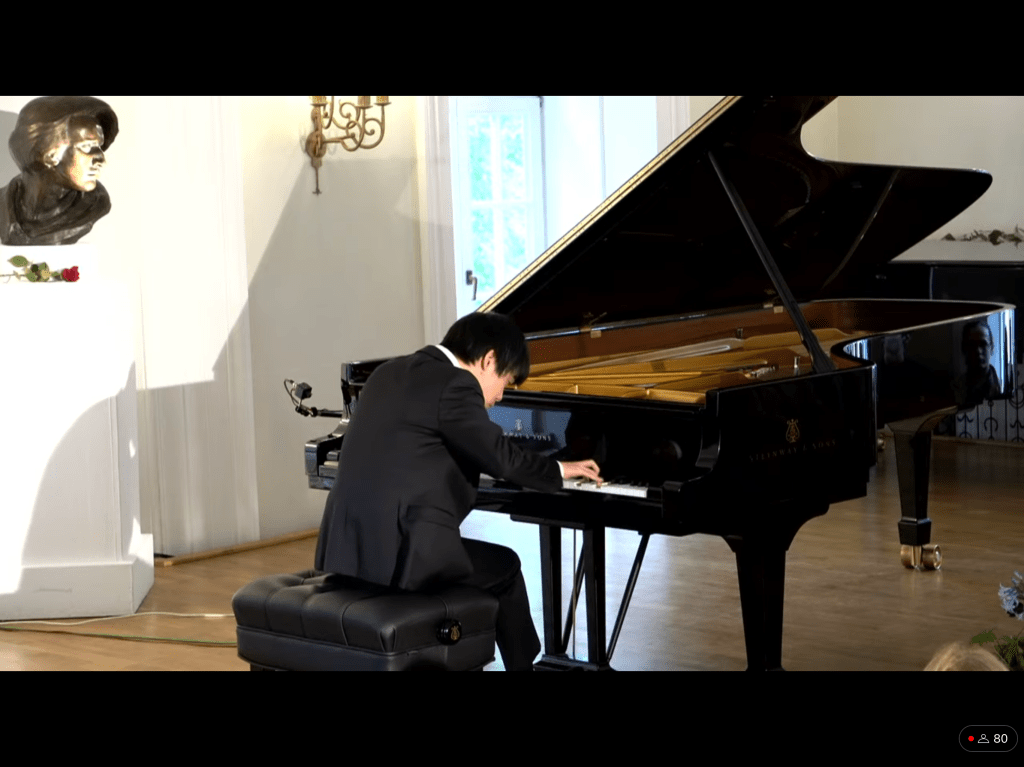
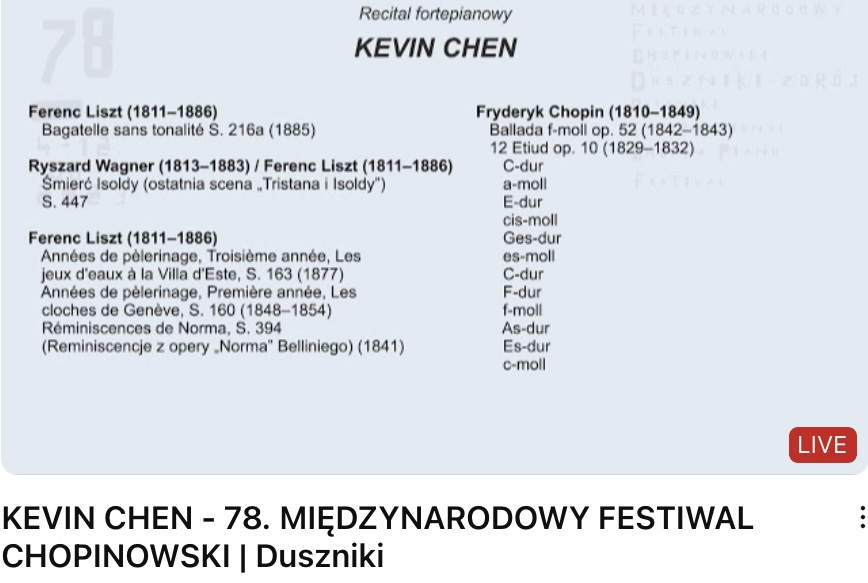
A fascinating opening with four short tone poems by Liszt .A ‘Bagatelle sans tonalité ‘ with its amazing clarity and precision that just seems to obstinately stop in mid air.A ‘Liebestod’ where we were treated to phrasing of subtlety from the etherial to the sumptuous .All played with an orchestral shape and mature understanding of sound but never interfering with the natural youthful passion of which this work above all is a yearning sigh of longing.A fluidity and jeux perlé brilliance of the fountains at the Villa d’Este was played not as a show piece but as a work full of the same colours and sounds that are still to be found on the hills around Rome that Liszt loved so much.’Les Cloches de Genèvre’ must have rung a bell for Kevin who just a year or so ago won the Gold medal in the International Competition there .A work rarely heard in concert but is an outpouring of mellifluous sounds played by Kevin with sumptuous colour revealing his masterly sense of pedalling that Anton Rubinstein always referred to as the ‘soul’ of the piano.
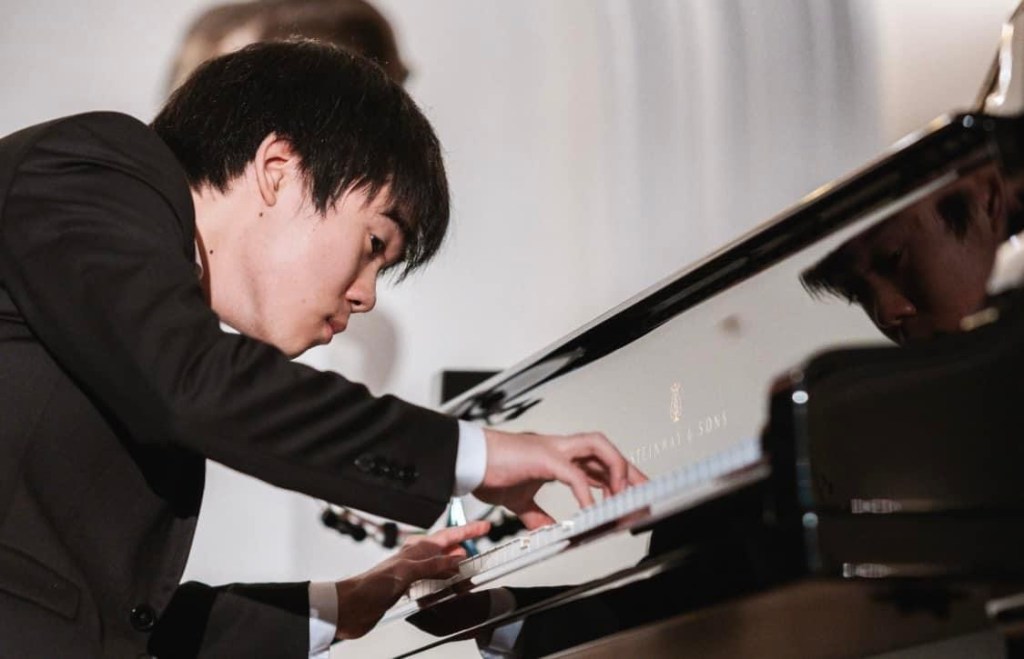
The Norma Fantasy was at last restored to the great work that it really can be.Beauty of phrasing,masterly sense of balance allied to a technical mastery that was breathtaking. Even the ending where the two themes are so cleverly combined the tempo never slackened as the tension rose to almost boiling point.Giant scales that were a mere wind passing over the keyboard with the melodic line being hinted at from afar. The Thalberg trick of a tenor melodic line in the midst of cascades of notes all around making one believe that there must be more than one pianist involved was played with astonishing ease and a mounting passion that was mesmerising.There were driving rhythms of an ending of astonishing rhythmic energy and precision as octaves were bantered about with enviable ease.
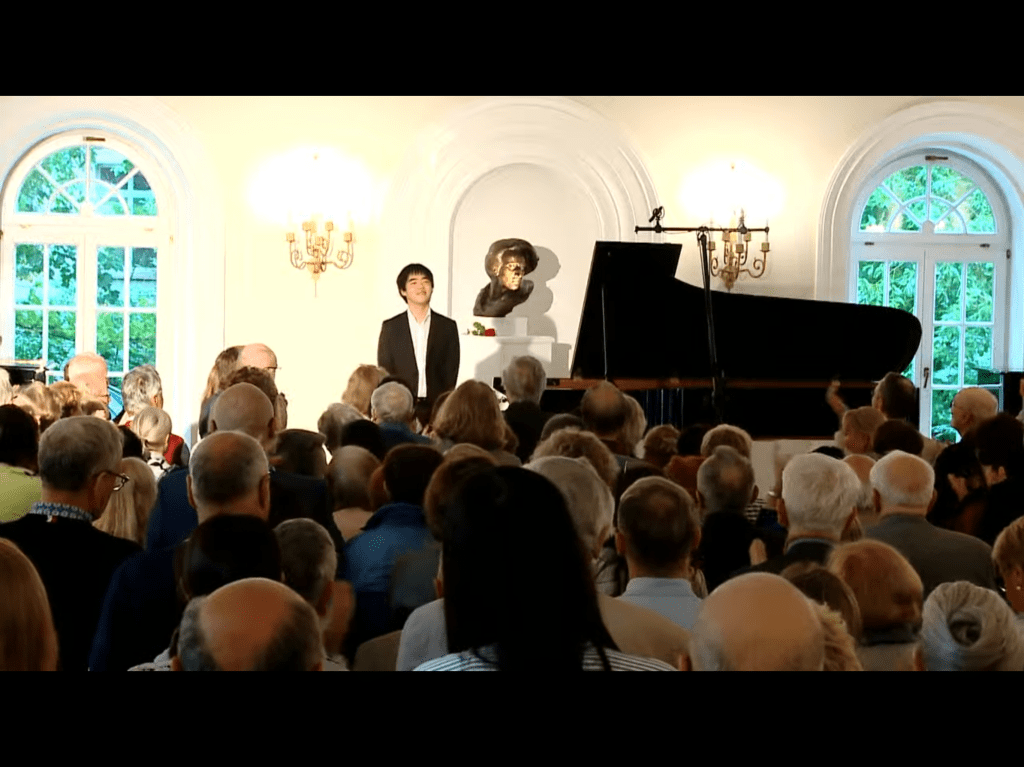
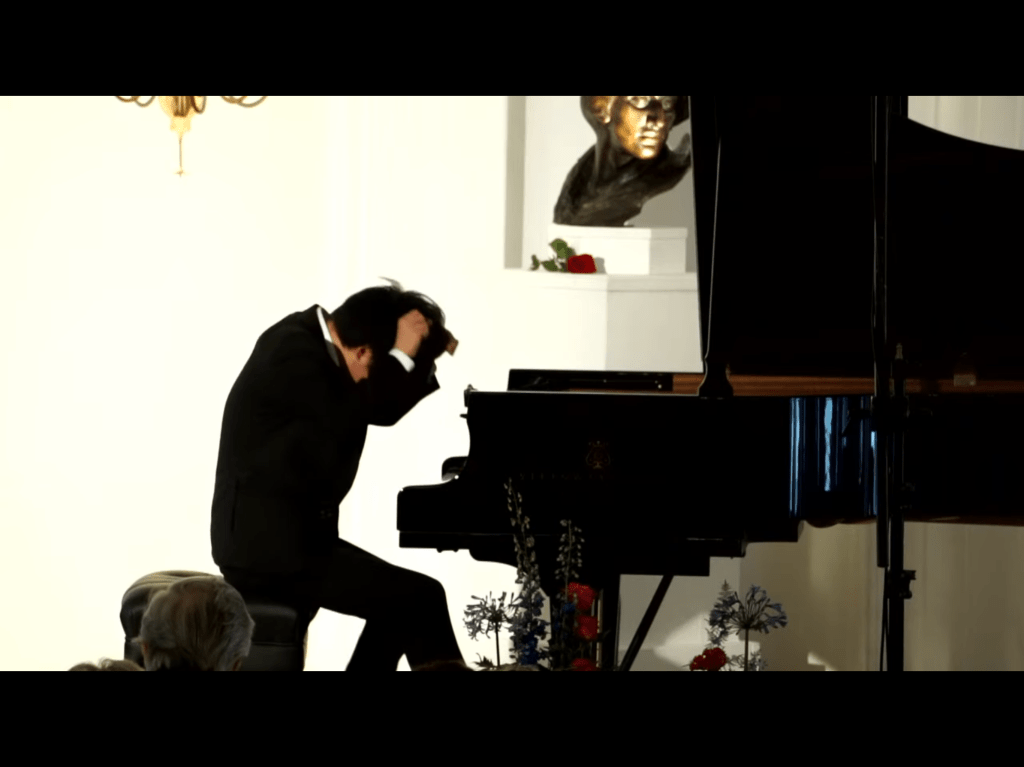
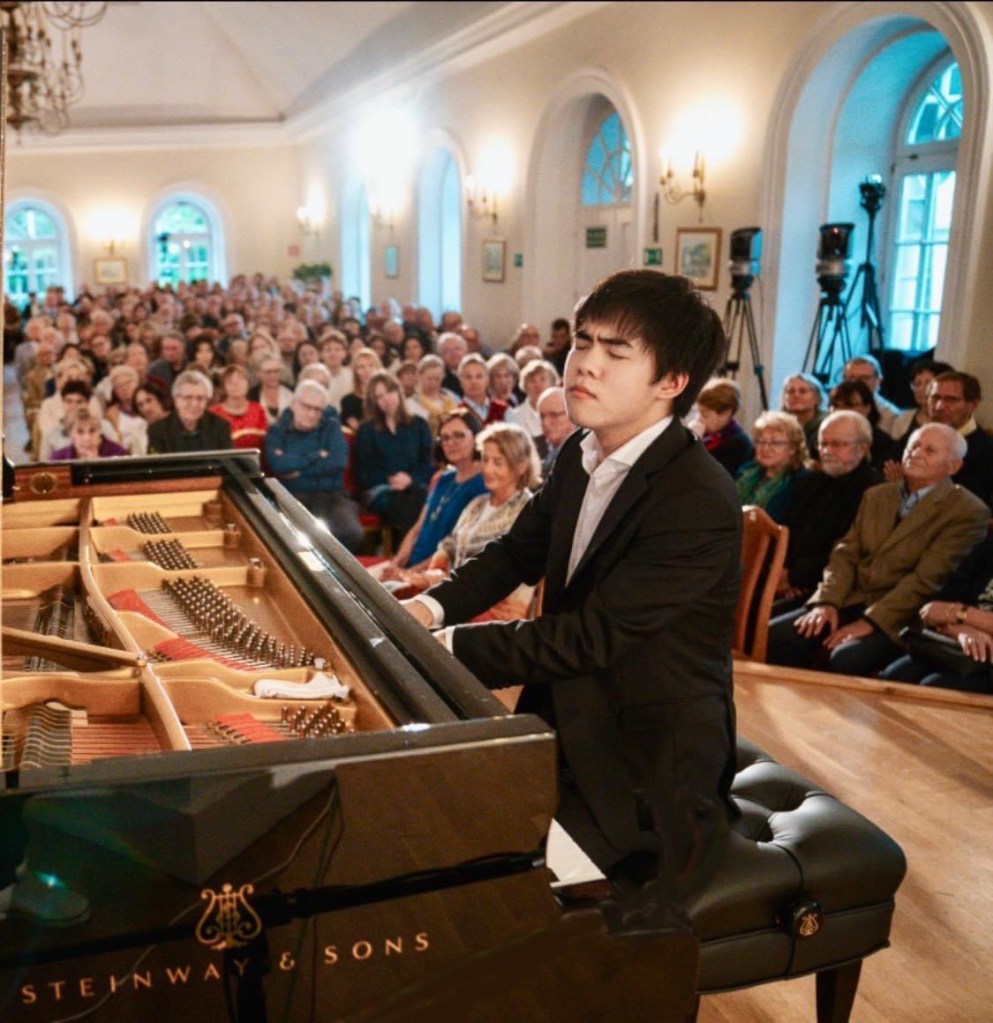
Bagatelle sans tonalité S 216a was written in 1885 a year before his death.The manuscript bears the title “Fourth Mephisto Waltz”and may have been intended to replace the piece now known as the Fourth Mephistopheles Waltz when it appeared Liszt would not be able to finish it; the phrase Bagatelle ohne Tonart actually appears as a subtitle on the front page of the manuscript.Written in waltz form,the Bagatelle remains one of Liszt’s most adventurous experiments in pushing beyond the bounds of tonality, concluding with an upward rush of diminished sevenths.Unlike the Third and Fourth Mephisto Waltzes, the Bagatelle received its premiere within Liszt’s lifetime, by his pupil Hugo Mansfield in Weimar on June 10, 1885.Like the Fourth Mephisto Waltz, however, it was not published until 1955.
The Bells of Geneva is a work taken from the first year of the years of Pilgrimage : Switzerland.A collection that would undoubtedly have as a preface another small collection of three pieces, Apparition (1834). This first Swiss year evokes Liszt’s stay in this country 20 years earlier with Marie d’Agoult.Dedicated to his first daughter Blandine (1835-1862),it is accompanied by a quote from Byron taken from Childe Harold : “I do not live in myself, but I become part of what surrounds me”.
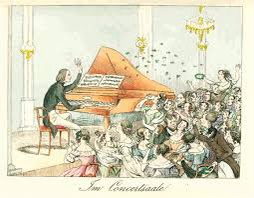
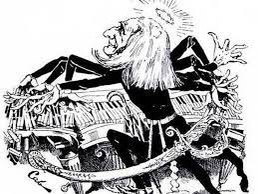
Norma Fantasy :During the 1800s opera had a lot of appeal to audiences. From big dramatic storylines to emotional arias, opera was in its prime during this century. Although opera was perceived to have a glamorous aura, it was actually quite inaccessible for a large part of the public due to price and cultural differences. Therefore it is not surprising that many pianists sought to gain more audiences by composing, arranging and performing their own operatic fantasies. Liszt undertook the challenge of diluting Bellini’s opera Norma into a 15 minute solo piano work in 1841. The work easily equals the dramatic impact of the original opera through Liszt’s dynamic and highly virtuosic writing. No less than seven arias dominate Liszt’s transcription of Norma which are threaded together to create a nearly continuous stream of music.The title role of Norma is often said to be one of the hardest roles for a soprano to sing, and this adds to the drama and intensity of the music. ‘Norma, a priestess facing battle against the Romans, secretly falls in love with a Roman commander, and together they have two illegitimate children. When he falls for another woman, she reveals the children to her people and accepts the penalty of death. The closing scenes and much of the concert fantasy reveal Norma begging her father to take care of the children and her lover admitting he was wrong.”Liszt, arguably the most charismatic virtuoso of all time, was challenged for supremacy by Sigismond Thalberg, a pianist who could apparently not only counter Liszt’s legendary fire and thunder with subtlety but who played as if with three hands. Three hands were heard, two were visible! A confrontation took place in the Salon of Princess Belgioso and although it was diplomatically concluded that ”Liszt was the greatest pianist; Thalberg the only one”, the outcome was inevitable. Liszt continued on his protean and trail-blazing course while Thalberg was consigned to virtual oblivion.
At the midpoint of Franz Liszt’s Les jeux d’eaux à la Villa d’Este (The Fountains of the Villa d’Este), as the music modulates into a radiant D major, the composer places in the score the following inscription from the Gospel According to John: Sed aqua quam ego dabo ei, fiet in eo fons aquae salientis in vitam aeternam (But the water that I shall give him shall become in him a well of water springing up into eternal life).The two great halves of Liszt’s long life (he lived from 1811 to 1886) are synthesized here. His early touring years as perhaps the greatest piano virtuoso of all time are manifested in the brilliant instrumental effects that abound in the music; a true test of any performer’s technical mastery. And his later years of spiritual enlightenment and teaching shine through in the serene ecstasy sustained throughout.While Les jeux d’eaux à la Villa d’Este is the progenitor of all pianistic water-music to come (Ravel and Debussy lay decades ahead), its intent goes beyond the musical depiction of the rilling and leaping of waters in fountains. It offers water as the symbolic focus of profound contemplation.

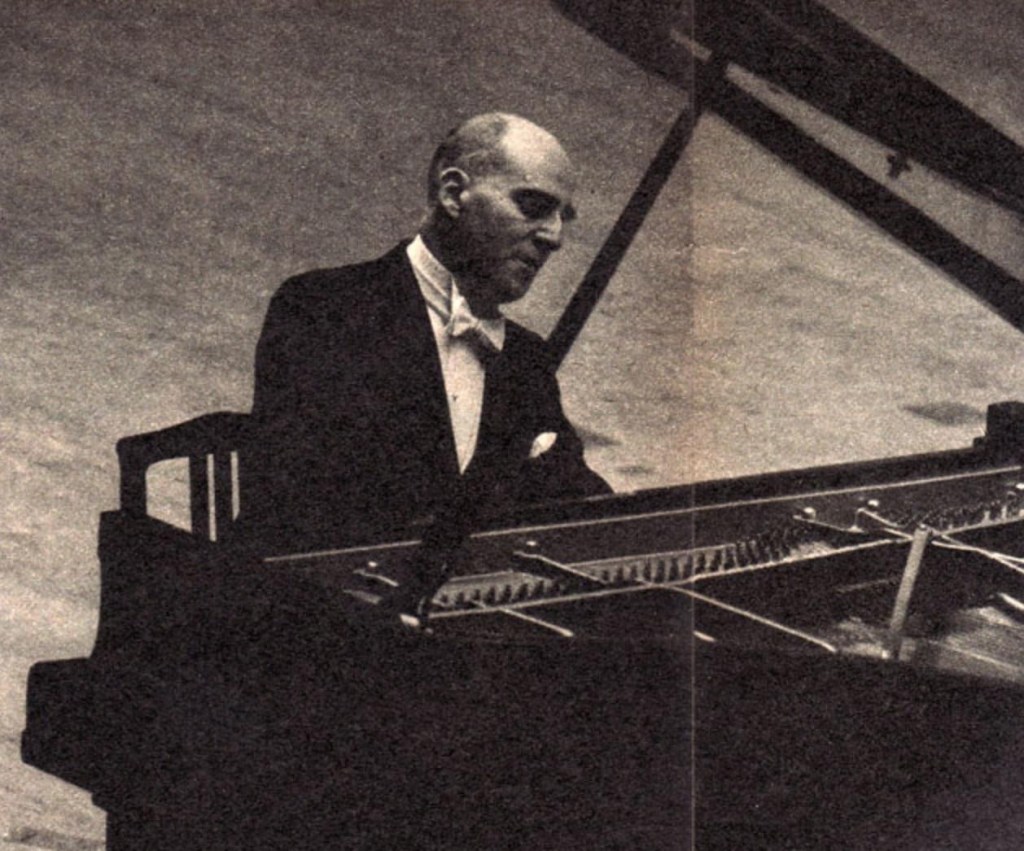
British pianist Solomon was born on August 9, 1902, which is 121 years ago this year. He was an astounding musician and pianist whose brilliant career was tragically cut short by a stroke in 1956, though he would live for over three more decades.As I mentioned in a post about the artist last month, his studio discography gives but a glimpse into the fullness of his repertoire and capabilities. He recorded about an hour of Chopin in the 78rpm era but none in the LP era (though he was due to record the Sonatas when his stroke occurred); he made just a few wonderful Debussy records (among his teachers was the French legend Lazare-Levy) but only on 78s, and these were rarely reissued. His handful of Liszt recordings also demonstrate a fiery temperament and blazing technical capacity at odds with the prevailing perception of him as a more reserved interpreter – which he could be … Like many, his artistry had many facets, only a portion of which is revealed by his sanctioned records.Linked in the comments is my 120th birthday tribute to the artist prepared last year, which features links to a number of my favourite recordings set down of course of roughly a quarter century, from 1929 to 1956. Also included are two radio interviews with Solomon that are very insightful, and a podcast I produced about his 78rpm recordings.I thought I’d also include in the comments a Liszt recording not included in the written feature, his superb December 16, 1932 (somewhat abridged) account of Liszt’s Hungarian Rhapsody No.15. His dazzling fingerwork is even more magnificent when one considers how beautiful his tone is throughout, every note glistening like a diamond: I’ve often said that if someone seems to have great technique because they have impressive dexterity but the sound they produce is not beautiful, then it is not actually integrated technique and merely dexterity. Solomon had it all.And finally, his Hammerklavier, part of what was due to be a recording of the complete Beethoven Sonatas, sadly interrupted by his health crisis. This is by many considered one of the finest accounts of this titanic masterpiece – it certainly is an account worth hearing and revisiting.
 ChristopherAxworthy-MusicCommentary