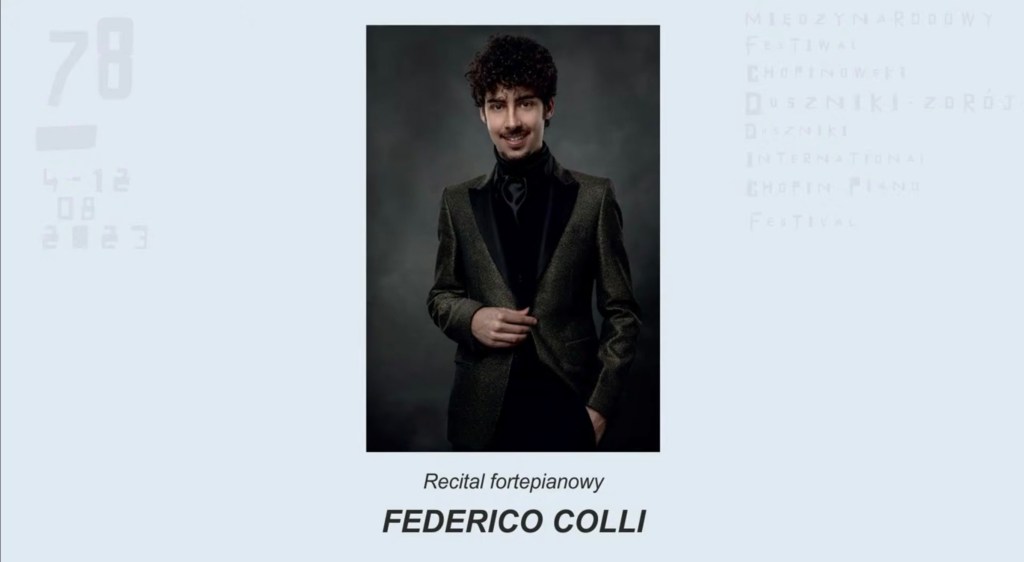

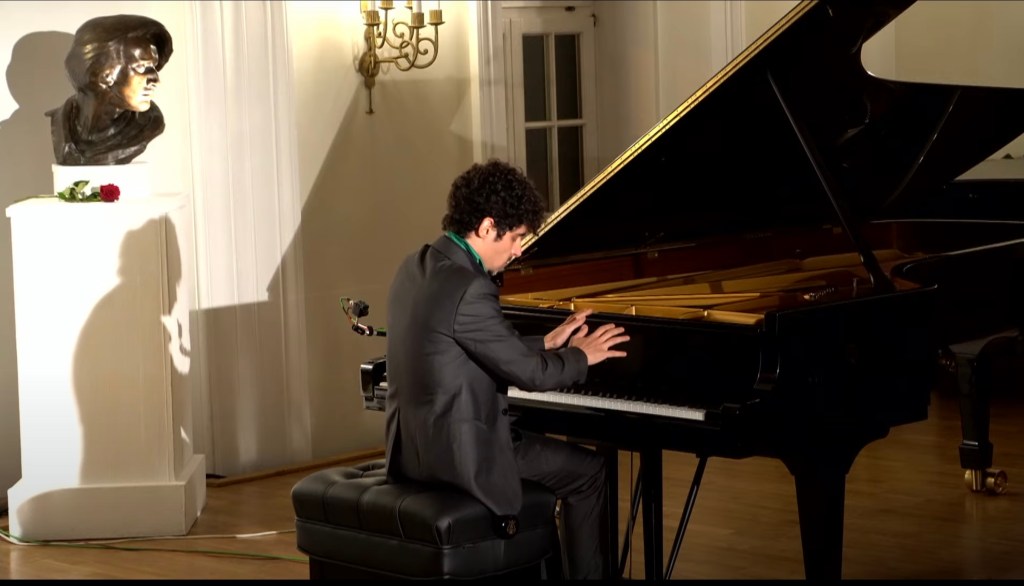
Astounding Federico Colli in Poland …. Winner of Leeds in 2012 now conquering the world with his artistry .
https://youtube.com/live/UHdgqAqMdlE?feature=share
Playing of ravishing beauty I never thought I would hear Prokofiev like that since Rubinstein’s Visions in Carnegie Hall …….beauty and artistry combined with showmanship and charm ….an artist with a wondrous choice of programme ………..A fascinating start with Mozart and the two Fantasies in C minor .A fragment of a violin fantasy only 27 bars long but completed by Stadler which showed immediately the credentials of Federico Colli with delicacy and luminosity and phrases of insinuating subtlety.An almost improvised work of great dynamic contrasts that was the ideal preparation for Mozart’s mighty C minor fantasy that was the introduction to his most Beethovenian of Sonatas,that in C minor.There was a mysterious opening to the fantasy and an almost capricious sense of timing which led to the beauty and freedom of the mellifluous central episode.The Allegro was sometimes erratic with exaggerated fluctuations of tempo but it was always of great effect and brought Mozart’s genial improvised fantasy vividly to life with originality but also faithfulness to the score.After a cadenza of true Beethovenian proportions there followed the Andantino with even more noticeable fluctuations of tempo before the dynamic and brilliant Più Allegro and the mystery of the return of the opening question and answer of such dramatic effect.
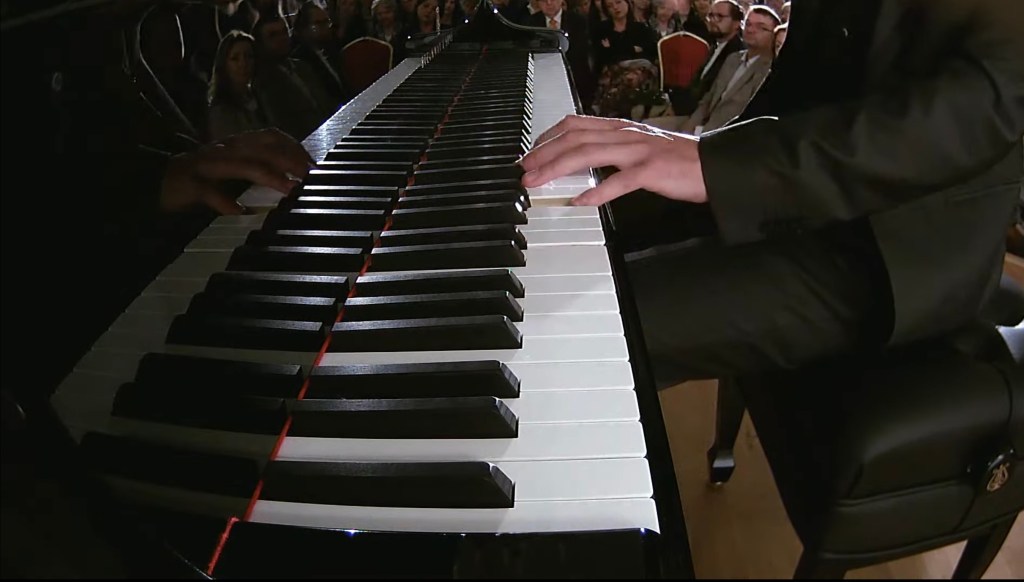
The Schubert Fantasy is well known to all those who have ever attempted to play piano duets.The haunting opening melody over a gently lapping accompaniment was played with ravishing sound and a subtle freedom that brought to life this well known opening with a freshness and etherial beauty that made one wonder why Schubert himself had not written it for two hands instead of four.These were indeed magic hands of a sensitivity to sound and colour that I have only heard from Horowitz .It was a wonderful moment of discovery every time the theme returned with ever more poetic beauty.The transcription by Grinberg became rather overpowering at some stages though and began showing its age.Like Busoni like with the same triumphant return at the very end with the opening theme returning in a blaze of Lisztian triumph just as in Busoni’s vision of Bach’s Goldberg Variations.The Scherzo too was more Brahms than Schubert with is rather full harmonic filling and pedal clinging harmonies.The Largo too with its shimmering vibrated chords where Schubert even with four hands was much more simple and less dramatic.The Fugue on the other hand was played with a clarity and simplicity building to a climax with Busoni like octaves in the left hand and great bass notes clouding the simplicity of Schubert’s etherial final vision of paradise.But having commented on the transcription it was worth its weight in gold to hear how Federico with such subtle artistry could turn such a well known and love theme into a wondrous jewel of unforgettable beauty.If a thing of beauty is a joy forever then play on say I.
It was in the ‘Visions Fugitives’ that Federico revealed his true fantasy and kaleidoscopic sense of colour.An ability to create with a minimum of strokes a continuous change of atmosphere and character.From the spacious landscape to the elegance and even quixotic charm of these jewels so rarely heard these days.I have heard Gilels and Richter play them with ravishing effect but it was Rubinstein like Colli today that could make them speak so eloquently and simply.An extraordinary quixotic range of sounds that like a chameleon seemed to change colour before our very eyes.
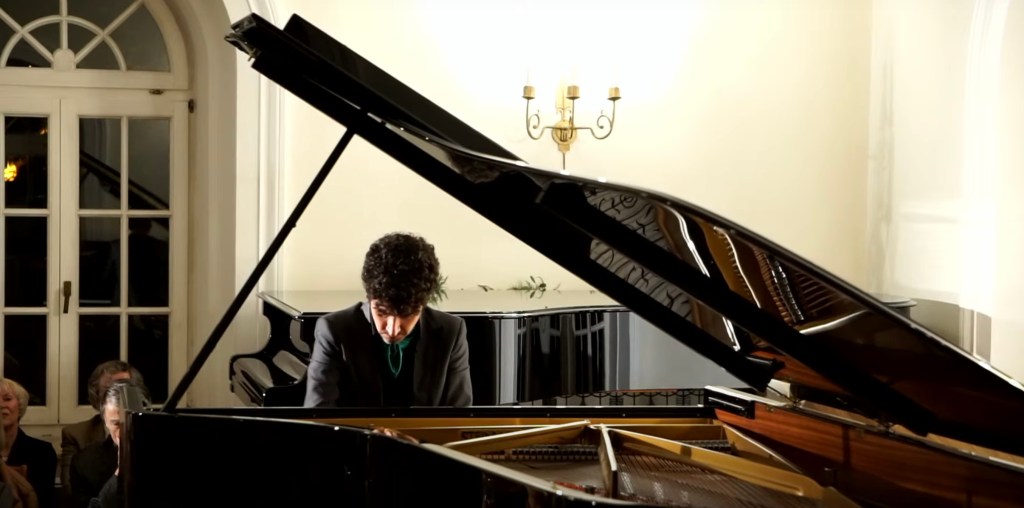
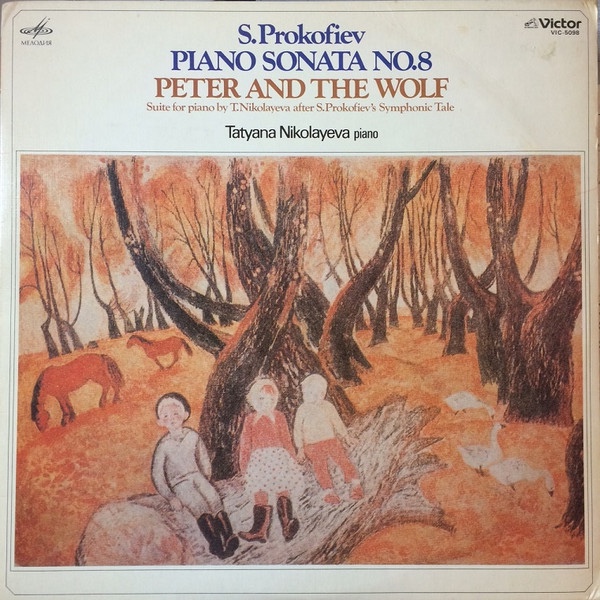
It was the same sense of character that her brought to Nikolaeva’s Suite from Peter and the Wolf.A short series of pieces all based on the famous theme that was played at the beginning with utmost purity and simplicity only to be embroidered and elaborated with transcendental fantasy and skill .A work worthy of being heard more often in the concert hall.It is much more than a mere transcription but is a paraphrase by a pianist where music just poured from her fingers whether it be the Art of Fugue or Mussorgsky’s Pictures.
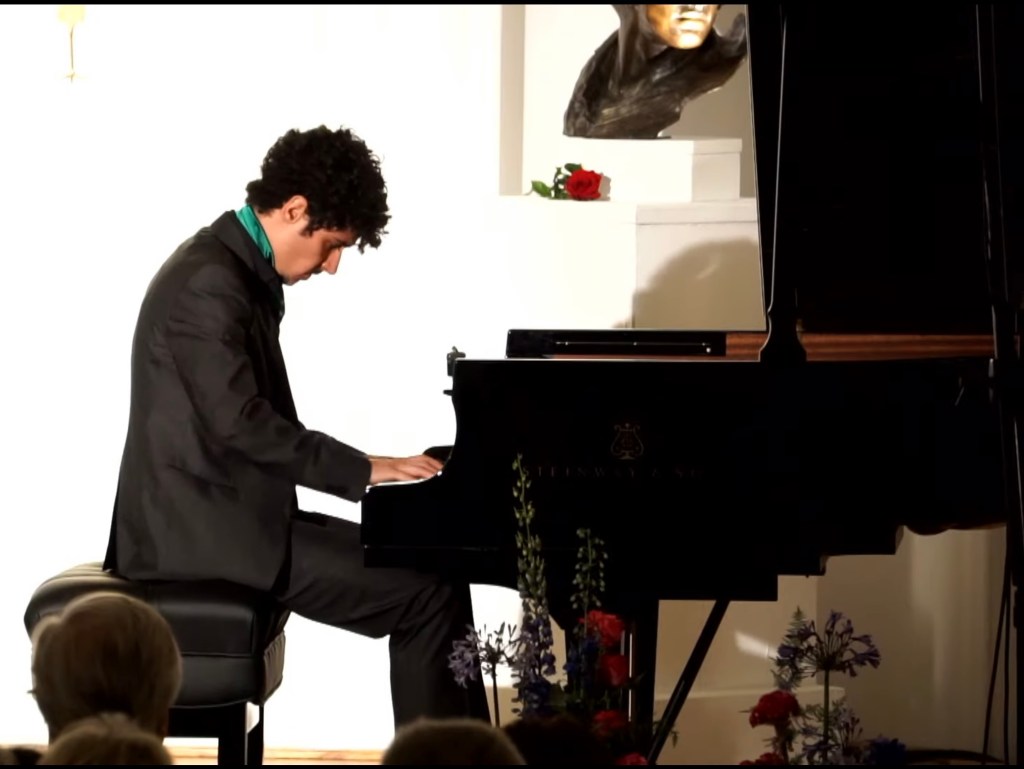
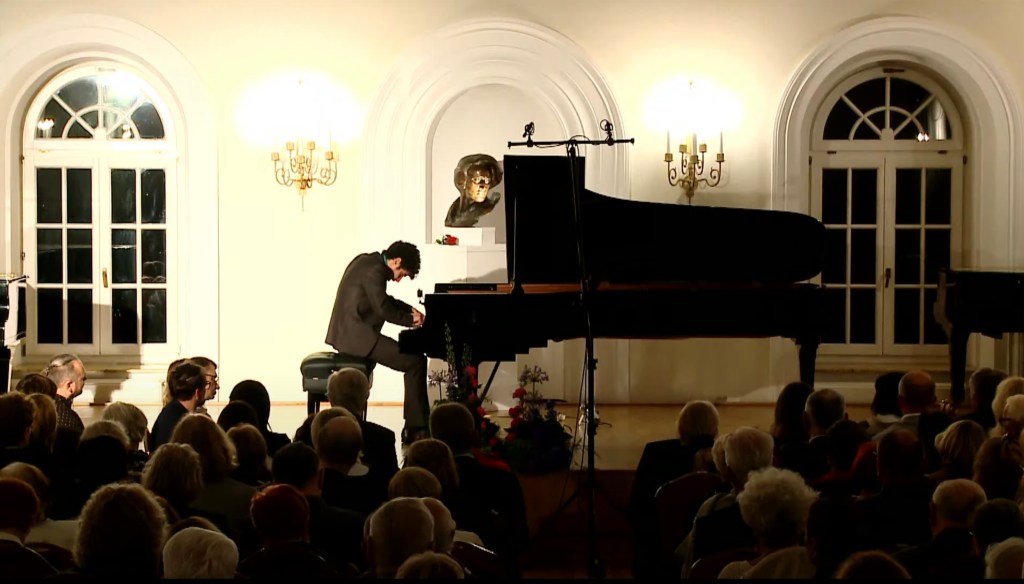
A recital in which Federico brought vividly to life everything he played.A supreme stylist playing with intelligence,artistry and an authority that was spellbinding.Even the encores were stimulating and quite a revelation of both beauty and technical mastery.
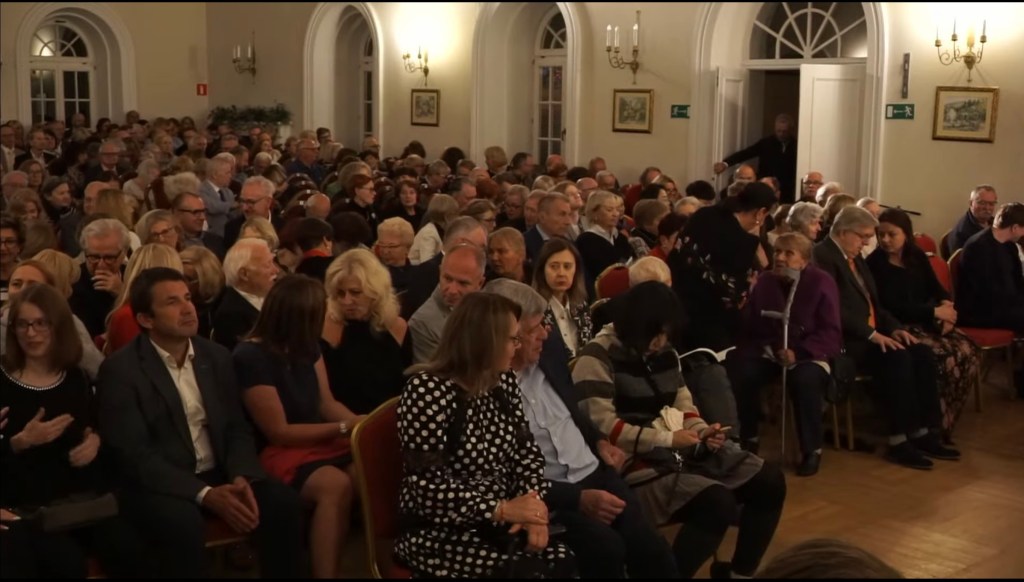
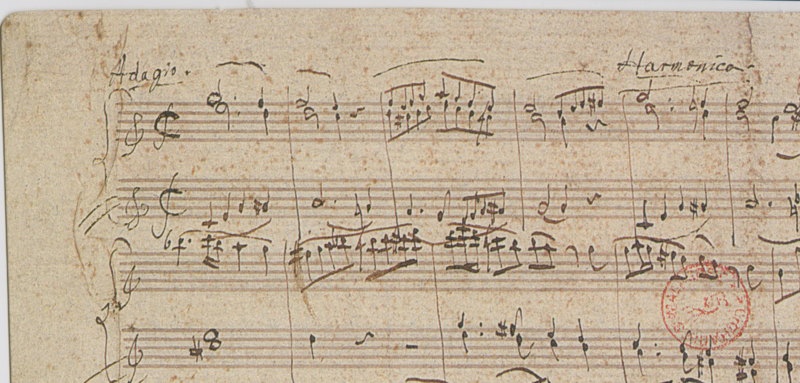
Mozart’s Adagio for Glass Harmonica was played with a purity and luminosity of sound as he etched the delicate sounds out of the piano with such icy precision.An overblown transcription followed of an equally overblown work by Kreisler who had admitted that the Preludium and Allegro was not by Pugnani but indeed by himself.This Busoni type transcription for piano revealed the enormous technical reserves of a pianist who can devour the keyboard when he chooses to do so.But Federico is above all an artist and a poet as was shown by his heartrending transcription of Handel ‘Lascia ch’io Piango’ offered as a goodnight elixir for an audience by now on their feet wanting ever more.
Visions fugitives, Op 22, is a cycle of twenty miniatures.They were written between 1915 and 1917, individually, many for specific friends of the composer, and premiered by him as a cycle lasting some twenty minutes on April 15, 1918, in Petrograd. In August 1917, Prokofiev played them for Russian poet Konstantin Balmont ,among others, at the home of a mutual friend. Balmont was inspired to compose a sonnet on the spot, called “a magnificent improvisation” by Prokofiev who named the pieces Mimolyotnosti from these lines in Balmont’s poem: “In every fleeting vision I see worlds, Filled with the fickle play of rainbows”. A French-speaking friend at the house, Kira Nikolayevna, immediately provided a French translation for the pieces: Visions fugitives. Prokofiev often performed only a couple of them at a time as encores at the end of his performances.The miniatures are vignette-like, whimsical, effervescent and bright.In 1935 Prokofiev made recordings of ten pieces from the set, and his playing is notable for its wistfulness, subtle shadings and — in places — rhythmic freedom.Rubinstein included ten of them in his historic Carnegie Hall recital series https://youtube.com/watch?v=Gk0jJyUh0T4&feature=share
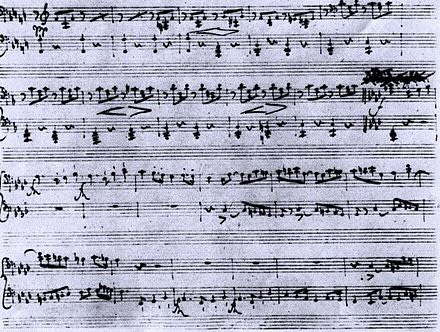
Fantasia No. 2 in C minor K.396/385f is a fragment of a violin Sonata by Mozart in Vienna in August or September 1782.Its is marked Adagio and consists of 27 bars , the violin part entering at bar 23.Maximilian Stadler later composed a “completion” of the work for solo piano which is 70 bars long and ends in C major ,copy of which in Stadler’s hand contains a dedication to Constanze Mozart Maximilian Johann Karl Dominik Stadler, Abbé Stadler (4 August 1748, in Melk – 8 November 1833, in Vienna ), was an Austrian composer, musicologist and pianist.In 1766 he entered the Benedictine Monastery in Melk Abbe where he served as Benedictine monk, and then Prior from 1784 to 1786. In 1786, he was Abbot of the Monastery of Lilienfeld , and from 1789 in Kremsmunster Monastery.From 1791 he lived in Linz and from 1796 in Vienna, where he settled the estate of Mozart and was in charge of the Imperial Music Archive.Fantasia No. 4 in C minor, K. 475 was composed by Mozart in Vienna on 20 May 1785.published as Opus 11, in December 1785, together with the Sonata in C minor K.457, the only one of Mozart’s piano sonatas to be published together with a work of a different genre.
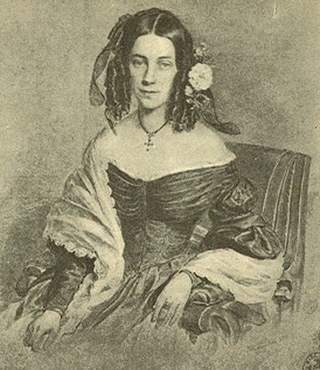
The work was dedicated to Caroline Esterházy, with whom Schubert was in (unrequited) love. Schubert died in November 1828. After his death, his friends and family undertook to have a number of his works published. This work is one of those pieces; it was published by Anton Diabelli in March 1829.The basic idea of a fantasia with four connected movements also appears in Schubert’s Wanderer Fantasy, and represents a stylistic bridge between the traditional sonata form sand the essentially free-form tone poem.
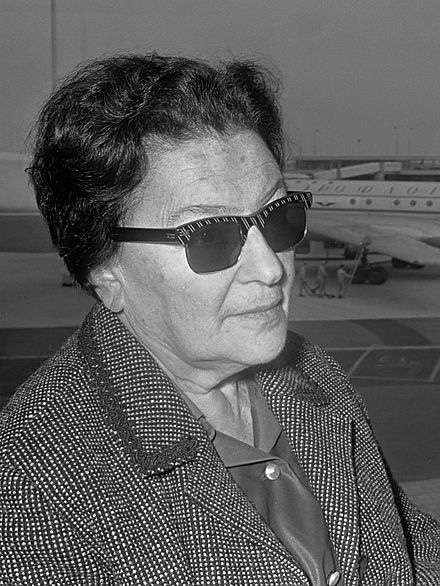
Maria Grinberg September 6, 1908 – July 14, 197 was born in Odessa. Until the age of 18, Maria took piano lessons from Odessa’s noted teacher David Aisberg. Eventually she became a pupil of Felix Blumenfeld (who also taught Horowitz) and later, after his death, continued her studies with Konstatin Igumnov at the Moscow Conservatory .She became a major figure of the Russian piano school. However, in 1937 both her husband and her father were arrested and executed as “enemies of the people”.She was fired by the state-run management and got a job as an accompanist of an amateur choreography group and later was readmitted as a piano soloist. She became a much-sought-after pianist in Moscow ,and other cities all over the Soviet Union.At the age of 50, after Stalin died, she was finally allowed to travel abroad. In all, Grinberg went on 14 performing tours – 12 times in the Soviet bloc countries and twice in the Netherlands where she became a nationally acclaimed figure. Critics compared her performances with those of Horowitz ,Rubinstein and Haskil.She died on July 14, 1978, in Tallinn Estonia , ten weeks before her seventieth birthday. The Gnessin Institute’s director, chorus master Vladimir Minin (who a year before had forced Grinberg to resign from her teaching position), refused to hold a memorial ceremony on the Institute’s premises, and it was only thanks to the efforts of Deputy Minister of Culture Kukharsky, the great pianist was given her last honor in a proper way.
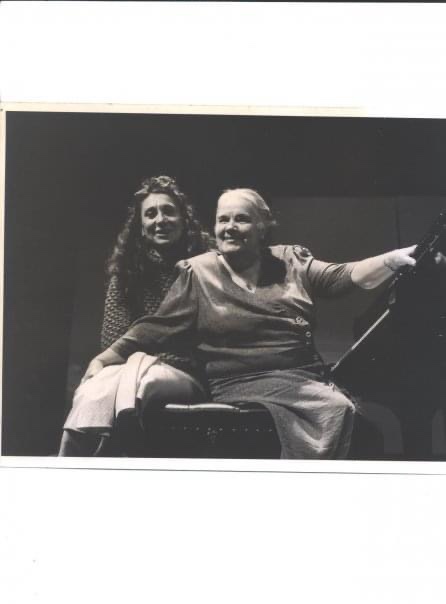
Tatyana Petrovna Nikolayeva May 4, 1924 – November 22, 1993 was was born in Bezhitsa, in the Bryansk district, on May 4, 1924. Her mother was a professional pianist and studied at the Moscow Conservatory under the renowned pedagogue Alexander Goldenweiser, and her father was an amateur violinist and cellist. When in Leipzig the International Johann Sebastian Bach Competition was founded to mark the bicentenary of Bach’s death in 1750, Nikolayeva won first prize in 1950; as a member of the jury, Dmitri Shostakovich he composed and dedicated the 24 Preludes and Fugues, Op.87, to her: it remained an important part of her piano repertoire.She sat as a jury member on international competitions such as the International Tchaikovsky Competition and the Leeds Piano Competition. She recorded her own transcription of Sergei Prokofiev’s Peter and the Wolf. Nikolayeva was the teacher of Nikolai Lugansky; shortly before her death, she declared him “The Next One” in the line of great Russian pianists. Among her other students was András Schiff, whom she taught in summer courses at the Hochschule für Musik Franz Liszt, Weimar. She died on November 22, 1993 in San Francisco after succumbing to a brain haemorrhage during a performance of one of the Op.87 fugues at the Herbst Theatre.

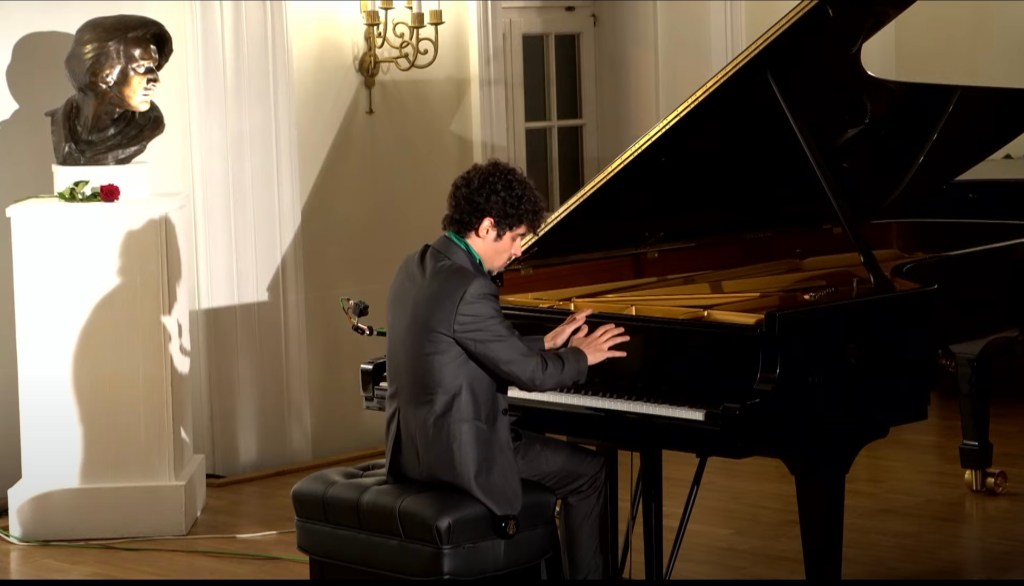
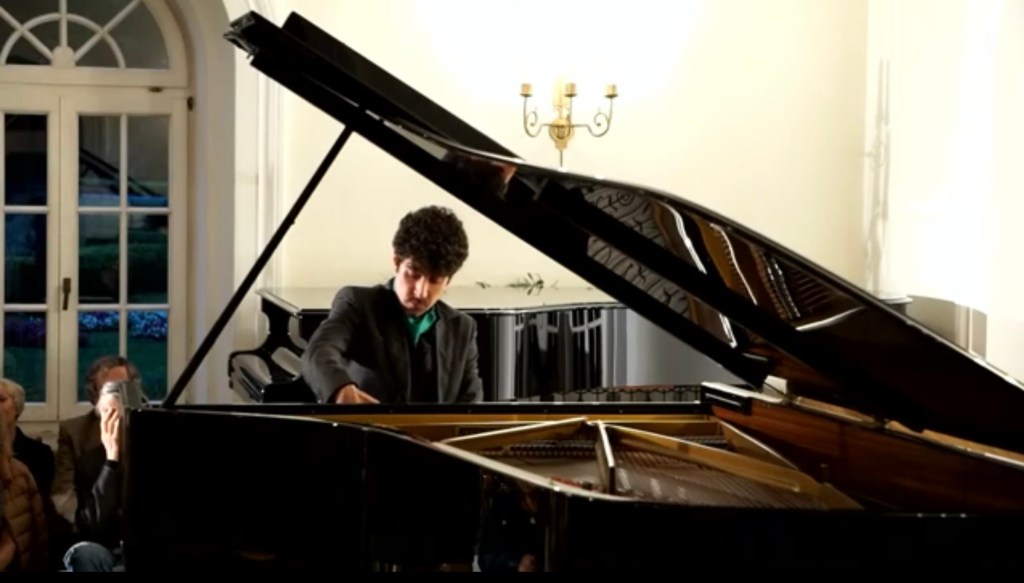
Federico Colli in Poland
 ChristopherAxworthy-MusicCommentary