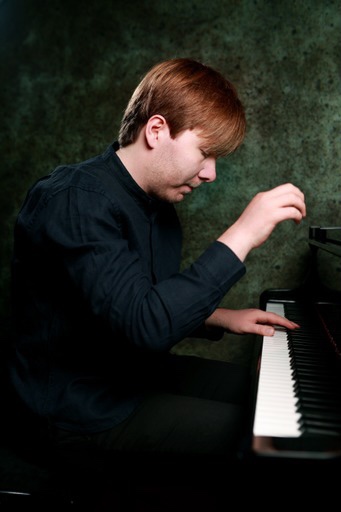
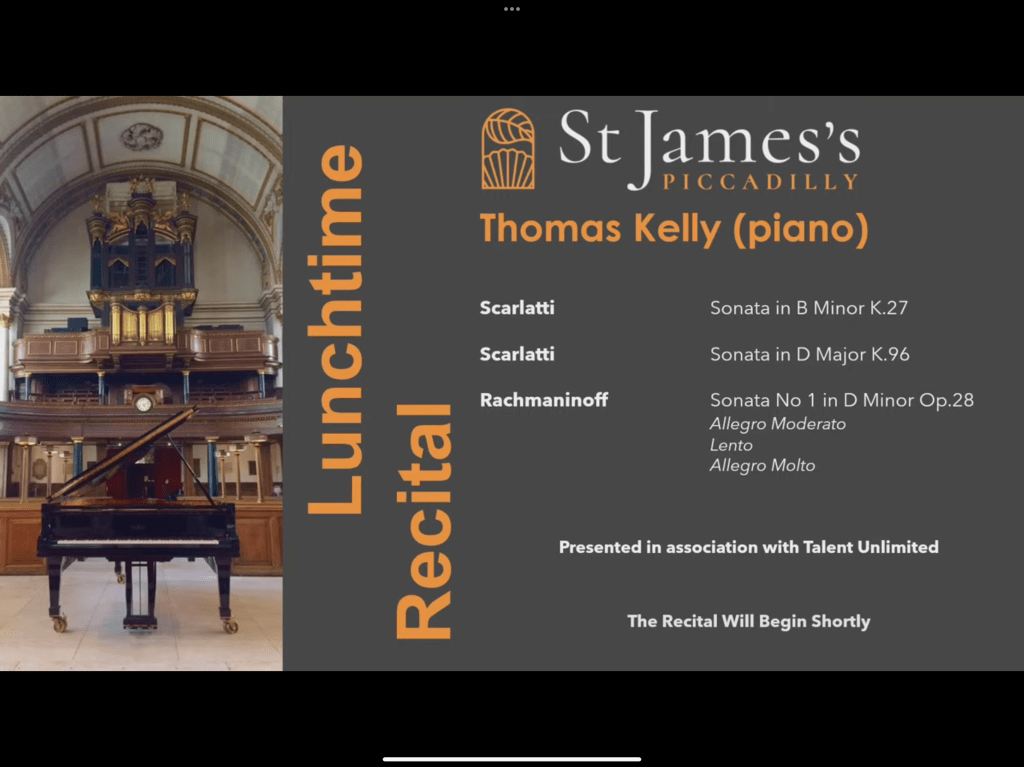
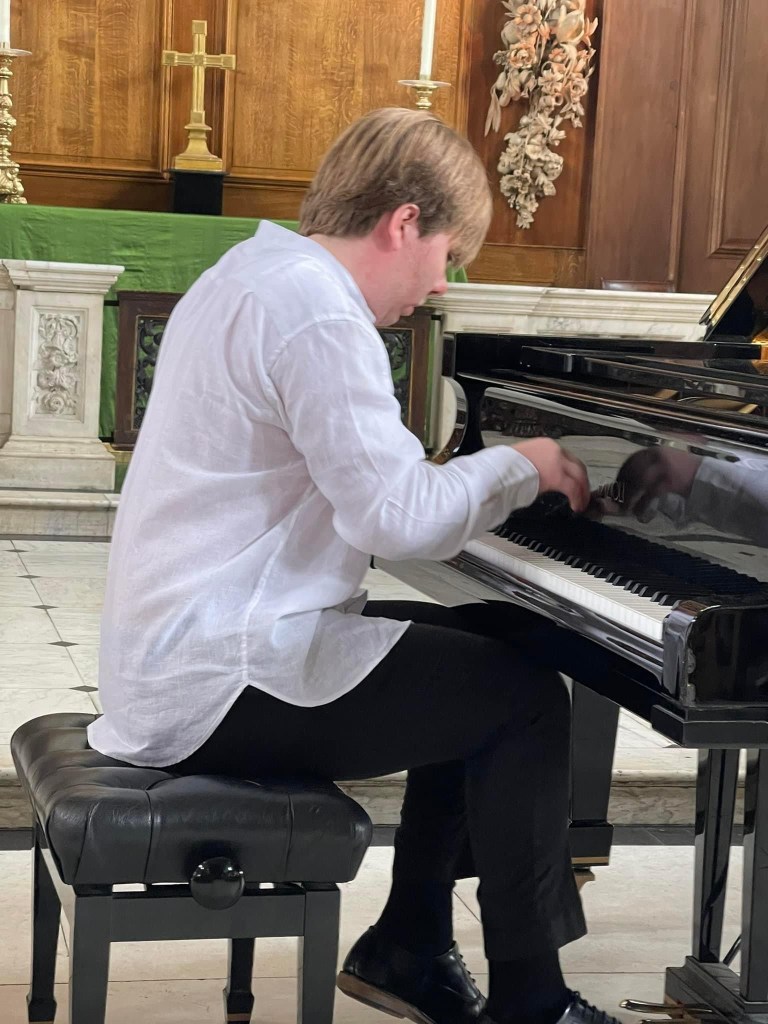
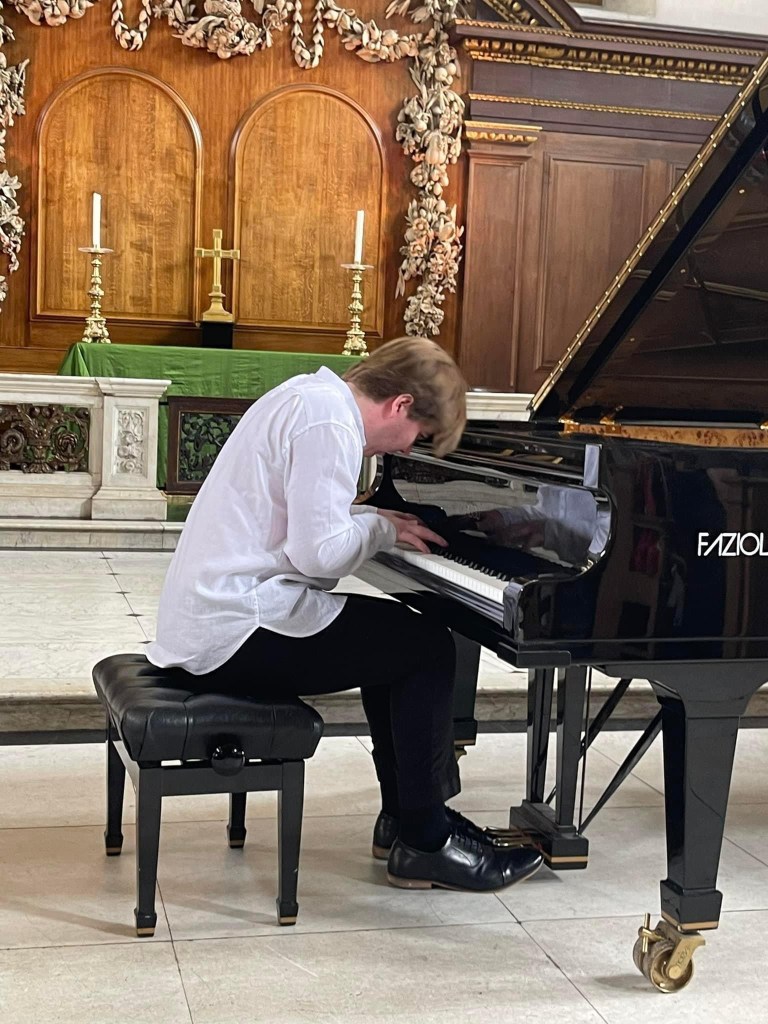
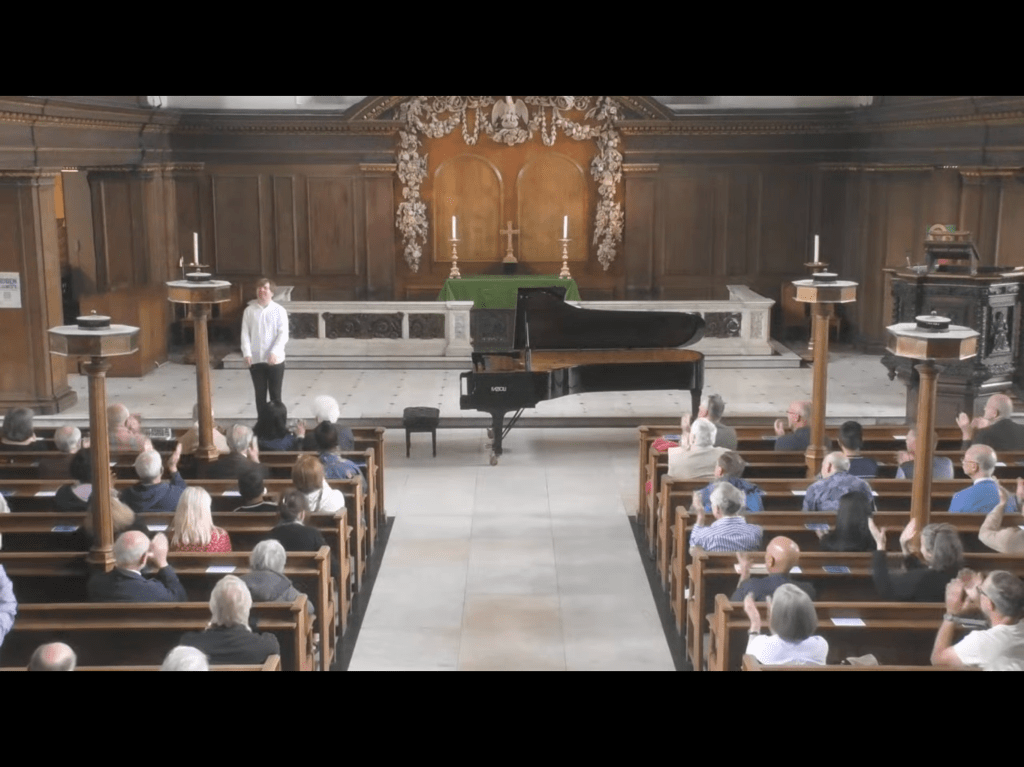
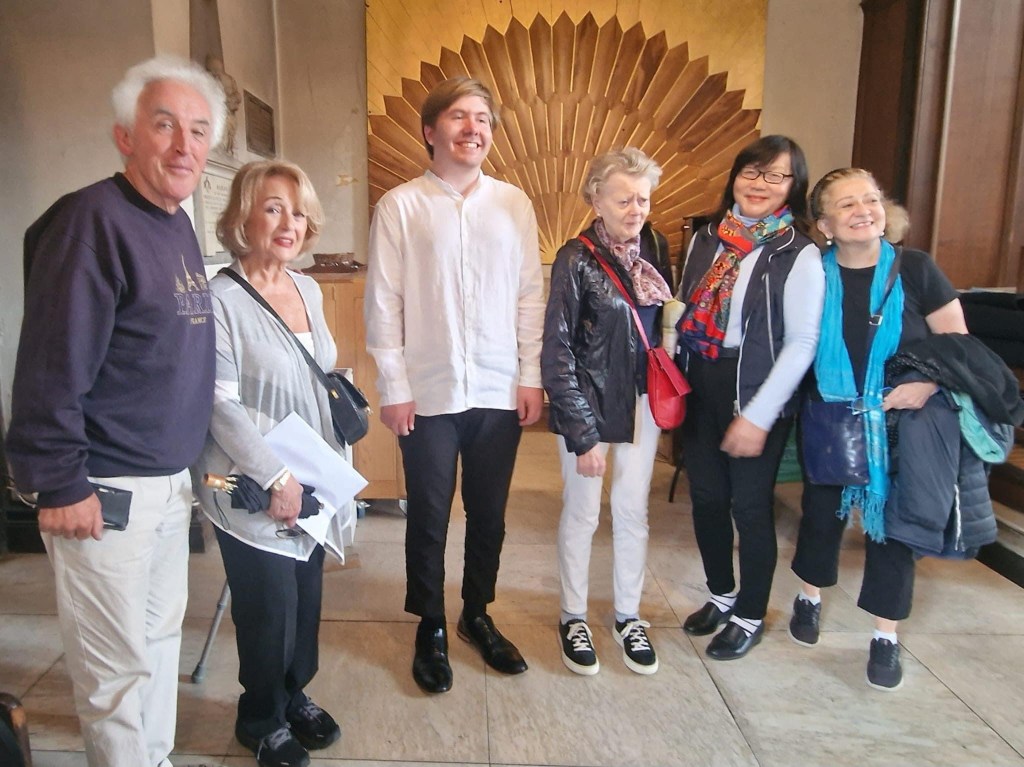
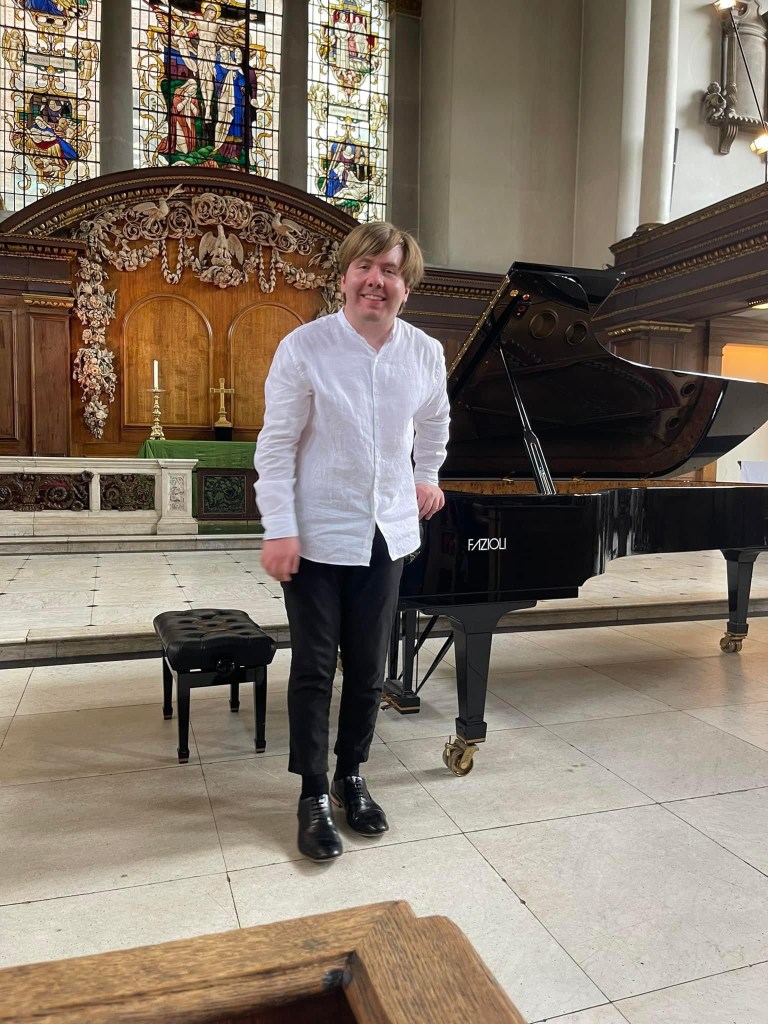
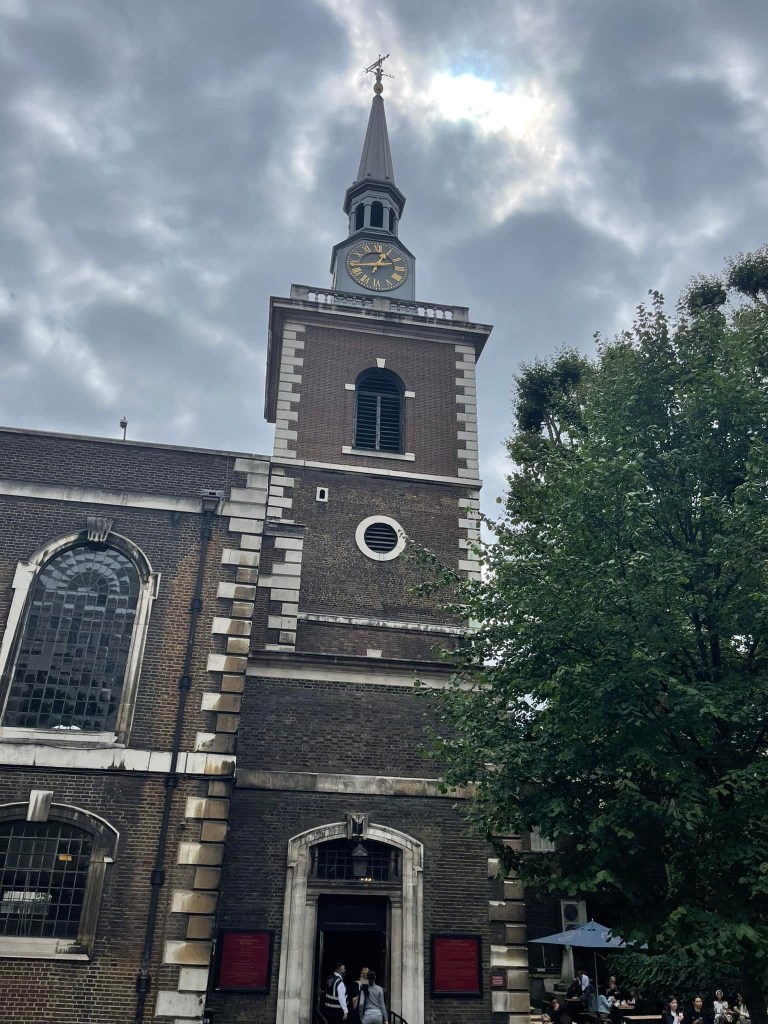
Some extraordinary piano playing from Thomas Kelly at St James’s Piccadilly.Rachmaninov is certainly being celebrated regally today.Thomas Kelly this lunchtime at St James’s ,Yuga Wang this evening at the Proms and the 13th year old Taige Wang this night with the Cleveland Symphony Orchestra in the USA.(https://vimeo.com/event/3598732/embed/5837f34ae2 )
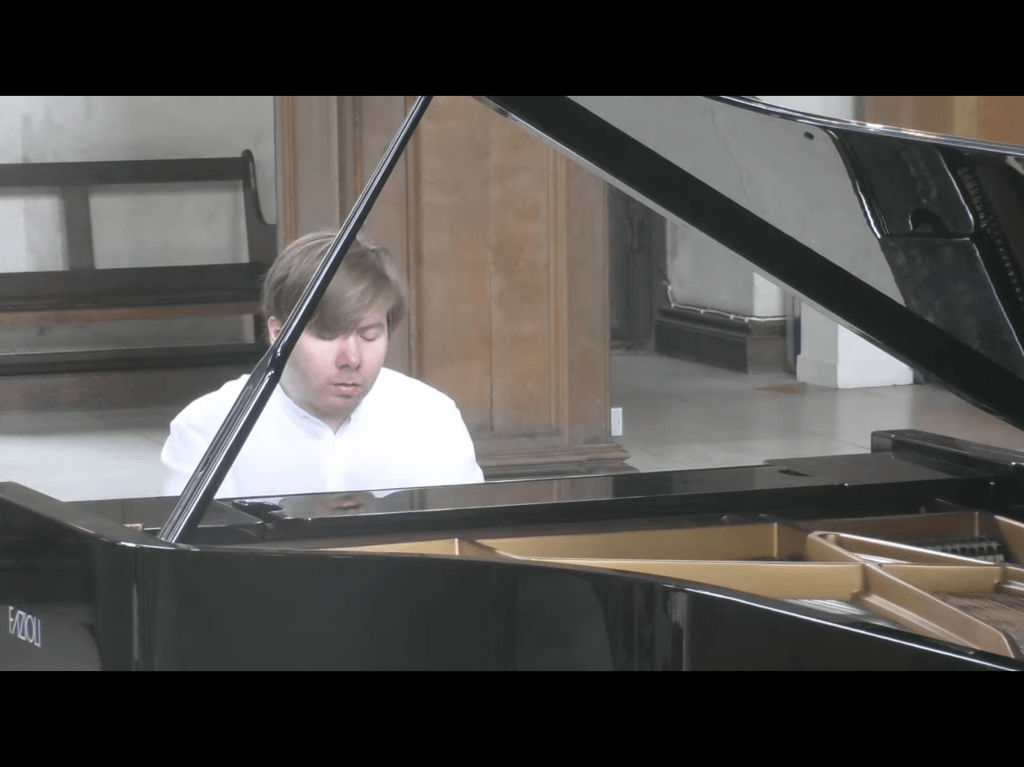
Yuga and Taige both playing Rhapsody on a theme of Paganini which is the very theme that Thomas chose to close his recital with in the version by Liszt that is his 6th of his Paganini studies.Thomas gave an astonishing display of technical wizardry where technical difficulties just disappeared in a display of a kaleidoscope of colour and fantasy as though Thomas was improvising as the Master himself must have done.
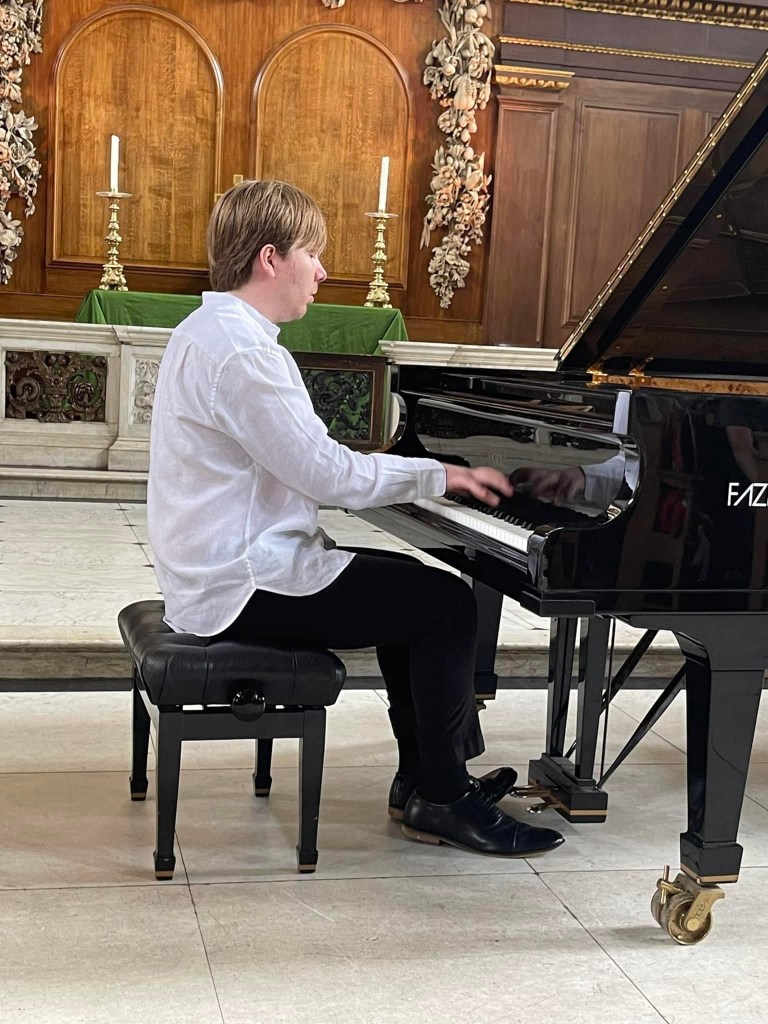
Stimulated and completely refreshed by a phenomenal performance of Rachmaninov’s elusive First Sonata he still had the energy to amaze,seduce and ravish the senses whilst astonishing us mortals with a display of piano playing that was as natural as water flowing in a stream.I was astonished by Benjamin Grosvenor’s recital at the Albert Hall a few weeks ago but was even more astounded by the performance today from a magician who could turn a Fazioli piano into casket of jewels of such subtle insinuating colours.Benjamin Grosvenor,Stephen Hough and Thomas Kelly all have the same thing in common which is an undying love of the sounds that can be conjured out of the piano.
The Golden Age of piano playing was justly questioned by a very learned colleague when I mentioned it in my review of Grosvenor’s concert .https://christopheraxworthymusiccommentary.com/2023/07/18/benjamin-grosvenor-at-the-proms-the-reincarnation-of-the-golden-age-of-piano-playing/
Quite rightly he pointed out that the level of piano playing has never been so high these days so why always look backwards?Pianists think nothing of playing with ease Brahms 2,Rach 3 or Prokofiev 3 that in my day was a rarity and it was only with the arrival of the Russians who showed us what real piano playing was all about.But let us not forget Uncle Tobbs the mentor of Dame Myra Hess and Dame Moura Lympany with the Matthay Method where every note had a hundred gradations of sound in it depending on how it was hit,stroked or caressed.But the English school did not seem to have the phenomenal digital mastery as the pianists from Odessa who had been trained from the cradle to acquire fingers of steel whilst never loosing the relaxed natural position of rubbery wrists and arms.We are not built to sit in front of a box of hammers and strings and to let our fingers run up and down the keys for hours on end , so any natural movement allied to the shape of the music on the page leads to a more well oiled way of playing.Volodos of course is the prime example these days of beauty of sound allied to beauty of movement.The pianists of the Golden Age were able to charm and seduce,astonish and ravish but were not always respectful of the composers wishes thinking that it was the sentiment behind the notes that was more important rather than the actual notation so carefully written on the page.Beethoven of course is the prime example of a composer,even when deaf,who could write with minute attention exactly how he wanted the music to sound.
We live in an age now thanks to the advent of masters like Schnabel,Serkin,Pollini Brendel or Perahia to mention just a few where the composers intentions are of fundamental importance and it is only here than an interpretation can begin with honesty and integrity.But there has been also a school where this attention to the score has produced a very monocrome type of playing where colour,fantasy and beguiling insinuating sounds have not been part of the pianists palette.
With the arrival of our magnificent three a new era is opening up where the Golden Age has returned but with the integrity and honesty of the most intellectually informed musicians.
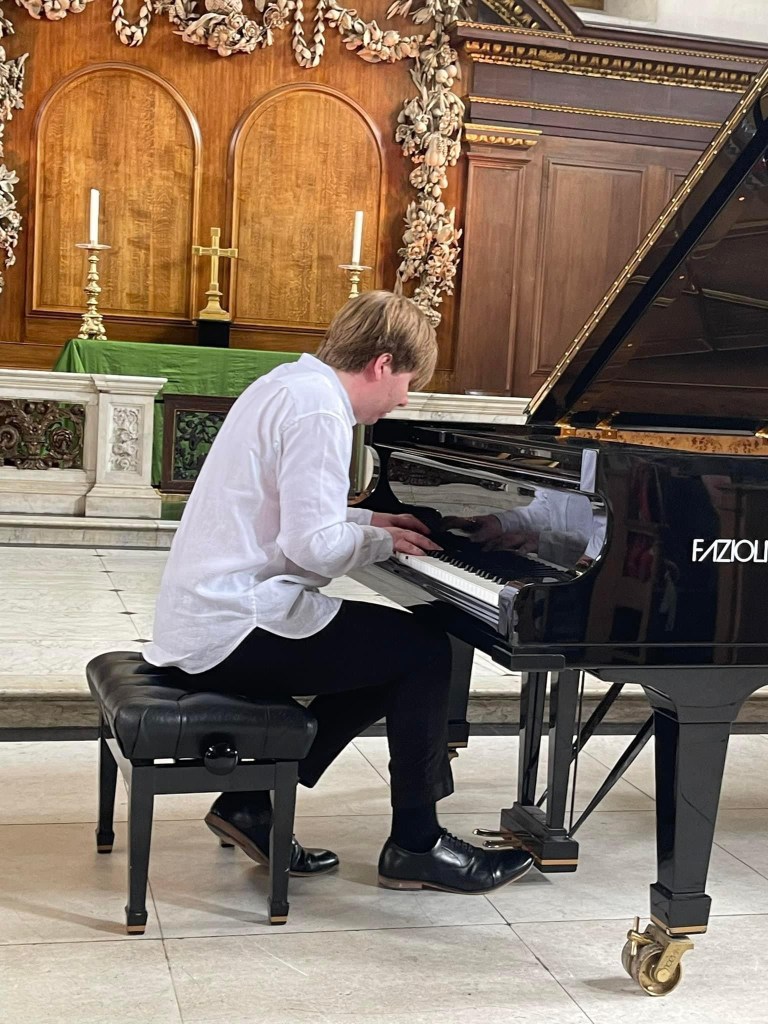
This was obvious from the way Thomas played the two opening Scarlatti Sonatas.With great respect for the style but as Horowitz had shown us a few years ago with a kaleidoscope of colours .It was imbued with a ravishing sense of colour but also a classical discipline that never faltered as the music was played with driving vitality and grace.Tom even opened up another stop towards the end of the B minor Sonata where deep bass notes shone down on the precedings with the scintillating effect of a prism.There was purity and clarity in the Sonata in D with astonishing repeated notes shaped with tantalising ease and a digital delight of a jeux perlé that was indeed of another era.A supremely stylish performance of insinuating harmonies and colours.
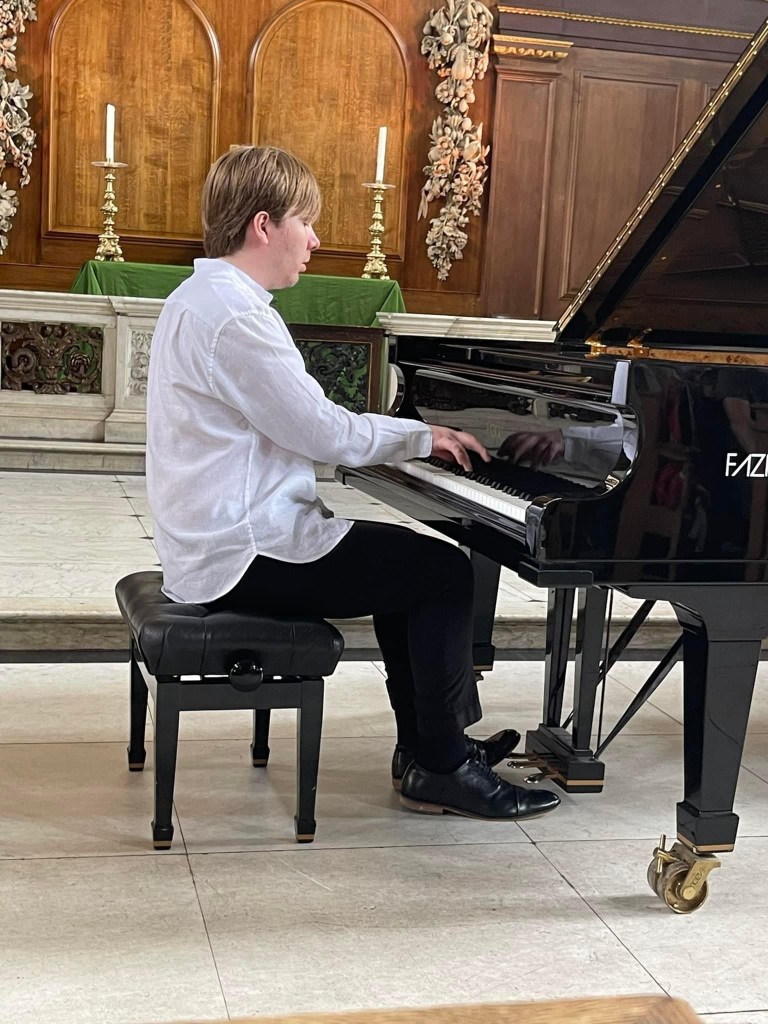
This was just the gate to Pandora’s box where the dark questioning of the opening of Rachmaninov’s First Sonata was whispered with frightening burning intensity and foreboding before an explosion of notes that were in Tom’s hands but streams of sound.It was like sitting on a cauldron of a boiling mass of sound ready to explode or dissolve into throbbing ecstasy or triumphant glory.A vision of a distant marvellous land was floated into thin air as if on a magic carpet and was to be the link between the movements that for Rachmaninov had been such a problem .But Tom today had seen with such clarity the architectural shape to a work that even for the composer was elusive.Tom ,like recently Kantarow,has a vision and passionate conviction of the meaning of this work that is captivating and enthralling and has at last placed it on a pinnacle with the much more accessible and vastly overplayed Second Sonata.There was even a magic link, a mere wisp of sound that linked the first movement to the second .Rachmaninov floating with insinuating nostalgia strands of melody of luminosity and ravishing beauty.The Allegro molto was a maze of sumptuous sounds contrasted with episodes of clarity and rhythmic energy of driving passion .Amazing virtuosity that was scintillating and exhilarating as in the distance appeared the magic land from afar that we had overheard in the first movement.The whole sonata was played with incredible musicianly understanding allied to the sheer joy of creating the sounds of a truly grand piano.The Golden Age has returned but on a rock of dedicated musicianship of integrity and honesty .
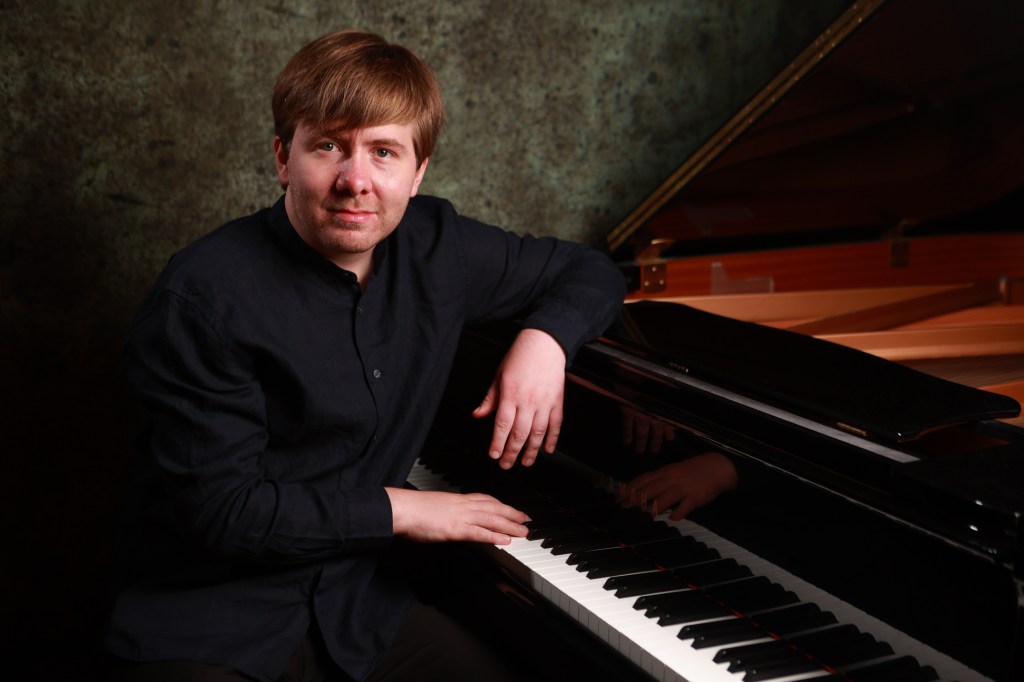
Thomas Kelly was born on 5th of November 1998. He started playing the piano aged 3, and in 2006 became Kent Junior Pianist of the Year and attained ABRSM Grade 8 with Distinction. Aged 9, Thomas performed Mozart Concerto No. 24 in the Marlowe Theatre with the Kent Concert Orchestra. After moving to Cheshire, he regularly played in festivals, winning prizes including in the Birmingham Music Festival, 3rd prize in Young Pianist of The North 2012, and 1st prize in WACIDOM 2014.
Since 2015, Thomas has been studying with Andrew Ball, initially at the Purcell School of Music and now at the Royal College of Music. Thomas has also gained inspiration from lessons and masterclasses withmusicians such as Vanessa Latarche, William Fong, Ian Jones, Valentina Berman, Wei-Yi Yang, Boris Berman, Paul Lewis, Mikhail Voskresensky, Dina Yoffe. Thomas will begin studying Masters at the Royal College of Music in 2021, sharing with Professors Andrew Ball and Dmitri Alexeev.
Thomas has won 1st prizes including Pianale International Piano Competition 2017, Kharkiv Assemblies 2018, at Lucca Virtuoso e Bel Canto festival 2018, RCM Joan Chissell Schumann competition 2019, Kendall Taylor Beethoven competition 2019, BPSE Intercollegiate Beethoven competition 2019 and the 4th Theodor Leschetizky competition 2020.
He has performed in a variety of venues, including the Wigmore Hall, the Cadogan Hall, Holy Trinity Sloane Square, St James’ Piccadilly, Oxford Town Hall, St Mary’s Perivale, St Paul’s Bedford, the Poole Lighthouse Arts Centre, the Stoller Hall, at Paris Conservatoire, the StreingreaberHaus in Bayreuth, the Teatro Del Sale in Florence, North Norfolk Music Festival and in Vilnius and Palanga. Since the pandemic restrictions in 2020, Thomas’ artistic activities include participating in all 3 seasons of the “Echo Chamber” an online concert series curated by Noah Max, and releasing 3 singles under the Ulysses Arts label on digital platforms.
Thomas is a C. Bechstein Scholar supported by the Kendall-Taylor award. He is being generously supported by the Keyboard Charitable Trust since 2020, and Talent Unlimited since 2021.
Presented in association with Talent Unlimited
Thomas Kelly at St Mary’s a programme fit for a Prince
Piano Sonata No. 1 in D minor op 28 was completed in 1908.It is the first of three “Dresden pieces”, along with the symphony n.2 and part of an opera, which were composed in the quiet city of Dresden.It was originally inspired by Goethe’s tragic play Faust,although Rachmaninoff abandoned the idea soon after beginning composition, traces of this influence can still be found.After numerous revisions and substantial cuts made at the advice of his colleagues, he completed it on April 11, 1908. Konstantin Igumnov gave the premiere in Moscow on October 17, 1908. It received a lukewarm response there, and remains one of the least performed of Rachmaninoff’s works.H e wrote form Dresden, “We live here like hermits: we see nobody, we know nobody, and we go nowhere. I work a great deal,”but even without distraction he had considerable difficulty in composing his first piano sonata, especially concerning its form.Rachmaninoff enlisted the help of Nikita Morozov , one of his classmates from Anton Arensky’s class back in the Moscow Conservatory, to discuss how the sonata rondo form applied to his sprawling work.Rachmaninov performed in 1907 an early version of the sonata to contemporaries including Medtner.With their input, he shortened the original 45-minute-long piece to around 35 minutes and completed the work on April 11, 1908. Igumnov gave the premiere of the sonata on October 17, 1908, in Moscow,

 ChristopherAxworthy-MusicCommentary
3 risposte a "Thomas Kelly at St James’s Piccadilly musicianship and mastery mark the return of a Golden Age but of the thinking virtuoso."