50th Anniversary of the Pontine Festival Foundation streamed live from Sermoneta and Ninfa
https://christopheraxworthymusiccommentary.com/2023/07/28/giovanni-gnocchi-giovani-artisti-dal-mondo-in-sermoneta/
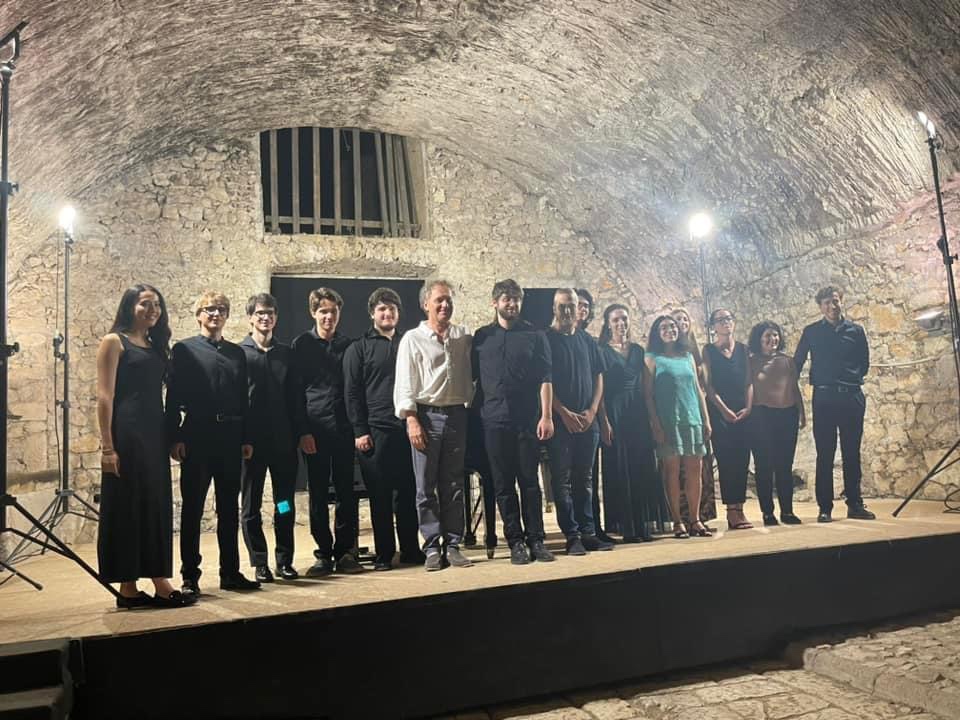
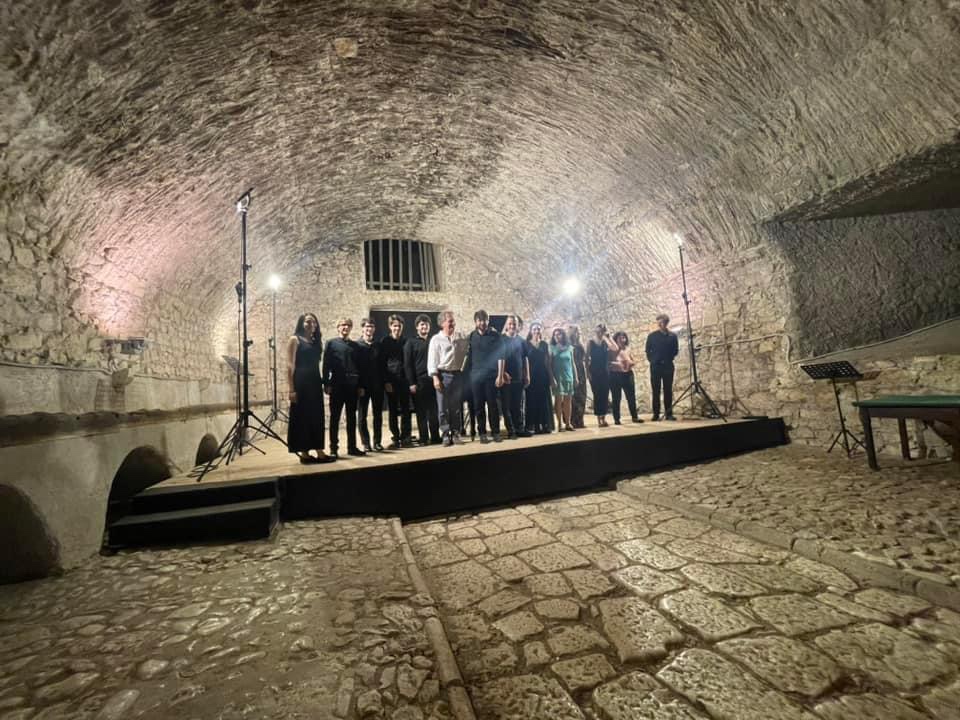
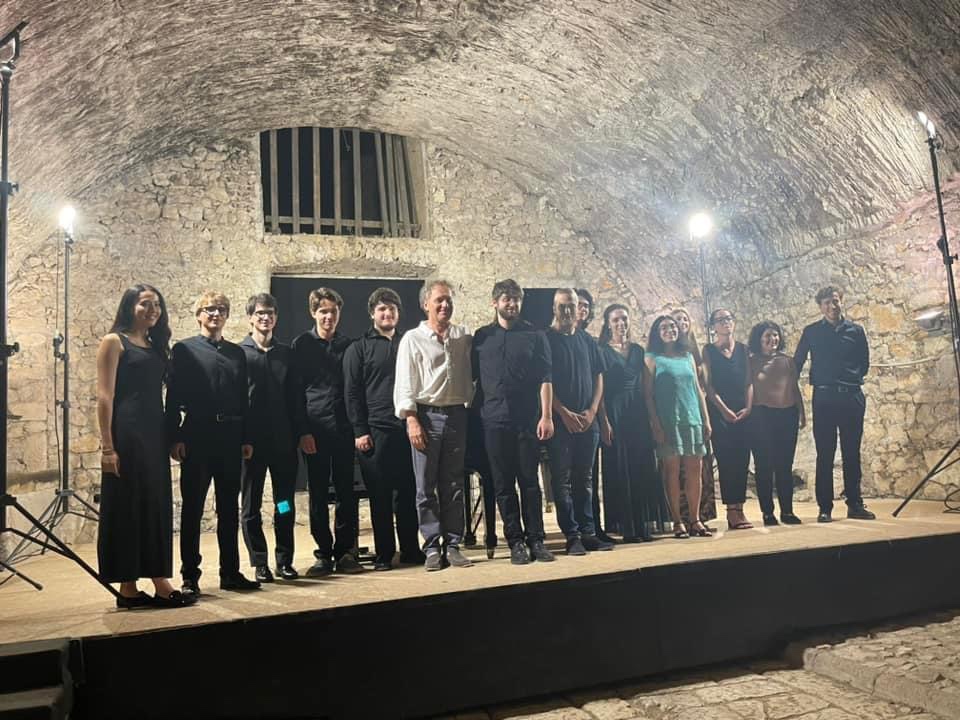
Ferschtman-Gnocchi-Lucchesini Trio Glorious tribute to Rocco Filippini in Sermoneta
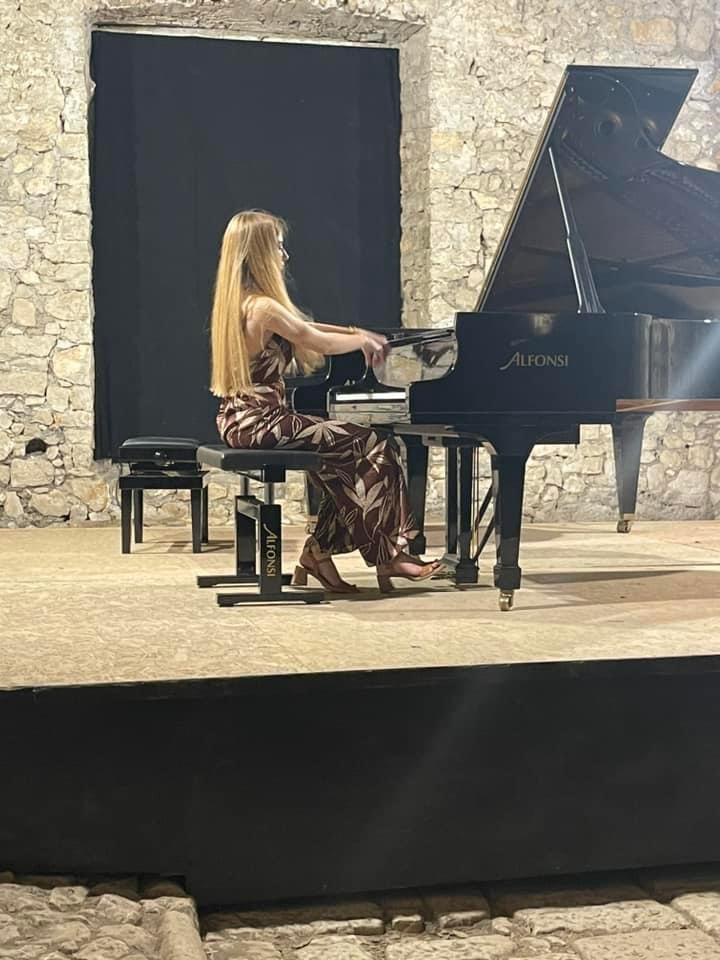
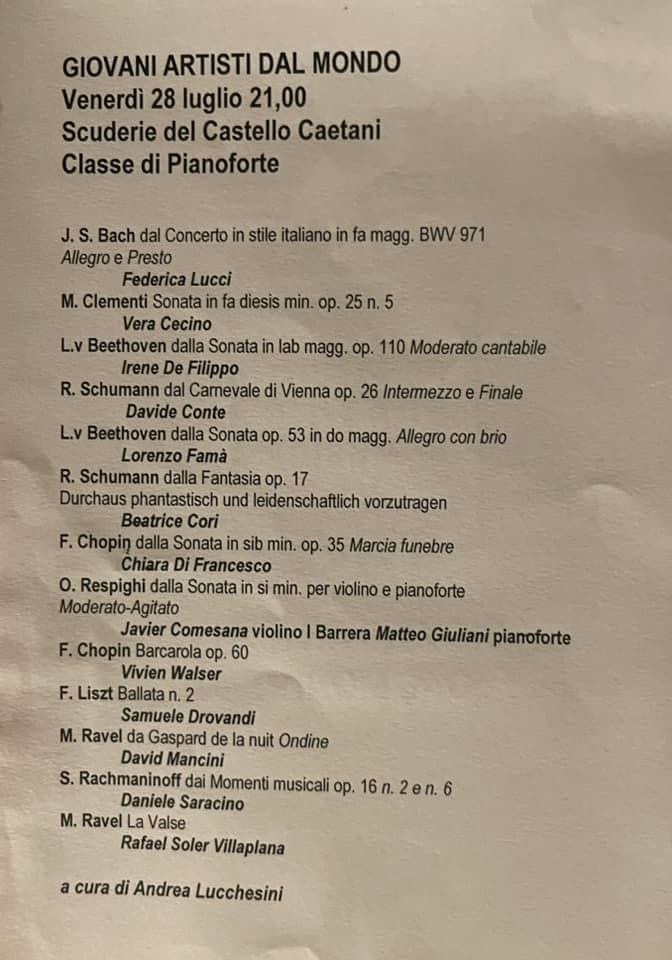
The first and last movements of Bach’s Italian Concerto opened the concert on the very day that Bach died in Leipzig in 1750 .Played with a rhythmic energy and very little pedal with a non legato touch that gave great drive and precision to this opening movement.The Presto was more varied in touch and phrasing and added more colour to this always rhythmically alive performance.
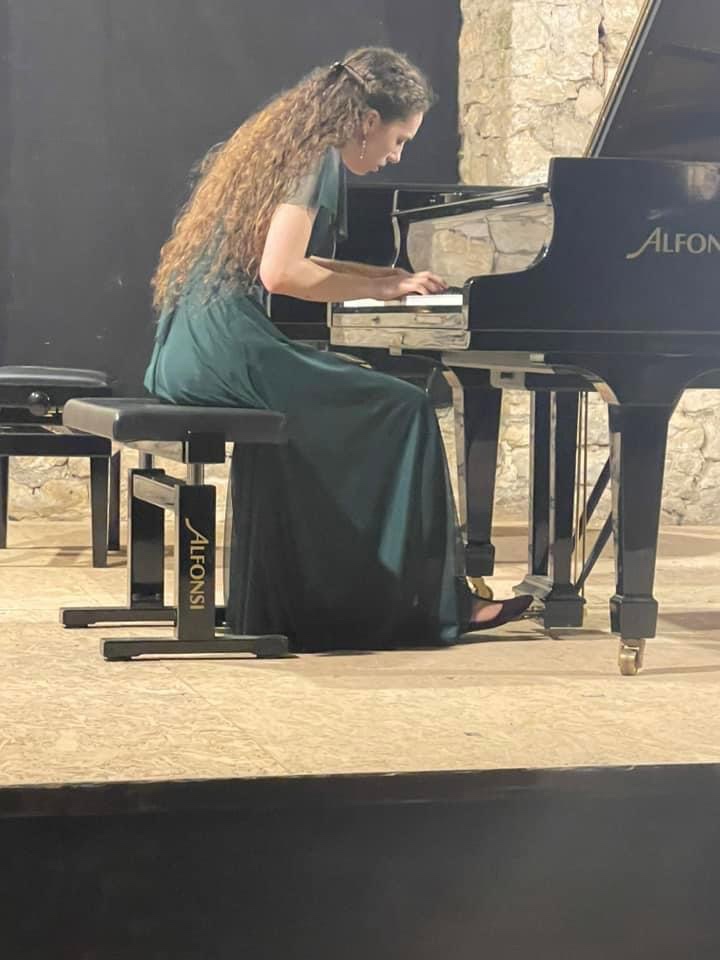
From the very first notes showing her artistry with delicacy and beauty contrasting with passages of astonishing rhythmic vitality.Clementi’s op 25 n.5 Sonata was written in 1790 and was defined in 1895 as a work where ‘his heart and soul were engaged’ to the full. The first movement is a mixture of dolce expression, capricious fingerwork, off-beat sforzando accents, teasing articulation and tonal surprise .The beautiful ‘lento e patetica’ slow movement in B minor was played with poignant shape and beauty .And the Presto with the clarity of Scarlatti but the brilliance of Mendelssohn’s.
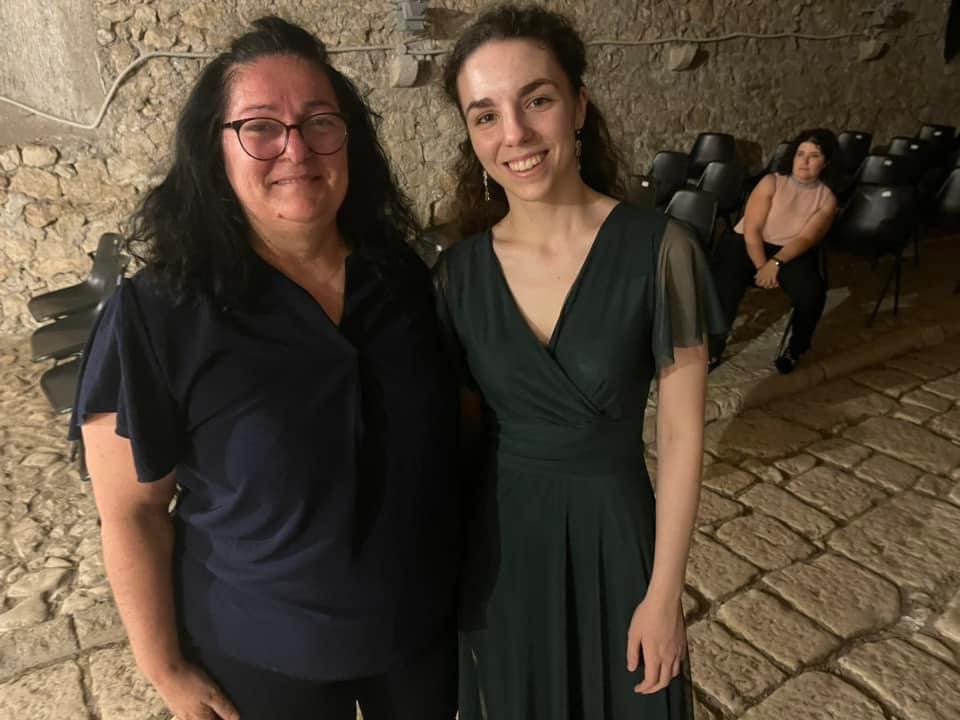
Vera is one of two students today in Sermoneta from the remarkable school of Maddalena De Facci in Venice.
Her brother is the young pianist Elia Cecina making a great name for himself on the concert platform .
https://christopheraxworthymusiccommentary.com/2023/01/22/elia-cecino-at-the-quirinale-in-rome-realms-of-gold-in-the-presidents-palace/
Elia also studies in Fiesole with Elisso Virsaladze who taught for many years in Sermoneta before she went into semi retirement
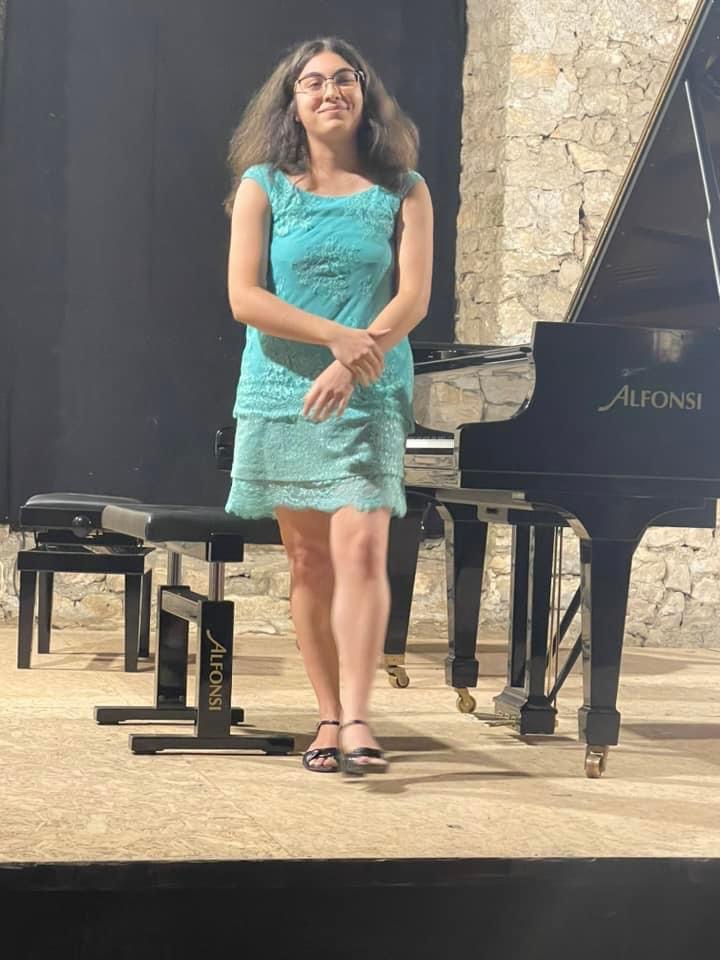
Beethoven’s penultimate sonata was played with great musicianship where the very precise indications of a composer ,who could only hear in his own head,were beautifully realised.Even the indications of the left hand in the development were played with crescendi and diminuendi without disturbing the pastoral beauty of one of Beethoven’s (together with the fourth concerto) most etherial and perfect creations.
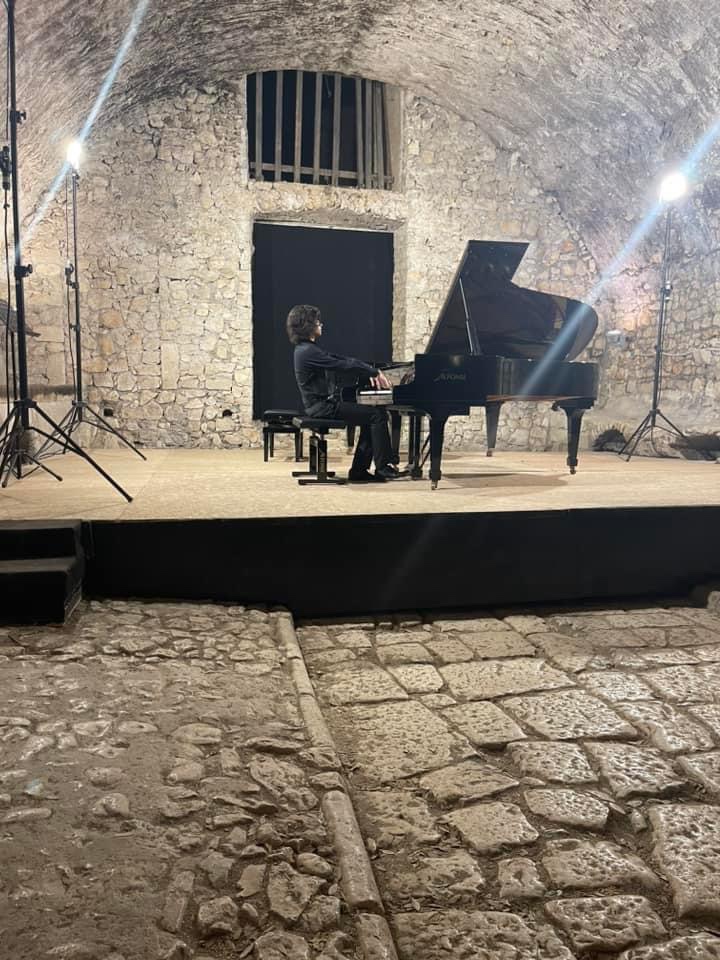
Also from the school of Maddalena de Facci showed immediately a beautiful sense of balance as the melodic line was allowed to sing above the continuous passionate accompaniment in Schumann’s Carnaval Jest op 26 .The duet between the bass and soprano was played with poignant meaning and control.The Finale had dynamic drive and clarity but his quixotic staccato accompaniment disturbed rather than helped the melodic line that he still managed to shape with beauty and simplicity
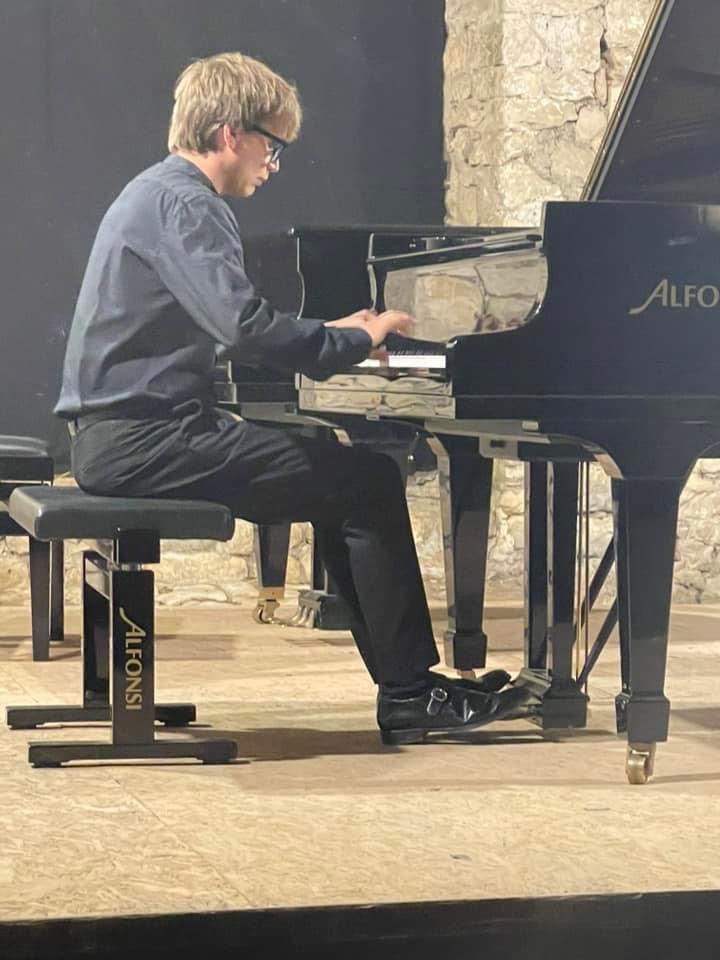
A very fine performance of the ‘Waldstein’ Sonata from a real musician.A tempo that allowed him to achieve an architectural shape without any slowing or disturbing of the overall rhythmic drive.A work that Delius dismissed as ‘scales and arpeggios’, but when played with the musicianship and drive of a Serkin it is one of the most exhilarating of opening movements.No wonder Beethoven decided not to have a slow movement but a simple introduction to the sublime beauty and transcendental difficulty of the last movement.I look forward to hearing more from this young musician who already has an impeccable musical understanding allied to a serious technical preparation .
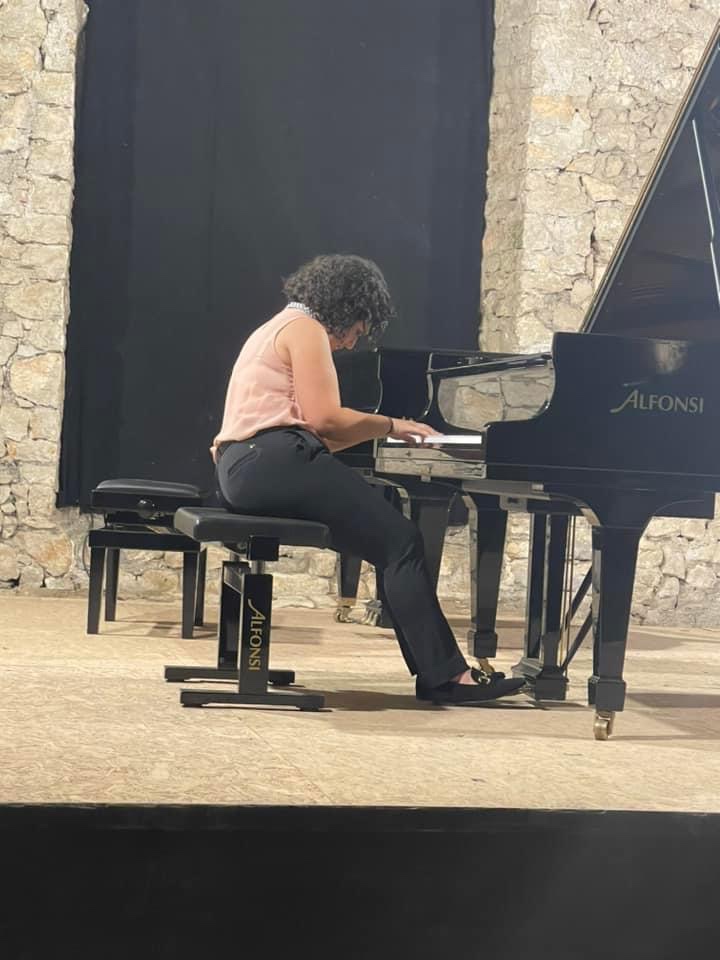
A beautiful sense of balance and flexibility of phrasing gave great strength to this outpouring of love for Schumann’s beloved Clara in his Fantasie op 17.The dynamics were generally well observed but her passionate involvement and youthful exuberance sometimes made the difference between mezzo forte/forte and fortissimo negligible.A burning intensity and some ravishingly beautiful sounds allowed her to play with the freedom of a true artist never sacrificing the overall architectural shape.
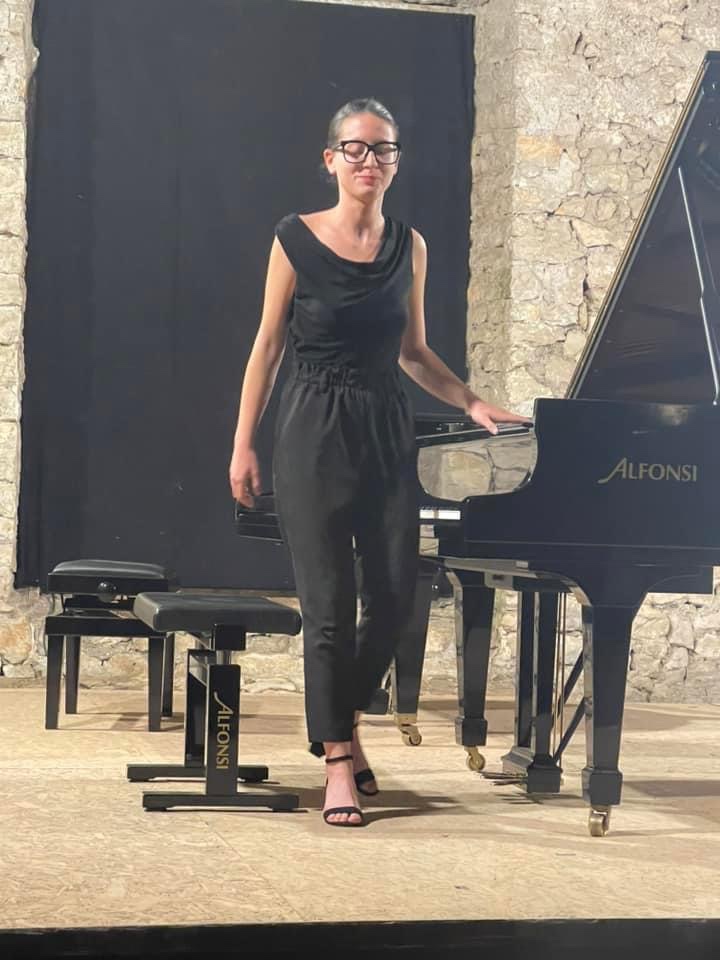
Not easy to sit down and play Chopin’s Funeral March out of context but Chiara managed to play with fluidity and a beautiful flowing tempo.The same simplicity would have given the trio an even more poignant contrast allowing the bel canto line to float on a wondrous wave of tranquility.
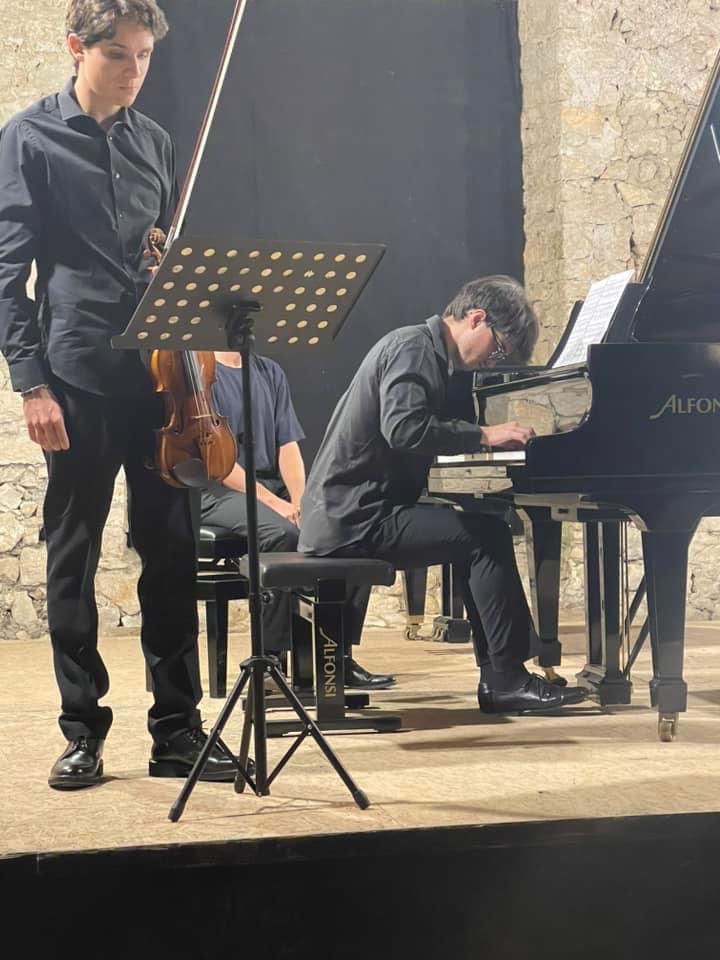
Beautiful playing from a superb duo partnership.The violin moving so well following the shape of the sounds they were creating together.Playing with the piano lid fully opened there was a cohesion and sense of balance from an all to rarely heard masterpiece.
Passionate playing of great colour and shape as they lived the music together creating a truly magical ending.
Andrea Lucchesini is a renowned chamber music player and it is right that this should have been included in a piano masterclass .I am sure that the result we heard today was due to the work all three had done together.
Six ears ,after all,are better than four!
ROME CHAMBER MUSIC FESTIVAL- Superb music making returns to Teatro Argentina
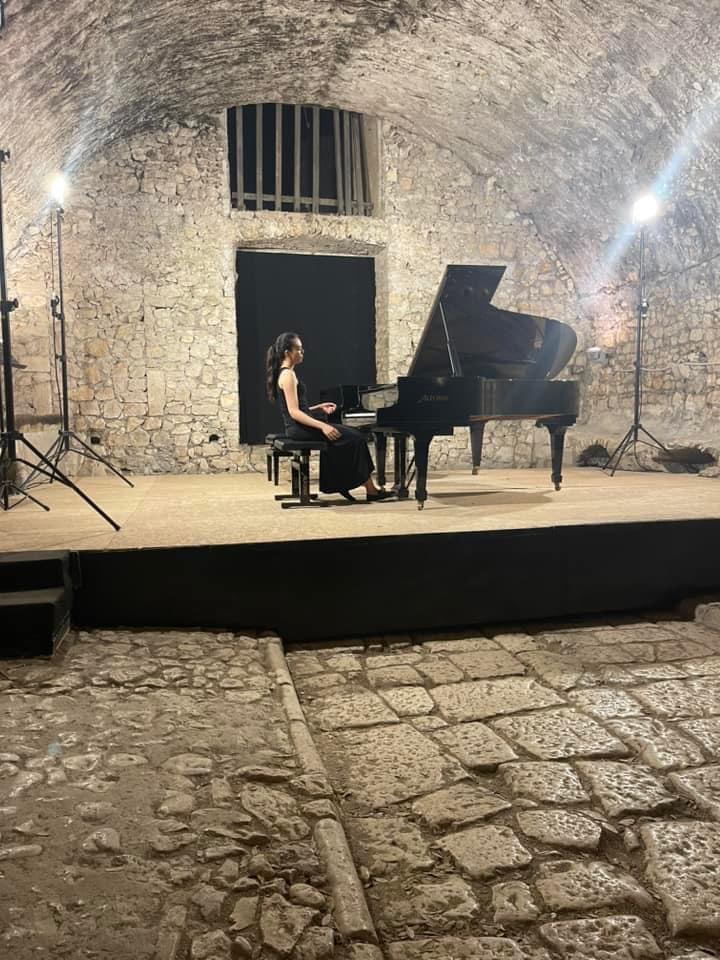
Played with simplicity and beauty one of Chopin’s greatest creations.The Barcarolle op 60 was played with sumptuous sounds and a continuous forward movement as the lapping of the waves carried the music forward.Maybe a little over emphatic in the climax where the sound tended to harden after the ravishing beauty of the bel canto passage that Perlemuter described to me once as ‘reaching heaven’
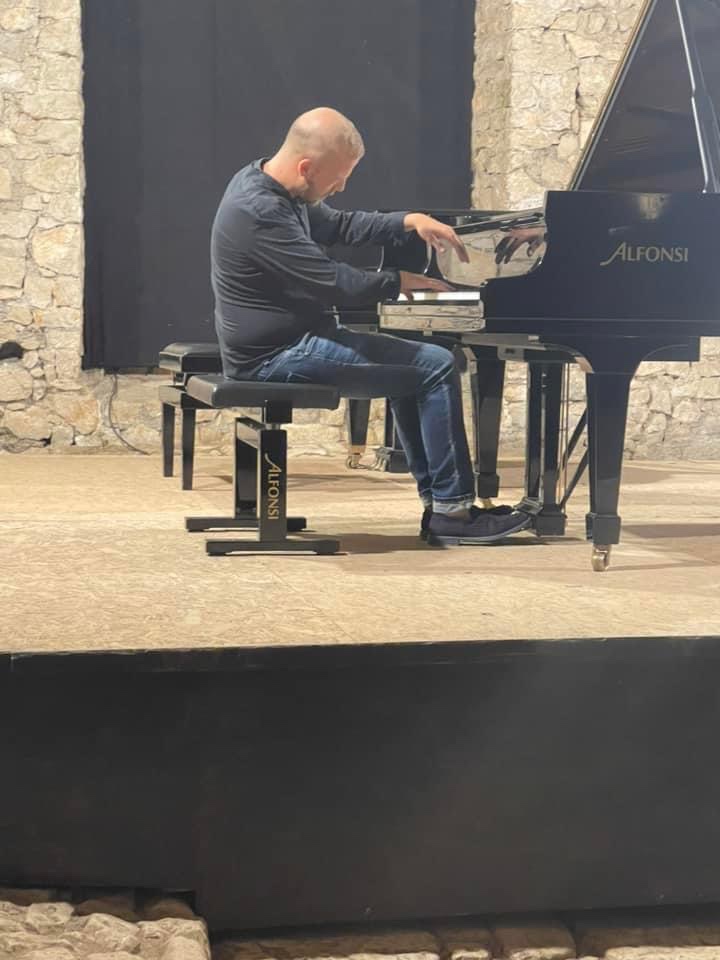
Some very assured playing of the masterpiece that is the Ballade n. 2 by Liszt.It is not always easy ,though ,to hold together as a tone poem.The balance was not always clear as the waves tended to overpower the musical line at the beginning but this overall was a successful performance from an artist of quite considerable technical and musical accomplishment.Beautiful and luminosity ignited the interludes of chordal meditation .Arrau who studied under Liszt’s disciple Martin Krause maintained that the Ballade was based on the Greek myths of Hero and Leander with the piece’s chromatic ostinati representing the sea: “You really can perceive how the journey turns more and more difficult each time. In the fourth night he drowns. Next, the last pages are a transfiguration”
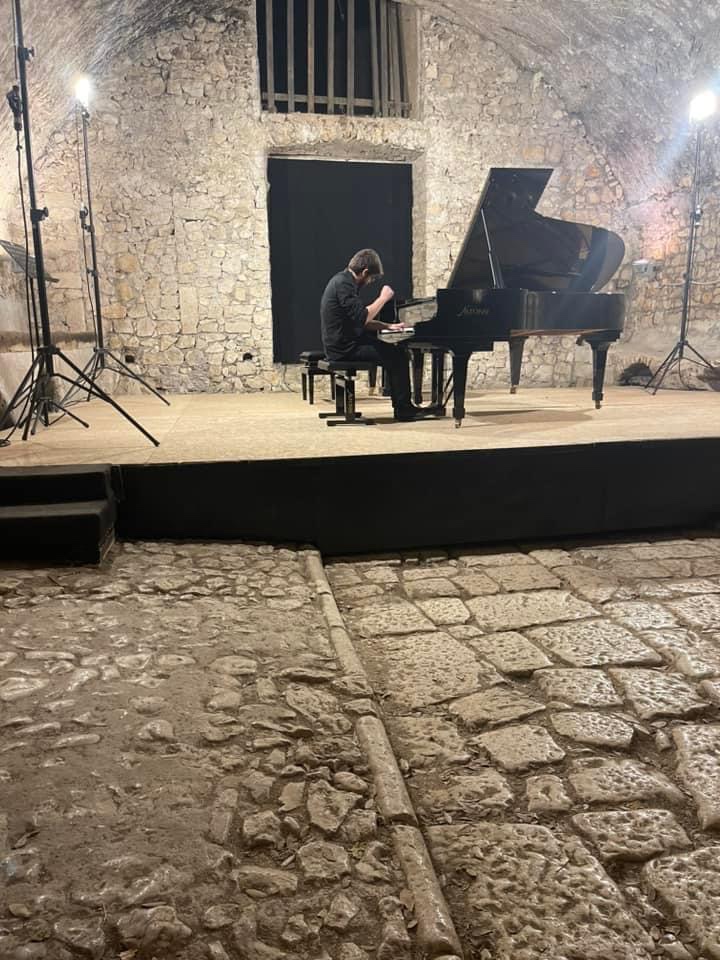
There was a beautiful luminosity and an astonishing clarity to the intricate filigree accompaniment in Ravel’s ‘Ondine’ .Sensitively shaped as single notes turned into washes of sound due to his very poetic use of the pedal.Nowhere more evident than in the final murmur of the water nymph before she shoots away into the distance.It was Anton Rubinstein who said the pedal is the ‘soul of the piano’ .Nowhere is that more evident than in this very fine performance.
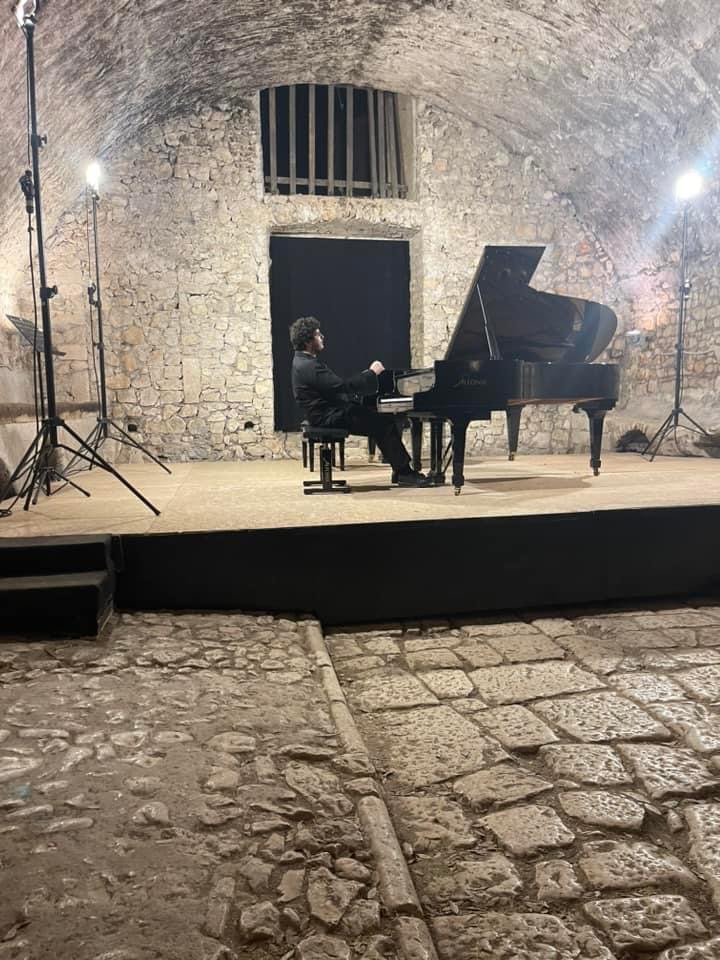
Some beautiful sounds of grandeur but not as rhythmically precise as needed with many details overlooked in a performance of passionate abandon but of great effect.
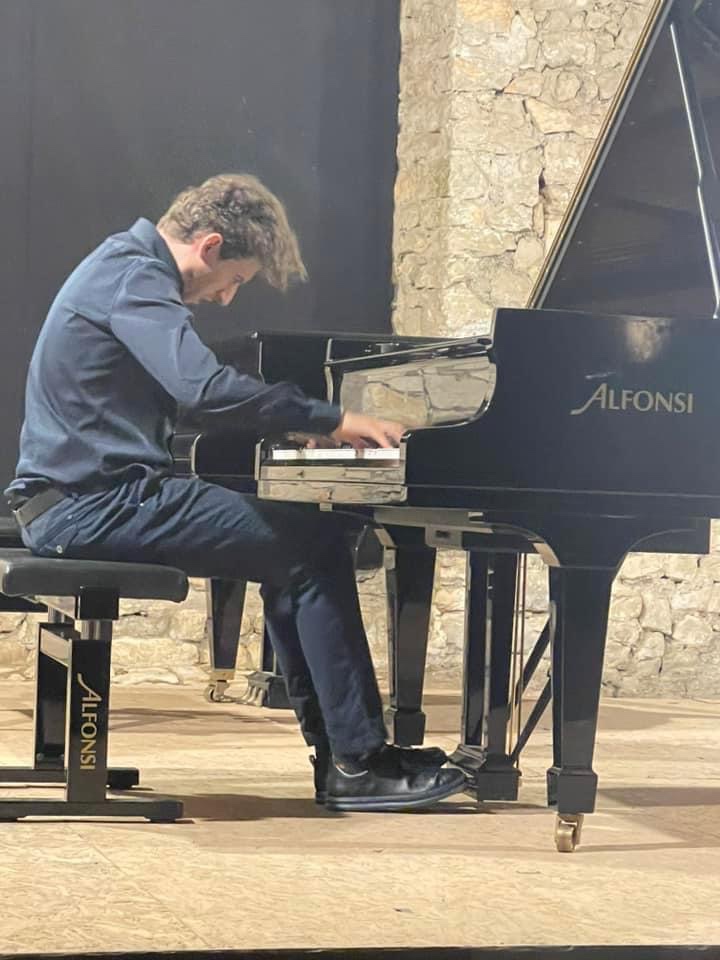
A remarkable performance of a true showpiece for the piano.
Ravel had always been inspired by the mechanics of Liszt and Balakirev and in his own transcription of La Valse he has left no trick unturned.It was played with a clarity and astonishing contrasts where the sumptuously insinuating waltz was always in the shadows waiting to explode with double and sometimes triple glissandi and much else besides.
A tour de force from a very fine pianist and a wonderful way to close this long concert before we all turned into pumpkins!
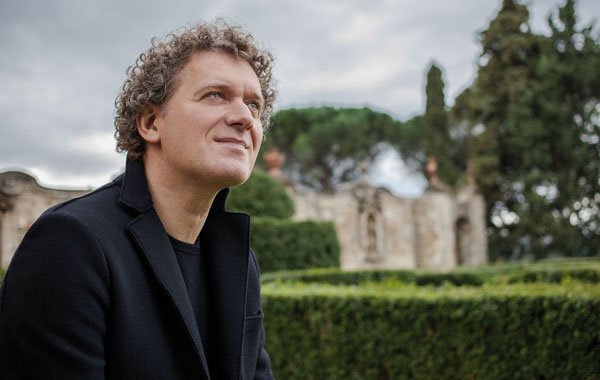
Trained at the great Maria Tipo piano school, Andrea Lucchesini began an intense international solo career at a very young age, after winning the “Dino Ciani” International Competition at the Teatro alla Scala in Milan in 1983. Since then he has played with the most prestigious orchestras and conductors such as C. Abbado, S. Bychkov, R. Abbado, R. Chailly, D. Gatti, G. Gelmetti, D. Harding, G. Noseda and G. Sinopoli.
He is the first (and only) Italian artist to receive the Accademia Chigiana International Prize, in 1994, while the following year the Italian critics awarded him the F. Abbiati Prize.For over twenty years he has also been very active in the chamber music sector, of which he explores the vast repertoire in the most varied formations, collaborating with musicians and ensembles of the highest level; numerous projects, including recordings, see him in duo with the cellist Mario Brunello.
In July 2001, the world premiere of Luciano Berio’s Sonata in Zurich marks the culmination of a successful collaboration, which began with Concerto II “Echoing curves”, performed by Lucchesini under Berio’s direction throughout the world, and recorded with the London Symphony Orchestra for BMG .
Andrea Lucchesini has recorded for Emi, Teldec and Agorà;the eight live CDs of Beethoven’s 32 Sonatas (Stradivarius) and the complete works for solo piano by Berio for Avie Records have received important acknowledgments from the critics, unanimous in applause even in front of the more recent CD dedicated to Schubert’s Impromptus.
Convinced of the importance of passing on musical knowledge to the younger generations, he is also passionately dedicated to teaching at the Fiesole Music School and is regularly invited to hold masterclasses at the most prestigious European and American musical institutions; he also participates in radio music dissemination projects, and as a juror in numerous international competitions on five continents.He is actually Artistic Director of the Amici della Musica di Firenze one of the oldest and most renowned concert Societies in Italy .The direction was passed on to him by the retiring historic directors Stefano Passigli and Domitilla Baldeschi
Alfonso Alberti celebrations- The shadow of Dante in the magic garden of Ninfa
Elisso Virsaladze in Latina “Homage to Riccardo Cerocchi “

 ChristopherAxworthy-MusicCommentary