Tuesday 11 July 3.00 pm
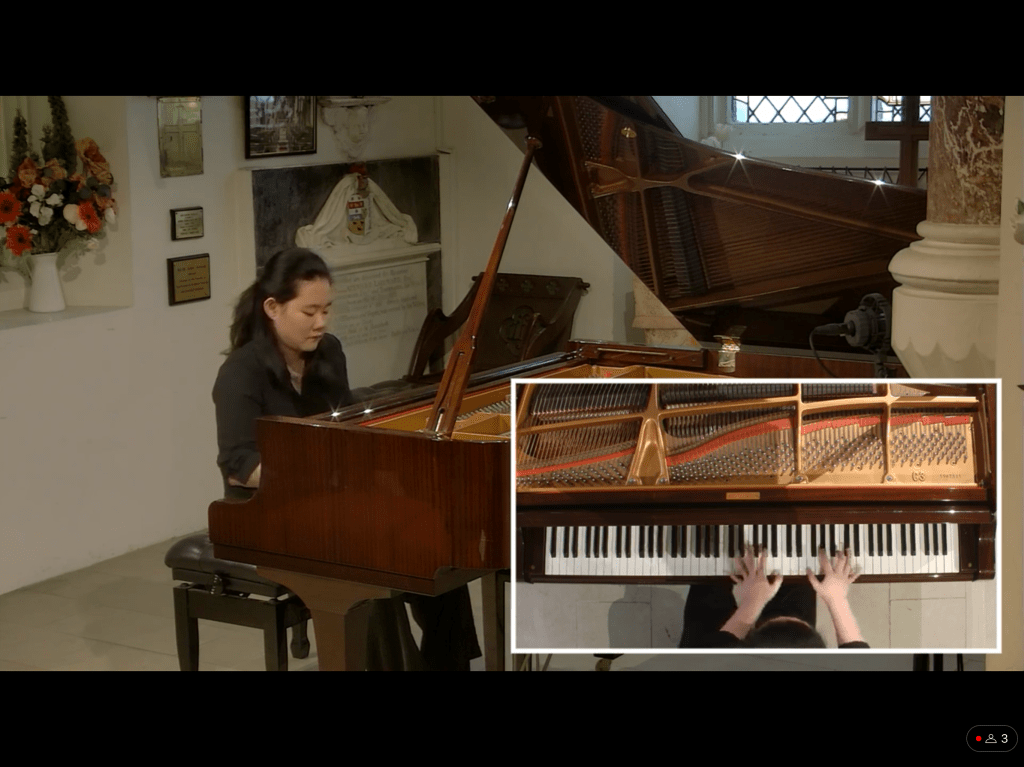

Some superb musicianly playing from Ke Ma .From the very first notes of the Schubert G flat Impromptu there were beautiful rich sounds of changing harmonies on which emerged the melodic line .Incorporated into the harmonic fabric the melodic line emerged with such strength and beauty .A disarming simplicity in which Schubert’s ‘Liebestraum’ was not of bitter sweet sentimentality but strong sentiments of poignant beauty.Playing of almost orchestral proportions as the F minor impromptu unwound with a rhythmic energy and buoyancy with moments of joyous excitement as the embellishments were thrown off with such deliberation.The central episode had a luminosity without ever loosing the rhythmic propulsion of this final exhilarating Impromptu.There were moments of great fantasy as Schubert seemed to be searching for a way back to the opening exhilarating dance.It was played with beauty and intelligent musicianship creating a tension of expectation just waiting for the moment of arrival and unwinding of the spring to lead to the return of the dance and the final great plunge to the bottom of the keyboard.

The absolute desolation of the opening of Book 2 of Debussy’s Image was just the scene for the bells that started to peal all over the keyboard creating a magic spell that was quite extraordinarily atmospheric.’Doucement sonore’ and ‘un peu en dehors’ Debussy suggests and later ‘très égal come une buée irisée’ all played with a transcendental control of sound as the melodic line was floated on this wave of sound.What grandeur there was too as the bells became more and more insistent only to die away to a mere whisper.What beauty she brought to the bleak landscape of the moon shining down on the Temple with wondrous sounds of unearthly luminosity.A masterly control of the pedal and of touch but above all an intelligence as she brought to life all the minute indications that Debussy seminates throughout the score.Have Gold Fish ever found such shimmering murmured pools to dip in and out of?Ke Ma brought a wonderful clarity to the melodic line as the fish enjoyed splashing around with such evident joy and exhilaration only to find absolute peace and tranquility in the final bars.Debussy wrote to his publisher,Jacques Durand :”Without false pride, I feel that these three pieces hold together well, and that they will find their place in the literature of the piano … to the left of Schumann, or to the right of Chopin… “
Cloches à travers les feuilles” was inspired by the bells in the church steeple in the village of Rahon in Jura,France.Rahon was the hometown of Louis Laloy ,a close friend of Debussy and also his first biographer.
“Et la lune descend sur le temple qui fut” (And the moon descends on the temple that was) was dedicated to Laloy.The name of the piece, which evokes images of East Asia ,was suggested by Laloy, a Sinologist The piece is evocative of Indonesian gamelan music, which famously influenced Debussy.
“Poissons d’or” was probably inspired by an image of a golden fish in Chinese lacquer artwork or embroidery ,or on a Japanese print. Other sources suggest it may have been inspired by actual goldfish swimming in a bowl,though the French for goldfish is ‘poisson rouge’ (red fish).

The revised 1931 version of Rachmaninov’s Sonata n.2 in B flat minor was played with passion and sumptuous sounds.But it was her musical intelligence and absolute attention to Rachmaninov’s indications that gave such strength and authority to a work that in lesser hands can seem so superficial and episodic.Her sense of orchestral colouring with a kaleidoscopic palette of colours was allied to the full Philadelphian luxuriant sounds that are so much part of Rachmaninov’s world.There was excitement and transcendental virtuosity but always with an organic feel of architectural shape and meaning.
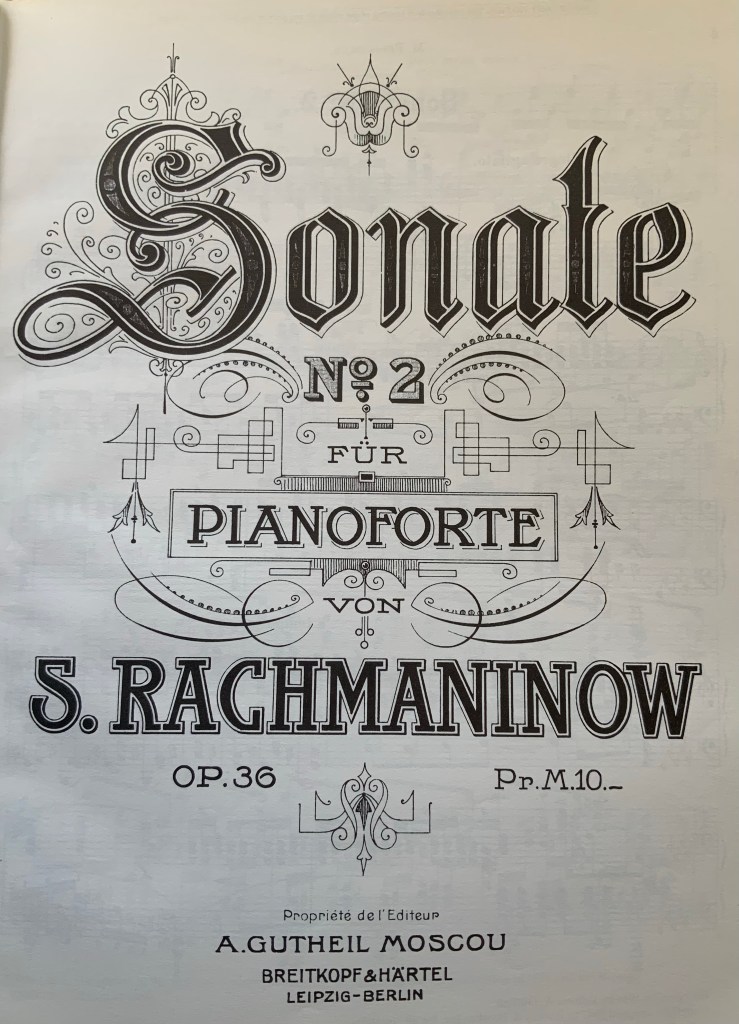
Rachmaninov worked on his Second Sonata over several months in 1913, beginning it while in Rome and later completing it in Russia and including it in his concerts that Autumn prior to its publication the following Spring.Although conceived in three movements (Allegro agitato, non allegro, Allegro molto), the Second Sonata flows as one astonishing piece, its bravura technical demands matched by that dark emotional intensity which runs through so much of Rachmaninov’s music. The movements are bound together by thematic cross-references and transformation; in particular, the opening descending passage pervades all three movements in different guises.The original version is not without its problems however; not only is the scale of the work daunting, so too some of the passage-work makes very significant demands on the performer.
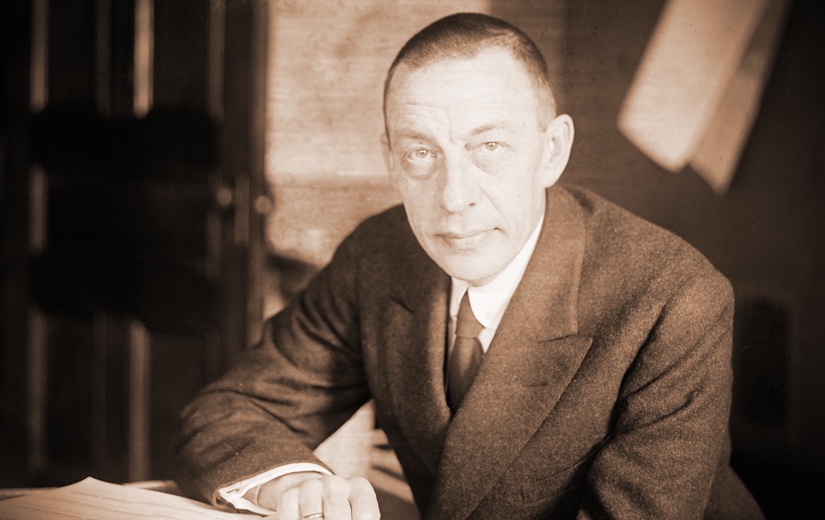
Rachmaninov’s own thoughts were expressed when he himself later wrote:”I look at some of my earlier works and see how much there is that is superfluous. Even in this Sonata so many voices are moving simultaneously, and it is so long. Chopin’s Sonata lasts nineteen minutes and all has been said.”
It was no doubt to address these points that Rachmaninov set about revising the Sonata in the summer of 1931, just as he was also composing his final solo piano work, the Corelli Variations.In this revised version, Rachmaninov makes significant changes to the piano writing throughout, both giving the piece a cleaner, more transparent texture and at the same time making the piece easier to play. In addition to these changes, he reduced the overall length of the Sonata by some 120 bars, tightening the structure considerably.
In spite of these efforts, as Rahmer points out in his concise but illuminating Preface to the new Henle edition,
“The question of whether Rachmaninov really altered the Sonata to its advantage is disputed to the present day among pianists and music critics. While many authors consider the significant cuts as a successful tightening up and elimination of unnecessary virtuoso ballast, the opposing faction criticises this intervention as a mutilation that upsets the Sonata’s formal balance and thematic conception.”
He goes on to note that while the revised version is the one frequently heard, some such as Zoltán Kocsis have advocated a return to the unaltered first version, while many others (notably Horowitz and Van Cliburn) have produced their own composite versions, based on their preferred elements from both.
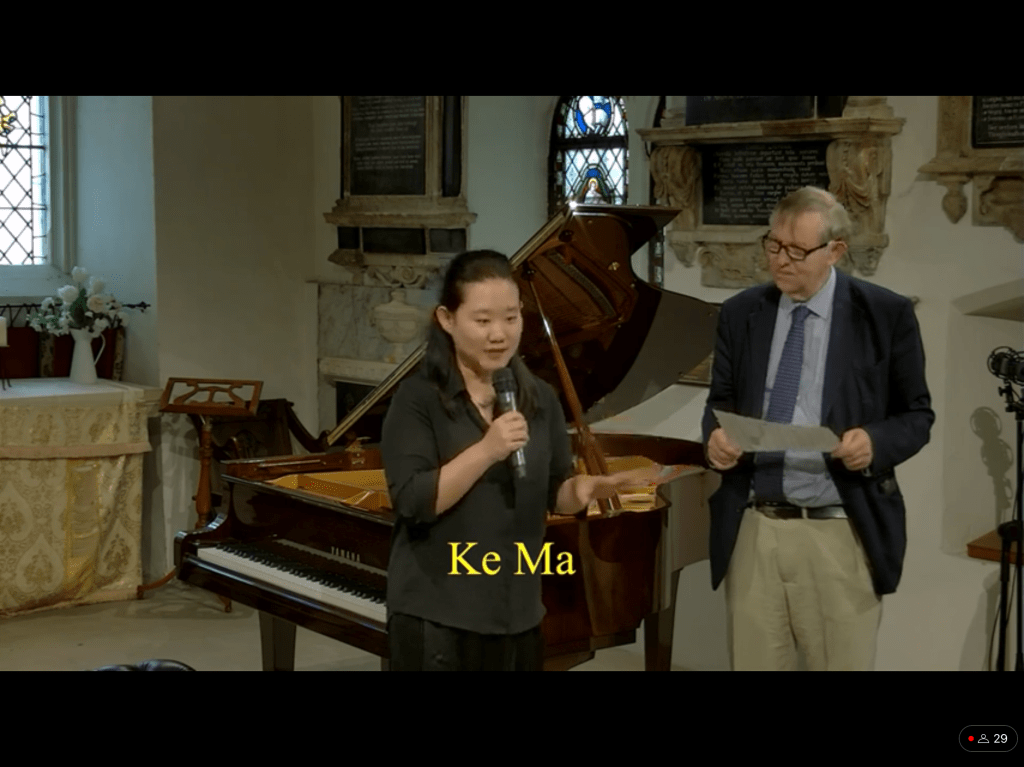
Born in Datong, China, Ke Ma is a highly accomplished pianist who has earned international acclaim for her exceptional musical talent and technical prowess. She pursued her musical education at the prestigious Royal Academy of Music in London, under the tutelage of Christopher Elton, Michael Dussek, and Andrew West, and graduated with a Masters with distinction (DipRAM) in 2017. Currently, Ke is actively engaged in her Doctoral study at Guildhall School of Music and Drama, where she is studying with esteemed professors Joan Havill, Dr. Alexander Soares, and Rolf Hind. Ke’s impressive achievements include securing top prizes at several international competitions, including 1st Prize at the 2016 Concours International de la vie de Maisons-Laffitte and Karoly Mocsari Special Prize in France, 1st Prize at the 2014 Shenzhen Competition in China, and 3rd Prize at the 2012 Ettlingen Competition in Germany. She has showcased her exceptional talent as a soloist, having performed with renowned orchestras such as the Royal Philharmonic Orchestra, Shenzhen Symphony Orchestra, and Miskolc Symphony Orchestra conducted by Tamás Gál at the Palace of the Arts in Budapest , among others.
Ke Ma at St Mary’s a seduction of luminosity and musicianship
 ChristopherAxworthy-MusicCommentary