Tuesday 4 July 3.00 pm


The Hungarian roots of Domonkos were apparent throughout his recital at St Mary’s Perivale not only for the obvious dance idioms in Kodaly’s ‘Dances of Marosszek’ but in the very sound he produced from the very opening notes of Bach’s Fantasia and Fugue BWV 944.
A Hungarian school of playing with a very crisp and clean sound of great fluidity very noticeable in Geza Anda,Tamas Vasary ,Deso Ranki and Zoltan Kocsis.It gives great clarity to the sound but with a kaleidoscopic range too from gently whispered sounds to the full sound of a truly Grand piano.
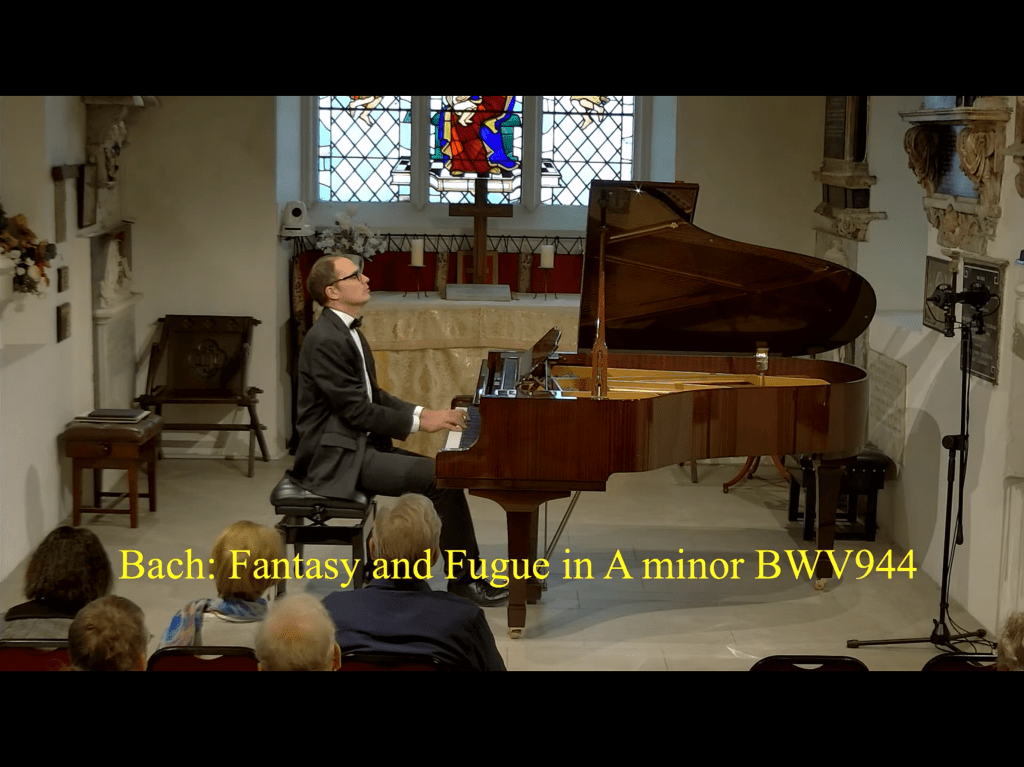
There was a clarity to the long improvised lines of the Bach Fantasia with a fugue that had an inner rhythmic propulsion where Bach’s extremely ‘knotty twine’ was unravelled with extraordinary beauty of sound.Each strand had a life of its own while creating a architectural whole of great nobility.

It was a sound that was ideally suited to the world of Benjamin Britten where luminosity and subtlety created a world where every note seems to have a life of its own in a musical language that is always based on the human voice.The piano accompaniments of the Song Cycles like the Winter Words or Michelangelo Sonnets are so similar to this sound world of solo piano.
Britten was a wonderful pianist but more like Gerald Moore where their accompaniment for singers was quite unique.Britten’s creation of a new genre of song (and opera)for his companion Peter Pears and his duo playing of Schubert with Richter or Rostropovich from Aldeburgh has become legend.

I was studying in Italy in 1972 when I was asked by the British Council to give a series of recitals to celebrate Britten’s 60th birthday playing the entire piano works of Britten together with the song cycle ‘Winter Words ‘ and some of his folk song arrangements.The piano works were Holiday Diary Suite and the Notturno commissioned for the first Leeds International Piano Competition.
Today is the first time since then that I have seen this suite on a concert programme.
Domonkos played it with superb character where Britten’s very individual language created a world where you could visualise the atmosphere that Britten was describing.A master craftsman Britten knew exactly how to make the piano talk with the same inflections and shapes as the human voice.The crystal clear sounds that are so much part of Domonkos’s technical finesse were ideally suited and it brought each of the four scenes of a ‘Holiday Suite’ vividly to life.
‘The Early Morning Bathe’ where you could almost see the water splashing,taking a plunge into the icy water and the tentative steps before taking another.Or the beautiful serene melodic line ‘sailing’ on gently moving waves.The agitation as they sailed into deeper waters only to return to the serenity and calm as they neared the shore.All the fun of the ‘Fun Fair’ with its sparkling perpetuum mobile played with such enviable precision.Fireworks shooting off with glissandi fired from Domonkos’s superbly trained fingers.The extraordinary lament as ‘Night’ falls with the tenor melody that sings out so poignantly while all around slumber is taking over.A superb sense of balance and complete control of timbre and balance made this a particularly poignant farewell.
A work that deserves a place on more concert programmes when played with the mastery that we heard today (I can imagine Curzon for whom it was eventually dedicated bringing the same eloquence to these seemingly sparse notes – as he did of course to Mozart).
A very individual ’medley’ of four completely different works from the musicianly hands of Domonkos turned into a Sonata of magnificence and opulence.

‘Finlandia’ transcribed by the composer Sibelius was a revelation as Domonkos showed us a tone poem of extraordinary evocative suggestion with its imperious orchestral opening and sumptuous string chords answered by the purity of the woodwinds.A virtuosistic build up to the glorious melodic outpouring of Nationalistic pride that has become the emblem of Finland.Superb full orchestral sound never hard or ungrateful from Domonkos’s wonderfully fluid sound world.

A beautiful Chopin Prelude op 28 n.17 was played with aristocratic rubato and sounds of magic and wonder.The deep tolling bell in the base and the mist it created for the apparition of the opening melody,floating into a stratosphere of poetic beauty,was quite memorable.

Rachmaninov’s G sharp minor prelude was played with a poetic sensibility and kaleidoscope of ravishing colours.

The sombre entry of S.Paolo walking on the waves was just a prelude to a tone poem of remarkable grandeur and beauty that was truly breathtaking.I have only heard the like from Wilhelm Kempff on his all too few historic recordings of Liszt.

The Kodaly ‘Dances’were played to the manner born with scintillating colours of such insinuating beguiling sounds and also technical brilliance of nobility and grandeur.

Domonkos Csabay is a Hungarian concert pianist, chamber musician and accompanist. He studied with András Kemenes and István Lantos at the Liszt Academy Budapest, and is a graduate of Royal Birmingham Conservatoire, where his professors were Pascal Nemirovski and John Thwaites. Besides pursuing a solo carreer, he has worked as a répétiteur with renowned opera companies and co-operated with diverse chamber ensembles. He has made several concerto appearances and has been invited to many prestigous venues and festivals, such as the Budapest Spring Festival or the Wye Valley Chamber Music Festival. Competition successes include 1st prize at the Lyon International Chamber Music competition and at the Birmingham International Piano Chamber Music Competition in 2022, special award in the Budapest Liszt Piano Competition, as well as prizes won as a composer in Romania and as member of a Lied duo in Wales. His performances have been broadcast on BBC Radio 3 and in the Hungarian Radio. His debut CD was issued by Naxos in 2021, his second solo album is appearing soon with the label Hungaroton. Domonkos recently finished his fellowship as a collaborative pianist the Royal College of Music, London.”
Domonkos Csabay at St Mary’s. A refined recital from a true musician
The Holiday Diary (Tales) of 1934, dedicated in the first published edition of 1935 to Arthur Benjamin, the composer’s piano teacher at the RCM, were later—in a sense—re-dedicated on the manuscript given to Britten’s friend, the pianist Clifford Curzon (‘who made them his’). They show Britten’s sharp sense of the descriptive and that boyish sense of fun which never entirely deserted him. The exuberant ‘Early Morning Bathe’ (Britten loved swimming) is irresistible with its hesitant shivers before taking the plunge, its wave-like arpeggios gathering momentum into warmer tonal waters, and the shivers in reverse of its coda as the bather emerges from the water. ‘Sailing’ broaches a vein of melodic serenity (parodied in a turbulent middle section) that was to prove consistent in many a more emotionally serious situation in Britten. The delights of the ‘Fun-Fair’ (a brisk toccata-like rondo with descriptive episodes) are a riot of piano sonority. The work concludes with an atmospheric night-piece in which the ghosts of former themes from the suite float past.

Jean Sibelius born Johan Julius Christian Sibelius;(8 December 1865 – 20 September 1957) was a Finnish composer of the late Romantic and early-modern periods. He is widely regarded as his country’s greatest composer, and his music is often credited with having helped Finland develop a national identity during its struggle for independence from Russia.The core of his oeuvre is his set of seven symphonies which, like his other major works, are regularly performed and recorded in Finland and countries around the world. His other best-known compositions are Finlandia ,the Karelia Suite ,Valse triste ,the violin Concerto ,the choral symphony Kullervo,and The Swan of Tuonela (from the Lemminkainen suite).There is also quite a large number of piano pieces yet to be discovered .In performing selected piano works, Lief Ove Andsnes finds that audiences were “astonished that there could be a major composer out there with such beautiful, accessible music that people don’t know.”
- Piano Suite (Florestan), JS 82 (1889)
- Sonata in F major op 12.(1893)
- 10 Pieces, Op. 24 (1894–1903)
- 10 Bagatelles, Op. 34 (1914–16)
- 10 Pensées lyriques, Op. 40 (1912–14)
- 10 Pieces, Op. 58 (1909)
- Three Sonatinas, Op. 67 (1912)
- No. 1 in F-sharp minor
- No. 2 in E major
- No. 3 in B-flat minor
- 2 Rondinos, Op. 68 (1912)
- 4 Lyric Pieces, Op. 74 (1914)
- 5 Pieces (The Trees), Op. 75 (1914)
- 13 Pieces, Op. 76 (1914)
- 5 Pieces (The Flowers), Op. 85 (1916)
- 6 Pieces, Op. 94 (1919)
- 6 Bagatelles, Op. 97 (1920)
- 8 Short Pieces, Op. 99 (1922)
- 5 Romantic Compositions, Op. 101 (1923)
- 5 Characteristic Impressions, Op. 103 (1924)
- 5 Esquisses, Op. 114 (1929)
Kyllikki
Six Impromptus
- 1) No. 1 in G minor (Moderato)
- 2) No. 2 in G minor (Lento-Vivace)
- 3) No. 3 in A minor (Moderato/Alla marcia)
- 4) No. 4 in E minor (Andantino)
- 5) No. 5 in B minor (Vivace)
- 6) No. 6 in E major (Commodo)

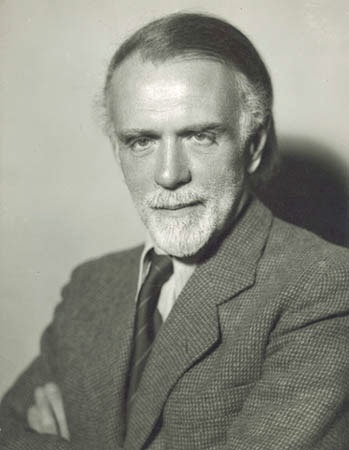
Born
16 December 1882
Died
6 March 1967 (aged 84)
Budapest, Hungary
Born in Kecskemet,Hungary and learned to play the violin as a child .In 1900 he entered the department of Languages at the University of Budapest and at the same time Hans von Kössler’s composition class at the Royal Hungarian Academy of Music. After completing his studies, he studied in Paris with Charles Widor for a year.
In 1905 he visited remote villages to collect songs, recording them on phonograph cylinders.In 1906 he wrote a thesis on Hungarian folk song, “Strophic Construction in Hungarian Folksong”. At around this time Kodály met fellow composer and compatriot Bela Barto whom he took under his wing and introduced to some of the methods involved in folk song collecting. The two became lifelong friends and champions of each other’s music.
 ChristopherAxworthy-MusicCommentary