Pollini in London: STORY OF A MIRACLE! By a young Italian pianist graduate of the RCM London – Antonio Morabito
The day before yesterday I witnessed what I would define, in no uncertain terms, a miracle.Indeed, a series of miracles in an evening that is unbelievable!
Pianists please read this post.
I start from the beginning.Maurizio Pollini, renowned Italian pianist, one of the greatest pianists of the twentieth century gave a recital at the Festival Hall at the Southbank in London.Obviously, with my dear friend Riccardo, we go very excited to listen to what promises to be a concert we will never forget.It was,but not for the reasons you would expect…
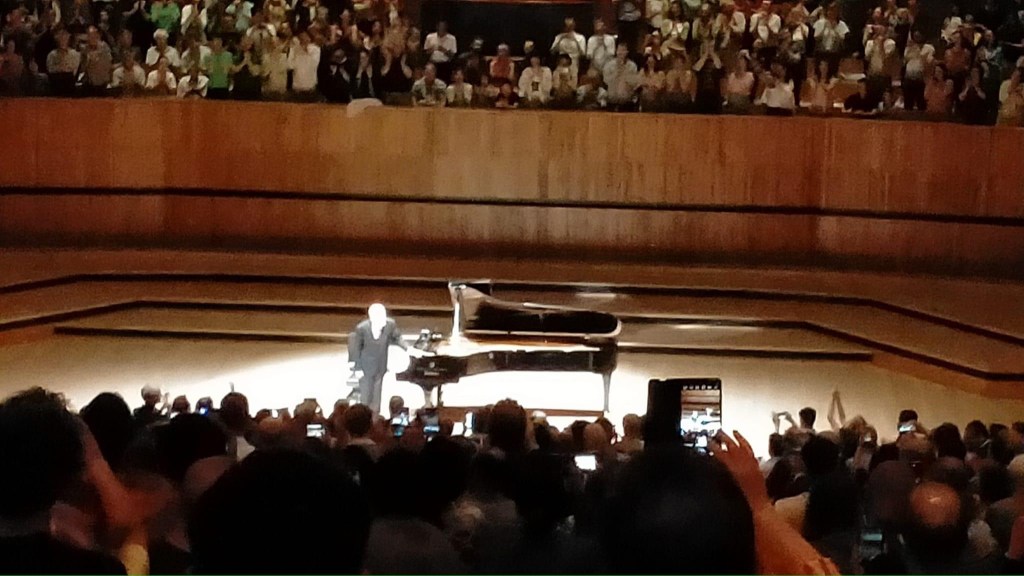
Silence in the hall, of the kind that is generally felt in sacred places before mass begins, lights off and stage lit with the piano in all its majesty in the centre. Everyone looking at the little door on stage left. Here it is! It’s really him, it’s not a YouTube frame, he really exists!Pollini enters a hall,packed to the rafters,staggering, bent over, almost in a hurry, he manages to reach the piano to lean on and stop himself falling over.He finally arrives, leans on the piano and bows gratefully for the unending applause that usually awaits a great artist at the end of the concert.There’s no doubt, the audience knows who they are looking at and pays homage to him.We join in the tribute, grateful, excited and proud to be Italian like him.
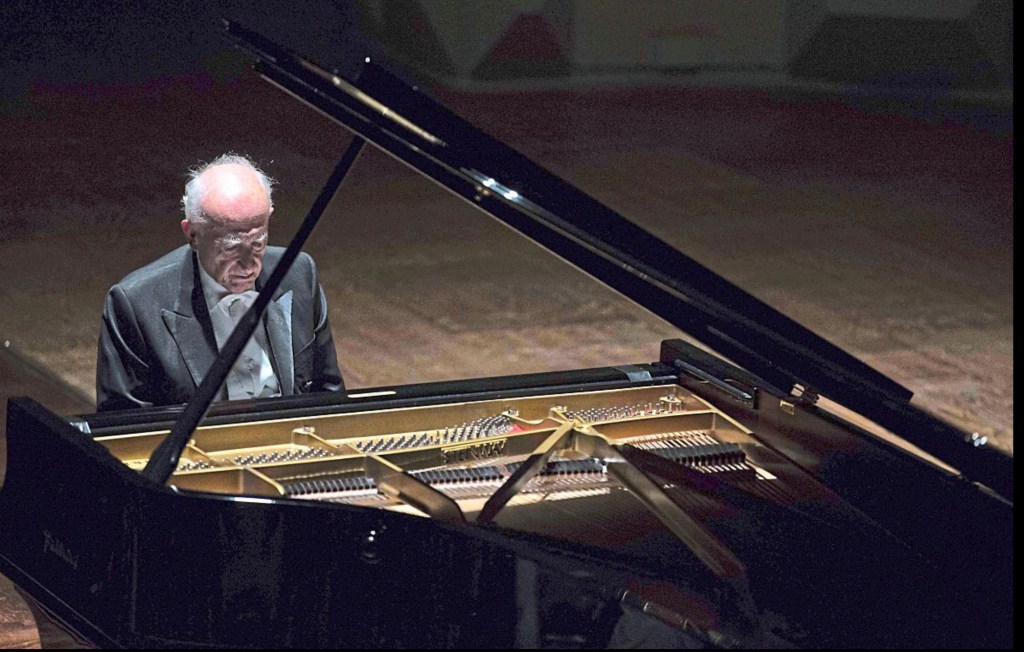
The programme is interesting, Schumann and Chopin.Riccardo, also a pianist, and I already imagine the refined artistry that awaits us too.The applause is still going on but Pollini is impatient, he doesn’t even adjust the bench, he doesn’t take those usual seconds of concentration that you would expect, he doesn’t let the applause end and immediately starts playing. Everyone stops clapping instantly.The concert has begun!We are once again immersed in the religious silence of before with the only difference that this time we are all hypnotized by his hands and by what they will be able to do.
The first piece is the famous Arabesque Op. 18.We are looking for the refinements, the enjoyment that comes from the interpretation of an artist of his caliber,but the Arabesque is nervous, with not too much emotional involvement, of a sound that appears shallow and hurried in the “cantabile”and too forced in the ” forte”(Pollini uses his whole body for the “sforzandi”).His tenseness is palpable, you can feel it even from the back row of the hall.It’s a lesson for me. A confirmation, if any were needed, that in a concert hall a connection is created between artist and audience that is really difficult to explain rationally.
Pure magic.The piece ends. It wasn’t what we expected but, as you know, the start of a concert is terrible for anyone, can you imagine for a 81 year old man? And then how can we ever dare to criticise Pollini!?We just join the thunderous applause of a crowd that couldn’t wait to continue its initial homage to the master and we give him the due recognition that he deserves,regardless.The second piece is the Fantasy op 17.We can not wait!Surely after the initial emotion he will demonstrate his his mastery.
What will happen, however, is unimaginable.Pollini sits down, hastily, and this time too he doesn’t let the applause end and starts playing again.But the piece that he plays is not Schumann’s Fantasy ,after a few notes we look at each other with Riccardo puzzled and I ask him: “wasn’t there the Fantasy now?”.Double-checking the program to see if I remember correctly. No mistake, he’s playing another piece. But what?After a very short time I understand that Pollini is improvising. Rapid arpeggios and harmonic sequences that occasionally recall passages from the Fantasy but nothing that has to do with a real piece nor with the Fantasy.The atmosphere is surreal.My heart is pounding, I empathize with him, I can’t believe it’s really happening.The great Pollini forgot the beginning of Schumann’s Fantasy.The confirmation comes when he stops playing and in a great state of confusion brings his hands to his head as if to say: “what’s wrong with me?”. For a moment I think of everything: “Is he feeling ill?A dizziness? Maybe something more serious?”The audience is astonished, petrified.He resumes playing, more arpeggios and miscellaneous improvisations, loud, angrily, using his whole body to play, almost angry with the piano.The same piano that crowned him for decades as one of the greatest pianists of recent times has now become the enemy which is forcing him to perform under these conditions.He stops playing, concluding with a cadenza in C major, pretending he’s played a piece that really exists.He stands up.The audience applauds shocked, worried, incredulous. It’s not the same applause as previously This is different.Pollini leaves the stage with the same speed with which he had entered.I’m in a cold sweat, my heart is pounding . I feel like it’s me on stage. And if I were there, what would I do? I don’t want to think about it.Endless minutes go by in which I sincerely think that a staff member will soon come out to say that the master, due to illness, is unable to continue. But no one comes on stage. Time passes and a general murmur accompanies anxious moments.
But here is the first miracle.The little door opens. It’s not the hall staff. It’s the Master!Pollini returns to the stage and the audience goes crazy with joy and emotion. They flood him once again with incredible affection! (By the way, the London crowd is not renowned for its warmth,more for its composure). But this Friday night is the night of miracles and anything can happen.Pollini returns to the stage with a book, he doesn’t have the hall staff bring it to him. He carries it himself. It’s his book that weighs like a rock this time. He will play with the book in front of him.Right after him a member of staff enters carrying the piano stand to put on the piano.The stand is placed on the piano while the audience does not stop encouraging Pollini by applauding like never before and shouting “bravo” loudly. The maestro always appears nervous and at the same time sorry but always grateful to the audience and in fact he takes a shy bow and without waiting for the staff member to leave the stage, he starts playing again before the applause ends.This time it is the beginning of Schumann’s Fantasy. Unmistakable!But there is something wrong, the book is there but where is the page turner and his chair? How is it possible that there isn’t one?Maybe he just needs to have the book in front of him for the beginning but he won’t use it?Unfortunately this is not the case as incredibly he turns the pages by himself by interrupting the piece or removing some notes!It’s absurd! How is it possible that he is doing this? Why didn’t he call a page turner?There is general embarrassment in the air and the first movement continues with many uncertainties, memory lapses, improvised or repeated parts. His hand is shaking and he can’t turn the pages.I am literally dead.I can not believe my eyes. It is a mixture of sadness and emotion.Pollini ends the first movement somehow.
And here is where the second mysterious miracle happens.Pollini stands up, tired, weary, angry, incredulous and extremely sad.The entire audience bursts into thunderous applause, the maestro almost in tears is forced to bow down and gestures with his hands as if to say “I’m sorry, forgive me”.And here the public does something unthinkable: they all stand up, stalls, stage,anyone, even the hall staff, in an ovation that I have personally never seen in my life!At that moment it was the piano world, and not only,present in London that embraced the sacrosanct fragility of a man who is a giant, but still a man and, with that embrace, they were reminding him of it.Pollini leaves the scene but the public doesn’t stop cheering him on. They praises the great man but also the great pianist that he is.It won’t be a performance to compromise a stratospheric career!
The Milanese pianist returns with a page turner and the concert continues.The Fantasy ends which is affected by the initial event but which in any case is completed with dignity.Same thing will be for the second part of the concert with Chopin. He will play everything, with the score in front of him, certainly not at the full level of his undisputed piano skills, always nervous, but without major problems, allowing us to glimpse the expressiveness of his touch, the brilliance and agility of some passages which, although not always impeccable, leave the listener with the idea that he is in any case in front of an exceptional pianist, witness of the piano history of an entire century.
What happens after the last note of the concert belongs to history.The audience applaude non-stop, all on their feet, an exhausted pianist, clearly embarrassed by applause he probably thinks he doesn’t deserve. Bent over on himself, leaning on what was his Olympus and at the same time his suffering, he bows grateful and is moved.It is truly a moving scene.He will be forced out 4 times, the audience shouts for an encore. It’s probably not the right day to continue playing but the public hopes for it, in vain, convinced that at any moment Pollini can erase what has gone wrong with a few notes played divinely as only he can.
No encore, the concert is over but his lesson will remain eternal for me.What this pianist did is miraculous. The strength and courage of a man who could have escaped at any moment but didn’t. He remained on stage and demonstrated to everyone that being an artist is above all a moral duty towards Art, towards oneself and towards the public.The man who won, among others, the Warsaw Chopin Competition, the most important piano competition on the planet, shows his fragility and his art remains indelible in the hearts of all those who recognized it and paid homage to him, no matter what happened. As it should be.I would have liked to hug that elderly man on stage who could have been my grandfather.I would have liked to say to him: “Maestro, don’t worry, you remain a giant of Music, an immense artist and today you have given us more than other millions of flawless pianists could ever convey”.
I tried to wait for him in vain, together with hundreds of people of all nationalities, at the artists’ exit but he preferred to leave through a secondary exit. Like the true artists do. No autographs, no selfies. I guess he thought: “I’m not worthy, not this time.” But I really wanted to answer him: “Yes Master, you will always be worthy.Especially this time.” Antonio Morabito
Thank you Antonio for translating your beautiful poetic account it is so moving but not everyone can understand the poetic nature of your Italian …………….London salutes a giant and it makes me proud to be a Londoner.
I remember Radu Lupu’s last performance in London greeted with criticism by the press .I was so incensed that I wrote an appreciation for what this giant had given us for over half a century.I was actually thanked for doing it ……..proving that those than can ,do, those that can’t criticise.
And shows that great artists are also human beings ……in the beginning is our end …..no escape for anyone but it is what goes on during that period and with what selfless generosity one gives of oneself,even when physical problems raise their head ,that marks out the men from the boys.
Hats off to a Genius
And from Dr Moritz von Bredow :
I presume Pollini’s London recital was an exception. I’ve just read the review from Vienna of June 16. It is heavenly, especially the fantasy by Schumann. Perhaps Pollini was tired or dehydrated. One should not put too much emphasis on that recital. This can, of course happen to anybody. And another absolutely ravishing review of his recital in Vienna, absolutely fantastic. Don’t worry about the London night, I’m sure he will surprise us again in the future with beauty of sound, technique, expression and experience.
Maurizio Pollini – Twilight of a God – Rome pays homage to a monument
Pollini a Londra: STORIA DI UN MIRACOLO! Un racconto da un pianista italiano a Londra Antonio Morabito
Avantieri ho assistito a quello che io definirei, senza mezzi termini, un miracolo.
Anzi, una serie di miracoli in una serata che ha dell’incredibile!
Pianisti, per favore, leggete questo post.
Parto dall’inizio.
Maurizio Pollini, notissimo pianista italiano, uno dei più grandi pianisti dei Novecento ha tenuto un recital alla Festival Hall del Southbank di Londra.
Ovviamente, col mio caro amico Riccardo, andiamo eccitatissimi ad ascoltare quello che si preannuncia essere un concerto che mai dimenticaremo.
Così è stato, ma non per i motivi che vi aspettereste…
Silenzio in sala, di quelli che generalmente si avvertono nei luoghi sacri prima che inizi il culto, luci spente e palco illuminato con al centro il Pianoforte in tutta la sua maestà. Tutti a guardare la porticina a sinistra del palco. Eccolo lì! È veramente lui, non è un fotogramma di YouTube, esiste davvero!
Pollini entra, in una sala gremita fino agli ultimi posti, barcollante, curvo, quasi di fretta va a raggiunge il pianoforte per appoggiarsi e scongiurare il pericolo caduta. Finalmente arriva, si appoggia al pianoforte e si inchina riconoscente per un applauso infinito che sembra essere quello di fine concerto.
Non c’è dubbio, il pubblico sa chi ha di fronte e gli rende omaggio.
Noi ci uniamo all’omaggio, grati, eccitati e orgogliosi di essere italiani come lui.
Il programma è interessante, Schumann e Chopin.
Io e Riccardo, anch’egli pianista, già pregustiamo le raffinatezze che non vediamo l’ora di sentire.
L’applauso è ancora in corso ma Pollini è impaziente, non si aggiusta neanche la panca, non si prende quei soliti secondi di concentrazione che ci si aspetterebbe, non lascia terminare l’applauso e comincia immediatamente a suonare. Tutti smettono di applaudire all’istante.
Il concerto è iniziato!
Siamo di nuovo immersi nel silenzio religioso di prima con l’unica differenza che stavolta siamo tutti ipnotizzati dalle sue mani e da ciò che saranno in grado di fare.
Il primo pezzo è il celebre arabesque Op. 18.
Siamo alla ricerca delle raffinatezze, del godimento che si trae dall’interpretazione di un artista del suo calibro ma l’arabesque si rivela nervoso, con non troppo coinvolgimento emotivo, di un suono che appare poco profondo e frettoloso nei cantabili e troppo spinto nei “forti” (Pollini si aiuta col corpo per gli “sforzandi”).
La sua tensione è palpabile, la si avverte anche dall’ultima fila della sala. È una lezione per me. Una conferma, qualora ce ne fosse bisogno, che in una sala da concerto si crea un collegamento tra artista e pubblico che è veramente difficile da spiegare razionalmente. Magia pura.
Il brano termina. Non era quello che ci aspettavamo ma, si sa, l’inizio di un concerto è terribile per tutti, figuriamoci per un uomo di 81 anni! E poi come possiamo mai azzardarci a dire qualcosa a Pollini!?
Non ci resta che unirci allo scrosciante applauso di una folla che non vedeva l’ora di continuare l’applauso iniziale e inondiamo il maestro del dovuto riconoscimento che merita a prescindere.
Il secondo pezzo è la fantasia Op.17.
Non vediamo l’ora!
Sicuramente dopo l’emozione iniziale darà sfoggio di tutta la sua maestria.
Quello che succederà, invece, è inimmaginabile.
Pollini si risiede, frettolosamente, e anche stavolta non lascia finire l’applauso e ricomincia a suonare.
Ma il pezzo che suona non è la fantasia di Schumann, dopo poche note ci guardiamo con Riccardo perplessi e io gli chiedo: “non c’era la fantasia adesso?”.
Ricontrollo il programma per vedere se ricordo male. Nessun errore, sta suonando un altro pezzo. Ma cosa?
Dopo pochissimo capisco che Pollini sta improvvisando. Dei rapidi arpeggi e concatenazioni armoniche che ricordano di tanto in tanto dei passaggi della fantasia ma nulla che abbia a fare con un vero e proprio pezzo né tantomeno con la Fantasia.
Il clima è surreale.
Mi batte forte il cuore, mi immedesimo in lui, non posso crederci, sta succedendo davvero.
Il grande Pollini ha dimenticato l’inizio della Fantasia di Schumann.
La conferma arriva quando smette di suonare e in grande stato confusionale avvicina le mani alla testa come a dire: “che mi succede?”. Per un attimo penso di tutto: “si sta sentendo male? Un giramento di testa? Magari qualcosa di più grave?”
Il pubblico è attonito, impietrito.
Riprende a suonare, altri arpeggi e improvvisazioni varie, forti, con rabbia, usa tutto il corpo per suonare, quasi arrabbiato col pianoforte, lo stesso pianoforte che lo ha incoronato per decenni come uno dei pianisti più grandiosi degli ultimi tempi è ora diventato il nemico che lo sta costringendo ad esibirsi in queste condizioni.
Smette di suonare, concludendo con una cadenza in do maggiore, fingendo di aver suonato un pezzo che esiste davvero.
Si alza.
Il pubblico applaude scosso, preoccupato, incredulo. Non è l’applauso di prima. Questo è diverso.
Pollini lascia il palco con la stessa velocità con cui era entrato.
Io sudo freddo, il cuore mi batte a tremila. Mi sento come se fossi io sul palco. E se fossi io lì, cosa farei? Non ci voglio pensare.
Passano interminabili minuti in cui io sinceramente penso che a breve uscirà un membro dello staff a dire che il maestro, a causa di un malessere, non è in grado di proseguire. Ma nessuno arriva sul palco. Il tempo passa e un bisbiglío generale accompagna momenti interminabili.
Ma ecco qui il primo miracolo.
La porticina si apre. Non è nessuno dello staff. È il Maestro!
Pollini rientra sul palco e il pubblico impazzisce di gioia e commozione. Lo inonda ancora una volta di un affetto che ha dell’incredibile! (Tra l’altro il pubblico londinese non è rinomato per il suo calore, ma per la sua compostezza). Ma questo venerdì sera è la sera dei miracoli e tutto può succedere.
Pollini rientra sul palco con un libro, non se lo fa portare dello staff. Lo porta lui stesso. È il suo libro che stavolta pesa come un macigno. Suonerà con la carta davanti.
Subito dopo di lui un membro dello staff sta portando il leggio da mettere sul pianoforte.
Il leggio viene sistemato sul pianoforte dallo staff mentre il pubblico non smette di incoraggiarlo applaudendo come non mai e gridando “bravo” a gran voce. Il maestro appare sempre nervoso e allo stesso tempo dispiaciuto ma sempre riconoscente al pubblico e difatti fa un timido inchino e senza aspettare che lo staff esca dal palco, ricomincia a suonare, anche stavolta prima che l’applauso termini.
Stavolta è l’inizio della Fantasia di Schumann. Inconfondibile!
Ma c’è qualcosa che non va, il libro c’è ma dov’è il girapagine? Com’è possibile non ci sia?
Magari avrà bisogno solo di avere il libro davanti per l’inizio ma non lo userà?
Purtroppo non è così, incredibilmente si gira le pagine da solo interrompendo il pezzo o rimuovendo qualche nota!
È assurdo! Com’è possibile che stia facendo questo? Perché non ha chiamato un girapagine?
Nell’aria c’è un imbarazzo generale e il primo movimento prosegue con tante incertezze, vuoti di memoria, parti improvvisate o ripetute. La sua mano è tremante e non riesce a girare le pagine.
Io sono letteralmente morto.
Non credo ai miei occhi. È un misto di tristezza e commozione.
Pollini finisce il primo movimento in qualche modo.
Ed ecco qui che accade il secondo miracolo che mette i brividi.
Pollini si alza, stanco, affaticato, arrabbiato, incredulo ed estremamente triste.
Il pubblico intero scoppia in un fragorosissimo applauso, il maestro quasi in lacrime è costretto ad inchinarsi e con le mani gesticola quasi a dire “mi dispiace, perdonatemi”.
Ed ecco che il pubblico fa qualcosa di impensabile: si alza tutto in piedi, platea , palchetti, chiunque, pure lo staff, in un’ovazione che personalmente non ho mai visto in vita mia!
In quel momento era il mondo pianistico, e non solo, presente a Londra che abbracciava la sacrosanta fragilità di uomo che è un gigante, ma pur sempre un uomo e, con quell’abbraccio glielo stava ricordando.
Pollini esce di scena ma il pubblico non smette di osannarlo. Si osanna il grande uomo ma anche il grandissimo pianista che è.
Non sarà mica un’esibizione a compromettere una carriera stratosferica!
Il pianista milanese ritorna con un gira pagine e il concerto continua.
Finisce la fantasia che risente dell’accaduto iniziale ma che comunque viene portata a termine dignitosamente.
Stessa cosa sarà per la seconda parte del concerto con Chopin. Suonerà tutto, con la carta davanti, non al pieno delle sue indiscusse doti pianistiche sicuramente, sempre nervoso, ma senza grossi problemi, lasciando intravedere l’espressività del suo tocco, la brillantezza e l’agilità di alcuni passaggi che, pur non sempre impeccabili, lasciano all’ascoltatore l’idea che è comunque davanti ad un pianista eccezionale, testimone della storia pianistica di un secolo intero.
Quello che succede dopo l’ultima nota del concerto appartiene alla storia.
Il pubblico applaude senza sosta, tutto in piedi, un pianista esausto, chiaramente imbarazzato per applausi che probabilmente pensa di non meritare. Ricurvo su se stesso, appoggiato a quello che è stato il suo olimpo ed insieme la sua sofferenza, si inchina grato e commosso.
È veramente una scena commovente.
Sarà costretto ad uscire ben 4 volte, il pubblico grida a gran voce il bis. Non è probabilmente la giornata giusta per continuare a suonare ma il pubblico ci spera, invano, convinto che da un momento all’altro Pollini possa cancellare ciò che non è andato con poche note suonate divinamente come solo lui sa fare.
Niente bis, il concerto è finito ma la sua lezione rimarrà per me eterna.
Quello che ha fatto questo pianista ha del miracoloso. La forza e il coraggio di un uomo che poteva scappare in qualsiasi momento e invece non lo ha fatto. È rimasto sul palco e ha dimostrato a tutti che essere artista è prima di tutto un dovere morale verso l’Arte, verso se stessi e verso il pubblico.
L’uomo che ha vinto, tra gli altri, il Concorso Chopin di Varsavia, la competizione pianistica più importante del pianeta, si è messo a nudo in tutta la sua fragilità e la sua arte rimane indelebile nel cuore di tutti coloro che l’hanno riconosciuta e gli hanno reso omaggio indipendentemente da tutto. Come è giusto che sia.
Lo avrei voluto abbracciare quell’uomo anziano sul palco che poteva essere mio nonno, gli avrei voluto dire: “Maestro, non si preoccupi, lei rimane un gigante della Musica, un artista immenso e oggi ci ha trasmesso più di quello che altri milioni di pianisti impeccabili non avrebbero mai potuto trasmettere”.
Ho provato ad aspettarlo invano, insieme ad un centinaio di persone di ogni nazionalità, all’uscita degli artisti ma lui ha preferito uscire da un’uscita secondaria. Come fanno i grandi. Niente autografi, niente selfie. Immagino avrà pensato: “non ne sono degno, non questa volta”. Ma io gli avrei voluto tanto rispondere: “Si Maestro, lei ne sarà sempre degno.
Soprattutto questa volta”.
Antonio Morabito
 ChristopherAxworthy-MusicCommentary
2 risposte a "London salutes a legend Maurizio Pollini The story of a miracle by Antonio Morabito. ’One of the most remarkable descriptions of the humanity and courageous playing of a great artist I have ever read …. required reading for any musician and listener who values untouchable integrity in music and life itself …. an astonishing and creatively constructive piece of assessment …’Michael Moran (distinguished Australian critic and musicologist in Warsaw)"