Tuesday 20 June 3.00 pm
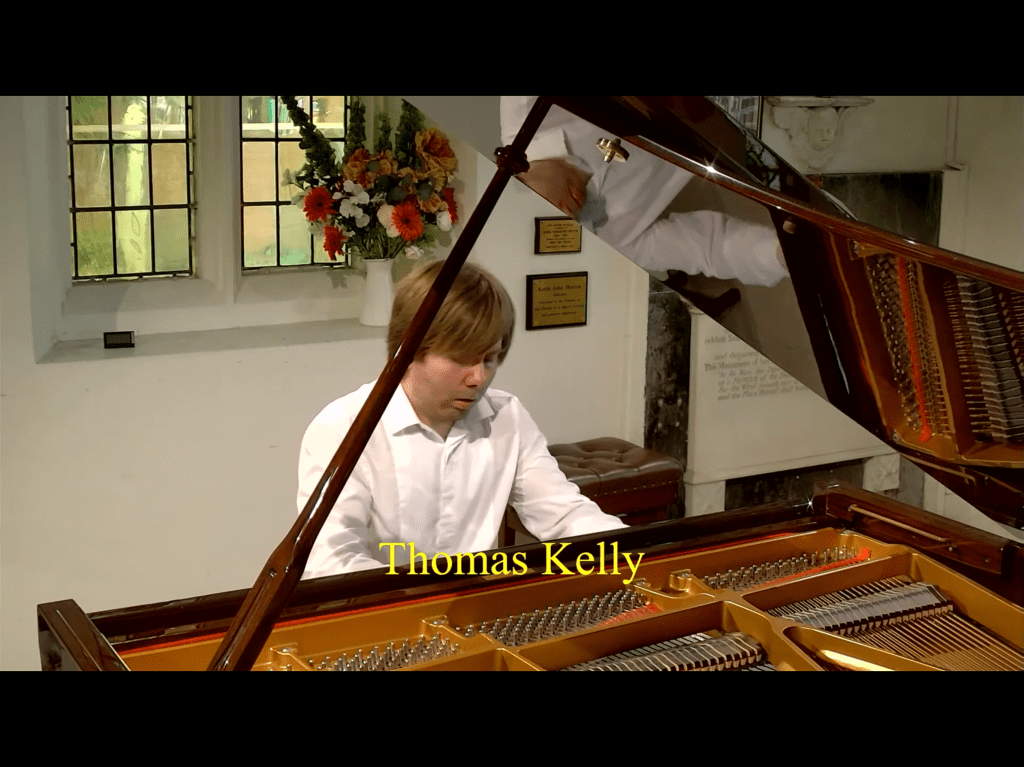
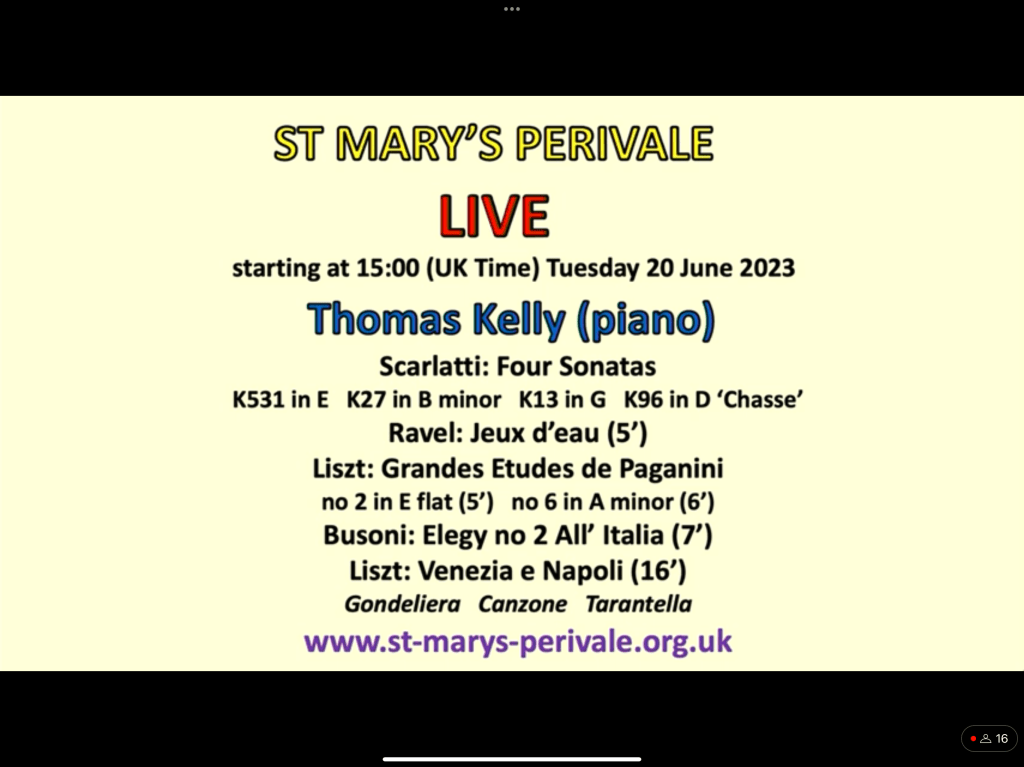
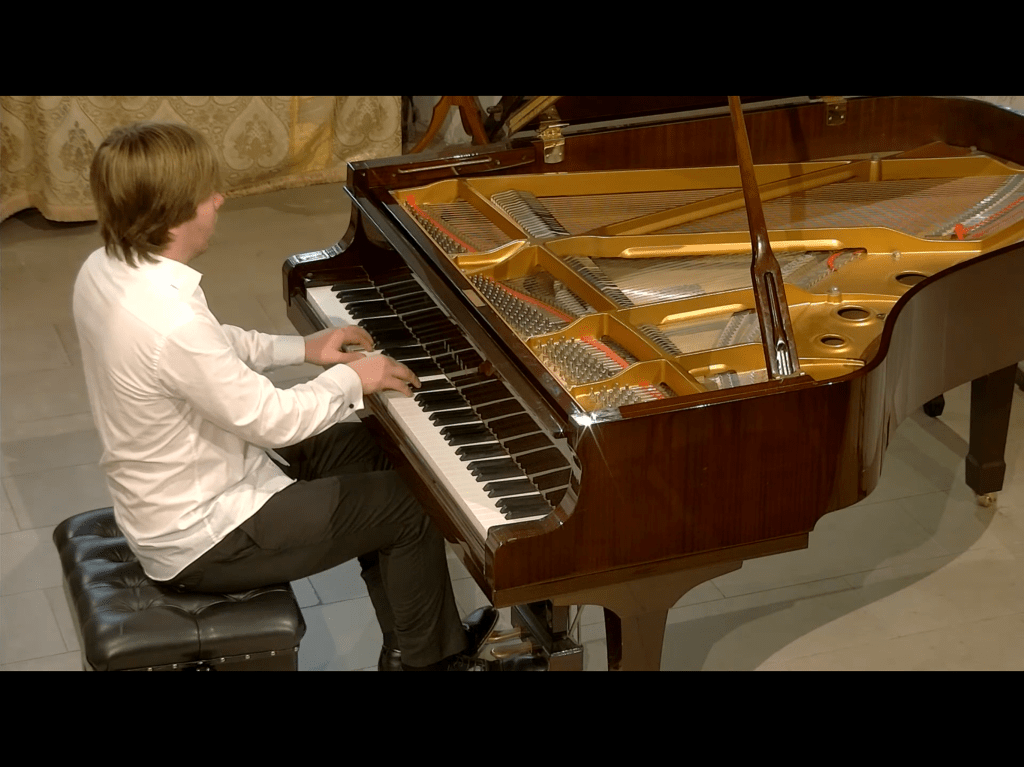
From the very first notes of Scarlatti it was clear that we were in for a very special afternoon of sumptuous playing from the Golden age of piano playing .The age when not only was there an ease of playing but there was a fantasy and imagination that with a palette of a seemingly infinite range of sounds that could ravish beguile,charm and astonish .
The idea was put into words by Tobias Matthay who would describe the way that in every note there was an infinite gradation of sounds that with a very sensitive touch could be as expressive as the human voice.I remember my first visit as a schoolboy to Sidney Harrison who sat at his wonderful inlaid Steinway and played the theme of Schumann’s Symphonic Studies.It was then that I knew music was to be the most important thing in my life.Lessons with him would be a revelation as he would search out songs where he could show me how to make the music speak in the same way as the human voice.We would spend hours finding the right inflection and shape to Traumerei of Schumann’s Kinderszenen.Of course there was also the technical preparation of Geoffrey Tankard’s books and Bach Preludes and Fugues,and much else besides but the seed was set.He would take me down the road to hear Frank Holland’s piano rolls in the Brentford Piano Museum of which he was honorary president .I could not believe the superhuman sounds of Godowsky,Rosenthal.Lhevine or the scintillating charm of Levitski.Later I was to be bowled over by Cortot’s Ballades on old recordings on loan from the local library.Followed by Horowitz’s return to the Carnegie Hall with his Schumann Fantasy of unbelievable colour and unashamed passion.Etincelles of scintillating charm and phenomenal technical wizardry.And later a mind blowing Stars and Stripes where the cheeky little piccolo would appear miraculously amidst his full orchestral sounds.Later the discovery of Rubinstein in concert where the beauty of his sound had us queuing up at six in the morning to be sure of getting in to his annual return visits.
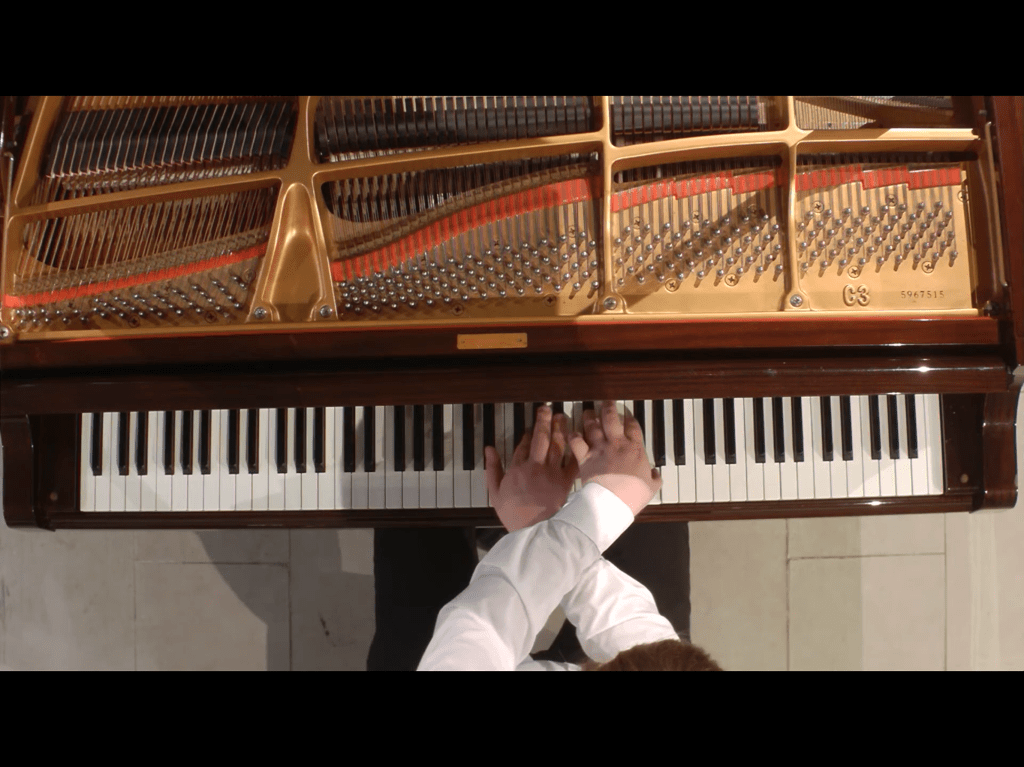
All this to say that I was reminded of this world listening again to Thomas Kelly today.Someone who is steeped in a style of what I thought a bygone age.A fluidity and technical mastery that made sense of the word ‘jeux perlé’.A pianist who listens to himself and in love with the sound of the piano as he shapes and delves deep in to the keys and draws more secrets out of them than others who do not even know they exist.I have heard Thomas many times since five years ago when he surprised everyone with his prize winning Carnaval for the Schumann Prize at the RCM.I have followed his progress since then and seen a supremely gifted young student become and artists of great stature.Of course the seeds were set by his friend and mentor the late Andrew Ball.https://christopheraxworthymusiccommentary.com/2023/02/14/a-celebration-of-the-life-of-andrew-ball-the-thinker-pianist-at-the-r-c-m-london/. Now his artistry has been transformed into a complete mastery thanks to the help and encouragement from the Alexeevs and their past prodigies now distinguished teachers and performers in their own right.https://christopheraxworthymusiccommentary.com/2021/11/13/dmitri-alexeev-mastery-and-communication-beyond-all-boundaries/Above all thanks should go to the Head of Keyboard Vanessa Latarche who had taken over the reigns of this post from Andrew Ball fifteen years ago and who has had the not easy task of helping this young ‘Ogdon’ to come to terms with a world outside music !

The very first notes of the four scarlatti Sonatas that’s he had chosen showed off a unique voice and sense of colour with shading of such subtle artistry.A ‘joie di vivre’ that illuminated K 13 in G and ‘La Chasse’ played with such an original new voice.
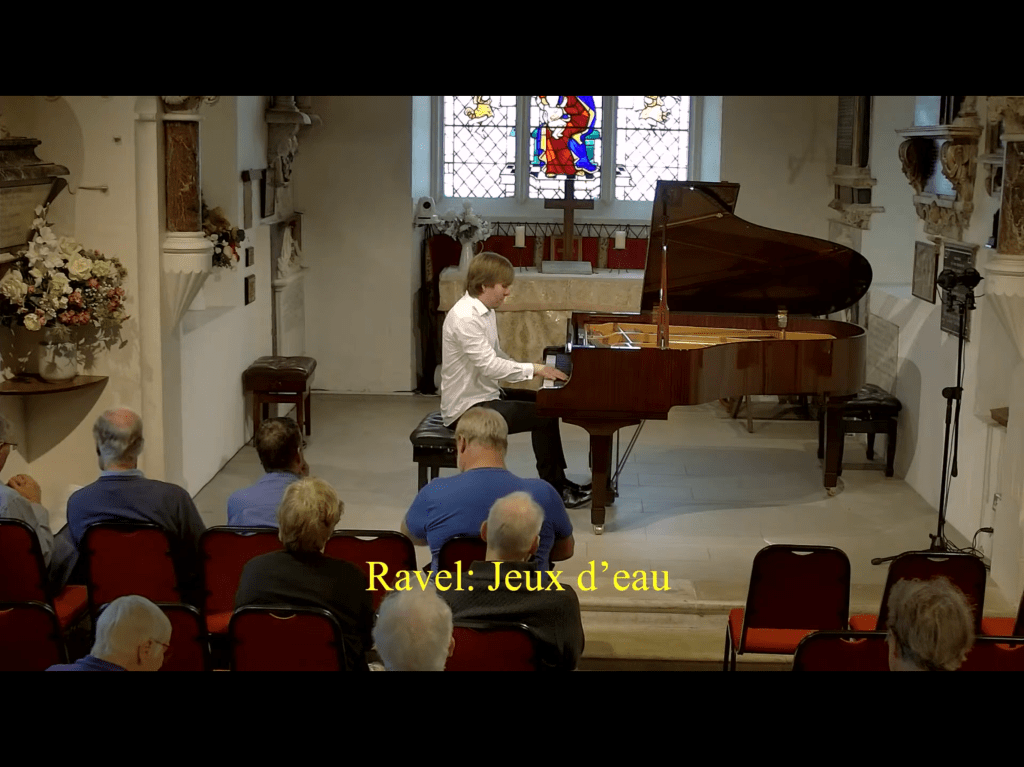
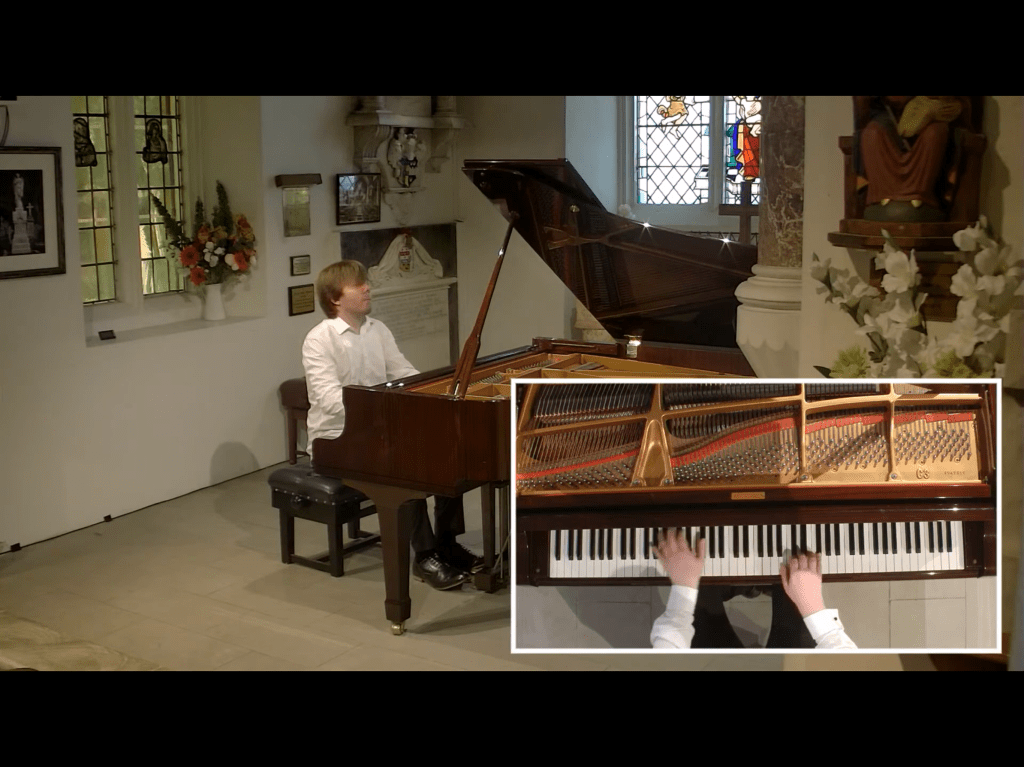
Ravel’s’ Jeux d’eau with a subtle flexibility and an aristocratic sense of style with ravishing colours and seemingly endless layers of sound.The overhead cameras at St Mary’s allowed us to observe the beautiful circular movements of Thomas’s chubby fingers.Like someone swimming in an imaginary bath of sound.The natural movements of the hand and arms are something that are to marvel at with Volodos.Thomas is still not completely liberated with his body movements as is the ‘Master’ but it is only a question of time until his whole body will unite in this unique union with the keyboard.Infact the piano seemed to glow with a golden radiance at the end of the Ravel as Thomas gradually allowed his body to shadow and be enveloped by the sounds he was producing.
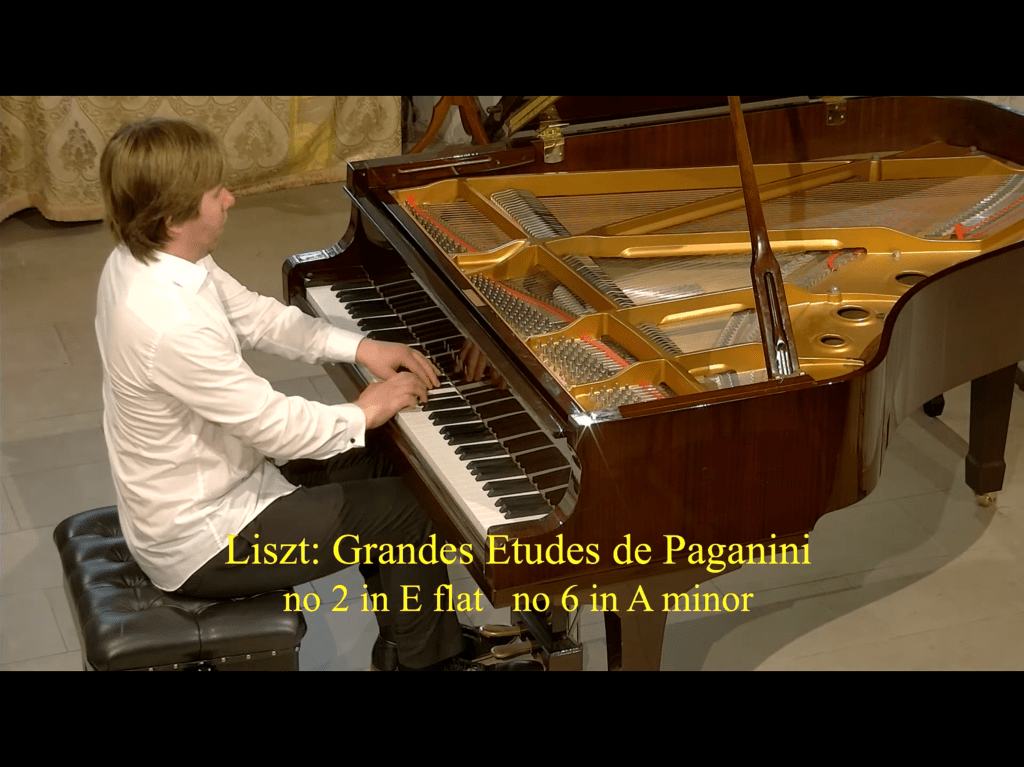
There was a beguiling charm to the Paganini study in E flat and awe inspiring octaves played with nonchalant ease and charm.There was extraordinary clarity in the central episode of octaves but it was the beguiling charm of the opening that revealed the art that conceals art.It is something that cannot be taught and it is inspired by a sensitivity at the moment of creation almost teasing and playing with his audience like a cat and mouse.The A minor study was played with great fantasy and grandeur as the variations gradually unfolded to the final triumphant flourishes.Here we were treated to the Grandest of Grand Pianos.
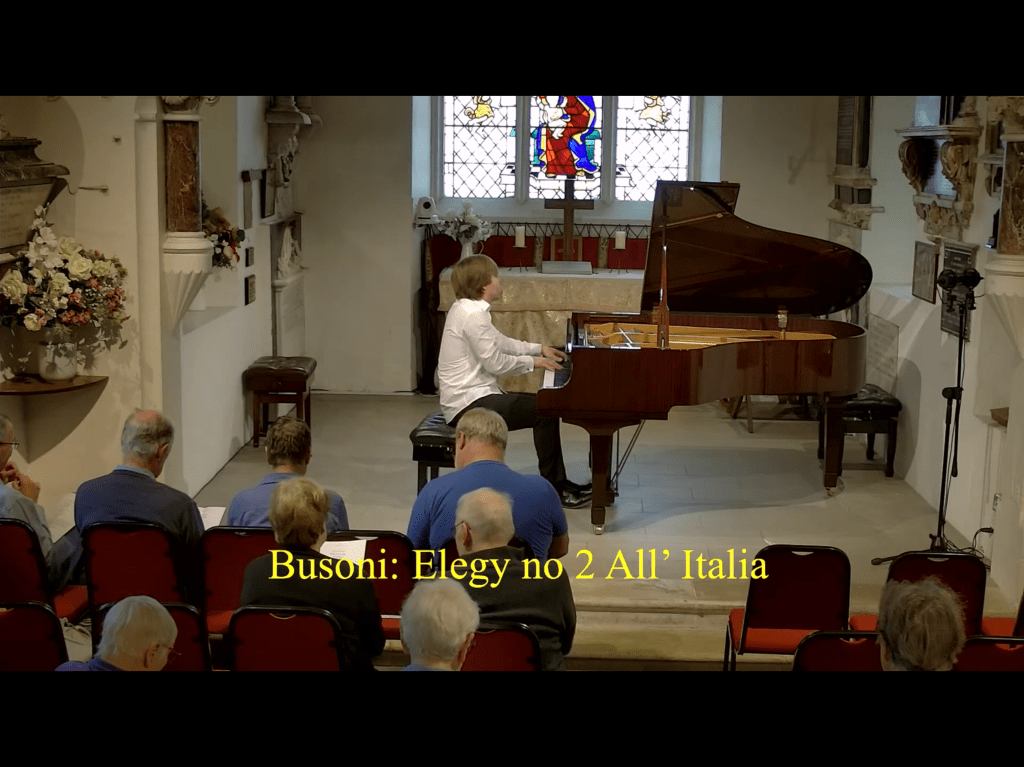
Instinctively the world of Busoni was linked to the world of Liszt as without a break the waves of the Gondeliera grew out of the final mysterious bars of All’Italia.The strange world of Busoni takes a remarkable musician to make sense of the washes of sound that had been inspired by Liszt’s prophetic late experiments in a search for a new sound world.It was Kiril Gernstein who recently opened up this world for us and showed us the very clear link between Liszt and Busoni and who like Thomas today could see a line that guides us through the clouds of mist and mystery which surrounds a line that is apparent only to the very finest of musicians.Thomas today revealed a work of sumptuous sounds of fantasy and grandiloquence.The amazingly atmospheric final few sounds were so rightly linked up to the Liszt that followed without the slightest break.
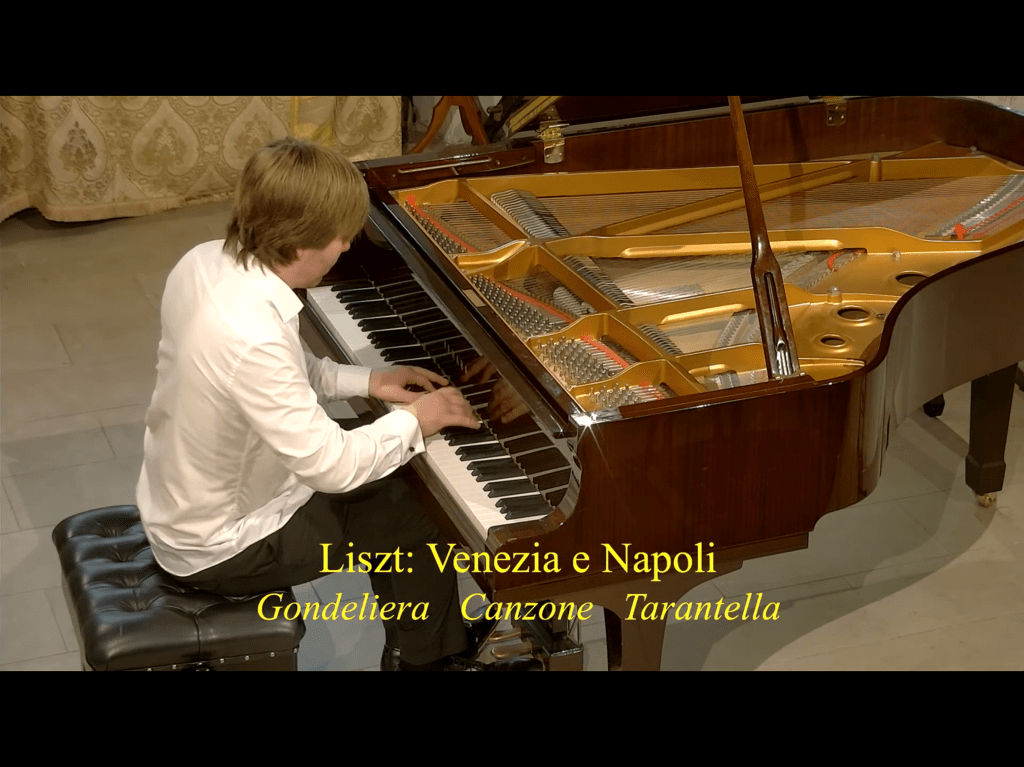
There was ravishing beauty to the Gondoliers song with a fluidity and ease that led so naturally into the plaintive cry of the ‘Canzone’ that followed.Thomas chose not to follow Liszt’s very precise pedal marking that links the ‘Canzone’ to the’Tarantella’ but all must surely be forgiven when the breathtaking virtuosity and sublime beauty that he brought to this ‘cavallo di battaglia’ of so many virtuosi of the past was quite unique.La Campanella offered as an encore was played with a subtlety and refined tone palette together with a scintillating technical mastery that reminded me of the piano role of Lhevine that had so inspired my undying love of the piano.
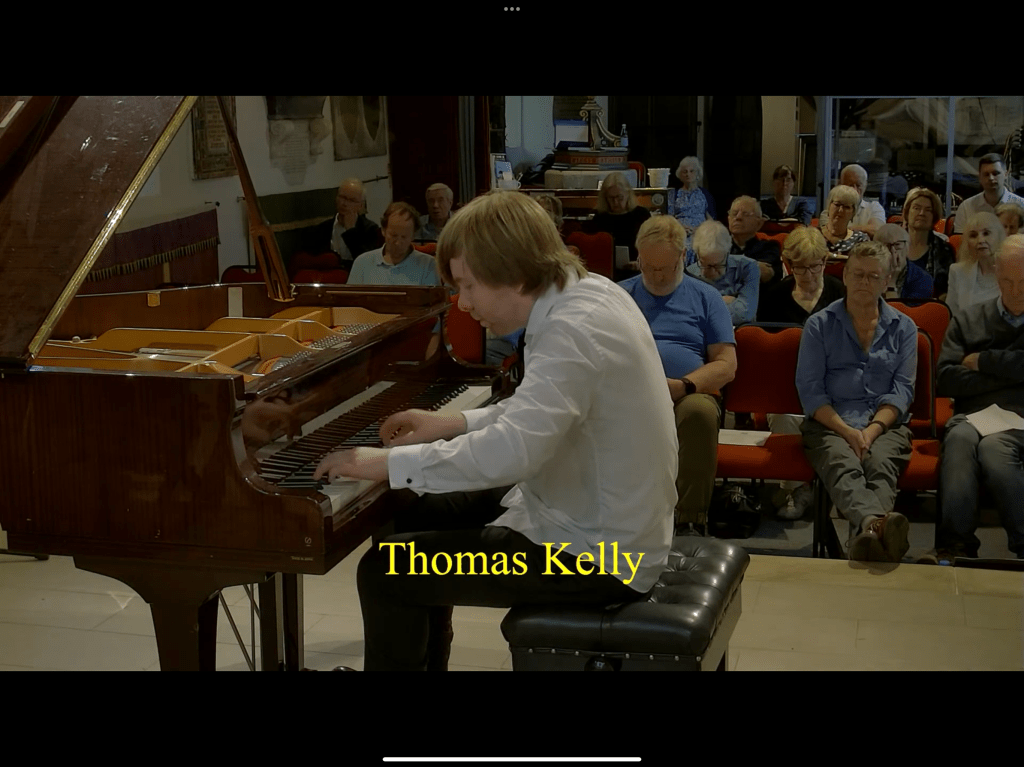
Thomas Kelly was born in 1998. He passed Grade 8 with Distinction in 2006 and performed Mozart Piano Concerto No. 24 in Canterbury’s Marlowe Theatre two years later. After moving to Cheshire, he regularly played in festivals, winning prizes including in the Birmingham Festival, 3rd prize in Young Pianist of The North 2012, and 1st prize in the 2014 Warrington Competition for Young Musicians. Since 2015, Thomas has studied with Andrew Ball, initially at the Purcell School for Young Musicians and now at Royal College of Music, where he is a third-year undergraduate. Thomas has won first prizes including Pianale International Piano Competition 2017, Kharkiv Assemblies 2018, Lucca Virtuoso e Bel Canto festival 2018, RCM Joan Chissell Schumann competition 2019, Kendall Taylor Beethoven Competition 2019 and BPSE Intercollegiate Beethoven Competition 2019. He has also performed in venues including the Wigmore Hall, Cadogan Hall, Holy Trinity Sloane Square, St James’ Piccadilly, Oxford Town Hall, St Mary’s Perivale, St Paul’s Bedford, Poole Lighthouse Arts Centre, Stoller Hall, Paris Conservatoire, the StreingreaberHaus in Bayreuth, the Teatro del Sale in Florence, in Vilnius and Palanga. Thomas’ studies at RCM are generously supported by Pat Kendall-Taylor, Ms Daunt and Ms Stevenson and C. Bechstein pianos. He won 5th prize at the 2021 Leeds International Piano Competition, and was the first British pianist to reach the finals of this prestigious competition for 18 years. He has been given the ‘Young Talent (piano)’ award for 2022 by the Critics’ Circle.
A celebration of the life of Andrew Ball -‘The thinker pianist’ at the R.C.M London
Thomas Kelly …..’Reaching for the stars!’ – a voyage of discovery at Leighton House
Thomas Kelly takes Florence by storm Music al British
Thomas Kelly at St Mary’s Masterly playing from the Golden Age
 ChristopherAxworthy-MusicCommentary