Tuesday 6 June 3.00 pm
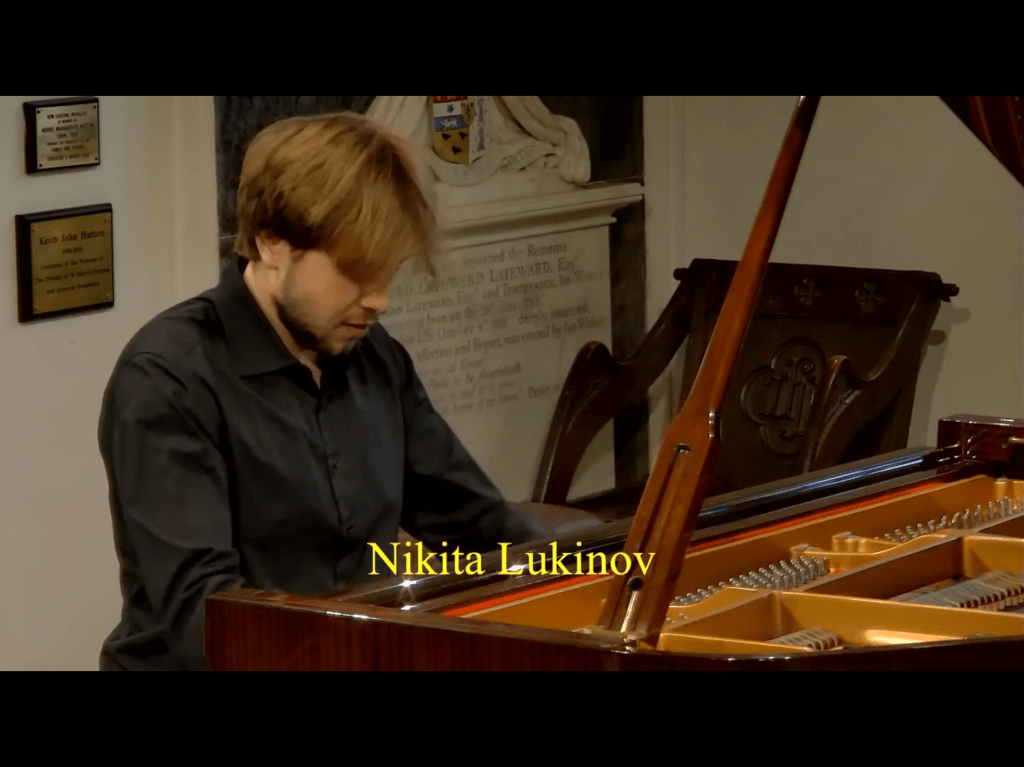
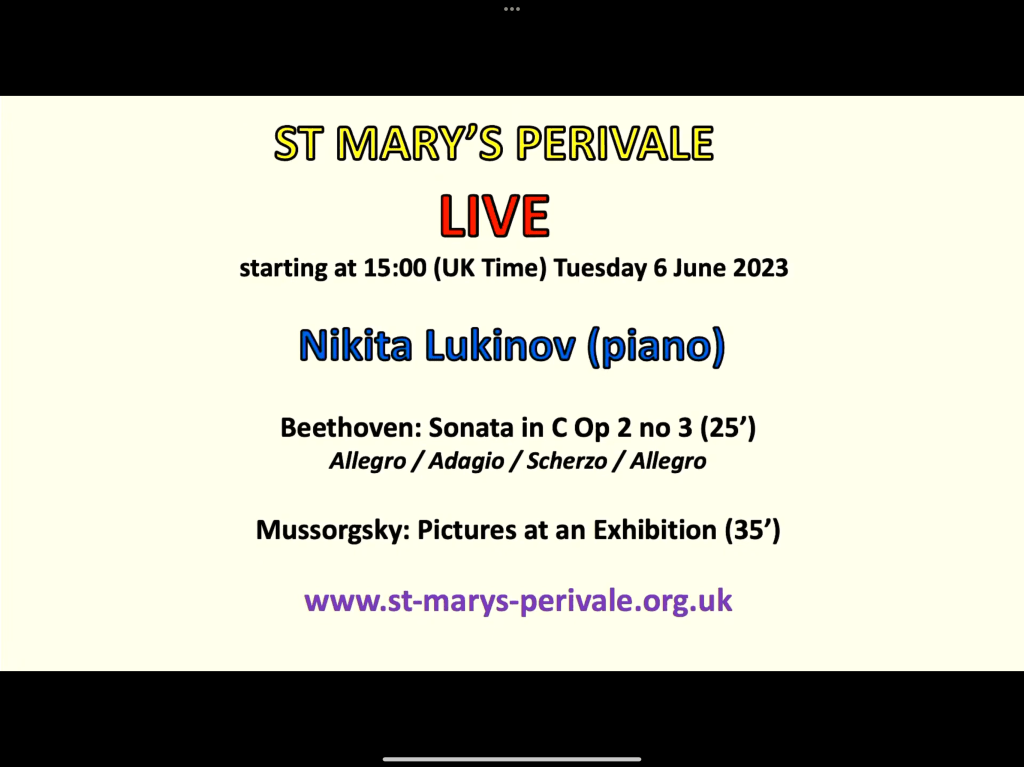
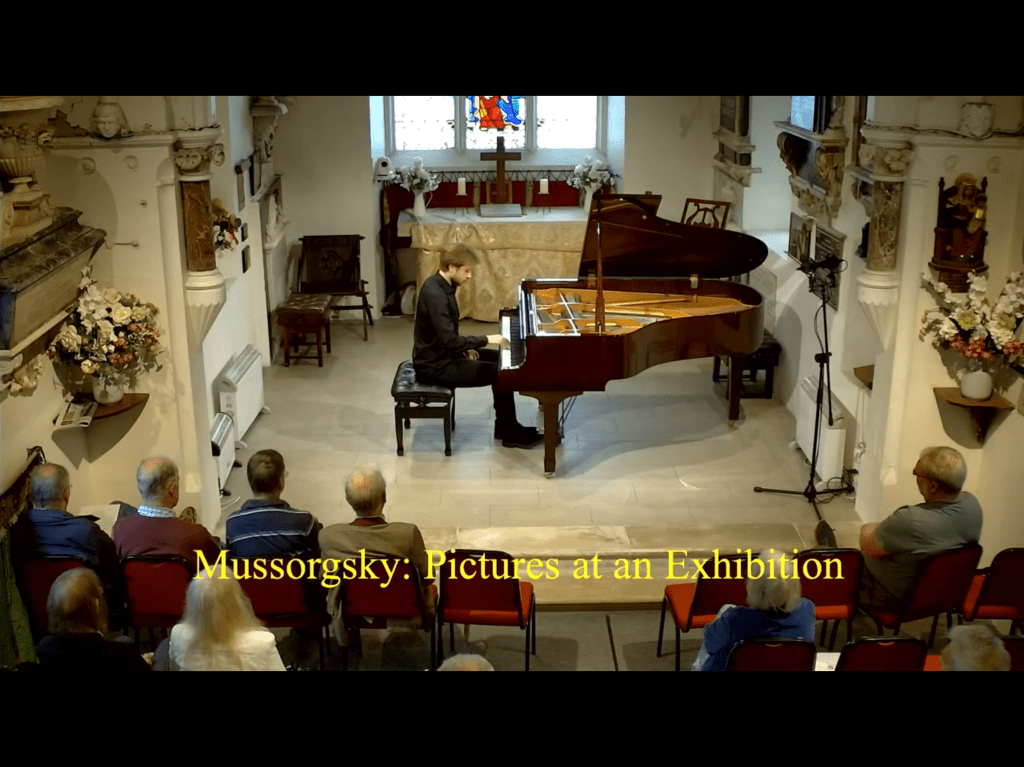
Nikita barely had time to try two notes on the piano due to a delayed flight from Glasgow but it was time enough for him to give masterly performances of the two important works on his programme.Nikita has done much to create funds for the Ukraine relief fund and so it was particularly poignant that he should have chosen to close his recital with the ‘Great Gate of Kiev’.Two important works played with great authority and a sense of character that brought them both vividly to life and communicated so simply and directly.The occasional expression on his face gave some hint of how he was living every moment of his music making but it was the kaleidoscope of sounds and mastery of architectural shape that was so compelling.With great charm exclaiming after the Beethoven that now he had warmed up he was ready for ‘Pictures’!But it was a masterly performance of Beethoven that we were treated to where his intelligent musicianship helped him to delve deeply into Beethoven’s score following scrupulously the composers instructions.Mussorgsky was given a monumental multi faceted performance of superb control and mastery.It was ,though,in his encore of the Tchaikowsky Meditation from his newly released CD that showed off his subtle artistry and beguiling charm.From the simple opening to the tumultuous passion of the climax his magnetism held us enthralled as he shared with us the ravishing beauty of this little tone poem
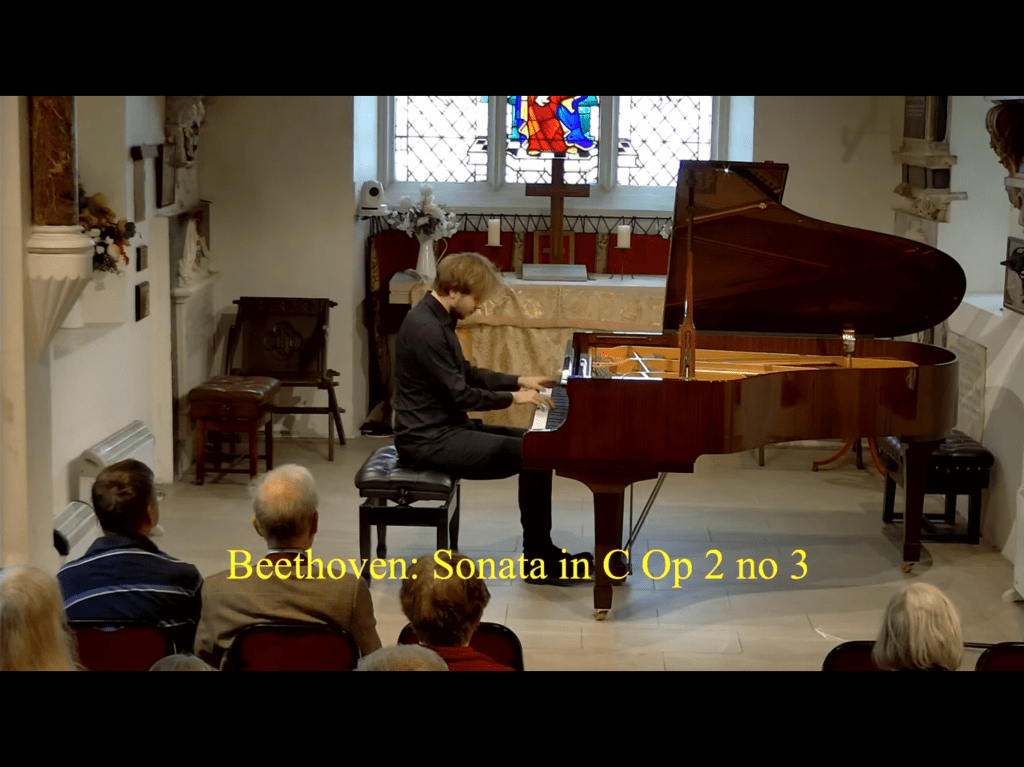
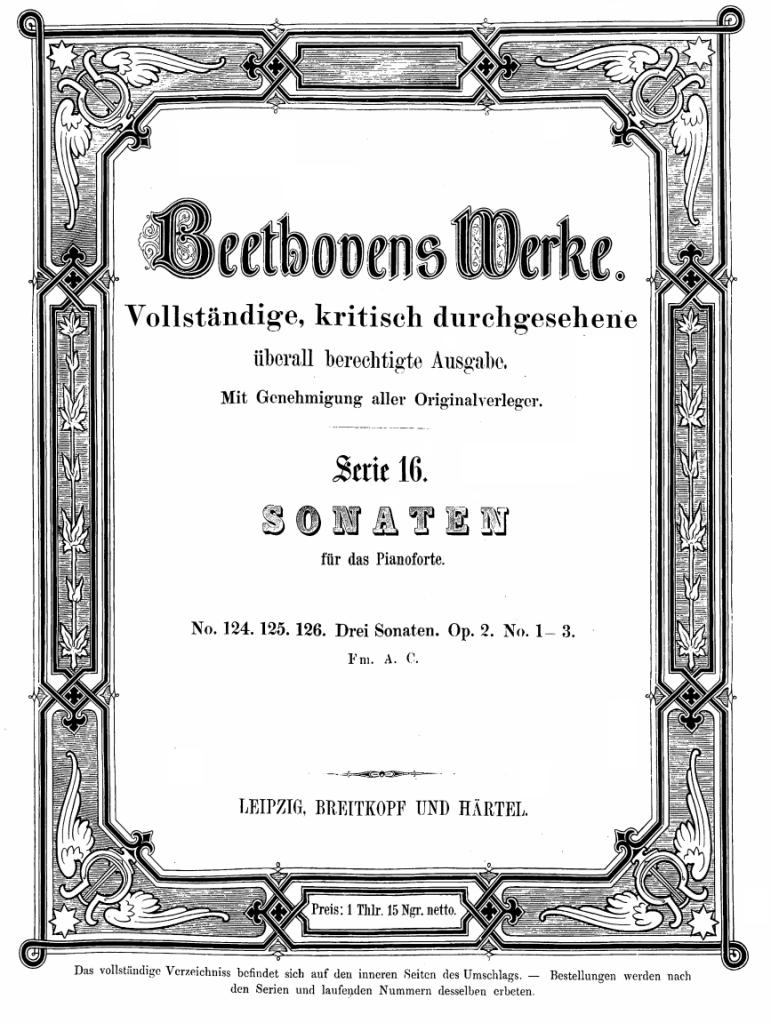
Beethoven’s Piano Sonata No. 3 in C major Op 2 n. 3 was written in 1795 and dedicated to Joseph Haydn It was published simultaneously with his first and second sonatas in 1796.It is often referred to as one of Beethoven’s earliest “grand and virtuosic” piano sonatas.All three of Beethoven’s Op. 2 piano sonatas contain four movements, an unusual length at the time, which seems to show that Beethoven was aspiring towards composing a symphony.It is both the weightiest and longest of the three Op. 2 sonatas, and it presents many difficulties for the performer, including difficult trills, awkward hand movements, and forearm rotation. It is also one of Beethoven’s longest piano sonatas in his early period.It is second only to the Grand Sonata op 7 also published in 1796
Pictures at an Exhibition is based on pictures by the artist, architect, and designer Viktor Hartmann. It was probably in 1868 that Mussorgsky first met Hartmann, not long after the latter’s return to Russia from abroad. Both men were devoted to the cause of an intrinsically Russian art and quickly became friends. They met in the home of the influential critic Vladimir Stasov, who followed both of their careers with interest. According to Stasov’s testimony, in 1868, Hartmann gave Mussorgsky two of the pictures that later formed the basis of Pictures at an Exhibition.
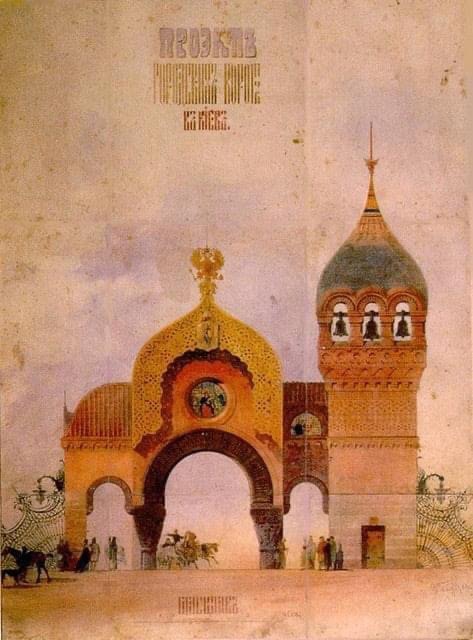
PICTURES AT AN EXHIBITION
Promenade l
The Gnomes
Promenade ll
The Old Castle
Promenade lll
The Tuileries: Children’s dispute
after play
Bydlo
Promenade IV
Ballet of the unhatched chicks
Two Polish Jews: Rich and poor
Promenade V
The market at Limoges
Roman Catacombs – With the dead
in a dead language
Baba Yaga: The Witch
The Heroes Gate at Kiev
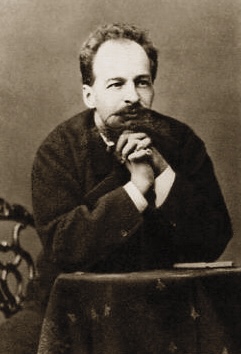
Hartmann’s sudden death on 4 August 1873 from an aneurysm shook Mussorgsky along with others in Russia’s art world. The loss of the artist, aged only 39, plunged the composer into deep despair. Stasov helped to organize a memorial exhibition of over 400 Hartmann works in the Imperial Academy of Arts in Saint Petersburg in February and March 1874. Mussorgsky lent the exhibition the two pictures Hartmann had given him, and viewed the show in person, inspired to compose Pictures at an Exhibition, quickly completing the score in three weeks (2–22 June 1874).Five days after finishing the composition, he wrote on the title page of the manuscript a tribute to Vladimir Stasov, to whom the work is dedicated.The music depicts his tour of the exhibition, with each of the ten numbers of the suite serving as a musical illustration of an individual work by Hartmann.Although composed very rapidly, during June 1874, the work did not appear in print until 1886, five years after the composer’s death, when a not very accurate edition by the composer’s friend and colleague Nikolai Rimsky-Korsakov was published.
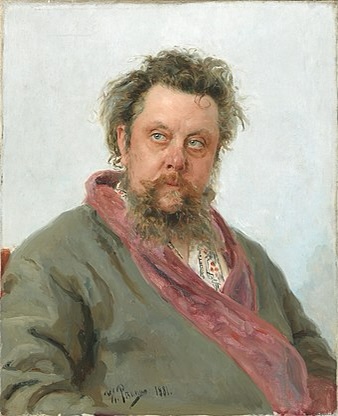
Mussorgsky suffered personally from alcoholism, it was also a behavior pattern considered typical for those of Mussorgsky’s generation who wanted to oppose the establishment and protest through extreme forms of behavior.One contemporary notes, “an intense worship of Bacchus was considered to be almost obligatory for a writer of that period.”Mussorgsky spent day and night in a Saint Petersburg tavern of low repute, the Maly Yaroslavets, accompanied by other bohemian dropouts. He and his fellow drinkers idealized their alcoholism, perhaps seeing it as ethical and aesthetic opposition. This bravado, however, led to little more than isolation and eventual self-destruction.

Heralded for “magic of music-making at its finest” (Keyboard Charitable Trust) and praised as “Exceptional talent” (The Scotsman), Nikita Lukinov resides in Scotland. In recent years he performed at Wigmore Hall, Usher Hall, Southbank Centre, Kings Place and Fazioli Hall. In the 2022-23 season Nikita gave recitals at the Steinway Hall in London, British Institute in Florence, embassy of the City of Hamburg representing Steinway&Sons pianos, Hastings International Piano Series, Vaduz Rathaussaal in Liechtenstein, “Celebrity recitals” concert series in Shrewsbury and completed a tour of 6 concerts in Scotland.In April 2022 in Shrewsbury, UK, Nikita gave a recital in aid of Ukraine. Another concert of this nature was in Berlin in December 2022. More than £10,000 was raised from these events. In January 2023 Nikita won the “Walcer Prize” Competition at the Royal Conservatoire of Scotland and had his solo recital debut at the Usher Hall in Edinburgh.Nikita is one of the musicians at the Talent Unlimited and Live Music Now Scotland schemes. A disciple of the Russian Piano School Nikita Lukinov started his musical education in Voronezh, Russia. Nikita is currently pursuing his Master’s Degree at the Royal Conservatoire of Scotland on a full scholarship from ABRSM in the class of Petras Geniušas. Since October 2022 he is also a teacher in the piano department, being the youngest senior staff in the UK Music Conservatoires at this moment. On June 1st, 2023, Nikita will have a release his debut CD “Kaleidoscope”.
Nikita Lukinov plays breathtaking charity recital for Ukraine in Berlin.
Nikita Lukinov at Bluthner Piano Centre for the Keyboard Trust Liszt restored to greatness.
Nikita Lukinov at St Mary’s a masterly warrior with canons covered in flowers
Nikita Lukinov Shrewsbury and Market Drayton
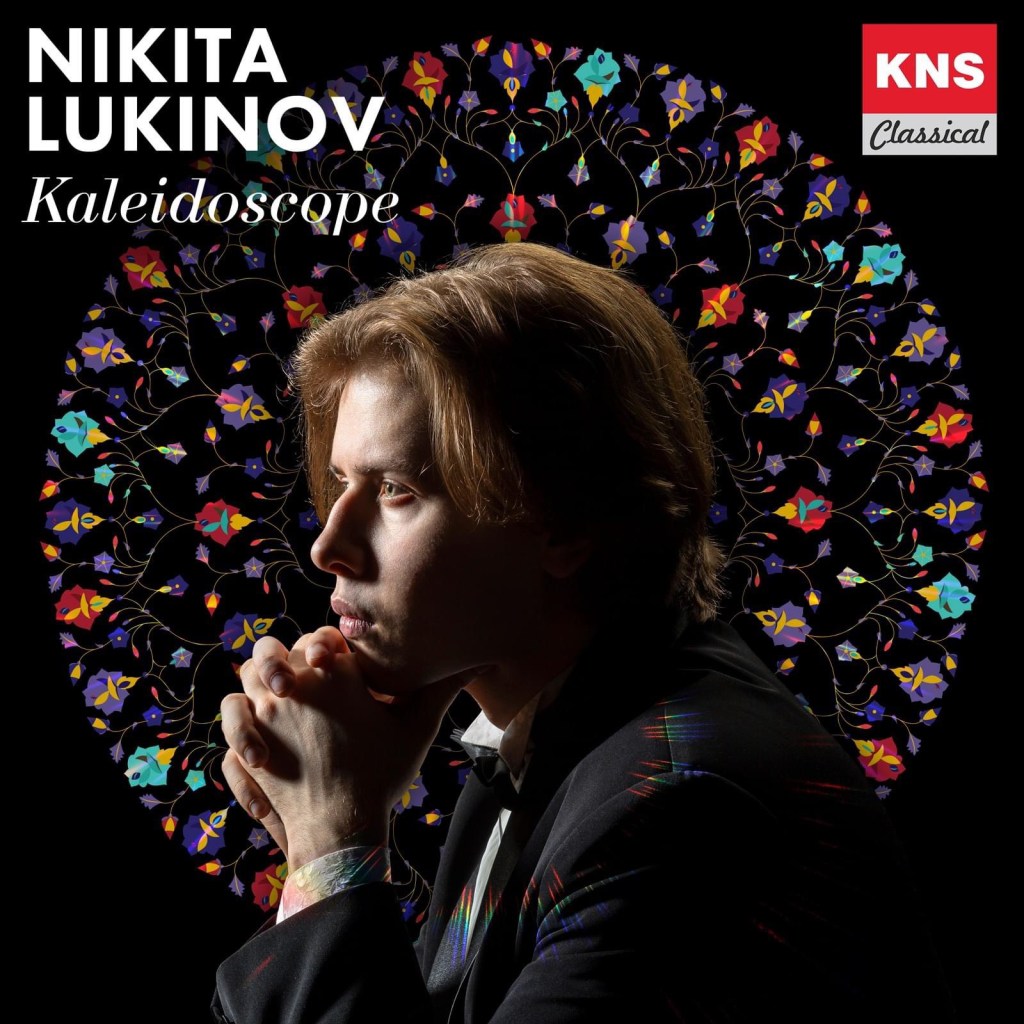
I was working on it for over a year, navigating and trying to perfect every step in the creation process from A to Z. The album features lesser known works of Tchaikovsky, Scriabin and Prokofiev. Do you know what were Tchaikovsky’s last pieces written for piano solo? Or you probably know Prokofiev’s ballet “Cinderella”, but do you know there is a gorgeous piano transcription that composer made himself?
These little secrets are revealed in “Kaleidoscope”! 🎶
If you would like to support me you can like the album on Spotify and share this post to your profile/story 🙏 Videos will be shortly available on my YouTube Channel too!
Special gratitude to
KNS Classical – release
Royal Conservatoire of Scotland – recording facilities
Denis Izotov – design
Sergey Elt – Sound
Help Musicians – funding
WildKat – Promotion
for making this whole thing possible!
 ChristopherAxworthy-MusicCommentary
2 risposte a "Nikita Lukinov at St Marys The charm and aristocratic style of a star"