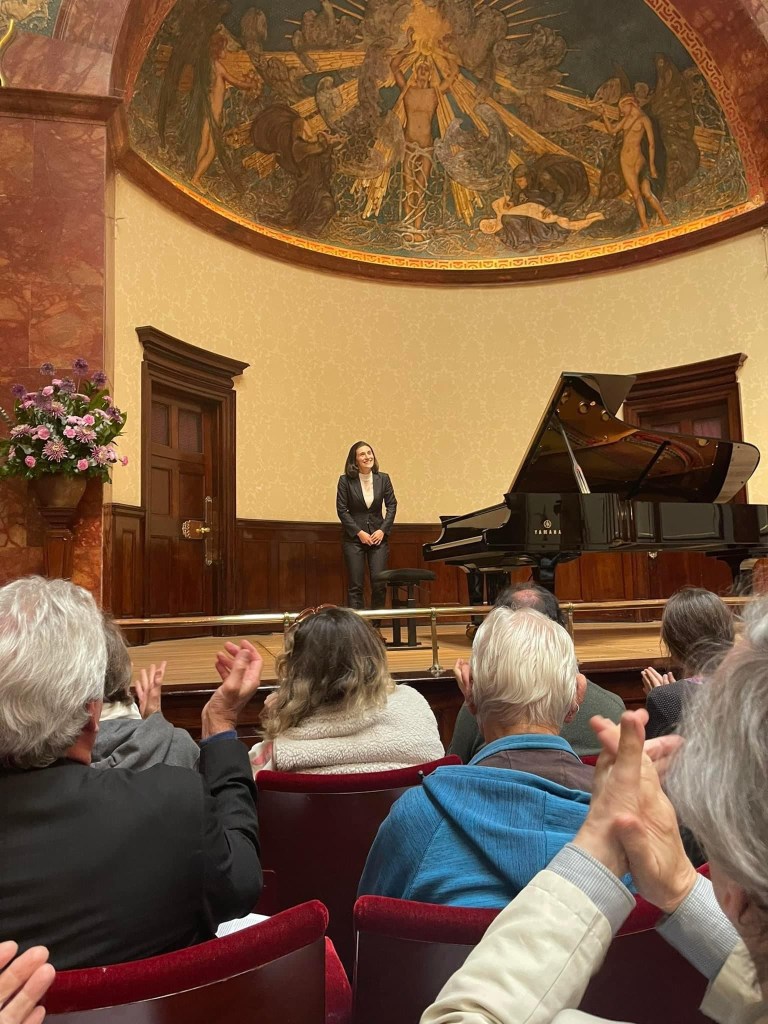
A lioness let loose at the Wigmore Hall ………ravishing,demonic,seductive and hypnotic …..Noah your mother is truly a star
The Piaf of the piano is in our midst.
https://www.bbc.co.uk/programmes/m001m58b
A short lunchtime programme for the BBC at the Wigmore Hall.It was quality rather than quantity that was so evident from the very first notes of this recital.Still under thirty having played her first recital on this stage six years ago.The indomitable Lisa Peacock had managed her London debut immediately after her success at the Utrecht Liszt competition.Leslie Howard who was chairman of the jury in Utrecht was present and a handful of important people for a lunchtime recital in this very Hall.
- Fryderyk Chopin (1810-1849)
- Ballade No. 1 in G minor Op. 23
- Franz Liszt (1811-1886
- Années de pèlerinage, deuxième année, Italie S161
- Après une lecture du Dante
- Années de pèlerinage, deuxième année, Italie S161
- Franz Schubert (1797-1828)
- Impromptu in F minor D935 No. 1
- Franz Liszt
- Hungarian Rhapsody No. 14 in F minor S244
A star is born …Mariam Batsashvili
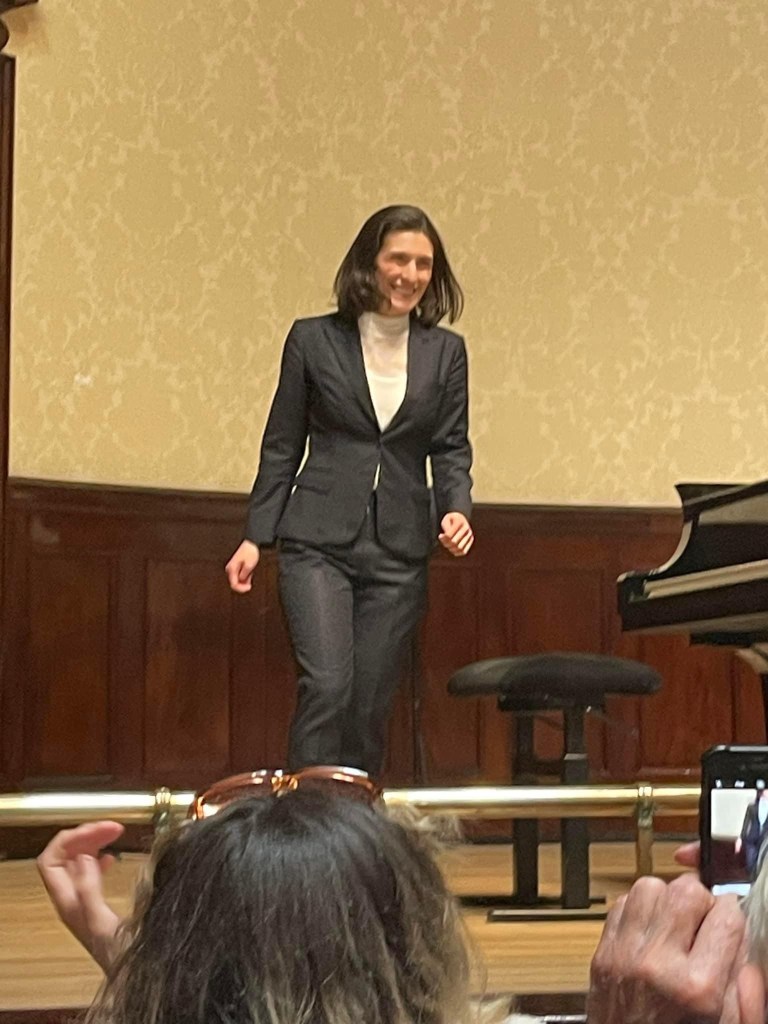
She quickly became a BBC young artist and played many memorable recitals including several for the Keyboard Trust in Germany with a specific invitation to play on a very special occasion in Lorin Maazel’s Castleton Festival in Virginia.Playing as today on a Yamaha piano that she turned into a Pandora’s box with a kaleidoscope of sounds that were breathtaking for their refined beauty and ravishing sense of balance.But there was also a demonic soul inside,ready to erupt and astonish with overwhelming sumptuous sounds that were so surprising coming from the hands of such a ‘minute’young lady.Piaf springs to mind.It was the sound of a truly ‘Grand’ piano in masterly hands that is very rare to hear these days with modern pianos that can resist even the most bombastic attacks from super trained virtuosi!The piano is fundamentally a percussive instrument but in the hands of someone who really loves the piano it can be persuaded to give the illusion that it can sing and dance better than any orchestra.In the hands of a true artist it has infinite possibilities of expression and is the crowned King of instruments.Joan Chissell anointed Rubinstein ‘the Prince of Pianists’ and all those that flocked to his concerts in the 70’s during his Indian Summer have never forgotten the sounds and with what seeming simplicity he held his audience in a spell that was unique.Rubinstein loved the piano but there are many before the public who seem to hate it – to quote Shura Cherkassky.’I don’t think they listen to themselves’ Shura often used to say listening to very assured performances from young aspiring pianists.Mariam not only loves the piano but she also listens to herself and having recently experienced motherhood she is even more sensitive to all around her.Living every note and acting the part as she is so involved in a musical conversation.Reliving these precious moments of sharing her act of discovery with us on the other side of the third wall,to use theatrical language.
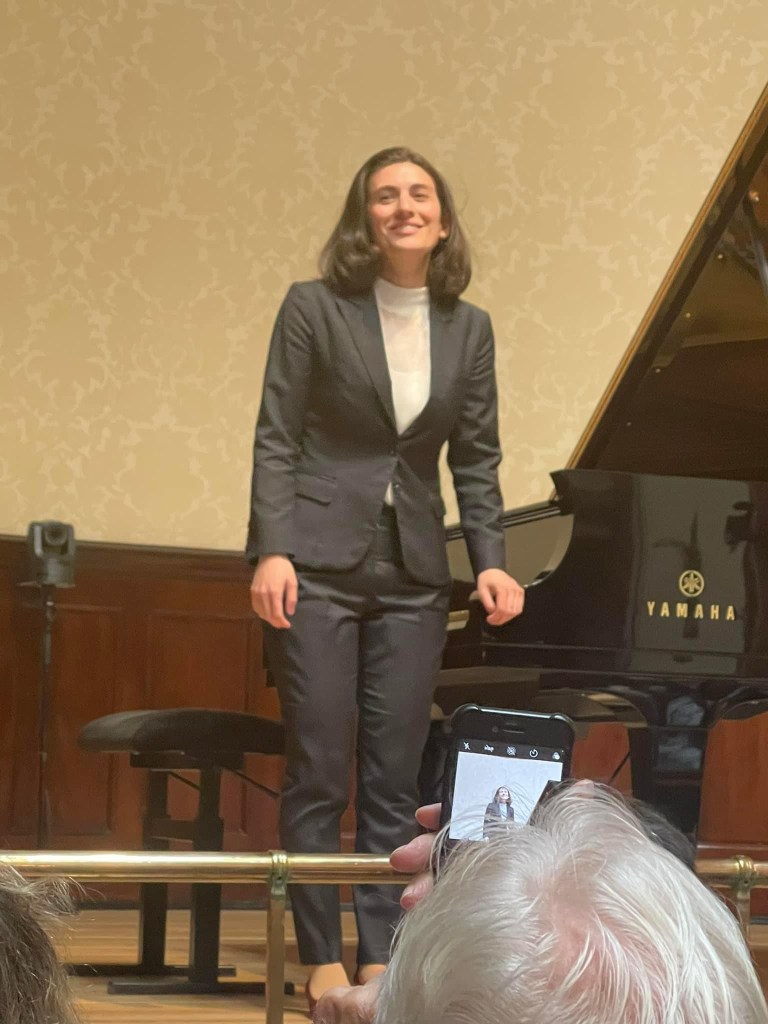
Chopin’s First Ballade was an epic journey from the very first notes with her superb sense of balance that allowed the melodic line to sing so naturally.It led to the first climax with such an evident joy of discovery on her face.But it was an onward journey as her ‘jeux perlé’ just took over with a ravishing sense of shape and colour.All leading to the one great climax just before the coda that was of epic proportions and gave such an overall architectural shape to this magisterial tone poem.An unrelenting drive to the coda was breathtaking as it was unforgiving in it’s transcendental authority .The final flourishing scales ending in a silence that was so pregnant with meaning that the gently calming chords came as a relief before the tumultuous cascades of octaves and final magisterial chords.
The ballade dates to sketches Chopin made in 1831, during his eight-month stay in Vienna.It was completed in 1835 after his move to Paris, where he dedicated it to Baron Nathaniel von Stockhausen, the Hanoverian ambassador to France.
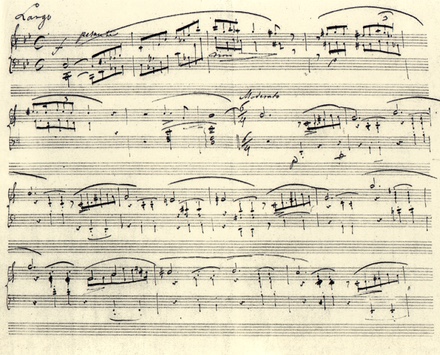
In 1836, Robert Schumann wrote: “I have a new Ballade by Chopin. It seems to me to be the work closest to his genius (though not the most brilliant). I even told him that it is my favourite of all his works. After a long, reflective pause he told me emphatically: ‘I am glad, because I too like it the best, it is my dearest work.'”
The Dante Sonata was originally a small piece entitled Fragment after Dante, consisting of two thematically related movements which Liszt composed in the late 1830s.He gave the first public performance in Vienna in November 1839.When he settled in Weimar in 1849, he revised the work along with others in the volume, and gave it its present title derived from Victor Hugo’s own work of the same name.It was published in 1858 as part of Années de pèlerinage
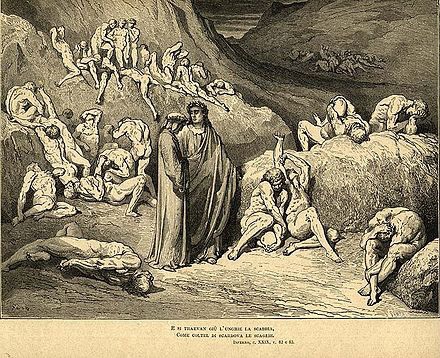
The Dante Sonata too received a performance of Hollywoodian technicolour as she followed with intelligence and real understanding the very precise indications that Liszt had marked in the score.After the grandiose opening octaves played with a subtle diminuendo followed by notes that were just a terrifying gust of wind,barely audible,but that sent a shiver down the spine.Cascades of octaves given such a meaningful musical shape contrasted with rays of light that shone like jewels.The overwhelming climax that burst into one of the most technically treacherous moments in an outpouring of romantic effusion that held no terror for Mariam.There were no thoughts for her other than a musical language that had to be fearlessly shared and experienced.
Schubert Impromptus are a series of eight pieces for solo piano composed in 1827. They were published in two sets of four each: the first two pieces in the first set were published in the composer’s lifetime as Op. 90; the second set was published posthumously as Op. 142 in 1839 (with a dedication added by the publisher to Franz Liszt ).The third and fourth pieces in the first set were published in 1857 (although the third piece was printed by the publisher in G major, instead of G♭ as Schubert had written it, and remained available only in this key for many years). The two sets are now catalogued as D. 899 and D. 935 respectively. They are considered to be among the most important examples of this popular early 19th-century genre.
There was aristocratic beauty to Schubert’s First Impromptu from his last set.A musical shape from the very opening with the downward shaping of the dotted introduction .It led to the velvet fluidity of the tenor melodic line with the right hand just shadowing and adding magical embellishments of scintillating delicacy.How to describe the sublime beauty and stillness she brought to the question and answer of the the central episode?One could see so clearly on her face her reaction to the sounds she was producing in a conversation of heartrending beauty.
Hungarian Rhapsody No. 14, S.244/14 in F minor ,is the fourteenth Hungarian Rhapsody by Liszt and the Hungarian Fantasy written in 1852, is an arrangement of the rhapsody for piano and orchestra.This rhapsody is composed of several distinct melodies. Some of them are Hungarian folk songs, such as Magosan repul a daru. Others are of uncertain origin; they may have been written by Liszt himself.
It was fascinating to be brought down to earth with Liszt’s Hungarian Fantasy.I had not realised that this 14th Hungarian Rhapsody had been orchestrated and known as the Hungarian Fantasy.It used to be played quite frequently by pianist such as Cziffra or Cherkassky in orchestral concerts.(Richter and Arrau too I believe).Playing with the score hidden in the piano to avoid the obvious confusion between the solo and orchestral versions that can be so confusing for a performing artist.(The same confusion can arise with Liszt’s orchestral version of Schubert’s Wanderer Fantasy).She gave a scintillating performance where even the repeated notes bubbled over with infectious ‘joie de vivre’ and refined virtuosity of another age.The nobility and grandeur she brought to Liszt’s grandiose score were just as overwhelming as the Berlin Philharmonic and brought this magic hour almost to an end.
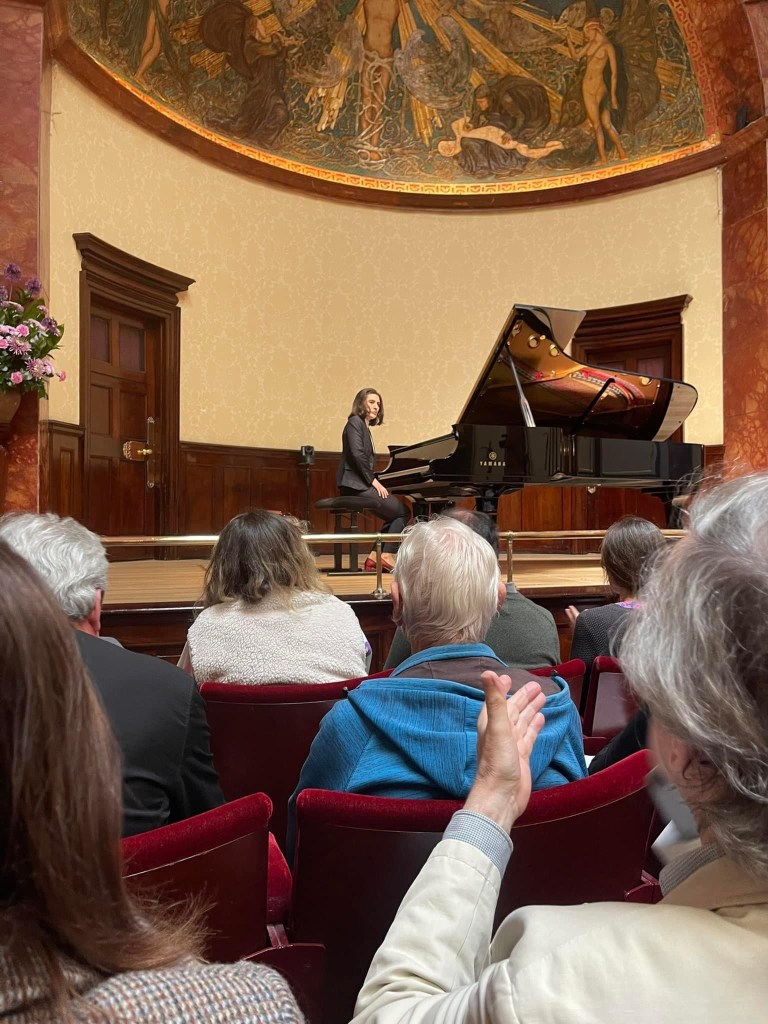
An encore of Liszt’s fourth Paganini study where Liszt outdid even Paganini with his formidably simple transcription of the violin with a single strand and only a few additions to keep the pianist even busier!It was a superb display of scintillating piano playing from the so called Golden Era.Mariam not only played the notes with driving rhythmic energy but she imbued them with a subtle charm and beguiling style that brought a smile even to her face as her hands seemed to fly across the keys with a hypnotic rhythmic ease.
 ChristopherAxworthy-MusicCommentary