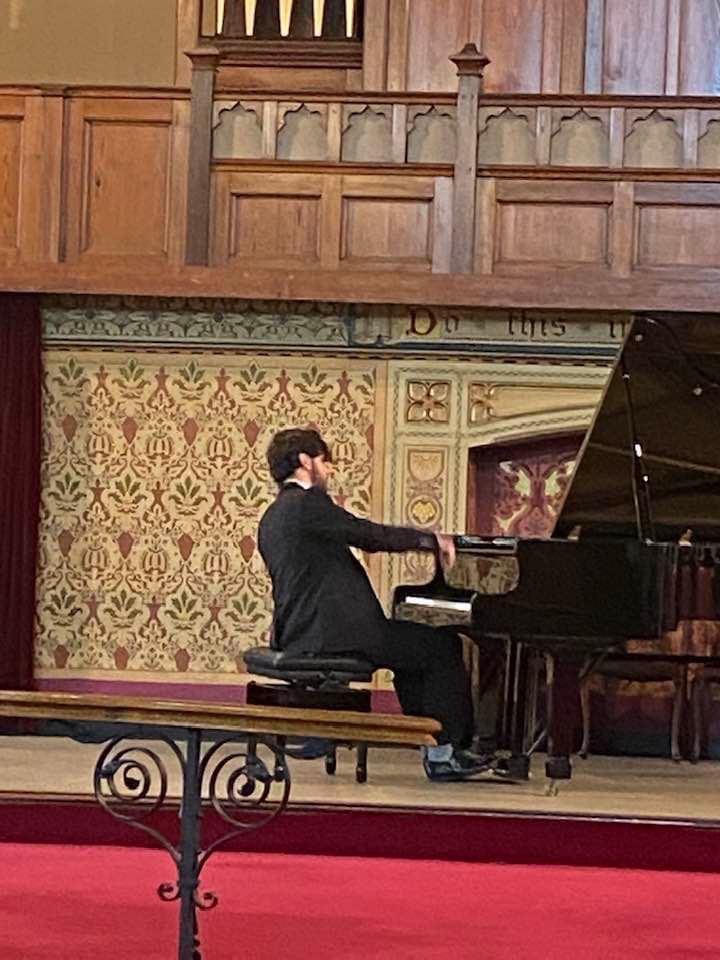
Petar Dimov playing in this new venue today two masterworks of the keyboard literature.
Played with unusual intelligence and musical integrity that brought refreshing new life to a well worn friend like the Italian Concerto.
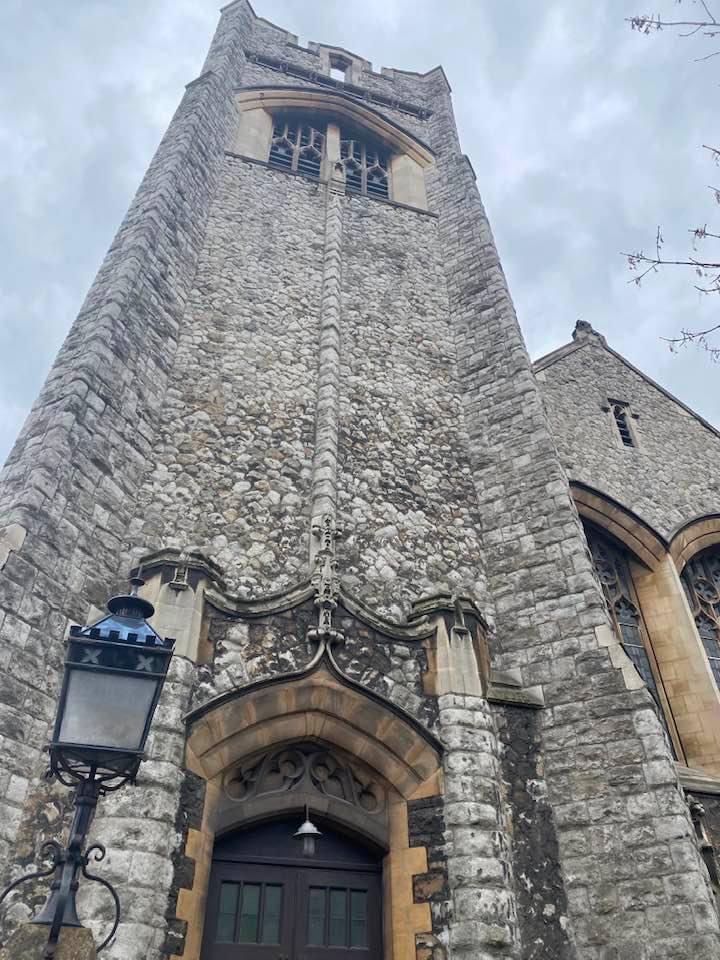
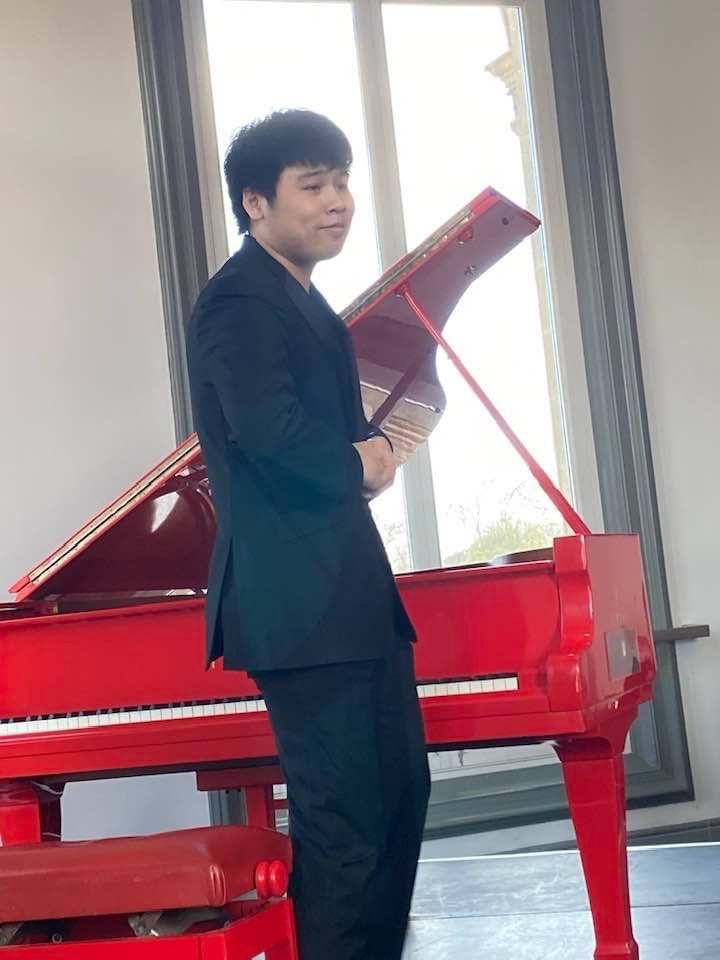
It was interesting to see a gleaming new grand piano mounted on a stage like plinth in this Methodist Church in the centre of Acton in west London.Looking at the name of the piano I was surprised to see a name unknown to me……I have known many makes of piano even including a Barenboim but the name Pinkham was new to me.The very informed church master of music ,Jane Schopf,suggested I look on google for information about this piano made in Cornwall – something I was glad to do as you will see below.
But it is Petar Dimov’s playing that was so interesting.
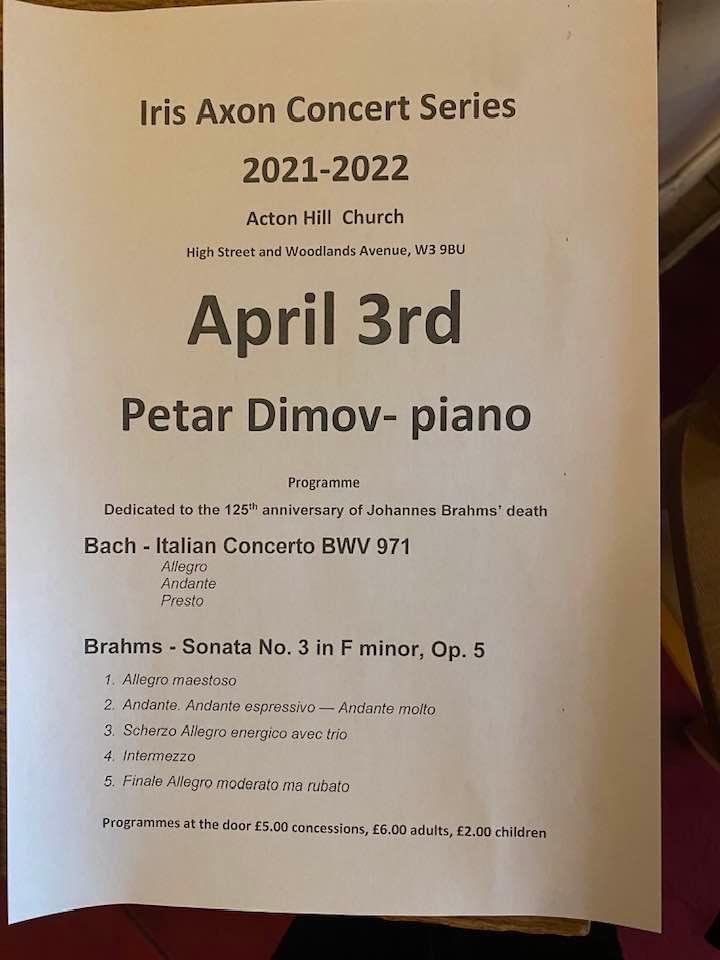
A Bach with such subtle ornamentation that gave character to the outer movements bringing them vividly to life with a real sense of joie de vivre in the Presto and of the grandeur of concerto in the Allegro moderato.The Andante by contrast was of a disarming simplicity allowing Bach’s beautiful aria to sing with such purity over the continual bass heart beat.The hushed re entry of the solo voice where a mere murmur drew the audience in to marvel at the simplicity of Bach’s genius where so few notes could mean so much.
The beauty of the piano sound too was remarkable for its purity and penetration where the kaleidoscope of sounds in the Brahms was remarkable for its warmth and clarity.
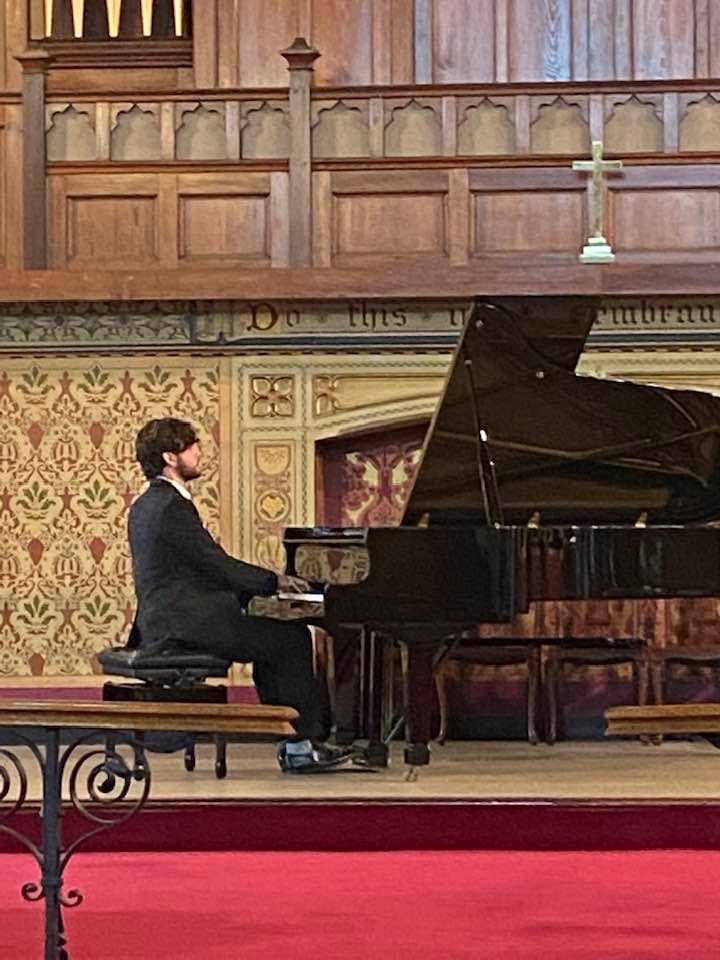
Of course Petar’s masterly musicianship had much to do with that but was helped rather than hindered by an instrument that responds so readily.
There was a sense of orchestral colour as the majestic opening chords of the Brahms F minor Sonata rang out only to be answered by the gentle palpitations of the horn and cello’s or the grandiose chorale with the non legato bass comments.
Such grandeur that was to dissolve into liquid sounds of ravishing beauty before the grandiose development episode that gave way to palpitations in which a dialogue emerges between bass and tenor registers.
The Andante was of luminosity and a constant flow of beauty gradually leading to the magic of the ‘poco più lento’ where the tone that Petar was able to share was of a whispered confession of such delicacy.
Gradually increasing in intensity until the explosion of passion that Brahms himself marks ‘con passione e molto espressivo’.The consequent gradual disintegration was enhanced by the care that Petar took over the rests in the final gentle pulsating left hand before the coda that Brahms marks ‘Andante molto espressivo pianississimo’.This is surely one of the marvels of all piano literature that Petar played with the same absolute simplicity and beauty that all those that heard Rubinstein or Curzon have never forgotten.
A scherzo that flew out of his fingers but with such attention to detail where the great bass melodic line was commented on by gently cascading streams of notes in the treble with a clarity and care of phrasing that was rare indeed.The trio too was played with the full rich sound of a string orchestra where all the voices had an importance that created a sumptuous whole.
There was a stark mystical atmosphere to the Intermezzo introduction to the last movement that was played with an improvisatory quality that was both tender and terrifying with its thunderous bass notes relentlessly insistent.Leading to the final gasps played miraculously without any ritardando or pedal.The finale was played at a deliberate pace where the syncopated chords acted as break like interruptions before the final abandonment and mellifluous outpouring of melody.The rich and glowing sound of the chorale was of a beauty worthy of the Philadelphia orchestra as it gradually built up to the frenzy of the coda on which floats the melodic line in a sort of whirl of almost Irish merriment!
Finally the frenzy giving way to a passsionate climax in an explosion of grandiose full orchestral sounds of sumptuous beauty.
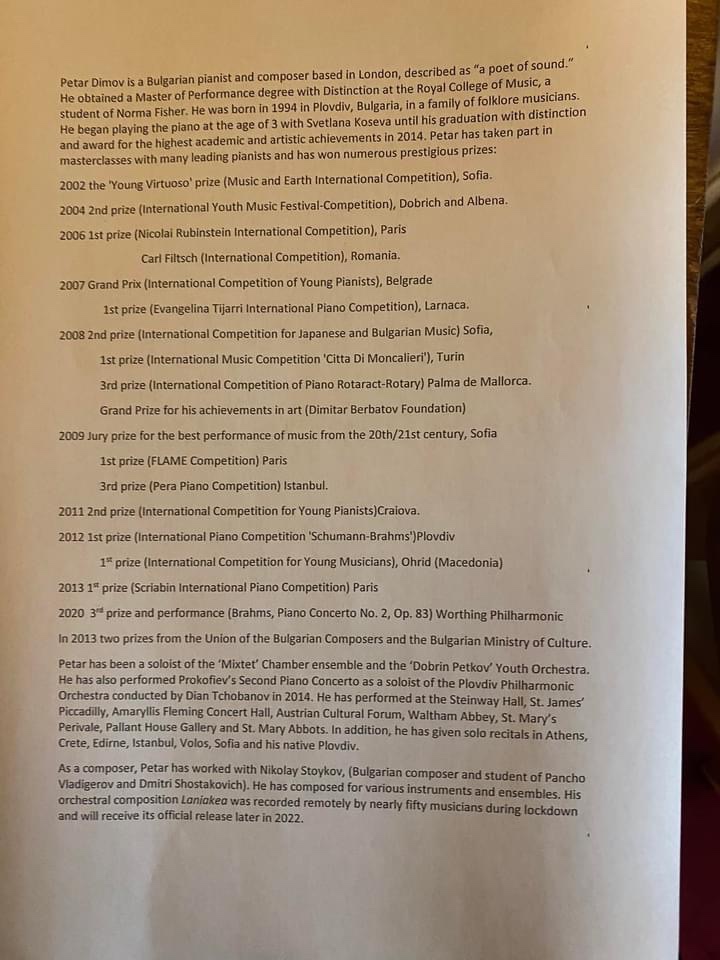
An encore of one of Petar’s own compositions just went to demonstrate the complete musician that he is.
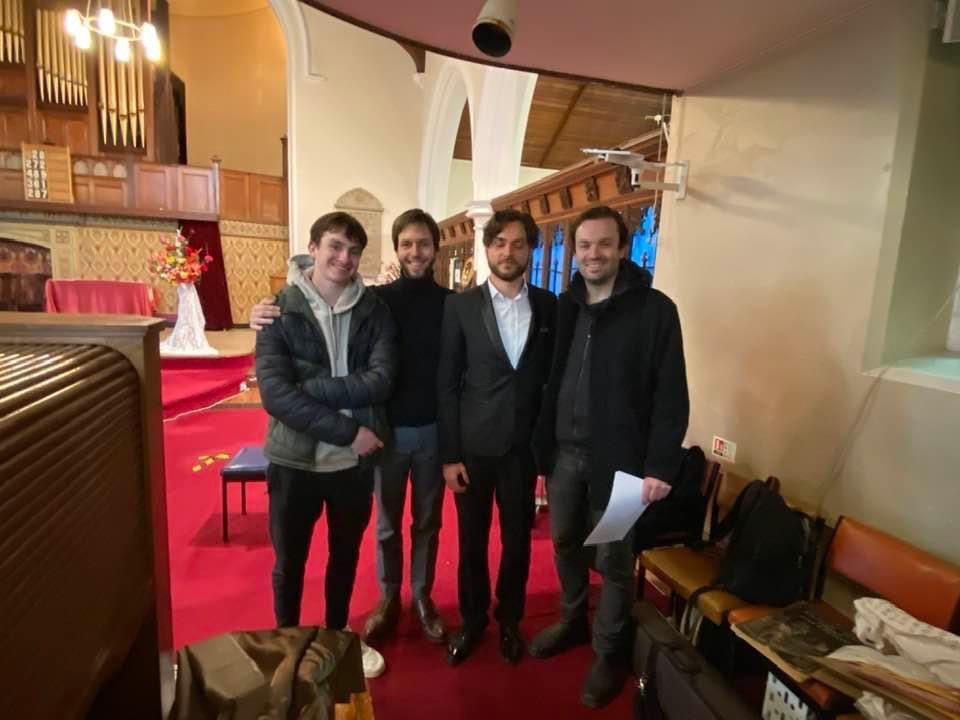
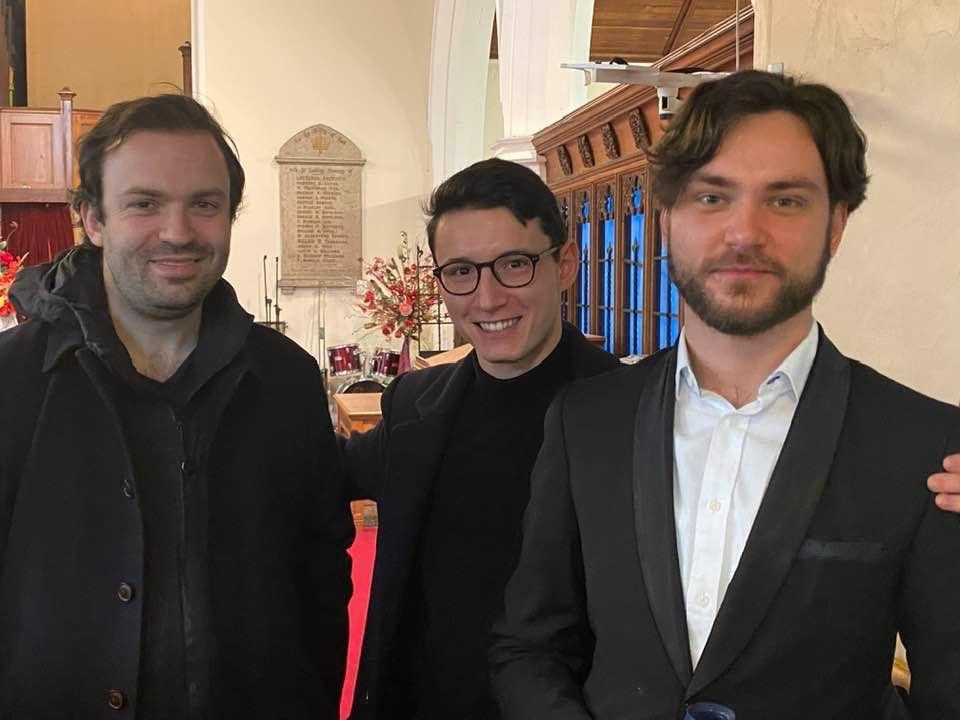
It was refreshing too to see his musician friends present to admire and salute their colleague on one of his all too rare public performances .
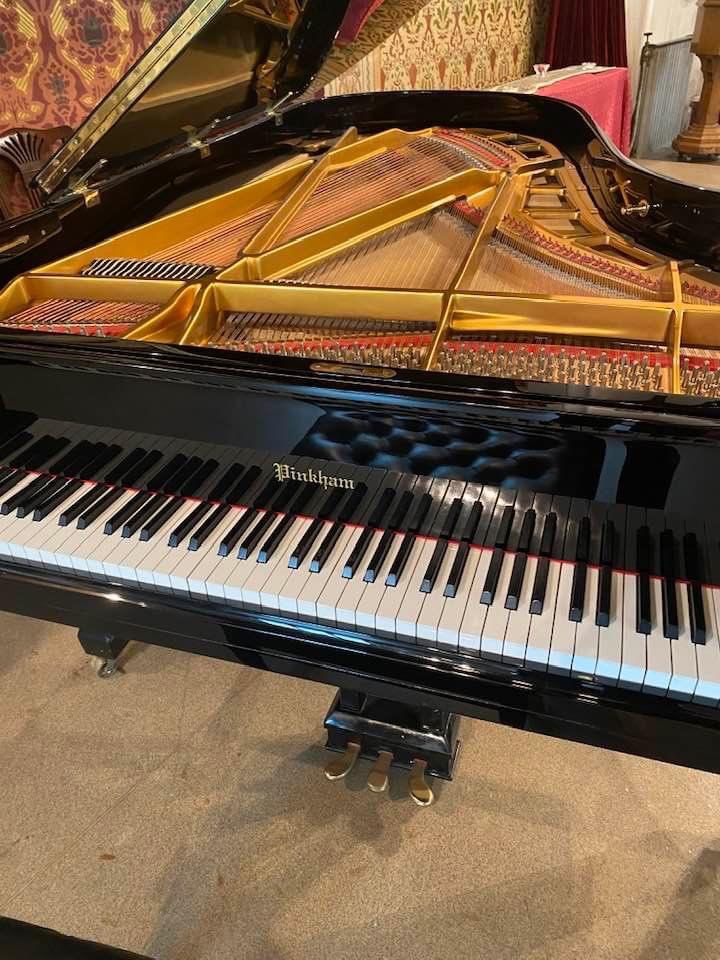
Clive Pinkham’s love and passion for the piano started from a very young age. The enthusiasm for the instrument gave him a lifetime of dedication striving for perfection. He used to do ten hours a day piano practice and found it frustrating having to play on poor pianos. From this a burning desire was born to make a piano that would respond accurately to what he asked of it. His aim was to create a piano that was affordable to all. A piano that would respond accurately to what he was asking from it, and a piano that would produce an effortless long rich sweet singing tone.
Clive Pinkham gave his first piano recital at the age of eight and went on to win the prestigious August Holmes scholarship to the London College of Music. He has given recitals at the Purcell Room of the Royal Festival Hall, at the Wigmore Hall and has appeared on American and British television.
“My philosophy is a total commitment to quality and customer satisfaction. For me it is important for my pianos to be of the very best as it is my name that is on the front of each piano, and I know myself first hand how much pleasure can be given by a piano that is a dream to play.”
Telephone: +44 (0) 845 0703833 / +44 (0) 1579 370423
clive.pinkham@pinkhampianos.com


 ChristopherAxworthy-MusicCommentary